
Preserving a Nation's Food: Mary Engle Pennington's Chemical Innovations

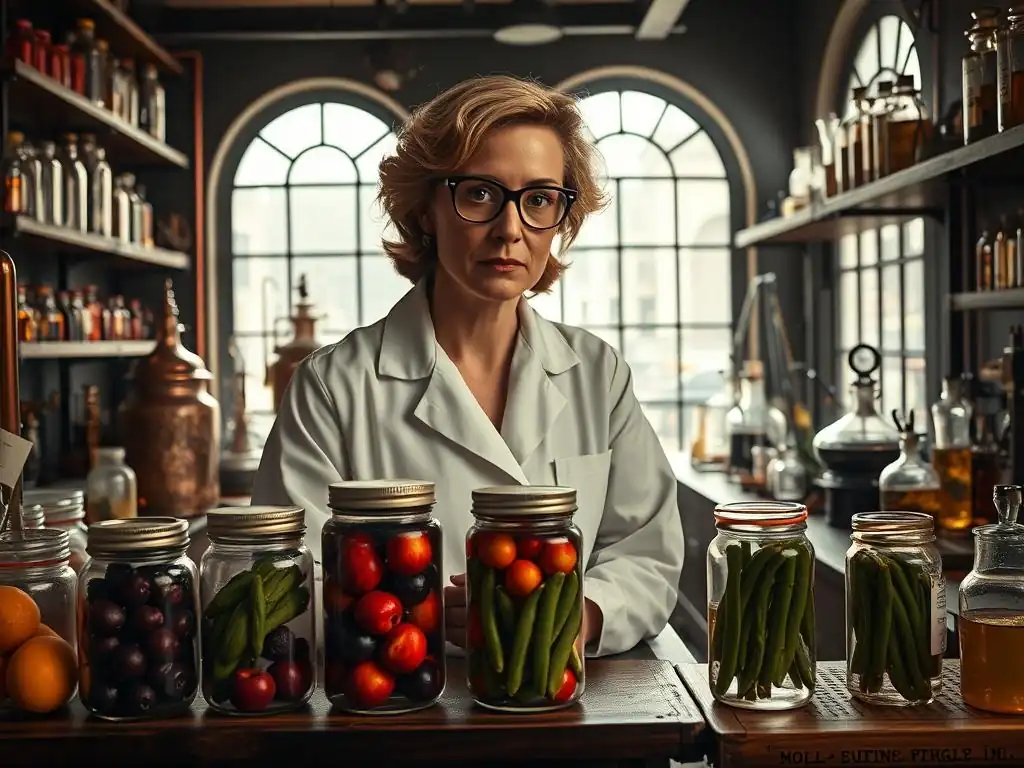
Welcome to WomenInScienceHistory.com!
Dive into the fascinating world of scientific innovation and discover the untold stories of remarkable women. Ever wondered how our food stays fresh and safe? Our featured article explores the groundbreaking work of Mary Engle Pennington and her pivotal role in food preservation. Prepare to be amazed by her chemical innovations and the lasting impact she had on an entire nation. What challenges did she overcome to revolutionize food safety? Read on to find out!
- Introduction: Mary Engle Pennington - A Pioneer in Food Chemistry
- Mary Engle Pennington's Groundbreaking Work in Food Preservation
- The Significance of Pennington's Contributions to the Food Industry
- Overcoming Obstacles: Challenges Faced by a Woman in Science
- Legacy and Impact of Mary Engle Pennington's Work
- Pennington's Patents and Publications: A Scientific Record
- Conclusion: Celebrating Mary Engle Pennington's Enduring Legacy in Food Science
-
Frequently Asked Questions
- What was Mary Engle Pennington's primary contribution to science?
- What specific challenges did Mary Engle Pennington face as a woman in science?
- How did Mary Engle Pennington's work impact the food industry?
- Besides food preservation, did Mary Engle Pennington contribute to other scientific areas?
- What is the significance of highlighting women like Mary Engle Pennington in science history?
- Final Reflection: A Legacy of Preserved Possibilities
- Ignite Change: Champion Food Safety Now!
Introduction: Mary Engle Pennington - A Pioneer in Food Chemistry
Early Life and Education of a Chemistry Trailblazer
Born in Nashville, Tennessee, in 1872, Mary Engle Pennington displayed an early and profound interest in the sciences, particularly chemistry. Her intellectual curiosity led her to the University of Pennsylvania, where she initially faced gender-based barriers; she was denied full matriculation solely because she was a woman. Despite this obstacle, Pennington persevered, gaining permission to attend classes as a special student. She earned a Certificate of Proficiency in Chemistry in 1892, a testament to her exceptional aptitude and determination.
Pennington continued her advanced studies, culminating in a Ph.D. in Chemistry from the University of Pennsylvania in 1895, specializing in physiological chemistry and botany. Her doctoral dissertation focused on the complex derivatives of columbium and tantalum, showcasing her deep understanding of inorganic chemistry. Following her doctoral work, she pursued post-doctoral studies at Yale University and later returned to her alma mater, the University of Pennsylvania, as an instructor in physiological chemistry, further solidifying her academic credentials and scientific foundation.
The Context of Food Preservation in the Early 20th Century
At the dawn of the 20th century, food preservation was a pressing national concern. Before the widespread adoption of industrial refrigeration, food spoilage was rampant, leading to significant economic losses for producers and posing serious health risks to consumers. Most communities relied on local, seasonal food supplies, and methods of preservation were largely limited to traditional techniques such as salting, smoking, pickling, and nascent forms of canning.
The rapidly growing urban populations of the era demanded a more reliable and consistent food supply, one that could be transported over long distances without succumbing to decay. Foodborne illnesses, like typhoid fever, were distressingly common, often linked to contaminated or spoiled perishable goods. There was a critical lack of standardized practices for food handling, storage, and transportation, highlighting an urgent need for scientific intervention to extend shelf life, ensure product safety, and improve public health outcomes. This was the landscape into which Mary Engle Pennington would introduce her groundbreaking work on Mary Engle Pennington food preservation.
Mary Engle Pennington's Groundbreaking Work in Food Preservation
Chemical Innovations in Refrigeration Techniques
Mary Engle Pennington's contributions to refrigeration extended beyond mere temperature control; they involved a sophisticated understanding of chemistry, physics, and engineering. She meticulously studied the optimal temperatures and humidity levels required for storing various perishable goods, recognizing that different foods had unique preservation needs. Her pioneering work led to the design of improved refrigerator cars, which were essential for transporting food products, particularly eggs and poultry, across the vast distances of the United States without spoilage.
Pennington’s research focused on the chemical changes that occur in food at different temperatures, identifying critical thresholds for bacterial growth and decay. She developed precise guidelines for ice usage and air circulation within storage units, ensuring consistent cold temperatures throughout the entire food chain. Her holistic approach to cold storage, which integrated scientific principles with practical engineering solutions, revolutionized how food moved from farms to urban markets, dramatically extending its freshness and safety.
Pennington's Role in Establishing Food Safety Standards
In 1905, Mary Engle Pennington was appointed by Harvey W. Wiley, the chief of the U.S. Department of Agriculture's (USDA) Bureau of Chemistry, a significant step for a woman in science at that time. Her immediate impact was evident, and by 1907, she was promoted to chief of the newly formed Food Research Laboratory, which later became the Food Research Division. In this pivotal role, Pennington was instrumental in developing and implementing scientific standards for the handling, storage, and transportation of perishable foods.
Her rigorous research and establishment of these standards directly supported the enforcement of the landmark Pure Food and Drug Act of 1906, a critical piece of legislation aimed at ensuring food safety and honesty in labeling. Pennington also pioneered new microbial testing methods for food products, allowing for scientific assessment of contamination levels and shelf life. Her leadership transformed the way the government approached food safety, grounding regulations in solid scientific evidence.
Improving the Handling and Storage of Perishable Goods
Pennington's early research at the USDA focused intensely on improving the handling and storage of highly perishable goods, particularly eggs and poultry. She conducted extensive studies on the optimal chilling rates and storage conditions for eggs, which significantly reduced spoilage rates during storage and transit. For instance, before her interventions, egg spoilage during transportation could be as high as 15-20%; her methods helped to considerably mitigate this issue.
She also developed what became known as the "Pennington Rules" for handling poultry, emphasizing the critical importance of immediate chilling of birds after slaughter to prevent bacterial growth. Beyond specific products, she championed hygienic practices throughout the entire food supply chain, from the farm to the retail outlet. Her research not only demonstrated the scientific necessity of proper cold chain management but also highlighted its substantial economic benefits, saving producers and consumers millions of dollars annually by reducing waste.
The Significance of Pennington's Contributions to the Food Industry
Reducing Food Spoilage and Waste Through Scientific Methods
Mary Engle Pennington's scientific innovations had a transformative impact on the reduction of food spoilage and waste across the nation. Her meticulous research into optimal temperatures and handling procedures extended the shelf life of highly perishable foods, such as eggs, poultry, and dairy products, from mere days to weeks, and in some cases, even months. This extended freshness allowed for the widespread distribution of fresh produce and animal products to urban centers, which previously had limited access to such goods.
The economic implications of her work were immense. By significantly cutting down spoilage rates – estimates suggest her methods could reduce spoilage in eggs and poultry by more than half in certain scenarios – Pennington's contributions translated into substantial savings for farmers, distributors, and consumers. Her scientific approach to Mary Engle Pennington food preservation helped to stabilize food markets and ensure a more consistent and affordable supply of high-quality provisions for a growing population.
Impact on Public Health and Foodborne Illness Prevention
Beyond the economic benefits, Mary Engle Pennington's work had a profound and direct impact on public health. By effectively preventing food spoilage, she played a crucial role in reducing the incidence of foodborne illnesses that were once common and often deadly. Her emphasis on cleanliness, rapid cooling, and consistent temperature control minimized the growth of harmful bacteria in food products.
In an era when diseases like typhoid fever, often linked to contaminated food, posed serious threats, Pennington’s dedication to a safer food supply was invaluable. Her scientifically grounded standards and practices contributed significantly to improving overall public health outcomes for a rapidly urbanizing American populace, making food not only more accessible but also much safer to consume.
Impact on the Dairy Industry
While much of her early work at the USDA focused on eggs and poultry, the fundamental principles of cold chain management and hygienic handling championed by Mary Engle Pennington were readily adopted and adapted by the dairy industry. She provided expert advice on the proper cooling, storage, and transportation of milk, butter, and other dairy products.
Her detailed research on microbial growth at different temperatures was directly applicable to dairy, helping to ensure the safety and freshness of these highly perishable items. The widespread implementation of refrigeration in dairy processing, distribution, and retail, which is now a cornerstone of the industry, owes a significant debt to the foundational scientific principles and practical guidelines that Mary Engle Pennington established for perishable food management.
Overcoming Obstacles: Challenges Faced by a Woman in Science
Gender Bias in the Scientific Community
From the very beginning of her academic journey, Mary Engle Pennington encountered significant gender bias within the scientific community. Her initial denial of full matriculation at the University of Pennsylvania, solely due to her gender, was an early indicator of the systemic barriers women faced. Despite achieving a Ph.D. and accumulating extensive qualifications, career opportunities in academia and government science were severely limited for women, often forcing them into less prestigious roles than their male counterparts with similar expertise.
Pennington continually had to prove her capabilities and intellect in environments that were overwhelmingly male-dominated. This persistent skepticism and the need to repeatedly demonstrate her competence were significant challenges she navigated throughout her distinguished career, highlighting the pervasive gender bias prevalent in early 20th-century science.
Gaining Recognition and Respect in a Male-Dominated Field
Even after securing a position at the USDA, Mary Engle Pennington faced the ongoing challenge of gaining full recognition and respect within a male-dominated scientific and governmental landscape. Her appointment as chief of the Food Research Laboratory was a breakthrough, but it did not immediately erase entrenched biases. She understood that to truly gain acceptance, her scientific work needed to demonstrate tangible, practical, and economic benefits.
Her success in drastically reducing food waste, improving food safety, and ultimately enhancing public health undeniably earned her widespread respect and cemented her reputation. After leaving government service, she became a highly sought-after consultant for private industry, a testament to her proven expertise and the recognition she eventually garnered, not just for her scientific acumen but for her ability to translate research into real-world solutions for Mary Engle Pennington food preservation.
The USDA's Initial Reluctance to Hire a Woman as a Chief
The U.S. Department of Agriculture, despite being a leading scientific institution, was not immune to the societal norms of the time regarding women in leadership. When Harvey W. Wiley, a progressive figure, first hired Mary Engle Pennington in 1905, it was as a "bacteriological chemist." However, there was considerable internal hesitation about elevating a woman to a chief position within a significant research division.
Despite her undeniable qualifications and the clear need for her expertise, the idea of a woman heading such a laboratory was unconventional. Wiley, recognizing her exceptional talent and the vital importance of her work, ultimately championed her cause. In 1907, he successfully promoted her to chief of the Food Research Laboratory, overcoming the prevailing resistance to her gender and marking a significant milestone for women in federal scientific roles.
Legacy and Impact of Mary Engle Pennington's Work
Lasting Influence on Modern Food Safety Practices
Mary Engle Pennington's pioneering work laid the immutable foundation for the modern cold chain management system that is ubiquitous today. Her meticulously developed principles of rapid chilling, consistent temperature maintenance during transit and storage, and stringent sanitary handling practices are now standard operating procedures across the global food industry. Regulatory frameworks for food safety, including those enforced by agencies like the Food and Drug Administration (FDA) in the United States, are built upon the scientific understanding she meticulously established concerning bacterial growth and food spoilage.
Every time consumers purchase fresh produce, meat, or dairy products from a refrigerated display case, they are directly benefiting from the enduring legacy of her efforts in Mary Engle Pennington food preservation. Her dedication to scientifically sound methods transformed the safety and accessibility of food, making it possible for perishable goods to travel long distances and remain fresh for extended periods.
Inspiring Future Generations of Women in Science
Mary Engle Pennington's remarkable story stands as a powerful testament to perseverance, intellect, and scientific excellence in the face of significant societal barriers. She not only achieved a Ph.D. and led a prominent government laboratory but also made profound scientific contributions that impacted the daily lives of millions. Her journey demonstrated unequivocally that women could achieve leadership roles and make indispensable advancements in scientific fields historically dominated by men.
Her achievements continue to serve as a beacon of inspiration for young women considering careers in STEM (Science, Technology, Engineering, and Mathematics) fields, particularly in chemistry and food science. Websites like Women In Science History highlight her narrative to ensure that her impact is recognized and to encourage future generations to pursue their scientific passions, undeterred by gender.
Mary Engle Pennington: A Champion of Food Preservation and Public Health
Mary Engle Pennington was more than just a brilliant scientist; she was a tireless advocate for applying rigorous scientific principles to solve practical, everyday problems. Her unwavering dedication to ensuring a safe, abundant, and accessible food supply directly improved the quality of life for countless Americans throughout the 20th century and beyond. Her foundational work on Mary Engle Pennington food preservation is a prime example of how scientific innovation can yield immense societal benefits, contributing to both economic prosperity and public well-being.
Her extraordinary contributions were formally recognized when she was inducted into the National Women's Hall of Fame in 2002, a fitting tribute to a woman whose scientific insights and practical applications profoundly shaped the modern food industry and safeguarded public health for generations.
Pennington's Patents and Publications: A Scientific Record
While Mary Engle Pennington's primary impact stemmed from her research and the development of industry standards, her innovative spirit also led to several practical inventions. She held at least one notable patent directly related to her work on food quality. In 1918, she was granted U.S. Patent 1,272,392 for an "egg-testing machine." This device was designed to rapidly and accurately determine the freshness and internal quality of eggs, a crucial tool for commercial grading and effective cold storage.
Beyond her direct patents, Pennington's research profoundly influenced the design and widespread adoption of refrigerated railroad cars. Although she may not have held patents for entire car designs herself, her detailed studies on optimal temperatures, air circulation, and insulation provided the scientific basis that engineers and manufacturers used to develop more efficient and effective cooling systems for food transportation. Her work directly contributed to practical solutions that improved the safety and efficiency of food handling across the nation.
Notable Publications on Food Chemistry and Preservation
Throughout her extensive career, Mary Engle Pennington authored a prolific number of scientific papers and government bulletins, serving as a vital conduit for disseminating her research findings. Many of her publications were specifically designed as practical guides, intended for a wide audience including farmers, food distributors, and even consumers. These accessible documents translated complex scientific findings into actionable advice, significantly impacting industry practices.
Among her most influential works were bulletins published by the U.S. Department of Agriculture, such as "The Care of Eggs" and "The Cooling of Poultry." These publications provided detailed, scientifically-backed instructions on how to handle, store, and transport perishable goods to minimize spoilage and maintain quality. Her commitment to sharing knowledge ensured that best practices for Mary Engle Pennington food preservation were widely adopted, elevating food safety standards across the country.
Analysis of "The Care of Eggs"
First published around 1914 as a USDA Farmers' Bulletin, "The Care of Eggs" stands as one of Mary Engle Pennington's most seminal and impactful publications. This comprehensive guide meticulously detailed the critical importance of cleanliness, proper temperature control, and appropriate humidity levels for egg storage at every stage, from the farm nest to the market. It provided practical, step-by-step instructions for candling eggs, a technique used to inspect the internal quality and freshness of eggs by holding them up to a light source.
The bulletin's recommendations were swiftly adopted by the burgeoning commercial egg industry, leading to significant improvements in egg quality and a dramatic reduction in spoilage nationwide. "The Care of Eggs" became a cornerstone of commercial egg handling practices, solidifying Pennington's reputation as a leading authority in food chemistry and a champion of practical, science-based solutions for food preservation.
Conclusion: Celebrating Mary Engle Pennington's Enduring Legacy in Food Science
The Importance of Recognizing Women's Contributions to Science
Mary Engle Pennington's extraordinary life and career serve as a powerful reminder of the vital, yet often overlooked, contributions women have made to scientific advancement throughout history. Her story helps to correct historical omissions, providing a more complete and accurate picture of scientific progress that acknowledges the diverse intellects behind groundbreaking discoveries. Recognizing figures like Pennington is not merely an act of historical correction; it is an essential step in inspiring future generations by showcasing a broader range of role models in STEM fields.
By highlighting the achievements of women scientists, we demonstrate that scientific excellence knows no gender boundaries and encourage young women to pursue their passions in science, technology, engineering, and mathematics, contributing to a more inclusive and innovative scientific community.
Further Research and Resources on Mary Engle Pennington
For those inspired by Mary Engle Pennington's dedication to Mary Engle Pennington food preservation and public health, numerous resources offer deeper insights into her remarkable life and work. The National Archives and Records Administration in Washington, D.C., holds many of her official USDA records, providing primary source material for researchers. Several academic biographies and historical analyses of women in science feature detailed accounts of her career, offering context on the challenges she faced and the significance of her achievements.
Academic journals in food science, chemistry, and the history of science frequently publish articles that delve into her specific contributions and their lasting impact. Additionally, online resources from reputable institutions such as the Smithsonian National Museum of American History or the American Chemical Society offer accessible information and summaries of her groundbreaking work, further solidifying her place as a pivotal figure in American scientific history.
Frequently Asked Questions
What was Mary Engle Pennington's primary contribution to science?
Mary Engle Pennington is best known for her pioneering work in food preservation and refrigeration techniques. She developed standards for safe food handling and storage.
What specific challenges did Mary Engle Pennington face as a woman in science?
Pennington faced significant gender bias in a male-dominated field. She was often overlooked and underestimated, forcing her to prove herself repeatedly.
How did Mary Engle Pennington's work impact the food industry?
Her research and innovations led to improved food safety standards, making food more accessible and reducing spoilage across the nation.
Besides food preservation, did Mary Engle Pennington contribute to other scientific areas?
While her main focus was food preservation, Pennington also made contributions to chemical research and government regulations related to food safety.
What is the significance of highlighting women like Mary Engle Pennington in science history?
Highlighting these women inspires future generations, and it corrects the historical record by acknowledging the significant contributions of women in science.
Final Reflection: A Legacy of Preserved Possibilities
The story of Mary Engle Pennington and her groundbreaking work in food preservation is not just a historical account; it's a testament to the enduring power of scientific innovation to shape our world. Her dedication to ensuring food safety and accessibility resonates profoundly today, as we grapple with issues of food waste, global hunger, and the environmental impact of our food systems. Pennington's legacy reminds us that even seemingly small advancements can have a monumental impact on the health and well-being of entire societies.
The influence of Pennington's work extends far beyond the laboratory, subtly shaping our cultural and social landscape. Her commitment to scientific rigor and her unwavering pursuit of practical solutions serve as an inspiration to women in STEM and a reminder of the importance of accessible and safe food for all. If we can control the conditions under which food is handled, we can control the quality of the food.
This quote encapsulates her core belief and highlights the lasting relevance of her work in a world increasingly concerned with food security and sustainability.
As we reflect on Mary Engle Pennington's remarkable contributions, let us consider how we can apply her spirit of innovation and dedication to addressing the challenges of our own time. How can we, like her, strive to create a more sustainable and equitable food system for future generations? Let her story inspire you to embrace curiosity, champion scientific progress, and work towards a world where everyone has access to safe, nutritious, and preserved possibilities.
Ignite Change: Champion Food Safety Now!
Thank you for exploring Mary Engle Pennington's remarkable journey and the vital role she played in revolutionizing food preservation. Now, it's time to translate that inspiration into action.
- Prioritize safer food storage at home: Explore techniques like proper refrigeration and food rotation to minimize waste and potential health risks.
- Share Pennington's story with your network – help us ensure her contributions are celebrated and inspire future generations of female scientists.
- Delve deeper: research current initiatives aimed at improving food safety standards in your community and consider supporting or volunteering.
What small change will you make today to honor Pennington's legacy and contribute to a safer, healthier world?