
Laura Bassi: Italy's First Female Physics Professor and Her Public Experiments

Welcome to WomenInScienceHistory.com!
Delve into the captivating world of women who dared to challenge the status quo and reshape the landscape of science. Today, we uncover the extraordinary story of Laura Bassi, a brilliant mind who defied societal expectations to become Italy's first female physics professor. Prepare to be inspired as we explore her groundbreaking work and the public experiments that cemented her legacy, a legacy often overshadowed by history. Intrigued? Discover how Bassi navigated a male-dominated academic world and left an indelible mark on the world of physics.
- Introduction: Unveiling the Story of Laura Bassi, a Physics Pioneer
- Early Life and Education of Laura Bassi: A Foundation for Scientific Success
- Laura Bassi's Groundbreaking Achievements in Physics
- The Challenges Faced by Laura Bassi in Academia
- Laura Bassi's Public Experiments: Demonstrating Scientific Principles
- Laura Bassi's Legacy: Inspiring Future Generations of Women in Science
- Conclusion: Celebrating Laura Bassi's Enduring Contribution to Physics and Women in Science
-
Frequently Asked Questions
- What is Laura Bassi best known for?
- What were some of the challenges Laura Bassi faced as a woman in science?
- Where did Laura Bassi conduct her public experiments?
- What scientific field was Laura Bassi primarily involved in?
- How does WomenInScienceHistory.com aim to honor Laura Bassi and other female scientists?
- Final Reflection: Illuminating the Path of Scientific Inquiry
- Unleash Your Inner Scientist!
Introduction: Unveiling the Story of Laura Bassi, a Physics Pioneer
Setting the Stage: Bologna in the 18th Century and the Pursuit of Knowledge
In the 18th century, Bologna stood out as a vibrant center of intellectual activity in Europe. Unlike many other cities where traditional scholasticism still held sway, Bologna fostered a more progressive environment, particularly within its esteemed university, one of the oldest in the world, founded in 1088. This period saw a burgeoning interest in new scientific philosophies, notably Newtonian physics, which was gaining traction across the continent and inspiring a shift towards empirical observation and experimentation.
The intellectual climate was ripe for innovation, with a growing emphasis on natural philosophy and the systematic study of the physical world. Public lectures and demonstrations were becoming popular, drawing diverse audiences eager to witness the wonders of science. It was within this dynamic and relatively open intellectual landscape that a young woman would rise to unprecedented prominence, challenging established norms and making her mark as a pioneering figure in the history of science.
Introducing Laura Bassi: A Brilliant Mind in a Male-Dominated World
Laura Bassi Veratti, born in Bologna in 1711, emerged as a truly remarkable figure who defied the deeply entrenched societal conventions of her era. She achieved what was then considered impossible for a woman: earning a university chair and becoming the first recognized female physics professor in Europe. Her journey from a privately educated prodigy to a celebrated academic is a testament to her exceptional intellect, unwavering dedication, and the unique, albeit limited, opportunities afforded to her in Bologna.
Her story is a crucial chapter in the narrative of women in science history, shedding light on the immense barriers women faced and the extraordinary efforts required to overcome them. As a Laura Bassi physics professor, she not only excelled in her field but also became a powerful symbol of female intellectual capability, paving the way for future generations to pursue scientific endeavors in a world that was slowly, grudgingly, beginning to acknowledge their talents.
Early Life and Education of Laura Bassi: A Foundation for Scientific Success
A Prodigy Emerges: Bassi's Early Intellectual Development
Laura Bassi was born on October 31, 1711, into an affluent and cultured family in Bologna. Her father, Giuseppe Bassi, a successful lawyer, quickly recognized his daughter's extraordinary intellectual curiosity and precocious abilities. Unlike many girls of her time, whose education was often limited to domestic skills and basic literacy, Laura was provided with a rigorous and extensive private education from a very young age.
By her early teens, she was already demonstrating a profound grasp of complex subjects. Her studies encompassed Latin, Greek, French, philosophy, mathematics, and, crucially, natural sciences, including physics. This comprehensive early grounding laid the indispensable foundation for her future academic pursuits, distinguishing her as a child prodigy with an insatiable appetite for knowledge and a remarkable capacity for scientific inquiry.
Mentorship and Guidance: The Influence of Gaetano Tacconi
A pivotal figure in Laura Bassi's intellectual development was Gaetano Tacconi, a distinguished professor of medicine and philosophy at the University of Bologna, who became her primary tutor around the age of 13. Tacconi, an eminent scholar, provided Bassi with intensive instruction in logic, metaphysics, and the burgeoning field of experimental physics. His mentorship was instrumental in shaping her scientific rigor and her understanding of the empirical method.
Under Tacconi's tutelage, Bassi delved deeply into the works of Isaac Newton and other contemporary natural philosophers, mastering complex theories and preparing herself for public academic discourse. His guidance was not merely about imparting knowledge but about cultivating a critical and analytical mind, equipping her with the intellectual tools and confidence required to navigate the male-dominated academic world and eventually excel as a Laura Bassi physics professor.
The Path to Academia: Early Academic Pursuits and Recognition
Laura Bassi's exceptional abilities quickly garnered public attention. To formally demonstrate her profound knowledge, she engaged in a series of public examinations and disputations, a common academic practice of the era. A landmark event occurred on April 17, 1732, when, at the age of 20, she publicly defended 49 theses in philosophy and physics in the presence of prominent scholars, senators, and the Archbishop of Bologna, Cardinal Prospero Lambertini (later Pope Benedict XIV).
The event was a grand spectacle, attracting immense interest and admiration. Her eloquent and insightful defense of complex scientific and philosophical concepts earned her widespread acclaim. As a direct result of this impressive display, on May 12, 1732, the University of Bologna awarded her a doctoral degree in philosophy, an unprecedented achievement for a woman in Europe. This historic conferral marked her official entry into the academic world and set the stage for her groundbreaking role as a Laura Bassi physics professor.
Laura Bassi's Groundbreaking Achievements in Physics
Becoming Italy's First Female Physics Professor: A Historic Milestone
Following her doctoral triumph, Laura Bassi's academic career swiftly ascended to an unprecedented height. Within weeks of receiving her degree in May 1732, the Senate of Bologna, recognizing her extraordinary talent and the prestige she brought to the city, appointed her to a professorship in philosophy at the University of Bologna. This appointment effectively made her the first woman in Europe to hold a university chair, a truly historic milestone.
While her initial professorship was in philosophy, the scope of "natural philosophy" at the time encompassed physics, making her de facto the first female physics professor. Although her teaching privileges were initially limited to a few public lectures annually due to societal restrictions on women, this formal recognition laid the groundwork for her eventual full engagement in experimental physics and solidified her unique position as a Laura Bassi physics professor.
Public Dissertations and Lectures: Sharing Knowledge and Challenging Conventions
Laura Bassi regularly delivered formal public lectures and dissertations, often held at the Archiginnasio (the university's main building) or, later, in her own home. These events were not mere academic exercises; they were grand occasions attended by large, eager audiences, including esteemed scholars, visiting dignitaries, and members of the Bolognese elite. Her lectures were renowned for their intellectual rigor, clarity, and her captivating ability to explain complex scientific principles.
By consistently performing at such a high intellectual level in public, Bassi was directly challenging the prevailing conventions that sought to confine women to domestic roles. Each lecture served as a powerful demonstration of female intellectual prowess, proving that a woman could not only comprehend advanced scientific concepts but also articulate them with authority and engage a diverse audience. Her public engagements were crucial in raising her profile and validating her status as a serious scholar.
Contributions to Experimental Physics: Bassi's Research and Discoveries
Laura Bassi possessed a profound passion for experimental physics, particularly for the burgeoning fields of Newtonian mechanics and electricity. She established a private laboratory in her home, a significant undertaking given the cost and complexity of scientific apparatus in the 18th century. In this dedicated space, she meticulously conducted experiments, replicating and verifying existing theories while also exploring new phenomena.
Her research focused on areas such as the properties of electricity, a rapidly developing field at the time, and the principles of Newtonian mechanics. While she is not credited with a singular "discovery" in the vein of Newton or Faraday, her systematic experimental approach, her dedication to empirical verification, and her role in disseminating these experimental findings through her teaching and public demonstrations were invaluable contributions to the advancement of physics in Italy and beyond. Her work as a Laura Bassi physics professor significantly contributed to the empirical understanding of the physical world.
The Challenges Faced by Laura Bassi in Academia
Despite her undeniable brilliance and formal appointments, Laura Bassi faced significant gender bias and discrimination throughout her career. While she was granted a professorship, her initial teaching privileges were severely restricted compared to her male counterparts. She was allowed to deliver only a few public lectures a year at the university, primarily for ceremonial purposes, rather than being given a full teaching load. This limitation underscored the prevailing institutional reluctance to fully integrate women into academic roles.
Societal expectations of the 18th century further compounded these challenges, as women were generally expected to remain within the domestic sphere. Bassi's public intellectual life was a constant challenge to these norms, subjecting her to scrutiny and requiring her to continually prove her intellectual capabilities and dedication. Her very presence as a Laura Bassi physics professor was an anomaly, and she had to navigate a landscape where her gender was often seen as a barrier to full professional acceptance.
Securing Academic Positions and Resources: Overcoming Obstacles
Gaining initial academic recognition was only the first step; securing meaningful positions and adequate resources presented ongoing hurdles for Laura Bassi. To teach more regularly and conduct her experiments, she often had to lobby influential figures and obtain special permissions. Her marriage in 1738 to Giuseppe Veratti, also a physics professor, provided her with a degree of social acceptance and professional support, but she continued to fight for equitable recognition and access to resources.
Establishing and maintaining her private laboratory was a testament to her perseverance, as funding for scientific apparatus was scarce, and even more so for a woman. She consistently sought to expand her teaching opportunities and gain greater involvement in the Bologna Institute of Sciences, eventually achieving a more significant role as Chair of Experimental Physics towards the end of her life. Her career was a continuous struggle against the systemic obstacles placed in the path of a female physics professor.
Balancing Family Life and Scientific Pursuits: A Difficult Juggling Act
Laura Bassi's life was not solely dedicated to academia; she also managed a demanding family life. She married Giuseppe Veratti in 1738, and together they had eight children, though only five survived to adulthood. The societal expectations for women to manage the household and raise children were immense, making her continued scientific and academic pursuits an even more remarkable feat.
Unlike her male colleagues, who could often rely on wives to manage domestic affairs, Bassi had to navigate the dual responsibilities of a rigorous academic career and a large family. She often conducted her experiments and gave private lectures from her home, demonstrating an extraordinary ability to integrate her personal and professional lives. This balancing act highlights her exceptional dedication and resilience in maintaining her status as a prominent Laura Bassi physics professor while fulfilling her family duties.
Laura Bassi's Public Experiments: Demonstrating Scientific Principles
The Purpose and Significance of Public Experiments in 18th Century Science
In the 18th century, public experiments played a vital role in the dissemination and popularization of new scientific ideas, especially the revolutionary concepts of Newtonian physics. These demonstrations served as a crucial bridge between theoretical knowledge and practical understanding, making abstract scientific principles tangible and accessible to a broader audience beyond the confines of academic institutions. They were not merely educational tools but also captivating public spectacles, drawing large crowds eager to witness the wonders of the natural world.
For scholars like Laura Bassi, conducting these experiments was essential for validating scientific theories through empirical evidence. They allowed for direct observation of phenomena, reinforcing the importance of the scientific method and fostering a deeper appreciation for the laws governing the universe. By engaging the public in this way, Bassi and her contemporaries helped to cultivate scientific literacy and ignite intellectual curiosity among both students and the general populace.
Detailed Examples of Bassi's Public Experiments
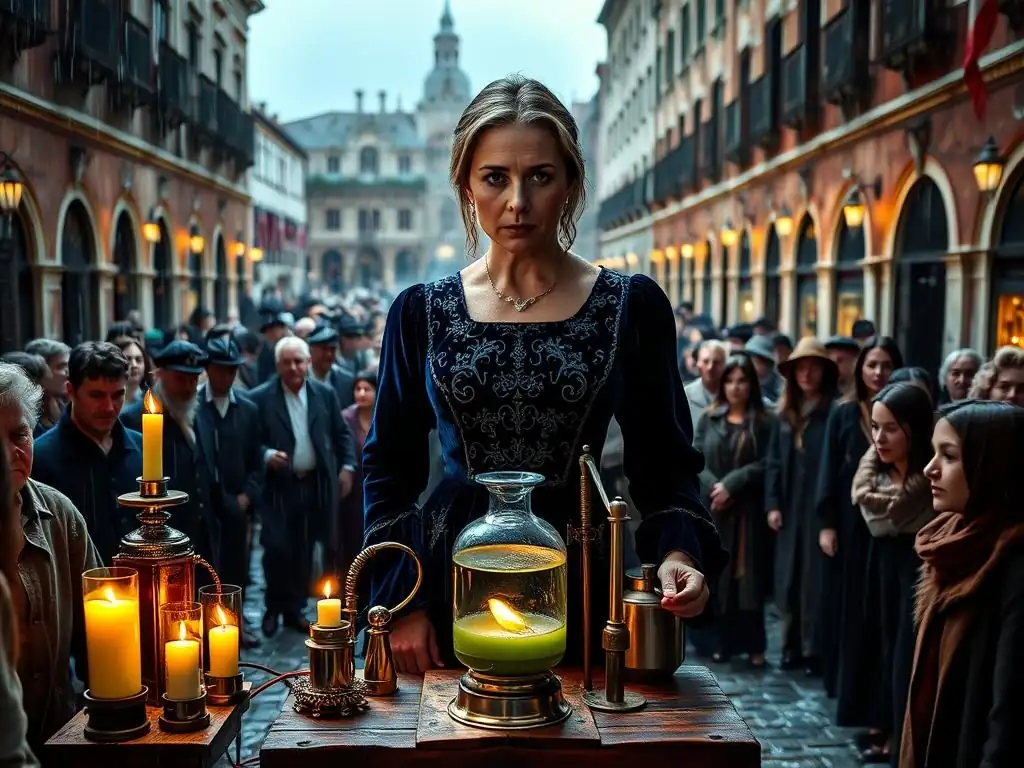
Laura Bassi was particularly renowned for her engaging public demonstrations, especially those related to electricity, a rapidly developing and fascinating field at the time. She would meticulously set up and perform experiments using state-of-the-art apparatus, often acquired at considerable personal expense. For instance, she would demonstrate the properties of static electricity using glass friction machines and Leyden jars, showcasing phenomena such as sparks, electrostatic attraction and repulsion, and even the "electric shock" effect, which was a popular novelty.
Beyond electricity, Bassi also conducted experiments illustrating principles of mechanics, such as those involving pendulums, levers, and inclined planes, to explain concepts like gravity and force. She also delved into optics, demonstrating the behavior of light through prisms and lenses. Her ability to clearly explain these complex phenomena while performing the experiments made her lectures highly sought after and solidified her reputation as an exceptional experimental physicist and a truly effective Laura Bassi physics professor.
The Impact of Bassi's Experiments on Scientific Understanding
The public experiments conducted by Laura Bassi had a profound impact on scientific understanding, both within academic circles and among the general public. Her clear, engaging, and empirically grounded demonstrations were instrumental in popularizing Newtonian physics in Italy, a region where Aristotelian and Cartesian philosophies still held considerable sway. By making complex theories accessible and visually compelling, she helped to accelerate the acceptance and understanding of these new scientific paradigms.
Furthermore, Bassi's commitment to experimental verification reinforced the importance of empirical evidence in scientific inquiry. Her work contributed to the broader shift from purely theoretical philosophical discourse to a more hands-on, evidence-based approach to science. Through her meticulous experiments, she not only educated her audiences but also championed the methodology that underpins modern scientific research, cementing her legacy as a pioneering Laura Bassi physics professor who advanced both knowledge and scientific practice.
Laura Bassi's Legacy: Inspiring Future Generations of Women in Science
Recognition and Honors: Acknowledging Bassi's Contributions
Laura Bassi's exceptional contributions to science and academia were not entirely overlooked during her lifetime. In 1732, the same year she received her doctorate, she was elected to the prestigious Bologna Academy of Sciences. This was a remarkable honor, allowing her to present papers and participate in the intellectual discourse of one of Europe's leading scientific institutions, albeit initially with some limitations on her full participation.
Her consistent dedication and expertise eventually led to further recognition. In 1776, just two years before her death, she was appointed to the Chair of Experimental Physics at the Bologna Institute of Sciences, a position previously held by her late husband. This appointment was a culmination of her lifelong efforts and a definitive acknowledgment of her unparalleled expertise and authority as a Laura Bassi physics professor, marking a significant victory for women in science.
The Enduring Impact of Her Work: How Bassi Paved the Way for Women in Physics
Laura Bassi's career served as an extraordinarily powerful precedent, demonstrating unequivocally that women were capable of rigorous scientific inquiry, original thought, and effective teaching at the highest echelons of academia. Her very existence as a university professor, and more specifically as a Laura Bassi physics professor, shattered centuries-old assumptions about women's intellectual capacities and their appropriate place in society.
While the path for women in science remained challenging for many decades after her death, Bassi's success created a crack in the formidable wall of male-dominated academia. Her story inspired other women to pursue education and intellectual careers, even if direct opportunities remained scarce. She became a beacon of possibility, a testament to the fact that with talent and perseverance, women could indeed make significant contributions to the field of physics and beyond.
Laura Bassi's Influence on the Advancement of Women in STEM Fields
Laura Bassi's profound influence extends beyond physics to the broader advancement of women in all STEM (Science, Technology, Engineering, and Mathematics) fields. Her life's work stands as a compelling historical example that intellectual capability and scientific aptitude are not gender-specific. She demonstrated that when given opportunities, even limited ones, women can not only participate but excel in complex scientific disciplines.
Her pioneering role continues to be cited in contemporary discussions about gender equality in education and professional fields. Bassi's legacy underscores the critical importance of recognizing and supporting female talent in STEM, advocating for equitable access to education, resources, and leadership positions. Her story remains a powerful reminder of the historical struggles and the enduring need to champion diversity and inclusion in scientific endeavors, ensuring that future generations of women can pursue their passions without the same formidable barriers faced by this trailblazing Laura Bassi physics professor.
Conclusion: Celebrating Laura Bassi's Enduring Contribution to Physics and Women in Science
Reinforcing the Importance of Recognizing Women in Science History
Laura Bassi's extraordinary life and career are paramount to the mission of WomenInScienceHistory.com. Her story is a vivid testament to individual brilliance overcoming systemic barriers, highlighting the often-unacknowledged contributions of women throughout scientific history. By recognizing pioneers like Bassi, we not only correct historical oversights but also gain a more complete and accurate understanding of how scientific progress has truly unfolded.
Her journey illuminates the complex historical context in which scientific advancements occurred, revealing the profound societal challenges faced by groundbreaking figures who dared to defy conventions. Celebrating Laura Bassi reinforces the vital importance of preserving and sharing these narratives, ensuring that the remarkable achievements of women in science are never again relegated to the footnotes of history.
Laura Bassi: A Role Model for Aspiring Scientists and a Testament to Perseverance
Laura Bassi stands as an enduring role model for aspiring scientists, particularly women, across the globe. Her unwavering dedication to learning, her groundbreaking role as the first female physics professor in Europe, and her remarkable resilience in the face of significant adversity are profoundly inspiring. She demonstrated that intellectual passion, combined with relentless effort, can indeed lead to monumental achievements even in the most challenging environments.
Her legacy transcends her specific scientific contributions; she opened doors, however narrowly, for future generations of women to pursue their scientific passions. Laura Bassi's life serves as a powerful reminder that perseverance, intellectual curiosity, and a commitment to challenging the status quo can lead to profound change, making her an indelible figure in the history of physics and a guiding light for women in science.
Frequently Asked Questions
What is Laura Bassi best known for?
Laura Bassi is best known for being Italy's first female physics professor and a pioneering figure in academia. She was also celebrated for her public experiments demonstrating Newtonian physics.
What were some of the challenges Laura Bassi faced as a woman in science?
As a woman in 18th-century science, Bassi faced significant challenges including limited access to formal education and discrimination within the academic community. She had to fight for recognition and opportunities.
Where did Laura Bassi conduct her public experiments?
Laura Bassi conducted her public experiments primarily in Bologna, Italy, at the University of Bologna and in other public venues. These were important for demonstrating her scientific expertise.
What scientific field was Laura Bassi primarily involved in?
Laura Bassi was primarily involved in the field of physics, particularly Newtonian physics. She also contributed to other areas such as natural philosophy and anatomy.
How does WomenInScienceHistory.com aim to honor Laura Bassi and other female scientists?
The website honors Laura Bassi and other female scientists by highlighting their biographies and groundbreaking contributions, aiming to inspire future generations and address their underrepresentation in historical narratives.
Final Reflection: Illuminating the Path of Scientific Inquiry
The story of Laura Bassi, Italy's first female physics professor, resonates profoundly today because it underscores the enduring struggle for equal access to scientific education and recognition for women. Her groundbreaking achievements, often achieved in the face of societal resistance, serve as a powerful reminder that talent and intellect know no gender.
Bassi's legacy extends far beyond the confines of 18th-century Bologna. Her unwavering dedication to scientific inquiry, coupled with her courage to publicly demonstrate her knowledge, continues to inspire generations of female scientists and scholars. I want to show my gratitude to the Senate and the Bolognese people for having given me the opportunity to carry out my studies and to demonstrate my knowledge.
This quote encapsulates her drive and the importance of the opportunities she fought so hard to attain, highlighting the ongoing need to champion inclusivity in STEM fields.
Let Laura Bassi's example fuel your own pursuit of knowledge and understanding. Consider how you can contribute to a more equitable and inclusive world, where every individual, regardless of gender or background, has the opportunity to explore their intellectual potential and contribute to the advancement of science. Let her story be a beacon, guiding us towards a future where brilliance is celebrated in all its forms.
Unleash Your Inner Scientist!
Thank you for exploring the inspiring story of Laura Bassi and her groundbreaking contributions to science. We hope you've discovered a renewed appreciation for the power of perseverance and intellectual curiosity. Now, it's your turn to make a difference.
- Share Laura Bassi's incredible story with your friends, family, and network to inspire the next generation of female scientists.
- Delve deeper into 18th-century scientific experiments by researching a forgotten scientific instrument from Bassi's era.
- Reflect on modern barriers to women in STEM and propose a novel solution to promote inclusivity in your community.
How will you build on Laura Bassi's legacy and champion women in science today?