
Gravity's Mathematicians: Women Theorists Exploring Einstein's Universe


Welcome to WomenInScienceHistory.com!
Prepare to be inspired by the untold stories of brilliant minds. This month, we delve into the captivating world of physics, focusing on Women’s contributions to physics and their pivotal roles in unraveling the mysteries of the universe. From groundbreaking theories to overcoming immense obstacles, discover how these unsung heroes challenged conventions and left an indelible mark on our understanding of gravity and Einstein's universe. Intrigued? Let's explore the legacy of these Gravity's Mathematicians together...
- Introduction: Unveiling Women's Contributions to Theoretical Physics
- Early Pioneers: Laying the Groundwork for Women in Gravity Research
- Navigating a Male-Dominated Field: Challenges Faced by Women Theorists
- Key Contributions of Women to Einstein's Theory of Relativity
- Women's Role in Developing Quantum Gravity Theories
- Women's Contributions to Cosmology and Black Hole Physics
- Modern Women Theorists: Continuing the Legacy in Gravitational Physics
- The Future of Women in Theoretical Physics: Breaking Barriers and Inspiring Generations
- Conclusion: Recognizing and Celebrating Women's Enduring Impact on Gravity Research
-
Frequently Asked Questions
- What were some significant challenges faced by women theorists studying physics, particularly in relation to Einstein's theories?
- Can you name a notable woman scientist who made contributions to the understanding of gravity or Einstein's theories?
- Why is it important to highlight the contributions of women in physics, especially those working on complex theories like Einstein's?
- How did WomenInScienceHistory.com contribute to recognizing the work of women theorists in physics?
- What impact did the lack of recognition have on the advancement of women's careers in theoretical physics?
- Final Reflection: Unveiling the Invisible Architects
- Unveil Your Inner Theorist: Journey Deeper into Gravity!
Introduction: Unveiling Women's Contributions to Theoretical Physics
Highlighting Overlooked Female Physicists in Einstein's Era
The early 20th century, a period marked by revolutionary advancements in physics, particularly with Albert Einstein's theories of relativity, was paradoxically a time when "Women’s contributions to physics" were frequently marginalized or entirely overlooked. Despite the societal barriers and pervasive gender bias within academic institutions, a remarkable cohort of women theorists quietly, yet profoundly, shaped our understanding of the universe. They tackled complex mathematical frameworks, developed groundbreaking concepts, and laid essential groundwork, often without the recognition afforded to their male counterparts.
These pioneering female physicists navigated a landscape where access to education, research positions, and even basic respect was a constant struggle. Many were forced to work in unpaid capacities, as "guests" in laboratories, or had their work published under male colleagues' names. Their intellectual prowess and relentless dedication, however, allowed them to make indispensable "Women’s contributions to physics," pushing the boundaries of knowledge in areas like quantum mechanics, nuclear physics, and the very fabric of spacetime.
Early Pioneers: Laying the Groundwork for Women in Gravity Research
Emmy Noether's Revolutionary Theorems and Impact on Modern Physics
Emmy Noether, a brilliant German mathematician, stands as one of the most influential figures whose theoretical insights profoundly impacted modern physics, including our understanding of gravity. Her seminal work, particularly Noether's Theorem, published in 1918, established a fundamental connection between symmetries in nature and conservation laws. This theorem posits that for every continuous symmetry of a physical system, there is a corresponding conserved quantity; for instance, the time-translation symmetry implies energy conservation, and spatial-translation symmetry implies momentum conservation. This elegant mathematical framework underpins virtually all modern physical theories, from classical mechanics to quantum field theory and general relativity.
Noether's contributions were particularly crucial for general relativity, as its field equations exhibit various symmetries that directly lead to conservation laws for energy-momentum. Her work provided a rigorous mathematical foundation for understanding these intrinsic properties of spacetime, deeply influencing how physicists interpret and apply Einstein's equations. Despite her genius, Noether faced immense discrimination, teaching without pay or proper professorial title for years at the University of Göttingen before finally being granted an "extraordinary" (non-tenured) professorship in 1922. Her enduring legacy underscores the profound, often foundational, "Women’s contributions to physics."
Hertha Sponer: Quantum Physics and Molecular Spectroscopy
Hertha Sponer, another distinguished German physicist, made significant "Women’s contributions to physics" primarily in the realm of quantum mechanics and molecular spectroscopy, fields that, while not directly gravity research, were foundational to understanding the universe at its most fundamental level. Born in 1895, Sponer was one of the first women to earn a Ph.D. in physics in Germany and became a prominent figure in the burgeoning field of quantum theory. Her research focused on the electronic structure of molecules and the interpretation of their spectra, providing crucial experimental data that validated early quantum mechanical predictions.
Sponer's work, often conducted in collaboration with Nobel laureate James Franck at Göttingen, involved precise measurements of molecular spectra, which were vital for understanding chemical bonding and energy levels within molecules. Her rigorous experimental and theoretical approach helped solidify the foundations of quantum chemistry. Like many Jewish scientists and academics of her era, she was forced to emigrate from Nazi Germany, eventually finding a position at Duke University in the United States. Her meticulous scientific work exemplifies the detailed and precise "Women’s contributions to physics" that built the edifice of 20th-century scientific understanding.
Overcoming Gender Bias in Physics Academia
The path for women in theoretical physics has historically been fraught with systemic gender bias, manifesting in various insidious forms within academia. From overt discrimination in hiring and promotion to more subtle forms of exclusion, female physicists often faced a hostile environment. They were frequently denied access to informal networks, known as the "invisible college," where crucial scientific discussions, collaborations, and opportunities for advancement often occurred. This exclusion limited their access to mentors, research opportunities, and the intellectual exchange necessary for groundbreaking theoretical work.
Many talented women were relegated to assistant roles, even when their intellectual contributions were central to major discoveries, and their names were often omitted from publications or credited as secondary authors despite primary roles. For instance, even highly accomplished women found it challenging to secure tenured positions or lead research groups, which directly impacted their ability to pursue long-term, ambitious projects in complex fields like gravity research. This pervasive bias meant that significant "Women’s contributions to physics" were often undervalued or simply unrecognized, requiring extraordinary perseverance to overcome.
Securing Funding and Recognition for Women's Research in Gravity
Beyond the daily biases, securing adequate funding and proper recognition for "Women’s contributions to physics," particularly in theoretical fields like gravity research, presented formidable challenges. Research grants and access to computing resources, essential for complex theoretical calculations and simulations, were disproportionately awarded to male colleagues. This disparity often forced women to work with fewer resources, limiting the scope and scale of their investigations into the intricate mathematical problems posed by general relativity and quantum gravity.
The lack of recognition extended to prestigious awards and professional accolades. Even when women made pivotal theoretical advancements, their work was frequently overshadowed, attributed to male collaborators, or simply not given the same prominence in scientific discourse. The glaring omission of Lise Meitner from the Nobel Prize for nuclear fission, despite her crucial theoretical interpretation, serves as a stark reminder of how "Women’s contributions to physics" were often denied their rightful place in history. This struggle for recognition impacted not only their individual careers but also the visibility and encouragement of future generations of female physicists.
Key Contributions of Women to Einstein's Theory of Relativity
Understanding and Expanding on Einstein's Equations
While Albert Einstein famously developed the theory of general relativity, numerous women theorists made crucial "Women’s contributions to physics" by helping to understand, interpret, and expand upon his complex field equations. Their work often involved delving into the intricate mathematics to derive solutions, analyze specific spacetime geometries, or explore the cosmological implications of the theory. These efforts were vital for moving general relativity from a purely theoretical concept to a framework that could be applied to real astrophysical phenomena.
For instance, some women focused on developing perturbation theories to analyze the stability of spacetime solutions or the propagation of gravitational waves, long before their direct detection. Others explored the implications of the theory for the early universe, contributing to the nascent field of theoretical cosmology. Their rigorous mathematical analyses and conceptual insights were essential in transforming Einstein's abstract equations into a practical tool for understanding the universe's large-scale structure and dynamics, showcasing the intellectual depth of "Women’s contributions to physics."
Lise Meitner's Role in Understanding Nuclear Fission and its Connection to E=mc²
Lise Meitner, an Austrian-Swedish physicist, made one of the most profound "Women’s contributions to physics" by providing the theoretical explanation for nuclear fission, a phenomenon directly demonstrating Einstein's mass-energy equivalence principle (E=mc²). Working in collaboration with Otto Hahn and Fritz Strassmann, Meitner's experimental work initially focused on bombarding uranium with neutrons. When Hahn and Strassmann observed that barium was produced, they were baffled.
It was Meitner, through a letter exchange with Hahn while she was in exile in Sweden (having fled Nazi Germany), who, along with her nephew Otto Robert Frisch, correctly interpreted the results in January 1939. They realized that the uranium nucleus had split into lighter elements, releasing an enormous amount of energy in the process, precisely as predicted by Einstein's famous equation.
This theoretical insight was revolutionary, confirming E=mc² in a dramatic fashion and paving the way for nuclear energy and weapons. Despite her pivotal role in the theoretical understanding, Meitner was controversially excluded from the 1944 Nobel Prize in Chemistry awarded solely to Otto Hahn, a stark example of the overlooked "Women’s contributions to physics."
Women's Role in Developing Quantum Gravity Theories
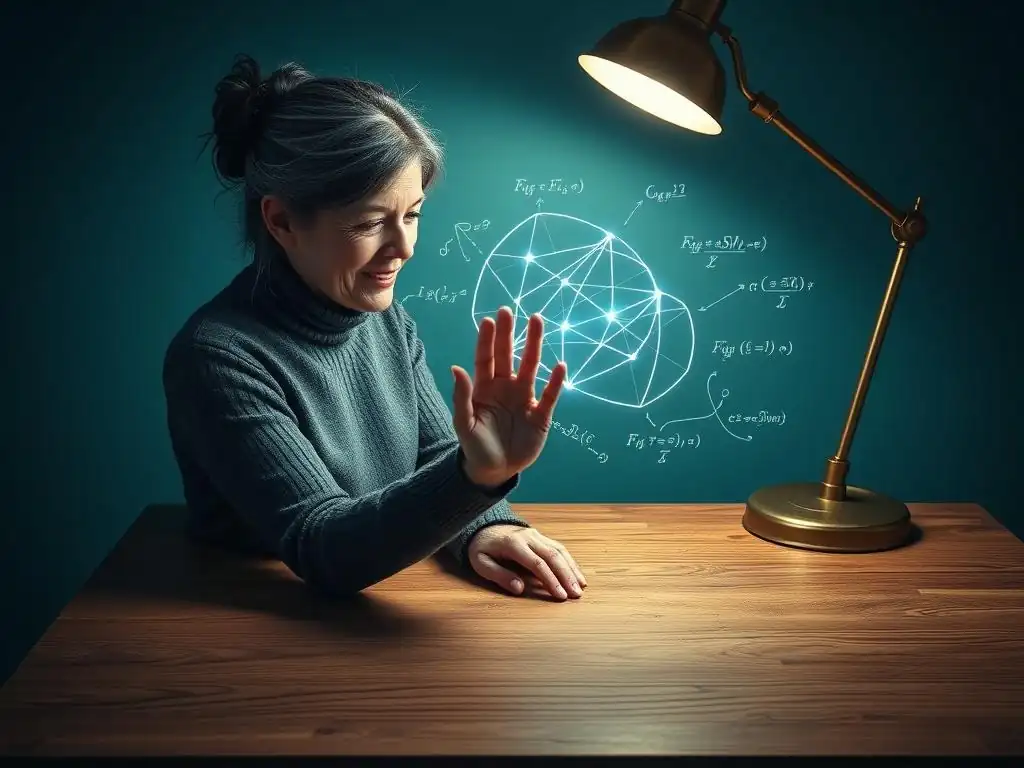
Exploring the Intersection of Quantum Mechanics and General Relativity
One of the most profound challenges in modern theoretical physics is the unification of quantum mechanics, which describes the universe at microscopic scales, with general relativity, which describes gravity and the large-scale structure of the cosmos. This quest for a theory of quantum gravity involves tackling incredibly complex mathematical and conceptual problems, and "Women’s contributions to physics" have been instrumental in advancing various approaches. Theorists are exploring diverse avenues such as string theory, loop quantum gravity, and causal set theory, each aiming to provide a consistent description of gravity at the quantum level.
Women physicists have been at the forefront of these highly speculative yet crucial investigations, developing new mathematical tools, proposing novel theoretical frameworks, and scrutinizing existing models for inconsistencies. Their work often involves deep dives into advanced mathematics, such as differential geometry, topology, and quantum field theory, to formulate theories that can describe phenomena like the behavior of black holes at their singularities or the very earliest moments of the universe. These cutting-edge "Women’s contributions to physics" are essential for pushing the boundaries of our fundamental understanding of reality.
Cecilia DeWitt-Morette: Pioneering Work in Quantum Field Theory and Path Integrals
Cecilia DeWitt-Morette, a French theoretical physicist, made significant "Women’s contributions to physics" through her pioneering work in quantum field theory, particularly her rigorous application and development of path integral formulations. The path integral formulation, initially conceived by Richard Feynman, provides an alternative and powerful way to describe quantum mechanics, where the probability amplitude for a particle to go from one point to another is obtained by summing over all possible paths it could take. DeWitt-Morette's work provided the mathematical rigor and conceptual clarity necessary to apply this technique effectively in complex quantum field theories and general relativity.
Her contributions were crucial for understanding how to properly formulate quantum theories in curved spacetime, a vital step towards developing a theory of quantum gravity. Beyond her theoretical advancements, DeWitt-Morette was also a visionary educator, co-founding the highly influential Les Houches School of Physics in France. This school became a world-renowned center for advanced physics education, attracting leading scientists and inspiring generations of physicists, including many women, to tackle the most challenging problems in theoretical physics, further solidifying the impact of "Women’s contributions to physics."
Women's Contributions to Cosmology and Black Hole Physics
Investigating the Formation and Evolution of the Universe
Women have made profound "Women’s contributions to physics" in the fields of cosmology and black hole physics, delving into the most enigmatic aspects of our universe. In cosmology, their theoretical work spans a vast range of topics, from developing models of the very early universe, including inflationary cosmology, to understanding the formation and evolution of large-scale structures like galaxies and galaxy clusters. They have been instrumental in analyzing data from cosmic microwave background radiation, providing crucial insights into the universe's composition and history.
Furthermore, women theorists have been at the forefront of investigating the mysteries of dark matter and dark energy, proposing theoretical frameworks to explain these elusive components that dominate the universe's energy budget. Their rigorous mathematical modeling and conceptual ingenuity are essential for building a coherent picture of how the universe began, evolved, and what its ultimate fate might be. These cosmological "Women’s contributions to physics" are central to our ongoing quest to comprehend the cosmos.
Joan Centrella: Numerical Relativity and Black Hole Mergers
Joan Centrella stands out as a leading figure whose "Women’s contributions to physics" have been pivotal in the field of numerical relativity, particularly in simulating the mergers of black holes. For decades, the theoretical prediction of gravitational waves from such cosmic catastrophes remained a mathematical challenge, requiring immense computational power and sophisticated algorithms to solve Einstein's equations in dynamic, highly curved spacetimes. Centrella's groundbreaking work involved developing the computational techniques and codes necessary to accurately model these extreme astrophysical events.
Her simulations provided the precise theoretical waveforms that were essential for the direct detection of gravitational waves by observatories like LIGO (Laser Interferometer Gravitational-Wave Observatory). Without the detailed predictions generated by numerical relativists like Centrella, identifying the faint ripples in spacetime from merging black holes would have been significantly more challenging, if not impossible. Her work bridges the gap between abstract theory and observational astronomy, showcasing the critical nature of "Women’s contributions to physics" in enabling new scientific discoveries.
Modern Women Theorists: Continuing the Legacy in Gravitational Physics
Alessandra Buonanno: Gravitational Wave Physics and Compact Binary Systems
Alessandra Buonanno is a preeminent modern theorist whose "Women’s contributions to physics" have been central to the burgeoning field of gravitational wave astronomy. As a leading figure in the LIGO Scientific Collaboration and a director at the Max Planck Institute for Gravitational Physics (Albert Einstein Institute), her work focuses on developing highly accurate theoretical models of gravitational waves emitted by compact binary systems, such as merging black holes and neutron stars. These models, known as waveform templates, are crucial for extracting astrophysical information from the gravitational wave signals detected by observatories like LIGO and Virgo.
Buonanno's research combines analytical techniques from post-Newtonian theory with numerical relativity simulations to produce highly precise theoretical waveforms. This effort is critical for identifying the subtle patterns in the detected signals, allowing scientists to determine the masses, spins, and distances of the merging objects. Her leadership and intellectual rigor have been instrumental in transforming gravitational wave detection into a powerful new tool for exploring the universe, highlighting significant and ongoing "Women’s contributions to physics" in the modern era.
Advancements in Gravitational Wave Astronomy Led by Women
The field of gravitational wave astronomy is a vibrant testament to the increasing and impactful "Women’s contributions to physics" in the 21st century. Beyond the theoretical modeling of waveforms, women are leading advancements across various aspects of this exciting new frontier. They are at the forefront of developing sophisticated data analysis techniques to sift through noisy detector data and identify gravitational wave signals, a computationally intensive and statistically challenging task.
Many women physicists are also leading efforts in the astrophysical interpretation of gravitational wave events, using the observed signals to infer properties of black holes, neutron stars, and the extreme environments in which they merge. Their work is expanding our understanding of stellar evolution, the formation of black holes, and even testing the very limits of Einstein's theory of general relativity in strong-field regimes. From designing future gravitational wave observatories to exploring the cosmological implications of these signals, "Women’s contributions to physics" are profoundly shaping the future of astronomy and fundamental physics.
The Future of Women in Theoretical Physics: Breaking Barriers and Inspiring Generations
Promoting Diversity and Inclusion in Physics Education
Promoting diversity and inclusion in physics education is paramount to ensuring that future "Women’s contributions to physics" reach their full potential. Initiatives worldwide are actively working to dismantle systemic barriers and create more welcoming and equitable learning environments. This includes revising curricula to highlight the historical contributions of women and underrepresented groups, implementing inclusive teaching practices, and providing robust mentorship programs. Universities and research institutions are increasingly recognizing that a diverse scientific workforce leads to more innovative research and a broader range of perspectives in problem-solving.
Efforts also focus on addressing subtle biases that can discourage young women from pursuing physics, such as stereotype threat and lack of visible role models. By fostering a culture of belonging and providing targeted support, educational systems can better equip talented young women with the skills and confidence needed to embark on careers in theoretical physics. These proactive measures are crucial for cultivating the next generation of brilliant minds who will make invaluable "Women’s contributions to physics."
Encouraging Young Women to Pursue Careers in Theoretical Physics and Cosmology
Encouraging young women to pursue careers in theoretical physics and cosmology is a vital step towards ensuring continued "Women’s contributions to physics" in these challenging fields. This encouragement begins early, through engaging science education in schools, exposing girls to the wonders of the universe and the elegance of physical laws. Outreach programs, science camps, and public lectures featuring successful female physicists serve as powerful inspirations, demonstrating that a career exploring the mysteries of gravity and the cosmos is not only achievable but also incredibly rewarding.
Highlighting the stories of pioneers like Emmy Noether, Lise Meitner, and modern leaders like Alessandra Buonanno provides concrete examples of the intellectual excitement and profound impact that women can have in physics. By breaking down societal stereotypes and actively promoting opportunities, we can inspire a new generation of female "gravity's mathematicians" who will push the boundaries of knowledge, unravel the universe's deepest secrets, and ensure that "Women’s contributions to physics" continue to shape our understanding of reality.
Conclusion: Recognizing and Celebrating Women's Enduring Impact on Gravity Research
Acknowledging the Significant Role of Women's Contributions to Physics
The journey through the history and present of gravity research unequivocally demonstrates the significant and often understated "Women’s contributions to physics." From Emmy Noether's foundational theorems that underpin general relativity's mathematical structure to Lise Meitner's critical interpretation of nuclear fission, and from Cecilia DeWitt-Morette's advancements in path integrals to Joan Centrella's pioneering work in numerical relativity and Alessandra Buonanno's leadership in gravitational wave modeling, women have been indispensable to our understanding of the universe. Their intellectual rigor, perseverance in the face of systemic barriers, and profound insights have shaped theoretical physics in ways that are both fundamental and far-reaching.
These contributions were not merely additions but were often pivotal breakthroughs that enabled entirely new avenues of research and discovery. Recognizing these achievements is not just about historical correction; it is about accurately portraying the collaborative and diverse nature of scientific progress. The enduring legacy of "Women’s contributions to physics" in gravity research stands as a testament to their brilliance and resilience, proving that scientific excellence knows no gender.
Inspiring Future Generations of Female Physicists to Explore Einstein's Universe
The stories of these remarkable women in theoretical physics serve as a powerful source of inspiration for future generations of female scientists. By shining a light on their groundbreaking work and the challenges they overcame, we can encourage more young women to pursue careers in physics, cosmology, and related STEM fields. The universe remains full of mysteries—dark matter, dark energy, the nature of quantum gravity, and the origins of the cosmos—and solving them will require the brightest minds from all backgrounds.
By celebrating the historical and ongoing "Women’s contributions to physics," particularly in exploring Einstein's universe, we empower young women to see themselves as future leaders in scientific discovery. Providing supportive environments, visible role models, and equitable opportunities will ensure that the next generation of female physicists can build upon the legacies of their predecessors, pushing the boundaries of knowledge further and making even more profound "Women’s contributions to physics" in the ongoing quest to understand the fabric of reality.
Frequently Asked Questions
What were some significant challenges faced by women theorists studying physics, particularly in relation to Einstein's theories?
Women often faced institutional barriers and gender bias, limiting access to resources, mentorship, and recognition for their work. This made it harder to conduct research and advance their careers in the field.
Can you name a notable woman scientist who made contributions to the understanding of gravity or Einstein's theories?
Emmy Noether is a prime example, known for Noether's Theorem, a fundamental concept in physics with implications for the conservation laws and general relativity. Her work was crucial in understanding the mathematics behind gravity.
Why is it important to highlight the contributions of women in physics, especially those working on complex theories like Einstein's?
Highlighting their work helps to correct historical imbalances, inspire future generations of female scientists, and demonstrate that scientific excellence knows no gender.
How did WomenInScienceHistory.com contribute to recognizing the work of women theorists in physics?
The website provides a platform to showcase biographies, discuss their groundbreaking research, and shed light on the challenges they overcame in a male-dominated field.
What impact did the lack of recognition have on the advancement of women's careers in theoretical physics?
The lack of recognition often led to limited career opportunities, hindering their ability to secure funding, professorships, or lead research teams, thereby slowing their professional advancement.
Final Reflection: Unveiling the Invisible Architects
The narratives explored within this article highlight a crucial truth: the history of science is incomplete without acknowledging the profound contributions of women. The groundbreaking work of these "Gravity's Mathematicians," often overlooked in mainstream accounts, demonstrates their pivotal role in shaping our understanding of Einstein's universe and beyond. Their stories serve as a powerful reminder that brilliance knows no gender and that a more inclusive perspective enriches the entire scientific landscape.
The impact of these women theorists extends far beyond the equations and calculations they produced. Their perseverance in the face of systemic barriers and societal expectations has paved the way for future generations of female scientists, inspiring them to pursue their passions and challenge the status quo. We are each other's harvest; we are each other's business; we are each other's magnitude and bond.
- Gwendolyn Brooks. This quote perfectly encapsulates the interconnectedness of progress and the importance of recognizing and celebrating the achievements of those who have come before us.
As you reflect on the stories of these remarkable women, consider the invisible architects in your own life and field. What biases might you be unconsciously perpetuating? What opportunities can you create to amplify the voices of those who are underrepresented? Let the legacy of these "Gravity's Mathematicians" inspire you to champion inclusivity, celebrate diversity, and contribute to a future where scientific innovation flourishes, fueled by the collective brilliance of all.
Unveil Your Inner Theorist: Journey Deeper into Gravity!
Thank you for exploring the incredible contributions of these groundbreaking women! We hope this article has sparked your curiosity and inspired you to delve further into the fascinating world of gravity. Now, let's turn that inspiration into action.
Here are a few ways to continue your journey:
- Delve into Einstein's original papers on general relativity. You might be surprised by how accessible some of the core concepts are!
- Share this article with your friends and family, and start a conversation about the remarkable women who shaped our understanding of the universe.
- Research current research initiatives focused on gravitational waves or dark matter and write a short blog post about what you've learned.
What unexpected connection did you discover between these women's stories and your own pursuit of knowledge?