
The Matilda Effect in Physics: Uncovering Overlooked Women (19001950)


Welcome to WomenInScienceHistory.com, where we illuminate the untold stories of remarkable women who shaped the scientific landscape. Prepare to be inspired as we delve into the world of physics and explore the Matilda Effect, a pervasive phenomenon that has historically obscured the contributions of female scientists. Uncover the fascinating biographies and groundbreaking achievements of these often-overlooked pioneers from 1900 to 1950, and discover why their names deserve to be etched in the annals of science. Intrigued? Read on to learn more!
- Introduction: Recognizing the Matilda Effect in Physics History
- Pioneering Women Physicists of the Early 20th Century: Examples of the Matilda Effect
- The Systemic Barriers Contributing to the Matilda Effect in Physics
- Combating the Matilda Effect: Promoting Recognition and Equity in Physics
- The Lasting Impact of the Matilda Effect on Physics and Beyond
- Conclusion: Ensuring Recognition for All Contributions to Physics History
-
Frequently Asked Questions
- What is the Matilda Effect, and how does it relate to physics history?
- Why is it important to study the Matilda Effect in physics history?
- What were some of the main challenges faced by women physicists between 1900 and 1950?
- Can you give an example of a woman physicist whose work was affected by the Matilda Effect during the period 1900-1950?
- How does WomenInScienceHistory.com aim to combat the Matilda Effect and promote the contributions of women in physics history?
- Final Reflection: Recognizing Unsung Contributions
- Empower the Unsung: Ignite Change Now!
Introduction: Recognizing the Matilda Effect in Physics History
What is the Matilda Effect and Why Does it Matter in Physics?
The Matilda Effect refers to the systematic denial or underrecognition of the contributions of women scientists to the benefit of their male colleagues. Coined by science historian Margaret W. Rossiter in 1993, this phenomenon highlights a pervasive bias that distorts the historical record, often leading to male scientists receiving disproportionate credit, awards, and even Nobel Prizes for work in which women played a crucial, often foundational, role. Its presence in physics history is particularly significant because it not only obscures groundbreaking discoveries but also perpetuates a skewed narrative about who is capable of scientific genius, impacting future generations.
The enduring impact of the Matilda Effect extends beyond historical accuracy; it actively discourages women from pursuing and persisting in scientific careers by diminishing their role models and reinforcing the perception of science as a male-dominated domain. When pioneering women in physics are erased or marginalized from the narrative, it creates a false impression that their numbers were negligible, or their work less significant.
This misrepresentation is crucial to address, as it affects the confidence and aspirations of young women considering a path in STEM fields, making the recognition of the Matilda Effect in physics history paramount for fostering a more inclusive and equitable scientific future.
The Underrepresentation of Women Physicists: Setting the Stage (1900-1950)
The early 20th century presented a formidable landscape for women aspiring to careers in physics. Despite significant advancements in women's education, societal norms and institutional biases severely limited their access to higher education, research positions, and professional recognition. Universities often had quotas for female students or outright denied them admission to certain programs, particularly in fields like physics which were deemed "unsuitable" for women. Those who managed to secure an education frequently found themselves relegated to unpaid or low-paying assistant roles, often without official titles or the prospect of promotion.
During this period, women physicists faced a double bind: they had to overcome significant barriers to enter the scientific community, and then contend with a pervasive culture of skepticism and discrimination regarding their intellectual capabilities. While some women, like Marie Curie, achieved global recognition, their success was often an exception rather than the rule, and even they faced subtle forms of prejudice.
The institutional structures of physics departments and research laboratories were largely male-dominated, fostering an environment where women's contributions were easily overlooked, appropriated, or attributed to their male mentors or collaborators, setting the stage for the widespread manifestation of the Matilda Effect.
Pioneering Women Physicists of the Early 20th Century: Examples of the Matilda Effect
Lise Meitner: The Overlooked Contributions to Nuclear Fission
Lise Meitner, an Austrian-Swedish physicist, stands as one of the most poignant examples of the Matilda Effect in physics history. Born in 1878, she overcame immense obstacles, including parental disapproval and societal expectations, to pursue a career in science.
After obtaining her doctorate in physics from the University of Vienna in 1906, she moved to Berlin, where she began a long and fruitful collaboration with chemist Otto Hahn. Despite being a highly respected and intelligent scientist, Meitner often faced discrimination, initially working without pay or official status in Hahn's laboratory, which was located in a converted carpenter's workshop in the basement of the Kaiser Wilhelm Institute for Chemistry.
Meitner's career was marked by significant contributions to radioactivity and nuclear physics. Her work with Hahn spanned over 30 years, leading to the discovery of several new isotopes and an understanding of radioactive recoil. However, it was her pivotal role in the discovery and explanation of nuclear fission that cemented her place in scientific history, and simultaneously, highlighted the profound injustice of the Matilda Effect.
Meitner's Collaboration with Otto Hahn and the Nobel Prize Controversy
The collaboration between Lise Meitner and Otto Hahn was a cornerstone of nuclear research for decades. Their most famous work began in the late 1930s, investigating the products formed when uranium was bombarded with neutrons. In 1938, as the political climate in Nazi Germany intensified, Meitner, who was Jewish, was forced to flee to Sweden, maintaining contact with Hahn only through correspondence. It was through their continued exchange of letters that Hahn described his puzzling experimental results: barium, a much lighter element, was unexpectedly found among the products after bombarding uranium.
Meitner, in collaboration with her nephew Otto Frisch, provided the crucial theoretical explanation for Hahn's observations in January 1939. They proposed that the uranium nucleus had split into two smaller nuclei, a process they termed "nuclear fission." Their groundbreaking paper, published in Nature, not only explained the phenomenon but also calculated the enormous amount of energy released, based on Einstein's E=mc² equation. This theoretical insight was fundamental; without it, Hahn's experimental findings would have remained inexplicable.
The Matilda Effect Manifested: Meitner's Recognition Delayed
Despite her indispensable intellectual contribution to the discovery of nuclear fission, Lise Meitner was famously excluded from the 1944 Nobel Prize in Chemistry, which was awarded solely to Otto Hahn "for his discovery of the fission of heavy nuclei." This decision is widely regarded as one of the most egregious examples of the Matilda Effect in physics history. The Nobel Committee, influenced by political circumstances and possibly gender bias, failed to acknowledge Meitner's critical role in interpreting the experimental results and providing the theoretical framework that made the discovery comprehensible.
Meitner never harbored resentment towards Hahn personally, but she was deeply hurt by the scientific community's failure to recognize her contribution. While she received numerous other accolades later in life, including the Enrico Fermi Award in 1966 (shared with Hahn and Strassmann), the absence of the Nobel Prize remains a stark reminder of how the Matilda Effect can deny credit to pioneering women in physics. Her story continues to be a powerful narrative in the ongoing effort to ensure a more accurate and inclusive understanding of physics history.
Emmy Noether: Abstract Algebra and its Impact on Theoretical Physics
Emmy Noether, a German mathematician born in 1882, is renowned for her revolutionary contributions to abstract algebra and theoretical physics. Despite her exceptional intellect and groundbreaking work, her career was a continuous struggle against the entrenched gender biases of early 20th-century academia. She was initially denied a professorship at the University of Göttingen, one of the world's leading mathematical centers, simply because of her gender, reflecting a stark example of the Matilda Effect in institutional settings.
Noether's profound insights transcended pure mathematics, leaving an indelible mark on physics. Her work laid fundamental groundwork for modern physics, particularly in the realm of symmetry and conservation laws. Albert Einstein, a contemporary, famously described her as "the most significant creative mathematical genius thus far produced since the higher education of women began," a testament to her unparalleled intellectual prowess and the depth of her contributions.
Noether's Groundbreaking Work in Invariant Theory and Physics
Noether's most celebrated contribution to physics is Noether's Theorem, published in 1918. This theorem establishes a profound and elegant connection between symmetries in nature and conservation laws. Specifically, it states that for every continuous symmetry of the laws of physics, there is a corresponding conserved quantity. For instance, the time-invariance of physical laws implies the conservation of energy, spatial translation invariance implies the conservation of linear momentum, and rotational invariance implies the conservation of angular momentum.
This theorem proved to be a cornerstone for both general relativity and quantum mechanics, providing a unifying principle that underpins much of modern theoretical physics. It offered a deep insight into why fundamental quantities like energy and momentum are conserved, transforming the understanding of physical laws. Noether's work provided the mathematical rigor that underpinned many of the emerging theories of the early 20th century, making her an indispensable figure in the intellectual landscape of physics history, even if her name was not always prominently associated with the physical applications of her theorem.
Facing Discrimination and the Matilda Effect: Noether's Struggle for Recognition
Despite her extraordinary talent and the profound impact of her work, Emmy Noether faced persistent discrimination and the full force of the Matilda Effect throughout her academic career. At the University of Göttingen, where she was invited by renowned mathematicians David Hilbert and Felix Klein, she was initially denied the right to habilitate (the qualification required to teach as a university lecturer) solely because she was a woman. Hilbert famously argued, "I do not see that the sex of the candidate is an argument against her admission as a Privatdozent. After all, we are a university, not a bathhouse."
For years, she taught courses under Hilbert's name, receiving no official salary or title. It was not until 1919, after significant advocacy from her male colleagues, that she finally obtained her habilitation, though she only received a meager salary years later. Her struggles for proper recognition and a permanent, well-compensated position illustrate the systemic barriers women in physics faced.
The rise of Nazism further compounded her difficulties, leading to her dismissal from Göttingen in 1933 due to her Jewish heritage, forcing her to emigrate to the United States, where she continued her work at Bryn Mawr College until her untimely death in 1935. Her story remains a powerful example of how the Matilda Effect limited the careers and recognition of pioneering women in physics.
Marietta Blau: Photographic Emulsions and Particle Physics Discoveries
Marietta Blau, an Austrian physicist born in 1894, made pioneering contributions to the field of nuclear physics, particularly through her innovative development of photographic emulsions for detecting elementary particles. Her work, often conducted under challenging conditions, laid crucial groundwork for future particle physics research. Despite her significant breakthroughs, her story is another compelling example of the Matilda Effect, as her innovations were often overshadowed or attributed to others.
Blau's early career involved working at the Radium Institute in Vienna, where she dedicated herself to understanding the interaction of radiation with matter. She developed a profound expertise in the photographic method, a technique that would become central to her most important discoveries. Her persistent efforts in refining these techniques ultimately allowed for unprecedented insights into subatomic phenomena.
Blau's Innovative Techniques in Radiation Research
Marietta Blau's most significant contribution was her development of nuclear photographic emulsions as a precise and effective method for detecting and measuring charged particles. By exposing photographic plates to radiation, particles would leave tracks that could be analyzed under a microscope, revealing their energy and momentum. This technique was revolutionary because it offered a direct visual record of subatomic interactions, providing a powerful tool for nuclear and cosmic ray research.
In 1937, in collaboration with her student Herta Wambacher, Blau made a groundbreaking discovery using these emulsions. They exposed photographic plates to cosmic rays at high altitudes (on mountain peaks) and observed "disintegration stars"—tracks emanating from a single point, indicating the simultaneous emission of multiple particles from a nuclear reaction. This was the first experimental evidence of nuclear reactions caused by cosmic rays, a discovery that opened up new avenues in particle physics. Their work demonstrated the potential of cosmic rays as a natural laboratory for studying high-energy physics, a field that would burgeon in the post-war era.
The Matilda Effect and Credit Allocation: Blau's Later Life
Despite her profound contributions, Marietta Blau’s recognition was often delayed and incomplete, a clear manifestation of the Matilda Effect in physics history. Her discovery of "disintegration stars" was highly significant, yet the Nobel Prize in Physics in 1950 was awarded to Cecil Powell for his development of the photographic method for studying nuclear processes and his discovery of the pion, building upon techniques very similar to those pioneered by Blau. While Powell's work was undeniably important, the extent to which Blau's foundational contributions were overlooked in the Nobel acknowledgment is a point of historical contention.
Blau’s career was also severely impacted by the political turmoil of the late 1930s. As a Jewish woman, she was forced to flee Austria in 1938, disrupting her research and leading to a period of instability. She eventually moved to the United States in 1948, working at Columbia University and later at the University of Miami, but she never received the institutional support or recognition commensurate with her earlier groundbreaking discoveries. Her struggles to establish a stable research environment and the subsequent attribution of credit to others highlight the systemic disadvantages faced by pioneering women in physics.
Hertha Sponer: Quantum Mechanics and Molecular Spectroscopy
Hertha Sponer, a distinguished German physicist born in 1895, made significant contributions to the fields of quantum mechanics and molecular spectroscopy. She was one of the early female pioneers in physics who navigated the complex academic landscape of the early 20th century, often facing institutional barriers that exemplified the Matilda Effect. Her work provided crucial experimental data that helped validate the nascent theories of quantum mechanics and deepened the understanding of molecular structure.
Sponer earned her Ph.D. in physics from the University of Göttingen in 1921, a period when women were just beginning to gain a foothold in scientific research. She worked alongside some of the most influential physicists of her time, including James Franck and Max Born, contributing to the vibrant intellectual environment that defined Göttingen as a hub of quantum physics research.
Sponer's Contributions to Understanding Molecular Spectra
Hertha Sponer's primary research focus was on molecular spectra, the patterns of light absorbed or emitted by molecules. By analyzing these spectra, physicists could deduce information about the energy levels, vibrational modes, and rotational states of molecules, providing insights into their structure and bonding. Sponer was particularly adept at conducting precise spectroscopic experiments and interpreting the resulting data within the framework of quantum mechanics.
She made significant contributions to the understanding of diatomic molecules, including pioneering work on the absorption bands of various gases. Her research helped to establish the empirical basis for quantum mechanical models of molecular structure, providing experimental verification for theoretical predictions. Sponer’s work often involved meticulous measurements and careful analysis, which were essential for advancing the understanding of how atoms combine to form molecules and how these molecules interact with light. Her precise data were invaluable for confirming and refining the theoretical underpinnings of quantum chemistry and physics during a period of rapid development.
Overcoming Institutional Barriers and the Matilda Effect in Academia
Despite her significant scientific contributions and her role in the burgeoning field of quantum mechanics, Hertha Sponer’s career trajectory was markedly influenced by the pervasive institutional barriers faced by women in academia, a clear manifestation of the Matilda Effect. While she held a position as an associate professor at the University of Göttingen, the rise of the Nazi regime forced her to leave Germany in 1934, as her fiancé (and later husband), James Franck, was Jewish. This forced emigration disrupted her research and career momentum.
She subsequently moved to the United States, where she joined the faculty at Duke University in 1936 as a professor of physics, becoming one of the first female professors in the sciences at the institution. While this was a significant achievement, she often faced challenges in securing the same level of resources, recognition, and leadership opportunities as her male counterparts throughout her career.
Her story underscores how even highly accomplished women in physics were often compelled to navigate systemic disadvantages and how their contributions, though fundamental, could be less prominently acknowledged in the broader narrative of physics history due to the Matilda Effect.
The Systemic Barriers Contributing to the Matilda Effect in Physics
Gender Bias in Scientific Institutions and Academia
The Matilda Effect in physics history was not merely a series of isolated incidents but a systemic problem rooted in pervasive gender bias within scientific institutions and academia during the early to mid-20th century. Conscious and unconscious biases permeated every level of the scientific hierarchy, from admissions and hiring committees to promotion panels and award nominations. Women were often perceived as less intellectually capable or less committed to science than men, leading to their exclusion from prestigious positions, research collaborations, and informal networks that were crucial for career advancement.
This bias manifested in various forms: women were frequently relegated to lower-status positions, such as research assistants or instructors, even when performing work equivalent to that of male professors. Their names might be omitted from publications, or their contributions downplayed in favor of male colleagues, even if they were the primary innovators. Furthermore, the "old boys' network" was a dominant force, where informal connections and mentorship, largely inaccessible to women, played a significant role in career progression and the attribution of credit, solidifying the Matilda Effect within the structure of physics academia.
Limited Access to Resources and Opportunities for Women in Physics
Beyond overt discrimination, women in physics during the early 20th century faced significant limitations in accessing crucial resources and opportunities, which further contributed to the Matilda Effect. Access to well-equipped laboratories, specialized equipment, research funding, and even office space was often restricted or prioritized for male scientists. Without these essential tools, women's ability to conduct independent research, publish extensively, and build a strong scientific reputation was severely hampered.
Moreover, opportunities for formal mentorship, participation in major research projects, and attendance at international conferences—vital for networking and gaining visibility—were often scarce for women. They might be excluded from informal discussions, seminars, or social gatherings where critical scientific ideas were exchanged and collaborations forged. This restricted access meant that even when women made significant discoveries, they lacked the platforms and institutional backing to ensure their work received widespread recognition, making it easier for their contributions to be overlooked or absorbed into the accomplishments of their better-resourced male counterparts, thereby reinforcing the Matilda Effect.
The "Matthew Effect" Amplifying Male Recognition: A Counterpoint
The Matilda Effect is often exacerbated by what sociologist Robert K. Merton termed the "Matthew Effect," a phenomenon where "to those who have, more shall be given." In the context of science, this means that established, already recognized scientists (who, historically, were predominantly men) tend to receive disproportionately more credit, resources, and recognition for their work, even when it is collaborative. This creates a self-reinforcing cycle where existing eminence leads to further opportunities and accolades, while those who are less known, often women, struggle to gain visibility.
When the Matthew Effect interacts with the Matilda Effect, the consequences for women in physics are particularly severe. A male scientist with an established reputation might receive sole credit for a discovery made in collaboration with a lesser-known female colleague, simply because his name carries more weight. This dynamic not only deprives the female scientist of deserved recognition but also further entrenches the perception of male dominance in the field, making it even harder for future generations of women to break through and receive equitable attribution for their contributions to physics history.
Combating the Matilda Effect: Promoting Recognition and Equity in Physics
Recovering and Amplifying the Stories of Overlooked Women Physicists
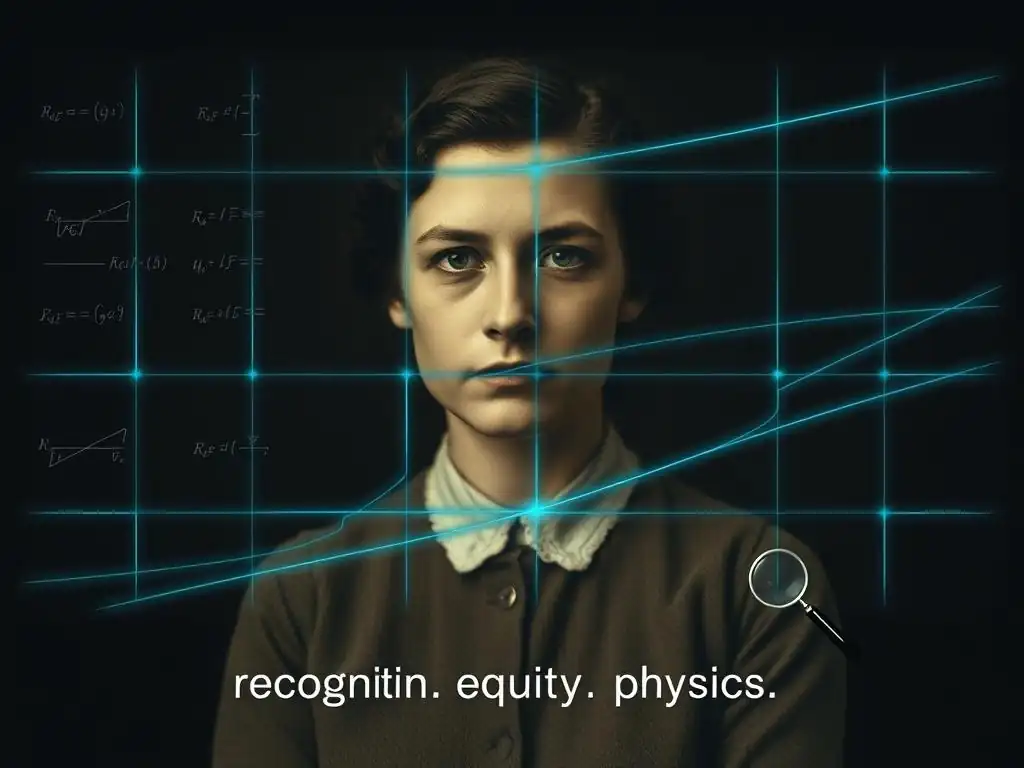
A crucial step in combating the Matilda Effect is the active and deliberate recovery and amplification of the stories of overlooked women physicists. This involves more than just acknowledging their existence; it requires detailed historical research, delving into archives, personal letters, and obscure scientific papers to unearth the full scope of their contributions. Websites like WomenInScienceHistory.com play a vital role in this endeavor, providing platforms to share meticulously researched biographies and analyses of these women's work, ensuring their rightful place in physics history.
By bringing these narratives to light, we not only correct historical inaccuracies but also provide powerful role models for current and future generations. Understanding the challenges these women faced and the ingenuity with which they overcame them inspires resilience and demonstrates that scientific excellence is not confined by gender. This concerted effort to re-examine and re-narrate physics history is essential for dismantling the lingering effects of the Matilda Effect and fostering a more complete and representative understanding of scientific progress.
Initiatives Promoting Gender Equality and Inclusion in STEM Fields
Beyond historical recovery, proactive initiatives are essential to promote gender equality and inclusion in contemporary STEM fields, thereby preventing future manifestations of the Matilda Effect. Universities, research institutions, and governmental bodies are increasingly implementing programs designed to support women in physics from early education through senior leadership positions. These initiatives include scholarships specifically for women in STEM, mentorship programs that connect aspiring female physicists with established professionals, and networking opportunities to foster a sense of community and collaboration.
Furthermore, policies aimed at creating more equitable workplaces, such as flexible working arrangements, parental leave, and anti-harassment policies, help retain women in physics careers. Organizations like the American Physical Society and the European Physical Society have established committees and grants dedicated to advancing women in physics, aiming to dismantle systemic barriers and foster an environment where all talent can flourish, ensuring that contributions are recognized based on merit, not gender.
Challenging Implicit Bias and Promoting Fair Credit Attribution
A significant component of combating the Matilda Effect lies in challenging implicit bias and actively promoting fair credit attribution in scientific collaborations and recognition processes. Implicit biases—unconscious associations and stereotypes—can subtly influence decisions in hiring, promotion, peer review, and award nominations, leading to the undervaluing of women's contributions. Workshops and training programs designed to raise awareness of these biases are becoming more common in academic and research settings.
Moreover, establishing transparent and objective criteria for authorship, awards, and grants is crucial. Implementing blind review processes where possible, ensuring diverse representation on award committees and editorial boards, and fostering a culture of explicit acknowledgment for all contributors in scientific publications are vital steps. By consciously working to mitigate bias and ensure that credit is given where it is due, the scientific community can move towards a more equitable system where the achievements of all physicists, regardless of gender, are fully recognized and celebrated, thereby actively countering the Matilda Effect.
The Lasting Impact of the Matilda Effect on Physics and Beyond
The Importance of Diverse Perspectives in Scientific Advancement
The Matilda Effect's historical suppression of women's contributions in physics has had a profound and detrimental impact on scientific advancement itself. By overlooking or marginalizing the work of women, the scientific community inadvertently limited the diversity of perspectives, approaches, and intellectual frameworks brought to bear on complex problems. Science thrives on a multitude of viewpoints, as different backgrounds and experiences can lead to novel questions, innovative methodologies, and unexpected breakthroughs.
When a significant portion of the population—women—is systematically excluded or undervalued, physics loses out on potential insights and solutions. Had figures like Lise Meitner, Emmy Noether, or Marietta Blau received their full due and been empowered with the same resources and recognition as their male counterparts, the pace and direction of certain discoveries might have been different, possibly even accelerated. Recognizing the Matilda Effect highlights the critical importance of fostering diverse perspectives in all scientific fields, demonstrating that inclusivity is not merely a matter of social justice but a fundamental requirement for optimal scientific progress.
Inspiring Future Generations of Women in Physics
One of the most significant lasting impacts of acknowledging and rectifying the Matilda Effect is its potential to inspire future generations of women in physics. For too long, the historical narrative of science has been dominated by male figures, creating a perception that physics is a field primarily for men. This lack of visible female role models can discourage young girls and women from pursuing STEM careers, as they may struggle to envision themselves in a field where they see few who resemble them.
By actively recovering and amplifying the stories of pioneering women in physics—highlighting their brilliance, resilience, and groundbreaking achievements despite immense challenges—we provide tangible proof that women have always been, and continue to be, integral to scientific discovery. These narratives serve as powerful beacons, demonstrating that a career in physics is not only possible but that women can, and do, excel and make world-changing contributions. Inspiring this next generation is crucial for ensuring a vibrant, diverse, and innovative future for physics.
Ongoing Vigilance Against Bias in Scientific Recognition
The Matilda Effect is not merely a historical relic; it represents a persistent challenge that requires ongoing vigilance against bias in scientific recognition even today. While overt discrimination may be less common than in the early 20th century, subtle forms of bias, such as unconscious prejudices in peer review, hiring, and award nominations, continue to affect how credit is attributed and who receives recognition. Studies still show disparities in the number of prestigious awards received by men and women, despite comparable publication records in some fields.
Therefore, the lessons learned from examining the Matilda Effect in physics history are highly relevant for contemporary science. They underscore the need for continuous self-assessment within scientific institutions, the implementation of robust diversity and inclusion policies, and a commitment to transparent and equitable processes for attributing credit. Persistent effort is required to ensure that all contributions, regardless of gender, are fairly acknowledged, safeguarding against the recurrence of the Matilda Effect and fostering a truly meritocratic scientific landscape.
Conclusion: Ensuring Recognition for All Contributions to Physics History
A Call to Action: Continuing the Work of Uncovering Overlooked Contributions of Women in Physics
The examination of the Matilda Effect in physics, particularly during the pivotal period of 1900-1950, reveals a profound and often painful truth: the history of science is incomplete without the diligent work of uncovering and celebrating the overlooked contributions of women. Figures like Lise Meitner, Emmy Noether, Marietta Blau, and Hertha Sponer stand as testament to the exceptional intellectual prowess and unwavering dedication of women who pushed the boundaries of physics, often in the face of immense systemic barriers and personal hardship.
Their stories, and countless others, were systematically diminished, appropriated, or simply ignored, distorting our collective understanding of scientific progress.
The ongoing work of recognizing and amplifying these narratives is not merely an academic exercise; it is a crucial call to action. It demands a commitment to historical accuracy, a proactive stance against lingering biases in contemporary science, and an unwavering dedication to fostering an inclusive environment where all talent can thrive.
By continuing to research, document, and widely disseminate the achievements of these pioneering women, we not only correct historical injustices but also inspire future generations, ensuring that the full, rich tapestry of physics history is finally woven with threads of every color, acknowledging every brilliant mind that shaped our understanding of the universe.
Frequently Asked Questions
What is the Matilda Effect, and how does it relate to physics history?
The Matilda Effect is the systematic suppression and attribution of women scientists' work to their male colleagues. In physics history, it means that the contributions of many women physicists between 1900-1950 were often unrecognized or credited to men.
Why is it important to study the Matilda Effect in physics history?
Studying the Matilda Effect is crucial for understanding the complete picture of scientific progress. It helps us correct historical inaccuracies and acknowledge the true contributors to physics, inspiring future generations of women in science.
What were some of the main challenges faced by women physicists between 1900 and 1950?
Women faced significant gender bias, limited access to educational and research opportunities, and societal expectations that discouraged them from pursuing scientific careers. These challenges contributed to the Matilda Effect.
Can you give an example of a woman physicist whose work was affected by the Matilda Effect during the period 1900-1950?
While WomenInScienceHistory.com provides many examples, Lise Meitner's role in the discovery of nuclear fission is a prominent example. Her contributions were often overshadowed by her male colleague, Otto Hahn, who received the Nobel Prize.
How does WomenInScienceHistory.com aim to combat the Matilda Effect and promote the contributions of women in physics history?
WomenInScienceHistory.com actively researches and publishes biographies of overlooked female physicists, highlights their groundbreaking discoveries, and raises awareness about the systemic biases that hindered their recognition.
Final Reflection: Recognizing Unsung Contributions
The revelations within this exploration of the Matilda Effect in physics during 1900-1950 underscore a crucial truth: history is not a static narrative, but a constantly evolving understanding shaped by the voices we choose to amplify. The stories of these overlooked women physicists, once relegated to the footnotes, now demand our attention, challenging the traditional, often male-dominated, portrayal of scientific progress. Their contributions, though historically minimized, resonate powerfully today, reminding us of the systemic biases that can obscure brilliance and hinder innovation.
This journey through the past has profoundly impacted my own perspective, highlighting the urgent need to actively seek out and celebrate the contributions of marginalized voices in all fields. It's not simply about correcting the historical record, but about fostering a more equitable and inclusive future where talent is recognized and nurtured regardless of gender or background. As Marie Curie, a woman who herself faced significant obstacles, so eloquently stated: One never notices what has been done; one can only see what remains to be done.
Let us, therefore, commit to a conscious effort to challenge ingrained biases and actively seek out the untold stories that enrich our understanding of the world. Reflect on the ways in which you can contribute to a more inclusive and equitable environment, both within your own sphere of influence and beyond. The legacy of these pioneering women physicists calls us to action: Let us ensure that future generations inherit a history that reflects the full spectrum of human ingenuity and achievement.
Empower the Unsung: Ignite Change Now!
Thank you for exploring the stories of these remarkable women in physics and their contributions. Now that you've learned about the Matilda Effect, it's time to champion their legacies and inspire a more equitable future for science.
- Amplify their stories: Actively share this article and other resources from WomenInScienceHistory.com to increase awareness of the Matilda Effect and the contributions of overlooked women in science.
- Explore our archive: Delve deeper into the biographies of other pioneering women featured on WomenInScienceHistory.com.
- Start a conversation: Discuss the Matilda Effect with your colleagues, students, or friends.
What small step will you take today to ensure that future generations recognize the brilliance of all scientists, regardless of gender?