
Bridging the Past: Female Engineers in Ancient & Medieval Infrastructure Projects


Welcome to WomenInScienceHistory.com!
Delve into the untold stories of women who shaped the scientific world. This month, we're exploring a fascinating, often overlooked area: the vital role of female engineers in ancient infrastructure projects. But how significant was their contribution, and why has it remained largely hidden from the history books? Prepare to uncover the groundbreaking realities behind these incredible feats of engineering.
- Introduction: Unveiling the Untold Stories of Women in Ancient Engineering
-
Ancient Civilizations: Evidence of Female Ingenuity in Infrastructure
- Women and Water Management: Ancient Irrigation Systems and Aqueducts (Minoan Civilization, Nabataean Water Systems)
- Road Construction and Urban Planning: Female Influence in Ancient Cities (Roman Road Networks, Infrastructure in Mohenjo-daro)
- Examples of Ancient Female Engineers and Architects: (Hypatia of Alexandria - Contributions to Mechanical Devices, Enheduanna - Overseeing Temple Construction)
- The Societal Context: How Women's Contributions Were Documented (or Not)
-
Medieval Engineering: Women's Role in Building and Innovation
- Female Involvement in Medieval Construction: Bridges, Cathedrals, and Castles (Construction of Abbeys in Medieval England, Textile Production Supporting Construction)
- Women's Contributions to Medieval Mining and Metallurgy: Infrastructure Support (Water Management in Mines, Smelting Techniques)
- Female Inventors and Innovators in Medieval Infrastructure: (Hildegard of Bingen - Contributions to Practical Mechanics and Water Systems)
- Challenges Faced by Women in Medieval Engineering Professions
- Case Studies: Examining Specific Ancient & Medieval Infrastructure Projects
- Tools and Techniques: Engineering Skills Passed Down Through Generations (Female Perspective)
- Reframing History: Acknowledging Female Engineers in Ancient Infrastructure
- Conclusion: Celebrating Female Ingenuity in Ancient and Medieval Infrastructure
-
Frequently Asked Questions
- How does WomenInScienceHistory.com contribute to the visibility of female engineers in ancient infrastructure?
- Were there actually female engineers involved in ancient infrastructure projects, given the historical context?
- What kind of challenges did female engineers likely face in ancient and medieval times?
- Can you provide an example of a specific ancient infrastructure project where female engineers might have been involved?
- Why is it important to highlight the contributions of women to ancient and medieval infrastructure projects, even when definitive proof is scarce?
- Final Reflection: Echoes of Innovation
- Unearth Hidden Legacies: Empower the Future!
Introduction: Unveiling the Untold Stories of Women in Ancient Engineering
Rediscovering Female Contributions to Early Infrastructure Development
For centuries, the narratives of ancient and medieval engineering have predominantly focused on the achievements of male architects, builders, and innovators. Grand structures like the Roman aqueducts, Egyptian pyramids, and Gothic cathedrals are often attributed solely to male genius, perpetuating a historical oversight that diminishes the roles of countless women. However, by re-examining archaeological findings, social structures, and the practical demands of daily life in past civilizations, it becomes increasingly clear that women's contributions to early infrastructure were far more significant than traditional histories suggest. This re-evaluation is crucial for a comprehensive understanding of human ingenuity.
This article seeks to illuminate the often-unseen hands and minds of female engineers ancient infrastructure projects. While direct documentation of women with formal engineering titles is rare, their practical knowledge, organizational skills, and labor were indispensable. From managing water systems in ancient households to contributing to the logistics of medieval construction, women played vital roles that, when acknowledged, paint a more accurate and inspiring picture of technological progress.
Why Women's Roles in Ancient and Medieval Engineering Were Often Overlooked
The historical invisibility of women in engineering stems from a confluence of societal factors prevalent in ancient and medieval times. Patriarchal structures often limited women's access to formal education, public recognition, and professional guilds, which were the primary avenues for documenting and celebrating engineering achievements. Women's work, even if technically demanding and critical for communal survival, was frequently relegated to the domestic sphere or considered informal labor, thus escaping official records.
Furthermore, historical accounts were predominantly written by men, often reflecting their own biases and societal norms. This meant that the contributions of female engineers ancient infrastructure projects, whether supervisory, practical, or supportive, were either intentionally omitted or simply not deemed worthy of recording. The lack of formalized roles and the emphasis on male-dominated public works have created a historical narrative that has, until recently, largely excluded the profound impact of women on the built environment of the past.
Ancient Civilizations: Evidence of Female Ingenuity in Infrastructure
Women and Water Management: Ancient Irrigation Systems and Aqueducts (Minoan Civilization, Nabataean Water Systems)
In ancient societies, water management was not merely an engineering task but a fundamental aspect of daily survival and communal health. In the Minoan civilization (c. 2700-1450 BCE), sophisticated plumbing and drainage systems were integral to palaces like Knossos, featuring terracotta pipes, flushing toilets, and elaborate storm drains. While no specific female engineers ancient infrastructure projects are named, women were central to household management and hygiene. Their intimate, daily interaction with water sources, waste disposal, and domestic water usage would have provided invaluable practical knowledge that likely informed the design and maintenance of these advanced systems.
Similarly, the Nabataean civilization (c. 4th century BCE - 1st century CE), renowned for its impressive water harvesting and storage systems in arid regions like Petra, relied on intricate networks of cisterns, dams, and channels. Women, as primary water gatherers and managers for their families, possessed a deep understanding of water conservation, flow dynamics, and storage needs. This hands-on experience and practical knowledge suggest an informal, yet critical, contribution to the efficiency and functionality of these complex water management female engineers ancient infrastructure projects.
Road Construction and Urban Planning: Female Influence in Ancient Cities (Roman Road Networks, Infrastructure in Mohenjo-daro)
The vast Roman road networks, such as the Via Appia (begun 312 BCE), were monumental feats of engineering, requiring immense logistical coordination beyond just physical construction. While male engineers designed and supervised these projects, the sustained effort of thousands of laborers necessitated extensive support systems. Women were often involved in providing food, clothing, and other essential supplies for the legions and construction crews. Their organizational skills in managing supply chains, preparing provisions, and maintaining morale were crucial indirect contributions to the execution of these massive female engineers ancient infrastructure projects.
In cities like Mohenjo-daro (Indus Valley Civilization, c. 2500-1900 BCE), urban planning reached an astonishing level of sophistication, characterized by a grid layout, advanced drainage systems, and public baths. The high degree of standardization and communal organization points to a society where all members understood and adhered to civic design principles.
As active participants in daily urban life, women would have interacted directly with the infrastructure, experiencing its functionality and limitations. Their practical understanding of household needs, waste management, and public spaces could have subtly, yet significantly, influenced the ongoing maintenance and iterative improvements of these female engineers ancient infrastructure projects.
Examples of Ancient Female Engineers and Architects: (Hypatia of Alexandria - Contributions to Mechanical Devices, Enheduanna - Overseeing Temple Construction)
While formal titles are rare, some ancient women demonstrate clear engineering acumen. Hypatia of Alexandria (c. 350/370–415 CE), a renowned philosopher, mathematician, and astronomer, is also credited with inventing or improving several mechanical devices, including the astrolabe for astronomical calculations and a hydroscope for measuring liquid density. Her work showcases a profound understanding of applied mechanics and practical problem-solving, making her an intellectual pioneer whose contributions align with the spirit of female engineers ancient infrastructure projects, albeit on a smaller scale of instrumentation.
Another compelling figure is Enheduanna (c. 2285–2250 BCE), the High Priestess of Ur in Mesopotamia. While primarily a religious and literary figure, her position as high priestess entailed significant administrative power and oversight of vast temple complexes, which were major economic and logistical centers. This role would have involved managing large-scale construction, maintenance, and resource allocation for religious and administrative buildings. Her authority and organizational prowess suggest a direct, if not hands-on, supervisory role in the planning and execution of significant architectural and infrastructural endeavors, positioning her as a key figure in early female engineers ancient infrastructure projects.
The Societal Context: How Women's Contributions Were Documented (or Not)
The absence of widespread documentation for female engineers ancient infrastructure projects is largely a reflection of the patriarchal structures prevalent in ancient societies. Formal education, public recognition, and the creation of lasting records (such as inscriptions on buildings or official architectural plans) were almost exclusively reserved for men, particularly those in positions of power or authority. This systemic bias meant that even when women contributed significantly, their names and specific roles were rarely recorded in official histories.
Moreover, many of women's contributions were informal, communal, or integrated into domestic responsibilities, which were less likely to be formally chronicled than the grand projects commissioned by male rulers or religious institutions. The labor of countless women in supporting roles—from preparing materials to managing logistics—was often seen as an extension of their household duties rather than a professional contribution, further obscuring their vital part in ancient female engineers ancient infrastructure projects.
Medieval Engineering: Women's Role in Building and Innovation
Female Involvement in Medieval Construction: Bridges, Cathedrals, and Castles (Construction of Abbeys in Medieval England, Textile Production Supporting Construction)
Medieval construction projects, particularly the monumental cathedrals and abbeys, were massive undertakings that spanned decades and required immense resources and labor. While master masons were typically male, women, especially abbesses and wealthy noblewomen, frequently served as patrons, financiers, and even overseers of these projects. For instance, abbesses in medieval England, like Hildelith of Barking Abbey in the 7th century, managed vast estates and initiated significant building programs within their monastic communities, demonstrating high-level administrative and logistical skills akin to modern project management for female engineers ancient infrastructure projects.
Beyond direct oversight, women played crucial, if often unacknowledged, roles in supporting industries. Textile production, overwhelmingly a female domain, was essential for creating ropes, sails for lifting machinery, and scaffolding necessary for large-scale construction. These women, through their skilled labor in producing vital materials, were indirect but indispensable contributors to the physical realization of medieval infrastructure, making them integral to the ecosystem of female engineers ancient infrastructure projects.
Women's Contributions to Medieval Mining and Metallurgy: Infrastructure Support (Water Management in Mines, Smelting Techniques)
While the physical labor of mining was predominantly male, women were involved in various capacities, particularly in the surface processing of ores and support functions. In some European mining regions, women were documented working at ore washing plants, crushing minerals, or operating simple water-powered devices for processing. This work required a practical understanding of water flow, material separation, and the basic mechanics of the processing infrastructure, linking them directly to the engineering aspects of mining operations. Their involvement in water management within these industrial sites highlights their role in female engineers ancient infrastructure projects.
In metallurgy, particularly in smaller, household-based operations, women were often involved in tasks such as charcoal production, operating bellows for furnaces, or preparing fluxes. Their knowledge of fire control, material transformation, and the design of simple smelting setups (e.g., bloomery furnaces) demonstrates an applied understanding of engineering principles. These contributions, though often informal, were critical to the development and continuation of metallurgical practices that underpinned the construction of tools, armaments, and structural components for medieval female engineers ancient infrastructure projects.
Female Inventors and Innovators in Medieval Infrastructure: (Hildegard of Bingen - Contributions to Practical Mechanics and Water Systems)
Hildegard of Bingen (1098–1179), a German abbess, mystic, and polymath, represents a remarkable example of female innovation during the medieval period. While not an engineer in the modern sense, her extensive writings, including Physica and Causae et Curae, reveal a profound interest in natural philosophy, practical mechanics, and the properties of materials. She observed and wrote about water flow, the mechanics of various devices, and the practical application of natural resources, suggesting an inventive mind applied to real-world problems.
As an abbess, Hildegard oversaw the construction and maintenance of her monastic communities, including the management of water supply systems, heating, and agricultural infrastructure. Her administrative role required a practical understanding of how these systems functioned and how to optimize them for the community's needs. This hands-on experience and intellectual curiosity position her as a conceptual contributor to medieval female engineers ancient infrastructure projects, demonstrating how influential women could shape their built environment.
Challenges Faced by Women in Medieval Engineering Professions
The medieval period presented significant institutional and societal barriers for women seeking formal roles in engineering. The burgeoning guild system, which regulated skilled trades like masonry, carpentry, and architecture, was almost exclusively male-dominated. These guilds controlled access to training, professional recognition, and large-scale projects, effectively excluding women from formal apprenticeship and master status. This systemic exclusion meant that even highly skilled women could not gain official recognition as female engineers ancient infrastructure projects.
Cultural expectations further confined women to domestic roles, limiting their public visibility and access to construction sites or formal educational opportunities. Any involvement by women in engineering-related tasks was often informal, unpaid, or conducted within family workshops where their labor was seen as an extension of household duties rather than a distinct profession. This lack of formal recognition and the pervasive societal biases make it particularly challenging to identify individual female engineers ancient infrastructure projects in medieval records.
Case Studies: Examining Specific Ancient & Medieval Infrastructure Projects
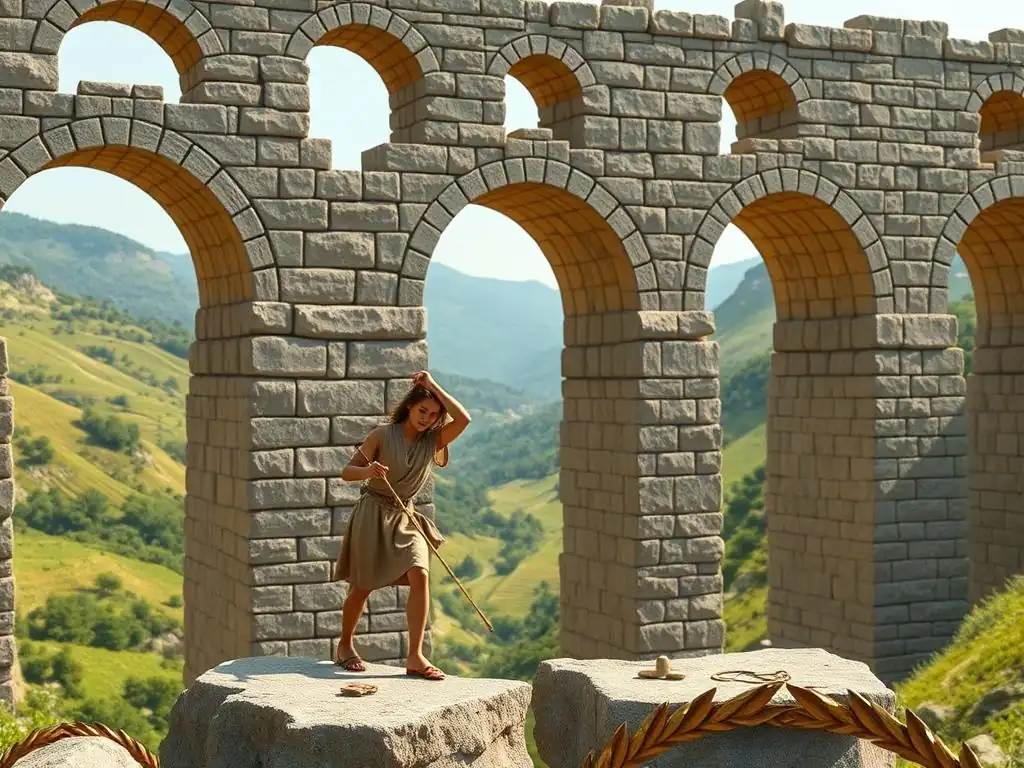
Case Study 1: Water System in Minoan Crete - Possible Female Involvement
The Infrastructure Project's Details
The Minoan civilization on Crete, flourishing from approximately 2700 to 1450 BCE, developed remarkably advanced water and sanitation systems for its time. Palaces like Knossos featured intricate networks of terracotta pipes, sophisticated drainage channels for rainwater and sewage, and even what appear to be flushing toilets and elaborate bathing facilities. These systems demonstrated a deep understanding of hydraulics and sanitation principles, directing water from springs and collecting rainwater into cisterns for distribution throughout the palatial complexes and surrounding settlements. The integration of these systems directly into living spaces highlights their importance for daily life and public health.
Evidence Suggesting Female Contribution (Direct or Indirect)
Direct archaeological evidence naming individual female engineers ancient infrastructure projects in Minoan Crete is, like most ancient societies, virtually non-existent. However, Minoan society is often depicted as more egalitarian than many of its contemporaries, with women holding prominent roles in religious life and potentially in household and economic management.
As primary managers of domestic spaces and household water use, women would have possessed an intimate, practical understanding of water flow, waste disposal, and the daily functionality of these systems. It is highly plausible that their practical knowledge and daily experience significantly informed the design and maintenance of these highly integrated water systems, even if their contributions were not formally recorded.
Impact of the Infrastructure on the Community
The advanced water and sanitation infrastructure in Minoan Crete profoundly impacted the community. It significantly improved public health by facilitating hygiene and efficient waste removal, thereby reducing the spread of disease. This allowed for higher population densities and contributed to a more sophisticated and comfortable urban lifestyle.
The reliable access to clean water also supported agriculture and craft production, bolstering the economy. Ultimately, this sophisticated infrastructure was central to the prosperity and distinctive culture of the Minoan civilization, allowing for the flourishing of art, trade, and complex social organization, a testament to the collective ingenuity that likely included the practical insights of female engineers ancient infrastructure projects.
Case Study 2: Bridge Construction in Medieval Europe - Possible Female Involvement
The Infrastructure Project's Details
Medieval Europe saw the construction of numerous impressive stone bridges, vital for facilitating trade, pilgrimage, and military movements across rivers and difficult terrain. Examples include the Pont Saint-Bénézet in Avignon, begun in 1177, and the original London Bridge, initiated in 1176. These projects were monumental undertakings, requiring significant financial investment, skilled labor, and complex engineering solutions to overcome challenging river currents, unstable foundations, and the sheer scale of stone transportation and placement. They often involved the construction of coffer dams to divert water, elaborate scaffolding, and the precise cutting and fitting of thousands of stone blocks.
Evidence Suggesting Female Contribution (Direct or Indirect)
While master masons and engineers were male, women played crucial roles in the financing, patronage, and logistical support of these massive projects. Wealthy noblewomen, abbesses, or even common women contributing through donations or labor were integral to the funding and execution of bridge construction. For example, some bridge-building fraternities or 'Bridge Wardens' responsible for maintenance and fundraising might have involved women in administrative or fundraising capacities.
Furthermore, women were central to the broader economy that sustained these projects; they produced food, clothing, and other necessities for the large workforces. Their organizational skills in managing households, estates, and community resources could have been indirectly applied to the complex logistical challenges of large-scale construction, making them silent but essential partners in these medieval female engineers ancient infrastructure projects.
Impact of the Infrastructure on the Community
Medieval bridges were transformative infrastructure projects. They dramatically facilitated trade by allowing safer and more efficient movement of goods and people, boosting local and regional economies. They also improved communication and connectivity between communities, fostering cultural exchange and the spread of ideas. Strategically important bridges could also serve vital military purposes, enhancing defense and troop movements. Overall, these infrastructure projects significantly improved the quality of life, economic vitality, and strategic capabilities of medieval towns and regions, a testament to the collective effort that included the often-unacknowledged contributions of potential female engineers ancient infrastructure projects.
Tools and Techniques: Engineering Skills Passed Down Through Generations (Female Perspective)
Transmission of Engineering Knowledge Within Families and Communities
In ancient and medieval societies, practical knowledge, including rudimentary engineering principles related to construction, water management, and material properties, was often transmitted informally within families and communities rather than through formal schooling. Women, as primary caregivers and managers of the household, and often active participants in agricultural tasks or craft production, were central to this informal education. They taught children about building simple shelters, managing water sources for domestic use or small-scale irrigation, and maintaining essential tools.
This intergenerational transmission of practical skills meant that a collective understanding of construction, resource management, and problem-solving was widely distributed throughout communities. While not always recognized as "engineering" in the modern sense, these skills were fundamental to daily life and communal survival, with women contributing significantly to this shared pool of expertise that underpinned many female engineers ancient infrastructure projects.
Specialized Skills and Knowledge Attributed to Women in Ancient and Medieval Times
Women in ancient and medieval times often possessed specialized skills that, though not explicitly labeled as engineering, had direct applications in infrastructure. Expertise in textile production, for instance, involved understanding fiber properties, weaving techniques, and knot tying for ropes and sails—all critical components for lifting mechanisms and scaffolding in construction. Similarly, pottery making, often a female domain, involved knowledge of clay properties, kiln temperatures, and structural design for pipes, storage vessels, and tiles, essentially a form of material science and ceramic engineering.
Furthermore, women's roles in food preservation, storage, and processing required knowledge of ventilation, temperature control, and the construction of effective storage structures (e.g., granaries, cellars). Their intimate understanding of these practical applications demonstrates an inherent grasp of engineering principles, making their contributions to the broader context of female engineers ancient infrastructure projects invaluable, even if indirect.
The Role of Guilds and Apprenticeships
The formal systems of guilds and apprenticeships, which emerged in the medieval period as the primary means of professional training and accreditation for skilled trades like masonry, carpentry, and smithing, were largely exclusive to men. This institutional exclusion prevented women from gaining formal recognition, official titles, and access to large-scale public or private commissions. Consequently, the absence of women in guild records contributes significantly to their historical invisibility as female engineers ancient infrastructure projects.
However, women sometimes participated in family workshops or businesses, particularly in crafts like weaving, pottery, or brewing, where they acquired practical skills and technical knowledge informally. While not formally apprenticed or recognized as masters, they learned by doing and contributed directly to production processes that often intersected with engineering principles. This informal acquisition of expertise allowed some women to apply their knowledge to various aspects of construction and design, even if their contributions were not officially documented under the umbrella of female engineers ancient infrastructure projects.
Reframing History: Acknowledging Female Engineers in Ancient Infrastructure
The Importance of Recognizing Women's Roles in Early Engineering
Recognizing the contributions of female engineers ancient infrastructure projects is not merely about correcting historical omissions; it is essential for constructing a complete and accurate narrative of human achievement. Ignoring the roles of half the population creates a skewed understanding of how societies developed and how technological progress was truly made. Acknowledging women's ingenuity and labor provides a richer, more nuanced view of the past, challenging simplistic, male-centric interpretations of history.
Furthermore, celebrating these often-unsung historical figures provides crucial role models for contemporary women and girls interested in STEM fields. By demonstrating that technical skill, creativity, and problem-solving abilities have always been inherent across genders, we can inspire future generations of female engineers and scientists, breaking down persistent stereotypes and fostering a more inclusive vision of innovation.
Challenges in Identifying and Documenting Female Contributions
The primary challenges in identifying and documenting female engineers ancient infrastructure projects stem from the pervasive patriarchal biases embedded in historical records. Official documents, architectural plans, and chronicles were predominantly created by men, for men, and often omitted or downplayed women's roles. Most of women's contributions were informal, communal, or tied to domestic duties, which were less likely to be formally recorded than the grand projects of male rulers or institutions.
Archaeological evidence, while revealing impressive structures, often doesn't specify the gender of those who designed or built them. Moving beyond anecdotal evidence to concrete proof requires meticulous reinterpretation of existing data, searching for subtle clues in household inventories, craft production sites, or less formal communal records. This lack of direct evidence makes the task of uncovering individual female engineers ancient infrastructure projects a complex and ongoing endeavor.
Future Research Directions: Uncovering More Evidence of Female Engineers in Ancient Infrastructure Projects
Future research into female engineers ancient infrastructure projects demands interdisciplinary approaches, combining insights from archaeology, social history, gender studies, and material culture analysis. Scholars should focus on analyzing domestic spaces, tools, and craft production sites for clues about women's technical skills and their application to daily life and communal infrastructure. For instance, detailed studies of ancient water systems within homes, or the tools used for textile and pottery production, can reveal sophisticated engineering knowledge.
Moreover, a nuanced interpretation of historical roles is crucial, moving beyond official titles to understand the full spectrum of practical contributions. This involves examining the economic and social contexts in which women operated, identifying indirect influences, logistical support, and the informal transmission of knowledge. By broadening our scope and challenging traditional assumptions, we can hope to uncover more compelling evidence of the vital roles played by female engineers ancient infrastructure projects in shaping the built environment of the past.
Conclusion: Celebrating Female Ingenuity in Ancient and Medieval Infrastructure
The Enduring Legacy of Women in Early Engineering and Technology
The examination of ancient and medieval infrastructure projects reveals a compelling, though often unacknowledged, legacy of women's ingenuity and contribution. While formal titles and public recognition were rarely bestowed upon them, women's practical knowledge, organizational skills, and labor were indispensable to the creation and maintenance of essential systems that underpinned ancient civilizations and medieval societies. From the sophisticated water management in Minoan palaces to the logistical support for Roman roads and the indirect contributions to medieval bridge building, countless unsung female engineers ancient infrastructure projects played vital roles.
The sophisticated societies of the past were not built solely by men; they were the collective product of all their members, including the often-invisible hands and minds of women. Their enduring legacy lies in the very foundations of our built world, demonstrating that technical expertise and innovative spirit have always been human attributes, transcending gender.
Inspiring Future Generations of Female Engineers and Scientists
Highlighting the historical contributions of female engineers ancient infrastructure projects is more than an academic exercise; it is a powerful source of inspiration for future generations. By demonstrating that women have always been integral to technological advancement, we can empower contemporary women and girls to pursue careers in engineering and science with confidence and a sense of historical lineage. This re-evaluation of history helps to dismantle persistent stereotypes and creates a more inclusive and equitable vision for the future of STEM.
It is imperative that we continue to re-evaluate and expand our understanding of history, ensuring that the full tapestry of human achievement, including the vital and often overlooked thread of female engineers ancient infrastructure projects, is finally woven into our collective consciousness. This ongoing effort will not only honor the past but also shape a more diverse and innovative future.
Frequently Asked Questions
How does WomenInScienceHistory.com contribute to the visibility of female engineers in ancient infrastructure?
The website highlights biographies and groundbreaking work of women, often overlooked in traditional historical accounts, inspiring future generations by showcasing their contributions.
Were there actually female engineers involved in ancient infrastructure projects, given the historical context?
While direct attribution can be challenging, the website explores evidence and potential roles women played in design, planning, and execution of infrastructure projects, acknowledging limitations in the record.
What kind of challenges did female engineers likely face in ancient and medieval times?
They faced male-dominated societal structures, limited access to education and resources, and often had their contributions attributed to male colleagues or family members.
Can you provide an example of a specific ancient infrastructure project where female engineers might have been involved?
While specific names are often missing, the site explores potential female involvement in projects like aqueduct construction, irrigation systems, or even some aspects of road building, focusing on indirect evidence and likely roles.
Why is it important to highlight the contributions of women to ancient and medieval infrastructure projects, even when definitive proof is scarce?
It's crucial to challenge traditional narratives, inspire future generations of female engineers, and acknowledge the potential impact of women's contributions, even when obscured by historical biases.
Final Reflection: Echoes of Innovation
The stories unearthed in this exploration of female engineers in ancient and medieval infrastructure projects resonate powerfully today, reminding us that innovation knows no gender or era. From the ingenious water systems of ancient civilizations to the architectural marvels of the medieval world, the contributions of women, often hidden in the shadows of history, are finally beginning to emerge, challenging conventional narratives and enriching our understanding of the past.
The rediscovery of these forgotten figures profoundly impacts our perception of history and its influence on the present. It compels us to re-evaluate the roles women played in shaping the world we inhabit and to actively seek out and celebrate their contributions in all fields, past and present. The most effective way to do it, is to do it.
- Amelia Earhart. This quote, though modern, perfectly encapsulates the spirit of these women who, despite societal constraints, dared to build and innovate.
As we close this chapter, let us carry forward the lessons learned from these pioneering women. Let us be inspired by their resilience, their ingenuity, and their unwavering commitment to building a better future. Consider how you can actively contribute to creating a more inclusive and equitable world, one where the contributions of all individuals, regardless of gender or background, are recognized and celebrated. The future of innovation depends on it.
Thank you for exploring the often-overlooked contributions of female engineers in ancient and medieval infrastructure. Now, let's ensure their stories continue to inspire!
- Nominate a groundbreaking woman engineer from any era for our "Hidden Figures" spotlight!
- Explore our interactive map to discover ancient infrastructure projects attributed to or influenced by women, and share your findings with #WomenInScienceHistory.
- Dive deeper by researching local historical societies for untold stories of women in engineering in your region and propose a collaborative article for our website!
What long-forgotten engineering marvel will you help us rediscover next?