
Nobel Couples: When Scientific Partnership Led to Shared (or Unshared) Recognition

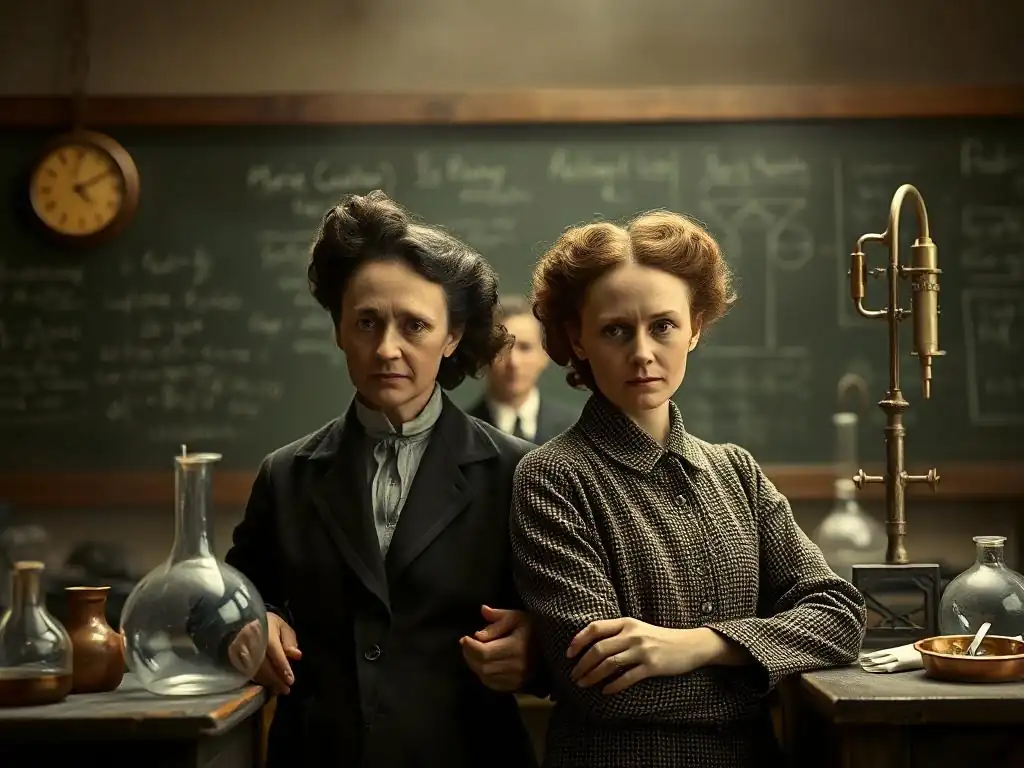
Welcome to WomenInScienceHistory.com!
Have you ever wondered if shared genius is a recipe for Nobel glory, or a breeding ground for scientific rivalry? Dive into our exploration of Nobel Prize female scientist couples, a fascinating look at the dynamic duos whose collaborative brilliance shaped our understanding of the world. Discover the inspiring stories of these partnerships, where love and groundbreaking research intertwined, and see if shared recognition always meant shared success. Intrigued? Read on to uncover the complexities and triumphs of these remarkable collaborations.
- Scientific Couples: Shared & Unshared Nobel Recognition
- Introduction: Collaboration and the Nobel Prize
- Nobel Prize Winning Couples: Shared Laurels
- Unequal Recognition: Couples with Disparate Nobel Recognition
- Factors Influencing Nobel Recognition in Scientific Partnerships
- Legacy of Scientific Couples: Inspiring Future Generations
- Conclusion: Complexities of Recognition in Collaborative Science
-
Frequently Asked Questions
- What is the primary focus of WomenInScienceHistory.com?
- Why is it important to highlight the stories of "Nobel Prize female scientist couples"?
- What kind of challenges did female scientists in Nobel Prize-winning partnerships typically face?
- Did all "Nobel Prize female scientist couples" share the Nobel Prize equally?
- What can be learned from studying the histories of "Nobel Prize female scientist couples"?
- Final Reflection: The Enduring Legacy of Shared Discovery
- Ignite Your Own Scientific Journey
Introduction: Collaboration and the Nobel Prize
The Nature of Scientific Collaboration
Scientific progress, far from being a solitary pursuit, is increasingly the result of intricate collaboration. From ancient academies to modern research institutions, the exchange of ideas, sharing of resources, and collective problem-solving have consistently accelerated discovery. This collaborative spirit is particularly evident in contemporary science, where the complexity of challenges, such as deciphering the human genome or developing new energy solutions, often demands interdisciplinary expertise and large-scale team efforts.
The benefits of collaborative work are manifold, fostering environments where diverse perspectives converge to spark innovation and refine methodologies. Partnerships allow scientists to leverage complementary skills, pool specialized knowledge, and validate findings through rigorous peer interaction. This synergy not only enhances the quality and impact of research but also often makes ambitious projects feasible, pushing the boundaries of what can be achieved by individual effort.
The Nobel Prize and Collaborative Work
The Nobel Prize, while celebrating monumental scientific achievements, has historically faced challenges in fully recognizing the collaborative nature of modern research. The statutes of the Nobel Foundation stipulate that a prize can be shared by a maximum of three laureates, a limitation that can complicate the attribution of credit in complex team-based discoveries. This individualistic focus often creates a tension with the reality of scientific progress, which frequently relies on the seamless integration of contributions from multiple researchers, including Nobel Prize female scientist couples.
This dynamic becomes particularly pronounced when considering scientific partnerships, especially those involving spouses or long-term collaborators who have worked on projects with deeply intertwined intellectual contributions. Deciding how to distribute credit among such closely knit teams, and whether the recognition should be shared equally or if one partner's contribution is deemed more "pivotal," has been a recurring dilemma for the Nobel Committee. These nuanced decisions underscore the complexities inherent in celebrating breakthroughs that are inherently collaborative.
The Curies: Pioneering Radioactivity Research
Marie and Pierre Curie's Research on Radioactivity
Marie and Pierre Curie embarked on a groundbreaking scientific journey that irrevocably changed our understanding of matter and energy. Following Henri Becquerel's discovery of uranium's radioactivity, the Curies initiated systematic investigations into other elements. Their meticulous work with pitchblende, a uranium-rich ore, revealed that it was far more radioactive than uranium itself, leading them to hypothesize the existence of new, unknown radioactive elements within the ore.
Working under arduous conditions in a leaky, unheated shed that served as their laboratory, they processed tons of raw pitchblende through laborious chemical separation techniques. This painstaking effort culminated in the isolation of two previously unknown elements: polonium, named after Marie's native Poland, in July 1898, and radium, for its intense radioactivity, in December 1898. Their rigorous experimental methods and shared intellectual drive laid the foundation for the field of radiochemistry.
Shared Nobel Prize in Physics (1903)
In 1903, the Nobel Prize in Physics was awarded to Henri Becquerel for his discovery of spontaneous radioactivity, and jointly to Marie and Pierre Curie "in recognition of the extraordinary services they have rendered by their joint researches on the radiation phenomena discovered by Professor Henri Becquerel." This marked a historic moment for Nobel Prize female scientist couples, as it was the first time a woman, Marie Curie, had ever received a Nobel Prize.
Initially, the nomination for the prize only included Becquerel and Pierre Curie. It was only through the intervention of Swedish mathematician Gösta Mittag-Leffler, a member of the nominating committee and an advocate for women in science, that Marie's crucial contributions were recognized and her name was added to the nomination. This shared recognition underscored the undeniable intellectual partnership between Marie and Pierre, setting a vital precedent for future Nobel Prize female scientist couples.
Marie Curie's Nobel Prize in Chemistry (1911)
Tragically, Pierre Curie died in 1906, but Marie continued their pioneering work with unwavering dedication. Her subsequent research focused on the isolation of pure metallic radium and the precise determination of its atomic weight, a monumental task that further solidified the existence and properties of this new element. This solo endeavor demonstrated her exceptional scientific acumen and perseverance.
In 1911, Marie Curie was awarded her second Nobel Prize, this time in Chemistry, "in recognition of her services to the advancement of chemistry by the discovery of the elements radium and polonium, by the isolation of radium and the study of the nature and compounds of this remarkable element." This unprecedented achievement made her the only person to ever win Nobel Prizes in two different scientific fields, showcasing her extraordinary individual contributions beyond their initial joint work as a Nobel Prize female scientist couple.
The Mosers: Mapping the Brain's Inner GPS
Discovering Grid Cells
May-Britt Moser and Edvard Moser, a prominent Nobel Prize female scientist couple, conducted pioneering research at the Norwegian University of Science and Technology (NTNU) in Trondheim, unraveling the mysteries of the brain's spatial navigation system. Their seminal work in 2005 led to the discovery of "grid cells" within the entorhinal cortex, a region adjacent to the hippocampus. These specialized neurons fire in a remarkable hexagonal grid pattern, creating a precise coordinate system that enables animals to map their position and navigate their environment.
Their experimental methodology involved meticulously recording the activity of individual neurons in the brains of rats as the animals moved freely within an open arena. The consistency and geometric precision of the grid cell firing patterns provided compelling evidence for an internal "GPS" system in the brain. This discovery built upon earlier work on "place cells" and provided a crucial missing piece in understanding how the brain constructs a coherent representation of space.
Shared Nobel Prize in Physiology or Medicine (2014)
In 2014, May-Britt and Edvard Moser were jointly awarded the Nobel Prize in Physiology or Medicine, sharing it with John O'Keefe, who had discovered "place cells" in the hippocampus in 1971. The prize recognized their collective discoveries of "cells that constitute a positioning system in the brain." The Mosers' identification of grid cells provided the critical framework that explained how place cells operate, creating a comprehensive model of spatial navigation.
Their shared recognition by the Nobel Committee underscored the inseparable nature of their research and the profound impact of their intellectual partnership. As a Nobel Prize female scientist couple, their achievement highlighted how close collaboration and complementary expertise can lead to breakthroughs of fundamental importance in neuroscience, cementing their legacy as pioneers in mapping the brain's intricate navigational circuits.
Unequal Recognition: Couples with Disparate Nobel Recognition
The Coris: Biochemistry and Carbohydrate Metabolism
Gerty Cori's Contributions to Carbohydrate Metabolism
Gerty Cori's contributions to biochemistry were foundational, particularly her meticulous work on carbohydrate metabolism. Alongside her husband, Carl Cori, she meticulously elucidated the "Cori cycle," a metabolic pathway describing the conversion of lactate (produced by muscles during exercise) back into glucose in the liver. This discovery was a significant breakthrough in understanding how the body manages energy and recycles metabolic byproducts.
Her research also led to the discovery of glucose-1-phosphate, often referred to as the Cori ester, and the identification of the enzyme phosphorylase, which plays a pivotal role in the breakdown of glycogen. Despite her undeniable intellectual leadership and experimental prowess, Gerty often faced systemic sexism and lower pay throughout her early career, a common challenge for Nobel Prize female scientist couples at the time. Her perseverance ultimately led to groundbreaking insights into cellular energy processes.
The 1947 Nobel Prize in Physiology or Medicine: Carl Cori
The 1947 Nobel Prize in Physiology or Medicine was awarded jointly to Carl and Gerty Cori, along with Bernardo Houssay. Their shared recognition was for their elucidation of "the course of the catalytic conversion of glycogen." This marked a pivotal moment for Nobel Prize female scientist couples, as Gerty became the first American woman to win a Nobel Prize in science, and only the third woman overall to receive a science Nobel.
Despite the shared award, historical narratives and public perception often initially emphasized Carl's role more prominently, a subtle but pervasive form of unequal recognition. This phenomenon highlighted the challenges faced by women in scientific partnerships, where societal norms could sometimes overshadow their contributions, even when their work was undeniably essential and recognized by the Nobel Committee. Their joint achievement, however, remains a landmark for Nobel Prize female scientist couples in biochemistry.
The Joliot-Curies: Artificial Radioactivity
Irene and Frederic Joliot-Curie's Work on Artificial Radioactivity
Irène Joliot-Curie and Frédéric Joliot-Curie, following in the footsteps of Irène's illustrious parents, Marie and Pierre Curie, made their own profound mark on nuclear physics. Working at the Radium Institute in Paris, their collaborative efforts led to the groundbreaking discovery of artificial, or induced, radioactivity in 1934. They demonstrated that stable elements could be made radioactive by bombarding them with alpha particles, transforming them into new, unstable isotopes.
Their seminal experiment involved bombarding aluminum foil with alpha particles from polonium, which resulted in the creation of a new, radioactive isotope of phosphorus, phosphorus-30. This isotope emitted positrons and decayed with a measurable half-life. Their work not only expanded the understanding of nuclear transformations but also opened up entirely new avenues for research, including the production of radioisotopes for medical applications and laid crucial groundwork for the development of nuclear energy.
The 1935 Nobel Prize in Chemistry
The 1935 Nobel Prize in Chemistry was jointly awarded to Irène Joliot-Curie and Frédéric Joliot-Curie "in recognition of their synthesis of new radioactive elements." This made them the second Nobel Prize female scientist couple to receive the prestigious award, following Irène's own parents. Their shared recognition underscored the seamless intellectual synergy between them and the profound impact of their joint research on the field of nuclear chemistry.
While their recognition was shared and celebrated, Irène, despite her distinguished lineage and undeniable scientific prowess, still navigated a scientific landscape where women's contributions could be subtly or overtly undervalued. Their achievement, however, solidified the concept of Nobel Prize female scientist couples as powerful and productive research units, demonstrating that partnerships could yield discoveries of immense scientific and practical significance.
Factors Influencing Nobel Recognition in Scientific Partnerships
Gender Bias in Science: Historical Context
Historically, scientific institutions and the broader academic landscape were predominantly male-dominated, creating an environment where women faced significant systemic barriers to entry, advancement, and, crucially, recognition. This pervasive gender bias often led to their groundbreaking work being overlooked, minimized, or even outright attributed to male colleagues, a phenomenon frequently observed in the narratives of Nobel Prize female scientist couples. Women were often relegated to supportive roles, even when their intellectual contributions were central to a discovery.
Beyond formal exclusion, women were frequently marginalized from informal scientific networks, crucial professional collaborations, and influential editorial boards, severely limiting their visibility and opportunities for independent credit. This entrenched historical context provides a critical lens through which to understand the disparities in recognition, even for truly transformative research conducted by Nobel Prize female scientist couples. The path to achieving equitable recognition has been, and in many ways remains, an uphill battle against deeply ingrained prejudices.
The Matilda Effect
The "Matilda Effect," a term coined by science historian Margaret Rossiter in 1993, describes the phenomenon where the achievements of female scientists are systematically underrated, dismissed, or even entirely attributed to their male colleagues. This effect is a significant, often subtle, factor in the unequal recognition observed in some Nobel Prize female scientist couples and broader scientific collaborations. It highlights how biases can distort historical narratives and influence present-day perceptions of scientific credit.
A classic example, though not involving a Nobel Prize female scientist couple, is Rosalind Franklin, whose crucial X-ray diffraction images (Photo 51) were fundamental to Watson and Crick's elucidation of the DNA double helix structure, yet her contribution was not adequately recognized with the 1962 Nobel Prize. Similarly, Lise Meitner's essential theoretical work on nuclear fission, which provided the physical explanation for Otto Hahn's experimental findings, was overlooked in the 1944 Chemistry Nobel awarded solely to Hahn. These cases underscore how the Matilda Effect can deny deserved recognition, even for pivotal scientific insights.
Challenges for Women in Collaborative Projects
Even within seemingly egalitarian scientific partnerships, women have historically faced unique challenges in securing independent credit for their intellectual contributions. They might be subtly or overtly assigned less visible roles, or their ideas might be absorbed into the joint output without explicit individual attribution. This can make it difficult to ascertain their precise impact, especially when the work is published under joint authorship without detailed breakdowns of individual contributions.
This dynamic can be particularly pronounced in spousal collaborations, where societal norms sometimes cast the wife as an assistant or subordinate rather than an equal intellectual partner. For Nobel Prize female scientist couples, overcoming these entrenched perceptions and ensuring fair attribution for their distinct contributions has been a persistent struggle. Recognizing and actively counteracting these biases remains a critical challenge for achieving true equity in scientific collaboration and ensuring that all talent is properly celebrated.
Legacy of Scientific Couples: Inspiring Future Generations
Celebrating Collaborative Research
The compelling stories of Nobel Prize female scientist couples, whether their recognition was shared or disparate, powerfully underscore the profound impact of collaborative research on scientific advancement. These partnerships demonstrate how combined intellect, diverse skills, and shared dedication can accelerate scientific discovery and push the boundaries of knowledge far beyond what an individual might achieve alone. The Curies' relentless pursuit of new elements or the Mosers' intricate mapping of brain pathways exemplifies the synergy born from such duos.
Celebrating these collaborative endeavors encourages future generations of scientists to embrace teamwork, recognizing that many of the most complex and pressing challenges facing the world today – from climate change to global health crises – require interdisciplinary approaches and collective problem-solving. The narratives of Nobel Prize female scientist couples serve as inspiring models for how shared vision and mutual support can lead to transformative breakthroughs.
Promoting Gender Equality in Science
The narratives of Nobel Prize female scientist couples provide invaluable case studies for advocating for greater gender equality in science. By examining instances of both shared and unequal recognition, we gain a deeper understanding of the historical and ongoing biases that affect women's careers, visibility, and access to prestigious awards. These stories highlight the importance of not just acknowledging women's presence in science but actively ensuring their contributions are fully and fairly credited.
Promoting gender equality means actively working to dismantle systemic barriers, ensuring equitable opportunities for funding, leadership, and recognition, and rigorously crediting the contributions of all scientists, regardless of gender. This commitment is vital for inspiring the next generation of diverse scientific leaders. By shedding light on the often-overlooked narratives of Nobel Prize female scientist couples, we can ensure that all talent is fully leveraged and that the scientific community truly reflects the diverse world it serves.
Conclusion: Complexities of Recognition in Collaborative Science
Significance of Collaborative Endeavors
The history of Nobel Prize female scientist couples vividly illustrates the inherent complexities of attributing individual credit within deeply intertwined scientific partnerships. While the Nobel Prize aims to honor individual excellence, the reality of scientific progress often hinges on collaborative synergy, where ideas, experiments, and efforts are seamlessly interwoven. The groundbreaking work of the Curies, Mosers, and Coris undeniably showcases the immense power of duos.
These stories highlight that true scientific breakthroughs frequently emerge from shared intellectual journeys, emphasizing the collective nature of discovery and the profound impact that dedicated scientific duos can have on advancing human knowledge. The combined drive and complementary expertise of Nobel Prize female scientist couples have repeatedly proven to be a catalyst for some of the most significant scientific advancements.
Advocating for Equitable Recognition in Science
Understanding the nuances of recognition, particularly for Nobel Prize female scientist couples, is crucial for fostering a more equitable scientific landscape. It necessitates a critical examination of historical biases, such as the Matilda Effect, and ongoing structural inequalities that can subtly or overtly obscure the contributions of women in collaborative settings. Only by acknowledging these challenges can we work towards solutions.
Moving forward, the scientific community must remain vigilant in advocating for fair and explicit recognition of all contributions, ensuring that future generations of scientists, regardless of gender, receive the credit they rightfully deserve for their groundbreaking work. This ongoing effort is vital for true progress and for inspiring a diverse and inclusive scientific future, where every brilliant mind, including those in Nobel Prize female scientist couples, is fully celebrated.
Frequently Asked Questions
What is the primary focus of WomenInScienceHistory.com?
The site primarily focuses on celebrating the contributions of women to science, showcasing their biographies and groundbreaking work. It also addresses the challenges they faced in historically male-dominated scientific fields.
Why is it important to highlight the stories of "Nobel Prize female scientist couples"?
Highlighting these stories reveals the often overlooked contributions of women in scientific partnerships and the complexities of recognition. It also sheds light on instances where their work may have been undervalued or uncredited.
What kind of challenges did female scientists in Nobel Prize-winning partnerships typically face?
They often faced challenges related to gender bias, including difficulty gaining recognition for their contributions and being overshadowed by their male partners. Access to resources and institutional support was also often unequal.
No, not all couples shared the Nobel Prize equally. In some cases, only the male partner was awarded the prize, even when the female partner made significant contributions to the research. This highlights the issue of unshared recognition.
What can be learned from studying the histories of "Nobel Prize female scientist couples"?
Studying these histories provides valuable insights into the historical biases within the scientific community and the importance of advocating for equitable recognition. It also inspires future generations by showcasing the impact of collaborative research.
The stories we've explored, of couples navigating the complex landscape of scientific discovery and recognition, resonate deeply today. The pursuit of knowledge, especially when intertwined with personal relationships, presents unique challenges and triumphs. Understanding these dynamics, particularly within the context of the Nobel Prize, allows us to appreciate the often-unseen contributions and sacrifices that fuel scientific progress.
The impact of these Nobel Prize female scientist couples extends far beyond the laboratory. Their journeys, both shared and individual, serve as powerful examples of perseverance, collaboration, and the unwavering pursuit of truth, inspiring future generations of scientists, regardless of gender. Science knows no country, because knowledge belongs to humanity, and is the torch which illuminates the world.
- Louis Pasteur. This quote encapsulates the spirit of collaborative discovery that these couples embodied, even amidst the pressures of competition and recognition.
As we close this exploration, let us reflect on the lessons learned from these remarkable individuals. Consider how their dedication, resilience, and collaborative spirit can inform your own endeavors, whether in science, art, or any field where passion and partnership intertwine. Strive to recognize and celebrate the contributions of all involved in the pursuit of knowledge, ensuring that future generations benefit from a more equitable and inclusive scientific landscape.
Ignite Your Own Scientific Journey
Thank you for exploring the fascinating world of Nobel Prize-winning couples with us! We hope you've gained a new appreciation for the collaborative spirit and the unique challenges faced by these brilliant minds. Now, it's time to translate that inspiration into action.
Here are a few ways you can dive deeper and contribute to the scientific community:
- Champion a female scientist: Actively seek out and share the stories of women making strides in science today. Amplify their voices on social media and in your local community.
- Explore related content: Delve into other untold tales of female scientists throughout history on WomenInScienceHistory.com to expand your knowledge and celebrate their remarkable contributions.
- Discuss and share: Share this article with your network and initiate conversations about the importance of recognizing and supporting collaborative scientific endeavors.
What steps will you take to highlight and celebrate the achievements of women in science?