Collector's Biographies: Women in Mathematics
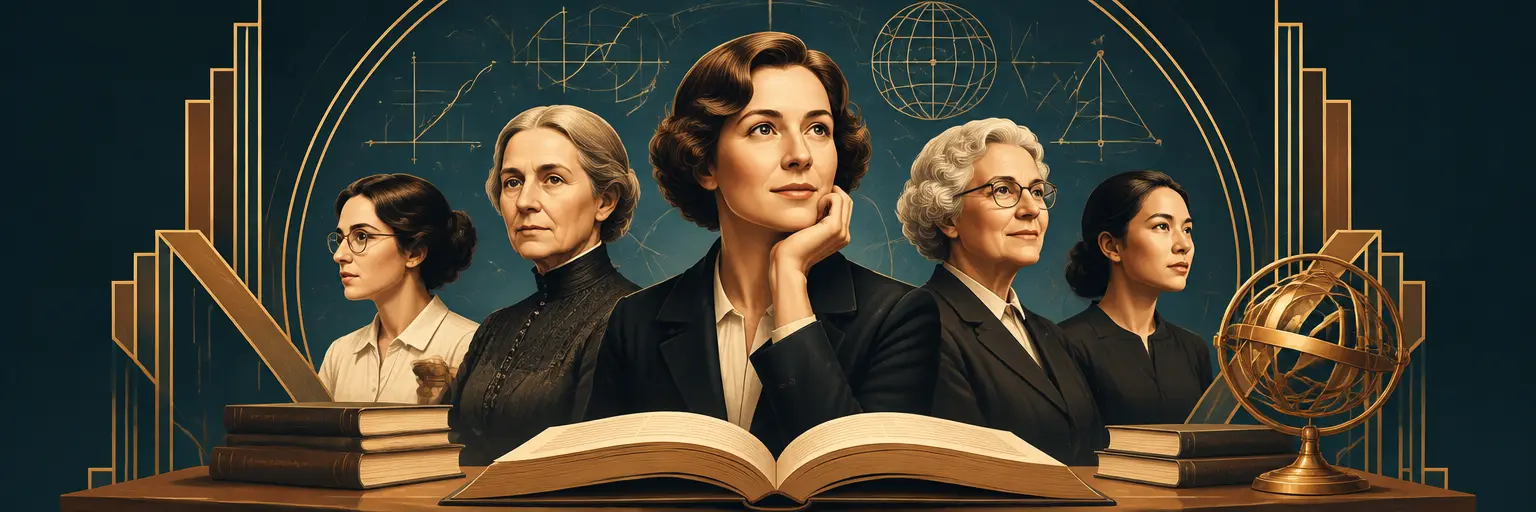
Dive into the remarkable lives of the women who shaped the mathematical world, from ancient scholars to modern trailblazers. This subcategory within Books & Biographies curates collector-grade editions, rare first prints, and meticulously researched narratives that honor female mathematicians. Whether you are a book collector, a historian, or an educator, these biographies reveal the genius, perseverance, and untold stories behind formulas and theorems. Explore how these women overcame societal barriers to contribute to algebra, geometry, and computational theory, making their legacies both inspiring and essential to science history.
📚 Pioneering Figures Who Redefined Mathematics
Discover biographies dedicated to iconic women like Hypatia of Alexandria, Ada Lovelace, and Emmy Noether, whose works laid foundations for modern mathematics. Collector's editions often include personal letters, annotated manuscripts, and rare photographs, offering a tangible connection to their intellectual journeys. These volumes emphasize not just their achievements but the context of their eras—how they navigated restricted education and limited professional recognition. Expect richly illustrated timelines and scholarly commentary that elevate each biography beyond a simple life story, making every page a treasure for enthusiasts of science history.
For collectors, first-edition prints or signed copies from reputable publishers hold significant value, often featuring forewords by contemporary mathematicians. Each narrative is crafted to highlight the intersection of personal struggle and scientific triumph, providing a nuanced view of their contributions to areas like abstract algebra, numerical analysis, and computer algorithms. These books serve as both historical artifacts and inspirational resources, bridging the gap between past innovations and present-day STEM advocacy.
🌟 Untold Stories of Overlooked Geniuses
Beyond famous names, this subcategory unearths biographies of lesser-known yet impactful women such as Sofya Kovalevskaya, Mary Cartwright, and Marjorie Lee Browne. Collector's editions often compile primary sources, including unpublished research notes and correspondence, to reconstruct their thought processes. These books emphasize how these mathematicians contributed to topics like differential equations, chaos theory, and topology, often without formal academic posts. You will find detailed accounts of their mentorship roles and how they fostered future generations, adding a human dimension to complex mathematical concepts.
Each biography is extensively footnoted, allowing readers to trace the authenticity of claims and explore additional archival materials. For avid collectors, limited-run prints featuring exclusive introductions from historians or living relatives are particularly sought after. These narratives not only document achievements but also challenge conventional historiography, giving credit where it is due. Ultimately, they inspire a deeper appreciation for diversity in STEM, making them valuable additions to any personal library focused on women’s contributions to science.
🔍 Collector’s Guide: Editions, Provenance, and Value
This subcategory provides practical advice on identifying high-quality collector’s biographies, from first editions to leather-bound classics. Expect details on publishers known for scholarly accuracy, such as MIT Press or Springer, and tips on verifying authenticity through ISBNs, printing dates, and dust jacket conditions. Provenance stories—like a book previously owned by a notable mathematician—can exponentially increase value, and guides here help you spot such markers. Additionally, learn about rare print runs and special annotations that make certain copies museum-worthy.
Careful preservation is crucial; thus, these resources include recommendations on acid-free storage, humidity control, and archival binding repair. For those new to collecting, comparison charts break down price ranges for standard versus deluxe editions, ensuring informed purchases. Digital catalogs and auction histories are also discussed, enabling you to track market trends. Combining historical passion with savvy acquisition, this section turns your interest into a rewarding investment, while keeping the literary legacy of these women alive for future generations.
📖 Biographies as Educational Tools for All Ages
Many collector’s biographies are written to be accessible, making them perfect for classrooms and youth mentorship programs. Titles focusing on figures like Maryam Mirzakhani or Kathleen Lonsdale include discussion questions, project ideas, and simplified explanations of complex theorems. These editions often feature vibrant artwork and interactive timelines, engaging young readers with mathematics in a relatable way. For educators, companion guides and lesson plans are highlighted, transforming historical narratives into practical teaching modules that promote gender equality in STEM subjects.
Beyond standard textbooks, these biographies emphasize resilience, problem-solving, and curiosity—traits that transcend mathematics. Libraries and home collections benefit from these books as they bridge storytelling with science, encouraging reluctant learners to explore. Furthermore, rare editions with classroom notes from famous teachers offer unique insights into pedagogical approaches. By integrating these biographies into curricula, students gain role models and a broader perspective on how women’s contributions have shaped modern science, fostering an inclusive learning environment from an early age.
🛠 Where to Find and How to Preserve These Treasures
Guidance on sourcing rare biographies includes reputable online marketplaces like AbeBooks and Biblio, as well as specialized auction houses focusing on scientific works. Look for libraries and university archives that occasionally release duplicates, sometimes with original library stamps that add charm. Also, join collector’s forums and subscribe to newsletters from institutes like the Association for Women in Mathematics to catch exclusive reprints. When acquiring, inspect spine condition and page integrity—these factors significantly affect long-term value and readability.
Preservation techniques involve using Mylar covers, maintaining stable temperatures (60-70°F), and avoiding direct sunlight to prevent fading. For rare annotations, consider digital backups through high-resolution scans, ensuring content is never lost. Professional book restoration services are recommended for older volumes, but simple cleaning with soft brushes can work everyday wonders. By following these best practices, your collection remains a pristine tribute to women in mathematics, appreciated by future generations of readers and researchers alike.
Frequently Asked Questions
What is the best first edition biography of a female mathematician to collect?
The 1974 edition of "Women in Mathematics" by Lynn M. Osen is highly prized, offering pioneering coverage of Hypatia and Emmy Noether. For a modern collectible, "The Mathematician's Shiva" by Stuart Rojstaczer (2014) blends fiction with historical figures, though not strictly a biography. First editions of biographies by Constance Reid on Julia Robinson are also excellent.
Are there any biographies that include original mathematical work or proofs?
Yes, some collector’s editions reproduce appendixes with original proofs. For example, "Emmy Noether's Wonderful Theorem" includes her main papers. Rare copies of "Sofya Kovalevskaya: A Russian Childhood" sometimes contain translated notes on her partial differential equations work. Always check the table of contents for “collected works” or “appendices.”
How can I verify the authenticity of a signed biography?
Verify signatures through authentication services like PSA or James Spence, which compare handwriting samples. Check for publishing house certificates of authenticity, and cross-reference the signature date with the author’s lifespan. Additionally, purchase from established dealers with return policies, and request high-resolution photos of the signature and copyright page.
Do these biographies often include photographs or personal letters?
Many collector’s editions do. Look for expanded editions, like "Ada's Algorithm" by James Essinger, which contains archival images. Some limited editions from university presses include facsimiles of letters. For more personal materials, check special collections libraries that sometimes offer companion digital access with purchased books.
Can I donate rare biographies to institutions and get a tax deduction?
Yes, tax-deductible donations are possible if you give to qualified nonprofits like museums or universities. Obtain a written appraisal from a certified appraiser before donating. Institutions such as the Smithsonian or your local university's rare book library accept such items, and documentation like Form 8283 may be required for values over $5,000.