Discover the Best Books for Kids: Women in Space Science
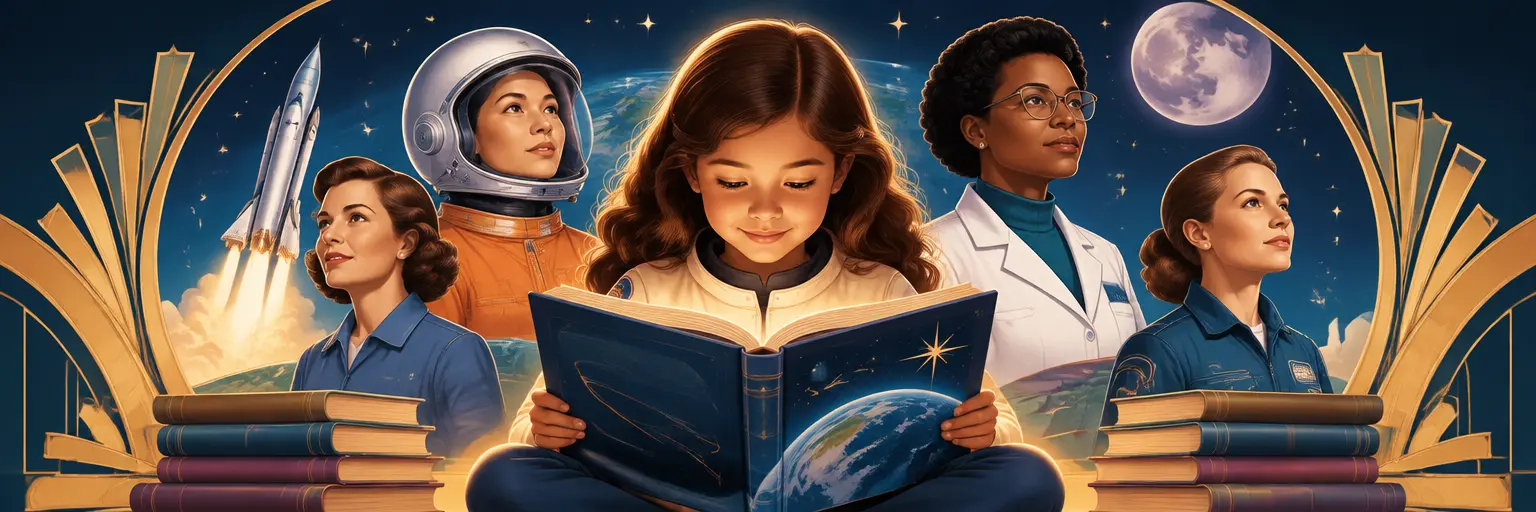
Welcome to our curated collection of the best books for kids about women in space science, a subcategory of our Books & Biographies section at WomenInScienceHistory.com. Here, you’ll find engaging, age-appropriate reads that celebrate the daring female astronauts, astrophysicists, engineers, and mathematicians who broke barriers to explore the cosmos. These books are perfect for parents, educators, and young readers eager to learn about female space pioneers, from early rocket scientists to modern Mars mission leaders. Each title we recommend is chosen not just for its educational value but for its ability to inspire curiosity, resilience, and a love for science in children aged 4–14.
🚀 Picture Books for Young Explorers (Ages 4–8)
These beautifully illustrated picture books introduce the youngest readers to the wonders of space travel and the women who made it possible. Expect vibrant storytelling that simplifies complex topics like orbital mechanics and zero gravity, while focusing on the courage of figures like Mae Jemison, the first Black woman in space, and Valentina Tereshkova, the first woman ever to orbit Earth. Titles such as “Mae Among the Stars” and “The Astronaut Who Painted the Moon” are perfect for bedtime or classroom read-alouds, sparking early STEM interest through relatable, human-centered stories.
Each book includes discussion prompts or back matter that explains the science behind the missions, helping parents and teachers connect the narrative to real-world concepts. By seeing these heroines as complex, determined individuals—not just historical figures—children will internalize the message that anyone, regardless of gender, can reach for the stars. These books also emphasize teamwork and problem-solving, essential skills for aspiring space scientists.
🔭 Chapter Books & Biographies (Ages 8–12)
For independent readers, this selection of chapter books and narrative biographies offers deeper dives into the lives and careers of women in space science. Expect detailed timelines, archival photographs, and personal anecdotes that humanize pioneers like Katherine Johnson, whose calculations were vital to NASA’s Apollo missions, and Eileen Collins, the first female Space Shuttle commander. Books like “Women in Space: 23 Stories of First Flights, Scientific Missions, and Gravity-Breaking Adventures” provide collective biographies that show the breadth of women’s roles, from mission control to extravehicular activity.
These works also address the challenges of sexism and racial discrimination, offering age-appropriate discussions that build empathy and critical thinking. Readers will learn how these women solved engineering problems, faced setbacks, and persevered through social barriers, all while contributing to historic breakthroughs. The result is a compelling blend of science, history, and social justice that encourages kids to ask questions, seek mentors, and imagine themselves in STEM careers.
🛰️ Activity Books & STEM Activity Guides
Hands-on learning is crucial for retention, and our activity-focused books make space science tactile and fun. These titles, such as “The Girl Who Drank the Moon (Science Edition)” or “Space Exploration for Kids: A Junior Scientist’s Guide to Astronauts, Rockets, and Life in Zero Gravity,” include experiments like building a paper rocket, calculating escape velocity, or designing a lunar habitat. They are ideal for homeschoolers, after-school clubs, or rainy-day projects, blending real-life women’s stories with challenges that reinforce physics, math, and engineering principles.
Each activity is scaffolded to match the skill level of the targeted age group, ensuring success and confidence. The guides also feature “Meet the Scientist” sidebars that profile diverse female experts, from planetary geologists to aerospace engineers, showing kids the wide array of space-related careers. This active engagement transforms passive reading into an exhilarating journey, proving that learning about space can be as thrilling as exploring it.
🌌 Graphic Novels & Visual Biographies (Ages 10–14)
Visual learners will thrive with our selection of graphic novels and illustrated biographies that capture the drama and detail of space missions. Works like “The Incredible Women of the Apollo Program” and “Hidden Figures: The True Story of Four Black Women and the Space Race (Young Readers’ Edition)” present dense historical facts through compelling panels and dialogue. Expect cinematic depictions of launch sequences, tense moments in mission control, and breathtaking views of Earth from orbit, all interwoven with the personal struggles and triumphs of female scientists.
These books are excellent for reluctant readers or those who prefer digestible storytelling over dense text. They also foster visual literacy as kids interpret diagrams, charts, and scientific illustrations. By pairing exact quotes from interviews and diaries with dramatic artwork, authors create an immersive experience that makes these women’s achievements unforgettable. Discussion questions at the end of each chapter promote family or classroom debates about ethics, exploration, and the future of space travel.
📚 Essential Reads for Classroom & Library Collections
For educators and librarians, we have compiled a list of core titles that build a strong, inclusive STEM library. These include award-winning non-fiction like “Almost Astronauts: 13 Women Who Dared to Dream” and “Reaching for the Moon: The Autobiography of NASA Mathematician Katherine Johnson.” Expect comprehensive indexes, glossaries, and primary-source links that support research projects and critical analysis. These books are not only informative but also serve as role models for underrepresented groups, showing that persistence and intelligence can overcome systemic obstacles.
Each recommended title has been vetted by science educators for accuracy and age-appropriateness, ensuring that terminology and concepts are correct yet accessible. We also provide reading level indicators, curriculum connections, and companion resources to help teachers integrate these stories into lessons on physics, history, and social studies. By embedding these books into school collections, we hope to normalize the presence of women in space science, making it a natural part of every child’s learning journey.
Frequently Asked Questions
What age group are these books best suited for?
Our selections span ages 4 to 14, with picture books for early readers, chapter books for middle grades, and advanced biographies for young teens. Each book’s description includes a recommended age range, but we encourage parents to consider their child’s reading level and interest, as many titles can be enjoyed by older or younger siblings.
Are these books scientifically accurate and feminist in perspective?
Yes, all books are written or reviewed by experts with a commitment to historical accuracy and inclusive perspectives. They highlight women’s achievements without diminishing their struggles, and they use precise scientific terminology in context, making them both reliable and inspiring.
Can I use these books for a school project or book report?
Absolutely—each title includes primary sources, timelines, or back matter with further reading. Many are accompanied by free teacher guides or discussion questions on our website, helping students structure research and presentations around key themes like persistence, teamwork, and innovation.
Do these books cover women from diverse backgrounds?
We prioritize diverse representation, featuring women of different races, nationalities, and eras. You’ll find stories of Black, Latina, Asian, and European astronauts and scientists, as well as LGBTQ+ figures, ensuring that every child can find a role model who resembles them.
Are there any digital or audiobook versions available?
Many of the recommended titles are available as ebooks or audiobooks through major retailers like Audible, Kindle, and library OverDrive platforms. We recommend checking your local library or favorite online bookstore for format options to suit your family’s needs.