
More Than Muses: Biographical Volumes Showcasing Women's Independent Mathematical Genius

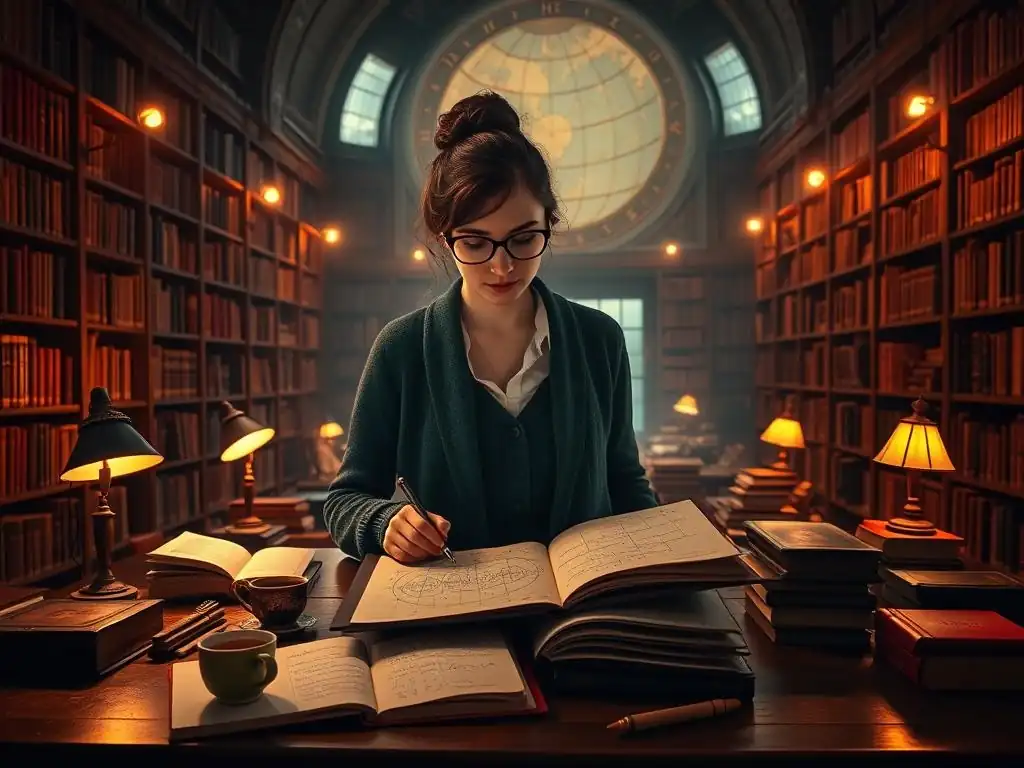
Welcome to WomenInScienceHistory.com!
Dive into the fascinating world of unsung heroes in science. For too long, the contributions of women have been relegated to the footnotes of history. But what if we told you about the remarkable women who defied expectations and reshaped the landscape of mathematics?
Our latest feature, "More Than Muses," explores recently published biographical volumes, shining a light on Women’s independent mathematical genius history, revealing the groundbreaking work and resilient spirit of these often-overlooked figures. Intrigued? Discover how their stories are finally being told and what it means for our understanding of scientific progress – the journey is just beginning...
- Unveiling Women’s Independent Mathematical Genius Through History: A Biographical Journey
- Why Biographical Accounts Matter: Recovering the History of Female Mathematical Pioneers
-
Frequently Asked Questions
- What is WomenInScienceHistory.com about?
- What is the main focus of the article "More Than Muses: Biographical Volumes Showcasing Women's Independent Mathematical Genius"?
- What kind of challenges did women in science, particularly in mathematics, often face?
- Does WomenInScienceHistory.com aim to inspire future generations?
- Why is it important to tell the stories of women's independent mathematical genius history?
- Final Reflection: Illuminating the Unseen Genius
- Unveil Your Inner Mathematician!
Unveiling Women’s Independent Mathematical Genius Through History: A Biographical Journey
For centuries, the narrative of scientific discovery has predominantly focused on male figures, often overshadowing the profound and original contributions of women. In the realm of mathematics, this oversight has been particularly pronounced, leading to a diminished understanding of the true breadth of women's independent mathematical genius history.
However, a growing body of biographical literature is now dedicated to unearthing these forgotten legacies, meticulously detailing the lives, struggles, and groundbreaking achievements of female mathematicians whose brilliance shaped various facets of the discipline. These volumes serve as crucial tools for understanding the intellectual landscape of their times and for re-evaluating the historical record to properly credit these pioneering minds.
Why Biographical Accounts Matter: Recovering the History of Female Mathematical Pioneers
Biographical accounts are far more than mere chronological retellings of lives; they are powerful instruments for historical correction and inspiration. In the context of women in mathematics, they are indispensable for recovering a narrative that has long been incomplete. By delving into the personal and professional journeys of these extraordinary individuals, we gain insight into the societal pressures, educational barriers, and institutional biases they faced, as well as the sheer intellectual fortitude that allowed their women's independent mathematical genius to flourish against considerable odds.
The Erasure of Women's Contributions in Mathematical History
The historical record of mathematical achievement has, for a significant period, suffered from a pervasive erasure of women's contributions. This was not always a deliberate act of malice but often a byproduct of societal norms that limited women's access to formal education, professional recognition, and public platforms.
For instance, until the late 19th and early 20th centuries, many prestigious universities and scientific societies either formally excluded women or severely restricted their participation. Even when women made significant discoveries, their work was frequently uncredited, attributed to male colleagues or supervisors, or published under male pseudonyms.
A notable example is the widespread phenomenon of "human computers" in the early 20th century, where thousands of women performed complex mathematical calculations for astronomical observatories and nascent aerospace industries, yet individual recognition for their crucial work was rare. For instance, at Harvard College Observatory, women like Henrietta Swan Leavitt and Annie Jump Cannon revolutionized astronomy through their meticulous calculations, but their names were often buried in footnotes or not mentioned at all in the broader scientific discourse of the time, obscuring their women's independent mathematical genius history.
This systemic oversight extended beyond mere omission; it actively shaped the perception of who could be a mathematician. The prevailing belief that mathematics was an inherently male domain meant that even when a woman achieved undeniable breakthroughs, her work was often viewed as an anomaly rather than a testament to her inherent intellectual capacity.
This created a self-reinforcing cycle where the lack of visible female role models further discouraged young women from pursuing mathematics, perpetuating the myth of male intellectual superiority in the field. The challenges were not just about access to education but also about the very concept of intellectual ownership and public acknowledgment, making it difficult for the true scope of women's independent mathematical genius to be recognized and celebrated in its own time.
The Power of Biography: Inspiring Future Generations of Women Mathematicians
Biographies serve as powerful antidotes to this historical erasure, meticulously reconstructing the lives and intellectual journeys of female mathematical pioneers. By presenting detailed accounts of their struggles, perseverance, and remarkable achievements, these volumes provide irrefutable evidence of women's independent mathematical genius history. They highlight how figures like Sophie Germain, despite being denied formal university enrollment, corresponded with leading mathematicians like Legendre and Gauss, contributing significantly to elasticity theory and number theory. Such narratives not only illuminate previously overlooked contributions but also provide crucial context for understanding the immense personal and intellectual challenges these women overcame.
Moreover, these biographical narratives are profoundly inspiring. They transform abstract historical facts into relatable human stories, offering tangible role models for contemporary and future generations of women interested in STEM fields. Seeing the lives of individuals like Emmy Noether, who developed foundational theories in abstract algebra despite facing institutional sexism, can empower young girls and women to pursue their own mathematical passions.
These stories demonstrate that an exceptional women's independent mathematical genius is not an anomaly but a recurring phenomenon throughout history, capable of thriving even in the most challenging circumstances. By bringing these narratives into the mainstream, biographies actively work to dismantle outdated stereotypes and encourage a more inclusive vision of who can contribute to the advancement of mathematical knowledge.
Frequently Asked Questions
What is WomenInScienceHistory.com about?
WomenInScienceHistory.com is a platform that celebrates the contributions of women to various scientific fields throughout history. It focuses on biographies, groundbreaking work, and the challenges they faced. Its mission is to inspire future generations.
What is the main focus of the article "More Than Muses: Biographical Volumes Showcasing Women's Independent Mathematical Genius"?
The article highlights biographical volumes that showcase the independent mathematical genius of women throughout history. It moves beyond the idea of women as mere muses.
What kind of challenges did women in science, particularly in mathematics, often face?
These women often faced challenges due to male-dominated arenas and overlooked narratives. This included systemic barriers and societal expectations that hindered their progress and recognition.
Does WomenInScienceHistory.com aim to inspire future generations?
Yes, a key aim of WomenInScienceHistory.com is to inspire future generations by highlighting the achievements and stories of pioneering women in science. It seeks to encourage young women to pursue careers in STEM fields.
Why is it important to tell the stories of women's independent mathematical genius history?
It is important to highlight these stories to correct historical inaccuracies, challenge stereotypes, and demonstrate that mathematical genius is not limited by gender. This ensures a more inclusive and accurate understanding of scientific history.
Final Reflection: Illuminating the Unseen Genius
The narratives explored in this article, detailing the lives and contributions of women mathematicians, are not simply historical anecdotes; they are powerful reminders of the systemic barriers that have historically obscured female brilliance. By bringing these stories to light, we challenge the pervasive myth of male dominance in mathematics and begin to rectify a long-standing injustice.
The impact of these women extends far beyond the equations they solved. Their perseverance and ingenuity serve as a beacon for future generations, inspiring young girls and women to pursue their passions in STEM fields without reservation. Understanding their struggles and triumphs is crucial to dismantling the unconscious biases that still persist today. The most effective way to do it, is to do it.
- Amelia Earhart, a sentiment that resonates deeply with the spirit of these pioneering women.
Let us not allow these stories to fade back into obscurity. Take a moment to reflect on the profound impact these women have had, and consider how you can contribute to a more equitable and inclusive future for mathematics. Encourage young women to explore their mathematical potential, challenge stereotypes, and actively support initiatives that promote gender equality in STEM. The future of mathematics, and indeed all fields, depends on harnessing the full potential of every mind, regardless of gender.
Unveil Your Inner Mathematician!
Thank you for diving into the inspiring stories of these incredible women. You've seen that mathematical genius knows no gender, and now it's time to put that inspiration into action.
Here are a few ways to connect with the legacy of women in mathematics:
- Visit your local library or bookstore and check out a biography of a female mathematician. Dedicate one hour a week to reading it and journaling your thoughts.
- Share this article on your social media channels with a personal reflection on which woman's story resonated with you the most.
- Research local math clubs or STEM programs in your community and consider volunteering as a mentor or tutor.
What's one small step you can take this week to honor these women and nurture your own mathematical potential?