
Valentina Tereshkova: The Weaver Who Became the First Woman in Space (1963)


Welcome to WomenInScienceHistory.com!
Delve into the inspiring world of women who dared to break barriers and shape the landscape of science. This site is dedicated to uncovering their remarkable stories and contributions. Prepare to be amazed, starting with our feature on Valentina Tereshkova, and discover how a textile worker soared to the stars, becoming the first woman in space – a pivotal moment in Space Science & Astronomy. But what challenges did she face, and what impact did her journey have? Explore her incredible story and ignite your own curiosity!
- Valentina Tereshkova: The First Woman in Space (1963)
- Introduction: A Pioneer in Space Exploration
- Early Life and Background: From Factory Worker to Cosmonaut
- The Vostok 6 Mission: Tereshkova's Historic Flight
- Impact and Legacy: Tereshkova's Enduring Influence
- Challenges and Triumphs: Navigating a Male-Dominated Field
- Post-Spaceflight: Public Service and Political Career
- Enduring Influence on Women in Space Exploration
- Conclusion: A True Icon of Space Exploration
-
Frequently Asked Questions
- What is Valentina Tereshkova best known for?
- What challenges did Valentina Tereshkova face as a woman in a male-dominated field like space exploration?
- What was the significance of Valentina Tereshkova's spaceflight for women in science?
- Besides being an astronaut, what other notable roles did Valentina Tereshkova hold?
- How does "WomenInScienceHistory.com" aim to highlight the accomplishments of figures like Valentina Tereshkova?
- Final Reflection: Reaching for the Stars, Grounded in Humanity
- Ignite Your Own Journey of Discovery!
Valentina Tereshkova: The First Woman in Space (1963)
Introduction: A Pioneer in Space Exploration
Highlighting Women in Space: Tereshkova's Groundbreaking Journey
The annals of space exploration are filled with stories of courage, innovation, and unwavering determination. Among these, the narrative of Valentina Tereshkova stands as a beacon, illuminating the remarkable contributions of women to science and technology. On June 16, 1963, Tereshkova transcended earthly boundaries, becoming the first woman in space.
Her solo mission aboard Vostok 6 not only etched her name into history but also shattered the prevailing gender norms of the era, demonstrating that space was not solely the domain of men. Her journey from a textile factory worker to an orbiting cosmonaut captivated the world and irrevocably changed perceptions of what women could achieve in the most demanding scientific and engineering fields.
This extraordinary feat by Valentina Tereshkova, the first woman in space, represented a monumental leap forward for humanity and for gender equality. It was a testament to her individual resilience and the rigorous Soviet space program, which, despite its Cold War motivations, inadvertently championed female empowerment on a global stage. The story of Valentina Tereshkova, the first woman in space, continues to inspire countless individuals to pursue careers in STEM, proving that with talent and tenacity, any frontier can be conquered.
The Historical Context: The Space Race and Soviet Propaganda
Valentina Tereshkova's flight occurred at the zenith of the Cold War's Space Race, a period of intense technological and ideological rivalry between the United States and the Soviet Union. Both superpowers vied for supremacy in space, viewing each orbital triumph as a significant victory in the global ideological contest. The Soviet Union, having already launched Sputnik 1, the first artificial satellite, in 1957, and Yuri Gagarin, the first man in space, in 1961, sought another groundbreaking achievement to underscore its technological prowess and societal progress.
In this highly charged atmosphere, the idea of sending a woman into space emerged as a powerful propaganda tool for the Soviet Union. It would not only demonstrate advanced aerospace capabilities but also project an image of a society where women were truly equal and empowered, contrasting sharply with Western perceptions.
The selection and training of Valentina Tereshkova, the first woman in space, was thus meticulously orchestrated, designed to maximize its political and symbolic impact on an international scale. Her mission was carefully framed to highlight Soviet commitment to gender equality, even as the deeper strategic motivations remained firmly rooted in Cold War competition.
Early Life and Background: From Factory Worker to Cosmonaut
Humble Beginnings: Early Life and Family
Valentina Vladimirovna Tereshkova was born on March 6, 1937, in Maslennikovo, a small village in the Yaroslavl Region of the Soviet Union. Her family background was modest; her father, Vladimir Tereshkov, was a tractor driver, and her mother, Elena Fyodorovna Tereshkova, worked in a textile factory. Tragically, her father was killed in action during World War II when Valentina was just two years old, leaving her mother to raise Valentina and her two siblings alone. This early hardship instilled in Tereshkova a strong sense of responsibility and resilience from a young age.
At the age of 17, Valentina Tereshkova followed in her mother's footsteps, beginning work at a local tire factory in Yaroslavl, and later at a cotton mill. While working, she continued her education through correspondence courses, demonstrating a remarkable drive for self-improvement despite her demanding schedule. This period of her life, marked by hard work and perseverance, laid the foundation for the discipline and dedication that would later define her historic achievement as the first woman in space.
Interest in Aviation: Joining a Local Aeroclub
Tereshkova's journey towards the cosmos began not in a laboratory, but in the skies above Yaroslavl. Her passion for aviation was ignited through parachuting, a popular sport in the Soviet Union at the time, particularly among youth organizations. In 1959, she joined a local aeroclub and began training as a competitive parachutist. This was not merely a hobby; parachuting required immense physical discipline, courage, and a deep understanding of aerodynamics – skills that would prove invaluable for a future cosmonaut.
By the time she was selected for the cosmonaut program, Tereshkova had completed approximately 126 parachute jumps, accumulating significant aerial experience. Her proficiency in parachuting was a critical factor in her selection, as cosmonauts were required to parachute from their Vostok capsules at an altitude of several kilometers before landing. This practical skill, combined with her physical fitness and unwavering resolve, made her an ideal candidate for the ambitious Soviet space program that sought to send the first woman in space.
Selection for the Cosmonaut Program: Criteria and Competition
In 1961, after Yuri Gagarin's historic flight, the Soviet Union initiated a secret search for female cosmonaut candidates, aiming to beat the United States in sending a woman into orbit. The selection criteria were stringent, focusing on young, healthy women under 30, preferably with parachuting experience, as it was deemed crucial for the Vostok spacecraft's landing procedure. Out of over 400 initial applicants, a shortlist of five women was chosen for rigorous training, including Valentina Tereshkova.
The competition was fierce, involving intense physical conditioning, isolation tests, centrifuge training, and academic instruction in rocketry and navigation. Tereshkova, despite lacking a pilot's background, excelled in the physical and psychological assessments, demonstrating exceptional endurance and mental fortitude. Her calm demeanor, strong will, and ability to handle stress under pressure ultimately set her apart, leading to her selection as the primary pilot for the Vostok 6 mission. The decision to make Valentina Tereshkova the first woman in space was personally approved by Soviet Premier Nikita Khrushchev, recognizing her as the ideal symbol of Soviet achievement.
The Vostok 6 Mission: Tereshkova's Historic Flight
Preparing for Vostok 6: Training Regimen and Challenges
The preparation for the Vostok 6 mission was an arduous and demanding process for Valentina Tereshkova and her fellow female cosmonaut candidates. Their training regimen was nearly identical to that of their male counterparts, encompassing extensive physical conditioning, including daily runs, swimming, and strength exercises. They also underwent specialized aerospace training, which involved surviving extreme G-forces in centrifuges, enduring prolonged periods in isolation chambers, and learning to navigate complex spacecraft simulators. The women were also subjected to parachute jump training, a critical component given the Vostok landing procedure.
Beyond the physical rigors, the cosmonauts received intensive academic instruction in orbital mechanics, spacecraft systems, and communication protocols. Tereshkova, in particular, dedicated herself to mastering the intricate details of the Vostok capsule. One significant challenge was adapting to the cramped confines of the spacecraft and learning to operate its controls in zero gravity. Despite facing immense pressure and the knowledge that the eyes of the world would be on her, Valentina Tereshkova maintained her composure and commitment, preparing diligently for her groundbreaking journey as the first woman in space.
Launch and Orbit: Spaceflight Experience and Observations
On June 16, 1963, at 12:30 PM Moscow time, Valentina Tereshkova, code-named "Chaika" (Seagull), launched aboard Vostok 6 from Baikonur Cosmodrome. The launch itself was flawless, propelling her into Earth orbit and instantly making her the first woman in space. During her nearly three-day mission, Tereshkova completed 48 orbits of Earth, traveling over 1.9 million kilometers. Her flight ran concurrently with Vostok 5, piloted by Valery Bykovsky, marking the first time two crewed spacecraft were in orbit simultaneously, facilitating communication and coordination between them.
From her vantage point, Tereshkova conducted various scientific observations. She meticulously documented her reactions to the space environment, providing invaluable data on the female body's response to zero gravity, which was crucial for future long-duration missions. She took photographs of the Earth's horizon, which were later used to identify aerosol layers in the atmosphere. Despite experiencing some discomfort, including space sickness and difficulty with the spacecraft's manual orientation system, she maintained communication with ground control, relaying her observations and vital signs. Her calm and professional demeanor throughout the flight solidified her status as a true pioneer.
Solo Mission: Three Days Orbiting Earth
Valentina Tereshkova's Vostok 6 mission was a truly solo endeavor, a remarkable feat given the nascent stage of human spaceflight. For 70 hours and 50 minutes, she was the sole occupant of her small, spherical capsule, navigating the vastness of space. This extended duration allowed for comprehensive data collection on the physiological and psychological effects of prolonged weightlessness on a female astronaut. Her call sign, "Chaika," became synonymous with her pioneering spirit and her groundbreaking achievement.
During her time in orbit, Tereshkova performed a range of tasks, including manual control of the spacecraft, which proved challenging due to a programming error that initially pointed the capsule away from Earth for retrofire. She successfully corrected this issue with ground control's assistance.
The mission's success was paramount, not just for Tereshkova personally, but for the entire Soviet space program and its ambition to demonstrate parity in space exploration. The solo nature of her flight underscored her remarkable self-reliance and the robust design of the Vostok spacecraft, confirming Valentina Tereshkova as the first woman in space and a testament to human resilience.
Impact and Legacy: Tereshkova's Enduring Influence
Global Recognition: Symbol of Soviet Achievement and Female Empowerment
The flight of Valentina Tereshkova instantly transformed her into a global icon. News of her mission reverberated across continents, generating immense excitement and admiration. She was hailed as a hero in the Soviet Union, receiving the title "Hero of the Soviet Union" and the Order of Lenin. International media celebrated her as a symbol of courage and a testament to human potential, transcending political divides. Her image graced magazine covers, and she embarked on numerous goodwill tours, meeting heads of state and inspiring millions.
Beyond the immediate fanfare, Tereshkova's achievement served a dual purpose: it was a triumph for Soviet science and a powerful statement about female empowerment. The Soviet government leveraged her success to promote the image of a progressive society where women were afforded equal opportunities, even in the most challenging and prestigious fields. Valentina Tereshkova, the first woman in space, became an enduring symbol of what women could achieve when given the chance, shattering preconceived notions about their capabilities in high-stakes environments.
Inspiring Future Generations: Role Model for Women in STEM
Valentina Tereshkova's pioneering flight had a profound and lasting impact on inspiring future generations, particularly young women, to pursue careers in science, technology, engineering, and mathematics (STEM). Her story demonstrated unequivocally that gender was not a barrier to achieving extraordinary scientific and exploratory feats. For many girls and young women around the world, seeing a woman in space transformed abstract dreams into tangible possibilities.
Her legacy extends far beyond the Soviet Union, influencing educational initiatives and encouraging greater female participation in traditionally male-dominated fields. Organizations and academic institutions frequently cite Valentina Tereshkova as a paramount role model, emphasizing her journey from a factory worker to a cosmonaut as an example of dedication and intellectual curiosity leading to groundbreaking achievements. The enduring image of Valentina Tereshkova, the first woman in space, continues to motivate countless individuals to reach for the stars, both literally and metaphorically.
Contribution to Space Science: Scientific Observations and Data Collection
While the symbolic impact of Valentina Tereshkova's flight was immense, her mission also yielded valuable scientific data. During her 70-hour orbital journey, she meticulously recorded her physiological responses to weightlessness, providing crucial insights into how the female body adapted to the space environment. This data was vital for understanding the broader human physiological limits and for planning longer-duration space missions. Her observations included details on her heart rate, breathing, and general well-being, which were continuously monitored by ground control.
Furthermore, Tereshkova performed practical experiments, such as manually orienting the spacecraft, which although challenging, provided engineers with feedback on control systems. She also took photographs of the Earth's limb, which contributed to early atmospheric science studies, helping to identify and analyze atmospheric layers from space. These scientific contributions, though sometimes overshadowed by the political significance of her flight, were integral to the cumulative knowledge base that advanced human space exploration, solidifying Valentina Tereshkova's place not just as a pioneer but also as a contributor to space science.
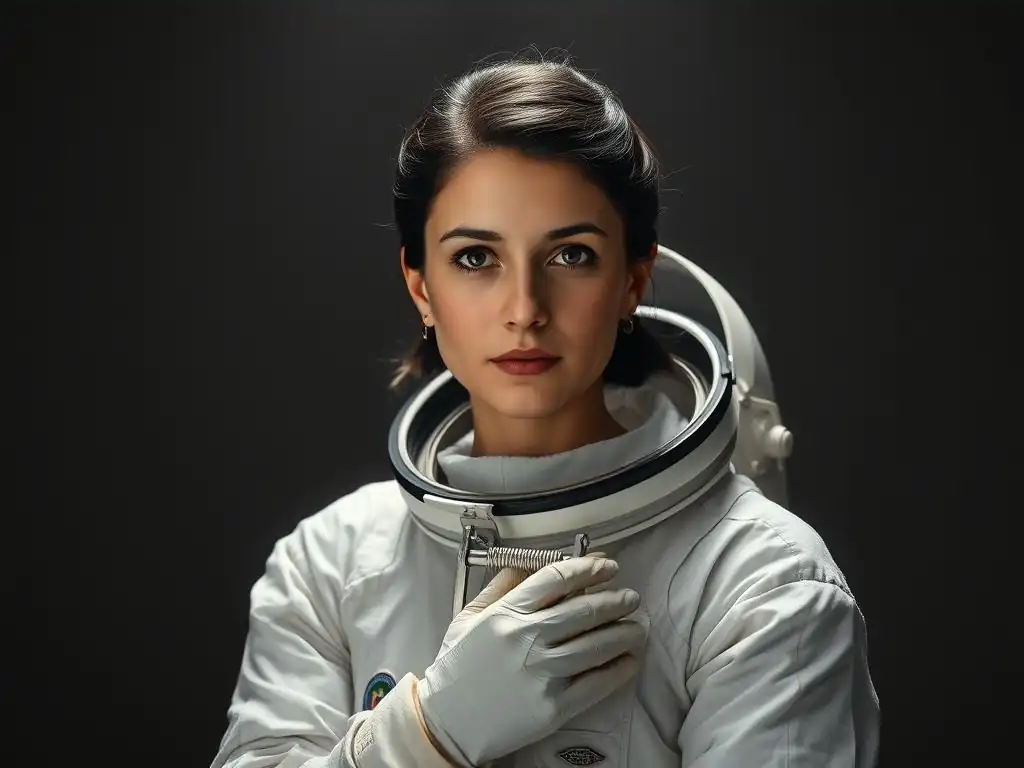
Gender Bias: Limited Opportunities and Expectations
Despite the public celebration of Valentina Tereshkova as the first woman in space, her journey was not without its challenges, particularly concerning the prevailing gender bias within the male-dominated field of space exploration. At the time, the very idea of women in space was revolutionary, and many within the Soviet space program, as in other global space agencies, held reservations about female capabilities for such high-stress and physically demanding roles. Opportunities for women in aerospace were severely limited, often confined to support roles rather than direct flight operations.
Tereshkova and her fellow female cosmonaut candidates faced subtle and overt skepticism, with some program leaders viewing their training more as a novelty or a political statement than a serious scientific endeavor. The initial selection of women was largely driven by political expediency rather than a broad belief in gender equality in space. This underlying bias meant that Tereshkova, even after her historic flight, found her opportunities for further space missions curtailed, as the focus quickly shifted back to male cosmonauts for subsequent, more complex programs.
Proving Capabilities: Demonstrating Competence and Skill
In the face of these challenges, Valentina Tereshkova had to consistently prove her competence and skill, not just during training but also during her actual mission. Her success on Vostok 6 was a powerful demonstration of her capabilities, defying skeptics and establishing a benchmark for future female astronauts. During her flight, she diligently performed her assigned tasks, maintained communication, and provided valuable observations, despite experiencing periods of space sickness and some technical difficulties with the spacecraft's orientation system.
Her ability to remain calm under pressure and adapt to the unforgiving environment of space showcased her mental fortitude and technical aptitude. While some post-flight reports from the Soviet side later downplayed certain difficulties she faced, the fact remains that she successfully completed her mission, orbited Earth for nearly three days, and returned safely. Her triumph was a clear message that women possessed the necessary resilience and intelligence to excel in the most demanding scientific and engineering frontiers, directly challenging the limited expectations placed upon them.
Communication Issues and Post-Flight Debriefing
The Vostok 6 mission, while a resounding success, was not without its operational challenges, including some communication issues and later, discrepancies in post-flight debriefings. During her flight, Tereshkova reportedly experienced periods of discomfort and some difficulty with the manual control system, leading to initial challenges in orienting the spacecraft correctly for re-entry. These details were largely suppressed or downplayed in official Soviet accounts for decades to maintain the image of a flawless mission and an unflappable hero.
After her return, the debriefing process also highlighted underlying tensions. While officially lauded, there Tereshkova faced subtle criticisms regarding her performance from some within the program, particularly from Chief Designer Sergei Korolev, who reportedly deemed her performance less than ideal. These criticisms, though rarely public, contributed to the decision not to send other women into space for nearly two decades after her flight, underscoring the persistent gender biases within the program. Despite these challenges, Valentina Tereshkova steadfastly defended her performance and maintained her composure, embodying remarkable resilience in the face of scrutiny.
Post-Spaceflight: Public Service and Political Career
Political Career: Soviet and Russian Government Positions
Following her historic flight as the first woman in space, Valentina Tereshkova's life took a significant turn towards public service and politics. She quickly rose through the ranks of the Soviet political system, becoming a prominent figure in the Communist Party. In 1966, she was elected to the Supreme Soviet of the Soviet Union, serving in various capacities for over two decades. Her political career included roles as a member of the Presidium of the Supreme Soviet and vice-president of the International Women's Democratic Federation.
After the collapse of the Soviet Union, Tereshkova continued her involvement in Russian politics. In 2011, she was elected to the State Duma, the lower house of the Russian Parliament, as a representative of the United Russia party, and has been re-elected multiple times since. Her long and distinguished political career has seen her advocate for various social causes, veterans' rights, and, notably, continued support for space exploration, leveraging her iconic status to influence policy and public opinion.
Advocacy for Space Exploration: Promoting Scientific Advancement
Even after her active cosmonaut career concluded, Valentina Tereshkova remained a passionate and vocal advocate for space exploration and scientific advancement. She consistently used her platform and influential position to promote the importance of space research, international cooperation in space, and the continued pursuit of human presence beyond Earth. She served as the head of the Soviet-French Friendship Society and later became the head of the Russian Centre for International Scientific and Cultural Cooperation, fostering global scientific collaboration.
Tereshkova frequently participated in international conferences, sharing her experiences and insights, and inspiring new generations of scientists and engineers. She has often spoken about the need for continued investment in space technology and the potential of space exploration to solve global challenges. Her unwavering commitment to the future of space travel underscores her belief in its transformative power and her enduring legacy as not just the first woman in space, but a lifelong champion of scientific discovery.
Beyond her political and space advocacy roles, Valentina Tereshkova has dedicated a significant portion of her life to various social and humanitarian causes. Her personal experiences, including growing up in poverty and losing her father during wartime, instilled in her a deep empathy for those in need. She has been actively involved in initiatives supporting children, veterans, and women's rights throughout her extensive public career.
Tereshkova has served as a patron for numerous charities and social organizations, using her global recognition to draw attention to important issues. She has been particularly vocal about promoting educational opportunities for underprivileged youth and ensuring access to healthcare for vulnerable populations. Her commitment to humanitarian work reflects a broader dedication to improving society, demonstrating that her impact extends far beyond the confines of space exploration, making Valentina Tereshkova a multifaceted icon.
Enduring Influence on Women in Space Exploration
Paving the Way: Breaking Barriers and Inspiring Others
Valentina Tereshkova's flight irrevocably altered the landscape for women in space exploration. By becoming the first woman in space, she broke a formidable barrier that had previously limited human spaceflight to men. Her achievement proved that women possessed the physical and mental fortitude required for such demanding missions, directly challenging ingrained societal biases and paving the way for future female cosmonauts and astronauts. Although it took almost two decades for another woman, Svetlana Savitskaya, to fly in space, Tereshkova's initial breakthrough was the essential first step.
Her pioneering journey demonstrated that gender was not a determinant of capability in the cosmos. This foundational achievement inspired a generation of women to pursue careers in aviation, engineering, and space science, fields where female representation had historically been minimal. The image of Valentina Tereshkova, the first woman in space, became a powerful symbol of possibility, encouraging young women worldwide to defy limitations and aspire to the highest echelons of scientific and technological achievement.
Role Model Status: Continued Recognition and Inspiration
Decades after her historic flight, Valentina Tereshkova continues to hold significant role model status, inspiring countless individuals globally. Her story is regularly featured in educational materials, documentaries, and public discussions about women in STEM. She is celebrated not only for her individual bravery but also for her broader impact on gender equality in science. Her enduring legacy is evident in the increasing number of women pursuing careers in aerospace and related fields.
She remains a celebrated figure in Russia and is frequently invited to speak at international events, where she shares her experiences and encourages future generations. Her continued public presence and advocacy for space exploration and women's rights ensure that her groundbreaking achievement as the first woman in space remains relevant and continues to motivate. Tereshkova's life story serves as a powerful reminder that perseverance, courage, and a pioneering spirit can lead to extraordinary accomplishments and inspire lasting change.
Progress of Women in Space: Increased Representation and Opportunities
The trajectory of women in space exploration since Valentina Tereshkova's flight in 1963 reflects a gradual but significant increase in representation and opportunities. While her mission was initially a solitary one for female cosmonauts for many years, her achievement undeniably opened the door for others. Following Svetlana Savitskaya in 1982, American astronaut Sally Ride became the first American woman in space in 1983. Since then, the number of women who have traveled to space has steadily grown, with women now serving in various roles, from mission specialists to commanders on the International Space Station.
As of 2023, over 70 women have flown into space, contributing to diverse scientific missions, space station operations, and even commanding complex orbital activities. This progress, while still striving for greater parity, stands as a testament to the initial barrier broken by Valentina Tereshkova, the first woman in space. Her pioneering flight fundamentally shifted perceptions and laid the groundwork for a more inclusive future in space exploration, demonstrating that the cosmos is truly for all of humanity.
Conclusion: A True Icon of Space Exploration
Remembering Tereshkova: Lasting Tribute to a Pioneer
Valentina Tereshkova, the weaver from a small Russian village who became the first woman in space, remains an indelible figure in the annals of human history. Her name is synonymous with courage, determination, and the spirit of exploration. Her groundbreaking journey aboard Vostok 6 in June 1963 was not merely a technological triumph but a profound statement about human potential, regardless of gender. She is remembered globally through monuments, street names, and educational curricula, all serving as lasting tributes to her unparalleled achievement.
Her story transcends the Cold War context in which it occurred, resonating with successive generations who continue to be inspired by her audacious leap into the unknown. The narrative of Valentina Tereshkova, the first woman in space, is a powerful reminder of the extraordinary feats that can be accomplished when individuals dare to dream beyond conventional boundaries and pursue their ambitions with unwavering resolve.
Honoring Contribution: Significance of Her Spaceflight
The significance of Valentina Tereshkova's spaceflight cannot be overstated. It was a pivotal moment not only for space exploration but also for women's empowerment worldwide. By enduring the rigors of space travel and successfully completing her mission, she shattered the prevailing stereotypes that limited women's roles in science and high-stakes endeavors. Her flight provided invaluable data on the female physiological response to space, contributing to the broader understanding of human adaptability beyond Earth.
More profoundly, her journey symbolized a monumental step towards gender equality in a field that was, and largely remains, male-dominated. Her contribution is honored as a testament to the belief that talent and determination know no gender. The legacy of Valentina Tereshkova, the first woman in space, continues to be celebrated as a cornerstone in the ongoing narrative of human progress and inclusion in the ultimate frontier.
Enduring Legacy: Inspiring Future Generations of Explorers
Valentina Tereshkova's enduring legacy is deeply rooted in her capacity to inspire. Her pioneering flight ignited the imagination of millions and continues to motivate young people, especially girls, to pursue careers in STEM fields. She demonstrated that with dedication and courage, seemingly impossible dreams can be realized. Her life story serves as a powerful narrative of overcoming adversity and achieving greatness, from humble beginnings to orbiting Earth.
As humanity looks towards returning to the Moon and venturing to Mars, the spirit of pioneers like Valentina Tereshkova remains a guiding light. Her achievement as the first woman in space laid the groundwork for a more diverse and inclusive future in space exploration. Her unwavering commitment to scientific advancement and her role as a global advocate for women's rights ensure that her impact will continue to resonate, inspiring future generations of explorers to reach for their own stars.
Frequently Asked Questions
What is Valentina Tereshkova best known for?
Valentina Tereshkova is best known for being the first woman in space, achieving this feat on June 16, 1963, aboard Vostok 6. Her flight lasted almost three days and orbited the Earth 48 times.
What challenges did Valentina Tereshkova face as a woman in a male-dominated field like space exploration?
Tereshkova faced numerous challenges, including gender bias during selection and training. She also had to prove her capabilities in a field that was overwhelmingly dominated by men.
What was the significance of Valentina Tereshkova's spaceflight for women in science?
Her spaceflight served as a powerful symbol of female empowerment and demonstrated that women were capable of achieving extraordinary feats in science and technology. It inspired many women to pursue careers in STEM.
Besides being an astronaut, what other notable roles did Valentina Tereshkova hold?
Beyond her historic spaceflight, Tereshkova was also a prominent political figure in the Soviet Union and later Russia. She served in various governmental positions and remained an advocate for space exploration.
How does "WomenInScienceHistory.com" aim to highlight the accomplishments of figures like Valentina Tereshkova?
The website aims to highlight figures like Tereshkova by providing detailed biographies of female scientists, discussing their groundbreaking work, and shedding light on the obstacles they overcame. It seeks to inspire future generations.
Final Reflection: Reaching for the Stars, Grounded in Humanity
The story of Valentina Tereshkova, the first woman in space, transcends mere historical record; it serves as a potent reminder of the unyielding human spirit and the boundless potential within us all. Her journey, from a textile factory worker to a cosmic pioneer, resonates deeply today, especially as we continue to push the boundaries of space exploration and strive for greater inclusivity in STEM fields.
Valentina's legacy is not just about breaking the glass ceiling in space, but about shattering expectations and inspiring generations to dream beyond their perceived limitations. Her courage and determination continue to fuel the aspirations of young women and men around the world. If women can be railroad workers in Russia, why can't they fly in space?
- Valentina Tereshkova. This quote encapsulates the spirit of challenging societal norms and pursuing one's dreams, regardless of perceived barriers.
As we reflect on Valentina Tereshkova's extraordinary achievement, let us remember that every individual possesses the capacity for greatness. Let her story ignite within you a spark of courage, a thirst for knowledge, and an unwavering belief in your own potential to reach for the stars, no matter how distant they may seem. Embrace the challenges, defy the limitations, and dare to become the pioneer of your own life's journey.
Ignite Your Own Journey of Discovery!
Thank you for exploring the incredible story of Valentina Tereshkova! Now, fueled by her courage and pioneering spirit, take your own leap into the unknown:
- Embark on a research quest to discover other unsung heroes of science and technology from across the globe and share their stories.
- Connect with your local science museum or astronomy club to deepen your understanding of space exploration.
- Share this article with friends and family to inspire the next generation of female scientists and astronauts.
What small step will you take today to honor Valentina's legacy and further your own exploration of the cosmos?