
The Paradox of Progress: Did War Accelerate or Hinder Women in Scientific Fields?

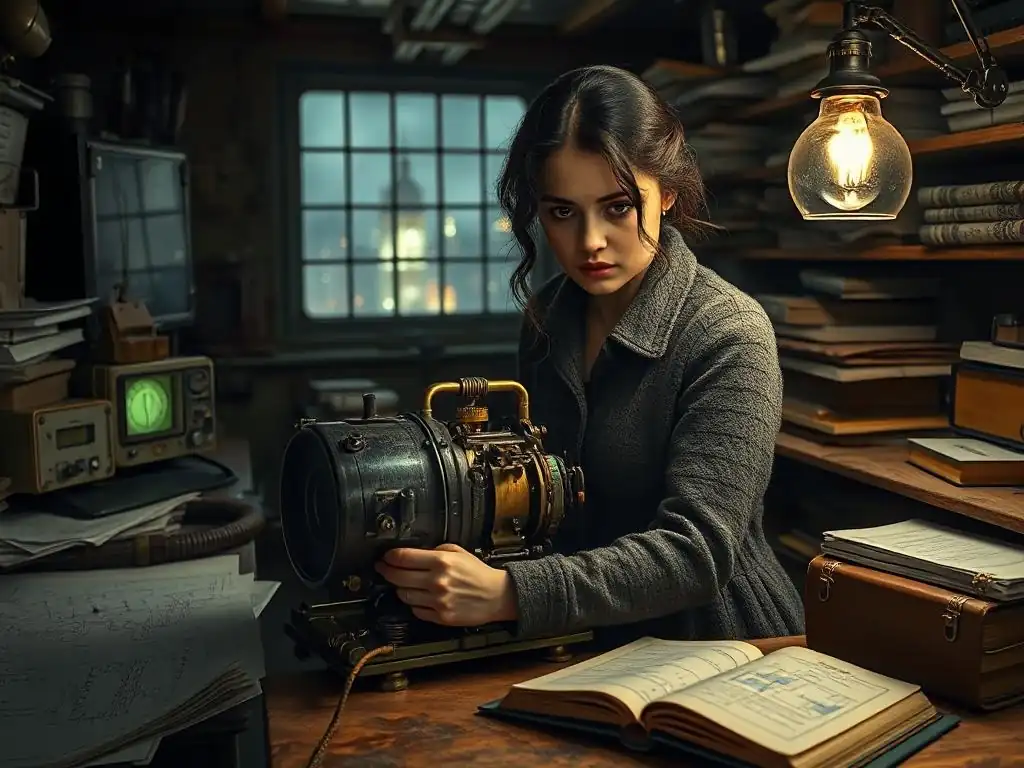
Welcome to WomenInScienceHistory.com, where we illuminate the remarkable stories of women who shaped the scientific landscape. Ever wondered about the paradoxical role of conflict? Dive into our latest exploration of women in science wartime, uncovering the surprising ways global conflicts both shattered and strengthened the barriers they faced in pursuing their scientific passions. Prepare to be captivated by untold tales of resilience, innovation, and the enduring impact of these groundbreaking women.
- Introduction: Women in Science During Wartime - A Complex Legacy
- The Pre-War Landscape: Barriers to Entry for Women in Science
- Wartime Opportunities: A Shift in the Scientific Workforce
- The Acceleration of Progress: How War Opened Doors for Women in STEM
- The Hindrance of Progress: Challenges and Setbacks Faced by Women Scientists During War
- Post-War Realities: The Retreat from Scientific Gains for Women
- Case Studies: Examining Specific Examples of Women's Experiences in Wartime Science
- Analyzing the Long-Term Impact: Did Wartime Service Truly Benefit Women in Science?
- Conclusion: The Ambiguous Legacy of War on Women's Scientific Advancement
-
Frequently Asked Questions
- How did wartime generally impact women's participation in science?
- In what specific fields of science did women see increased opportunities during wartime?
- What challenges did women face even with increased opportunities during wartime?
- Did wartime research conducted by women lead to lasting scientific advancements?
- How does WomenInScienceHistory.com shed light on the experiences of women scientists during wartime?
- Final Reflection: Embracing Scientific Potential Beyond Conflict
- Ignite Your Scientific Curiosity: Celebrate Women's Contributions!
Introduction: Women in Science During Wartime - A Complex Legacy
Exploring the Contradictory Effects of War on Women's Scientific Roles
The exigencies of war have historically presented a paradoxical challenge and opportunity for women in science. While these periods of intense global conflict often disrupted societal norms and created unprecedented demands for scientific and technical labor, they simultaneously reinforced existing biases and introduced new obstacles. The narrative of women in science wartime is therefore not a simple tale of linear progress, but a complex interplay of advancement and setback.
On one hand, the severe shortage of male labor, diverted to combat roles, compelled industries and research institutions to open their doors to women, offering them roles previously deemed unsuitable. This led to invaluable practical experience and, for some, a temporary elevation in professional standing. On the other hand, this newfound access was often conditional, accompanied by unequal pay, limited recognition, and the expectation that women would revert to domestic roles once peace returned. This dual reality makes the legacy of war on women's scientific contributions profoundly ambiguous.
The Pre-War Landscape: Barriers to Entry for Women in Science
Limited Educational Opportunities for Aspiring Female Scientists
Before the major global conflicts, particularly the First and Second World Wars, aspiring female scientists faced significant systemic barriers to accessing higher education. Many universities either did not admit women to certain scientific and engineering programs or imposed strict quotas, severely limiting their enrollment. For instance, in the early 20th century, female representation in engineering schools was often less than 1% of the student body, effectively restricting the pipeline of formally trained women in technical fields.
Even when admitted, women often found themselves in women's colleges or specific programs that, while valuable, sometimes lacked the resources or prestige of male-dominated institutions. This educational segregation meant that fewer women gained the advanced scientific training necessary for cutting-edge research or industrial roles, reinforcing the perception that science was not a suitable career path for them.
Societal Expectations and Gender Bias in Scientific Professions
Deep-seated societal expectations and pervasive gender bias profoundly shaped women's roles in the pre-war scientific landscape. Women were largely steered towards professions considered "appropriate," such as teaching, nursing, or domestic roles, rather than rigorous scientific pursuits. The scientific community itself was predominantly male, with established networks and hierarchies that often excluded women from mentorship, collaboration, and recognition.
Even if a woman managed to acquire scientific training, she often faced discrimination in hiring and promotion. Many were relegated to lower-paying, subordinate positions like laboratory assistants or technicians, regardless of their qualifications, and were rarely given opportunities for leadership or independent research. This systemic bias meant that even brilliant minds found it challenging to establish meaningful scientific careers.
The Scarcity of Female Role Models in STEM Fields Before Wartime
The scarcity of visible and celebrated female role models in STEM fields before wartime further compounded the challenges for aspiring women. With so few women holding prominent scientific positions, it was difficult for younger generations to envision a career for themselves in these domains. This created a self-perpetuating cycle: fewer women entered the field, leading to even fewer visible successes, which in turn discouraged new entrants.
The historical record often overlooked or downplayed the contributions of pioneering women, further obscuring their achievements from public view. This lack of visible representation meant that many girls and young women did not even consider science as a viable or desirable career path, limiting their aspirations and the overall pool of female talent entering scientific disciplines.
Wartime Opportunities: A Shift in the Scientific Workforce
The Increased Demand for Scientists and Technicians During War
The onset of major conflicts, particularly World War I and World War II, dramatically altered the demand for scientific and technical expertise. Modern warfare necessitated rapid advancements in weaponry, communication, medicine, and logistics, creating an unprecedented need for skilled scientists, engineers, and technicians. As millions of men were conscripted into military service, a significant labor vacuum emerged in laboratories, factories, and research institutions across the globe.
This acute shortage forced governments and industries to look beyond traditional male recruitment pools. The urgency of national defense and technological superiority began to override long-standing gender biases, making it imperative to utilize any available talent. This shift provided an unforeseen opening for women to step into roles previously considered exclusive to men, fundamentally altering the scientific workforce composition, albeit temporarily.
Women Filling Critical Roles in Research, Development, and Engineering
In response to the wartime demand, women rapidly began to fill critical roles in various scientific, research, development, and engineering capacities. They moved beyond traditional support functions to engage directly in scientific inquiry and technical application. For example, during World War II, women worked extensively on projects ranging from chemical research for new materials to designing communication systems and conducting vital medical research to combat battlefield injuries and diseases.
Many women served as mathematicians, physicists, and chemists in top-secret government projects. A notable instance is the significant number of women who worked on the Manhattan Project, performing complex calculations by hand as "human computers," analyzing radioactive materials, and contributing to experimental design. Their intellectual contributions were indispensable to the wartime scientific effort.
Examples of Women's Contributions to Wartime Scientific Advancements
Women's contributions to wartime scientific advancements were widespread and impactful. In the United States, women at the National Advisory Committee for Aeronautics (NACA), the precursor to NASA, performed critical aerodynamic calculations for aircraft design, accelerating the development of advanced military planes. Across the Atlantic, British women were instrumental in code-breaking efforts at Bletchley Park, applying advanced mathematical and logical skills to decrypt enemy communications, significantly shortening the war.
Beyond these well-known examples, women also played key roles in developing new medical treatments, improving food preservation techniques for troops, and advancing radar technology. For instance, women trained as meteorologists provided essential weather data for military operations, while others worked on synthetic rubber production, vital for tires and other military equipment, demonstrating their diverse and indispensable contributions to the scientific needs of the war.
The Acceleration of Progress: How War Opened Doors for Women in STEM
Breaking Down Traditional Gender Roles in Scientific Labor
The sheer necessity of wartime production and scientific innovation forced a temporary dismantling of rigid gender roles in the workplace. Women were seen operating complex machinery, conducting intricate laboratory experiments, and even leading small research teams – roles that were previously considered exclusively male domains. This practical involvement provided irrefutable proof of women's capabilities, demonstrating that gender was not a barrier to scientific competence or technical proficiency.
This period challenged deeply ingrained societal perceptions about what women were capable of, both within the scientific community and in the broader public consciousness. While often framed as a temporary measure for national survival, the wartime experience provided a powerful precedent, showing that women could perform highly skilled scientific labor effectively and efficiently.
Gaining Practical Experience and Expertise in Scientific Disciplines
For many women, wartime offered an unprecedented opportunity to gain hands-on experience and develop expertise in scientific and technical disciplines that would have been inaccessible in peacetime. They learned to operate advanced scientific instruments, perform intricate analyses, and contribute directly to significant research and development projects. This practical training was invaluable, providing a foundation of skills and knowledge that many could leverage, even if their professional paths were disrupted post-war.
This direct engagement in scientific work also exposed women to the cutting edge of various fields, from chemistry and engineering to physics and mathematics. The experience gained in high-stakes environments, such as developing new materials for military use or conducting medical research under pressure, contributed significantly to their professional development and understanding of scientific methodologies.
Increased Visibility and Recognition of Women's Scientific Abilities
While often understated and rarely leading to full equity, the exigencies of war did bring a degree of increased visibility and recognition to women's scientific abilities. Propaganda efforts, such as the "Rosie the Riveter" campaign, subtly acknowledged women's capacity for complex technical work, even if the primary focus was on industrial production. The sheer volume of women entering technical roles made their presence undeniable.
Within specific scientific projects, the contributions of women, though sometimes anonymous or credited collectively, were recognized by their immediate colleagues and supervisors as essential. This internal recognition, even if not widely publicized, slowly began to shift perceptions within scientific institutions, demonstrating that women were capable of making significant and tangible contributions when given the opportunity.
The Hindrance of Progress: Challenges and Setbacks Faced by Women Scientists During War

Maintaining Domestic Responsibilities Alongside Scientific Work
Despite their critical contributions to the war effort, women scientists often continued to bear the primary burden of domestic responsibilities, including household management and childcare. Unlike many of their male colleagues, who were typically freed from these duties, women were expected to balance demanding scientific work with the ongoing demands of the home front. This dual responsibility led to immense personal strain and often limited their ability to dedicate themselves fully to career advancement or extended research.
The societal expectation that women would manage the home persisted, creating an invisible, often exhausting, workload that undercut their professional capacity. Many women worked long shifts in laboratories or factories, only to return home to hours of unpaid domestic labor, highlighting the deep-seated inequalities that even wartime urgency could not fully dismantle.
Unequal Pay and Limited Advancement Opportunities Compared to Male Colleagues
Even when performing the same or similar scientific tasks, women scientists during wartime were frequently paid less than their male counterparts. For instance, in some engineering and technical roles during World War II, women might earn only 60-70% of a man's wage for comparable work. This systemic pay disparity underscored that their contributions, while necessary, were often viewed as temporary or less valuable.
Furthermore, opportunities for advancement were often limited. Women were frequently relegated to assistant or support roles, even if they possessed the skills and qualifications for leadership. Promotions to senior research positions or managerial roles were rare, reflecting a persistent bias that saw women's wartime employment as a stopgap measure rather than a legitimate career path, thereby hindering their long-term professional growth in science.
The Emotional Toll of Wartime Service and Scientific Contributions
Working in high-pressure scientific environments during wartime, often on projects with direct military applications, took a significant psychological and emotional toll. Women contributed to the development of new weaponry, medical responses to combat injuries, and other critical, often morally complex, endeavors. The constant stress of long hours, the urgency of the work, and the awareness of the war's destructive nature contributed to widespread burnout and emotional exhaustion.
Moreover, the lack of full recognition for their contributions, coupled with the expectation that they would return to traditional roles post-war, often left many women feeling undervalued and overlooked. This emotional burden, combined with the physical demands of their roles, had lasting impacts on their well-being and their morale regarding continued engagement in scientific fields.
Post-War Realities: The Retreat from Scientific Gains for Women
The Return of Male Scientists and Displacement of Female Workers
The end of the wars brought a swift and widespread reversal of the temporary gains made by women in scientific fields. As millions of servicemen returned home, there was immense societal and political pressure to re-establish pre-war gender roles. This led to a systematic displacement of women from scientific, technical, and industrial jobs to make way for returning male soldiers. Many highly skilled women found themselves unemployed or relegated to lower-paying, less challenging positions, effectively erasing their wartime advancements in the scientific workforce.
Government policies and public sentiment actively encouraged women to return to domestic life, often framing their wartime work as a temporary patriotic duty rather than a legitimate career. This mass displacement meant that the valuable experience and expertise women had gained were often not leveraged or built upon in the peacetime economy, leading to a significant loss of scientific talent.
The Reinforcement of Traditional Gender Roles in the Post-War Era
The post-war period saw a powerful societal push to reinforce traditional gender norms, with a strong emphasis on women as homemakers and mothers. Popular culture, educational institutions, and government initiatives actively promoted the domestic ideal, undermining any progress made in challenging gender stereotypes during the war. This cultural shift made it increasingly difficult for women to pursue or maintain scientific careers, as societal expectations heavily disfavored their continued presence in professional fields.
Educational institutions often reverted to pre-war exclusionary practices, limiting opportunities for women to pursue advanced scientific degrees. Industries, no longer facing acute labor shortages, often prioritized male employment, further narrowing the pathways for women in science. This widespread reinforcement of traditional roles created a formidable barrier to women's sustained engagement in STEM.
The Loss of Momentum for Women's Advancement in Science
The combination of displacement from jobs and the societal reinforcement of traditional gender roles led to a significant loss of momentum for women's advancement in science. The wartime experience, while demonstrating women's capabilities, did not translate into lasting institutional change for the majority. Instead, the scientific community largely reverted to its male-dominated status quo.
The valuable experience and skills acquired by women during the war were often underutilized or entirely discarded. This setback effectively delayed the widespread integration of women into STEM fields by decades, pushing back the timeline for achieving gender equity in science. The post-war era became a period of retreat from the temporary gains, highlighting the fragility of progress without sustained systemic support.
Case Studies: Examining Specific Examples of Women's Experiences in Wartime Science
Grace Hopper: A Pioneer Forged in Wartime
Grace Hopper, a brilliant mathematician, exemplifies how wartime demands could open unexpected doors for women in science. Before World War II, she was a mathematics professor at Vassar College. In 1943, she joined the U.S. Naval Reserve (WAVES) and was assigned to the Bureau of Ordnance Computation Project at Harvard University. Here, she became one of the first programmers of the Mark I computer, a groundbreaking electro-mechanical machine critical for wartime calculations, including ballistic trajectories. Her work involved meticulous programming and debugging, contributing directly to the Allied war effort.
Hopper's wartime experience provided her with unparalleled hands-on involvement in the nascent field of computing, a domain that would revolutionize science and technology. Unlike many women who were displaced post-war, she leveraged her wartime expertise into a lifelong career, becoming a pioneering computer scientist, developing the first compiler, and coining the term "bug." Her story stands as a testament to the transformative potential of wartime opportunities for individual women in science, even if her sustained success was an exception to the broader post-war trend.
Dr. Elizabeth Lee Hazen: Contributions and Post-War Hurdles
Dr. Elizabeth Lee Hazen, a distinguished bacteriologist and chemist, represents the complex experience of women in science wartime, particularly those involved in highly sensitive projects. During World War II, due to the urgent demand for scientific talent, Dr. Hazen was recruited to work on the top-secret Manhattan Project. She contributed her expertise in chemistry and microbiology to the Metallurgical Laboratory at the University of Chicago and later at Columbia University, where she was involved in the analysis of uranium and radioactive materials, a critical component of the atomic bomb development.
Her work on such a pivotal wartime project showcased her high level of scientific competence and dedication. However, despite her significant contributions and advanced qualifications (she held a Ph.D.), Dr. Hazen, like many women scientists post-war, faced challenges in securing permanent, high-level research positions commensurate with her wartime experience. While she continued a successful career, notably co-discovering the antifungal antibiotic Nystatin years later, her initial post-war trajectory reflected the broader societal resistance to women in leadership roles within the established scientific hierarchy, illustrating the "hindrance" aspect of war's legacy on women in science.
Analyzing the Long-Term Impact: Did Wartime Service Truly Benefit Women in Science?
Short-Term Gains vs. Long-Term Sustainability of Women's Scientific Careers
While wartime undeniably provided short-term gains for women in science, offering unprecedented access to scientific roles and practical experience, these benefits rarely translated into sustained career advancement for the majority. The "temporary" nature of their wartime employment meant that institutional structures and societal biases that had hindered women's careers pre-war largely remained intact or were even strengthened post-war. For example, following World War II, female enrollment in STEM college programs often saw a temporary dip, and the percentage of women in scientific professions generally declined or stagnated for decades, indicating a failure to build upon wartime momentum.
The prevailing narrative was that women's wartime contributions were a patriotic necessity, not a permanent shift in gender roles. This perspective meant that many women were laid off or pressured to return to domestic life, preventing them from leveraging their newfound skills and expertise into long-term, equitable scientific careers. The institutional memory of their critical contributions often faded as the focus shifted back to traditional gendered labor divisions.
The Influence of Wartime Experiences on Subsequent Generations of Female Scientists
Despite the post-war setbacks, the very fact that women could perform complex scientific roles during wartime had an undeniable, albeit slow, influence on subsequent generations of female scientists. The visibility, however limited, of women in laboratories, factories, and technical fields demonstrated their capabilities, providing a historical precedent that could be drawn upon in later decades. While immediate post-war opportunities dwindled, the knowledge that women had played crucial scientific roles during times of national crisis lingered.
For women who managed to remain in science or return to academic roles, their wartime experiences often shaped their research interests and professional networks. Their presence, even if numerically small, contributed to a gradual chipping away at entrenched biases, providing foundational support for the slow but eventual increase in women's participation in STEM fields that would emerge in later decades.
Identifying Lasting Legacies and Unresolved Challenges for Women in STEM
The lasting legacy of women in science wartime is multifaceted. It includes the undeniable proof of women's intellectual and technical capabilities under immense pressure, the temporary challenging of traditional gender roles in the workplace, and the foundational experience gained by a generation of women who contributed significantly to scientific and technological advancements. These periods highlighted that when barriers are removed, women excel.
However, the period also illuminated unresolved challenges that persist in STEM today, such as the fragility of progress without sustained institutional support, persistent gender pay gaps that continue to exist, and the ongoing struggle for equitable representation in leadership positions. The history of women in science wartime serves as a crucial chapter in understanding the systemic barriers and the continuing fight for gender equity in science.
Conclusion: The Ambiguous Legacy of War on Women's Scientific Advancement
Acknowledging the Complex Interplay of Progress and Setback
The impact of war on women's advancement in scientific fields is a testament to a profoundly ambiguous legacy, characterized by a complex interplay of progress and setback. While the exigencies of global conflict undeniably opened doors for women into scientific and technical roles previously inaccessible, these opportunities were often temporary, conditional, and accompanied by significant inequalities. War simultaneously served as an accelerator, by forcing the breakdown of some gender barriers and providing invaluable practical experience, and a hinderer, by reinforcing traditional roles post-conflict and displacing women from their hard-won positions.
It is crucial to acknowledge this nuanced reality rather than viewing the period through a simplistic lens of either unmitigated progress or absolute regression. The experiences of women in science wartime reveal the deep-seated societal structures that govern access and opportunity, demonstrating how quickly progress can be eroded without sustained commitment to gender equity.
Emphasizing the Importance of Recognizing Women's Contributions to Wartime Science
Despite the post-war retreat, the scientific contributions of women during wartime were indispensable to national efforts and global scientific advancement. From developing new materials and medical treatments to pioneering work in computing and cryptography, women's intellectual and technical labor was critical to the war effort. Their ingenuity, dedication, and resilience under immense pressure deserve widespread recognition and integration into the broader historical narrative of science.
Highlighting these contributions is essential not only for historical accuracy but also for inspiring future generations. By acknowledging the vital roles played by women in science wartime, we ensure that their stories are not forgotten and that their achievements are given the prominence they rightfully earned, often against formidable odds.
Reflecting on Lessons Learned and Future Directions for Gender Equity in STEM
The paradoxical legacy of war on women in science offers profound lessons for the ongoing pursuit of gender equity in STEM. It underscores the fragility of progress that is not underpinned by fundamental institutional and societal change. The rapid displacement of women post-war demonstrates that opportunities created out of crisis are often temporary unless actively sustained and supported by policy and cultural shifts.
Moving forward, the history of women in science wartime emphasizes the need for proactive measures to dismantle systemic barriers, ensure equitable pay and advancement opportunities, and promote inclusive environments in STEM fields. It calls for sustained commitment to mentorship, visible role models, and equitable access to education and leadership, ensuring that future advancements for women in science are permanent and truly transformative, rather than fleeting responses to crisis.
Frequently Asked Questions
How did wartime generally impact women's participation in science?
Wartime often increased women's participation in science due to a labor shortage. With men away at war, women filled crucial roles, including those in scientific and technical fields. However, this was often temporary.
In what specific fields of science did women see increased opportunities during wartime?
Women found increased opportunities in fields like engineering, medicine, and research, particularly related to war efforts. This included areas like ballistics, cryptography, and medical advancements.
What challenges did women face even with increased opportunities during wartime?
Despite contributing significantly, women often faced lower pay and limited recognition. They were also often expected to return to traditional roles after the war ended.
Did wartime research conducted by women lead to lasting scientific advancements?
Yes, many women made significant contributions during wartime that led to lasting advancements. Their work in areas such as penicillin production and radar technology had long-term impacts.
How does WomenInScienceHistory.com shed light on the experiences of women scientists during wartime?
The website features biographies of women scientists who contributed during wartime, highlighting their groundbreaking work and the challenges they overcame. This helps to bring their stories to a wider audience.
Final Reflection: Embracing Scientific Potential Beyond Conflict
The exploration of women in science wartime reveals a complex and often contradictory narrative. While war undeniably opened doors previously locked, forcing a re-evaluation of societal roles and capabilities, it also came at a profound cost, highlighting the inherent tragedy of progress born from destruction. The temporary empowerment experienced during conflict should not overshadow the systemic barriers that persisted before, during, and after these periods.
The legacy of these wartime advancements continues to shape the cultural landscape, reminding us of the untapped potential that exists when societal constraints are challenged. It's a poignant reminder that progress shouldn't require tragedy to unlock opportunity. Necessity is the mother of invention,
and in the context of women in science, war became a grim necessity that forced a re-evaluation of talent and contribution. This historical perspective urges us to actively dismantle the barriers that still prevent women from fully participating and leading in scientific fields, ensuring that opportunity is not contingent on crisis.
As we reflect on the paradox of progress, let us not simply acknowledge the past, but actively shape a future where scientific innovation flourishes through inclusivity and equity. Consider how you can contribute to creating a world where the brilliance and dedication of women in science are celebrated and supported, not just in times of crisis, but every single day. Let the lessons of wartime inspire a commitment to building a truly equitable and thriving scientific community for all.
Ignite Your Scientific Curiosity: Celebrate Women's Contributions!
Thank you for delving into the complex history of women in science during wartime. We hope you've gained a deeper appreciation for their resilience and the lasting impact of their work. Now, it's time to take that inspiration and turn it into action!
Here's how you can continue the journey:
- Nominate a deserving woman scientist, past or present, to be featured on WomenInScienceHistory.com. Let's amplify their stories together!
- Explore our website's archive to discover hidden gems of women's scientific achievements throughout history.
- Share this article with your network and spark a discussion about the challenges and triumphs of women in STEM.
Which unsung woman scientist will you champion today?