
Beyond the Drawing Room: How Early Women Scientists Forged Connections


Welcome to WomenInScienceHistory.com!
Dive into the untold stories and remarkable achievements of women who shaped the scientific landscape. Ever wondered about the networks that supported these pioneers? In "Beyond the Drawing Room: How Early Women Science Connections Forged Connections," we uncover the surprising ways these brilliant minds navigated a world that wasn't always ready for them. Prepare to discover the hidden threads of collaboration and resilience that helped launch groundbreaking discoveries and challenge societal norms. What secrets do these historical connections hold? Let's explore!
- Introduction: The Power of Early Women Science Connections
- The Landscape of Scientific Isolation for Women
- Building Bridges: Strategies for Early Women Science Connections
- Key Figures in Fostering Early Women Science Connections
- The Impact of Early Women Science Connections
- Lessons Learned: The Enduring Relevance of Early Women Science Connections
- Conclusion: Celebrating the Enduring Legacy of Early Women Science Connections
-
Frequently Asked Questions
- What were some significant barriers faced by early women scientists attempting to forge connections?
- How did early women scientists overcome the lack of formal institutional support to build networks?
- What role did correspondence play in facilitating connections for early women scientists?
- How did family connections influence the ability of early women scientists to connect with the scientific community?
- Why is it important to study the history of how early women scientists forged connections?
- Final Reflection: Illuminating the Path of Connection
- Unveil Your Inner Explorer: Connect & Champion!
Introduction: The Power of Early Women Science Connections
Challenging Isolation: The Need for Networks in Early Science
For centuries, women pursuing scientific endeavors often found themselves in profound isolation. Denied entry to formal universities, scientific academies, and professional societies, their intellectual pursuits were largely confined to private studies or domestic settings. This lack of institutional affiliation meant a severe absence of peer interaction, access to laboratories, and opportunities for formal training and mentorship, rendering scientific work an inherently solitary journey for many.
The very nature of scientific progress, however, thrives on collaboration, discussion, and the exchange of ideas. Without robust networks, early women scientists faced immense hurdles in validating their work, disseminating their findings, and even accessing the latest knowledge. Therefore, forging "early women science connections" was not merely beneficial; it was often a critical lifeline that enabled these pioneering minds to overcome systemic barriers and contribute meaningfully to their fields.
Traditional historical accounts of science have frequently overlooked the contributions of women, often presenting a narrative dominated by male figures. Consequently, the intricate webs of "early women science connections" that existed, albeit informally, have remained largely hidden from public view. These hidden collaborations, whether through correspondence, informal gatherings, or familial mentorships, were crucial in sustaining scientific inquiry among women.
Unveiling these narratives is central to understanding the true evolution of scientific thought and the perseverance of women in the face of adversity. By highlighting how these connections facilitated intellectual exchange, provided emotional support, and even led to groundbreaking discoveries, WomenInScienceHistory.com aims to enrich the historical record and inspire contemporary generations. These collaborative efforts demonstrate a powerful testament to ingenuity and resilience, showcasing the often-unseen infrastructure that supported female scientific ambition.
The Landscape of Scientific Isolation for Women
Barriers to Entry: Limited Access to Formal Scientific Institutions
Throughout much of history, formal scientific institutions—universities, academies, and professional societies—were almost exclusively male domains. For instance, the Royal Society in London, founded in 1660, did not admit its first female Fellow until 1945, nearly three centuries later. Similarly, prestigious universities like Cambridge and Oxford began granting full degrees to women only in the early 20th century, long after their establishment. This exclusion meant that women were systematically denied access to essential resources such as well-equipped laboratories, specialized libraries, and direct instruction from leading scholars.
This institutional blockade had profound consequences, relegating women's scientific work to the periphery. Without official recognition or affiliation, their research often lacked the formal validation and dissemination channels available to their male counterparts. The absence of a formal scientific community made it incredibly challenging for women to engage in peer review, present their findings at conferences, or secure funding, thereby stifling their potential impact and perpetuating a cycle of marginalization within the scientific sphere.
Beyond institutional barriers, early women scientists also contended with pervasive social constraints and rigid gender expectations. Societal norms often dictated that a woman's primary role was within the domestic sphere, focused on household management and child-rearing. Intellectual pursuits, particularly in demanding fields like science, were frequently deemed unfeminine, inappropriate, or even detrimental to a woman's health and marital prospects.
This societal pressure meant that women who dared to pursue scientific interests often faced ridicule, skepticism, or outright disapproval. Many had to conduct their research discreetly, often under the patronage of a male relative or through informal channels. The pervasive belief that women lacked the intellectual capacity for rigorous scientific thought further compounded these challenges, forcing them to constantly justify their passion and competence in a world that largely expected them to remain silent on scientific matters.
The Scarcity of Female Mentors and Role Models in Early Science
One of the most significant challenges for aspiring early women scientists was the profound scarcity of female mentors and role models. With so few women formally recognized or even informally active in scientific fields, younger women had very limited opportunities to observe successful female scientists in action, learn directly from their experiences, or receive guidance on navigating a male-dominated world. This created a "chicken and egg" problem: the lack of visible female scientists perpetuated the notion that science was not a field for women.
The absence of female mentors meant that advice on research methodologies, publication strategies, or career progression was rarely available from someone who truly understood the unique obstacles faced by women. This isolation could lead to feelings of self-doubt and a lack of direction, making the path to scientific contribution even more arduous. Consequently, the rare "early women science connections" that did form, however informal, became incredibly precious, offering invaluable support and validation in an otherwise solitary pursuit.
Building Bridges: Strategies for Early Women Science Connections
Scientific Salons and Intellectual Gatherings: Creating Spaces for Dialogue
In the absence of formal institutional access, scientific salons and intellectual gatherings emerged as vital spaces for "early women science connections." Particularly prominent in 17th and 18th-century Europe, especially in France, these private assemblies hosted by educated women, known as salonnières, brought together leading philosophers, scientists, artists, and writers. Within these informal settings, women, often as hostesses, could actively participate in discussions, present their ideas, and engage with cutting-edge scientific concepts, transcending the rigid social and academic barriers of the time.
These salons, such as those hosted by Madame de Lambert or Madame Geoffrin, served as crucial intellectual hubs where knowledge was exchanged, theories debated, and reputations subtly advanced. For women like Émilie du Châtelet, such gatherings provided an unparalleled opportunity to hone their scientific arguments, gain exposure to new discoveries, and build informal networks with influential male and female intellectuals who might otherwise have been inaccessible. The salon environment fostered a sense of community and intellectual camaraderie that was largely unavailable elsewhere for female scholars.
Correspondence Networks: The Power of Letters in Disseminating Knowledge
Given geographical distances and institutional exclusion, correspondence networks became an indispensable tool for "early women science connections" and the broader dissemination of scientific knowledge. Letters served as a primary medium for exchanging research findings, posing questions, discussing experimental results, and even offering mutual encouragement across continents. For women, who often lacked the means to travel or attend formal meetings, this method of communication was particularly empowering.
Notable figures like Laura Bassi, a prominent 18th-century physicist from Bologna, maintained extensive scientific correspondences with European scholars, allowing her to stay abreast of developments and contribute to ongoing debates. These letter-based networks functioned as a form of informal peer review and collaboration, enabling women to engage with the scientific community on their own terms. The detailed exchanges within these letters represent a rich archive of collaborative science, demonstrating how ideas ripened and discoveries were shared far beyond the confines of university walls.
Informal Mentorships: Supporting and Guiding Aspiring Female Scientists
Formal mentorship programs for women in science were virtually nonexistent in earlier centuries, yet informal mentorships played a critical role in fostering "early women science connections." These relationships often developed within families, with fathers or brothers guiding their daughters or sisters in scientific pursuits. For instance, Caroline Herschel’s astronomical career was initially nurtured by her brother William, who trained her in observation and calculation. Beyond familial ties, older, established women sometimes took younger, aspiring female scientists under their wing, offering guidance, sharing resources, and providing much-needed encouragement.
These informal mentorships were crucial for transmitting practical skills, scientific methodologies, and navigating the social complexities of the scientific world. They provided a safe space for learning and experimentation that was unavailable in formal institutions. The personal nature of these "early women science connections" often extended beyond scientific advice, offering emotional support and validation that helped these pioneering women persist in their challenging careers, laying foundational knowledge for future generations.
Key Figures in Fostering Early Women Science Connections
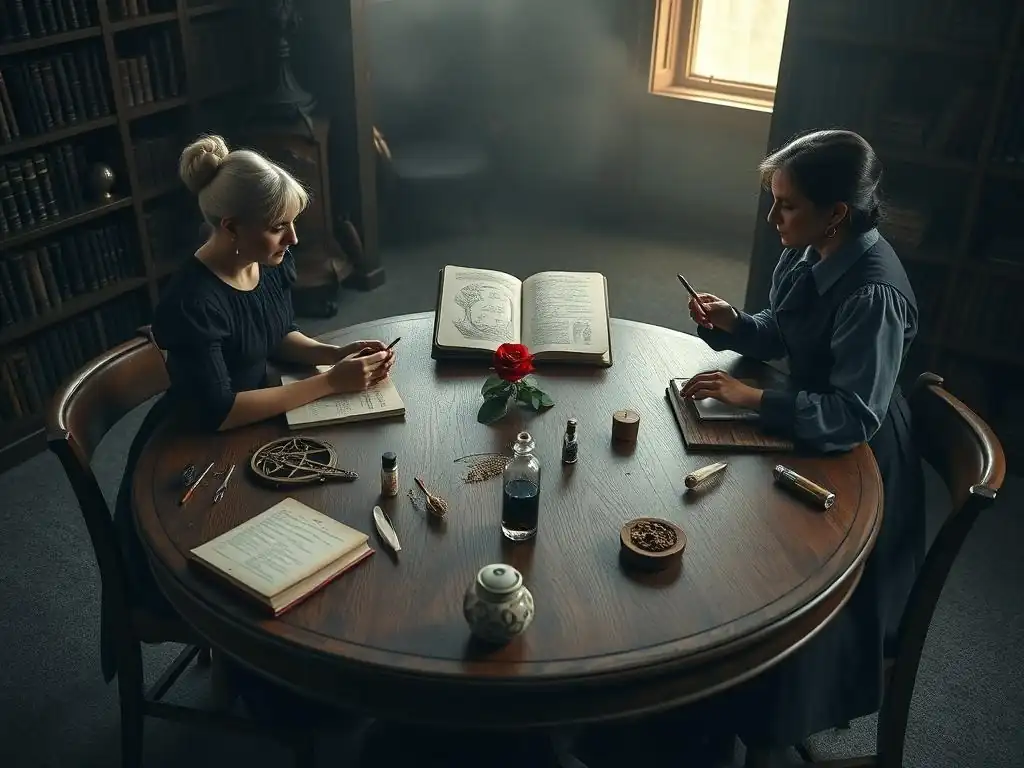
Caroline Herschel: Mentorship and Collaborative Discoveries
Astronomical Contributions and Support for Other Women in Science
Caroline Herschel (1750–1848) stands as a monumental figure in the history of astronomy, not only for her independent discoveries but also for her indirect role in fostering "early women science connections." Initially working as her brother William Herschel's assistant, she developed into a highly skilled astronomer in her own right, becoming the first woman to receive a salary as a scientist from the British crown (in 1787) and the first woman to be awarded the Gold Medal of the Royal Astronomical Society (in 1828).
Her meticulous observations led to the discovery of eight comets and fourteen nebulae, and she significantly contributed to William's monumental star catalogues.
While her direct mentorship of other women was limited by the social norms and geographical spread of the time, Caroline's very existence and public recognition as a professional astronomer served as an undeniable beacon of possibility. Her achievements demonstrated that a woman could not only participate in but excel at rigorous scientific work, offering a tangible example to aspiring female scientists across Europe. Her published work, such as the Index to Flamsteed's Observations (1798), further established her as a serious scholar, implicitly encouraging other women to engage with scientific data and contribute to the field.
Émilie du Châtelet: Translation, Commentary, and Intellectual Exchange
Facilitating Access to Scientific Knowledge and Encouraging Scholarly Discourse
Gabrielle Émilie Le Tonnelier de Breteuil, Marquise du Châtelet (1706–1749), was a polymath whose intellectual prowess profoundly influenced "early women science connections" through her dedication to disseminating and advancing scientific knowledge. Her most enduring legacy is her translation of Isaac Newton’s Philosophiæ Naturalis Principia Mathematica into French, completed with her extensive commentary shortly before her death. This work, Principes mathématiques de la philosophie naturelle, remains the standard French translation of Newton's masterpiece and was crucial in making his complex theories accessible to a broader European audience, including women.
Beyond her translations, du Châtelet's salon at Cirey, where she lived with Voltaire, served as a vibrant hub for intellectual exchange. Here, she engaged in rigorous scientific and philosophical debates with leading thinkers of her era, demonstrating a profound understanding of physics, mathematics, and metaphysics. By actively participating in and facilitating such high-level scholarly discourse, she created an environment where intellectual rigor was celebrated, and women could engage as equals in scientific conversation. Her work not only provided essential scientific texts but also modeled a life dedicated to intellectual inquiry, inspiring and enabling other women to pursue similar paths.
Maria Gaetana Agnesi: Mathematical Prowess and Educational Advocacy
Creating Opportunities for Women in Mathematics and Promoting Learning
Maria Gaetana Agnesi (1718–1799) was an Italian mathematician and philosopher whose contributions significantly advanced "early women science connections" by making complex mathematical concepts more accessible and by demonstrating women's capabilities in the field. Her most famous work, Instituzioni analitiche ad uso della gioventù italiana (Analytical Institutions for the Use of Italian Youth), published in 1748, was a comprehensive two-volume textbook covering algebra, calculus, and differential equations. This groundbreaking text was widely praised and translated into English and French, becoming an essential resource for students across Europe.
Agnesi's textbook was particularly impactful because it systematized and clarified the burgeoning field of calculus, making it understandable to a wider audience, including aspiring female mathematicians who might not have had access to formal instruction. Her appointment as a professor of mathematics at the University of Bologna by Pope Benedict XIV in 1750, though she never formally taught there due to her religious devotion, was an unprecedented recognition of a woman's mathematical talent.
Agnesi's life and work thus served as a powerful testament to women's intellectual capabilities, creating both educational resources and a visible example that inspired and empowered other women to pursue rigorous mathematical studies.
The Impact of Early Women Science Connections
Amplifying Research: Increasing Visibility and Recognition for Female Scientists
The informal "early women science connections" played a crucial role in amplifying the research of female scientists, thereby increasing their visibility and, in some cases, securing recognition. In an era where institutional barriers often prevented women from publishing under their own names or presenting at conferences, these networks served as alternative channels for disseminating their findings. Through correspondence, shared manuscripts, and discussions within salons, new discoveries and theories by women could circulate among a small but influential group of peers.
This informal dissemination was vital for validating their work. When a female scientist's research was discussed and acknowledged within an intellectual circle, it gained a measure of legitimacy that formal avenues often denied. While formal recognition remained elusive for many, these connections provided a crucial sense of peer validation and intellectual belonging, slowly chipping away at the pervasive skepticism surrounding women's scientific capabilities and paving the way for future acceptance.
Fostering Innovation: Collaborative Projects and Breakthrough Discoveries
"Early women science connections," though often informal, were instrumental in fostering innovation and contributing to breakthrough discoveries. Science rarely progresses in isolation; it thrives on the exchange of ideas, the critique of hypotheses, and the sharing of experimental results. For women, these connections provided the intellectual sparring partners and collaborative environments that were otherwise inaccessible. Whether it was Caroline Herschel's meticulous astronomical observations supporting William's grand projects or Émilie du Châtelet's rigorous intellectual exchanges shaping her understanding of Newtonian physics, collaboration was key.
These networks facilitated discussions that sparked new insights, helped refine methodologies, and sometimes led to direct collaborative projects, even if uncredited. For example, the shared passion for botany among women in the 18th and 19th centuries led to extensive plant collecting and illustration, often a collaborative effort between friends or family members, contributing significantly to botanical knowledge. These collaborative efforts, born from necessity, demonstrated the power of collective intelligence and the vital role that diverse perspectives played in advancing scientific understanding.
Creating a Legacy: Inspiring Future Generations of Women in Science
Perhaps one of the most profound impacts of "early women science connections" was the creation of a legacy that inspired future generations of women in science. By demonstrating that scientific inquiry was not only possible but also achievable for women, these pioneering figures, supported by their informal networks, laid crucial groundwork. Their very existence and perseverance, even in the face of immense societal and institutional obstacles, served as powerful role models for those who followed.
The stories of women like Maria Gaetana Agnesi, whose widely used textbook made complex mathematics accessible, or Caroline Herschel, who earned a professional salary as an astronomer, provided tangible proof of female scientific capability. These narratives, passed down through various channels, fueled the aspirations of subsequent generations. They showed that despite the "drawing room" confines, women could indeed transcend boundaries, pursue their intellectual passions, and contribute meaningfully to the scientific canon, thereby paving the path for the greater inclusion of women in science.
Lessons Learned: The Enduring Relevance of Early Women Science Connections
The Importance of Mentorship and Role Models for Women in STEM
The historical struggles of early women scientists powerfully underscore the enduring importance of mentorship and visible role models for women in STEM fields today. Just as Caroline Herschel's work, however indirectly, inspired other women, contemporary female scientists benefit immensely from seeing successful women in leadership, research, and academia. Studies consistently show that access to mentors—individuals who can offer guidance, share experiences, and provide career advice—significantly impacts women's persistence and success in STEM careers.
For instance, a 2018 study by the National Academies of Sciences, Engineering, and Medicine highlighted that effective mentorship is crucial for navigating the complex professional landscape and overcoming challenges like implicit bias. The scarcity of female mentors in early science created a significant barrier, and recognizing this historical gap informs current efforts to build robust mentorship programs and increase the visibility of women in STEM, ensuring that aspiring scientists have tangible examples and support systems.
The Value of Building Supportive Networks in Overcoming Challenges
The ingenious strategies employed by early women scientists to build "early women science connections"—through salons, correspondence, and informal mentorships—offer invaluable lessons on the enduring value of supportive networks in overcoming challenges. In an era where women still face unique hurdles in STEM, including imposter syndrome, work-life balance issues, and persistent biases, robust professional and personal networks remain vital. These networks provide a platform for sharing experiences, offering emotional support, collaborating on projects, and accessing career opportunities that might otherwise be out of reach.
Modern professional organizations, online communities, and affinity groups for women in STEM serve a similar function to the historical salons and correspondence circles. They create spaces where women can find allies, mentors, and collaborators, fostering a sense of belonging and collective strength. The historical precedent demonstrates that isolation is a significant impediment to progress, and actively cultivating supportive networks is a powerful antidote to such challenges, allowing women to thrive and contribute more effectively.
Promoting Diversity and Inclusion in Science: A Call to Action for Today
The narrative of "early women science connections" is not merely a historical curiosity; it is a powerful call to action for promoting diversity and inclusion in science today. The systemic barriers faced by women centuries ago, though perhaps less overt, still manifest in subtle biases and structural inequities within contemporary scientific institutions. Understanding how women historically circumvented these barriers through informal networks highlights the necessity of intentionally creating more inclusive and equitable environments today.
Fostering diversity in science is not just a matter of fairness; it demonstrably leads to more innovative and impactful research outcomes. Diverse teams bring varied perspectives, problem-solving approaches, and a broader range of experiences, enriching the scientific process. By actively promoting inclusivity, supporting underrepresented groups, and valuing diverse forms of collaboration, we can build upon the foundations laid by these early women scientists, ensuring that scientific progress truly benefits from the full spectrum of human talent and ingenuity.
Conclusion: Celebrating the Enduring Legacy of Early Women Science Connections
Women in Science History: Continuing the Conversation
The journey of "early women science connections" reveals a compelling narrative of resilience, ingenuity, and profound intellectual dedication. Despite formidable institutional and societal barriers, pioneering women found innovative ways to connect, collaborate, and contribute to scientific knowledge. WomenInScienceHistory.com is dedicated to continuing this vital conversation, unearthing more of these hidden stories, and celebrating the often-overlooked legacies of female scientists who shaped our understanding of the world.
By shining a light on their struggles and triumphs, we aim to inspire not only future generations of scientists but also a deeper appreciation for the multifaceted history of science itself. The ongoing exploration of these historical networks enriches our collective understanding of how knowledge truly progresses and the diverse contributions that have propelled it forward.
Recognizing the Enduring Importance of Collaborative Networks in Science
The historical evidence overwhelmingly demonstrates that collaborative networks, however informal or challenging to establish, were absolutely essential for the advancement of early women scientists. Their stories are a testament to the enduring truth that scientific progress is rarely a solitary endeavor; it thrives on connection, shared ideas, and mutual support. From the intellectual salons of Paris to the meticulous correspondences across continents, these "early women science connections" forged bridges over vast chasms of isolation.
In an increasingly interconnected world, the lessons from these historical networks remain profoundly relevant. They remind us that fostering supportive communities, promoting open communication, and valuing diverse perspectives are fundamental to scientific innovation and the continued success of all individuals within the scientific community. The legacy of these pioneering women continues to inspire us to build stronger, more inclusive networks for the scientists of today and tomorrow.
Frequently Asked Questions
What were some significant barriers faced by early women scientists attempting to forge connections?
Early women scientists faced significant societal biases and limited access to formal education and scientific institutions. They often had to navigate male-dominated networks that excluded them.
How did early women scientists overcome the lack of formal institutional support to build networks?
Many women relied on informal networks, such as family connections, correspondence with male scientists, and participation in salons and scientific societies that occasionally welcomed them.
What role did correspondence play in facilitating connections for early women scientists?
Correspondence was crucial, enabling women to share ideas, receive feedback, and collaborate on research despite geographical limitations and institutional barriers. It allowed for the creation of vital intellectual exchanges.
How did family connections influence the ability of early women scientists to connect with the scientific community?
Family connections, especially those with scientifically inclined fathers, brothers, or husbands, provided access to resources, mentorship, and introductions to established scientists. These connections were a critical stepping stone for many.
Why is it important to study the history of how early women scientists forged connections?
Understanding their struggles and strategies highlights the historical inequalities in science. It also inspires future generations by showcasing the resilience and ingenuity of women who overcame significant obstacles and contributed significantly to scientific advancement.
Final Reflection: Illuminating the Path of Connection
The stories of early women scientists, as we've explored, are not just historical anecdotes; they are powerful blueprints for resilience and collaboration that resonate deeply in today's scientific landscape. Their struggles to be recognized, their innovative approaches to knowledge sharing, and their unwavering dedication to their fields offer invaluable lessons for navigating the challenges that persist even now.
The impact of these women extends far beyond their individual discoveries. Their collective efforts to build networks and support each other laid the groundwork for a more inclusive and equitable scientific community. Their legacy reminds us that progress is rarely a solitary endeavor, but rather a tapestry woven from shared experiences and mutual encouragement. If I have seen further it is by standing on the shoulders of giants.
- Isaac Newton, a sentiment that underscores the importance of acknowledging and building upon the contributions of those who came before us, especially those who faced systemic barriers.
As we close this exploration of early women science connections, let us carry forward their spirit of collaboration and unwavering determination. Consider how you can actively foster connections within your own sphere of influence, championing inclusivity and creating opportunities for others to thrive. Let their stories inspire you to build bridges, break down barriers, and contribute to a future where scientific progress is truly accessible to all.
Unveil Your Inner Explorer: Connect & Champion!
Thank you for delving into the inspiring stories of early women scientists and the powerful networks they built. Now it’s your turn to build upon their legacy and continue pushing boundaries.
Ready to take action?
- Boldly share this article with a friend, colleague, or family member who would be inspired by these remarkable women and their collaborative spirit.
- Explore the "Resources" section on WomenInScienceHistory.com to discover more untold stories and organizations supporting women in STEM.
- Think about a woman in science who inspired you, and write her a virtual thank you note.
What modern-day connections can you forge to uplift and empower women in science today?