
Voices from the Resistance: Women Scientists Who Fought Back Through Their Work

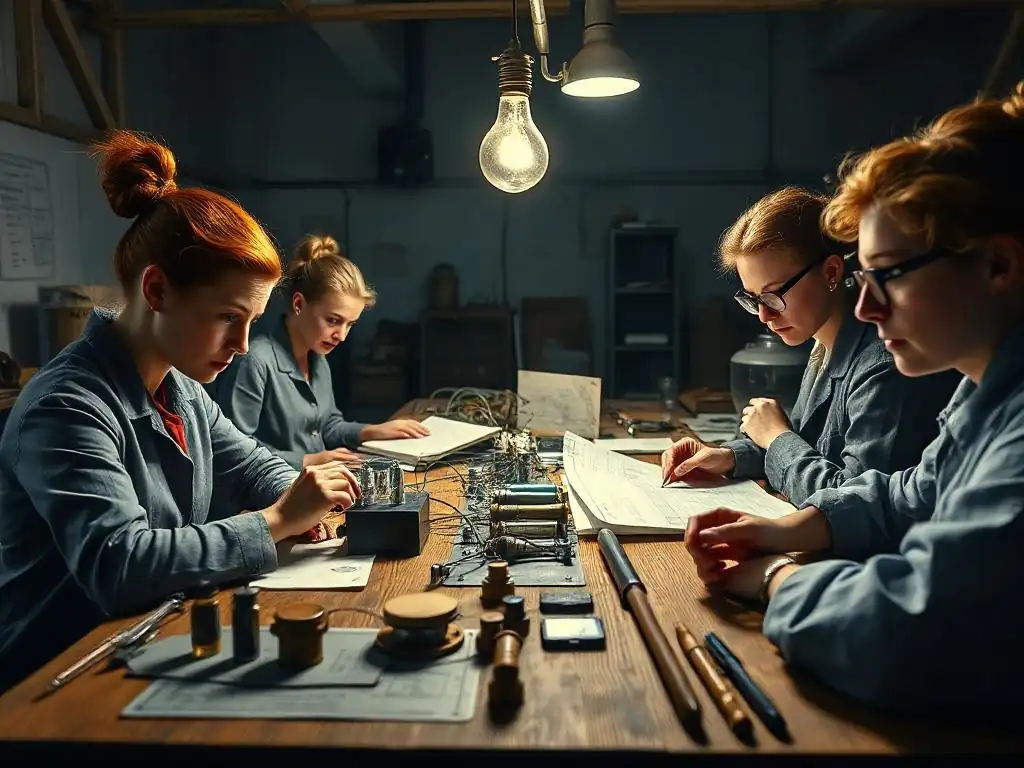
Welcome to WomenInScienceHistory.com!
Uncover the remarkable stories of women who defied expectations and shaped the world of science. In a landscape often dominated by men, these pioneers faced immense challenges, yet their dedication and brilliance shone through. This week, we delve into the Voices from the Resistance: Women Scientists Who Fought Back Through Their Work, exploring how their groundbreaking historical work became a powerful act of defiance. Discover the struggles and triumphs of these incredible individuals and understand the lasting impact of their unwavering spirit. Intrigued? Read on to learn more about their incredible journeys and the obstacles they overcame!
- Introduction: Women Scientists and Resistance Through History
- Pioneering Women Scientists: Examples of Resistance in Their Historical Work
- The Impact of War and Global Events on Female Scientists' Research
- The Power of Scientific Contributions as a Form of Resistance
- Conclusion: Celebrating the Resilience of Women in Science History
-
Frequently Asked Questions
- What kind of resistance did women scientists face historically, according to WomenInScienceHistory.com?
- How does WomenInScienceHistory.com showcase the historical work of women scientists?
- What is the primary goal of WomenInScienceHistory.com in celebrating women scientists?
- Why is it important to understand the historical context of women scientists' contributions?
- How can WomenInScienceHistory.com help promote awareness of women scientists and their resistance?
- Final Reflection: Echoes of Scientific Defiance
- Ignite Your Inner Pioneer: Reclaim Science for All!
Introduction: Women Scientists and Resistance Through History
The Context: Wars & Global Events Impacting Women in Science
Throughout history, major global events such as World Wars, economic depressions, and widespread social upheavals have profoundly shaped the landscape of scientific endeavor. These periods of crisis often disrupted established research priorities, diverted crucial funding towards immediate military or public health needs, and forced scientists into new, often challenging, environments. While these events presented immense obstacles, they also, paradoxically, sometimes created unexpected avenues for individuals previously marginalized within the scientific community, including women.
During these tumultuous times, the inherent societal biases against women in science were often exacerbated, limiting their access to resources, recognition, and leadership roles. Yet, it was precisely in these demanding circumstances that many women scientists demonstrated extraordinary resilience. Their continued pursuit of knowledge and their groundbreaking contributions, often against a backdrop of discrimination and instability, stand as a testament to their quiet, persistent resistance against systemic barriers and the prevailing norms of their eras.
Defining Resistance: Beyond Physical Acts - The Power of Scientific Contributions
Resistance is not always characterized by overt political protest or armed struggle; it can manifest as an unwavering commitment to truth, integrity, and progress in the face of adversity. For women in science, particularly during periods of intense global conflict or societal injustice, resistance often took the form of intellectual defiance, sheer perseverance, and the meticulous pursuit of scientific inquiry. Their "historical work" became a powerful conduit for this resistance, challenging the status quo and asserting their intellectual capabilities in fields where they were frequently dismissed or overlooked.
The scientific contributions of these women, even when seemingly apolitical, had profound societal impacts. They challenged prevailing discriminatory ideologies, such as those based on race or gender, by demonstrating intellectual prowess and producing irrefutable evidence. The very act of a woman conducting rigorous, impactful research in a male-dominated field was a form of defiance, contributing to a slow but significant shift in perceptions. This subtle yet profound "women scientists resistance historical work" laid foundational groundwork for future generations and underscored the power of knowledge as a tool for change.
Pioneering Women Scientists: Examples of Resistance in Their Historical Work
Lise Meitner: Challenging Norms Through Physics During World War II
Lise Meitner, an Austrian-Swedish physicist, stands as a towering figure in the history of nuclear science, yet her journey was fraught with the challenges faced by many women in early 20th-century academia. Born in Vienna in 1878, she pursued physics despite significant societal barriers, eventually becoming the second woman to earn a doctoral degree in physics from the University of Vienna in 1905. Her early career in Berlin was marked by the necessity of working in a former carpenter's workshop, as women were initially not allowed in the main laboratory spaces, and she was unpaid for years.
Her groundbreaking research in radioactivity and nuclear physics, often in collaboration with Otto Hahn, led to the discovery of protactinium in 1917 and, most famously, the theoretical explanation of nuclear fission. However, the rise of Nazism in Germany forced her, a Jewish woman, to flee in 1938. Her continued scientific pursuit, even in exile and under immense personal duress, was an undeniable act of defiance against the regime that sought to erase her and her contributions from German science.
Overcoming Obstacles: Lise Meitner's Journey in a Male-Dominated Field
Lise Meitner's path to scientific prominence was paved with systemic obstacles inherent to her gender and, later, her Jewish heritage. When she first arrived in Berlin in 1907, she was initially denied access to the main laboratory at the Kaiser Wilhelm Institute for Chemistry, being relegated to a basement space. For five years, from 1907 to 1912, she worked without a salary, supported only by her family, highlighting the economic and institutional barriers faced by women aspiring to scientific careers.
Despite these significant disadvantages, Meitner's intellectual brilliance shone through. Her persistent dedication led to her becoming the head of the physics department at the Kaiser Wilhelm Institute in 1917, a testament to her talent and perseverance. Her "women scientists resistance historical work" included navigating outright discrimination, yet she continued to produce pioneering research, often working side-by-side with male colleagues who received greater recognition and resources.
Lise Meitner's Resistance: How Her Work Indirectly Opposed Nazi Ideology
Lise Meitner's forced emigration from Nazi Germany in July 1938, escaping with minimal possessions, underscored the direct threat posed by the regime to Jewish intellectuals. Yet, even from afar in Sweden, her intellectual engagement with her former colleagues continued. It was through correspondence with Otto Hahn that she received news of puzzling experimental results which, with her nephew Otto Frisch, she correctly interpreted as nuclear fission, publishing their theoretical explanation in Nature in January 1939.
Her very existence as a leading scientist, and her continued intellectual contribution to a discovery that would profoundly shape the 20th century, stood in stark contrast to the Nazi regime's attempts to purge Jewish influence from German science and society. Her unwavering commitment to scientific truth and discovery, even as her personal and professional life was shattered by persecution, exemplifies "women scientists resistance historical work" against totalitarian ideologies that sought to control and corrupt scientific inquiry for political ends.
Legacy: The Lasting Impact of Lise Meitner's Scientific Contributions and Resistance
Lise Meitner's scientific legacy is immense, fundamentally reshaping our understanding of atomic physics and laying the groundwork for the atomic age. Her theoretical explanation of nuclear fission was crucial for understanding the immense energy released in the process, a discovery that would lead to both nuclear power and atomic weapons. Despite her pivotal role, she was famously overlooked for the Nobel Prize in Chemistry in 1944, which was awarded solely to Otto Hahn, a decision widely seen as a reflection of the persistent biases against women in science.
Despite the lack of formal recognition during her lifetime, Meitner's perseverance and intellectual integrity have been increasingly celebrated. In 1997, element 109 was officially named Meitnerium (Mt) in her honor, a posthumous acknowledgment of her monumental contributions. Her story serves as a powerful reminder of the resilience of women in science and the quiet yet profound impact of "women scientists resistance historical work" in the face of discrimination, inspiring future generations to seek truth and challenge injustice.
Alice Ball: Scientific Activism in the Face of Racial Discrimination
Alice Augusta Ball, an African American chemist, made a groundbreaking contribution to medicine in the early 20th century, developing the most effective treatment for leprosy. Her story is a powerful testament to the challenges faced by women and people of color in science, and her work represents a significant act of "women scientists resistance historical work" against both disease and systemic discrimination. Born in Seattle in 1892, Ball excelled academically, earning degrees in pharmaceutical chemistry and pharmacology from the University of Washington.
Her exceptional talent led her to the University of Hawaii, where she became the first woman and the first African American to earn an M.S. in chemistry in 1915. At just 23 years old, she also became the university's first female chemistry instructor. In an era marked by pervasive racial segregation and gender inequality, her academic and professional achievements were extraordinary feats of perseverance and a quiet but potent form of defiance against the prevailing social order.
Alice Ball's Groundbreaking Research on the Treatment of Leprosy
Alice Ball's most significant contribution was her development of the "Ball Method," a revolutionary treatment for leprosy (Hansen's disease). Before her work, the primary treatment involved injecting crude chaulmoogra oil, which was painful and ineffective due to its insolubility in water. Ball successfully isolated the active chemical compounds from chaulmoogra oil and, through a process of esterification, created the ethyl esters of its fatty acids.
This rendered the oil derivatives water-soluble and injectable, allowing for their absorption into the bloodstream. Her method significantly reduced the side effects and improved the efficacy of the treatment, making it the most effective remedy for leprosy until the advent of sulfa drugs in the 1940s. Thousands of patients worldwide benefited from her scientific breakthrough, transforming a previously debilitating and highly stigmatized disease into a manageable condition.
The Intersection of Science and Social Justice: Alice Ball's Overlooked Contributions
Alice Ball's groundbreaking work, despite its profound global impact, was tragically overshadowed and nearly lost to history due to racial and gender discrimination. After her untimely death at the age of 24 in 1916, her male supervisor, Harry T. Hollmann, published her findings without giving her proper credit, initially naming the technique the "Hollmann Method." Later, the university president, Arthur Dean, continued to develop the method and published the results, also failing to acknowledge Ball's primary role and even attempting to rename it the "Dean Method."
This erasure of her contributions highlights the systemic biases prevalent in early 20th-century science, where the work of women and minorities was often co-opted or undervalued. The decades it took for her legacy to be properly recognized underscore the "resistance" inherent in simply existing and excelling as a Black woman in science during that period. Her pursuit of a cure for a disease often affecting marginalized communities also speaks to a deep, inherent commitment to social justice through scientific means.
Enduring Influence: Alice Ball's Contribution to Science and the Fight for Equality
In recent decades, efforts have been made to correct the historical record and celebrate Alice Ball's rightful place in science history. The University of Hawaii has officially recognized her contributions, and her story is now taught as an example of both scientific brilliance and the fight for equity. In 2000, the university dedicated a plaque in her honor, and February 29th (her birthday) is now recognized as "Alice Ball Day" by the Lieutenant Governor of Hawaii.
Alice Ball's story is a powerful narrative of "women scientists resistance historical work" against both formidable disease and entrenched societal prejudice. Her perseverance, intelligence, and unwavering commitment to scientific discovery continue to inspire young people, particularly women and people of color, to pursue careers in STEM fields and to advocate for a more inclusive and equitable scientific community where contributions are recognized regardless of background.
Rachel Carson: Using Scientific Knowledge to Counter Environmental Threats
Rachel Carson, a marine biologist, conservationist, and author, became a monumental figure in the 20th century through her pioneering work that launched the modern environmental movement. Her seminal book, Silent Spring, published in 1962, meticulously documented the devastating effects of synthetic pesticides on ecosystems and human health, challenging the widespread and unregulated use of chemicals like DDT. Her work exemplifies how rigorous scientific communication can be a powerful and necessary form of resistance against industrial practices and governmental complacency.
The context of her work was the post-World War II era, which saw a rapid expansion of chemical industries and the widespread application of pesticides, often with little understanding of their long-term environmental consequences. The dominant narrative championed these chemicals as signs of progress and agricultural efficiency. Carson's scientific integrity and deep ecological understanding compelled her to investigate these claims and present a counter-narrative based on evidence, despite the significant personal and professional risks involved.
Rachel Carson's Expertise in Marine Biology
Rachel Carson's foundational scientific expertise was in marine biology, a field she pursued with passion and dedication. She earned her master's degree in zoology from Johns Hopkins University in 1932. Her professional career began with the U.S. Bureau of Fisheries (later the U.S. Fish and Wildlife Service), where she worked as a junior aquatic biologist, writing scientific articles and radio scripts to educate the public about marine life.
Before Silent Spring, Carson had already established herself as a highly respected science writer and a keen observer of the natural world. Her previous books, Under the Sea-Wind (1941), The Sea Around Us (1951), and The Edge of the Sea (1955), were critically acclaimed bestsellers that showcased her ability to convey complex ecological concepts with poetic clarity and scientific accuracy. This established credibility was crucial when she later embarked on her more controversial and challenging "women scientists resistance historical work" against the chemical industry.
Fighting Misinformation: Rachel Carson's Role in Raising Awareness About Pesticides
Upon the publication of Silent Spring, Rachel Carson faced an intense and well-funded campaign of misinformation and personal attacks from powerful chemical companies and their allies in government. She was ridiculed as an emotional, unscientific "spinster" and an alarmist, with attempts made to discredit her scientific credentials and undermine her message. Some critics even suggested that her work would lead to widespread famine and disease by advocating against pesticides.
Despite this formidable opposition, Carson steadfastly maintained her position, supported by meticulous research. She synthesized hundreds of scientific studies, governmental reports, and personal testimonies to build an irrefutable case for the dangers of persistent pesticides. Her courage in standing against a powerful industrial lobby and her commitment to presenting scientific evidence in the face of deliberate misinformation represent a profound act of "women scientists resistance historical work," transforming public awareness and policy regarding environmental health.
Scientific Integrity as Resistance: The Importance of Evidence-Based Approaches
Rachel Carson's form of resistance was rooted deeply in her unwavering commitment to scientific integrity and the pursuit of ecological truth. She did not engage in political rhetoric but rather presented a clear, evidence-based argument that challenged a dominant paradigm driven by economic interests rather than scientific caution. Her work highlighted the critical importance of understanding interconnected ecological systems and the long-term consequences of human actions on the environment.
The impact of Silent Spring was immediate and far-reaching. It sparked widespread public concern, led to a presidential advisory committee report that largely validated her findings, and ultimately contributed to the nationwide ban on DDT for agricultural use in the United States in 1972. Furthermore, her advocacy was instrumental in the creation of the U.S. Environmental Protection Agency (EPA). Carson's legacy demonstrates how rigorous scientific inquiry, combined with effective communication, can be a potent force for societal change and environmental protection, serving as a powerful example of "women scientists resistance historical work" that continues to resonate today.
The Impact of War and Global Events on Female Scientists' Research

Funding and Resources: How Conflicts Shifted Priorities in Scientific Research
Periods of war and major global events inevitably redirect national priorities, significantly impacting the allocation of funding and resources for scientific research. During conflicts, there is often a massive shift from basic, curiosity-driven research to applied science directly relevant to military needs, such as ballistics, cryptography, and medical advancements for treating combat injuries. This reorientation often meant reduced budgets for fields traditionally pursued by women, or those deemed less "critical" to the war effort, such as pure biology, astronomy, or certain areas of chemistry.
For many women scientists, this shift could mean a sudden cut-off of existing grants, the closure of laboratories, or a forced redirection of their own research focus. However, it also sometimes created new, albeit often temporary, opportunities in fields that suddenly became vital to national security or public health. For instance, during World War II, women were increasingly recruited into roles in engineering, chemistry, and physics to support the war effort, filling gaps left by men serving on the front lines.
Increased Opportunities and New Challenges for Women in STEM During Wartime
Wartime labor shortages, particularly during World War I and II, did open doors for women in scientific and technical roles that were previously inaccessible or highly male-dominated. Women took on critical responsibilities in factories, government laboratories, and research institutions. For example, during World War II, the number of women in the U.S. workforce increased by approximately 50%, with many entering industrial and scientific roles, including as engineers, chemists, and mathematicians (often termed "computers").
However, these newfound opportunities often came with significant challenges. Women typically faced lower pay compared to their male counterparts for the same work, and their positions were frequently considered temporary, with the expectation that they would return to domestic roles once the war concluded. This highlights the transient nature of some wartime "advancements" and the persistent societal barriers that women scientists had to contend with, even when their expertise was desperately needed, making their continued presence a form of "women scientists resistance historical work" against ingrained gender norms.
The Long-Term Effects: How Historical Events Shaped the Trajectory of Women's Scientific Careers
The end of wartime often brought a reversal of the temporary gains made by women in STEM. As men returned from service, many women were pressured or forced out of their scientific and technical positions to make way for male veterans. This often meant a regression to lower-status roles, or even a complete exit from the scientific workforce, hindering their long-term career progression and recognition. For instance, many women who served as "computers" during WWII found it difficult to transition into professional computing roles in the post-war era.
Despite these setbacks, the very act of women participating and demonstrating competence in critical scientific roles during these times had lasting, albeit slow, effects. Their visibility and contributions, however fleeting, helped to chip away at the deeply entrenched biases against women in science, validating their intellectual capabilities and proving their essential role. The "women scientists resistance historical work" during these periods, even if not immediately recognized, laid crucial groundwork for future generations, contributing to the gradual erosion of barriers and paving the way for greater inclusion in STEM.
The Power of Scientific Contributions as a Form of Resistance
Preserving Knowledge: Protecting Scientific Data and Research During Times of Conflict
During periods of intense conflict or political upheaval, the preservation of scientific knowledge, data, and research often becomes a critical act of resistance against destruction, censorship, or appropriation. Scientists, including many women, risked their lives and careers to safeguard invaluable research, unique specimens, and intellectual property. For example, during World War II, scientists in various European institutions made heroic efforts to hide or transport sensitive research materials away from advancing armies, often at great personal peril.
This quiet heroism of preserving knowledge ensured that scientific progress could continue after periods of disruption, preventing a loss of accumulated human understanding. The meticulous cataloging, hiding, and sometimes clandestine transfer of research materials by these unsung heroes, many of whom were women working behind the scenes, represents a profound and often overlooked aspect of "women scientists resistance historical work," ensuring that the torch of discovery could be passed to future generations.
Challenging Ideologies: Using Scientific Findings to Debunk Discriminatory Beliefs
Throughout history, scientific findings have sometimes been twisted or fabricated to support discriminatory ideologies, such as theories of racial superiority or gender inferiority. In response, many women scientists used their rigorous, evidence-based research to directly or indirectly counter these pseudoscientific claims. For instance, pioneering female anthropologists and biologists conducted studies that debunked eugenics or challenged the notion of inherent intellectual differences between genders or races.
Their commitment to empirical data and objective analysis served as a powerful intellectual counter-narrative, demonstrating that scientific truth, not prejudice or political agendas, should guide our understanding of the world. This intellectual "women scientists resistance historical work" was vital in shaping public discourse and laying the groundwork for more equitable societal views, proving that science, when pursued with integrity, can be a potent weapon against injustice.
Inspiring Future Generations: How These Women Paved the Way for More Inclusive Scientific Communities
The perseverance and achievements of these pioneering women scientists, often accomplished against immense odds, created invaluable role models and shattered prevailing stereotypes about who could excel in scientific fields. By demonstrating extraordinary intellectual capability, resilience, and dedication, they proved that scientific excellence is not limited by gender, race, or social background. Their very presence in labs, universities, and research institutions was a challenge to the exclusionary norms of their time.
Today, as their stories are increasingly unearthed, shared, and celebrated, they continue to inspire young girls and women worldwide to pursue careers in STEM. Their "women scientists resistance historical work" serves as a powerful testament to the fact that determination and scientific brilliance can overcome systemic barriers, paving the way for more diverse, inclusive, and equitable scientific communities where talent can flourish regardless of one's identity.
Conclusion: Celebrating the Resilience of Women in Science History
The Enduring Legacy of Women Scientists' Resistance Through Their Work
The scientific contributions of women throughout history, particularly during times of conflict, upheaval, and pervasive discrimination, represent a profound and often understated form of resistance. Their unwavering commitment to discovery, even when faced with systemic barriers, personal danger, or outright erasure, not only advanced human understanding in countless fields but also served as a powerful defiance against the gendered and racialized norms that sought to limit their potential.
From explaining nuclear fission in exile to developing life-saving treatments for stigmatized diseases and igniting environmental movements, their "women scientists resistance historical work" is an indelible part of our collective scientific heritage.
Their achievements demonstrate that the pursuit of knowledge itself can be an act of courage, challenging the status quo and asserting intellectual freedom. These women, often working in the shadows or against powerful opposition, laid crucial groundwork for scientific progress and greater equity in science. Their resilience and dedication serve as a testament to the enduring power of the human spirit to seek truth and contribute to the betterment of society, even in the most challenging circumstances.
Continuing the Fight: Inspiring Future Generations of Female Scientists to Challenge Injustice
While significant progress has been made, challenges for women in science persist, including issues of representation, bias, and equitable opportunities. The stories of historical "women scientists resistance historical work" offer invaluable blueprints for current and future generations of female scientists. They provide inspiration and practical lessons in perseverance, advocacy, and the critical importance of maintaining scientific integrity in the face of external pressures.
By learning from these pioneering women, aspiring female scientists are empowered to continue challenging biases, advocating for inclusive environments, and using their scientific acumen as a tool for positive social change. Their historical struggles and triumphs remind us that the fight for equity in science is an ongoing journey, and that every act of intellectual bravery contributes to a more just and innovative future.
Further Exploration: Resources for Learning More About Women in Science and Resistance
The rich tapestry of "women scientists resistance historical work" is far from fully unraveled, and countless inspiring narratives await deeper exploration. Numerous resources exist to delve further into the lives and contributions of these extraordinary individuals. From academic biographies and historical archives to dedicated online platforms and educational initiatives, the opportunities to learn more are abundant.
We encourage readers to seek out and engage with these resources to gain a deeper appreciation for the profound impact these women had on science and society. Understanding their struggles and their triumphs not only enriches our knowledge of scientific history but also strengthens our resolve to continue advocating for a world where scientific talent is recognized and celebrated, irrespective of gender or background.
Frequently Asked Questions
What kind of resistance did women scientists face historically, according to WomenInScienceHistory.com?
The website highlights that women scientists encountered challenges in male-dominated arenas, including limited access to resources and recognition, and societal biases against their capabilities. Their work was often overlooked or dismissed.
How does WomenInScienceHistory.com showcase the historical work of women scientists?
The site features biographies of pioneering female scientists, detailing their lives, groundbreaking contributions, and the obstacles they overcame. It aims to shed light on their often-unrecognized achievements.
What is the primary goal of WomenInScienceHistory.com in celebrating women scientists?
The website aims to inspire future generations by showcasing the stories of female scientists who made significant contributions to various scientific fields. It seeks to rectify their historical underrepresentation.
Why is it important to understand the historical context of women scientists' contributions?
Understanding the historical context reveals the systemic barriers and societal prejudices that women scientists had to navigate, highlighting the significance of their accomplishments despite facing resistance and limitations.
How can WomenInScienceHistory.com help promote awareness of women scientists and their resistance?
By providing a dedicated platform for biographies and discussions of their historical work, the site raises awareness about their contributions and the challenges they faced, fostering appreciation for their resilience and talent.
Final Reflection: Echoes of Scientific Defiance
The stories we've explored, the unyielding spirit of women scientists who resisted oppression through their work, resonate powerfully today. In a world still grappling with inequality and facing new challenges to scientific integrity, their dedication serves as a potent reminder that knowledge and truth are powerful weapons against injustice. Their struggles and triumphs are not just historical footnotes; they are vital lessons for navigating the complexities of our present.
The impact of these women extends far beyond their individual discoveries. They challenged societal norms, paved the way for future generations of female scientists, and demonstrated the profound importance of intellectual freedom. Their courage continues to inspire me, reminding me that even in the face of adversity, the pursuit of knowledge is a revolutionary act. Never be limited by other people's limited imaginations.
- Dr. Mae Jemison, the first African American woman in space, perfectly encapsulates the spirit of these women who refused to be confined by societal expectations.
As we close this chapter, let us carry forward the legacy of these remarkable women. Let their stories fuel our own commitment to truth, justice, and the unwavering pursuit of knowledge. Consider how you can, in your own sphere of influence, champion inclusivity, defend scientific integrity, and ensure that the voices of all scientists, especially those historically marginalized, are heard and valued. The resistance continues, and we all have a role to play.
Ignite Your Inner Pioneer: Reclaim Science for All!
Thank you for diving into the inspiring stories of these remarkable women! Their dedication reminds us that science thrives on diverse perspectives and unwavering courage. Now, it's your turn to keep their spirit alive.
- Amplify their legacy: Share this article with three friends or colleagues who need a dose of scientific inspiration.
- Unearth hidden figures: Research a lesser-known woman scientist from your local area and share her story on social media using #WomenInScienceHistory.
- Challenge the status quo: Actively seek out and support initiatives that promote gender equality in STEM fields, whether through mentorship, donations, or advocacy.
What small step can you take today to ensure future generations of women scientists have the opportunity to change the world?