
The Interwar Innovators: The Growth and Adaptation of Women's Science Networks

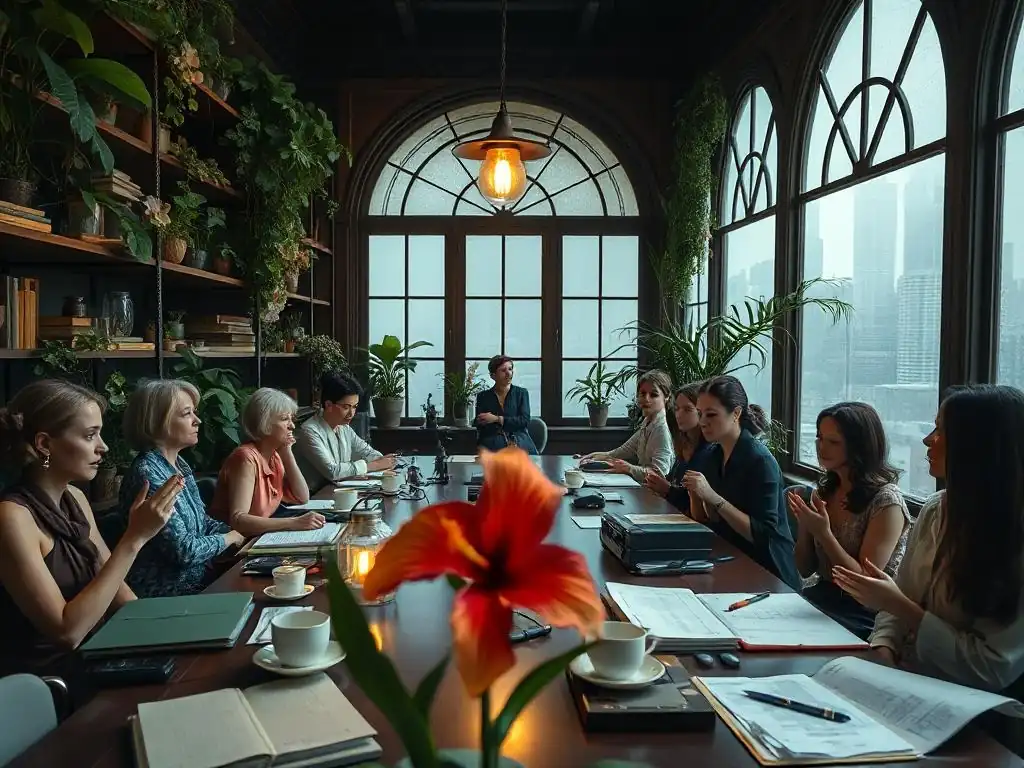
Welcome to WomenInScienceHistory.com, where we unearth the remarkable stories of women who shaped the scientific landscape. Did you know that even with groundbreaking discoveries, women scientists often faced unique hurdles in building and maintaining their professional networks? This brings us to our featured article, “The Interwar Innovators: The Growth and Adaptation of Women's Science Networks.” Delve into the historical context of women’s science network growth challenges during this pivotal era and discover how these determined pioneers navigated a world that wasn't always ready to embrace their brilliance.
What strategies did they employ to overcome societal barriers and foster collaboration? Keep reading to find out!
- Introduction: Women in Science Between the Wars
- Evolution of Women's Science Networks: A Historical Overview
- Women’s Science Network Growth Challenges: Obstacles and Opportunities
- Case Studies: Successful Interwar Women's Science Networks
- Adaptation and Innovation: How Women's Networks Responded to the Era
- The Impact of Interwar Networks on Women's Scientific Careers
- Legacy and Lessons Learned: The Enduring Influence of Interwar Networks
-
Frequently Asked Questions
- What were some of the biggest challenges facing women's science networks during the interwar period?
- How did women's science networks adapt to the growth challenges they faced during this time?
- What role did international collaborations play in the growth of women's science networks?
- Why is it important to study the challenges and successes of women's science networks in the past?
- How can learning about historical women's science networks inspire future generations of female scientists?
- Final Reflection: Embracing the Legacy of Interwar Resilience
- Unveil Your Inner Pioneer!
Introduction: Women in Science Between the Wars
Setting the Stage: The Interwar Period and Scientific Advancement
The period between the two World Wars, from 1919 to 1939, was a crucible of profound societal change and unprecedented scientific advancement. Following the devastation of World War I, nations grappled with economic instability and shifting political landscapes, yet simultaneously witnessed a remarkable surge in scientific inquiry and technological innovation. This era saw the consolidation of quantum mechanics, the expansion of Einstein's theory of relativity, and groundbreaking discoveries in medicine, such as the isolation of insulin and the initial development of antibiotics like penicillin.
Within this dynamic environment, the scientific community, though predominantly male, began to experience subtle shifts. The war had, in some instances, necessitated the temporary inclusion of women in roles previously deemed unsuitable, revealing their capabilities in technical and scientific fields. While these opportunities often receded with the return of peace, the intellectual ferment of the interwar years created a fertile ground for new ideas, including a slow but steady re-evaluation of women's potential contributions to science.
The Rise of Women's Scientific Presence (1919-1939)
Despite significant societal barriers, the interwar period marked a discernible, albeit gradual, increase in the number of women pursuing higher education and careers in scientific disciplines. Universities, particularly in the United States and Great Britain, saw a growing enrollment of female students in physics, chemistry, biology, and mathematics. For instance, by the mid-1930s, women constituted approximately 10-15% of all science graduates in some major US universities, a notable increase from pre-war figures, though still a small fraction of the overall scientific workforce.
These pioneering women, often driven by an unyielding passion for discovery, began to carve out niches in research institutions, industrial laboratories, and academic departments. While many were relegated to assistant or demonstrator roles, a determined few achieved recognition for their independent research. Their growing presence underscored the need for specialized support structures, leading to the nascent development and eventual women’s science network growth challenges that would define their collective efforts.
Evolution of Women's Science Networks: A Historical Overview
Defining Women's Science Networks: Purpose and Structure
Women's science networks during the interwar period were informal or semi-formal associations formed by and for women in scientific fields. Their primary purpose was multifaceted: to provide mutual support, share scarce resources, combat professional isolation, and advocate for greater recognition and opportunities within a male-dominated scientific establishment. These networks emerged as essential lifelines for women navigating a landscape rife with gender-based discrimination and limited access to traditional career pathways.
The structures of these networks varied widely, ranging from highly organized professional associations with formal memberships and regular meetings to informal gatherings of colleagues within university departments or research laboratories. Some were disciplinary-specific, focusing on, for example, chemistry or biology, while others were broader, uniting women across various scientific fields. Regardless of their structure, these networks served as critical hubs for intellectual exchange, mentorship, and collective action, directly addressing the unique women’s science network growth challenges of the era.
Key Characteristics of Interwar Women's Science Networks
A defining characteristic of interwar women's science networks was their strong emphasis on self-help and advocacy. Recognizing the systemic barriers they faced, members often pooled their limited resources—whether laboratory space, equipment, or even accommodation—to facilitate research and collaboration. Many networks actively campaigned for equal pay, access to tenure-track positions, and representation on scientific committees, aiming to dismantle the institutional obstacles that impeded women's progress.
Furthermore, these networks frequently transcended disciplinary boundaries, a necessity given the relatively small number of women in any single scientific field. A chemist might find common ground and support with a biologist or a mathematician, fostering interdisciplinary discussions and collaborations that might not have occurred in traditional, often siloed, male-dominated environments. This collaborative spirit was crucial for the women’s science network growth challenges they faced, enabling a broader base of support and a more unified voice for women in science.
Women’s Science Network Growth Challenges: Obstacles and Opportunities
Societal Barriers to Women in Science During the Interwar Period
The interwar period, despite its scientific advancements, remained deeply entrenched in patriarchal societal norms that significantly impeded women's full participation in science. Prevailing attitudes often deemed women intellectually inferior or inherently unsuited for rigorous scientific inquiry, confining them largely to domestic roles or traditional "feminine" professions. This manifested in myriad ways, from subtle condescension to outright exclusion from academic positions, research grants, and professional societies.
Many women scientists encountered the "marriage bar," a policy or informal practice that forced women to resign from their professional posts upon marriage, particularly prevalent in countries like Britain. Even without such explicit rules, the expectation that women would prioritize family over career often led to them being overlooked for promotions or prestigious appointments. These systemic biases presented formidable women’s science network growth challenges, making it difficult for individual women to thrive and necessitating collective action to overcome the formidable walls of discrimination.
Funding and Resources: Limited Access for Female Scientists
Access to adequate funding and resources represented a significant hurdle for women in science during the interwar years. Grant applications from women were often disproportionately scrutinized or denied, reflecting a pervasive skepticism about their commitment or capability to conduct independent research. This meant that many female scientists were relegated to poorly equipped laboratories, worked without the latest instruments, or relied on the generosity of male colleagues for access to essential facilities.
For example, a study of university science departments in the United States in the late 1920s revealed that women faculty members, if present at all, typically received significantly less departmental funding for their research compared to their male counterparts. This scarcity of resources often forced women to pursue less expensive research avenues or to collaborate extensively, pooling meager supplies. These financial constraints were central to the women’s science network growth challenges, driving the need for collective resource-sharing and advocacy for equitable funding.
Overcoming Isolation: The Importance of Networking for Women
The isolation experienced by many pioneering women scientists was a profound professional and psychological barrier. Often, a woman might be the sole female faculty member or researcher in an entire department, facing a constant battle against skepticism, lack of mentorship, and an absence of peers with whom to share experiences or collaborate. This professional loneliness could stifle intellectual growth and career progression, making it difficult to feel part of a broader scientific community.
In response, women's science networks emerged as vital havens. These networks provided not only emotional support and a sense of belonging but also crucial professional avenues for collaboration, shared advice, and mentorship. By connecting women across institutions and disciplines, these networks enabled the exchange of ideas, facilitated access to informal resources, and offered a platform to discuss and strategize against common professional obstacles. This collective solidarity was instrumental in addressing the profound women’s science network growth challenges posed by professional isolation.
Case Studies: Successful Interwar Women's Science Networks

The American Association of University Women (AAUW): A Model for Collaboration
The American Association of University Women (AAUW), though not exclusively a science organization, played a pivotal role in fostering a vital women's science network during the interwar period. Established in 1881, its mission expanded significantly to support women's higher education and professional development, including in scientific fields. The AAUW recognized the critical need for financial aid for women pursuing advanced degrees and research.
Throughout the 1920s and 1930s, the AAUW awarded numerous fellowships to women in science, enabling them to conduct groundbreaking research and pursue doctoral studies at a time when such opportunities were scarce. By 1930, the AAUW had granted over 200 fellowships, a significant portion of which supported women in natural sciences, engineering, and medicine. These fellowships not only provided crucial financial backing but also connected recipients into a robust network of accomplished female scholars, fostering collaboration and mutual support against common women’s science network growth challenges.
The British Federation of University Women (BFUW): Fostering Innovation and Mentorship
In Britain, the British Federation of University Women (BFUW), founded in 1907, mirrored the AAUW's efforts and played a crucial role in supporting women scientists during the interwar years. The BFUW focused on promoting the interests of women graduates, providing practical support, and advocating for their professional advancement. A key initiative was the establishment of residential clubs, such as Crosby Hall in London, which offered affordable accommodation and a supportive community for women academics and researchers.
Beyond providing physical spaces, the BFUW organized lectures, conferences, and study groups that facilitated intellectual exchange and mentorship among its members. These events allowed women scientists to present their research, discuss challenges, and form invaluable professional relationships. The BFUW also offered a limited number of research grants and fellowships, particularly to women facing financial hardship or those displaced by political turmoil in Europe, thereby actively addressing the women’s science network growth challenges of the time by offering both material and intellectual support.
The Women Scientists at the Marine Biological Laboratory (MBL), Woods Hole: Addressing Specific Scientific Challenges
The Marine Biological Laboratory (MBL) in Woods Hole, Massachusetts, stands out as a unique hub where an unusually high concentration of women scientists thrived during the interwar period, forming an informal yet highly effective network. Unlike many university departments that limited women's participation, MBL provided a relatively egalitarian research environment, attracting numerous pioneering female biologists, zoologists, and physiologists. Approximately 20-30% of the researchers at MBL during peak summer sessions in the 1920s and 1930s were women, a stark contrast to typical academic settings.
This concentration fostered a vibrant community where women scientists like Ethel Browne Harvey, known for her work on cell division, and Libbie Hyman, a leading invertebrate zoologist, could collaborate, share techniques, and mentor younger researchers. The informal nature of MBL allowed for spontaneous intellectual exchange and mutual support, overcoming many of the institutional barriers present elsewhere. This natural formation of a supportive network at MBL was instrumental in enabling significant scientific contributions by women in the face of broader women’s science network growth challenges.
Adaptation and Innovation: How Women's Networks Responded to the Era
Strategies for Visibility: Promoting Women's Scientific Achievements
Recognizing that women's scientific achievements were often overlooked or undervalued, interwar women's networks actively developed strategies to enhance their members' visibility. This included establishing their own publications or dedicated sections within existing journals to showcase research conducted by women. They also organized public lectures, seminars, and conferences where female scientists could present their findings to broader audiences, including the general public and influential figures.
Furthermore, these networks engaged in strategic efforts to nominate their members for prestigious awards, professional society memberships, and key appointments, even when facing significant resistance from male-dominated committees. While not always successful, these persistent campaigns raised awareness of women's contributions and challenged the prevailing narrative that science was exclusively a male domain. Such initiatives were crucial for navigating the women’s science network growth challenges related to professional recognition and dispelling pervasive biases.
Mentorship and Support Systems: Building a Stronger Scientific Community
A cornerstone of interwar women's science networks was the development of robust mentorship and support systems. Experienced women scientists, often holding senior positions or having navigated significant career hurdles, provided invaluable guidance to younger colleagues. This mentorship extended beyond scientific advice to include practical career navigation, strategies for balancing professional and personal life, and coping mechanisms for dealing with discrimination.
These networks also facilitated the creation of practical support structures. This included informal arrangements for shared laboratory space, equipment, or even accommodation, particularly for women traveling for research. The collective pooling of resources and knowledge helped individual members overcome specific women’s science network growth challenges related to limited access and funding. This nurturing environment fostered a strong sense of community, ensuring that women scientists felt supported and less isolated in their pursuits.
Women's science networks during the interwar period devised innovative strategies to navigate the often-hostile landscape of male-dominated scientific institutions. One key approach was collective advocacy: networks lobbied universities, professional societies, and government bodies for policy changes that would promote gender equality, such as advocating for equal pay, fairer hiring practices, and the removal of the "marriage bar."
Beyond formal advocacy, networks empowered individual women to develop personal strategies for success. This often involved excelling in niche but critical areas of research where their contributions could not be easily dismissed, or forming strategic alliances with supportive male colleagues. By sharing experiences and offering practical advice, these networks helped women assert their intellectual authority, challenge skepticism, and establish their credibility in environments where their presence was often questioned, thereby directly addressing the pervasive women’s science network growth challenges.
The Impact of Interwar Networks on Women's Scientific Careers
Increased Opportunities for Research and Publication
The collective strength of interwar women's science networks directly translated into increased opportunities for their members to conduct and publish research. By facilitating access to shared laboratory equipment, providing informal funding sources, and connecting women with potential collaborators, these networks bypassed many of the traditional barriers to research. For instance, a network might help a chemist secure access to a spectroscope or connect a biologist with a researcher at a marine station, enabling projects that would otherwise be impossible.
Furthermore, the existence of network-supported publications or dedicated sections within broader journals provided essential venues for women to disseminate their findings. This was crucial at a time when women's submissions might face greater scrutiny or outright rejection from mainstream journals. The enhanced visibility and practical support offered by these networks undoubtedly contributed to a measurable increase in the number of scientific papers and books authored or co-authored by women during this period, despite the persistent women’s science network growth challenges.
Enhanced Professional Development and Leadership Roles
Interwar women's science networks were instrumental in fostering the professional development of their members, often providing training and leadership opportunities that were scarce in traditional academic settings. Within the networks themselves, women took on leadership roles as committee chairs, journal editors, and event organizers, gaining invaluable experience in administration, communication, and strategic planning.
These networks also served as platforms for women to hone their presentation skills through regular seminars and conferences, preparing them for broader scientific discourse. While still rare, the support provided by these networks occasionally enabled women to secure more prominent positions within universities or research institutions, such as becoming heads of smaller departments or serving on advisory boards. This collective push contributed to a slow but steady increase in women's professional influence, despite the enduring women’s science network growth challenges.
Breaking Down Barriers: Long-Term Effects on Gender Equality in Science
The groundwork laid by interwar women's science networks had profound, long-term effects on the trajectory of gender equality in science. By persistently challenging discriminatory practices, advocating for equal opportunities, and demonstrating the intellectual prowess of women scientists, these networks began to chip away at deeply ingrained societal and institutional barriers. Their efforts created precedents for future generations of women entering STEM fields.
The collective memory of these networks and the achievements of their members provided a powerful narrative that countered the erasure of women's contributions from scientific history. Though progress was slow and uneven, the sustained pressure from these organized groups contributed to a gradual shift in attitudes and policies in the decades that followed. The legacy of their fight against women’s science network growth challenges helped to establish a foundation upon which later feminist scientific movements would build, advocating for greater inclusion and equity in science.
Legacy and Lessons Learned: The Enduring Influence of Interwar Networks
Inspiring Future Generations of Women Scientists
The stories of the interwar innovators and the networks they forged continue to serve as a profound source of inspiration for future generations of women scientists. Their resilience, intellectual rigor, and unwavering commitment to scientific discovery in the face of immense adversity offer powerful role models. Learning about figures like Lise Meitner, who persevered through persecution and professional marginalization, or the collaborative spirit of women at MBL, underscores the human capacity for achievement against all odds.
These historical narratives demonstrate that the pursuit of scientific excellence by women is not a recent phenomenon but has deep roots, often sustained by collective effort. By highlighting how these pioneers navigated and overcame significant women’s science network growth challenges, their experiences provide a compelling blueprint for current and future efforts to promote diversity and inclusion in STEM. Their legacy reminds us of the importance of tenacity and community in achieving scientific breakthroughs.
The Importance of Collaboration and Advocacy
The enduring lesson from interwar women's science networks is the irreplaceable importance of collaboration and advocacy in advancing women's careers and addressing systemic inequalities in science. Individual brilliance, while necessary, was often not sufficient to overcome the institutional and societal barriers of the era. It was through collective action—sharing resources, providing mentorship, and advocating for policy changes—that significant progress was made.
These networks demonstrated that a unified voice and shared purpose could create opportunities where none existed, and that mutual support could sustain individuals through professional isolation and discrimination. The principles of community-building, active mentorship, and persistent advocacy, honed during a period of immense women’s science network growth challenges, remain profoundly relevant today. They serve as a timeless reminder that fostering an inclusive and equitable scientific landscape requires ongoing, concerted effort and the unwavering support of a strong network.
Frequently Asked Questions
What were some of the biggest challenges facing women's science networks during the interwar period?
The interwar period presented significant obstacles. These included funding limitations, limited access to resources and institutions, and persistent gender bias within the scientific community.
How did women's science networks adapt to the growth challenges they faced during this time?
Women adapted by creating supportive communities, leveraging international collaborations, and actively seeking opportunities to publish and present their research.
What role did international collaborations play in the growth of women's science networks?
International collaborations provided crucial access to resources, mentorship, and recognition. These partnerships helped to expand networks and circumvent limitations in their home countries.
Why is it important to study the challenges and successes of women's science networks in the past?
Studying these networks provides insights into overcoming systemic barriers. It also helps us understand how to foster inclusive scientific environments and promotes equity in STEM fields.
How can learning about historical women's science networks inspire future generations of female scientists?
By showcasing role models and demonstrating resilience, these stories empower young women to pursue scientific careers. They also highlight the importance of collaboration and support in achieving scientific success.
Final Reflection: Embracing the Legacy of Interwar Resilience
The stories of the interwar women scientists, detailed throughout this article, are not simply historical anecdotes; they are a potent reminder of the enduring power of collaboration and adaptation in the face of adversity. Their struggles to build and maintain science networks, despite significant societal and institutional barriers, resonate deeply with the challenges faced by women in STEM fields today. The lessons learned from their experiences offer invaluable insights into fostering more inclusive and supportive scientific communities.
The impact of these pioneering women extends far beyond their individual scientific contributions. Their collective efforts to create spaces for knowledge sharing and mentorship laid the groundwork for future generations of women in science. Their resilience in the face of "Women’s science network growth challenges" serves as a powerful example. The most effective way to do it, is to do it.
- Amelia Earhart. This quote, though from a different field, encapsulates the spirit of these women who, despite the obstacles, forged ahead and created networks that sustained them and propelled their careers.
As we reflect on the legacy of these interwar innovators, let us be inspired to build upon their foundations. Consider how you can actively contribute to creating more inclusive and supportive environments for women in science. Whether through mentorship, advocacy, or simply amplifying the voices of women in your field, your actions can help ensure that the challenges faced by these pioneers are not repeated, and that future generations of women scientists can thrive.
Unveil Your Inner Pioneer!
Thank you for diving into the fascinating story of women's science networks between the wars. We hope you've found inspiration in their resilience and ingenuity. Now, it's your turn to carry that spirit forward!
Here are a few ways you can join the legacy:
- Boldly research a lesser-known woman scientist from the interwar period and share her story on social media, tagging us @WomenInScienceHistory.
- Explore online archives to uncover new primary source material related to women's scientific collaborations during this era.
- Start a book club with friends to discuss biographies of women scientists, challenging common narratives and inspiring future generations.
What collaborative projects will you undertake to amplify the voices of women in science history?