
Sunspot Scribes: Women Documenting Solar Activity in the Early 20th Century

Welcome to WomenInScienceHistory.com!
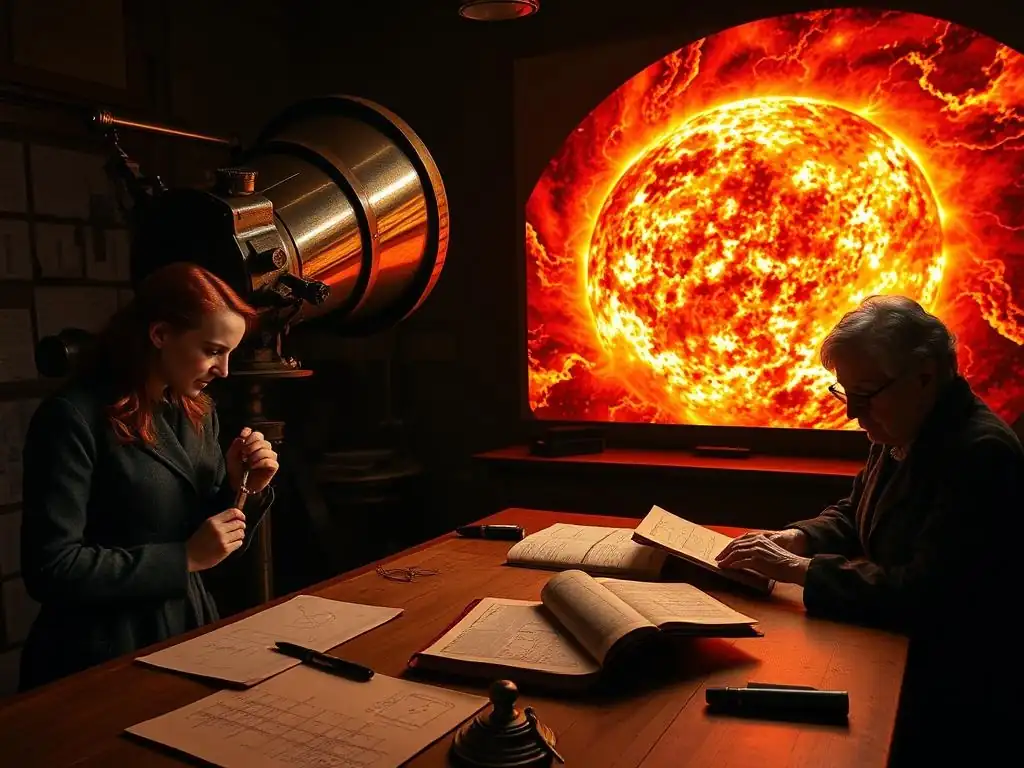
Discover the untold stories of remarkable women who shaped the world of science. This time, we delve into the fascinating world of early 20th-century astronomy with Sunspot Scribes: Women Documenting Solar Activity, revealing the crucial, yet often uncredited, contributions of women solar observation during this pivotal era. What challenges did they overcome, and how did their meticulous work impact our understanding of the sun? Explore their groundbreaking achievements and prepare to be inspired!
- Introduction: Unsung Heroines of Early 20th Century Solar Observation
- The Rise of Women in Space Science (1900-1950): A New Era
- Women Solar Observers: Dedicated to Sunspot Studies
- The Tedious Task: Methods of Early 20th Century Sunspot Documentation
- Challenges Faced by Women in Solar Astronomy
- Impact and Legacy: The Enduring Contributions of Women
- Early 20th Century: The Importance of Long-Term Solar Data Sets
- Conclusion: Celebrating the Contributions of Women Astronomers
-
Frequently Asked Questions
- What specific type of scientific work did women contribute to regarding solar observation in the early 20th century?
- Why were women often employed in these roles related to solar observation?
- What challenges did women face in pursuing careers in solar observation during the early 20th century?
- Where can I find more information about specific women who contributed to solar observation in the early 20th century?
- How did the work of these women contribute to our understanding of the sun?
- Final Reflection: Illuminating Untold Stories
- Ignite Your Inner Observer: Uncover the Secrets of the Sun!
Introduction: Unsung Heroines of Early 20th Century Solar Observation
Highlighting the Overlooked Contributions of Women to Solar Astronomy
In the nascent years of the 20th century, as scientific inquiry into the cosmos expanded, a cohort of diligent women quietly yet profoundly shaped our understanding of the Sun. Often relegated to roles as "computers" or assistants, these unsung heroines performed the meticulous, labor-intensive tasks that formed the bedrock of early 20th-century solar observation. Their unwavering commitment to documenting solar activity, from tracking elusive sunspots to analyzing complex stellar spectra, provided invaluable data that underpinned major astronomical breakthroughs.
Their contributions, though frequently overshadowed by their male counterparts, were indispensable. These women meticulously cataloged celestial phenomena, processed countless photographic plates, and performed complex calculations, laying the groundwork for modern astrophysics. Their precise and consistent work in women solar observation early 20th century was not merely supportive; it was foundational, allowing for the identification of long-term solar trends and the development of new theories about our star.
The Importance of Documenting Solar Activity in the Early 1900s
The early 1900s marked a pivotal period for solar physics, as scientists began to grasp the profound influence of the Sun on Earth. Understanding solar activity, particularly sunspots, was crucial because these phenomena were linked to terrestrial magnetic disturbances, early radio communication interference, and even theories about climate variations. Continuous, systematic documentation was paramount to discern patterns, predict cycles, and build a comprehensive picture of solar behavior.
Observatories worldwide recognized the need for long-term solar data sets. This era saw the establishment of international collaborations aimed at standardizing observations and compiling global sunspot records. The detailed, day-to-day vigilance required for such an endeavor often fell to skilled female assistants, whose dedication ensured the continuity and accuracy of these vital records, making their role in women solar observation early 20th century utterly essential.
The Rise of Women in Space Science (1900-1950): A New Era
Breaking Barriers: Opportunities for Women in Astronomy
The turn of the 20th century, while still largely patriarchal, saw a gradual, albeit limited, opening of doors for women in scientific fields, particularly in astronomy. Observatories, facing a growing demand for data processing and analysis, began hiring educated women for roles that required immense precision and patience. These positions, often clerical in nature, allowed women to gain invaluable hands-on experience with astronomical data, photographs, and instruments.
The Harvard College Observatory, under directors like Edward Pickering, famously employed dozens of women as "human computers." While often paid significantly less than their male counterparts—sometimes as little as 25 cents an hour around 1900—these roles provided unique access to astronomical data and fostered an environment where women could develop highly specialized skills in data reduction, classification, and detailed observation, crucial for the emerging field of women solar observation early 20th.
Early 20th Century: A Period of Growing Interest in Solar Physics
The early 20th century witnessed a surge in scientific interest in the Sun, driven by technological advancements and a deeper curiosity about stellar processes. The development of specialized instruments like the spectroheliograph by George Ellery Hale and Henri-Alexandre Deslandres around 1890-1892 allowed astronomers to photograph the Sun's surface and atmosphere in specific wavelengths, revealing previously unseen features like prominences and filaments.
This new observational capability transformed solar physics from primarily visual sunspot counting to a more sophisticated study of solar atmospheric phenomena and magnetic fields. The demand for meticulous photographic plate analysis and the systematic recording of these new observations grew exponentially. This expanding need for precise, continuous data collection provided further avenues for skilled women to contribute significantly to women solar observation early 20th.
Women Solar Observers: Dedicated to Sunspot Studies
Annie Jump Cannon: Stellar Classification and Variable Star Research
While not exclusively a solar observer, Annie Jump Cannon's pioneering work at the Harvard College Observatory laid foundational methodologies crucial for all astronomical data analysis, including solar studies. Between 1900 and 1930, Cannon personally classified over 350,000 stars by analyzing their photographic spectra, developing the widely adopted Harvard Classification Scheme (OBAFGKM). Her meticulous system brought order to the vast stellar universe, a systematic approach directly applicable to the detailed classification needed for sunspot groups and other solar features.
Her profound dedication to accurate data collection and classification set a benchmark for astronomical research. This tireless effort in cataloging, which included identifying thousands of variable stars, underscored the critical role of systematic observation and precise recording—qualities that were equally vital for women solar observation early 20th century, where continuous, accurate sunspot records were paramount.
Henrietta Swan Leavitt: Discovering the Period-Luminosity Relation
Henrietta Swan Leavitt, another brilliant "computer" at Harvard, made a discovery of immense cosmological significance that relied entirely on painstaking data analysis, a skillset central to women solar observation early 20th. By meticulously studying photographic plates of the Magellanic Clouds between 1904 and 1912, she identified a consistent relationship between the luminosity and pulsation period of Cepheid variable stars. This period-luminosity relation, published in 1912, provided the first reliable "standard candle" for measuring cosmic distances.
Leavitt's ability to discern a fundamental pattern from thousands of individual observations exemplifies the rigorous attention to detail and analytical prowess characteristic of the women working in astronomical observatories. Her work, while focused on distant stars, showcased the critical importance of accurate, systematic data collection and pattern recognition—principles directly transferable to the detailed study of solar phenomena and their cycles.
Cecilia Payne-Gaposchkin: Determining the Sun's Composition
Cecilia Payne-Gaposchkin, a British-born astronomer who completed her Ph.D. at Radcliffe College (associated with Harvard) in 1925, made one of the most significant breakthroughs in understanding the Sun. In her groundbreaking doctoral thesis, Stellar Atmospheres, she definitively proved that stars, including our Sun, are overwhelmingly composed of hydrogen and helium. This revolutionary conclusion directly challenged the prevailing scientific consensus that stars had elemental compositions similar to Earth's.
Her work involved meticulous spectroscopic analysis, interpreting the absorption lines in stellar spectra to deduce elemental abundances. This deep dive into the Sun's fundamental makeup provided the chemical foundation for all subsequent solar physics. Payne-Gaposchkin's audacious and correct conclusion, initially met with skepticism by some established male astronomers, stands as a testament to the intellectual rigor and profound impact of women in early 20th-century solar observation and astrophysics.
The Tedious Task: Methods of Early 20th Century Sunspot Documentation
Visual Observation and Precise Drawing Techniques
In the early 20th century, much of the sunspot documentation relied on direct visual observation and meticulous hand-drawing. Astronomers and their assistants would project the Sun's image onto a white screen using a telescope, or observe it through specially filtered telescopes to protect their eyes. This method allowed for the detailed sketching of sunspot groups, including their size, shape, umbra/penumbra distinctions, and precise positions on the solar disk.
The accuracy of these drawings was paramount for tracking sunspot evolution and calculating solar rotation. This painstaking work required exceptional artistic skill, keen observational acuity, and unwavering patience, as it often involved hours of focused attention. Many women in early 20th-century solar observation roles excelled at these precise drawing techniques, contributing to long-term records that are still valuable today.
The Use of Spectroheliographs and Other Instruments
Beyond visual drawings, the early 20th century saw the increasing use of advanced instruments like the spectroheliograph. Invented independently by George Ellery Hale and Henri-Alexandre Deslandres in the late 19th century, this device allowed astronomers to photograph the Sun in specific wavelengths of light, revealing features beyond the visible sunspots, such as solar prominences and filaments in the chromosphere.
Operating these instruments involved precise alignment, long exposures, and careful processing of photographic plates. Women often played crucial roles in this photographic work, from preparing and developing plates to meticulously analyzing the resulting images for subtle changes in solar activity. Their dedication to these technical tasks ensured the collection of comprehensive datasets, significantly advancing women solar observation early 20th.
Challenges of Early Solar Data Collection and Interpretation
Early solar data collection was fraught with numerous challenges. Weather conditions posed a constant impediment, as clear skies were essential for both visual observation and photographic exposures. Equipment limitations, such as the sensitivity of photographic emulsions and the optical quality of telescopes, also restricted the detail and consistency of observations across different observatories.
Furthermore, the interpretation of this vast amount of data presented its own hurdles. Standardizing observations across different observers and instruments, accounting for human error in hand-drawn records, and developing consistent classification systems for sunspot groups were ongoing difficulties. Despite these obstacles, the persistent efforts of women in early 20th-century solar observation ensured the continuity and reliability of these vital records, forming the backbone of solar physics.
Challenges Faced by Women in Solar Astronomy
Gender Bias and Limited Access to Resources
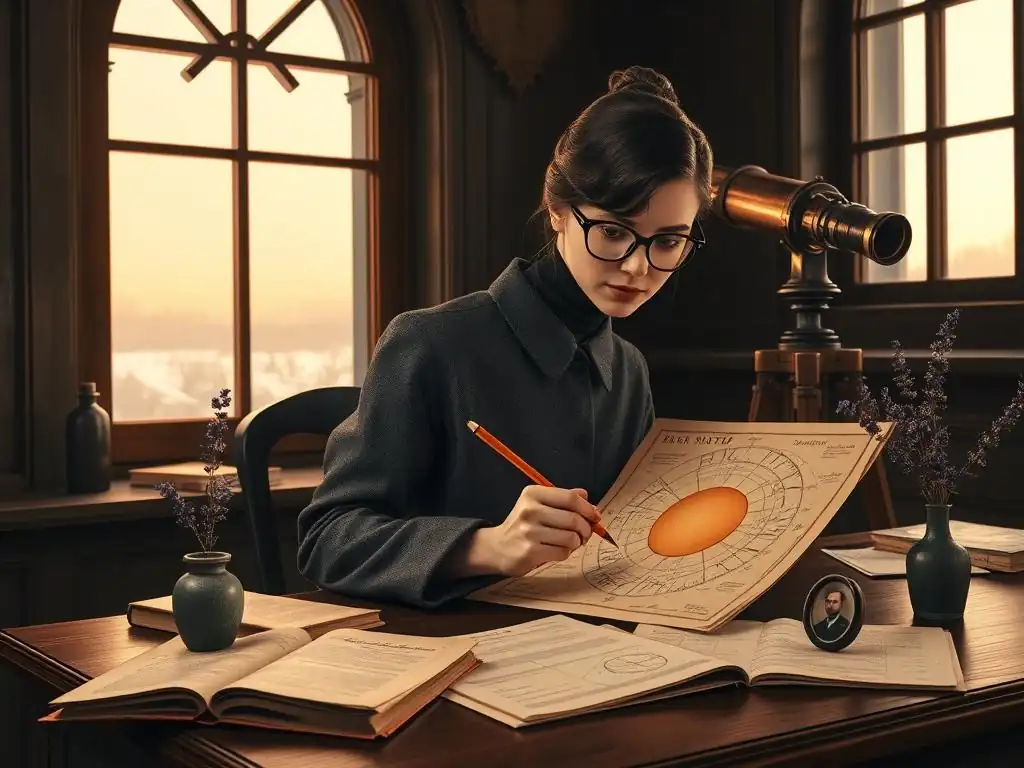
Women pursuing scientific careers in the early 20th century encountered formidable barriers rooted in pervasive societal gender bias. Access to higher education, particularly in scientific fields, was often restricted, and even when admitted, women faced skepticism about their intellectual capabilities. Upon graduation, they were frequently channeled into lower-paying, less prestigious "computer" roles rather than being offered independent research positions or professorships.
This bias extended to resources: women were often denied access to prime telescope time, excluded from scientific discussions, and had fewer opportunities for professional networking. Despite their critical contributions to women solar observation early 20th, their work was frequently undervalued, hindering their career advancement and recognition within the scientific establishment.
Recognition and Publication Challenges in a Male-Dominated Field
Even when women performed groundbreaking work, achieving proper recognition and publication was a significant hurdle in the male-dominated scientific landscape. It was common for women's names to be omitted from research papers, or for them to be credited merely as "assistants" or in footnotes, even when their intellectual contributions were substantial. The credit for their discoveries was often attributed to their male supervisors or colleagues.
For instance, Henrietta Swan Leavitt's period-luminosity relation was published under Edward Pickering's name, with Leavitt listed as the author of the note. While Pickering's role as director was standard for institutional publications, it often obscured the individual contributions of women like Leavitt. This systemic lack of acknowledgment meant that many pivotal contributions to women solar observation early 20th remained largely invisible for decades.
Balancing Scientific Pursuits with Societal Expectations
Beyond professional biases, women scientists in the early 20th century faced immense pressure to conform to traditional societal expectations regarding marriage, family, and domestic responsibilities. Many were expected to choose between a career and a family, a dilemma rarely faced by their male counterparts. Those who pursued science often had to navigate a delicate balance, making significant personal sacrifices.
These societal pressures could limit their professional mobility, restrict their ability to attend conferences, or pursue field research, all of which were crucial for career progression in science. The resilience and determination of women in early 20th-century solar observation to continue their demanding scientific work despite these external pressures underscore their profound dedication to astronomical discovery.
Impact and Legacy: The Enduring Contributions of Women
Preserving Valuable Solar Data for Future Generations
The meticulous work performed by women in early 20th-century solar observation was instrumental in creating and preserving invaluable long-term solar datasets. Their systematic recording of sunspot numbers, positions, and characteristics over decades provided an unparalleled historical record of solar activity. This continuous, detailed data is still critical today for understanding the Sun's long-term cycles, including the 11-year sunspot cycle.
These historical records form the baseline for modern solar physics research, enabling scientists to study solar-terrestrial relations, predict space weather events, and even inform climate research. Without the diligent, often uncredited, efforts of these women to compile and maintain these vast archives, our current understanding of solar variability would be significantly diminished.
Inspiring Future Scientists and Breaking Down Barriers
The very presence and success of these pioneering women in astronomy, despite the formidable obstacles they faced, served as a powerful source of inspiration. Their achievements, once brought to light, have helped to dismantle the outdated notion that science is an exclusively male domain. By demonstrating intellectual prowess, meticulous skill, and unwavering dedication, they proved that gender was no barrier to scientific excellence.
Their legacies continue to motivate young women to pursue careers in STEM fields, showing them that it is possible to break through traditional boundaries. The growing recognition of these early contributions to women solar observation early 20th century actively promotes diversity and inclusion in science, encouraging a broader range of talents to contribute to scientific discovery.
Recognizing the Importance of Diverse Perspectives in Science
The historical contributions of women in solar observation highlight the critical importance of diverse perspectives in scientific inquiry. The meticulous, systematic approach often employed by these female "computers" and researchers, who were sometimes tasked with the most tedious yet foundational data collection, proved to be an invaluable asset. Their attention to detail and ability to discern patterns from vast datasets laid the groundwork for major theoretical advancements.
Acknowledging and celebrating the roles of these women enriches the historical narrative of science, making it more accurate and inclusive. It also reinforces the contemporary understanding that diverse teams, bringing varied experiences and viewpoints, lead to more robust research, innovative solutions, and a more comprehensive understanding of the universe, including the dynamic behavior of our Sun.
Early 20th Century: The Importance of Long-Term Solar Data Sets
How women's work provided valuable data on stellar evolution
The detailed observational data meticulously collected by women in the early 20th century, including sunspot counts, solar feature locations, and spectroscopic analyses, provided crucial empirical evidence for understanding stellar evolution. While primarily focused on our Sun, these continuous records allowed astronomers to characterize solar activity cycles and magnetic phenomena. This understanding could then be extrapolated to other stars, providing insights into their life cycles and behaviors.
By meticulously charting the Sun's variability over decades, these female observers and analysts contributed directly to theories about how stars generate energy, their internal structures, and their eventual fates. Their precise numerical data formed the bedrock upon which models of stellar interiors and atmospheric dynamics were built, significantly advancing the broader field of astrophysics.
The role of women in establishing the foundations of modern astrophysics
The systematic data collection and analysis performed by women in the early 20th century were absolutely fundamental in establishing modern astrophysics. Often working as "human computers," they processed astronomical photographs, calculated stellar properties, and cataloged celestial objects on an unprecedented scale. This painstaking numerical precision provided the raw material—the empirical evidence—that theoretical astrophysicists needed to formulate and test their groundbreaking theories.
Without their diligent efforts in documenting phenomena like sunspots, stellar spectra, and variable star behaviors, the development of fields such as solar physics, space weather prediction, and even cosmology would have been severely hampered. Their contributions ensured the integrity and continuity of astronomical records, directly enabling the revolutionary discoveries that defined early 20th-century astrophysics and paved the way for future generations of women solar observation early 20th century.
Conclusion: Celebrating the Contributions of Women Astronomers
Acknowledging the Vital Role of Women in Early 20th Century Astronomical Observation
The narrative of early 20th-century astronomy is incomplete without acknowledging the vital and often uncredited contributions of women. As "sunspot scribes" and meticulous data analysts, they formed the backbone of observational astronomy, particularly in areas requiring immense patience and precision, such as the continuous documentation of solar activity. Their dedication ensured the creation of invaluable long-term datasets that continue to inform modern scientific research.
These women, despite facing significant societal and professional barriers, conducted groundbreaking work that laid the essential groundwork for major discoveries in stellar classification, cosmic distance measurement, and the fundamental composition of stars. Their unwavering commitment to scientific rigor and their relentless pursuit of accuracy were indispensable to the progress of astronomy in the early 20th century.
Encouraging Further Research and Recognition of Their Achievements
The stories of women in early 20th-century solar observation and broader astronomy serve as a powerful reminder of the hidden figures whose efforts shaped scientific progress. It is imperative that historical research continues to uncover and highlight these overlooked contributions, ensuring that their achievements are fully recognized and integrated into the broader scientific narrative. Celebrating their work not only corrects historical oversights but also provides vital role models for future generations.
By understanding the full, diverse history of scientific discovery, we can better appreciate the challenges overcome and the perseverance demonstrated by these pioneering women. Their enduring legacy inspires continued efforts towards greater inclusivity and equity in science, ensuring that all talents are recognized and valued in the ongoing quest to understand our universe.
Frequently Asked Questions
What specific type of scientific work did women contribute to regarding solar observation in the early 20th century?
Women primarily worked as human computers analyzing photographic plates and drawing sunspots, meticulously documenting solar activity. Their observations were vital for understanding solar cycles and their impact on Earth.
Due to perceived dexterity and patience, women were often deemed suitable for the tedious but crucial work of measuring and recording sunspot data. This was often seen as less prestigious than theoretical work.
What challenges did women face in pursuing careers in solar observation during the early 20th century?
Women faced significant gender bias and limited opportunities for advancement. They often lacked the same access to formal education and research positions as their male counterparts.
Where can I find more information about specific women who contributed to solar observation in the early 20th century?
Websites like WomenInScienceHistory.com provide biographies and research highlighting the contributions of pioneering female scientists. Search terms like "women solar observation early 20th" can also yield relevant results.
How did the work of these women contribute to our understanding of the sun?
Their meticulous observations provided a long-term dataset of solar activity, crucial for understanding solar cycles, solar flares, and coronal mass ejections. This helped in understanding the Sun-Earth connection.
Final Reflection: Illuminating Untold Stories
The meticulous records kept by these women, often relegated to the shadows of scientific history, are now shining a vital light on our understanding of the sun's dynamic behavior and its impact on Earth. Their dedication, often unacknowledged, underscores the importance of recognizing the contributions of all individuals, regardless of gender, in the pursuit of scientific knowledge.
The legacy of these "Sunspot Scribes" continues to resonate today, reminding us of the persistent struggle for recognition faced by women in STEM fields. Their work serves as a powerful testament to the enduring human spirit of inquiry and the importance of preserving historical records. The history of science is not just a history of great men, but a history of great ideas, and those ideas often come from unexpected places.
As we look to the future, let us remember the dedication and perseverance of these early 20th-century women solar observers. Their story is a call to action: seek out the untold narratives, champion inclusivity in scientific endeavors, and ensure that the contributions of all are celebrated and valued. Let their legacy inspire us to continue pushing the boundaries of knowledge, always remembering the vital role that diverse perspectives play in shaping our understanding of the universe.
Ignite Your Inner Observer: Uncover the Secrets of the Sun!
Thank you for journeying with us into the fascinating world of early women solar observers. We hope you've found inspiration in their dedication and contributions. Now, it's your turn to shine!
Here's how you can take action:
- Embrace the spirit of scientific curiosity: Document your own observations of the natural world, whether it's cloud formations, bird migrations, or even the changing phases of the moon. Keep a detailed journal of your findings!:
- Explore online resources dedicated to citizen science and contribute your observations to larger scientific projects. Your backyard could be the next frontier!
- Share this article with friends and family to help spread awareness of these incredible women and inspire a new generation of science enthusiasts.
What will you observe and document today? Let us know in the comments below!