
Silenced Skies: The Fight for Recognition by Early Women Space Scientists

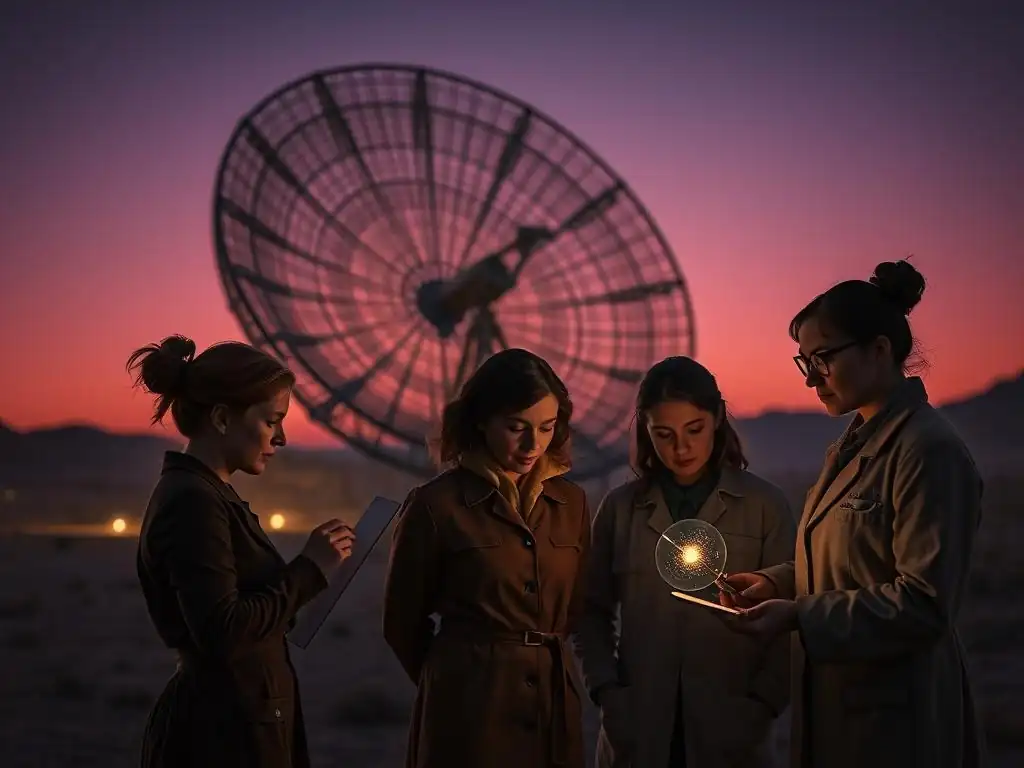
Welcome to WomenInScienceHistory.com!
Discover the untold stories of brilliant minds in science as we delve into the fascinating, and often challenging, journeys of women who shaped our world. Are you ready to uncover the silenced skies? Our latest article explores the groundbreaking contributions and struggles for recognition faced by early women space scientists. Prepare to be inspired and enlightened as we shed light on their vital role in the cosmos and beyond. Dive in and learn more!
- Introduction: Unveiling the Untold Stories of Women in Early Space Science
- The Pioneers: Profiles of Early 20th Century Women in Space Science
- The Challenges Faced by Early Women Space Scientists
- Scientific Contributions: A Closer Look at Their Achievements
- The Fight for Recognition: Documenting Their Legacy
- The Enduring Impact of Early Women in Space Science
- Conclusion: Honoring the Legacy of Silenced Skies
-
Frequently Asked Questions
- How were early women space scientists often treated in their field?
- What kinds of challenges did these women face when trying to gain recognition?
- Why is it important to highlight the contributions of early women space scientists now?
- What types of scientific work did early women space scientists contribute to?
- Where can I learn more about these inspiring women and their work?
- Final Reflection: Echoes in the Cosmos
- Ignite Your Passion: Stand on the Shoulders of Giants!
Introduction: Unveiling the Untold Stories of Women in Early Space Science
The Overlooked Contributions of Female Astronomers and Space Scientists (1900-1950)
While popular narratives of space exploration often focus on iconic male figures, the foundational work that paved the way for modern astrophysics was significantly shaped by a cadre of "early women space scientists." During the first half of the 20th century, particularly from 1900 to 1950, these pioneering female researchers meticulously analyzed vast amounts of astronomical data, often working behind the scenes and with minimal recognition. Their groundbreaking observations and calculations laid the empirical groundwork for understanding stellar properties, galactic structures, and the very scale of the universe.
These "early women space scientists" were frequently employed as "human computers" at observatories, tasked with the arduous, yet scientifically critical, work of processing photographic plates. They measured star positions, classified spectra, and detected variable stars, performing tasks that required immense precision, patience, and intellectual rigor. Despite their pivotal roles, their contributions were often uncredited, minimized, or published under the names of their male supervisors, obscuring the true extent of their impact on the nascent field of space science.
Why Early Women Space Scientists' Work Matters Today
The discoveries made by "early women space scientists" are not merely historical footnotes; they remain fundamental pillars of modern astronomy. For instance, the period-luminosity relationship for Cepheid variables, discovered by Henrietta Swan Leavitt, continues to be a cornerstone for measuring cosmic distances, enabling astronomers to probe the farthest reaches of the cosmos. Similarly, Cecilia Payne-Gaposchkin's revolutionary findings on stellar composition fundamentally redefined our understanding of stars and the chemical makeup of the universe.
Beyond their direct scientific output, the stories of these "early women space scientists" serve as powerful inspirations and crucial lessons. Their perseverance in the face of significant gender barriers, systemic discrimination, and societal expectations provides a compelling narrative of resilience. Understanding their struggles and triumphs helps us appreciate the progress made in promoting diversity in STEM fields and highlights the ongoing need to ensure equitable opportunities and recognition for all scientists, regardless of gender.
The Pioneers: Profiles of Early 20th Century Women in Space Science
Henrietta Swan Leavitt: Unlocking the Secrets of Stellar Distances
Henrietta Swan Leavitt stands as one of the most significant "early women space scientists," whose quiet dedication to astronomical data analysis yielded a discovery of cosmic proportions. Employed at the Harvard College Observatory from 1902, Leavitt worked as a "human computer," meticulously analyzing photographic plates of variable stars, particularly those found in the Small and Large Magellanic Clouds. Her painstaking work involved identifying and measuring the brightness fluctuations of thousands of stars, a task that demanded exceptional precision and patience.
It was during this meticulous observation that Leavitt noticed a peculiar pattern among a specific type of variable star known as Cepheids. By 1912, she had formally published her groundbreaking finding: brighter Cepheids took longer to pulsate, establishing a direct, linear relationship between their period of pulsation and their intrinsic luminosity. This discovery provided the first reliable "standard candle" in astronomy, fundamentally transforming our ability to measure distances across the vast expanse of the universe.
Key Contributions of Henrietta Swan Leavitt to Space Research
Leavitt's period-luminosity relation for Cepheid variables was nothing short of revolutionary. Before her discovery, cosmic distances beyond our immediate galactic neighborhood were largely speculative. Her work provided astronomers with a precise method to determine the absolute brightness of a Cepheid simply by observing its pulsation period. By comparing this intrinsic brightness to its apparent brightness as seen from Earth, the distance to the star, and by extension, to the galaxy it resided in, could be accurately calculated.
This single contribution by an "early woman space scientist" proved indispensable for subsequent cosmological breakthroughs. Edwin Hubble, for instance, famously used Leavitt's relation to determine the distance to the Andromeda galaxy in the 1920s, proving it was a separate "island universe" outside the Milky Way. This discovery, in turn, led to the understanding of an expanding universe, a concept that underpins modern cosmology. Leavitt's meticulous data analysis, encompassing over 2,400 variable stars, provided the empirical bedrock for these profound shifts in scientific understanding.
Overcoming Obstacles: Gender Bias in Early Astronomy
Despite the monumental significance of her discovery, Henrietta Swan Leavitt, like many "early women space scientists," faced considerable gender bias and limited opportunities within the scientific establishment. She held the title of "computer" throughout her career, never advancing to a full professorship or receiving the recognition commensurate with her intellectual contributions. Her salary was meager, reportedly around 30 cents an hour, a stark contrast to the compensation and prestige afforded to male astronomers.
Furthermore, Leavitt was not permitted to operate the telescopes herself, a common restriction for women in astronomy at the time, confining her to the laborious analysis of photographic plates produced by others. Though her work was widely cited and acknowledged by prominent astronomers, her personal recognition often lagged. She passed away in 1921, before a Nobel Prize nomination for her work could be formally processed, highlighting how the systemic under-recognition of "early women space scientists" prevented them from receiving their due accolades during their lifetimes.
Cecilia Payne-Gaposchkin: A Trailblazer in Stellar Spectroscopy
Cecilia Payne-Gaposchkin stands as another towering figure among "early women space scientists," whose intellectual audacity and rigorous scientific methodology revolutionized our understanding of stars. Born in England, Payne-Gaposchkin defied societal norms to pursue her passion for astronomy, eventually moving to the United States to study at Harvard College Observatory, as Cambridge University did not grant degrees to women at the time. Her arrival at Harvard marked the beginning of a truly groundbreaking career.
In 1925, Payne-Gaposchkin submitted her doctoral thesis, "Stellar Atmospheres; A Contribution to the Observational Study of High Temperature in the Reversing Layers of Stars," a work that is still regarded as one of the most brilliant astronomy dissertations ever written. In it, she applied the then-new principles of quantum mechanics to analyze stellar spectra, leading to a profound and initially controversial conclusion about the fundamental composition of stars.
Cecilia Payne-Gaposchkin's Groundbreaking Research on Stellar Composition
Payne-Gaposchkin's thesis presented the astonishing finding that stars are overwhelmingly composed of hydrogen and helium, rather than the heavier elements previously assumed to dominate their makeup. Through meticulous analysis of spectral lines, she quantitatively determined that hydrogen accounted for approximately 98% of the observable mass in stars, with helium making up most of the remainder. This conclusion directly contradicted the prevailing scientific consensus, which held that stars had a similar elemental composition to Earth.
Initially, her findings were met with skepticism, notably from prominent astronomer Henry Norris Russell, who advised her to retract her radical conclusion. However, Payne-Gaposchkin persisted, and four years later, Russell published similar findings, acknowledging her priority and the accuracy of her research. Her work irrevocably shifted the paradigm in astrophysics, establishing the correct elemental abundances of stars and providing a crucial piece of the puzzle for understanding stellar evolution and the chemical history of the universe.
Recognition Denied: The Struggle for Professional Advancement
Despite her revolutionary Ph.D. thesis, Cecilia Payne-Gaposchkin faced significant professional discrimination, a common experience for "early women space scientists." Harvard University was slow to formally recognize her immense contributions. For many years after earning her doctorate, she was not granted a regular faculty appointment, instead holding titles like "technical assistant" and "research associate." She was denied an office in the main observatory building and received a salary considerably lower than her male counterparts, despite her unparalleled scientific output.
The struggle for professional recognition was a prolonged battle for Payne-Gaposchkin. It wasn't until 1956—a remarkable 31 years after her seminal thesis—that she finally became the first woman to be promoted to full professor at Harvard University. In the same year, she also became the first woman to chair a department at Harvard, leading the Department of Astronomy. Her career trajectory vividly illustrates the persistent barriers and the arduous fight for professional advancement faced by "early women space scientists" in the early 20th century.
Annie Jump Cannon: Shaping the Field of Stellar Classification
Annie Jump Cannon is another monumental figure among "early women space scientists," renowned for her extraordinary contributions to stellar classification. Working as part of the "Harvard Computers" team, Cannon possessed an unparalleled ability to analyze and classify stellar spectra with remarkable speed and accuracy. Her work was essential for bringing order to the vast and growing collection of astronomical data.
Cannon's most enduring legacy is her refinement and widespread adoption of the Harvard Classification Scheme (O, B, A, F, G, K, M), which organizes stars based on their spectral characteristics and surface temperature. She improved upon earlier, more cumbersome systems, creating a logical and practical method that became the universal standard for classifying stars. This system, still in use today, is a testament to her meticulousness and insightful understanding of stellar properties.
The Impact of Annie Jump Cannon's Work on Astronomical Catalogs
The sheer volume and precision of Annie Jump Cannon's work are staggering. Over her career, she personally classified the spectra of over 350,000 stars, a feat of incredible dedication and visual acuity. Her classifications formed the backbone of the Henry Draper Catalogue, a monumental astronomical resource that provided essential data for countless scientific studies. This catalog, largely compiled through the efforts of Cannon and her team of "early women space scientists," became an indispensable tool for astronomers worldwide.
The Henry Draper Catalogue enabled astronomers to systematically study stellar evolution, investigate the distribution of different star types within our galaxy, and analyze the structure of the Milky Way. Cannon's standardized and comprehensive classification system allowed for comparative studies and theoretical advancements that would have been impossible without such an organized and vast dataset. Her work was fundamental to the development of astrophysics as a quantitative science.
Limited Opportunities: Navigating a Male-Dominated Scientific Landscape
Despite her unparalleled expertise and the immense practical value of her work, Annie Jump Cannon, like many "early women space scientists," operated within a male-dominated scientific landscape that offered limited opportunities for professional advancement. She was initially hired as a "computer" for a modest wage, a common fate for female astronomers of her era, regardless of their scientific acumen. Her requests for higher academic positions or better pay were often met with resistance or prolonged delays.
While Cannon received numerous honorary degrees from prestigious institutions, including Wellesley College and Oxford University (making her the first woman to receive an honorary doctorate from Oxford), her professional standing within Harvard itself remained constrained for many years. This pattern of under-recognition and restricted upward mobility was a pervasive challenge for "early women space scientists" in the early 20th century, underscoring the systemic barriers they faced despite their profound and enduring scientific contributions.
The Challenges Faced by Early Women Space Scientists
Gender Bias and Discrimination in Academia and Research Institutions
"Early women space scientists" consistently encountered pervasive gender bias and discrimination within the academic and research institutions of their time. They were frequently relegated to subordinate roles, such as "computers" or assistants, even when performing highly complex and intellectually demanding analytical work. This systemic bias meant their contributions were often perceived as mere technical support rather than fundamental scientific research, leading to a lack of proper attribution and diminished professional standing.
Moreover, women were routinely excluded from informal scientific networks, discussions, and decision-making processes. They were often denied direct access to primary research instruments like telescopes, which were considered the exclusive domain of male astronomers. This exclusion, coupled with skepticism regarding their intellectual capabilities, created an environment where their innovative ideas and groundbreaking discoveries were less likely to be taken seriously, hindering their ability to gain widespread acceptance and recognition for their work.
Lack of Access to Resources and Funding for Female Scientists
A significant hurdle for "early women space scientists" was the severe lack of access to essential resources and independent funding. Unlike their male counterparts, who could often secure grants and institutional support for their research, female scientists found it exceedingly difficult to obtain the necessary financial backing or access to specialized equipment. This was largely due to the fact that most funding bodies, academic committees, and institutional leadership positions were exclusively held by men who often harbored biases against female researchers.
This lack of resources severely limited their ability to pursue independent research projects or lead significant observational campaigns. Consequently, many highly talented women were compelled to work in supportive roles, where their contributions, while undeniably vital to the progress of science, were often less visible and thus less likely to lead to individual recognition or career advancement. The systemic disadvantage in resource allocation directly impeded the potential for "early women space scientists" to fully realize their scientific ambitions.
The Pressure to Conform to Societal Expectations and Family Roles
Beyond institutional biases, "early women space scientists" also grappled with the immense pressure to conform to prevailing societal expectations regarding women's roles. During the early 20th century, society largely dictated that a woman's primary domain was the domestic sphere, focused on marriage, child-rearing, and household management. A demanding scientific career was often viewed as incompatible with these traditional roles, creating a significant conflict for aspiring female scientists.
Many "early women space scientists" faced difficult personal choices, with some opting not to marry or have children in order to dedicate themselves fully to their scientific pursuits. For those who did marry, balancing professional aspirations with societal and family responsibilities often presented formidable challenges, with little institutional support for childcare or flexible working arrangements. This added layer of societal pressure and personal sacrifice underscored the profound determination required for "early women space scientists" to carve out careers in a field that was often unwelcoming to them.
Scientific Contributions: A Closer Look at Their Achievements
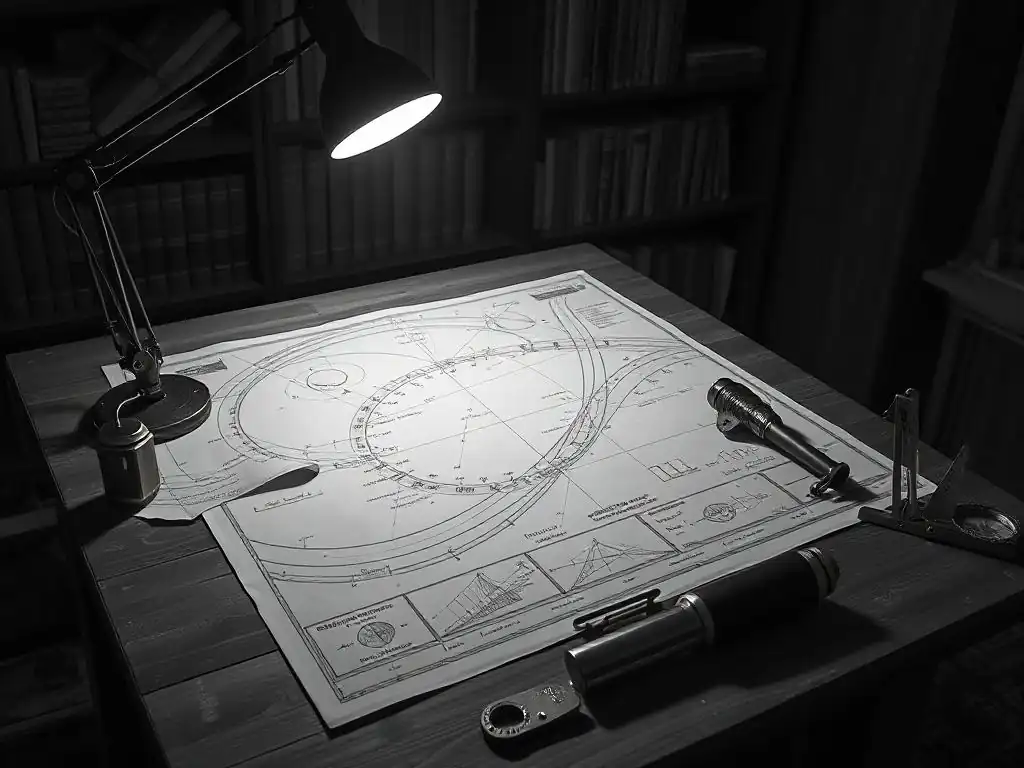
Analyzing the Data: Early Women's Role in Astronomical Observations
The meticulous and often unheralded work of "early women space scientists" in analyzing astronomical data formed the empirical bedrock upon which 20th-century astrophysics was built. At observatories like Harvard, they spent countless hours poring over glass photographic plates, identifying and measuring the positions, brightnesses, and spectral characteristics of countless stars. This painstaking process, though manual and repetitive, required immense precision and a deep understanding of astronomical phenomena.
Beyond the well-known figures, many other "early women space scientists" contributed significantly to this observational data collection. For instance, Antonia Maury developed an influential system of stellar classification that detailed spectral line characteristics, offering insights into stellar evolution. Williamina Fleming, another member of the Harvard Computers, discovered over 300 variable stars, 10 novae, and 52 nebulae, all through her diligent analysis of photographic plates. These women were the unsung heroes who transformed raw observational data into comprehensible scientific information.
Theoretical Advancements: Women's Contributions to Space Science Theories
While often relegated to observational roles, "early women space scientists" were also instrumental in driving theoretical advancements in space science. Cecilia Payne-Gaposchkin's doctoral thesis is the quintessential example, as she applied the then-nascent quantum mechanics to stellar spectra, leading to the revolutionary conclusion that stars are overwhelmingly composed of hydrogen and helium. This theoretical insight fundamentally reshaped our understanding of stellar physics and the elemental composition of the universe.
Furthermore, the meticulous observational data gathered by "early women space scientists" directly fueled theoretical breakthroughs. Henrietta Swan Leavitt's period-luminosity relation for Cepheid variables, derived from her detailed observations, became a critical theoretical tool. It enabled astronomers to conceptualize and measure the vast distances to other galaxies, which in turn provided the empirical evidence for the expanding universe theory. Their data work was not merely descriptive; it provided the essential quantitative basis for profound theoretical shifts in cosmology and astrophysics.
While "early women space scientists" were not typically involved in the physical construction of telescopes or other heavy machinery, their contributions to the methodology and "technology of knowledge" in space science were significant. Annie Jump Cannon's development and refinement of the Harvard Classification Scheme for stellar spectra, for instance, was a major methodological innovation. Her system provided a standardized, efficient, and universally adoptable "technology" for organizing and understanding stellar data, streamlining astronomical research worldwide.
Moreover, the systematic approaches developed by these women for managing and interpreting vast quantities of astronomical data, often performed manually, laid conceptual groundwork for later automated data analysis techniques. Their meticulousness in cataloging, cross-referencing, and identifying patterns within massive datasets foreshadowed modern database management and computational astronomy. Their contributions were not just about individual discoveries but also about establishing robust, reproducible scientific methods that were crucial for the advancement of space-related technologies and research practices.
The Fight for Recognition: Documenting Their Legacy
Recovering Lost Histories: The Importance of Archival Research
The fight for recognition of "early women space scientists" often begins with the painstaking process of recovering lost histories through extensive archival research. For decades, much of their crucial work was either published under the names of male supervisors, buried within obscure observatory annals, or simply minimized in official records. This systematic erasure necessitates dedicated scholarly effort to unearth personal notebooks, correspondence, internal memos, and original scientific papers to accurately attribute discoveries and contributions.
This process of historical reconstruction is not merely an academic exercise; it is a vital endeavor to correct an incomplete and often biased historical narrative. It involves meticulously piecing together fragments of information to reveal the true extent of these women's intellectual labor and scientific ingenuity. By shining a light on these often-overlooked documents, researchers are giving voice to those who were metaphorically "silenced skies," ensuring their rightful place in the annals of scientific achievement.
Highlighting Women's Achievements in Space Science History
Platforms like WomenInScienceHistory.com play a crucial role in the ongoing effort to highlight the achievements of "early women space scientists." By dedicating specific features, biographies, and detailed analyses to their groundbreaking work, these initiatives ensure that their stories are no longer confined to specialized academic circles but become accessible to a broader public. This visibility is essential for rectifying historical oversights and celebrating the diversity of contributions to space science.
The act of highlighting these achievements extends beyond mere historical accuracy; it serves a vital inspirational purpose. By showcasing the extraordinary accomplishments of figures like Henrietta Swan Leavitt, Cecilia Payne-Gaposchkin, and Annie Jump Cannon, these platforms provide powerful role models for current and future generations of aspiring scientists. Seeing women at the forefront of scientific discovery, even in the face of immense adversity, can significantly encourage young girls and women to pursue careers in STEM fields, including space science and astronomy.
The Ongoing Effort to Acknowledge and Celebrate Early Women Space Scientists
The acknowledgment and celebration of "early women space scientists" is an ongoing, multifaceted effort that spans various forms of modern recognition. This includes the publication of dedicated books and documentaries, the naming of astronomical features (such as craters on the Moon or Venus) after pioneering female scientists, and the organization of academic conferences focused on their legacies. These collective actions work to integrate their stories fully into the mainstream narrative of scientific progress.
While significant strides have been made in recent decades to recognize these remarkable individuals, the work is far from complete. Many "early women space scientists" still await full and proper attribution for their contributions, and the broader narrative of science continues to evolve towards greater inclusivity. The continued fight for acknowledgment is a dynamic process that not only honors these historical figures but also fosters a more equitable and representative scientific community for the future.
The Enduring Impact of Early Women in Space Science
Inspiring Future Generations of Female Scientists and Engineers
The remarkable stories of "early women space scientists" serve as powerful beacons of inspiration for future generations of female scientists and engineers. Their unwavering dedication, intellectual prowess, and sheer resilience in overcoming formidable gender barriers demonstrate that scientific brilliance knows no gender. By highlighting figures like Henrietta Swan Leavitt, whose work redefined cosmic distances, or Cecilia Payne-Gaposchkin, who unveiled the true composition of stars, we provide tangible role models that can motivate young women to pursue challenging careers in STEM.
These narratives are crucial for dismantling persistent stereotypes about who can be a scientist or engineer. When aspiring female students see that women have always been at the cutting edge of discovery, even in fields as traditionally male-dominated as space science, it empowers them to envision themselves in similar roles. This visibility fosters a sense of belonging and capability, encouraging greater participation and diversity within scientific disciplines.
Redefining the Narrative of Space Exploration and Scientific Discovery
Acknowledging the profound contributions of "early women space scientists" fundamentally redefines the prevailing narrative of space exploration and scientific discovery. It moves away from a simplistic, male-centric view of progress to a more nuanced, accurate, and inclusive understanding of how scientific knowledge truly advances. Their stories reveal that many groundbreaking discoveries were the result of collaborative efforts, often relying heavily on the meticulous, yet often invisible, labor performed by women.
This redefinition enriches the entire historical record of science. It sheds light on the systemic biases that shaped scientific institutions and reveals the immense talent that was often overlooked or undervalued. By integrating the narratives of "early women space scientists," we gain a more complete and honest account of the intricate processes, challenges, and diverse individuals who collectively propelled humanity's understanding of the cosmos forward.
Lessons Learned: Promoting Equity and Inclusion in STEM Fields Today
The experiences of "early women space scientists" offer invaluable lessons for promoting equity and inclusion in STEM fields today. While overt discrimination may be less common, subtle biases, a lack of visible representation, and unequal opportunities still persist in various forms. By studying the historical context of their struggles, we can identify lingering systemic issues and develop more effective strategies to address them in contemporary scientific environments.
These historical narratives serve as a call to action, urging us to actively work towards creating truly equitable and inclusive environments in all STEM disciplines. This includes advocating for fair pay, ensuring equal access to resources and leadership positions, fostering mentorship opportunities, and recognizing diverse contributions without bias. Learning from the past is essential to ensuring that the scientific community of the future is one where every talent can flourish, and no brilliant mind is ever again relegated to the "silenced skies."
Conclusion: Honoring the Legacy of Silenced Skies
Celebrating the Resilience and Ingenuity of Early Women Space Scientists
The journey of "early women space scientists" is a testament to extraordinary resilience and unwavering ingenuity in the face of profound adversity. Despite being largely overlooked, underpaid, and often denied proper credit for their monumental contributions, their passion for discovery propelled them to make breakthroughs that fundamentally reshaped our understanding of the cosmos. From unlocking the secrets of stellar distances to revealing the true composition of stars and meticulously classifying hundreds of thousands of celestial bodies, their foundational work was absolutely essential for the rapid advancements in space science during the 20th century.
Their stories remind us that scientific progress is rarely a linear path taken by a few celebrated individuals, but rather a complex tapestry woven by countless dedicated minds, many of whom operated from the periphery. The enduring spirit of these "early women space scientists," who pursued knowledge against formidable odds, continues to inspire. They demonstrate that true scientific brilliance knows no boundaries of gender or circumstance.
A Call to Action: Ensuring Equal Opportunities for Women in Space Science
The legacy of "silenced skies" is not merely a historical footnote; it is a powerful call to action for the present and future. The struggles faced by "early women space scientists" highlight the persistent need to champion diversity, equity, and inclusion in space science and across all STEM fields. We must actively work to dismantle the remaining barriers, both overt and subtle, that continue to impede the full participation and recognition of women in scientific endeavors.
By continuing to tell their stories, by actively seeking out and celebrating diverse contributions, and by advocating for equitable opportunities, we ensure that the brilliance of all future scientific talent is fully recognized and celebrated. Let us commit to a future where no aspiring scientist's voice is ever silenced, and where the collective human endeavor to understand the universe is truly enriched by the contributions of every brilliant mind, regardless of gender.
Frequently Asked Questions
How were early women space scientists often treated in their field?
Early women space scientists frequently faced gender discrimination and were often overlooked or undervalued for their contributions in the predominantly male field. They were often relegated to supporting roles rather than being recognized as lead researchers.
What kinds of challenges did these women face when trying to gain recognition?
Besides direct discrimination, these women also faced challenges like lack of access to funding, fewer opportunities for advancement, and a general lack of acknowledgment in publications and conferences.
Why is it important to highlight the contributions of early women space scientists now?
Highlighting their contributions is crucial to correct historical inaccuracies and ensure that their pioneering work is properly recognized. It also serves to inspire future generations of women in STEM fields.
What types of scientific work did early women space scientists contribute to?
Early women space scientists contributed to a wide range of areas, including trajectory calculations, astrophysics, rocket propulsion, and the development of spacecraft instrumentation.
Where can I learn more about these inspiring women and their work?
Websites like WomenInScienceHistory.com provide detailed biographies and discussions of their achievements, shining a light on their groundbreaking discoveries and the obstacles they overcame.
Final Reflection: Echoes in the Cosmos
The stories of early women space scientists, once relegated to the shadows, are now beginning to resonate with a power that can no longer be ignored. Their contributions, though often uncredited, laid the very foundation for our current understanding of the cosmos. This article has sought to illuminate their struggles and triumphs, reminding us that progress is rarely a linear path and that recognition is often hard-won, especially for those who challenge societal norms.
The impact of these pioneering women extends far beyond the scientific realm. Their perseverance serves as a potent reminder that representation matters and that the pursuit of knowledge should be open to all, regardless of gender or background. Their stories inspire us to question the narratives we inherit and to actively seek out the voices that have been historically marginalized. The important thing is to never stop questioning.
- Albert Einstein, a sentiment these women embodied in their relentless pursuit of understanding.
As we gaze at the stars, let us remember the women who helped pave the way for our exploration of the universe. Let their stories fuel our own dedication to inclusivity and equity in all fields. Consider how you can amplify the voices of those who are often overlooked and contribute to a future where brilliance is recognized and celebrated, regardless of who it comes from. The legacy of these early women space scientists calls us to action: to build a more equitable and inspiring future for all who dream of reaching for the stars.
Ignite Your Passion: Stand on the Shoulders of Giants!
Thank you for joining us on this journey through the untold stories of women who dared to dream among the stars. We hope you've found inspiration in their struggles and triumphs. Now, let's carry their legacy forward!
Here's how you can make a difference:
- Share their stories! Help these pioneering women finally receive the recognition they deserve by sharing this article with your network.
- Explore our website, WomenInScienceHistory.com, to discover more unsung heroes and learn about the challenges women still face in STEM fields today.
- Imagine you could tell one of these early scientists about the progress women have made since their time. What would you say to inspire them?
What other remarkable women in science deserve to have their stories told?