
The Battle for the Telescope: Women's Struggle for Observation Time (19001950)

Welcome to WomenInScienceHistory.com!
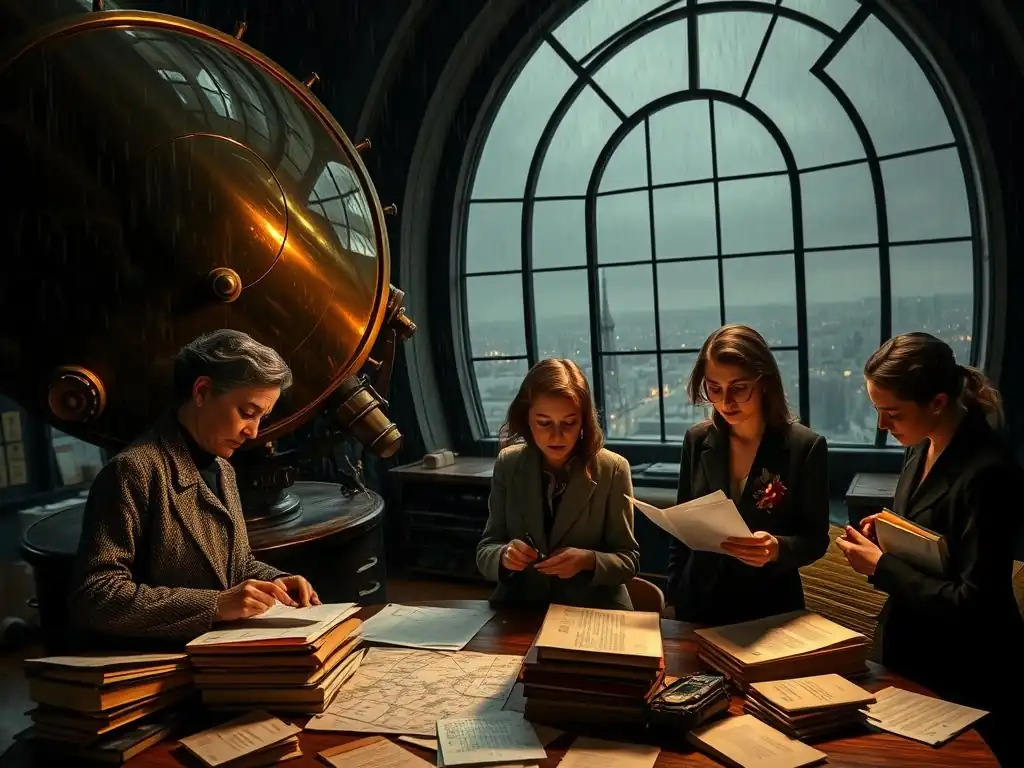
Delve into the fascinating, and often untold, stories of women who shaped the scientific landscape. In this article, we spotlight a crucial battleground: the fight for women’s telescope observation time, a struggle that defined their access to the cosmos and their place in 20th-century astronomy. Explore the systemic biases and unwavering determination that marked this era, leaving you pondering: how much brilliance remained undiscovered due to these limitations? Continue reading to uncover the details of this pivotal period between 1900 and 1950.
- Introduction: Unveiling the Unequal Skies - Women in Early 20th Century Astronomy
- The Barriers to Entry: Gender Bias in Astronomical Observation
- Pioneering Women Astronomers and Their Fight for Telescope Access
- The Impact of Limited Observation Time on Women's Astronomical Research
- The Shift Begins: Gaining Ground in the Fight for Equal Access
- Case Studies: Women Who Successfully Secured Telescope Time
- The Legacy: Paving the Way for Future Generations of Women Astronomers
- Conclusion: Celebrating the Resilience and Contributions of Women in Astronomy
-
Frequently Asked Questions
- What were some of the main obstacles women faced in accessing telescope observation time between 1900 and 1950?
- Why was telescope observation time so crucial for women scientists during this period?
- How did societal expectations and gender roles contribute to the "Women's Telescope Observation Time Struggle"?
- What impact did the lack of observation time have on the careers and recognition of women astronomers?
- What are some examples of women who persevered despite the challenges and made significant contributions to astronomy during this era?
- Final Reflection: Illuminating the Shadows of the Past
- Unveil Your Inner Astronomer: Take Action Now!
Introduction: Unveiling the Unequal Skies - Women in Early 20th Century Astronomy
Setting the Stage: The Male-Dominated World of Early 20th Century Astronomy
The dawn of the 20th century found the field of astronomy largely dominated by men, particularly in positions of power, direct observation, and leadership within established observatories. Institutions like Harvard College Observatory, Lick Observatory, and Mount Wilson Observatory, while pioneering centers of research, operated under a deeply entrenched patriarchal system.
This meant that while women often performed crucial, painstaking work behind the scenes – such as calculations, data reduction, and stellar classification – their direct access to the most powerful instruments, the telescopes themselves, was severely restricted. This systemic exclusion significantly hampered the ability of many talented female astronomers to conduct independent research and gain recognition for their intellectual contributions.
Observatory culture of the era often viewed women as suitable for tasks requiring meticulous attention to detail and patience, but not for the perceived intellectual rigor or physical demands of nighttime observation. This division of labor, while seemingly efficient on the surface, created a significant barrier to women’s telescope observation time struggle, effectively relegating them to supporting roles rather than primary investigators. The prevailing societal norms reinforced these professional hierarchies, making it incredibly challenging for women to break free from these prescribed roles and assert their capabilities as lead researchers.
Observation Time: The Key to Astronomical Discovery
For any astronomer, direct observation time on a telescope is the lifeblood of discovery. It is through these dedicated hours, often under challenging nighttime conditions, that raw data is collected – photographic plates exposed, spectra captured, and variable stars monitored.
Without this fundamental access, even the most brilliant theoretical insights or meticulous data analysis could not be validated or expanded upon. The limited opportunities for women’s telescope observation time struggle meant that their ability to initiate and complete novel observational projects was severely curtailed, often forcing them to rely on data collected by male colleagues or to focus on theoretical work that did not require direct instrumental access.
Consider the immense value of even a single night on a cutting-edge instrument like the 60-inch reflector at Mount Wilson, which became operational in 1908. Such an instrument could gather light from faint, distant objects, enabling breakthroughs in understanding stellar evolution, galactic structure, and the expansion of the universe.
Denying women direct access to these powerful tools was akin to denying a painter access to their canvas and brushes; it fundamentally limited their creative and scientific output. The competition for these precious hours was fierce, and gender bias added an insurmountable layer of difficulty for female scientists seeking to make their mark.
The Crucial Role of Telescope Access in Astronomical Research
Telescope access was not merely about gathering data; it was about establishing one's scientific authority and contributing to the global body of astronomical knowledge. The astronomer who secured observation time, especially on the largest and most advanced instruments, was positioned to make significant discoveries, publish groundbreaking papers, and ultimately shape the direction of the field. This direct engagement with the instruments allowed for an intuitive understanding of their capabilities and limitations, fostering a deeper connection to the observational process.
For women in astronomy, the struggle for telescope access was therefore a struggle for scientific agency. Without the ability to propose and execute their own observational programs, their research often remained secondary, dependent on the goodwill or established projects of male colleagues. This dynamic perpetuated a cycle where women's contributions, however crucial, were often seen as derivative or supportive rather than foundational. The lack of direct engagement with the primary research tool profoundly impacted their career trajectories and the recognition they received for their often-revolutionary insights, highlighting the systemic nature of the women’s telescope observation time struggle.
The Barriers to Entry: Gender Bias in Astronomical Observation
"Human Computers": The Limited Roles for Women in Observatories
In the early 20th century, many observatories, particularly Harvard College Observatory under Edward Pickering, employed large numbers of women for the painstaking work of analyzing photographic plates. These women, famously known as "human computers," performed invaluable tasks such as measuring stellar positions, classifying spectra, and calculating magnitudes. For instance, the Harvard women processed hundreds of thousands of photographic plates, cataloging over 500,000 stars by 1910. While this provided employment and an entry point into astronomy for women, it simultaneously confined them to roles that were largely clerical and analytical, rather than observational or leadership-oriented.
This division of labor was often justified by the prevailing belief that women possessed a natural aptitude for detailed, repetitive work, making them ideal for tasks considered too tedious or time-consuming for male astronomers, who were expected to focus on theory and observation. The "human computer" role, despite its critical importance to astronomical progress, rarely led to opportunities for telescope access or independent research. This structural limitation was a significant component of the women’s telescope observation time struggle, preventing them from transitioning from data processors to data creators, thereby limiting their scope for original discovery and intellectual leadership.
Institutional Discrimination: Unequal Access to Funding and Resources
Beyond the direct allocation of observation time, institutional discrimination manifested in unequal access to funding, research grants, and even basic laboratory resources. Observatories and universities, often funded by private endowments or state legislatures, typically prioritized male faculty members for research budgets, equipment purchases, and travel funds necessary for attending conferences or visiting other observatories. This disparity meant that even if a woman had a brilliant research proposal, she might lack the financial backing to pursue it, especially if it required expensive telescope time or specialized equipment.
Furthermore, women were rarely appointed to tenured faculty positions or leadership roles that controlled resource allocation. For example, by the mid-1930s, the number of women holding full professorships in astronomy departments across the United States remained exceedingly low, often in the single digits. This lack of institutional power meant that women had little say in how observatory resources, including telescope time, were distributed. The pervasive gender bias created a systemic disadvantage, making the women’s telescope observation time struggle not just about individual access, but about a broader lack of institutional support and equitable resource distribution.
The Prevailing Beliefs: Questioning Women's Capabilities in Scientific Observation
A significant barrier to women's direct involvement in astronomical observation was the prevailing societal and scientific belief that women lacked the necessary intellectual capacity, physical stamina, or emotional stability for rigorous scientific work, particularly at night. Stereotypes suggested that women were too delicate for the cold, lonely nights in an observatory dome, or that their minds were not suited for complex theoretical reasoning or critical judgment required during observation. These unfounded prejudices were deeply ingrained in the scientific community.
For instance, some male astronomers openly expressed doubts about women's ability to handle the technical intricacies of telescopes or to make quick, accurate decisions under pressure. Such discriminatory attitudes were not merely personal biases but were often codified implicitly or explicitly in hiring practices and the allocation of research opportunities. This pervasive skepticism about women's scientific capabilities created an invisible, yet powerful, barrier to women’s telescope observation time struggle, forcing them to constantly prove their competence in a field that doubted their very presence.
Pioneering Women Astronomers and Their Fight for Telescope Access
Henrietta Leavitt: Overcoming Limited Access to Contribute to Distance Measurement
Henrietta Swan Leavitt (1868–1921), working as a "computer" at Harvard College Observatory, is renowned for her discovery of the period-luminosity relationship of Cepheid variable stars. Despite her groundbreaking work, Leavitt rarely, if ever, had direct access to the telescopes. Her research was conducted primarily by meticulously examining photographic plates, such as those from the Harvard collection which included exposures from the Arequipa station in Peru. She cataloged thousands of variable stars, including 1,777 in the Magellanic Clouds alone, a monumental task performed under the limitations of her role.
Leavitt's extraordinary insight, published in 1912, revealed that brighter Cepheids pulsate more slowly, establishing a direct relationship between their period and intrinsic luminosity. This discovery provided astronomers with a crucial "standard candle" for measuring cosmic distances, fundamentally changing our understanding of the scale of the universe. Yet, her contributions were made through painstaking analysis of data collected by others, highlighting the profound impact a brilliant mind could have even when faced with the women’s telescope observation time struggle. Her work, though indirect, laid the foundation for Edwin Hubble's later confirmation of the expanding universe.
Annie Jump Cannon: Revolutionizing Stellar Classification Despite Obstacles
Annie Jump Cannon (1863–1941), another prominent "human computer" at Harvard, revolutionized stellar classification. Despite her profound expertise in spectroscopy, Cannon's direct telescope access was minimal. She spent decades analyzing astronomical photographs, primarily spectrograms, to classify stars based on their spectral characteristics. Her work led to the development of the Harvard Classification Scheme (OBAFGKM), which is still used today. By 1922, Cannon had classified over 225,000 stars, a feat of incredible precision and dedication.
Cannon's systematic approach to stellar classification was so efficient that she could classify three stars per minute. Her monumental efforts provided the foundational data for numerous astronomical studies, enabling astronomers to understand stellar evolution, composition, and distances. While she was awarded honorary degrees and recognized internationally for her contributions, the fact remains that her primary work involved analyzing data, not generating it directly from the telescope. Her story underscores the persistent women’s telescope observation time struggle, even for those who achieved unparalleled mastery in their analytical roles.
Strategies for Securing Observation Time: Collaboration, Persistence, and Ingenuity
For the few women who did manage to secure telescope time, it often required a combination of extraordinary persistence, strategic collaboration, and ingenuity. Some women formed informal alliances with male colleagues who were willing to share or lend their allotted time, or who served as sympathetic mentors. For example, early in her career, Cecilia Payne-Gaposchkin benefited from the support of Harlow Shapley at Harvard. Other strategies included focusing on instruments or observatories that were less in demand or less prestigious, or those specifically associated with women's colleges.
Another approach involved demonstrating such undeniable competence and producing such high-quality results from limited opportunities that their requests for additional time became harder to deny. The scarcity of direct access often forced women to be exceptionally efficient and productive with every minute they secured, maximizing their output from restricted resources. These resourceful approaches, though often requiring significant personal sacrifice, were vital in navigating the pervasive women’s telescope observation time struggle and pushing the boundaries of what was considered possible for female astronomers.
The Impact of Limited Observation Time on Women's Astronomical Research
Missed Opportunities: Groundbreaking Discoveries Potentially Delayed
The pervasive women’s telescope observation time struggle undoubtedly led to missed opportunities for groundbreaking discoveries. When talented astronomers are denied direct access to the primary tools of their trade, their ability to initiate and execute novel observational programs is severely hampered. This meant that insights that might have led to earlier breakthroughs in areas like galactic dynamics, exoplanet detection (had the technology been available), or the discovery of new celestial objects were potentially delayed or never realized by women. The intellectual capital was present, but the instrumental access was not.
Consider the potential for women like Henrietta Leavitt or Annie Jump Cannon, had they been granted regular, independent observation time. Their profound analytical skills and deep understanding of stellar properties could have been directly applied to guiding observational campaigns, leading to more targeted data collection and potentially accelerating the pace of discovery. The historical record, therefore, reflects not only the achievements of these women but also the significant discoveries that might have occurred years earlier if gender bias had not constrained their access to the instruments of the cosmos.
The Slow Pace of Progress: Hindered Advancement in Astronomical Knowledge
The systematic exclusion of women from direct observational roles inevitably slowed the overall pace of astronomical progress. Science thrives on diverse perspectives and varied approaches to problem-solving. By limiting a significant portion of the scientific talent pool to secondary, data-processing roles, the field deprived itself of potential new lines of inquiry, innovative observational techniques, and alternative interpretations of data that women might have pursued had they been in positions of direct control over telescopes.
This hindered advancement was not just about individual careers; it was about the collective growth of astronomical knowledge. The women’s telescope observation time struggle meant that observational programs were largely conceived and executed through a singular, male-dominated lens, potentially overlooking certain phenomena or experimental designs. The cumulative effect of these missed contributions and limited perspectives meant that the full potential of early 20th-century astronomy was not realized, thereby delaying the expansion of human understanding of the universe.
Beyond the direct impact on research, the lack of telescope access made it incredibly difficult for women to establish independent scientific authority and gain full recognition for their intellectual contributions. In the scientific hierarchy, direct observation often conferred a higher status than data analysis, even if the analysis was more profound. The astronomer who operated the telescope, who secured the precious "plates" or "spectra," was often seen as the primary contributor, while the "computer" who analyzed them was considered a technician.
This dynamic meant that even when women made monumental discoveries, their work was sometimes attributed to the male directors of the observatories or downplayed in importance. For instance, while Henrietta Leavitt's period-luminosity relation was revolutionary, she received little formal recognition during her lifetime, and the full implications of her work were often credited to male astronomers who utilized her findings. This persistent women’s telescope observation time struggle was thus not just a barrier to research, but a fundamental impediment to achieving equitable recognition and leadership within the scientific community.
The Shift Begins: Gaining Ground in the Fight for Equal Access
The Rise of Women's Colleges: Providing Opportunities for Astronomical Research
The emergence and growth of women's colleges, such as Vassar College, Wellesley College, and Mount Holyoke College, played a crucial role in providing women with opportunities in astronomy that were often denied in co-educational or male-dominated institutions. These colleges frequently established their own observatories and astronomy departments, staffed by pioneering female astronomers who then served as mentors and instructors. For example, Maria Mitchell at Vassar (though earlier than this period, her legacy inspired) and later figures like Anne S. Young at Mount Holyoke provided environments where women could not only study astronomy but also gain hands-on experience with telescopes.
While the telescopes at these colleges were generally smaller and less powerful than those at major research observatories, they offered invaluable direct experience. This access, however limited in scope, allowed women to conduct their own observational projects, develop practical skills, and contribute to scientific literature. These institutions became vital training grounds, nurturing a generation of female astronomers who, despite facing the broader women’s telescope observation time struggle, could at least gain foundational observational experience and pursue independent research in a more supportive environment.
Mentorship and Advocacy: Supporting Women in Astronomy
The support of forward-thinking mentors, both male and female, proved instrumental in helping some women navigate the obstacles to telescope access. While rare, male astronomers who recognized the talent and potential of their female colleagues sometimes advocated for their inclusion or shared their own observation time. For instance, Harlow Shapley at Harvard, despite initially overseeing the "human computer" system, was a significant supporter of Cecilia Payne-Gaposchkin, advocating for her and eventually granting her access to more direct research opportunities.
Female mentors, often faculty at women's colleges or senior "computers" at major observatories, also provided crucial guidance, encouragement, and practical advice on how to navigate the male-dominated scientific landscape. These networks of support, though informal, were vital for combating the isolation and discrimination faced by individual women. Such advocacy, however limited, played a role in slowly chipping away at the systemic women’s telescope observation time struggle, opening small but significant pathways for women to engage more directly with observational astronomy.
Challenging the Status Quo: Slowly Dismantling Gender Barriers
The persistent efforts of pioneering women astronomers themselves, coupled with changing societal attitudes, gradually began to challenge the entrenched gender barriers in astronomy. As women consistently produced high-quality research, often under exceptionally difficult circumstances, it became increasingly hard for the scientific establishment to ignore their contributions or deny their capabilities. Their publications in respected journals, their participation in scientific societies (even if initially limited), and the sheer weight of their collective achievements slowly eroded the prejudices against them.
While the period between 1900 and 1950 saw only incremental progress, these decades laid crucial groundwork. The undeniable scientific contributions made by women like Leavitt, Cannon, and later Payne-Gaposchkin demonstrated that intellectual capacity and scientific rigor were not gender-specific. This slow but steady dismantling of the status quo helped to pave the way for future generations of women astronomers to gain more equitable access to resources, including the much-coveted telescope time, and diminish the intensity of the women’s telescope observation time struggle.
Case Studies: Women Who Successfully Secured Telescope Time
Cecilia Payne-Gaposchkin: Pioneering Stellar Composition Analysis
Cecilia Payne-Gaposchkin (1900–1979) stands as a monumental figure who, despite early challenges, ultimately secured significant telescope access and revolutionized stellar astrophysics. Arriving at Harvard College Observatory in 1923, she initially worked within the "human computer" framework, but her exceptional intellect quickly became apparent. Her doctoral dissertation in 1925, "Stellar Atmospheres; A Contribution to the Observational Study of High Temperature in the Reversing Layers of Stars," was groundbreaking. In it, she correctly concluded that stars are composed primarily of hydrogen and helium, a radical idea at the time, which challenged the prevailing belief that stars had Earth-like compositions.
While her initial work relied heavily on spectral plates collected by others, Payne-Gaposchkin eventually gained more direct access to observational facilities and was instrumental in developing techniques for photometric analysis. Her marriage to Sergei Gaposchkin, also an astronomer, facilitated collaborative research and provided a more equal partnership.
Throughout her career, she published over 150 papers and several books, many of which involved extensive analysis of observational data, often derived from her own or her husband's telescope time. Her eventual appointment as the first female professor at Harvard (though not full professor until 1956) was a testament to her undeniable contributions, demonstrating that the women’s telescope observation time struggle could be overcome by sheer scientific brilliance and persistence.
Antonia Maury: Challenging Established Classifications and Advocating for Rigorous Analysis
Antonia Maury (1866–1952), another of the "Harvard Computers," is a compelling example of a woman who not only performed meticulous analysis but also challenged established scientific norms, advocating for more rigorous observational and analytical methods. Maury was responsible for classifying the spectra of thousands of stars, particularly those in the northern hemisphere, for the Henry Draper Catalogue. Her meticulous work led her to propose a more detailed and nuanced system of stellar classification than the one initially favored by Pickering, incorporating spectral line widths to indicate luminosity.
Maury's insistence on a more detailed classification system, which included "c-characteristics" for supergiant stars, was initially met with resistance but was later recognized as highly significant, influencing Ejnar Hertzsprung's work on stellar luminosities. While her direct telescope access was limited, her profound understanding of spectral data and her insistence on thoroughness effectively pushed the boundaries of observational analysis from the "computer" desk. Her story highlights that even within the confines of the women’s telescope observation time struggle, some women could exert significant influence on observational practices through their analytical insights and intellectual courage.
Analyzing Success: Factors that Contributed to Securing Observation Time
The success stories of women who managed to secure telescope time, however limited, often point to a combination of factors. Foremost among these was undeniable scientific brilliance and the production of high-impact research. When a woman consistently published groundbreaking results or demonstrated exceptional analytical prowess, it became increasingly difficult for institutions to justify denying her access to primary research tools. Cecilia Payne-Gaposchkin's revolutionary thesis is a prime example.
Secondly, the presence of supportive mentors or collaborators, often male colleagues or sympathetic observatory directors, was crucial. These individuals could act as advocates, share their own allotted time, or provide institutional backing. Thirdly, persistence and a willingness to work within or around existing limitations, sometimes by focusing on less competitive instruments or collaborating on projects where their analytical skills were indispensable, also played a role. Finally, the slow but steady cultural shift, however minor in the first half of the century, gradually opened small windows of opportunity for women to push past the pervasive women’s telescope observation time struggle.
The Legacy: Paving the Way for Future Generations of Women Astronomers
The Impact on Modern Astronomy: Contributions of Early 20th Century Women
The contributions of early 20th-century women astronomers, despite the pervasive women’s telescope observation time struggle, laid indispensable foundations for modern astronomy. Their meticulous data analysis, pioneering classification schemes, and groundbreaking theoretical insights provided the raw material and conceptual frameworks upon which subsequent generations of astronomers built. Henrietta Leavitt's period-luminosity relation remains a cornerstone of cosmic distance measurement, critical for understanding the scale of the universe and the Hubble Constant. Annie Jump Cannon's stellar classification system is still in use today, a testament to its enduring utility and precision.
Cecilia Payne-Gaposchkin's revelation of the elemental composition of stars fundamentally reshaped our understanding of stellar physics and the universe's chemical evolution. These women, often working in the shadows or with limited resources, provided the empirical bedrock and intellectual breakthroughs that enabled major advancements in astrophysics throughout the 20th century and beyond. Their work demonstrated the profound impact that dedicated, brilliant minds can have, even when facing significant institutional and societal barriers to direct observational access.
Lessons Learned: Addressing Ongoing Challenges in Gender Equality in STEM
The historical women’s telescope observation time struggle offers vital lessons for addressing ongoing challenges in gender equality across all STEM fields today. It highlights the insidious nature of systemic bias, which can manifest not just in outright denial but also in the allocation of resources, the types of roles deemed appropriate, and the recognition afforded to different kinds of scientific work. The "human computer" paradigm, while providing employment, simultaneously limited women's scientific agency and access to the most prestigious aspects of research.
Understanding this history underscores the importance of equitable access to research tools, funding, and leadership positions. It also emphasizes the need for active mentorship, institutional support, and conscious efforts to dismantle implicit biases that can still influence career progression and recognition. The narrative of early 20th-century women in astronomy serves as a powerful reminder that true scientific progress requires the full inclusion and empowerment of all talented individuals, regardless of gender.
Inspiring Future Generations: The Enduring Significance of the Fight for Telescope Access
The stories of these pioneering women astronomers are incredibly inspiring, demonstrating immense resilience, intellectual brilliance, and unwavering dedication in the face of profound adversity. Their fight for women’s telescope observation time struggle is not just a historical footnote; it is a powerful narrative of perseverance that continues to resonate with and motivate future generations of women in science. By highlighting their often-overlooked contributions and the challenges they overcame, we provide role models who embody the spirit of scientific inquiry and the courage to challenge the status quo.
Their legacy encourages young women considering careers in STEM to pursue their passions, knowing that barriers can be overcome and that their contributions are invaluable. The continued effort to ensure equitable access to resources and opportunities in astronomy, and indeed all sciences, owes much to the groundwork laid by these early 20th-century trailblazers. Their enduring significance lies in their dual achievement: advancing scientific knowledge and simultaneously paving the way for a more inclusive and equitable scientific future.
Conclusion: Celebrating the Resilience and Contributions of Women in Astronomy
The Ongoing Need for Equity in Astronomical Research
The history of the women’s telescope observation time struggle from 1900 to 1950 serves as a stark reminder that equity in scientific research is not a given; it is a continuous pursuit. While women in astronomy today have significantly greater access to telescopes and leadership roles than their predecessors, disparities still exist in funding, publication rates, and representation in senior positions. The historical context underscores that equitable access to resources, including the most advanced observational instruments, is fundamental for fostering innovation and ensuring that the scientific community benefits from the full spectrum of talent available.
Modern observatories and funding bodies must remain vigilant against subtle biases in proposal reviews and allocation processes. Ensuring fair access to state-of-the-art facilities, like the James Webb Space Telescope or ground-based giants like the Keck Observatory, is crucial for fostering an inclusive environment where every astronomer, regardless of gender, has the opportunity to make groundbreaking discoveries. The lessons from the past reinforce the ongoing need for proactive measures to achieve true gender equity in astronomical research.
Honoring the Pioneers: Remembering the Women Who Fought for Their Place in the Stars
It is imperative to continuously honor and remember the pioneering women who fought for their place in the stars during a time of immense gender bias. Figures like Henrietta Leavitt, Annie Jump Cannon, Cecilia Payne-Gaposchkin, and Antonia Maury, among many others, not only advanced astronomical knowledge but also courageously challenged the restrictive norms of their era. Their stories illuminate the often-invisible labor and intellectual contributions of women who were systematically denied direct access to the tools of their trade.
By recognizing their resilience and celebrating their achievements, we ensure that their legacies are not forgotten and that their struggles serve as powerful reminders of the progress made and the work that still remains. Their determination in the face of the women’s telescope observation time struggle is a testament to the unwavering human quest for knowledge and the profound impact individuals can have against systemic odds.
Women's Telescope Observation Time Struggle: A Continuing Narrative.
The women’s telescope observation time struggle is not a closed chapter in history; it is a continuing narrative. While the overt barriers of the early 20th century have largely been dismantled, contemporary challenges related to implicit bias, work-life balance, and equitable representation persist. The historical context provided by the 1900-1950 period offers invaluable insights into the systemic nature of discrimination and the multifaceted efforts required to overcome it.
By continuously examining this historical struggle, we gain a deeper appreciation for the journey towards gender equity in science. It encourages us to remain vigilant, to advocate for inclusive policies, and to celebrate every step towards a future where all aspiring astronomers, regardless of gender, have unimpeded access to the telescopes and opportunities necessary to unlock the universe's secrets. The fight for equitable access to the cosmos, initiated by these pioneering women, continues to inspire and inform the pursuit of a truly inclusive scientific landscape.
Frequently Asked Questions
What were some of the main obstacles women faced in accessing telescope observation time between 1900 and 1950?
Women faced significant barriers, including social biases that questioned their scientific capabilities, limited institutional support (lack of positions and funding), and outright denial of access to telescopes in many observatories.
Why was telescope observation time so crucial for women scientists during this period?
Telescope time was essential for conducting original research and making groundbreaking discoveries in astronomy. Without it, women were often relegated to data analysis or administrative roles, hindering their scientific advancement and recognition.
How did societal expectations and gender roles contribute to the "Women's Telescope Observation Time Struggle"?
Prevailing societal expectations often confined women to the domestic sphere, making it difficult for them to pursue demanding scientific careers. This was exacerbated by the belief that women were unsuited for the rigors of observational astronomy, leading to unequal opportunities.
What impact did the lack of observation time have on the careers and recognition of women astronomers?
The limited access significantly hampered their ability to conduct independent research and publish original findings. This, in turn, led to slower career progression, less recognition within the scientific community, and often, attribution of their work to male colleagues.
What are some examples of women who persevered despite the challenges and made significant contributions to astronomy during this era?
Despite the obstacles, women like Henrietta Leavitt and Annie Jump Cannon made invaluable contributions to astronomy. They often excelled in data analysis, but also fought for and sometimes secured rare observation time, making breakthroughs that advanced the field, even if their contributions were initially downplayed.
Final Reflection: Illuminating the Shadows of the Past
The stories recounted in this article, detailing the women’s telescope observation time struggle between 1900 and 1950, are not simply relics of a bygone era. They resonate powerfully today, reminding us that the fight for equitable access and recognition in STEM fields is an ongoing battle, albeit one fought on different fronts. The echoes of these women's perseverance continue to inspire movements pushing for inclusivity and challenging systemic biases that still subtly, and sometimes not so subtly, limit opportunities for marginalized groups.
The impact of these pioneering women extends far beyond the scientific discoveries they managed to make despite the odds. Their unwavering dedication serves as a potent reminder that progress is rarely linear and often requires immense courage and resilience. Their struggles highlight the importance of challenging established norms and advocating for a more just and equitable world. We are like dwarfs sitting on the shoulders of giants. We see more, and things that are more distant, than they did, not because we have keener vision or greater height, but because we are lifted up by their giant size.
This quote, often attributed to Bernard of Chartres, perfectly encapsulates how we benefit from the sacrifices and achievements of those who came before us, urging us to continue building upon their legacy.
As we reflect on the "Women’s telescope observation time struggle," let us not only celebrate their triumphs but also commit to dismantling the remaining barriers that hinder the full participation of women and other underrepresented groups in science. Consider how you can actively contribute to creating a more inclusive and equitable environment in your own sphere of influence, whether it be through mentorship, advocacy, or simply by challenging your own biases. The stars are for everyone, and it is our collective responsibility to ensure that everyone has the opportunity to reach for them.
Unveil Your Inner Astronomer: Take Action Now!
Thank you for exploring the untold stories of women who fought for their place in the stars. You've discovered the challenges these pioneering astronomers faced, and now it's your turn to champion their legacy. Let's ensure their contributions are never forgotten.
Here's how you can make a difference:
- Boldly advocate for equitable opportunities in STEM fields, ensuring that every aspiring scientist has a chance to shine. This is the most crucial action you can take.
- Share this article and other stories from WomenInScienceHistory.com with your network to ignite conversations about inclusivity in science.
- Research and write a blog post on your social media about a modern-day woman astronomer that inspires you!
What steps will you take today to ensure the legacy of women in astronomy continues to inspire future generations?