
Fueling the Future: Uncovering Women's Roles in Early Rocketry Research

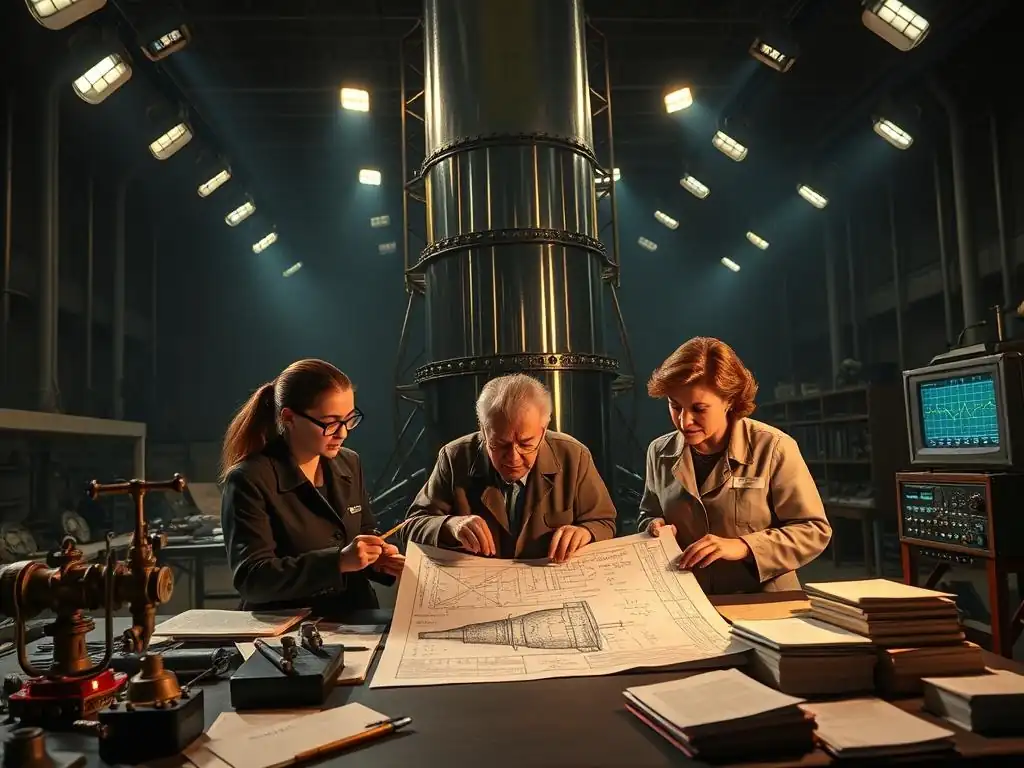
Welcome to WomenInScienceHistory.com, where we unearth the untold stories of groundbreaking women who shaped the scientific landscape. Were you aware that women played a pivotal, yet often overlooked, role in the dawn of space exploration? Dive into our latest article, "Fueling the Future: Uncovering Women’s Early Rocket Research," and discover the hidden figures who helped propel humanity towards the stars. Prepare to be amazed by their ingenuity, resilience, and enduring impact on Space Science & Astronomy. What secrets will you uncover?
- Introduction: Recognizing Women's Pioneering Contributions to Rocketry
- Early 20th Century: A Nascent Field Ripe for Innovation
- Key Female Figures in Early Rocket Research: Profiles and Contributions
- Overcoming Obstacles: Gender Bias in Early Space Science
- The Impact of Women's Early Contributions on Modern Rocketry
- Preserving the Legacy: A Call to Action
- Conclusion: Celebrating the Unsung Heroines of Early Rocket Research
- Further Reading: Resources for Exploring Women's History in Rocketry
-
Frequently Asked Questions
- What role did women play in the early stages of rocket research?
- What were some of the primary challenges faced by women working in rocketry during its early years?
- Can you provide an example of a specific female scientist who made significant contributions to early rocket research?
- How did the contributions of women in early rocket research impact the development of space travel?
- Why is it important to highlight the contributions of women in fields like early rocketry research?
- Final Reflection: Igniting Inspiration from the Stars
- Ignite Your Inspiration: Step into the World of Pioneering Women!
Introduction: Recognizing Women's Pioneering Contributions to Rocketry
The Forgotten History of Women in Space Science
The annals of scientific history often recount the triumphs of male pioneers, particularly in groundbreaking fields like rocketry and space exploration. This prevailing narrative, while celebrating significant achievements, frequently overlooks the indispensable contributions of women who worked tirelessly, often behind the scenes, to make these advancements possible. From intricate calculations to experimental chemistry, women were integral to the foundational stages of space science, yet their stories remain largely unacknowledged in many historical accounts, creating a skewed and incomplete understanding of the true collaborative nature of scientific progress.
This oversight is particularly pronounced in the early development of rocketry, a field that demanded a diverse range of skills from theoretical physics to meticulous engineering. While the names of male visionaries dominate textbooks, countless women contributed their intellectual prowess and dedication to solving complex problems that underpinned the nascent space age. Their efforts in women's early rocket research were critical, though often obscured by societal biases and the prevailing norms of the era that limited their visibility and formal recognition.
Why Women's Early Rocket Research Matters Today
Recognizing the pioneering contributions of women in early rocketry is not merely an exercise in historical revisionism; it is a vital step towards inspiring future generations and fostering a more inclusive understanding of STEM fields. By highlighting the courage, intellect, and perseverance of these women, we challenge persistent stereotypes about who belongs in science and engineering. Their stories serve as powerful testaments to the fact that innovation knows no gender, and that diverse perspectives are essential for scientific advancement.
Furthermore, the foundational work done by women in women's early rocket research laid crucial groundwork for the modern space age. The principles they helped establish, the materials they helped develop, and the computational methods they refined are still evident in today's advanced aerospace technologies. Understanding their impact provides a richer, more accurate historical context and demonstrates how their often-uncredited innovations were absolutely integral to humanity's journey to the stars, influencing everything from satellite communication to deep-space probes.
Early 20th Century: A Nascent Field Ripe for Innovation
The State of Rocketry Before 1950
The early 20th century marked a period of intense theoretical development and rudimentary experimentation in rocketry, transitioning from science fiction to tangible engineering challenges. Visionaries like Robert Goddard in the United States, Hermann Oberth in Germany, and Konstantin Tsiolkovsky in Russia laid much of the theoretical groundwork for liquid-fueled rockets and space travel. However, translating these complex equations and conceptual designs into working prototypes required immense practical application, meticulous data analysis, and innovative material science.
Before 1950, rocketry was characterized by a lack of standardized practices, limited funding, and a nascent understanding of high-energy propellants and their behavior under extreme conditions. Engineers and scientists grappled with issues of thrust efficiency, structural integrity, and guidance systems using relatively primitive tools and computational methods. Every successful test firing, every improved component, and every accurate calculation was a significant step forward in this challenging and often dangerous field, creating a demand for precise and dedicated scientific talent, much of which was provided through women's early rocket research.
Opportunities for Women in Scientific Fields
Despite prevailing societal barriers that often limited women's access to higher education and professional roles, the early 20th century presented some unexpected opportunities, particularly in fields requiring meticulous data handling and computation. Many women with strong mathematical and scientific aptitudes found employment as "human computers" in burgeoning scientific and engineering sectors, including those indirectly or directly supporting aerospace development. These roles, while often lacking public recognition, were fundamentally important to the progress of complex projects.
World War II, in particular, accelerated the integration of women into technical roles out of necessity, opening doors that had previously been closed. Women entered laboratories, factories, and research centers, applying their skills in mathematics, physics, and chemistry to critical wartime projects, including those related to ballistics and propulsion. This period provided a crucial, albeit often temporary, pathway for women to contribute their expertise to scientific and engineering endeavors, laying the foundation for future generations of women in STEM and directly influencing the landscape of women's early rocket research.
Key Female Figures in Early Rocket Research: Profiles and Contributions
Mary Sherman Morgan: Contributions to Rocket Propellants
Mary Sherman Morgan, a brilliant chemist, made an indelible mark on early rocketry through her groundbreaking work in propellant development. Employed at North American Aviation's Rocketdyne Division, her expertise was crucial during a pivotal moment in the Space Race. Her contributions directly enabled the United States to achieve a significant milestone: the launch of its first satellite.
Morgan's most notable achievement was the development of Hydyne, a high-energy liquid propellant. This innovative fuel was specifically engineered for the Jupiter-C rocket, which successfully launched Explorer 1, America's first artificial satellite, into orbit on January 31, 1958. Her work in chemical engineering provided a critical performance boost that previous propellants could not offer, demonstrating the profound impact of women's early rocket research on national space endeavors.
Mary Sherman Morgan's Background and Education
Born in 1921 in North Dakota, Mary Sherman Morgan's journey into the highly specialized field of rocket propellants was both unique and driven by wartime necessity. She initially attended North Dakota State University, pursuing a degree in chemistry. However, her formal education was interrupted by the urgent demands of World War II, which called upon skilled individuals to contribute to the nation's defense efforts.
In 1943, Morgan joined the Plum Brook Ordnance Works in Sandusky, Ohio, a facility that manufactured explosives and conducted research on propellants. It was here that she gained invaluable practical experience in chemical analysis and the handling of hazardous materials. This hands-on background, combined with her sharp analytical mind, perfectly positioned her for the complex challenges of developing new rocket fuels, making her an essential figure in women's early rocket research.
Mary Sherman Morgan's Specific Research and Achievements
Mary Sherman Morgan's most significant contribution was the formulation of Hydyne, a new liquid propellant designed to provide greater thrust for the Jupiter-C rocket. Prior to Hydyne, the Redstone missile, on which the Jupiter-C was based, utilized a mixture of ethanol and liquid oxygen. Morgan's team was tasked with creating a fuel that could deliver at least 10% more thrust, a seemingly small but critically important increase for achieving orbital velocity.
Hydyne, a blend of 60% unsymmetrical dimethylhydrazine (UDMH) and 40% diethylenetriamine (DETA), proved to be the answer. This innovative chemical composition provided approximately 12% more thrust than the previous ethanol-based fuel, a margin that was decisive for the Jupiter-C's success. The subsequent launch of Explorer 1, propelled by Hydyne, marked a turning point for the United States in the early days of the Space Race, directly attributable to Morgan's chemical ingenuity and dedication to women's early rocket research.
Yvonne Brill: Pioneering Work in Rocket Propulsion Systems
Yvonne Brill was a visionary aerospace engineer whose inventions in propulsion systems significantly advanced the longevity and efficiency of satellites. Her career, spanning several decades, saw her contribute to numerous critical space missions, fundamentally changing how satellites operated in orbit. Her work exemplified the innovative spirit of women's early rocket research, even as her most famous invention matured in the latter half of the 20th century.
Brill's most renowned invention is the hydrazine resistojet propulsion system, a highly efficient method for maintaining satellite orbits and orientation. This system revolutionized satellite design by allowing spacecraft to conserve fuel and operate for much longer periods than previously possible. Her ingenuity in this area cemented her legacy as a key figure in propulsion technology, enabling the proliferation of modern satellite applications.
Yvonne Brill's Challenges and Triumphs
Yvonne Brill faced significant challenges as a woman pursuing a career in engineering during an era when such fields were overwhelmingly male-dominated. Despite earning degrees in mathematics and chemistry from the University of Manitoba and the University of Southern California, respectively, she initially encountered difficulties securing engineering positions that fully utilized her extensive knowledge. She often had to balance her professional aspirations with societal expectations and family responsibilities, including working from home during periods of her career.
Despite these hurdles, Brill's persistence and intellectual brilliance led to numerous triumphs. Her hydrazine resistojet system was adopted by major aerospace companies and government agencies, including NASA, INTELSAT, and RCA, becoming a standard for satellite propulsion. In recognition of her transformative contributions, she was awarded the National Medal of Technology and Innovation in 2011 by President Barack Obama, a testament to her enduring impact and a shining example of the triumphs in women's early rocket research.
Yvonne Brill's Impact on Rocket Science
The hydrazine resistojet developed by Yvonne Brill had a profound technical and operational impact on rocket science and satellite technology. This system uses electrical power to heat hydrazine propellant, creating a more efficient thrust for station-keeping maneuvers compared to traditional chemical thrusters. This efficiency allowed satellites to maintain their precise orbital positions with significantly less fuel consumption, directly extending their operational lifespan from just a few years to well over a decade.
Brill's innovation was instrumental in the widespread adoption and viability of communication satellites, meteorological satellites, and later, GPS systems. By extending satellite longevity, her work dramatically reduced the cost and frequency of satellite launches, making space-based services more accessible and reliable. Her foundational contributions to propulsion efficiency illustrate how innovations stemming from women's early rocket research laid the groundwork for the global connectivity and Earth observation capabilities we rely on today.
Annie Easley: A Human Computer in Rocket Propulsion
Annie Easley was a pioneering African American computer scientist, mathematician, and rocket scientist whose career at NASA's Lewis Research Center (now Glenn Research Center) spanned more than three decades. Her work was fundamental to the development and analysis of rocket propulsion systems, particularly for the crucial Centaur upper stage rocket. She was a testament to the vital, though often unseen, roles women played in early space endeavors.
Initially working as a "human computer," Easley performed complex mathematical calculations essential for understanding rocket performance, trajectories, and fuel consumption. As technology evolved, she transitioned seamlessly into computer programming, developing and implementing code that modeled various propulsion systems and energy technologies. Her meticulous and accurate work was a cornerstone of women's early rocket research, ensuring the reliability and efficiency of critical space hardware.
Annie Easley's Collaborative Efforts and Individual Research
Annie Easley's collaborative efforts were central to the success of the Centaur project, a high-energy upper stage rocket vital for launching heavy payloads, including communication satellites and space probes like Viking 1 and 2, which journeyed to Mars. Easley's calculations were critical for analyzing propellant flow, temperature distribution within the rocket engines, and stress analyses on the Centaur's components. She worked closely with engineers and physicists, providing the numerical backbone for their designs and experiments.
Beyond her work on the Centaur, Easley also conducted individual research into alternative energy technologies, including battery storage and solar energy systems. She developed and implemented computer code to analyze energy conversion systems and co-authored several scientific papers. Her ability to adapt from manual computation to advanced programming demonstrated her intellectual versatility and continuous contribution to the evolving field of aerospace science, solidifying her place in the history of women's early rocket research.
Recognizing Annie Easley's Role
Annie Easley's story is particularly significant due to the dual challenges she overcame as an African American woman in STEM during a period of pervasive racial and gender discrimination in the United States. Her perseverance in pursuing and excelling in a highly technical field, despite systemic barriers, makes her an inspiring figure. She not only performed critical technical work but also served as an advocate for diversity and inclusion in STEM.
While her name might not be as widely recognized as some male counterparts in the public narrative of space exploration, her foundational work in propulsion system analysis and her contributions to early space missions were indispensable. Easley's legacy underscores the importance of acknowledging the unsung heroes whose dedication and intellectual rigor, often in less visible roles, drove significant progress in women's early rocket research and laid the groundwork for future space endeavors.
Overcoming Obstacles: Gender Bias in Early Space Science
Societal Expectations and Limited Access to Resources
In the early 20th century, deeply entrenched societal expectations largely confined women to domestic roles, discouraging their pursuit of careers in demanding scientific and engineering fields like rocketry. Educational institutions often had limited programs or outright barriers for women in advanced physics, engineering, or aerospace disciplines. Even for those who managed to gain a scientific education, the professional landscape presented formidable challenges.
Practical limitations further compounded these issues. Women often faced exclusion from informal professional networks, which were crucial for career advancement and collaboration. Access to specialized laboratory equipment, funding for independent research, or opportunities for leadership roles were scarce. These systemic barriers meant that women involved in women's early rocket research frequently had to work harder to prove their competence and secure even basic recognition, often in supportive rather than leading capacities.
The Struggle for Recognition and Credit
One of the most pervasive obstacles faced by women in early space science was the systemic struggle for recognition and proper credit for their work. In a male-dominated environment, women's intellectual contributions were frequently overlooked, downplayed, or, in many instances, directly attributed to their male colleagues or supervisors. This pervasive bias led to the quiet erasure of many groundbreaking achievements from the official historical record.
Examples abound where women's names were omitted from scientific publications, patents, or official reports, despite their critical involvement in the research or development. Even when their work was foundational to a project's success, the institutional structures and cultural norms often failed to acknowledge their intellectual property or leadership. This persistent lack of attribution has made the recovery and proper recognition of women's early rocket research an ongoing and essential effort for historians and advocates today.
The Impact of Women's Early Contributions on Modern Rocketry
Laying the Groundwork for Future Space Exploration
The meticulous calculations, innovative material science, and groundbreaking propulsion system designs pioneered by women in the early 20th century provided the fundamental building blocks for all subsequent space exploration. Without their often-unseen but critical work, the leap from rudimentary rockets to complex orbital vehicles and deep-space probes would have been significantly delayed, if not impossible. Their intellectual contributions ensured the accuracy, reliability, and efficiency required for future missions.
For instance, the advancements in propellant chemistry by figures like Mary Sherman Morgan directly enabled more powerful and efficient rockets, while the propulsion system innovations by Yvonne Brill revolutionized satellite longevity. These specific contributions, rooted in women's early rocket research, continue to influence contemporary aerospace engineering. Modern rocket scientists still grapple with optimizing fuel efficiency and thrust, building upon the foundational principles established by these early female pioneers.
How Women's Innovations Shaped Rocket Technology
The innovations introduced by women in early rocketry were not merely incremental improvements; they often represented transformative solutions to critical engineering challenges. Their work directly influenced the design, capabilities, and operational parameters of subsequent rockets and spacecraft. The efficiency gains in propulsion, the improved understanding of chemical reactions in propellants, and the reliable computational methods they developed became industry standards and benchmarks.
Their problem-solving approaches and scientific rigor contributed significantly to the overall maturity and reliability of rocket technology. From ensuring the structural integrity of a rocket to precisely calculating orbital trajectories, the intellectual output of women in this nascent field helped establish the scientific and engineering rigor necessary for successful spaceflight. Thus, the legacy of women's early rocket research is woven into the very fabric of modern rocket technology, underpinning everything from commercial satellite launches to crewed missions to the International Space Station.
Preserving the Legacy: A Call to Action
Recovering and Amplifying Women's Stories in Rocketry
To truly understand the comprehensive history of space science, dedicated efforts are needed to recover and amplify the stories of women in rocketry. This involves rigorous historical research into overlooked archives, personal accounts, and previously uncredited publications. Historians, academic institutions, and cultural organizations must actively seek out and document the contributions of these pioneering women to correct past omissions and provide a more accurate and inclusive narrative.
Amplifying these stories through platforms like "Women in Science History" is crucial. This means going beyond simply listing names; it requires providing detailed narratives of their specific challenges, the methodologies they employed, and their precise achievements. By fully integrating women's early rocket research into the mainstream historical record, we ensure that their intellectual labor and perseverance are properly recognized and celebrated for generations to come.
Inspiring Future Generations of Female Scientists and Engineers
Showcasing the historical role models of women in early rocketry has a direct and profound impact on inspiring future generations of female scientists and engineers. When young girls and women see tangible examples of women who not only entered but excelled in challenging STEM fields, it breaks down perceived barriers and demonstrates that these careers are accessible and rewarding. These historical figures provide powerful proof that innovation and scientific leadership are not exclusive to any gender.
To foster the next generation of female innovators in space science, it is essential to provide accessible education, robust mentorship programs, and inclusive environments within STEM fields. Highlighting the achievements of women in women's early rocket research serves as a powerful motivator, encouraging young talent to pursue their passions in science and engineering with confidence, ensuring a more diverse and innovative future for space exploration.
Conclusion: Celebrating the Unsung Heroines of Early Rocket Research
Acknowledging the Enduring Impact of Women in Space Science
The journey into space, often romanticized as the triumph of a few male visionaries, was in reality a colossal collaborative effort, significantly propelled by the intellectual rigor and innovative spirit of countless women. From developing critical propellants to performing the complex calculations that guided early rockets, women were not merely peripheral figures but central to the foundational developments of rocketry. Their perseverance in the face of societal and professional barriers underscores their profound dedication to scientific advancement.
The modern space age, with its vast array of satellites, sophisticated probes, and ambitious human missions, owes an immeasurable debt to these pioneering women. Their contributions, though often hidden from public view for decades, paved the way for humanity's ventures beyond Earth. The field of women's early rocket research is richer and more complete when their stories are brought to light, revealing a collaborative history that truly propelled humanity forward.
Continuing the Fight for Equity and Inclusion in STEM
While significant progress has been made in recognizing women's contributions to science, the fight for full equity and inclusion in STEM fields continues. Systemic biases, implicit assumptions, and persistent stereotypes still present challenges for women pursuing scientific and engineering careers today. By celebrating the unsung heroines of early rocket research, we not only honor their past achievements but also empower current and future generations to break down remaining barriers.
Their legacies serve as a powerful reminder that diversity in thought and experience is essential for true scientific progress. Continuing to advocate for equal opportunities, accessible education, and inclusive environments ensures that all talented individuals, regardless of gender or background, can contribute fully to the scientific endeavors that shape our future, ensuring that the legacy of women's early rocket research is just one chapter in a much longer, more inclusive history of innovation.
Further Reading: Resources for Exploring Women's History in Rocketry
Books and Articles on Women in Early Space Science
For those eager to delve deeper into the remarkable stories of women in early space science, a growing body of literature offers invaluable insights. These resources include scholarly works, biographies, and historical analyses that meticulously document the lives and contributions of pioneering female scientists and engineers. Such publications often provide detailed accounts of their specific research, the challenges they faced, and their lasting impact on the field of rocketry.
Readers can explore comprehensive histories of space exploration that are beginning to integrate these overlooked narratives, as well as dedicated biographical works that focus solely on individual women who shaped the early aerospace industry. These articles and books are crucial for understanding the nuances of women's early rocket research and the broader context of their scientific careers.
Online Archives and Databases Highlighting Female Scientists
The digital age has opened new avenues for discovering and accessing information about women in science, including those involved in early rocketry. Numerous online archives, digital libraries, and specialized databases are increasingly making historical documents, photographs, and personal accounts accessible to the public. These resources often contain primary source materials that shed light on the day-to-day work and significant breakthroughs of female scientists.
Exploring these online platforms can provide researchers and enthusiasts with a wealth of information on specific projects, collaborations, and the broader scientific landscape in which these women operated. These digital collections are vital tools for recovering and preserving the legacy of women's early rocket research, ensuring their stories are available for future study and inspiration.
Frequently Asked Questions
What role did women play in the early stages of rocket research?
Women made significant contributions, often working as human computers performing complex calculations crucial for rocket trajectory and fuel efficiency. Their work was often underappreciated and uncredited.
What were some of the primary challenges faced by women working in rocketry during its early years?
Women faced significant gender discrimination and limited opportunities for advancement. They were often relegated to support roles and denied recognition for their contributions.
Can you provide an example of a specific female scientist who made significant contributions to early rocket research?
While many names are overlooked, figures like Mary Sherman Morgan, who created the hydyne fuel used in the Jupiter-C rocket, exemplify women's vital contributions.
How did the contributions of women in early rocket research impact the development of space travel?
Their meticulous calculations and research were absolutely essential for the success of early rocket launches and the advancement of space exploration.
Why is it important to highlight the contributions of women in fields like early rocketry research?
Highlighting their contributions helps to rectify historical inaccuracies, inspire future generations of female scientists, and demonstrate that science is for everyone.
Final Reflection: Igniting Inspiration from the Stars
The stories unearthed within this article serve as a potent reminder that innovation knows no gender. While history often spotlights a select few, the unsung contributions of women in early rocketry research, as we've explored, were instrumental in propelling humanity towards the stars. Their dedication, ingenuity, and perseverance, often in the face of societal barriers, laid the groundwork for the technological advancements we celebrate today.
The impact of these pioneering women extends far beyond the technical realm. Their legacy serves as a powerful beacon, illuminating the path for future generations of women in STEM and challenging ingrained biases that continue to persist. We choose to go to the Moon in this decade and do the other things, not because they are easy, but because they are hard; because that goal will serve to organize and measure the best of our energies and skills, because that challenge is one that we are willing to accept, one we are unwilling to postpone, and one which we intend to win.
While President Kennedy's words focused on the challenge of space exploration, they equally apply to the ongoing challenge of ensuring equal opportunity and recognition for all contributors, regardless of gender.
As you reflect on the narratives presented, consider the untold stories that remain hidden, waiting to be discovered. Let the resilience and brilliance of these women inspire you to challenge assumptions, champion inclusivity, and actively support the next generation of innovators. The future of scientific discovery depends on our collective commitment to fostering a world where every voice is heard, and every talent is nurtured.
Ignite Your Inspiration: Step into the World of Pioneering Women!
Thank you for exploring the remarkable stories of women who shaped the early days of rocketry. Now that you've witnessed their ingenuity and determination, it's time to channel that inspiration into action.
Here are a few ways you can celebrate and continue their legacy:
- Discover a Hidden Figure: Research a lesser-known woman in STEM history and share her story on social media using #WomenInScienceHistory.
- Advocate for STEM Education: Support initiatives that encourage young girls and women to pursue careers in science, technology, engineering, and mathematics.
- Write a letter to a young, female student interested in space exploration, offering your support and inspiration.
What small step will you take today to honor these groundbreaking women and fuel the future of women in STEM?