
The Manhattan Project's Women: Beyond the Shadows of Oppenheimer and Fermi's Teams

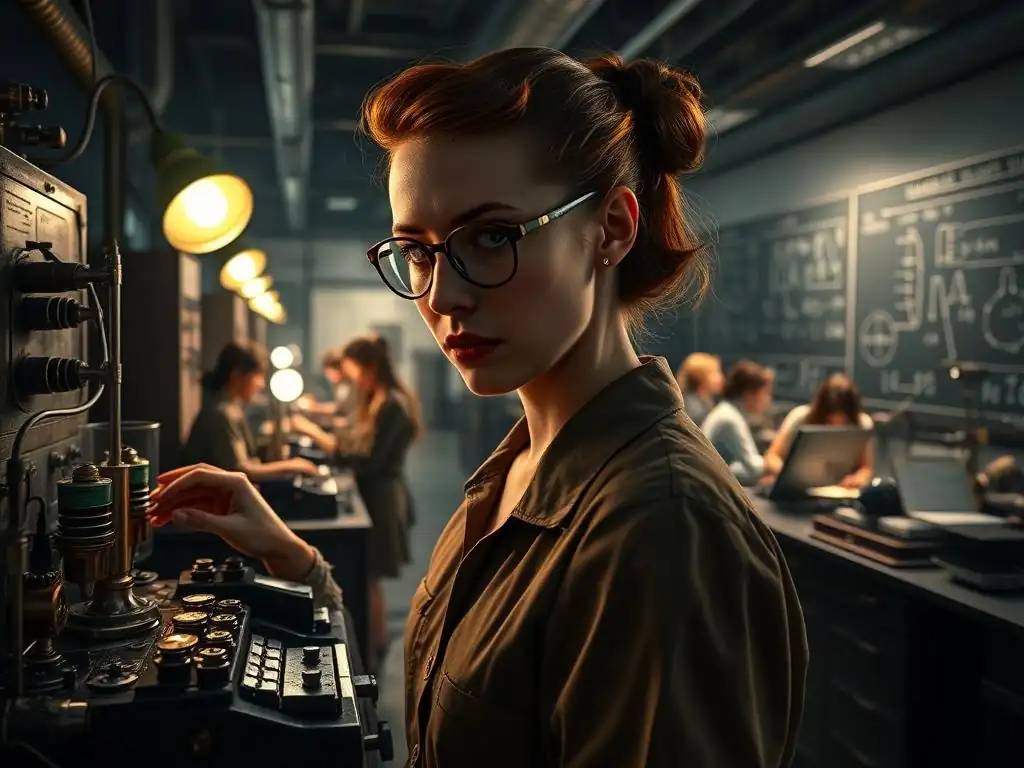
Welcome to WomenInScienceHistory.com!
Delve into the untold stories of scientific brilliance often hidden from the mainstream narrative. Prepare to be inspired as we uncover the pivotal, yet often overlooked, contributions of women in science throughout history. This week, we shine a light on a critical period in scientific history: The Manhattan Project. But we're not just focusing on the familiar names of Oppenheimer and Fermi.
What were the roles of women in the Manhattan Project, and how did their contributions shape the outcome? Discover the hidden figures who were integral to this groundbreaking endeavor and explore the challenges they faced in a world that often underestimated their intellect and capabilities. Read on to uncover their remarkable stories.
- Introduction: Unveiling the Untold Stories of Women in the Manhattan Project
- The Diverse Roles of Women in the Manhattan Project
- Prominent Women Scientists of the Manhattan Project: Shining a Light on Their Achievements
- Overcoming Obstacles: Challenges Faced by Women in the Manhattan Project
- The Legacy of Women's Contributions to the Manhattan Project
- Conclusion: Honoring the Women Behind the Science of the Manhattan Project
-
Frequently Asked Questions
- What was the general role of women in the Manhattan Project?
- Why are the contributions of women in the Manhattan Project often overlooked?
- What types of scientific work did women perform on the Manhattan Project?
- What challenges did women face while working on the Manhattan Project?
- How did the Manhattan Project impact the careers of women in science?
- Final Reflection: Illuminating the Unsung Heroines
- Unveil Your Inner Pioneer: Explore the Untold Stories!
Introduction: Unveiling the Untold Stories of Women in the Manhattan Project
Acknowledging the Overlooked Contributions of Women Scientists During WWII
The Manhattan Project, a monumental undertaking of World War II, stands as a testament to scientific ingenuity and collective effort, culminating in the development of the atomic bomb. While the names of male luminaries like J. Robert Oppenheimer and Enrico Fermi often dominate historical accounts, the full tapestry of this endeavor is far richer, woven with the indispensable contributions of countless individuals, many of whom were women.
Their dedication, intellectual prowess, and sheer labor were vital to the project's success, yet their women’s roles Manhattan Project contributions have, for too long, remained largely in the shadows, obscured by a narrative that predominantly focuses on its most visible male leaders.
From the secretive laboratories of Los Alamos to the vast industrial complexes of Oak Ridge and Hanford, women played critical roles across all facets of the project. They were not merely support staff; they were scientists, engineers, technicians, and administrators, whose work was fundamental to cracking the complex challenges of nuclear fission and material production. Acknowledging their contributions is not just about historical accuracy; it is about recognizing the diverse talents that converged to shape one of the 20th century's most impactful scientific achievements, and understanding the true scope of women’s roles Manhattan Project.
Challenging the Dominant Narrative: Women's Roles Beyond Supporting Staff
The prevailing historical narrative often minimizes the extensive and varied women’s roles Manhattan Project, frequently relegating them to auxiliary or clerical positions. However, a closer examination reveals that women were deeply embedded in the core scientific and technical work, performing tasks that required advanced knowledge, precision, and innovative thinking. They tackled complex calculations, conducted rigorous experiments, managed hazardous materials, and designed critical components, often in an environment that was not accustomed to their presence in such capacities.
This article aims to challenge that dominant narrative by illuminating the specific and significant ways women contributed to the Manhattan Project. By focusing on their direct involvement in scientific research, technical development, and critical support functions, we can begin to appreciate the full spectrum of their engagement. This re-evaluation is essential not only for historical completeness but also to inspire future generations by showcasing the extraordinary intellectual and professional capabilities demonstrated by women under the extreme pressures of wartime scientific advancement, truly highlighting the diverse women’s roles Manhattan Project.
The Diverse Roles of Women in the Manhattan Project
Women in Scientific Research: Key Areas of Contribution
Chemistry and Material Science: Women's Crucial Work on Uranium Enrichment
The pursuit of uranium enrichment was one of the most formidable challenges of the Manhattan Project, requiring an unprecedented scale of chemical and material science innovation. Women chemists and technicians were at the forefront of this effort, performing meticulous work on processes like gaseous diffusion and electromagnetic separation, which were critical for producing fissionable uranium-235. At facilities like Oak Ridge's K-25 plant, thousands of women operated complex machinery and performed precise chemical analyses on uranium compounds, ensuring the purity and enrichment levels met the stringent requirements for nuclear reactions.
Their tasks included handling highly corrosive and radioactive materials, developing novel methods for chemical separation, and conducting quality control checks on every batch of enriched uranium. This work was often tedious, dangerous, and demanded exceptional attention to detail. Without their diligent efforts in laboratories and industrial settings, the vast quantities of enriched uranium needed for the atomic bombs would not have been possible, underscoring the vital women’s roles Manhattan Project in chemical engineering and material science.
Physics and Calculations: Women's Role in Critical Mass Calculations
Within the theoretical and experimental physics divisions, women played an indispensable role, particularly in the realm of complex calculations. Before the advent of modern electronic computers, human "computers"—often women with degrees in mathematics or physics—were responsible for performing the arduous and intricate calculations necessary for reactor design, critical mass determination, and weapon yields. At sites like Los Alamos, these women meticulously crunched numbers using slide rules and mechanical calculators, tackling problems that involved neutron diffusion, reaction rates, and hydrodynamics.
Their precise work directly informed the design of the atomic devices, ensuring that enough fissionable material would be present to sustain a chain reaction while avoiding premature detonation. For instance, the calculations related to neutron multiplication factors and the behavior of fissile materials under various conditions were critical for the successful operation of experimental reactors and the eventual weapon designs. This intellectual labor, though often unseen, was foundational to the project's scientific progress and highlighted the profound women’s roles Manhattan Project in theoretical physics.
Biology and Medicine: Understanding the Effects of Radiation Exposure
The inherent dangers of working with radioactive materials necessitated a robust effort in health physics and radiobiology, an area where women also made significant contributions. As the project progressed, understanding the biological effects of radiation exposure became paramount for the safety of personnel and the broader implications of nuclear technology. Women scientists and medical professionals were involved in studying radiation sickness, developing safety protocols, and monitoring the health of thousands of workers.
At facilities like the Metallurgical Laboratory in Chicago, women conducted research on the effects of radiation on living organisms, contributing to the nascent field of radiation biology. Their findings helped establish safe exposure limits and guided the design of protective measures within the highly hazardous environments of the project. This critical work ensured the well-being of the workforce and laid the groundwork for future advancements in nuclear medicine and radiation safety, showcasing essential women’s roles Manhattan Project in biological and medical research.
Women in Technical and Support Roles: Essential but Often Unrecognized
Engineering and Technical Assistance: Skills vital for Project Success
Beyond the core scientific research, a vast array of technical and engineering support was required to bring the Manhattan Project to fruition. Women filled many of these crucial roles, serving as laboratory technicians, instrument calibrators, drafts-women, and engineering assistants. Their skills were vital for transforming theoretical designs into functional prototypes and large-scale industrial operations. For example, at the electromagnetic separation plants in Oak Ridge, women known as "Calutron Girls" operated and maintained the massive Calutron machines, which were essential for separating uranium isotopes.
These roles demanded precision, mechanical aptitude, and problem-solving skills. They were responsible for assembling complex apparatus, monitoring sophisticated equipment, and ensuring the accurate measurement of experimental results. Without their meticulous work in laboratories, workshops, and production facilities, the ambitious scientific goals of the project would have remained purely theoretical, demonstrating the indispensable women’s roles Manhattan Project across technical and engineering domains.
Administrative and Logistical Support: Maintaining the Project's Momentum
While often overlooked in favor of scientific breakthroughs, the administrative and logistical infrastructure of the Manhattan Project was a colossal undertaking, and women formed its backbone. With hundreds of thousands of individuals involved across multiple secret sites, the coordination of personnel, resources, and information was a monumental task. Women served as secretaries, typists, record keepers, human resources administrators, and security personnel, managing the vast flow of documents, maintaining strict secrecy, and ensuring the smooth operation of daily activities.
Their work involved processing immense volumes of highly sensitive information, organizing travel and accommodation for thousands of scientists and military personnel, and managing the complex supply chains that fed the project's voracious appetite for materials. The meticulous record-keeping and efficient communication facilitated by these women were absolutely essential for maintaining the project's momentum and cohesion, proving that women’s roles Manhattan Project extended to every critical function, including the foundational administrative and logistical support.
Prominent Women Scientists of the Manhattan Project: Shining a Light on Their Achievements
Leona Woods Marshall Libby: A Pioneer in Reactor Physics
Leona Woods Marshall Libby (1919-1986) was a brilliant physicist and the youngest, as well as the only woman, on Enrico Fermi's core team at the University of Chicago's Metallurgical Laboratory. Her contributions to the Manhattan Project were profoundly significant, particularly in the development of the world's first self-sustaining nuclear chain reaction. Woods was instrumental in the construction of Chicago Pile-1 (CP-1), where she helped assemble the graphite and uranium pile and was present during its historic criticality on December 2, 1942.
Her expertise extended to the design and operation of subsequent reactors, including the X-10 Graphite Reactor at Oak Ridge and the plutonium production reactors at Hanford. Woods was known for her acute understanding of neutron physics and her skill in calibrating and operating the neutron detectors used to monitor the chain reaction. Her work was foundational to understanding reactor behavior and ensuring the safe production of plutonium, making her a pivotal figure in the women’s roles Manhattan Project in reactor physics.
Chien-Shiung Wu: Her Contributions to the Manhattan Project and Beyond
Chien-Shiung Wu (1912-1997), a distinguished experimental physicist, made critical contributions to the Manhattan Project, particularly at Columbia University. Her work focused on the development of highly sensitive radiation detection instruments and the improvement of the gaseous diffusion process for uranium enrichment. Wu was a leading expert in beta decay and nuclear spectroscopy, skills that proved invaluable for the project's needs.
One of her most significant, though often overlooked, contributions involved solving the "xenon poisoning" problem that plagued the early plutonium production reactors at Hanford. When the B Reactor at Hanford unexpectedly shut down shortly after starting operations, Wu's expertise in radioactive decay processes helped identify xenon-135, a neutron absorber, as the culprit.
Her insights allowed engineers to adjust reactor design and operation, preventing catastrophic delays in plutonium production. Her exceptional contributions to the Manhattan Project laid the groundwork for her later groundbreaking work, famously disproving the conservation of parity in a Nobel Prize-winning experiment, cementing her legacy among the most influential women’s roles Manhattan Project and beyond.
Katharine Way: Calculating Isotope Separation and Nuclear Data
Katharine Way (1903-1995) was a physicist whose intellectual contributions to the Manhattan Project were centered on crucial theoretical calculations and data compilation. Working at the Metallurgical Laboratory in Chicago and later at Oak Ridge, Way focused on the decay of fission products, developing mathematical formulas that were essential for predicting the behavior of nuclear fuel and waste. Her work was vital for understanding the long-term characteristics of irradiated materials, which had direct implications for reactor safety and fuel reprocessing.
Way also played a key role in compiling and organizing nuclear data, which was indispensable for physicists and engineers designing reactors and evaluating nuclear processes. Her meticulous work on nuclear data tables provided foundational information that guided many aspects of the project's scientific endeavors, from isotope separation efficiency to reactor neutronics. Her commitment to rigorous data analysis and compilation highlighted a significant aspect of the women’s roles Manhattan Project in fundamental nuclear physics.
Elizabeth Rona: Expertise in Polonium Extraction and Purification
Elizabeth Rona (1890-1981) was an Austrian-Hungarian nuclear chemist who brought unparalleled expertise in the chemistry of radioactive elements to the Manhattan Project. Her work at Los Alamos was particularly critical for the development of the atomic bomb, specifically the "Fat Man" implosion device. Rona was tasked with the extremely challenging and dangerous work of separating and purifying polonium-210, a highly radioactive element.
Polonium was a crucial component of the neutron initiators used in the implosion-type atomic bombs, responsible for initiating the chain reaction at the precise moment of detonation. Rona's methods ensured the extremely high purity of polonium required for this sensitive application. Her deep knowledge of radiochemistry and her ability to work with minute quantities of highly hazardous materials under immense pressure were indispensable to the bomb's design and functionality, cementing her pivotal women’s roles Manhattan Project in the chemical engineering of nuclear materials.
Overcoming Obstacles: Challenges Faced by Women in the Manhattan Project

Despite their vital contributions, women participating in the Manhattan Project often faced significant gender bias and discrimination within the predominantly male scientific and engineering communities of the 1940s. Many women, even those with advanced degrees and specialized skills, encountered skepticism regarding their capabilities or were initially relegated to less prestigious roles. Their ideas might have been undervalued or dismissed, and they were often excluded from informal networks and decision-making processes that were commonplace among their male colleagues.
This pervasive gender bias created a challenging environment, where women had to constantly prove their competence and push against societal expectations that often viewed scientific and technical work as unsuitable for them. While the urgency of wartime production sometimes necessitated a more inclusive approach to talent, ingrained prejudices meant that recognition and opportunities for advancement were often harder to come by for women, highlighting the systemic hurdles faced by women’s roles Manhattan Project.
Unequal Pay and Recognition: The Struggle for Fair Compensation
A persistent challenge for women in the Manhattan Project, mirroring broader societal inequities of the era, was the issue of unequal pay and recognition. It was common practice for women to be paid less than men for performing equivalent work, even in highly specialized scientific and technical roles. This wage disparity was not merely a matter of fairness but also reflected a devaluation of women's labor and expertise, regardless of their qualifications or the criticality of their contributions.
Furthermore, post-war, the public narrative and historical accounts of the Manhattan Project largely omitted or downplayed the women’s roles Manhattan Project, showering accolades primarily on their male counterparts. This lack of public recognition and equitable compensation not only impacted their immediate professional standing but also contributed to their historical invisibility, making it a prolonged struggle for these pioneering women to receive the acknowledgment they rightfully deserved for their instrumental efforts in one of history's most significant scientific endeavors.
Balancing Work and Family: The Challenges of Wartime Service
For many women involved in the Manhattan Project, balancing their demanding professional responsibilities with personal and family obligations presented unique and often overwhelming challenges. The project's intense secrecy and the need for relocation to remote and rapidly constructed sites (like Los Alamos, Oak Ridge, and Hanford) often meant uprooting families, leaving support networks behind, and adapting to isolated, high-pressure environments. Childcare facilities were often rudimentary or non-existent, placing an additional burden on mothers.
The sheer intensity of wartime work, with long hours and the constant pressure of the project's critical mission, added to the strain. Women were often expected to manage both their highly technical jobs and the domestic responsibilities that traditional societal norms placed upon them. This dual burden, coupled with the profound secrecy surrounding their work that prevented them from discussing their contributions even with family, added a significant layer of psychological and logistical difficulty to the already arduous women’s roles Manhattan Project.
The Legacy of Women's Contributions to the Manhattan Project
Impact on Post-War Science and Technology
The experience gained by women in the Manhattan Project had a profound and lasting impact on post-war science and technology. The project served as an unparalleled training ground, equipping a generation of female scientists, engineers, and technicians with cutting-edge skills in nuclear physics, chemistry, engineering, and computation. Many of these women continued to pursue distinguished careers in STEM fields, contributing to the burgeoning areas of nuclear energy, medical physics, computer science, and environmental science.
Their involvement helped establish new disciplines and push the boundaries of existing ones. For instance, the demand for "human computers" during the project inadvertently trained a cohort of women who would later transition to early programming roles as electronic computers emerged. The knowledge and expertise they developed were critical in shaping the trajectory of scientific and technological advancement in the decades that followed, underscoring the enduring legacy of women’s roles Manhattan Project in shaping the modern scientific landscape.
Inspiring Future Generations of Women in STEM
Highlighting the women’s roles Manhattan Project is crucial for inspiring future generations of women in STEM (Science, Technology, Engineering, and Mathematics). By bringing these previously overlooked stories to the forefront, we provide tangible examples of women excelling in demanding scientific and technical fields during a pivotal historical moment. These narratives demonstrate that women have always been capable of groundbreaking contributions, even when faced with significant societal and systemic barriers.
Learning about the resilience, ingenuity, and intellectual prowess of women like Leona Woods Marshall Libby, Chien-Shiung Wu, and Katharine Way can empower young girls and women today to pursue their own passions in science and technology. Their stories serve as powerful counter-narratives to persistent stereotypes about gender and aptitude in STEM, fostering a more inclusive vision of who can be a scientist or engineer and encouraging continued participation in these vital fields.
Recognizing the Full Scope of Women's Scientific Achievements in History
Recognizing the full scope of women’s roles Manhattan Project is a critical step towards a more accurate and comprehensive understanding of scientific history. For too long, the contributions of women in science have been marginalized, omitted, or downplayed in favor of male-centric narratives. By meticulously uncovering and celebrating the achievements of women in monumental projects like the Manhattan Project, we begin to correct these historical oversights.
This ongoing effort to illuminate women's scientific achievements is not just about giving credit where credit is due; it is about enriching our collective understanding of how scientific progress truly happens—through the diverse talents, perspectives, and relentless efforts of all who contribute. Acknowledging the full spectrum of women’s roles Manhattan Project ensures that future generations receive a more complete and inspiring account of human ingenuity, fostering an appreciation for the collaborative and diverse nature of scientific discovery throughout history.
Conclusion: Honoring the Women Behind the Science of the Manhattan Project
Moving Beyond the Shadows: A Call for Continued Recognition
The Manhattan Project stands as a monumental chapter in human history, fundamentally altering the course of global affairs and scientific endeavor. While the spotlight has historically illuminated a select few male figures, it is imperative to move beyond these shadows and fully acknowledge the immense and multifaceted contributions of the women who were integral to its success. From groundbreaking theoretical physics and complex chemical separations to critical logistical support and health monitoring, women’s roles Manhattan Project were diverse, indispensable, and often performed under conditions of extreme secrecy and personal sacrifice.
Their ingenuity, perseverance, and dedication were not merely supplementary; they were foundational to overcoming the immense scientific and engineering challenges of developing the atomic bomb. As we reflect on this pivotal period, it is a call for continued recognition and celebration of these pioneering women. By integrating their stories into the mainstream historical narrative, we not only pay homage to their extraordinary achievements but also inspire a more inclusive and equitable future for women in science, ensuring that their legacies shine brightly for generations to come.
Frequently Asked Questions
What was the general role of women in the Manhattan Project?
Women played crucial, though often unrecognized, roles in the Manhattan Project. They worked as technicians, mathematicians, physicists, chemists, and administrators, contributing significantly to the project's success.
Why are the contributions of women in the Manhattan Project often overlooked?
Their contributions are often overlooked due to historical biases and the focus on male leadership figures like Oppenheimer and Fermi. The declassification process also initially highlighted the roles of prominent male scientists.
What types of scientific work did women perform on the Manhattan Project?
Women engaged in a wide range of scientific tasks, including isotope separation, uranium enrichment, calculations for nuclear reactions, and laboratory research. They also provided essential support in administration and logistics.
What challenges did women face while working on the Manhattan Project?
Women faced challenges such as gender discrimination, lower pay compared to their male counterparts, and limited opportunities for advancement. They also often had to balance their work with domestic responsibilities.
How did the Manhattan Project impact the careers of women in science?
For some, the Manhattan Project provided unique opportunities and experience that advanced their careers. However, many women faced a return to traditional roles after the war, highlighting the societal limitations of the time.
Final Reflection: Illuminating the Unsung Heroines
The narrative of the Manhattan Project is often dominated by the towering figures of Oppenheimer and Fermi, but the true scope of its success hinges on the contributions of countless individuals, particularly the women whose roles have been historically marginalized. Understanding the depth and breadth of "Women's roles Manhattan Project" is not merely a matter of historical correction; it's a crucial step towards acknowledging the full spectrum of talent and dedication that fueled one of the most pivotal moments in human history.
The persistent underrepresentation of women in STEM fields, even today, underscores the importance of recognizing their past achievements. This article serves as a reminder that brilliance and dedication know no gender, and that overlooking the contributions of women not only diminishes their legacy but also limits our understanding of the past. The most effective way to do it, is to do it.
– Amelia Earhart. This quote encapsulates the spirit of the women who, despite facing societal barriers, quietly and effectively contributed to the Manhattan Project, shaping the world we live in today.
As you reflect on the stories of these remarkable women, consider the untold potential that lies dormant when voices are silenced and contributions are overlooked. Let their dedication and resilience inspire you to champion inclusivity and equity in all fields, ensuring that future generations benefit from the full spectrum of human talent. Let us all strive to create a world where every voice is heard, and every contribution is valued.
Unveil Your Inner Pioneer: Explore the Untold Stories!
Thank you for delving into the remarkable contributions of women in the Manhattan Project. We hope this article illuminated their vital roles beyond the shadow of prominent figures. Now, it’s time to translate inspiration into action!
- Discover a new woman scientist whose story resonates with you and share her impact on social media to inspire others.
- Explore WomenInScienceHistory.com for more hidden figures in STEM, expanding your knowledge and appreciation.
- Reflect on the systemic barriers these women overcame – what actionable steps can you take to promote inclusivity in science today?
What untold story from the world of women in science will you uncover next?