
From Isolation to Influence: The Evolutionary Power of Women Connecting in Science

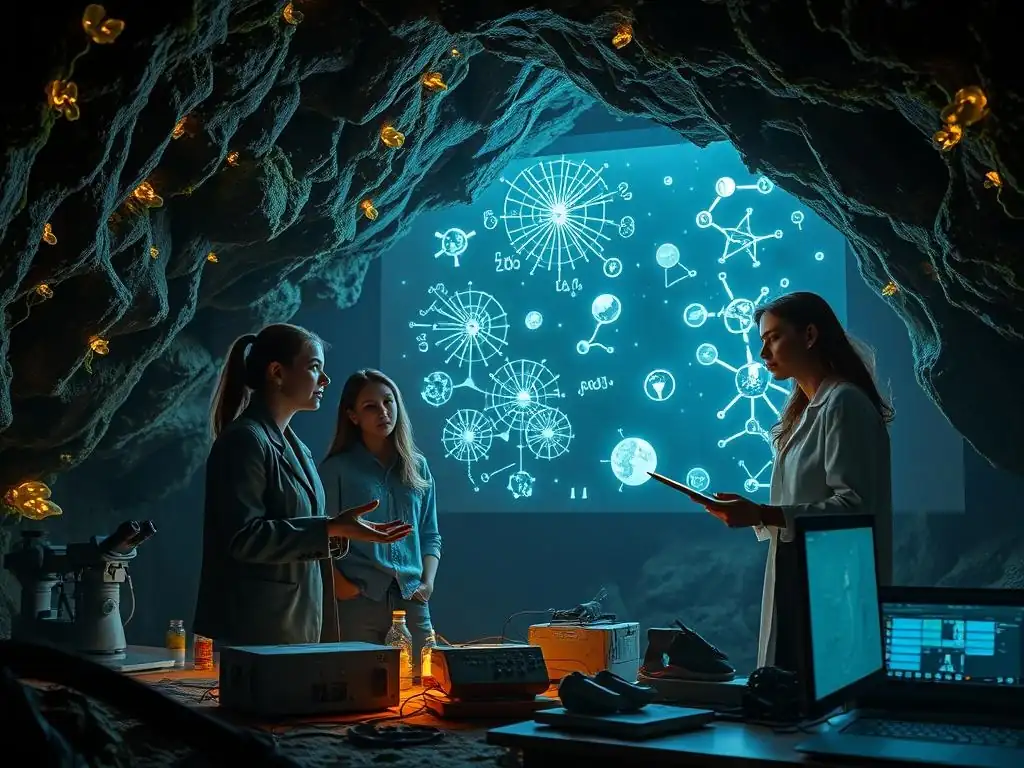
Welcome to WomenInScienceHistory.com!
Delve into the fascinating world where collaboration became a catalyst for scientific breakthroughs. Discover how women connecting – building networks and sharing knowledge – defied historical barriers and amplified their influence across the scientific landscape. This article, "From Isolation to Influence: The Evolutionary Power of Women Connecting in Science," explores the historical context of these vital connections. Are you ready to uncover the untold stories of resilience, innovation, and the enduring power of women supporting women in science?
- Introduction: The Historical Isolation of Women in Scientific Fields
- The Dawn of Collaboration: Early Networks of Women Scientists
- The Rise of Women's Science Networks: A Turning Point
- The Evolutionary Power of Collaboration: Impact and Influence
- Case Studies: Women Connecting and Influencing Scientific Advancements
- Modern Networks: Expanding the Reach and Influence of Women in Science
- Empowering Future Generations: The Legacy of Women Connecting in Science
- Conclusion: The Enduring Power of Women Connecting Science Collaboration Influence
-
Frequently Asked Questions
- How did gender inequality historically impact women's ability to collaborate in science?
- What are some specific examples of women scientists who overcame barriers to collaborate and achieve significant breakthroughs?
- How can modern technology and online platforms facilitate greater collaboration among women in science?
- How does increased collaboration among women in science contribute to a more diverse and inclusive scientific community?
- What is the potential impact of greater collaboration among women in science on addressing global challenges?
- Final Reflection: The Enduring Strength of Scientific Sisterhood
- Ignite Your Scientific Sisterhood!
Introduction: The Historical Isolation of Women in Scientific Fields
Overcoming Barriers: The Initial Struggles for Women in Science
For centuries, women seeking to engage in scientific pursuits faced formidable barriers, often stemming from deeply entrenched societal norms and institutional exclusion. Access to formal education, particularly at university level, was largely denied to women until the late 19th and early 20th centuries. Even when educational avenues slowly opened, women were frequently barred from laboratories, libraries, and scientific societies, effectively preventing them from participating in the nascent women connecting science collaboration that was beginning to define male scientific advancement.
This widespread exclusion meant that early female scientists were often forced to pursue their passions in isolation, conducting experiments in private homes or relying on the patronage of male relatives. Their work, no matter how groundbreaking, frequently went unacknowledged or was attributed to male colleagues. The lack of formal recognition and the absence of a supportive community meant that many brilliant minds remained obscured, their potential influence on scientific progress severely limited by circumstances beyond their control.
Understanding the Landscape: Limited Opportunities and Recognition
The landscape for women in science was characterized by a severe scarcity of opportunities and a pervasive lack of recognition for their intellectual contributions. Even those who managed to gain some education or practical experience were rarely afforded official academic positions, research grants, or leadership roles. For instance, in the late 19th century, women working as "computers" at observatories, like the Harvard College Observatory, performed crucial calculations and analyses, yet were paid significantly less than men and rarely received credit for their discoveries.
This systemic undervaluation meant that women's pathways to professional scientific careers were largely non-existent, and their individual efforts struggled to gain traction without the benefit of collective women connecting science collaboration. The few who did achieve prominence, such as Marie Curie, often did so despite immense societal and professional resistance, highlighting the exceptional tenacity required to break through a system designed to keep them on the periphery of scientific influence.
The Dawn of Collaboration: Early Networks of Women Scientists
Scientific Societies and Women: A Gradual Inclusion
Established scientific societies, such as the Royal Society of London (founded 1660) and the French Académie des sciences (founded 1666), were exclusively male bastions for centuries. Women were systematically excluded from membership, presentations, and publications, denying them crucial platforms for disseminating their work and engaging in peer review. It wasn't until the early 20th century that some societies began to cautiously admit women, often starting with honorary memberships rather than full, voting status.
For example, the American Chemical Society admitted its first female members in 1893, but their full integration and women connecting science collaboration within such bodies remained a slow and arduous process. This gradual, often reluctant, inclusion marked a tiny but significant step, providing the first formal, albeit limited, avenues for women to participate in collective scientific discourse and begin to exert a broader influence on their fields.
Denied formal avenues, women ingeniously forged informal networks to share knowledge, provide mutual support, and circumvent official barriers. These often took the form of correspondence circles, private salons, or small study groups where intellectual exchange could flourish away from male scrutiny. For instance, in the 18th century, pioneering natural philosophers like Laura Bassi and Émilie du Châtelet corresponded with a select group of intellectuals, including other women, exchanging ideas and critiques.
These informal networks were vital for fostering a sense of community and validating the intellectual pursuits of women who were otherwise isolated. They allowed for the discreet sharing of experimental results, theoretical discussions, and emotional encouragement, demonstrating the nascent power of women connecting science collaboration even in the absence of institutional recognition. This hidden infrastructure laid critical groundwork for the future expansion of women's collective influence.
The Rise of Women's Science Networks: A Turning Point
Formal Organizations: Creating Space for Women in Science
The early to mid-20th century witnessed a crucial shift from informal gatherings to the establishment of formal organizations dedicated to supporting women in science. This development was fueled by a growing awareness of gender inequality and the realization that collective, organized action was necessary to dismantle systemic barriers. These new organizations provided dedicated spaces for women connecting science collaboration, offering professional development, advocacy, and a sense of belonging that was previously absent.
These formal groups aimed to address the specific challenges faced by women, from securing funding and positions to combating discrimination and promoting their work. They became crucial platforms for advocating for policy changes within academic institutions and governmental bodies, thereby amplifying the collective influence of women scientists and working towards a more equitable scientific landscape.
The Importance of Mentorship: Guiding the Next Generation of Female Scientists
A cornerstone of these emerging networks was the emphasis on mentorship, a critical resource often lacking in male-dominated academic structures. Experienced female scientists, having navigated significant obstacles themselves, began to actively guide and sponsor younger women entering the field. This mentorship provided invaluable advice on career progression, grant writing, navigating institutional politics, and balancing professional and personal life.
This systematic approach to mentorship created a vital pipeline, ensuring that knowledge, strategies for resilience, and professional connections were passed down through generations. By fostering these relationships, women connecting science collaboration networks empowered individual women, building their confidence and equipping them with the tools necessary to thrive, thereby strengthening the collective influence of women in science.
Examples of Pioneering Women's Scientific Societies: AWIS and Graduate Women in Science
Among the most influential pioneering organizations is the Association for Women in Science (AWIS), founded in 1971. Born out of the women's rights movement, AWIS quickly became a leading voice for gender equity in STEM. Its mission focuses on advocating for women's advancement, providing professional development, and promoting the full participation of women in all scientific fields. AWIS has grown to include thousands of members across various chapters, demonstrating the significant demand for women connecting science collaboration and its broad influence.
Another foundational organization is Graduate Women in Science (GWIS), established even earlier in 1921. GWIS has a long history of supporting women pursuing graduate degrees in science, providing fellowships, grants, and networking opportunities. With a century of experience, GWIS has consistently championed the scientific achievements of women and fostered a supportive community for women in science, proving the enduring power of women connecting science collaboration over generations.
The Evolutionary Power of Collaboration: Impact and Influence
Amplifying Voices: Women Connecting to Advocate for Change in Science
The formation of formal and informal networks has been instrumental in amplifying the voices of women in science, enabling them to collectively advocate for systemic change. Rather than individual complaints, organized groups could present unified demands, challenging discriminatory practices in hiring, promotion, and funding. This collective advocacy has led to increased awareness of gender bias and, in many cases, tangible policy reforms.
For example, the persistent efforts of women connecting science collaboration groups contributed to the implementation of anti-discrimination policies within universities and research institutions. While the full impact of such advocacy is complex to quantify, the visibility and collective pressure exerted by these networks have undeniably played a significant role in creating a more equitable scientific environment and increasing the overall influence of women in academia and industry.
Fostering Innovation: Diverse Perspectives Driving Scientific Breakthroughs
Beyond advocacy, the increased presence and collaboration of women in science have directly fostered innovation by introducing diverse perspectives to scientific inquiry. Research has consistently shown that diverse teams, including those with significant gender diversity, tend to outperform homogenous teams in problem-solving and creativity. Women often bring different life experiences, approaches to research questions, and collaborative styles.
This infusion of varied viewpoints challenges established paradigms and can lead to novel solutions and overlooked research avenues. When women connecting science collaboration flourishes, it enriches the intellectual landscape, leading to more robust scientific methodologies, more comprehensive analyses, and ultimately, breakthroughs that might not have been achieved otherwise, thereby extending their collective influence on scientific progress.
Breaking Down Silos: Collaborative Research and Interdisciplinary Approaches
Women's science networks frequently encourage and facilitate interdisciplinary collaboration, effectively breaking down traditional academic silos. By connecting scientists from different fields—for instance, a biologist with an engineer, or a chemist with a computer scientist—these networks foster cross-pollination of ideas that are crucial for addressing complex, multifaceted global challenges. This collaborative spirit often emerges organically from the shared experiences within these communities.
This approach has led to innovative research projects that merge expertise from disparate disciplines, yielding comprehensive solutions to problems like climate change, disease modeling, and sustainable energy. The emphasis on women connecting science collaboration in an interdisciplinary manner demonstrates a powerful model for scientific advancement, significantly increasing the collective influence of their research endeavors.
Case Studies: Women Connecting and Influencing Scientific Advancements

Case Study 1: Rosalind Franklin and the Structure of DNA
Rosalind Franklin's meticulous X-ray diffraction images, particularly "Photo 51," and her precise data analysis were absolutely crucial to Watson and Crick's elucidation of the double helix structure of DNA in 1953. Her work provided direct evidence of DNA's helical nature and key measurements of its dimensions. Despite her pivotal contributions, her role was significantly under-recognized at the time, and she did not receive the Nobel Prize awarded to Watson, Crick, and Wilkins in 1962.
Franklin's story often serves as a stark reminder of the challenges faced by women in science, particularly the lack of credit and the professional isolation. Had a robust women connecting science collaboration network existed around her, providing stronger advocacy and support, her intellectual property might have been better protected, and her foundational influence on one of biology's greatest discoveries might have been recognized more equitably in her lifetime.
Case Study 2: Barbara McClintock and Transposable Elements
Barbara McClintock's groundbreaking discovery of "jumping genes" or transposable elements in maize in the 1940s and 50s was initially met with widespread skepticism and even ridicule by the scientific community. Her findings challenged the then-dominant view of a static genome, and her innovative research methods were not immediately understood or accepted. For years, her work was largely ignored, leading to a period of professional isolation.
Despite this initial lack of acceptance and the absence of a strong women connecting science collaboration network to champion her radical ideas, McClintock persevered, continuing her research in relative obscurity. Her work was eventually vindicated and recognized with a Nobel Prize in Physiology or Medicine in 1983, decades after her initial discoveries. This case underscores the immense resilience required when individual brilliance has to fight against the scientific tide without the collective support that women connecting science collaboration can provide, highlighting the potential for delayed influence.
Analyzing the Results: Measuring the Impact of Women's Science Networks
Measuring the precise impact of women's science networks involves both qualitative and quantitative assessments. Qualitatively, we observe increased confidence, reduced feelings of isolation, and enhanced leadership skills among women participating in these networks. Quantitatively, metrics include a rise in the percentage of women in STEM leadership roles, an increase in grant funding awarded to female principal investigators, and improved retention rates of women in STEM careers from graduate school through senior positions.
While establishing direct causality can be complex, the clear correlation between the growth and maturation of women connecting science collaboration initiatives and the demonstrable increase in the representation, visibility, and overall influence of women in science is undeniable. The collective efforts of these networks have demonstrably moved the needle, creating more inclusive environments and fostering greater recognition for women's contributions.
Modern Networks: Expanding the Reach and Influence of Women in Science
Leveraging Technology: Online Communities and Global Collaboration
The advent of the internet and digital platforms has revolutionized the landscape for women connecting science collaboration, enabling the formation of vast, accessible online communities and facilitating global collaboration on an unprecedented scale. Geographical barriers, which once limited face-to-face networking, are now virtually non-existent. Online forums, professional social media groups, and virtual conferences allow women scientists from diverse backgrounds and locations to connect instantaneously.
These digital spaces provide dynamic platforms for knowledge sharing, peer mentorship, and collective advocacy, reaching thousands, if not millions, worldwide. This technological leap has significantly expanded the reach and collective influence of women in science, allowing for rapid dissemination of information, coordination of initiatives, and the creation of a truly global network of support and collaboration.
Addressing Contemporary Challenges: Supporting Women in STEM Careers
Modern networks continue to address the persistent, albeit evolving, challenges faced by women in STEM careers. These include navigating subtle unconscious biases, tackling the gender pay gap, combating imposter syndrome, and managing work-life balance in demanding scientific roles. These networks provide crucial support systems, offering shared experiences and practical strategies to overcome these obstacles.
Specific initiatives within these networks include workshops on negotiation skills, mental wellness resources tailored for scientists, and advocacy for family-friendly policies in research institutions. By proactively addressing these contemporary issues, women connecting science collaboration continues to improve professional environments, ensuring that female scientists can thrive and contribute fully, thereby solidifying their ongoing influence on scientific culture.
Social media platforms like Twitter, LinkedIn, and Instagram have become powerful tools for women in science, allowing them to share their research, celebrate achievements, and engage directly with the public. This increased visibility helps to challenge stereotypes, humanize scientists, and inspire younger generations. Hashtags such as #WomenInSTEM and #ActualLivingScientist have created powerful online communities that highlight the diversity and talent of female researchers.
These platforms enable immediate engagement, allowing women to discuss scientific topics, promote their work, and collectively advocate for greater equity and inclusion. The strategic use of social media by women connecting science collaboration initiatives has significantly built public awareness, fostered a sense of belonging, and directly contributed to promoting inclusion and recognizing the widespread influence of women in the scientific community.
Empowering Future Generations: The Legacy of Women Connecting in Science
Inspiring Role Models: Showcasing the Achievements of Women Scientists
The increased visibility of successful women scientists, largely facilitated by the efforts of modern networks, provides invaluable role models for girls and young women considering scientific careers. Seeing is believing, and when young minds encounter accomplished female physicists, biologists, engineers, or computer scientists, it powerfully demonstrates what is achievable. These narratives of achievement counteract historical biases and the pervasive stereotype of science as a male domain.
By actively showcasing the diverse achievements of women scientists through profiles, interviews, and public engagement, women connecting science collaboration initiatives inspire confidence and ambition. This deliberate highlighting of role models is crucial for encouraging the next generation to pursue their scientific curiosities, ensuring a continuous flow of talent and a growing collective influence in the future.
Promoting STEM Education: Encouraging Girls and Young Women to Pursue Science
Women's science networks actively engage in outreach programs, workshops, and educational initiatives specifically designed to encourage girls and young women to develop an interest in STEM from an early age. These programs often involve hands-on experiments, mentorship opportunities with current scientists, and presentations that demystify scientific careers and make them seem accessible and exciting.
Examples include science camps for middle school girls, mentorship programs connecting high school students with university researchers, and public events that celebrate scientific discovery. These efforts by women connecting science collaboration are fundamental in nurturing early interest, building confidence, and dismantling perceived barriers, thereby directly contributing to a future where a larger proportion of girls pursue science, strengthening the collective influence of women in the scientific community.
Creating a More Equitable Future: The Ongoing Evolution of Women's Science Networks
Despite significant progress, achieving full gender equity in science remains an ongoing endeavor. Women's science networks continue to evolve, adapting their strategies to address new challenges and ensure that the gains made are sustained and expanded. Their focus areas now increasingly include intersectionality, advocating for women from diverse racial, ethnic, and socioeconomic backgrounds, as well as addressing issues specific to LGBTQ+ women in STEM.
The sustained efforts of women connecting science collaboration are fundamental to ensuring that scientific progress benefits from the full diversity of human talent and perspectives. This continuous evolution promises a future where science is not only more equitable but also more innovative and impactful, solidifying the enduring influence of these networks on the global scientific landscape.
Conclusion: The Enduring Power of Women Connecting Science Collaboration Influence
Reflecting on the Progress: The Evolution of Women's Role in Science
The journey of women in science, from centuries of isolation and systemic exclusion to their current, increasingly influential roles, is a testament to unwavering perseverance and the transformative power of collective action. What began as informal, often clandestine, exchanges among a few pioneering individuals has evolved into a global web of robust, formal, and technologically enhanced networks. This remarkable evolution highlights how women connecting science collaboration has fundamentally reshaped the scientific landscape.
The progress achieved in terms of representation, recognition, and the overall professional environment for women in science is undeniable. From breaking down barriers to fostering innovation and advocating for systemic change, the persistent efforts of these networks have exerted a profound and positive influence on the scientific community, demonstrating the essential role of solidarity and shared purpose.
Looking Ahead: The Future of Women's Science Networks and Their Influence on the Scientific Community
As we look ahead, the future of women's science networks promises continued innovation and expansion. Their focus will undoubtedly broaden to encompass greater intersectionality, ensuring that all women, regardless of background, have equitable opportunities and support within STEM. The global nature of modern challenges will also necessitate even greater international women connecting science collaboration, leveraging technology to bridge geographical divides and foster truly global scientific endeavors.
The enduring power of women connecting science collaboration influence will continue to enrich the entire scientific enterprise. By ensuring that diverse voices are heard, that novel perspectives are integrated, and that talent is nurtured irrespective of gender, these networks will not only continue to empower women but also drive more robust, innovative, and impactful discoveries that benefit society as a whole.
Frequently Asked Questions
How did gender inequality historically impact women's ability to collaborate in science?
Historically, gender biases and exclusionary practices often limited women's access to networks and resources, hindering their opportunities for scientific collaboration and advancement. This often led to isolation.
What are some specific examples of women scientists who overcame barriers to collaborate and achieve significant breakthroughs?
While numerous examples exist, names like Rosalind Franklin and Dorothy Hodgkin exemplify women who, despite facing adversity, engaged in crucial collaborative research, driving significant scientific progress.
How can modern technology and online platforms facilitate greater collaboration among women in science?
Modern technology offers unprecedented opportunities through online communities, virtual conferences, and shared databases, enabling women scientists to connect globally, share knowledge, and build supportive networks.
How does increased collaboration among women in science contribute to a more diverse and inclusive scientific community?
Women connecting and collaborating bring diverse perspectives, methodologies, and approaches to scientific inquiry, fostering a more inclusive environment that attracts and retains talent from all backgrounds. This diversity fuels innovation.
What is the potential impact of greater collaboration among women in science on addressing global challenges?
Enhanced collaboration empowers women to leverage their collective expertise and influence to tackle complex global issues, such as climate change, public health crises, and sustainable development, ultimately leading to more effective solutions.
Final Reflection: The Enduring Strength of Scientific Sisterhood
The journey from isolated research to collaborative influence, as explored in this article, underscores the unyielding power of women connecting in science. In a world often structured to favor individual achievement, the collective strength forged through collaboration is not just a benefit, but a necessity for driving innovation and fostering a more equitable scientific landscape. The stories shared highlight that true progress emerges not from solitary brilliance, but from the synergistic energy of shared knowledge and mutual support.
The ripple effect of women connecting in science extends far beyond the laboratory, shaping the cultural narrative and inspiring future generations. Witnessing the growth of these networks has been profoundly moving, a testament to the resilience and determination of women to break down barriers and build bridges. If I have seen further it is by standing on the shoulders of giants,
a quote often attributed to Isaac Newton, resonates deeply here, reminding us that progress is inherently collaborative, built upon the contributions of those who came before and those who stand beside us.
Now, consider the power you hold to contribute to this transformative movement. Let the stories of connection and collaboration inspire you to seek out mentorship, build your own networks, and champion the voices of women in science. The future of scientific discovery hinges not only on groundbreaking research, but also on the strength of the bonds we forge and the inclusivity we cultivate. Embrace the opportunity to be a catalyst for change, and together, we can create a scientific community where every woman has the opportunity to thrive and leave an indelible mark on the world.
Ignite Your Scientific Sisterhood!
Thank you for diving into the power of women connecting in science! We hope you've gained valuable insights into the incredible impact of collaboration and support. Ready to amplify your own influence?
- Boldly connect with other women in your field – reach out to someone you admire, offer mentorship, or join a relevant professional organization.
- Share this article with your network to inspire others to foster connections within the scientific community.
- Unexpected Action: Organize a virtual coffee break with female colleagues to brainstorm solutions to a shared challenge.
What small, yet impactful, connection will you cultivate this week to strengthen the scientific sisterhood?