
The Salon to the Seminar: Informal Learning Networks that Paved Women's Academic Path

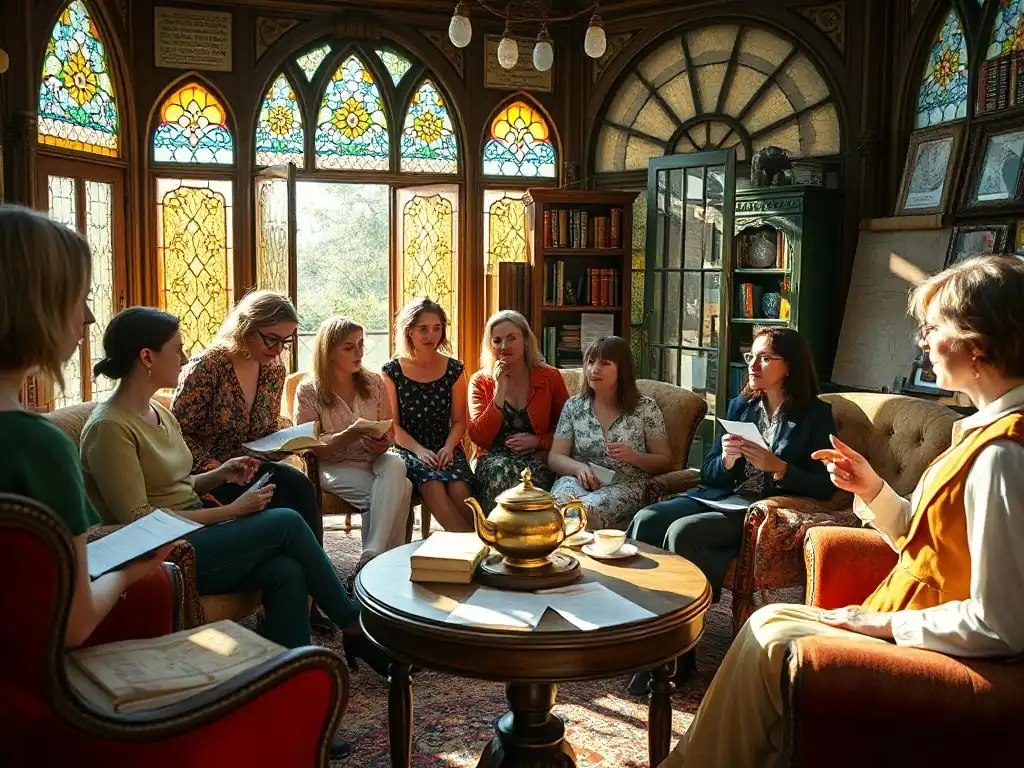
Welcome to WomenInScienceHistory.com, where we unearth the captivating stories of groundbreaking female scientists! Delve into a world often overlooked, and discover the remarkable contributions of women to science across history. Ever wondered how women navigated the male-dominated scientific landscape of the past? Our latest article, "The Salon to the Seminar: Informal Learning Networks that Paved Women's Academic Path," explores the vital role of women’s informal science learning networks in fostering their intellectual development and academic success.
Uncover the secrets of these hidden collaborations and explore the historical context that shaped their journeys. What innovative strategies did these women employ to break barriers and advance scientific knowledge? Read on to find out!
- Introduction: Unveiling Women’s Informal Science Learning Networks
- Historical Context: Limited Formal Academic Access for Women in Science
- Salons as Centers of Scientific Exchange for Women
- Correspondence and Scientific Societies: Expanding Women’s Learning Circles
- Case Studies: Women Who Thrived Through Informal Science Learning
- The Transition: From Informal Networks to Formal Academic Integration
- Conclusion: Recognizing the Significance of Women’s Informal Learning in Science History
-
Frequently Asked Questions
- What were some examples of "informal learning networks" that helped women in science historically?
- Why were "women’s informal science learning networks" so important for women in science?
- How did these "informal learning networks" help women overcome challenges in male-dominated fields?
- In what ways did women use these networks to share their scientific findings and ideas?
- How did the "informal science learning networks" contribute to the overall advancement of science?
- Final Reflection: Empowering Echoes of Informal Learning
- Ignite Your Own Spark: Connect & Cultivate!
Introduction: Unveiling Women’s Informal Science Learning Networks
The Overlooked Role of Informal Networks in Women's Scientific Advancement
For centuries, women faced formidable barriers to formal scientific education and professional recognition. Excluded from universities, scientific societies, and laboratories, many aspiring female scholars were forced to forge alternative paths to knowledge and collaboration. These often-overlooked informal networks, encompassing everything from private salons to correspondence circles and self-organized study groups, proved to be indispensable conduits for scientific learning and innovation among women. They provided crucial spaces for intellectual exchange, mentorship, and the development of expertise that would otherwise have been inaccessible.
These women’s informal science learning networks were not merely substitutes for formal institutions; they were vibrant, dynamic ecosystems where groundbreaking ideas were shared, experiments discussed, and intellectual camaraderie fostered. They represent a hidden, yet profoundly impactful, chapter in the history of science, revealing how women navigated and ultimately contributed to scientific progress despite systemic exclusion. The ingenuity and resilience displayed in creating and sustaining these networks underscore their vital role in shaping the scientific landscape.
Why Study Women’s Informal Science Learning Networks in History?
Understanding the historical significance of women’s informal science learning networks is crucial for several reasons. Firstly, it offers a more complete and nuanced picture of scientific development, moving beyond the traditional narrative that often centers solely on male-dominated institutions. By illuminating the contributions made through these alternative avenues, we gain a richer appreciation of the diverse ways in which scientific knowledge has been generated and disseminated. It challenges the notion that scientific progress was solely the domain of formally recognized male scholars.
Secondly, the study of these informal networks provides invaluable insights into the strategies women employed to overcome systemic discrimination. It highlights their resourcefulness, intellectual drive, and unwavering commitment to scientific inquiry, even in the face of profound societal and institutional resistance. These historical accounts serve as powerful inspirations, demonstrating how passion and perseverance can transcend seemingly insurmountable obstacles, offering timeless lessons for supporting and inspiring women in STEM fields today.
Historical Context: Limited Formal Academic Access for Women in Science
Barriers to Entry: Gender Bias in Traditional Scientific Institutions
Throughout much of history, traditional scientific institutions were largely impenetrable bastions of male privilege, systematically excluding women from their ranks. Universities, academies, and professional societies often operated under deeply ingrained gender biases, propagating the belief that women were intellectually inferior or inherently unsuited for rigorous scientific pursuits.
This pervasive prejudice manifested in various forms, from outright prohibitions on female enrollment and attendance to subtle, yet powerful, cultural norms that discouraged women from pursuing academic or scientific careers. For instance, the Royal Society of London, founded in 1660, did not admit its first female Fellows until 1945, nearly three centuries later.
Even when women were occasionally permitted to attend lectures, they were typically denied the right to matriculate, earn degrees, or hold faculty positions. This exclusion wasn't merely about access to education; it was about denying women legitimacy, recognition, and the professional networks essential for scientific advancement. The prevailing sentiment was that a woman's place was in the domestic sphere, not the laboratory or the lecture hall, severely limiting their opportunities to engage with scientific discourse and contribute formally.
The Scarcity of Formal Scientific Education for Women Before the Late 19th Century
Prior to the late 19th century, formal scientific education for women was virtually nonexistent across most of the Western world. While some wealthy families might afford their daughters private tutors or access to limited educational resources at home, a structured curriculum in subjects like physics, chemistry, or biology was rare. The few institutions that did offer education to women, such as seminaries or finishing schools, often focused on accomplishments deemed appropriate for their social roles, like music, art, and domestic sciences, with scientific instruction being rudimentary at best.
This profound scarcity of formal educational pathways meant that women with scientific aspirations had to rely almost entirely on self-study, familial connections, or the nascent women’s informal science learning networks that began to emerge. Without access to university laboratories, libraries, or direct instruction from leading scientists, women were compelled to devise their own methods for acquiring knowledge and conducting research. This context underscores the extraordinary achievements of women who, despite these severe limitations, managed to make significant scientific contributions.
Salons as Centers of Scientific Exchange for Women
Parisian Salons: A Hub for Female Scientists and Intellectuals
In 17th and 18th-century Europe, particularly in Paris, salons emerged as vibrant intellectual and social hubs, often hosted by aristocratic or wealthy women known as salonnières. These gatherings transcended mere social events, evolving into crucial spaces where Enlightenment thinkers, philosophers, artists, and increasingly, scientists, could convene, debate, and disseminate new ideas.
For women, who were largely excluded from formal academic institutions and scientific societies, these salons offered an invaluable, albeit informal, entry point into the male-dominated intellectual sphere. They provided a unique platform for women to engage with cutting-edge scientific discourse, meet prominent scholars, and participate actively in intellectual discussions.
These salons fostered a unique environment where scientific knowledge was democratized to a certain extent, allowing women to listen to lectures, observe demonstrations, and even contribute their own thoughts and observations. They served as vital women’s informal science learning networks, allowing women to stay abreast of the latest discoveries, build intellectual confidence, and establish connections that could lead to further learning or collaborative opportunities. The intimate setting of the salon contrasted sharply with the formal, often intimidating, atmosphere of universities, making it a more accessible space for female participation.
Madame Lavoisier's Salon and its Impact on Women in Chemistry
One of the most notable examples of a salon's impact on women in science is that of Marie-Anne Pierrette Paulze Lavoisier (1758–1836). As the wife of the renowned chemist Antoine Lavoisier, she transformed their home into a dynamic scientific salon in late 18th-century Paris.
Madame Lavoisier was far more than a hostess; she was an active participant in her husband's research, translating scientific texts from English to French, including Richard Kirwan's Essay on Phlogiston, to which she famously added critical footnotes correcting Kirwan's arguments. Her linguistic skills and deep understanding of chemistry were instrumental in the communication of new ideas.
Her salon became a central gathering place for leading chemists and intellectuals of the era, such as Claude Louis Berthollet and Antoine François Fourcroy. During these gatherings, new chemical theories were debated, experiments were discussed, and demonstrations were often conducted in their well-equipped home laboratory. For women with an interest in chemistry, Madame Lavoisier's salon provided an unparalleled opportunity to immerse themselves in the latest scientific developments and network with the brightest minds of the time, effectively serving as a sophisticated component of women’s informal science learning networks in the field of chemistry.
The Role of Salons in Disseminating Scientific Knowledge to Women
Beyond specific examples like Madame Lavoisier's, salons generally played a pivotal role in disseminating scientific knowledge to women who had no other means of access. These gatherings provided a unique blend of social interaction and serious intellectual pursuit, making scientific discussions more palatable and accessible than formal academic settings. Women attending salons could hear first-hand accounts of new discoveries, engage in debates about emerging theories, and even witness scientific demonstrations. This immersive environment allowed them to acquire knowledge that was otherwise confined to male-dominated academic circles.
Furthermore, salons facilitated mentorship and collaboration. Established scholars might take an interest in a bright female attendee, offering guidance or access to resources. The informal nature of these settings also allowed for a more fluid exchange of ideas, breaking down some of the hierarchical barriers present in formal institutions. As a result, salons functioned as crucial women’s informal science learning networks, not only educating women but also empowering them to participate actively in the intellectual life of their time, laying groundwork for future generations of female scientists.
Correspondence and Scientific Societies: Expanding Women’s Learning Circles
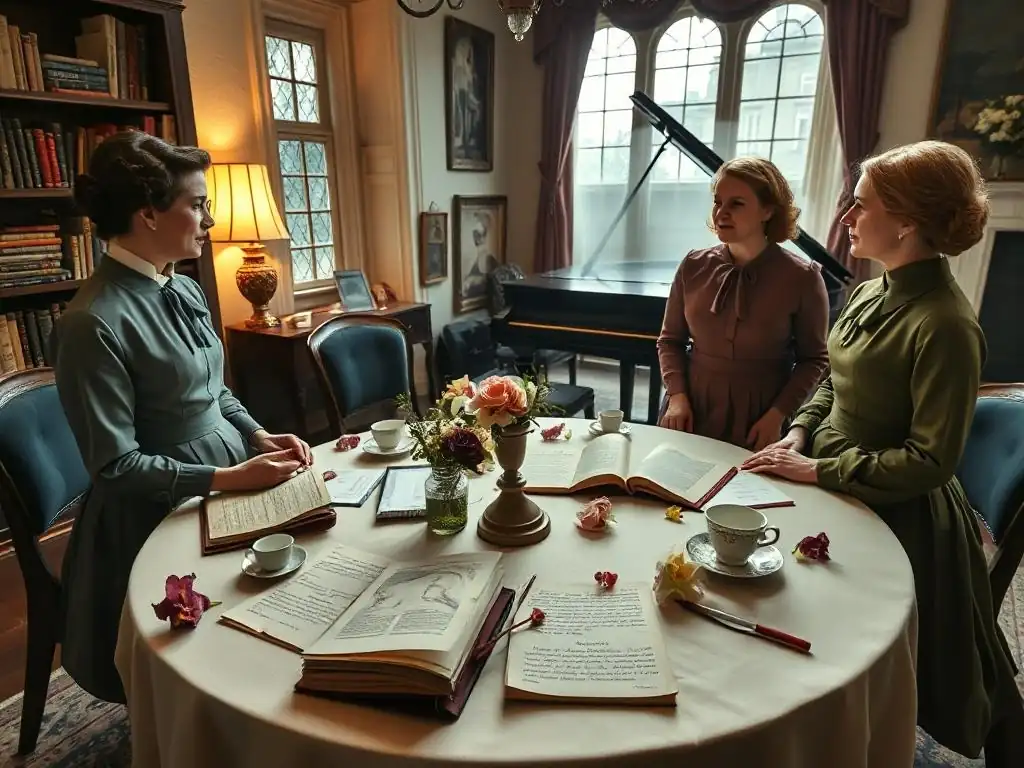
Scientific Correspondence: A Lifeline for Female Scientists
For women excluded from formal academic and social circles, scientific correspondence became an indispensable lifeline, serving as a primary means of intellectual exchange and collaboration. Letters allowed female scientists to bypass geographical barriers and institutional discrimination, connecting them with peers, mentors, and leading scholars across Europe and beyond.
Through this medium, women could share their observations, data, and theoretical insights, seek advice on experiments, and receive feedback on their work, often without the need for formal institutional affiliation. For instance, Laura Bassi, an 18th-century physicist from Bologna, maintained extensive correspondence with prominent European scientists, engaging in detailed discussions on physics and philosophy.
This epistolary network was a vital component of women’s informal science learning networks, enabling women to participate in the scientific discourse of their era, even when direct participation in academies was denied. It provided a private yet powerful channel for intellectual growth, allowing them to critique existing theories, propose new ideas, and contribute to the collective body of scientific knowledge. For many, correspondence was the only way to gain recognition, foster collaborations, and maintain a sense of belonging to a wider scientific community.
The Exclusion of Women from Formal Scientific Societies and its Consequences
The late 17th and 18th centuries saw the proliferation of formal scientific societies, such as the Royal Society in London and the French Academy of Sciences, which became the arbiters of scientific legitimacy and progress. These societies published journals, hosted lectures, and provided critical networking opportunities, yet they almost universally excluded women from membership and participation. This exclusion was often enshrined in their statutes or upheld by unwritten social norms, effectively barring women from the most influential platforms for scientific dissemination and recognition.
The consequences of this exclusion were profound. Women could not formally present their research, publish their findings in prestigious journals under their own names, or participate in the debates that shaped scientific consensus. This lack of official recognition often meant their contributions were overlooked, attributed to male family members, or simply lost to history. The absence of these formal channels underscored the absolute necessity for women’s informal science learning networks to exist, providing the only viable avenues for female scientists to connect, learn, and contribute.
Creating Alternative Scientific Communities: Women's Scientific Societies
In response to their systematic exclusion from established institutions, women began to forge their own scientific communities and societies, creating alternative spaces for intellectual exchange and professional development. While these societies were often smaller and lacked the prestige of their male counterparts, they were crucial for fostering a sense of belonging and providing platforms for women to share their research.
Examples include the Ladies' Physiological Institute, founded in Boston in the 1850s, which focused on health and scientific education for women, and the Association for the Advancement of Women (AAW), established in 1873, which included a science section where women presented their work and engaged in discussions.
These burgeoning women’s informal science learning networks, though sometimes more formal than salons or correspondence, operated outside the traditional academic gatekeepers, offering women opportunities to publish, lecture, and collaborate. They demonstrated women's agency in creating their own intellectual infrastructure, providing a much-needed environment for peer support, mentorship, and the collective advancement of scientific knowledge. These societies laid important groundwork for future generations, demonstrating the power of self-organization in the face of systemic barriers.
Case Studies: Women Who Thrived Through Informal Science Learning
Caroline Herschel: From Astronomical Assistant to Independent Discoverer
Caroline Herschel (1750–1848) exemplifies a woman who achieved extraordinary scientific success primarily through informal learning and collaboration. Initially brought from Hanover to England to assist her brother, the astronomer William Herschel, she began her scientific career as his indispensable helper, grinding and polishing telescope mirrors and meticulously recording observations. Despite lacking formal astronomical training, Caroline quickly developed her own observational skills and mathematical prowess.
She independently discovered eight comets between 1786 and 1797, including the first comet discovered by a woman, and cataloged 14 nebulae. In 1787, she became the first woman to receive a salary for scientific work, a modest £50 per year (equivalent to approximately £7,000 in today's money) from King George III, a testament to her recognized contributions.
Her work culminated in the creation of a comprehensive catalogue of 2,500 nebulae and star clusters, an invaluable resource for astronomers. Her achievements were recognized by the Royal Astronomical Society, which awarded her its Gold Medal in 1828, making her the first woman to receive this honor. This remarkable career trajectory highlights the power of informal apprenticeship and dedicated self-study within a supportive, albeit unconventional, scientific household.
The Importance of Mentorship from William Herschel in Caroline Herschel's Scientific Development
Caroline Herschel's scientific development was inextricably linked to the informal mentorship she received from her brother, William. He provided her with direct, hands-on training in the intricacies of astronomical observation, telescope construction, and data analysis. Working alongside him in their home observatory, she learned by doing, gaining practical experience that surpassed any formal education available to women at the time. William encouraged her to make independent observations and calculations, fostering her talent and confidence.
This unique informal learning environment, a core component of her women’s informal science learning networks, allowed Caroline to transition from an assistant to a respected astronomer in her own right. William's guidance, coupled with her own relentless dedication, provided her with the tools, knowledge, and access to instruments that were otherwise inaccessible. Their collaborative partnership, built on shared passion and mutual respect, demonstrates how informal mentorship can be a powerful catalyst for scientific discovery, especially in contexts where formal avenues are closed.
Mary Anning: The Self-Taught Pioneer of Paleontology
Mary Anning (1799–1847), a working-class woman from Lyme Regis, England, became a self-taught pioneer in the nascent field of paleontology, making groundbreaking fossil discoveries that reshaped scientific understanding of prehistoric life. Despite having minimal formal education, Anning developed an unparalleled expertise in identifying, excavating, and preparing marine fossils found along the Jurassic coast. Her major discoveries include the first complete Ichthyosaur skeleton (1811), the first Plesiosaur skeleton (1823), and the first Pterodactylus skeleton found outside Germany (1828).
Anning's profound knowledge of geology and anatomy, acquired through years of meticulous observation and practical experience, earned her the respect, though often not the formal recognition, of leading male geologists of her time, such as William Buckland and Henry De la Beche. She often sold her finds to collectors and scientists, providing not only a livelihood but also a conduit for her discoveries to enter the scientific discourse. Her story is a powerful testament to the efficacy of experiential learning and informal networks in fostering scientific brilliance.
How Collaborative Learning Shaped Mary Anning's Scientific Achievements
Mary Anning's scientific achievements were significantly shaped by her collaborative learning experiences within her unique women’s informal science learning networks. While she lacked formal academic training, she engaged in regular intellectual exchange with the geologists and naturalists who visited Lyme Regis to study her finds. She shared her practical knowledge of fossil identification and excavation techniques, while they, in turn, provided her with theoretical frameworks and the latest scientific interpretations of her discoveries. This informal exchange was a two-way street, where Anning's empirical findings often challenged or refined existing scientific theories.
Her network extended beyond elite scientists to include local collectors, amateur naturalists, and even tourists interested in fossils. She was often paid for her expertise and discoveries, indicating a form of informal professional recognition that provided crucial support. These interactions, though informal, were critical for validating her work, disseminating her findings, and integrating her self-taught expertise into the broader scientific community, making her an indispensable figure in the early history of paleontology.
The Transition: From Informal Networks to Formal Academic Integration
Gradual Inclusion: Women's Entry into Universities and Research Institutions
The late 19th and early 20th centuries marked a pivotal, albeit slow, transition as women began to gain grudging entry into universities and research institutions, a significant shift from the reliance on women’s informal science learning networks. Pioneering institutions, often women's colleges like Vassar (founded 1861) and Smith (founded 1871) in the United States, or the establishment of women's colleges within existing universities like Girton College (1869) and Newnham College (1871) at Cambridge, began to offer formal academic training to women.
However, this inclusion was often partial; for instance, at Cambridge, women could attend lectures and sit exams but were denied full degrees until 1948.
The establishment of separate women's medical colleges and the gradual opening of university faculties to female students slowly chipped away at the barriers. By the early 20th century, a growing number of women were able to pursue degrees in scientific fields, although they still faced significant discrimination in securing faculty positions, research funding, and professional advancement. This period represents the beginning of a long journey towards full academic integration, moving women from the periphery to the formal structures of scientific inquiry.
The Enduring Influence of Informal Learning on Women’s Academic Success
Even as formal academic doors began to open, the enduring influence of informal learning and networks remained crucial for women's academic success. As women entered male-dominated university departments, they often found themselves isolated, facing subtle biases and a lack of female role models. In this environment, informal peer support groups, study circles, and mentorship relationships, often facilitated by pioneering female faculty or older students, became vital for navigating academic challenges and building confidence. These continued women’s informal science learning networks provided a safe space for sharing experiences, collaborating on coursework, and offering mutual encouragement.
These informal connections supplemented formal education by providing emotional support, practical advice, and a sense of community that was often lacking in the broader institutional setting. They helped women persist in demanding scientific fields, offering a counterbalance to the pressures and isolation they might experience. Even within formal academic structures, these informal avenues for learning and networking were essential for women to thrive and carve out their professional identities.
The Legacy of Women’s Informal Science Learning Networks: Shaping Modern Opportunities
The historical women’s informal science learning networks, born out of necessity and ingenuity, have left a profound and lasting legacy that continues to shape modern opportunities for women in science. The spirit of collaboration, mutual support, and non-traditional learning paths that characterized these early networks can be seen in contemporary initiatives designed to foster diversity and inclusion in STEM. Modern mentorship programs, professional development groups, and online communities specifically for women in science are direct descendants of these historical informal avenues.
Today, while formal education is widely accessible, informal networks remain crucial for career progression, work-life balance, and combating persistent biases. These networks provide a platform for sharing experiences, navigating challenges, and advocating for systemic change. The historical resilience and success of women’s informal science learning networks serve as a powerful reminder that support, community, and accessible knowledge sharing are fundamental pillars for empowering future generations of female scientists.
Conclusion: Recognizing the Significance of Women’s Informal Learning in Science History
Lessons Learned: Supporting Informal Science Learning for Future Generations
The study of women’s informal science learning networks throughout history offers invaluable lessons for contemporary efforts to support and empower women in STEM. Firstly, it underscores the critical importance of diverse learning environments. Not all valuable scientific knowledge is acquired within traditional classrooms or laboratories; informal settings, mentorships, and peer-to-peer exchanges can be equally, if not more, impactful. Secondly, it highlights the power of community and mutual support in overcoming systemic barriers. When formal structures are exclusionary, self-organized networks become indispensable lifelines.
For future generations, these historical narratives emphasize the need to actively foster and invest in informal learning opportunities, mentorship programs, and inclusive communities for girls and women interested in science. Whether through after-school clubs, online forums, or professional networking groups, creating accessible and supportive spaces for scientific exploration and collaboration is vital. By recognizing and valuing these non-traditional pathways, we can ensure that talent and passion are nurtured, regardless of formal credentials or historical disadvantages.
Celebrating the Pioneers: Acknowledging Women’s Contributions to Science through Informal Avenues
Ultimately, recognizing the significance of women’s informal science learning networks is about celebrating the remarkable pioneers who, against immense odds, advanced scientific knowledge and paved the way for future generations. Figures like Caroline Herschel, Mary Anning, and Madame Lavoisier, who operated largely outside the formal academic structures, demonstrate the profound impact individuals can have when provided with even unconventional avenues for intellectual growth. Their stories challenge the narrow historical narratives that often overlook women's contributions, bringing to light the hidden tapestry of scientific discovery.
By acknowledging the ingenuity, resilience, and intellectual prowess displayed within these informal learning circles, we not only pay tribute to these trailblazing women but also gain a more complete and accurate understanding of science history. Their legacy serves as a powerful reminder that scientific progress is a collective human endeavor, enriched by diverse perspectives and pathways to knowledge, and that the often-unseen efforts within women’s informal science learning networks were absolutely essential to its advancement.
Frequently Asked Questions
What were some examples of "informal learning networks" that helped women in science historically?
Historically, salons and correspondence networks were crucial. These informal spaces provided opportunities for women to discuss scientific ideas and access knowledge unavailable in formal settings. They offered critical support and mentorship that bypassed institutional barriers.
Why were "women’s informal science learning networks" so important for women in science?
These networks were vital because formal scientific institutions often excluded women. They created spaces for knowledge sharing, collaboration, and career advancement that women were otherwise denied.
How did these "informal learning networks" help women overcome challenges in male-dominated fields?
These networks provided crucial support systems, helping women navigate prejudice and discrimination. They offered validation and encouragement, which was essential in male-dominated environments.
Women frequently used correspondence to share observations, experiments, and theories. Salons facilitated direct intellectual exchange and the circulation of ideas among peers.
How did the "informal science learning networks" contribute to the overall advancement of science?
By fostering collaboration and knowledge sharing, these networks allowed women to contribute their unique perspectives. This ultimately enriched the scientific community and led to new discoveries.
Final Reflection: Empowering Echoes of Informal Learning
The echoes of salons and informal gatherings, once the clandestine classrooms for women excluded from formal education, resonate powerfully today. The spirit of collaborative learning and knowledge sharing, born out of necessity, continues to fuel advancements in science and academia. The article highlights how these networks were not merely social circles, but vital engines of intellectual growth, and their legacy persists in modern mentorship programs, online communities, and collaborative research initiatives that champion inclusivity and diverse perspectives.
The impact of these informal networks extends far beyond the historical context, shaping the very fabric of our understanding of knowledge creation and dissemination. Witnessing the resilience and ingenuity of these women underscores the profound importance of fostering supportive environments where marginalized voices can thrive. Never doubt that a small group of thoughtful, committed citizens can change the world; indeed, it's the only thing that ever has.
This quote, often attributed to Margaret Mead, perfectly encapsulates the transformative power of these informal learning networks and their enduring influence on women's participation in science.
As we reflect on the journey from the salon to the seminar, let us be inspired to cultivate our own networks of support and mentorship. Consider how you can actively contribute to creating inclusive spaces where knowledge is freely shared, and where every voice is valued. Embrace the spirit of collaboration and empower others to pursue their passions, ensuring that the path to knowledge remains open and accessible to all.
Ignite Your Own Spark: Connect & Cultivate!
Thank you for exploring the vital role of informal networks in shaping women's academic journeys. Now it's your turn to build and benefit from these powerful connections.
- Actively seek out or create your own support network within your field or area of interest. Think beyond formal institutions and embrace informal gatherings.
- Share this article to amplify the stories of women in science and inspire others to learn from their experiences.
- Explore historical societies or online forums dedicated to women in science history to unearth hidden figures and contribute to ongoing research.
What seemingly small connection could you forge today to create a ripple effect of support and inspiration in your field?