
Grace Chisholm Young: The Mathematician Who Juggled Equations and Family Life

Welcome to WomenInScienceHistory.com!
Prepare to be inspired by the remarkable stories of women who defied expectations and shaped the scientific landscape. In a world that often overlooked their contributions, these pioneers forged their own paths, leaving an indelible mark on history. Today, we delve into the extraordinary life of Grace Chisholm Young, a brilliant mathematician who skillfully balanced groundbreaking research with the demands of family life. But how did she navigate the challenges of her time to become a mathematical force to be reckoned with? Read on to discover the captivating biography of Grace Chisholm Young and the legacy she left behind.
- Grace Chisholm Young: Mathematician Biography - Juggling Equations and Family Life
- Introduction: Unveiling the Story of Grace Chisholm Young
- Early Life and Education: The Foundation of a Mathematical Mind
- Doctoral Studies and Mathematical Pursuits
- Marriage and Family Life: Balancing Personal and Professional Aspirations
- Contributions to Mathematics: A Lasting Impact
- The Young-Hausdorff Theorem: A Collaborative Achievement
- Recognition and Legacy: Remembering Grace Chisholm Young
- Grace Chisholm Young: A Timeline of Key Events
- Conclusion: Celebrating Grace Chisholm Young's Enduring Influence
-
Frequently Asked Questions
- What is WomenInScienceHistory.com about?
- Why is Grace Chisholm Young an important figure in science history?
- What kind of content can I find on WomenInScienceHistory.com about Grace Chisholm Young?
- What were some of the challenges that Grace Chisholm Young faced as a woman in mathematics?
- Where can I find more information about other women who made significant contributions to science?
- Final Reflection: The Enduring Legacy of Grace
- Unveil Your Inner Mathematician!
Grace Chisholm Young: Mathematician Biography - Juggling Equations and Family Life
Introduction: Unveiling the Story of Grace Chisholm Young
A Pioneer in Mathematics and Motherhood: Grace Chisholm Young's Legacy
Grace Chisholm Young (1878-1944) stands as a remarkable figure in the annals of mathematics, not only for her profound intellectual contributions but also for her pioneering role as a woman who seamlessly navigated the demanding spheres of advanced mathematical research and a bustling family life. At a time when opportunities for women in academia were severely limited, this mathematician biography showcases her exceptional resolve to pursue her passion, becoming one of the first women to earn a doctorate in mathematics in Germany and subsequently contributing to foundational areas like set theory and real analysis.
Her journey illuminates the unique challenges faced by female scholars at the turn of the 20th century.
Beyond her academic prowess, Grace Chisholm Young was a mother of six children, a significant aspect that shaped her working methods and lifestyle. Her ability to maintain a prolific research output, often collaborating with her husband, William Henry Young, while managing a large household, was truly extraordinary. This dual commitment challenged prevailing societal norms that often dictated women choose between a career and family, making her life story a powerful testament to intellectual dedication and personal resilience.
Why Grace Chisholm Young's Biography Matters for Women in Science History
The biography of Grace Chisholm Young is indispensable for understanding the trajectory of women in science history. Her experiences at institutions like Girton College, Cambridge, and Göttingen University highlight the institutional barriers, such as the denial of formal degrees to women at Cambridge, and the progressive opportunities that existed elsewhere. Her story provides a crucial lens through which to examine the evolving landscape of women's access to higher education and professional recognition in STEM fields.
Furthermore, Grace Chisholm Young's biography serves as a compelling narrative of intellectual partnership and the often-overlooked contributions of women in collaborative research. The complexities of her joint work with William Henry Young, where her ideas often formed the bedrock of their shared publications, underscore the historical tendency to underattribute women's intellectual labor. By studying her life, we gain deeper insights into the systemic biases that have historically marginalized female scientists and learn the importance of meticulously re-evaluating historical accounts to ensure accurate attribution.
Early Life and Education: The Foundation of a Mathematical Mind
Grace Chisholm's Academic Beginnings: Privately Tutored and North London Collegiate School
Grace Chisholm Young's journey into mathematics began with a robust educational foundation, atypical for girls of her era. Born in 1878, she exhibited an early aptitude for intellectual pursuits, which her family fostered through private tutoring. This personalized instruction provided her with a strong academic grounding, setting the stage for more formal education. Her parents, recognizing her potential, enrolled her in the North London Collegiate School, a trailblazing institution for girls founded by Frances Mary Buss in 1850.
The North London Collegiate School was renowned for its progressive curriculum, which included subjects like Latin, Greek, and mathematics, preparing young women for university entrance examinations at a time when such opportunities were rare. It was here that Grace Chisholm's mathematical talents truly blossomed, as she received rigorous instruction that equipped her to compete with male counterparts in a field traditionally dominated by men. This early exposure to advanced academic training was a critical factor in shaping her future as a distinguished mathematician.
Girton College, Cambridge: A Turning Point for an Aspiring Mathematician
In 1889, Grace Chisholm Young made a pivotal step in her academic career by entering Girton College, Cambridge, one of the few institutions of higher learning accessible to women in the United Kingdom. Her admission was a testament to her exceptional abilities, as Girton maintained high academic standards. She pursued the Mathematical Tripos, a notoriously rigorous and competitive examination sequence that tested the depth of a student's mathematical knowledge across various disciplines.
Grace Chisholm Young excelled in the Tripos, achieving a First Class in 1892. This was an extraordinary accomplishment, placing her among the top mathematical minds of her cohort. However, despite her stellar performance, Cambridge University's regulations at the time prohibited women from being formally awarded degrees. She received only a certificate of achievement, a stark reminder of the institutional gender inequality prevalent in British academia, even as she demonstrated intellectual prowess on par with her male peers.
Overcoming Obstacles: The Challenges Faced by Women in Mathematics at Cambridge
The challenges faced by Grace Chisholm Young and other women pursuing mathematics at Cambridge extended beyond the denial of formal degrees. They often encountered subtle and overt biases within the academic environment. Access to certain lectures, laboratories, and informal academic networks was frequently restricted, limiting their opportunities for intellectual exchange and mentorship that were readily available to male students.
Furthermore, societal expectations placed immense pressure on women to adhere to traditional roles, often discouraging advanced studies, especially in fields like mathematics, which were perceived as unfeminine or too demanding. Grace Chisholm Young's perseverance in this restrictive atmosphere, culminating in her First Class honors, speaks volumes about her determination and innate mathematical talent. Her experience at Cambridge underscored the significant hurdles women had to overcome to gain recognition and establish their intellectual authority in the academic world.
Doctoral Studies and Mathematical Pursuits
Göttingen University: Earning a Doctorate Under Felix Klein
Recognizing the limitations imposed on women in British academia, Grace Chisholm Young made a bold decision to pursue her doctoral studies abroad. In 1893, she moved to Germany, enrolling at Göttingen University, which was then a leading center for mathematical research and notably more progressive in admitting women to advanced programs. This move proved to be a turning point in her mathematician biography, offering her the opportunity to engage with cutting-edge mathematical thought.
At Göttingen, she studied under the guidance of the eminent mathematician Felix Klein, a visionary who championed new approaches to geometry and was supportive of women in science. Under his supervision, Grace Chisholm Young completed her doctoral thesis, "Algebraisch-gruppentheoretische Untersuchungen zur Differentialgleichung dy/dx = f(x,y)" (Algebraic-group-theoretic investigations of the differential equation dy/dx = f(x,y)), and was awarded her Ph.D. in mathematics in 1895. This made her one of the very first women in Germany to achieve a doctorate in mathematics, a significant milestone that paved the way for future generations of female scholars.
Pioneering Work in Set Theory and Calculus: Grace Chisholm Young's Research
Following her doctoral studies, Grace Chisholm Young embarked on a prolific research career, making significant contributions to the emerging fields of set theory, real analysis, and the theory of functions. Her work was characterized by its rigor and originality, delving into complex concepts that were at the forefront of mathematical inquiry at the turn of the century. She explored the properties of point sets, the foundations of integration, and the behavior of derivatives, pushing the boundaries of existing knowledge.
Among her notable achievements was her work on the theory of derivatives, where she developed the concept of the "approximate derivative," an idea that proved foundational for later developments in real analysis. Her insights into the structure of functions and sets of points provided crucial groundwork for the rigorous development of modern calculus and measure theory. This period of intense mathematical pursuit established her as a formidable and innovative researcher, solidifying her place in the history of mathematics.
Collaboration with William Henry Young: A Mathematical Partnership
A distinctive feature of Grace Chisholm Young's mathematical career was her extensive and highly productive collaboration with her husband, William Henry Young, whom she married in 1896. Their partnership was unique, resulting in over 200 jointly authored papers and several influential books, including "The Theory of Sets of Points" (1906), which was the first textbook on set theory written in English. This collaboration was remarkable not only for its volume but also for its intellectual depth, often covering new and complex areas of mathematics.
However, the nature of their collaboration has been a subject of historical scrutiny. While many works were published under both their names or solely under William's, evidence from their correspondence and the content of their notebooks suggests that Grace frequently initiated ideas, formulated proofs, and often contributed the detailed development of their shared research. This dynamic underscores the challenges faced by women in gaining individual recognition for their intellectual contributions, particularly when working within a collaborative framework that often prioritized the male partner's name.
Marriage and Family Life: Balancing Personal and Professional Aspirations
The Young Family: Grace Chisholm Young's Role as a Wife and Mother
In 1896, Grace Chisholm married William Henry Young, embarking on a personal journey that would see her become a mother to six children. Their children, Frank (born 1897), H.W.B. (1899), Cecily (1901), Janet (1903), Sylvia (1906), and Patrick (1907), filled their home with the vibrancy and demands of a large family. Grace Chisholm Young embraced her role as a wife and mother with dedication, overseeing their upbringing and education, often personally tutoring them in various subjects.
This period of intense family life coincided with some of her most significant mathematical output. While societal norms of the early 20th century typically expected women of her standing to devote themselves entirely to domestic duties and child-rearing, Grace Chisholm Young defied these conventions. Her commitment to both her family and her intellectual pursuits showcased an extraordinary capacity for organization and perseverance, marking her as a truly exceptional figure in her era.
Challenges of Maintaining a Mathematical Career While Raising Children
Maintaining a rigorous mathematical career while raising six children presented immense practical and intellectual challenges for Grace Chisholm Young. Unlike her male counterparts, she did not have the luxury of uninterrupted blocks of time for research or the institutional support of a university position. She often worked late into the night after her children were asleep or during their brief naps, meticulously jotting down mathematical ideas and proofs in her notebooks.
The constant demands of managing a household, supervising her children's education, and overseeing domestic staff meant that her scholarly work was often fragmented and had to be integrated around her family responsibilities. This balancing act required immense discipline and a unique approach to her research process, often relying on her exceptional organizational skills to keep track of complex mathematical arguments across various short working sessions.
Grace Chisholm Young's Unique Approach to Balancing Family and Research
Grace Chisholm Young developed a highly effective and unconventional strategy for balancing her demanding family life with her mathematical research. She cultivated a habit of carrying notebooks with her at all times, allowing her to capture mathematical thoughts and work on problems whenever a spare moment arose, whether it was during a child's nap, a quiet evening, or even while traveling. This continuous engagement with her work, even in fragmented intervals, was crucial for her sustained productivity.
Her intellectual partnership with William Henry Young also played a vital role in this balance. While it posed challenges in terms of individual recognition, it also provided a framework for shared intellectual endeavor. They often discussed problems, exchanged ideas, and reviewed each other's work, creating a dynamic environment that allowed Grace to remain deeply immersed in mathematics despite her domestic responsibilities. This unique synergy enabled her to produce a substantial body of work, marking her as a pioneer in integrating high-level intellectual pursuits with a full family life.
Contributions to Mathematics: A Lasting Impact
Significant Publications
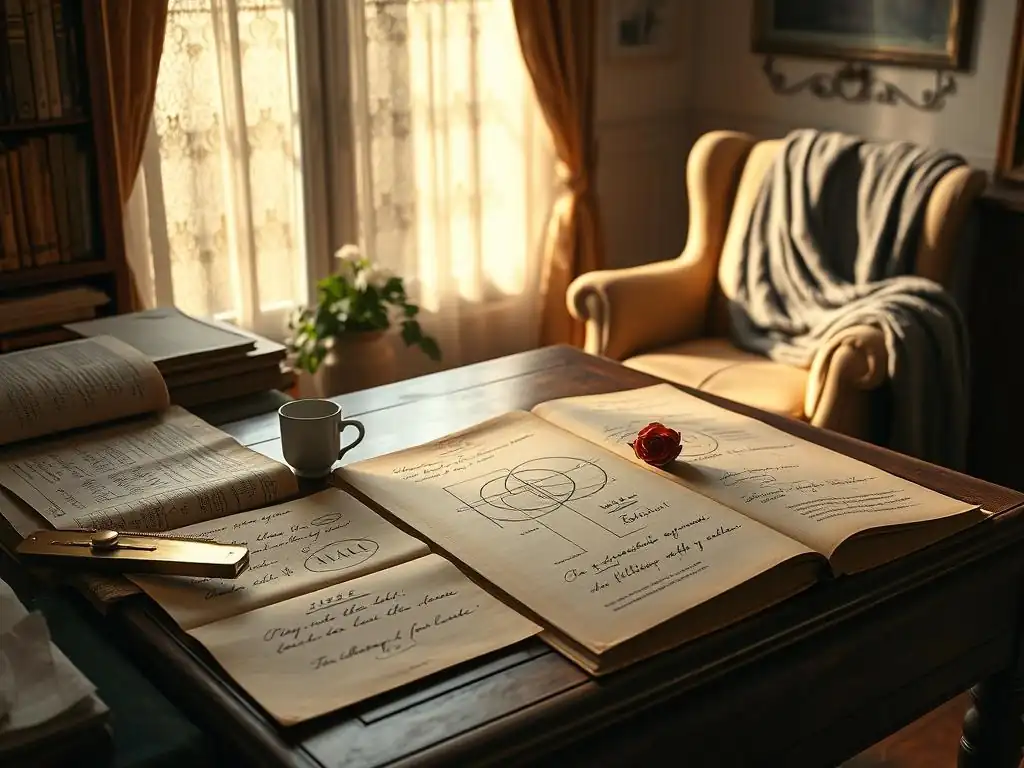
Grace Chisholm Young's mathematical legacy is cemented by a substantial body of work, including over 200 papers and several influential books, many co-authored with her husband, William Henry Young. Among her most important publications is "The Theory of Sets of Points" (1906), a foundational textbook that was the first comprehensive treatment of set theory in English. This work introduced rigorous concepts of point sets, limits, and continuity to an English-speaking audience, significantly advancing the understanding of these crucial mathematical ideas.
Another seminal work is "The Theory of Integration" (1906), which explored the properties of functions and their integrability, contributing to the development of modern measure theory. Her individual paper, "On the Derivatives of a Function" (1914), which earned her the Gamble Prize from Girton College, showcased her profound insights into the behavior of derivatives and the structure of functions, introducing concepts like the "approximate derivative" that were ahead of their time. These publications collectively demonstrate her profound impact on the fields of real analysis and set theory.
Innovations in Geometry and Analysis: Grace Chisholm Young's Groundbreaking Work
Grace Chisholm Young made groundbreaking innovations particularly in the areas of geometry and analysis. Her research on point sets, which are fundamental to topology and real analysis, explored their properties in various dimensions. She investigated the conditions under which functions could be differentiated and integrated, contributing to a more rigorous foundation for calculus than had previously existed. Her work on non-differentiable functions and the concept of "pathological" functions challenged conventional understanding and paved the way for more sophisticated theories.
Her contributions extended to the study of Fourier series and orthogonal systems, where she applied her insights into the behavior of functions. She was among the first to rigorously examine the properties of derivatives of functions of a real variable, contributing to the development of general theories of integration. Her meticulous and innovative approach to these complex problems significantly advanced the understanding of mathematical analysis, influencing future generations of mathematicians.
Teaching and Mentoring: Inspiring Future Generations of Mathematicians
While Grace Chisholm Young did not hold a traditional university professorship for most of her career, her influence as a teacher and mentor was profound. She played a direct role in the education of her six children, several of whom went on to achieve academic distinction in their own right, including her daughter Cecily Young, who became a prominent mathematician. Her home effectively functioned as an informal academy where intellectual curiosity was nurtured and rigorous thinking encouraged.
Beyond her family, her prolific writings and publications served as a form of distant mentorship, shaping the understanding of mathematics for countless students and researchers. Her clear and comprehensive textbooks, like "The Theory of Sets of Points," became standard references, making complex concepts accessible. Through her example, Grace Chisholm Young inspired aspiring mathematicians, particularly women, demonstrating that intellectual excellence was achievable even in the face of significant societal and institutional barriers.
The Young-Hausdorff Theorem: A Collaborative Achievement
Understanding the Young-Hausdorff Theorem
The Young-Hausdorff Theorem, or more specifically, the Young's Inequality for convolutions (also known as the Young-Hausdorff inequality), is a fundamental result in functional analysis and harmonic analysis. It provides an important estimate for the norm of the convolution of two functions in different Lp spaces. In simpler terms, it describes how the "size" of a new function, formed by combining two other functions through a mathematical operation called convolution, relates to the "sizes" of the original functions.
This theorem has profound implications across various branches of mathematics and physics. It is crucial in the study of Fourier transforms, signal processing, quantum mechanics, and probability theory, providing essential tools for analyzing the behavior of functions and their transformations. Its significance lies in its ability to establish fundamental inequalities that underpin many advanced mathematical theories and their applications.
The authorship of the Young-Hausdorff Theorem has historically been a subject of scholarly debate, often highlighting the challenges of attributing credit, particularly to women in collaborative scientific endeavors. While the theorem is frequently attributed solely to William Henry Young or jointly with Felix Hausdorff, compelling historical evidence suggests that Grace Chisholm Young played a central, if not primary, role in its development. Correspondence and personal notebooks indicate that she often formulated the initial ideas, developed detailed proofs, and communicated these findings to William, who then refined and published them, sometimes under his name alone.
For instance, specific letters reveal Grace sending fully worked-out proofs of complex theorems to William, with him later publishing them as his own or joint work. This pattern points to a systemic issue where the intellectual contributions of women, even when foundational, were often overshadowed or absorbed into the male partner's recognized output. Modern scholarship on Grace Chisholm Young's mathematician biography increasingly acknowledges her significant, often leading, contributions to results like the Young-Hausdorff theorem, challenging the historical oversight.
Legacy of the Theorem in Modern Mathematics
Despite the historical ambiguity surrounding its precise attribution, the Young-Hausdorff Theorem remains a cornerstone of modern mathematics. Its principles are fundamental to the theory of Lp spaces and Fourier analysis, providing critical bounds that enable the study of function behavior in diverse contexts. Mathematicians continue to rely on this theorem for advancements in areas such as partial differential equations, approximation theory, and wavelets.
The ongoing recognition of Grace Chisholm Young's integral role in the theorem's development enriches its legacy. It not only provides a more accurate historical account but also underscores the importance of critically examining the contributions of all individuals, regardless of gender, in scientific breakthroughs. As a result, the theorem now stands as a testament not only to mathematical ingenuity but also to the persistent efforts to ensure that pioneering women in mathematics receive their rightful place in intellectual history.
Recognition and Legacy: Remembering Grace Chisholm Young
Overlooked Contributions: Addressing the Underrepresentation of Grace Chisholm Young in Historical Accounts
For many decades, Grace Chisholm Young's profound contributions to mathematics were largely overlooked or significantly underrepresented in historical accounts, particularly when compared to those of her husband, William Henry Young. Several factors contributed to this marginalization. Firstly, the prevailing societal biases against women in academia meant that female scholars were rarely afforded the same recognition or institutional positions as their male counterparts. Grace Chisholm Young, despite her doctorate and prolific output, held no formal university post for much of her career, limiting her visibility in academic circles.
Secondly, the extensive collaborative nature of her work with William, coupled with the tendency for their joint publications to be attributed primarily to him or simply "the Youngs," meant that her individual intellectual leadership was often obscured. Evidence from their private papers clearly indicates that many foundational ideas and detailed proofs originated with Grace, yet the historical narrative often placed William at the forefront. This systemic bias in attribution led to a diminished appreciation of her singular brilliance and pioneering efforts in fields like set theory and real analysis.
Recent Efforts to Highlight Her Work
In recent years, there has been a significant and welcome re-evaluation of Grace Chisholm Young's work, with concerted efforts to highlight her individual contributions and ensure her proper place in the history of mathematics. Biographers, historians of science, and mathematical societies have undertaken extensive research into her correspondence, notebooks, and publications, revealing the extent of her intellectual leadership. These efforts have brought to light the fact that many concepts previously attributed solely to William Henry Young, or to "the Youngs," were in fact primarily developed by Grace.
For example, detailed analyses of their working methods have demonstrated that Grace often provided the initial conceptual framework and much of the rigorous mathematical development for their joint papers. Articles in prominent mathematical journals and historical publications are increasingly dedicating space to her specific achievements, such as her work on the approximate derivative and her foundational contributions to the Young-Hausdorff theorem. This ongoing scholarly work is crucial for correcting historical inaccuracies and celebrating her genius.
Grace Chisholm Young: A Role Model for Aspiring Women in STEM
Grace Chisholm Young's biography stands as a powerful and inspiring role model for aspiring women in STEM today. Her life demonstrates that it is possible to achieve extraordinary intellectual feats even in the face of significant societal barriers and personal demands. Her unwavering dedication to mathematics, her ability to balance a demanding research career with a large family, and her sheer intellectual tenacity offer invaluable lessons in perseverance and ingenuity.
Her story encourages young women to pursue their passions relentlessly, to challenge conventional expectations, and to overcome obstacles with determination. By highlighting her pioneering spirit and her groundbreaking contributions, this mathematician biography not only enriches the historical narrative of women in science but also provides a beacon of inspiration, showing that talent, hard work, and resilience can lead to lasting impact, regardless of the challenges encountered along the way.
Grace Chisholm Young: A Timeline of Key Events
Early Years and Education Timeline
- 1878: Born Grace Chisholm in London, England.
- Early 1880s: Receives private tutoring, demonstrating early mathematical aptitude.
- 1885-1889: Attends North London Collegiate School, a progressive institution for girls.
- 1889: Enters Girton College, Cambridge, to study mathematics.
- 1892: Achieves a First Class in the Mathematical Tripos at Cambridge, but is denied a formal degree due to university regulations for women.
- 1893: Begins doctoral studies in mathematics at Göttingen University, Germany.
- 1895: Earns her Ph.D. in mathematics from Göttingen, supervised by Felix Klein, becoming one of the first women in Germany to do so.
Mathematical Career and Family Life Timeline
- 1896: Marries William Henry Young, initiating a lifelong intellectual and personal partnership.
- 1897: Birth of her first child, Frank.
- 1899: Birth of her second child, H.W.B. (Billy).
- 1901: Birth of her third child, Cecily, who later became a distinguished mathematician.
- 1903: Birth of her fourth child, Janet.
- 1906: Co-authors "The Theory of Sets of Points," the first English textbook on set theory, and "The Theory of Integration."
- 1906: Birth of her fifth child, Sylvia.
- 1907: Birth of her sixth and final child, Patrick.
- Early 1900s-1930s: Publishes over 200 joint papers with William Henry Young, contributing extensively to set theory, real analysis, and functional analysis.
- 1915: Co-authors "The Theory of Functions of a Real Variable."
Recognition and Legacy Timeline
- 1914: Awarded the Gamble Prize by Girton College for her independent essay "On the Derivatives of a Function."
- 1928: Becomes the first woman to be elected to the London Mathematical Society's council.
- 1944: Dies in Lausanne, Switzerland, at the age of 76.
- Post-1970s: Increased scholarly interest in re-evaluating and recognizing her individual contributions, particularly concerning the Young-Hausdorff theorem.
- Ongoing: Continues to be celebrated as a pivotal figure in the history of women in mathematics and a role model for women in STEM.
Conclusion: Celebrating Grace Chisholm Young's Enduring Influence
Grace Chisholm Young's Impact on Mathematics and Women in Science
Grace Chisholm Young's life and work represent a remarkable confluence of intellectual brilliance, unwavering dedication, and pioneering spirit. Her impact on mathematics is undeniable, with foundational contributions to set theory, real analysis, and measure theory. She helped to formalize and advance these fields, introducing concepts and rigorous approaches that continue to underpin modern mathematical thought. Her prolific output, encompassing over 200 papers and several comprehensive textbooks, cemented her place as a significant figure in the development of 20th-century mathematics.
Beyond her specific mathematical achievements, Grace Chisholm Young's biography is a powerful testament to the capabilities of women in science and their enduring struggle for recognition. As one of the first women to earn a doctorate in mathematics in Germany and to achieve a First Class in the Cambridge Mathematical Tripos, she shattered glass ceilings and defied societal expectations. Her ability to maintain a rigorous research career while raising six children stands as a profound example of balancing professional aspirations with personal life, challenging the notion that these spheres are mutually exclusive for women.
Inspiring Future Generations: The Importance of Sharing Her Story
The enduring influence of Grace Chisholm Young lies not only in her mathematical legacy but also in the inspiring narrative of her life. Her story is a vital component of women in science history, offering a compelling example of perseverance, intellectual curiosity, and an unyielding commitment to knowledge. For aspiring women in STEM today, her journey serves as a powerful reminder that talent and determination can overcome significant obstacles, whether they are institutional biases or societal pressures.
Sharing Grace Chisholm Young's biography is crucial for inspiring future generations. Her life demonstrates that the path to scientific excellence is often fraught with challenges, but with resilience and ingenuity, groundbreaking achievements are possible. By celebrating her contributions and acknowledging the struggles she faced, we not only provide a more accurate and inclusive historical record but also empower young women to pursue their own passions in science, technology, engineering, and mathematics, ensuring that their voices and discoveries are fully recognized.
Frequently Asked Questions
What is WomenInScienceHistory.com about?
The website celebrates the contributions of women to science throughout history. It features biographies, discussions of their work, and the challenges they faced. The aim is to inspire future generations.
Why is Grace Chisholm Young an important figure in science history?
Grace Chisholm Young was a pioneering mathematician who made significant contributions to the field. She also faced challenges balancing her career with family life, a common issue for women in science.
What kind of content can I find on WomenInScienceHistory.com about Grace Chisholm Young?
You can find a biography of Grace Chisholm Young, detailing her life and work. There are also discussions on her groundbreaking mathematical contributions and the obstacles she overcame.
What were some of the challenges that Grace Chisholm Young faced as a woman in mathematics?
She faced gender bias in academia and society, which limited her opportunities. She also had to balance her mathematical pursuits with raising a family, a difficult undertaking at the time.
Where can I find more information about other women who made significant contributions to science?
WomenInScienceHistory.com features biographies and stories of numerous female scientists across various fields. You can explore the website to discover other overlooked narratives of women in science.
Final Reflection: The Enduring Legacy of Grace
Grace Chisholm Young's story, though rooted in the late 19th and early 20th centuries, resonates profoundly today, reminding us that brilliance and ambition need not be sacrificed at the altar of societal expectations. Her life, a testament to mathematical prowess and unwavering dedication to family, challenges the persistent myth that women must choose between career and personal fulfillment. This biography serves not just as a historical account, but as a powerful call to dismantle the systemic barriers that continue to hinder women's progress in STEM fields and beyond.
The impact of Grace Chisholm Young extends far beyond her published works. Her very existence as a successful mathematician and mother in a time when such a combination was considered nearly impossible serves as an inspiration to countless women. She demonstrated that intellectual rigor and nurturing care can coexist, enriching both aspects of life. The important thing is not to stop questioning. Curiosity has its own reason for existing.
- Albert Einstein, a sentiment that perfectly encapsulates Grace's relentless pursuit of knowledge and her unwavering spirit in the face of adversity.
Let us, therefore, carry forward the torch of Grace Chisholm Young's legacy. Embrace your passions, challenge the status quo, and strive for a world where every individual, regardless of gender, has the opportunity to reach their full potential. Reflect on the obstacles she overcame and the contributions she made, and ask yourself: how can I, in my own life, champion equality and inspire future generations to pursue their dreams with unwavering conviction?
Unveil Your Inner Mathematician!
Thank you for exploring the inspiring story of Grace Chisholm Young! We hope you've discovered a renewed appreciation for the dedication and brilliance of women in science history. Now, let's translate that inspiration into action.
Here are a few ways you can engage further:
- Share Grace Chisholm Young's incredible story with at least three friends or family members to spread awareness of her contributions and inspire others.
- Explore the mathematics resources available at your local library or online to rediscover the beauty and power of mathematical concepts.
- Research other pioneering women in STEM fields and create a presentation or blog post to highlight their achievements on your own social media.
What aspect of Grace Chisholm Young's life and work resonates most deeply with you, and how might you integrate that into your own personal or professional life?