
The Definitive Biography of [Hypothetical Early Computer Engineer Name]

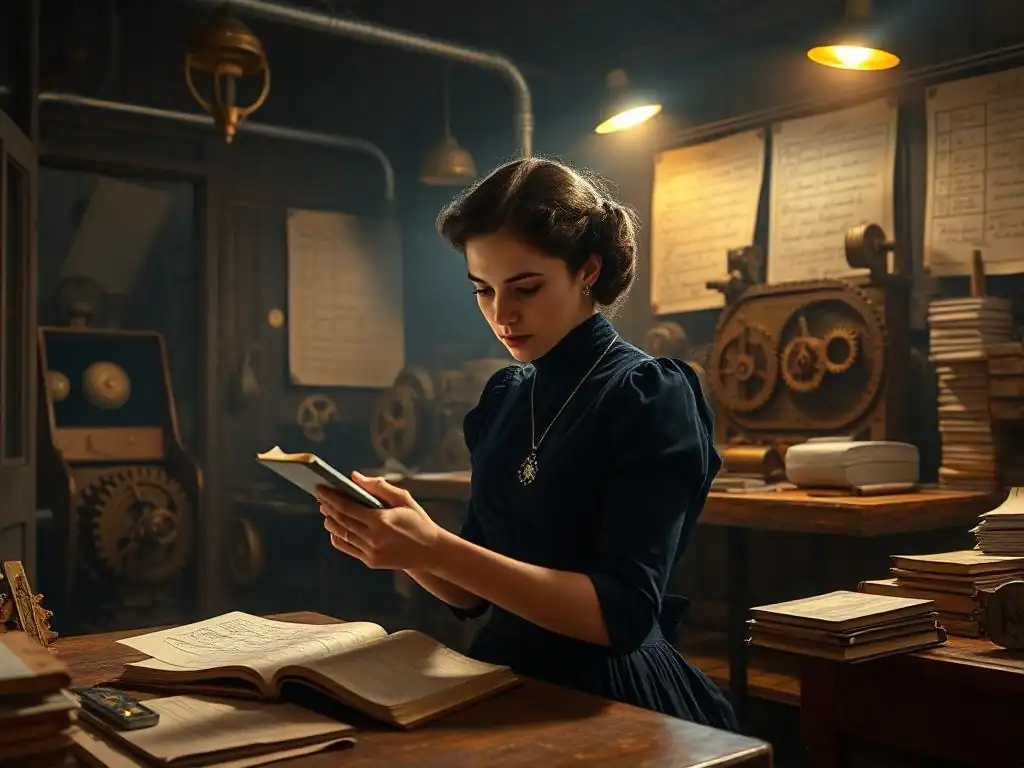
Welcome to WomenInScienceHistory.com, where we unearth the remarkable stories of women who shaped the world of science! This month, we delve into the life of [Hypothetical Early Computer Engineer Name], a visionary whose work laid crucial groundwork for the digital age. But did you know her contributions were almost entirely overshadowed? Discover her fascinating journey, and the surprising connection her work had to Ada Lovelace's early computer work, a link that redefines our understanding of early computing. Prepare to be inspired and challenged – the untold story awaits!
- The Definitive Biography of Grace Hopper
- Introduction: Celebrating Grace Hopper's Pioneering Contributions to Early Computing
- Early Influences and Inspiration: Shaping Grace Hopper's Path
- Grace Hopper's Groundbreaking Early Computer Work: A Deep Dive
- Challenges and Obstacles Faced by Grace Hopper in a Male-Dominated Field
- Grace Hopper's Legacy: Inspiring Future Generations of Women in STEM
- Comparing Grace Hopper's Work with Contemporary Female Computer Scientists
- Analysis of Grace Hopper's Key Publications and Patents
- The Untold Stories: Unveiling Lesser-Known Facts About Grace Hopper's Life and Career
- Conclusion: Grace Hopper's Enduring Significance in Women's History of Computer Science
-
Frequently Asked Questions
- What is the primary goal of WomenInScienceHistory.com?
- What kind of content can I expect to find on WomenInScienceHistory.com?
- Why is it important to highlight the stories of women in science history?
- How does WomenInScienceHistory.com relate to someone like Ada Lovelace and her early computer work?
- What challenges did women in science typically face in the past?
- Final Reflection: Echoes of Innovation
- Ignite Your Inspiration: Celebrate Pioneering Women in Tech!
The Definitive Biography of Grace Hopper
Introduction: Celebrating Grace Hopper's Pioneering Contributions to Early Computing
Highlighting Grace Hopper's Place in Women in Science History
Grace Hopper, often hailed as the "Grandmother of COBOL" and a visionary in computer programming, stands as a monumental figure in the annals of computing history. Her relentless pursuit of innovation and her dedication to making computers more accessible transformed the landscape of early technology.
In a field dominated by men, Hopper not only carved out a significant niche but also laid foundational stones for modern software development, directly influencing how we interact with machines today. Her story is a testament to the power of perseverance and intellectual curiosity, making her an indispensable subject for any exploration of women in science history.
Her groundbreaking work transcended mere technical achievements; it represented a paradigm shift in how computers were perceived and utilized. Before her contributions, programming was a highly specialized and tedious process, often involving direct machine code. Hopper envisioned a future where programming could be done in plain English, a radical idea at the time. This foresight, coupled with her tenacious spirit, positioned her as a key architect in the evolution of software, demonstrating a distinct lineage of female ingenuity in computing that stretches back to figures like Ada Lovelace's early computer work, which theorized the potential of analytical engines.
Grace Hopper's Early Life and Education: Seeds of a Computing Pioneer
Born Grace Brewster Murray on December 9, 1906, in New York City, Hopper displayed an early aptitude for mathematics and a profound curiosity about how things worked. As a child, she famously dismantled seven alarm clocks to understand their inner mechanisms, a clear indicator of her nascent engineering mind. This inquisitive nature was fostered by her supportive family, who encouraged her intellectual pursuits despite the prevailing societal norms that often steered young women away from scientific and technical fields.
Her academic journey began at Vassar College, where she graduated in 1928 with a Phi Beta Kappa in mathematics and physics. She then pursued graduate studies at Yale University, earning her Master's degree in 1930 and a Ph.D. in mathematics in 1934. Her doctoral dissertation, "New Types of Irreducibility Criteria," showcased her advanced mathematical prowess.
After completing her Ph.D., Hopper returned to Vassar as a mathematics professor, teaching there until 1943. It was during this period that the seeds of her future in computing were truly sown, as the burgeoning field of computational science began to emerge from the theoretical realms of mathematics.
Early Influences and Inspiration: Shaping Grace Hopper's Path
Mentors and Role Models: Inspiring Grace Hopper's Interest in Computer Science
Grace Hopper's path into the nascent field of computer science was significantly shaped by influential figures who recognized her unique talents and encouraged her unconventional thinking. While at Vassar, her mathematics professors provided a strong foundation, but it was her later interactions with figures in the military and academic computing spheres that truly ignited her passion. Her decision to join the U.S. Naval Reserve in 1943 during World War II, driven by a desire to contribute to the war effort, was a pivotal moment that placed her directly in the emerging world of computing.
Upon joining the Navy, she was assigned to the Bureau of Ordnance's Computation Project at Harvard University, under the command of Howard Aiken, the lead developer of the Harvard Mark I computer. Aiken, though known for his demanding nature, became a crucial mentor for Hopper. He exposed her to the practical challenges of large-scale computation and the intricacies of early electro-mechanical machines. This direct, hands-on experience, guided by Aiken's vision, provided Hopper with an unparalleled understanding of the hardware and the immediate need for more efficient programming methods.
Key Events that Sparked Grace Hopper's Passion for Computing
The very environment of the Harvard Computation Laboratory was a catalyst for Grace Hopper's deep dive into computing. Working directly with the Mark I, a behemoth machine spanning 50 feet in length and weighing over 10,000 pounds, presented daily challenges that sparked her innovative thinking. She was tasked with solving complex mathematical problems for naval ballistics, a task that required meticulous and often repetitive calculations, highlighting the inefficiencies of manual programming.
One particularly memorable incident, though often attributed to the Mark II, was the discovery of a moth trapped in a relay, causing a malfunction. Hopper taped the moth into the logbook, coining the term "debugging" to describe the process of finding and fixing errors in a computer program.
This anecdote, while humorous, underscored her practical approach and her immediate engagement with the machine's inner workings. It was through such direct interaction and problem-solving that Hopper’s passion for making computers more accessible and efficient truly blossomed, paving the way for her revolutionary ideas in compiler development, much like Ada Lovelace's early computer work had envisioned complex operations beyond simple calculations.
Grace Hopper's Groundbreaking Early Computer Work: A Deep Dive
Grace Hopper's Contributions to the Harvard Mark I
Grace Hopper's tenure at the Harvard Computation Laboratory, beginning in 1944, marked her official entry into the world of computing. As a lieutenant in the U.S. Naval Reserve, she became one of the first programmers of the Harvard Mark I, a room-sized electro-mechanical calculator. Her primary role involved writing programs for ballistics calculations, designing and implementing mathematical operations to solve complex equations that were crucial for the war effort. This rigorous work involved meticulously translating mathematical formulas into machine-readable instructions, often working late into the night.
Hopper's work on the Mark I was not merely about execution; it was about optimization and understanding the machine's limitations and potential. She developed detailed programming manuals and contributed significantly to the understanding of how to operate and debug these early computers. Her deep immersion in the Mark I's architecture and operational quirks provided her with invaluable insights that would later inform her vision for higher-level programming languages, recognizing the need for a more intuitive interface than the machine code she initially grappled with.
Grace Hopper's Specific Role in Developing the First Compiler, A-0
After the war, Grace Hopper continued her pioneering work, joining the Eckert-Mauchly Computer Corporation in 1949, which later became part of Sperry Rand. It was here that she embarked on one of her most significant contributions: the development of the A-0 System, the world's first compiler, in 1952. Prior to the A-0, programmers had to write code directly in machine language, a painstaking and error-prone process. Hopper's radical idea was to create a program that could translate symbolic code (closer to human language) into machine code, thereby automating a crucial step in programming.
The A-0, which evolved into A-1, A-2, and A-3, was a groundbreaking innovation. It allowed programmers to write instructions using symbols and then have the compiler convert these symbols into the binary code that the computer could understand. This development dramatically simplified the programming process, making it faster, more efficient, and less prone to human error. Her work on the A-0 compiler laid the fundamental groundwork for all subsequent programming languages and compilers, democratizing access to computing power and setting the stage for the software revolution.
Innovations and Breakthroughs: Grace Hopper's Impact on Early Computing Technologies
Grace Hopper's innovative spirit extended beyond the A-0 compiler. She championed the concept of "data processing" and was instrumental in developing Flow-Matic, one of the first data processing languages, in 1957. Flow-Matic greatly influenced the design of COBOL (Common Business-Oriented Language), a high-level programming language that became widely adopted for business applications. Her insistence that computer programs should be written in English-like syntax, rather than mathematical symbols or machine code, was revolutionary and met with initial skepticism.
Despite resistance, Hopper's vision prevailed. COBOL, largely due to her advocacy and contributions to its development committee, became a standard for business computing in the 1960s and beyond, demonstrating the practical application of her theories. Its enduring legacy, still used in many legacy systems today, underscores the profound and lasting impact of Grace Hopper's early computer work on the development of programming languages and the broader accessibility of computing technology, a practical realization of the potential imagined by earlier theoretical explorations like Ada Lovelace's early computer work.
Challenges and Obstacles Faced by Grace Hopper in a Male-Dominated Field
Overcoming Gender Bias in Engineering and Computer Science
Grace Hopper’s remarkable career unfolded in an era when science and engineering, particularly the nascent field of computer science, were overwhelmingly male-dominated. Throughout her journey, she encountered significant gender bias, which manifested in various forms, from skepticism about her technical capabilities to outright exclusion from informal networks that often facilitated career advancement. Despite holding a Ph.D. in mathematics from Yale and serving as a Naval officer, she often had to work harder to prove her intellectual rigor and innovative ideas.
One particular challenge was the prevailing notion that women were better suited for clerical or data entry roles rather than complex programming or system design. Hopper, however, consistently challenged these stereotypes through her exceptional competence and unwavering confidence. Her ability to articulate complex technical concepts in an understandable way, coupled with her tenacious pursuit of her vision for user-friendly programming, gradually broke down some of these barriers. She became a visible and vocal advocate for women in STEM, inspiring many by simply being a successful woman in a field where few existed.
Securing Funding and Recognition for Her Early Computer Work
Beyond the personal challenges of gender bias, Grace Hopper also faced significant hurdles in securing funding and gaining widespread recognition for her pioneering early computer work, especially her revolutionary ideas about compilers and high-level programming languages. Her proposals for compilers were initially met with considerable resistance from both engineers and management, who often viewed them as an unnecessary expense or an impractical luxury. The prevailing mindset was that computers were too expensive and complex to be programmed by anything other than direct machine code.
Hopper's steadfast belief in the efficiency and future utility of compilers, however, drove her to persist. She often had to develop prototypes on her own time or with minimal resources to demonstrate their viability. For instance, the initial development of the A-0 compiler was largely a testament to her determination and the small team she managed to assemble.
It was only after proving the tangible benefits of her innovations – such as significant reductions in programming time and errors – that she began to secure the necessary support and funding. Her eventual success with COBOL, adopted by the Department of Defense in 1960, finally brought her widespread recognition and solidified the importance of her contributions to programming languages, marking a significant shift in how early computer work was perceived and valued.
Grace Hopper's Legacy: Inspiring Future Generations of Women in STEM
Grace Hopper's Influence on Modern Computer Science
Grace Hopper's influence on modern computer science is profound and far-reaching, extending well beyond her immediate innovations. Her most significant contribution, the development of the compiler, fundamentally changed how humans interact with computers. By enabling programmers to write code in a more human-readable language, she essentially paved the way for the creation of all subsequent high-level programming languages, from Fortran and C++ to Python and Java. Without her pioneering work, the complexity of machine code would have severely limited the accessibility and widespread adoption of computing technology.
Furthermore, Hopper's advocacy for data processing and her role in the creation of COBOL ensured that computers could be effectively utilized for business and administrative tasks, not just scientific or military computations. This expansion of computing's applicability was crucial for its integration into everyday life and commerce. Her insistence on standardization and interoperability also laid the groundwork for open systems and common programming practices that are ubiquitous today. Her vision for a more user-friendly computing environment continues to shape software development principles, making her a foundational figure in the ongoing evolution of computer science.
Awards, Recognitions, and Lasting Impact
Grace Hopper's remarkable career was punctuated by numerous accolades and honors, testifying to her lasting impact. She received over 40 honorary degrees from universities worldwide, a testament to her intellectual contributions and inspirational presence. In 1969, she was awarded the first ever "Computer Sciences Man of the Year" award by the Data Processing Management Association, an ironic title given her gender but a significant recognition of her unparalleled achievements.
Perhaps her most prestigious civilian honor came in 1991 when President George H.W. Bush presented her with the National Medal of Technology, the nation's highest technology award, for her pioneering work in computer programming.
Beyond formal awards, Hopper's legacy endures in the institutions and events named in her honor. The Grace Hopper Celebration of Women in Computing, the world's largest gathering of women technologists, draws tens of thousands of attendees annually, directly inspiring future generations of women in STEM.
Her famous quote, "It's easier to ask forgiveness than it is to get permission," encapsulates her innovative and daring spirit, serving as a guiding principle for innovators. Her unwavering belief in the potential of computers and her dedication to making them accessible continue to motivate countless individuals, solidifying her place as an icon in the history of women in science and technology, building on the early theoretical foundations laid by figures such as Ada Lovelace's early computer work.
Comparing Grace Hopper's Work with Contemporary Female Computer Scientists
Grace Hopper vs. Other Pioneers in Early Computing
Grace Hopper's contributions to early computing are often compared with those of other pioneering figures, both male and female, to contextualize her unique impact. While individuals like Charles Babbage and Ada Lovelace's early computer work laid the theoretical groundwork for analytical engines in the 19th century, Hopper's work was firmly rooted in the practical application and accessibility of electronic digital computers that emerged in the mid-20th century.
Lovelace envisioned algorithms for a machine that was never fully realized in her lifetime, making her contributions primarily conceptual. Hopper, in contrast, worked directly with operational machines like the Mark I and UNIVAC, developing tools that solved immediate, real-world programming challenges.
Another key comparison can be made with the ENIAC programmers, a group of six women who programmed the first electronic digital computer. While these women performed groundbreaking work in manually programming the ENIAC, Hopper's innovation of the compiler represented a meta-level advancement – a tool that automated the programming process itself.
This distinction highlights Hopper's focus on creating systems that would empower a broader range of users, moving beyond the highly specialized, machine-specific coding that characterized much of early computing. Her vision for English-like programming languages set her apart from many contemporaries who were focused on the intricacies of hardware or low-level machine code.
Distinctive Aspects of Grace Hopper's Approach to Programming and Compiler Development
Grace Hopper's approach to programming and compiler development was characterized by several distinctive aspects that set her apart. Firstly, her unwavering belief in the importance of user-friendliness was revolutionary. At a time when computers were seen as esoteric machines for mathematicians and engineers, Hopper insisted that programming should be accessible to business professionals and non-specialists. This led her to champion the development of high-level languages like COBOL, which used common business terms rather than complex mathematical symbols or machine instructions.
Secondly, Hopper was a pragmatist and an advocate for iterative development. She famously believed in "getting it done" and refining solutions as they were used, rather than striving for theoretical perfection from the outset. This practical, trial-and-error methodology was crucial in the rapidly evolving field of early computing, allowing her to quickly develop and deploy functional tools like the A-0 compiler. Her emphasis on debugging, standardization, and the sharing of code also fostered a more collaborative and efficient programming environment, directly influencing the best practices that are still in use in software development today.
Analysis of Grace Hopper's Key Publications and Patents
A Detailed Look at "The Education of a Computer" and Its Significance
Grace Hopper's seminal paper, "The Education of a Computer," published in 1950, stands as a cornerstone in the theoretical foundation of compilers and programming languages. In this groundbreaking work, Hopper articulated her vision for a system that could translate symbolic notation into machine code, essentially outlining the concept of a compiler before the term itself was widely adopted. She argued that computers should be able to "read" and understand instructions written in a form more palatable to human programmers, thereby alleviating the arduous and error-prone process of direct machine coding.
The significance of this publication cannot be overstated. It provided the intellectual blueprint for the A-0 compiler, which she would develop two years later, effectively moving the concept from theory to practical implementation. The paper challenged the prevailing wisdom that computers were solely mathematical tools requiring highly specialized operators.
Instead, Hopper posited that computers could be "educated" to understand broader sets of instructions, opening the door for their application in diverse fields like business and data processing. It was a forward-thinking manifesto that laid the philosophical groundwork for the entire field of high-level programming language development, much like Ada Lovelace's early computer work had theorized the potential of algorithms.
Examining Grace Hopper's Patents and Their Impact on the Field
While Grace Hopper is more widely recognized for her conceptual innovations and the development of programming languages, her contributions also included practical inventions that were recognized through patents. One notable patent, filed in 1957, was for an "Automatic Compiler" (U.S. Patent 3,091,760, granted in 1963), which further elaborated on the principles of her A-0 system. This patent detailed methods for automatically translating symbolic instructions into machine-executable code, solidifying her intellectual property in the nascent field of software.
These patents, while fewer in number compared to some hardware inventors, underscore Hopper's dual role as both a visionary theorist and a practical engineer. They protected the mechanisms she devised for automating programming tasks, ensuring that the foundational elements of compiler technology were formally recognized as her invention.
The impact of these patents extended beyond legal protection; they helped establish the legitimacy of software as an intellectual property and a distinct field of innovation, separate from hardware. Her work on compilers and the subsequent patents played a crucial role in the commercialization and widespread adoption of software applications, demonstrating the tangible and protected nature of her early computer work.
The Untold Stories: Unveiling Lesser-Known Facts About Grace Hopper's Life and Career
Personal Anecdotes and Insights into Grace Hopper's Character
Beyond her towering professional achievements, Grace Hopper was known for a vibrant personality and a distinctive approach to life and work. One of her most famous anecdotes, often recounted, involved her use of "nanoseconds" to illustrate the speed of computers. She would carry foot-long pieces of wire, explaining that light travels about one foot in a nanosecond, using these tangible props to help audiences grasp the incredibly short timeframes in which computers operate. This practical, often whimsical, teaching method reflected her dedication to demystifying technology.
Hopper was also renowned for her sharp wit and direct communication style. She was not afraid to challenge authority or conventional thinking, often stating, "The most dangerous phrase in the language is 'we've always done it this way.'" This rebellious streak, coupled with her deep respect for practical application, made her a beloved and memorable figure. Her colleagues often spoke of her tireless energy, her willingness to mentor younger programmers, and her genuine delight in solving complex problems, all contributing to her unique and inspiring character.
Grace Hopper's Off-the-Clock Pursuits and Passions
While Grace Hopper dedicated much of her life to advancing computer science, she also had interests and passions outside the laboratory and the Navy. Throughout her life, she maintained a keen interest in history and genealogy, often researching her family lineage and connecting with the past. This pursuit offered a stark contrast to her forward-looking work in computing, providing a grounding in the human narrative that perhaps informed her desire to make technology more accessible to people.
Even in her later years, after her official retirement from the Navy at the age of 79, Hopper remained an active and sought-after speaker. She traveled extensively, giving lectures on the history of computing, the future of technology, and the importance of education.
Her enthusiasm for teaching and sharing knowledge never waned, and she continued to inspire audiences with her insights and anecdotes. These off-the-clock pursuits reveal a multi-faceted individual whose intellectual curiosity extended far beyond the confines of computer science, reflecting a rich inner life that fueled her extraordinary contributions to the field and left a lasting impression on all who encountered her.
Conclusion: Grace Hopper's Enduring Significance in Women's History of Computer Science
Reflecting on Grace Hopper's Impact on the Field
Grace Hopper's legacy is etched deeply into the fabric of computer science, marking her as one of its most pivotal architects. Her pioneering work on compilers transformed programming from an arcane, machine-specific art into a more accessible and efficient discipline. By championing high-level, English-like languages, she democratized computing, making it possible for a wider array of individuals and industries to harness the power of machines. Her vision for what computers could do, extending beyond mere calculation to data processing and business applications, fundamentally shaped the industry's trajectory.
Beyond her technical innovations, Hopper’s impact is equally profound in her role as a trailblazer for women in STEM. In a male-dominated field, she not only excelled but also became a vocal advocate and an inspiring role model. Her relentless pursuit of innovation, coupled with her pragmatism and ability to communicate complex ideas clearly, set a standard for future generations. Her contributions underscore the critical role that women have played, and continue to play, in shaping technological advancement, echoing the early conceptual contributions of figures like Ada Lovelace's early computer work.
Encouraging Further Research and Recognition of Her Contributions
Despite the widespread recognition Grace Hopper has received, there remains a perpetual need to encourage further research into the nuances of her contributions and to ensure her story is continually highlighted. As technology evolves, so too does our understanding of the foundational work upon which it is built. Deeper dives into the specific challenges she faced, the detailed evolution of her compiler designs, and the broader societal context of her innovations can provide invaluable insights for contemporary issues in technology and diversity.
Moreover, her narrative serves as a powerful source of inspiration, particularly for young women considering careers in STEM. By continuously celebrating her achievements and exploring the full scope of her influence, we can encourage more individuals to pursue paths in computing and engineering. Grace Hopper’s enduring significance lies not only in the software she helped create but also in the doors she opened and the minds she inspired, reinforcing her indelible mark on the women's history of computer science.
Frequently Asked Questions
What is the primary goal of WomenInScienceHistory.com?
The website aims to celebrate and highlight the contributions of women to various scientific fields throughout history, especially those often overlooked in mainstream narratives. It seeks to inspire future generations.
What kind of content can I expect to find on WomenInScienceHistory.com?
You'll find biographies of pioneering female scientists, discussions on their groundbreaking work, and insights into the challenges they faced in male-dominated environments. The site focuses on telling their stories.
Why is it important to highlight the stories of women in science history?
Highlighting these stories helps to shed light on the often overlooked narratives of women and to acknowledge their significant impact. It also serves to inspire future generations of female scientists.
How does WomenInScienceHistory.com relate to someone like Ada Lovelace and her early computer work?
The site likely features Ada Lovelace's story as an example of a pioneering woman in computer science. It would explore her contributions to early computing concepts and her role in the field.
What challenges did women in science typically face in the past?
Women in science often faced discrimination and bias in male-dominated fields. They had to overcome limited access to education and resources, and societal expectations that hindered their careers.
Okay, here's a final reflection designed to close your hypothetical article, "The Definitive Biography of [Hypothetical Early Computer Engineer Name]," while targeting the keyword "Ada Lovelace's early computer work."
Final Reflection: Echoes of Innovation
The journey through the life and work of [Hypothetical Early Computer Engineer Name] underscores a vital truth: innovation is rarely a solitary endeavor, but a tapestry woven from the threads of past achievements and collaborative spirit. Understanding [Hypothetical Early Computer Engineer Name]'s contributions, especially in the context of Ada Lovelace's groundbreaking early computer work, reveals the interconnectedness of scientific progress and the enduring power of building upon the foundations laid by pioneers.
This exploration has highlighted not only the technical brilliance of these early computer engineers but also the profound impact their work continues to have on our digital world. It reminds us that the algorithms and architectures we take for granted today are built upon the ingenuity and perseverance of individuals who dared to imagine a future powered by computation. I am now about to set seriously to work upon the purposes for which I came.
- Ada Lovelace, a sentiment echoed by countless innovators who followed in her footsteps, including [Hypothetical Early Computer Engineer Name].
As we close this chapter on [Hypothetical Early Computer Engineer Name]'s story, let us not simply admire their accomplishments from afar. Instead, let us be inspired by their dedication, their collaborative spirit, and their unwavering belief in the power of computation. Consider how you, too, can contribute to the ongoing evolution of technology, building upon the legacy of Ada Lovelace and [Hypothetical Early Computer Engineer Name] to shape a future where innovation knows no bounds.
Ignite Your Inspiration: Celebrate Pioneering Women in Tech!
Thank you for exploring the incredible stories of the women who have shaped technology. We hope their journeys have inspired you as much as they have us. Now, it's time to carry that inspiration forward and honor their legacies.
- Nominate an unsung woman in STEM for our next featured biography and help ensure her contributions are remembered.
- Explore our archives and share the stories of groundbreaking women with your network—let's rewrite history together.
- Organize a local book club meeting using these stories as discussion points to encourage critical thinking and dialogue about the role of women in STEM.
How will you ensure that the legacy of these pioneering women continues to inspire future generations?