
The Mechanics of Progress: Unsung Women Innovators in Machine Design and Automation

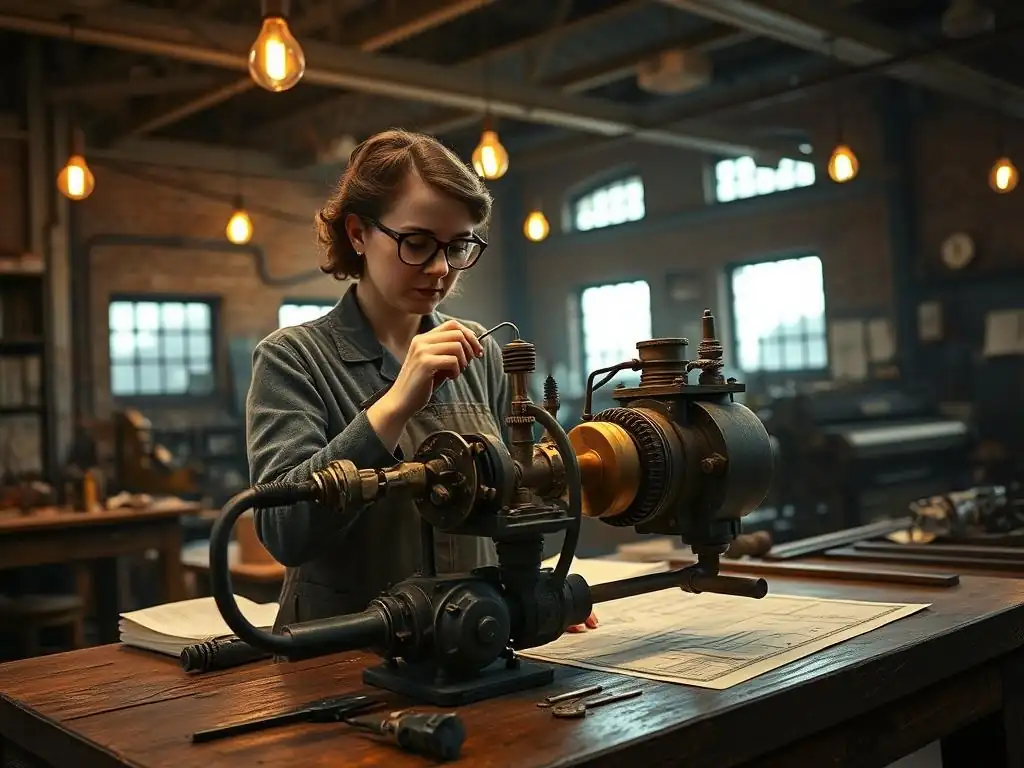
Welcome to WomenInScienceHistory.com!
Prepare to be captivated by the untold stories of brilliant minds that shaped the world of science. In this arena, we unveil the remarkable contributions of women who dared to defy societal norms and leave an indelible mark on history. Ever wondered about the pioneers who quietly revolutionized industries with their ingenuity in machine design? Dive into "The Mechanics of Progress: Unsung Women Innovators in Machine Design and Automation" and discover the groundbreaking work and extraordinary challenges faced by these forgotten figures. Their legacy awaits. What innovations did they bring to the table? Let's explore...
- Introduction: Recognizing Women's Contributions to Machine Design
- Early Pioneers: Breaking Barriers in Automation (1950-1970)
- Innovations in Robotics and Computer-Aided Design (1970-1990)
- Women Shaping the Future of Machine Design and Automation (1990-2000)
- Key Inventions and Patents by Women in Machine Automation
- The Challenges Faced by Women in Machine Design
- Inspiring Future Generations of Women in Engineering
- Conclusion: Acknowledging the Legacy of Women Inventors in Machine Design
-
Frequently Asked Questions
- What is WomenInScienceHistory.com's primary goal?
- Why is it important to study women in machine design?
- What challenges did women inventors in machine design typically face?
- Can you give an example of a groundbreaking contribution by a woman in machine design?
- Where can I learn more about specific women inventors in machine design?
- Final Reflection: Honoring the Gears of Innovation
- Champion Women in Tech: Ignite Progress Now!
Introduction: Recognizing Women's Contributions to Machine Design
The Overlooked History of Women Inventors in Engineering
Throughout history, the narratives of technological progress have often been dominated by male figures, leaving the significant contributions of women inventors in engineering largely unacknowledged. This oversight is particularly pronounced in fields like machine design and automation, where groundbreaking innovations by women have frequently been marginalized or entirely omitted from mainstream historical accounts. Even as the mid-to-late 20th century brought some societal shifts, the prevailing gender biases in STEM fields meant that many brilliant female engineers and women inventors machine design continued to operate in the shadows, their ingenuity not fully recognized.
Uncovering these forgotten stories is crucial for a complete and accurate understanding of how our modern world was built. By examining the impact of these unsung women inventors machine design, we gain insight into the diverse perspectives and problem-solving approaches that propelled advancements in manufacturing, computing, and complex automated systems. Their work not only pushed the boundaries of what was technologically possible but also challenged the restrictive norms of their time, paving the way for future generations.
Why Women Inventors in Machine Design Matter
The contributions of women inventors machine design are not merely historical footnotes; they represent fundamental building blocks of modern industry and technology. Their innovations have directly shaped the efficiency, safety, and functionality of countless automated systems, from factory assembly lines to space exploration vehicles. For instance, advancements in ergonomic machine interfaces or robust software for complex control systems often trace their roots to the pioneering work of female engineers.
Furthermore, highlighting these achievements is vital for inspiring future generations. When young girls and women see themselves reflected in the history of innovation, it empowers them to pursue careers in STEM fields, including machine design and automation. Recognizing these women inventors machine design provides critical role models, demonstrating that ingenuity and technical prowess know no gender, and that diverse voices are essential for truly transformative progress.
Early Pioneers: Breaking Barriers in Automation (1950-1970)
Lillian Moller Gilbreth: Contributions to Motion Study and Ergonomics
While much of Lillian Moller Gilbreth's foundational work in industrial psychology and efficiency engineering began earlier in the 20th century, her influence profoundly shaped the principles of machine design and automation well into the 1950s and beyond. As a prominent industrial psychologist and engineer, Gilbreth was a pioneer in applying scientific management principles to improve workplace efficiency, particularly through time-and-motion studies. She meticulously analyzed worker movements to eliminate waste and optimize processes, directly impacting the design of factory layouts and machinery to be more efficient and less fatiguing for operators.
Her groundbreaking work in ergonomics, the study of how people interact with their work environment, was particularly relevant for the nascent field of automation. Gilbreth advocated for designing equipment that accommodated human limitations and capabilities, ensuring that machines were not only productive but also safe and comfortable to operate. This human-centered approach to machine design, championed by one of the most influential women inventors machine design in history, laid the groundwork for modern human-machine interfaces and user experience considerations in automated systems.
Edith Clarke: Pioneering Work in Electrical Power System Analysis
Edith Clarke was an extraordinary electrical engineer whose analytical methods were indispensable for the robust design and operation of electrical power systems, which are the backbone of all automated machinery. In 1921, she developed the "Clarke Calculator," a graphical device that simplified the solution of equations for electrical transmission lines, drastically reducing the time and complexity of calculations. This invention was crucial for the expanding electrical grid and, by extension, for the reliable power supply needed by industrial automation.
Her seminal textbook, "Circuit Analysis of A-C Power Systems," published in 1943, became a standard reference in the field, teaching generations of engineers how to analyze complex electrical circuits. Clarke was the first woman to present a paper before the American Institute of Electrical Engineers (AIEE) in 1921 and the first to be elected a Fellow of the AIEE in 1948.
Her rigorous mathematical approaches ensured the stability and efficiency of large-scale electrical networks, directly enabling the development of the powerful and precise automated machines that emerged in the mid-20th century, cementing her legacy as a foundational figure among women inventors machine design in electrical engineering.
Overcoming Gender Bias in the Mid-20th Century Engineering Field
The mid-20th century presented a formidable landscape for women inventors machine design, characterized by deep-seated gender bias and institutional barriers. Despite their intellectual capabilities and technical prowess, women engineers frequently encountered discrimination in hiring, promotion, and professional recognition. Many were relegated to lower-paying, less visible roles, or their contributions were simply overlooked or attributed to male colleagues, a phenomenon now known as the "Matilda Effect."
Societal norms often discouraged women from pursuing engineering degrees, leading to a significantly limited presence of women in university engineering programs and professional roles. For instance, in the 1950s, women constituted less than 1% of the engineering workforce in the United States.
Those who did enter the field often faced exclusion from informal networks, lack of mentorship, and a constant need to prove their competence in environments that questioned their very presence. The perseverance and resilience of these women inventors machine design in the face of such pervasive systemic obstacles are a testament to their unwavering dedication and passion for innovation.
Innovations in Robotics and Computer-Aided Design (1970-1990)
Margaret Hamilton: Developing Software for the Apollo Space Program
Margaret Hamilton, a pivotal figure in the development of software engineering, made contributions that were absolutely critical to the success of complex automated systems, particularly those in the space program. As the Director of the Software Engineering Division at the MIT Instrumentation Laboratory (now Charles Stark Draper Laboratory), she led the team responsible for creating the on-board flight software for the Apollo command and lunar modules. This software was a sophisticated automated control system, tasked with navigating, guiding, and controlling spacecraft in real-time, a feat of machine design in itself.
Hamilton's rigorous approach to software design and testing, including the development of asynchronous processing and priority displays, directly prevented mission aborts, most famously during the Apollo 11 lunar landing when the computer became overloaded. Her pioneering work in defining "software engineering" as a discipline emphasized robustness, reliability, and error prevention, principles that are now fundamental to the design of any complex automated machine. Her visionary leadership and technical brilliance established her as a key woman inventor machine design through her foundational work in software that enabled sophisticated automation.
Radia Perlman: Advancements in Network Routing Protocols
Radia Perlman is often referred to as the "Mother of the Internet" for her invention of the Spanning Tree Protocol (STP) in 1985. This protocol is fundamental to how modern Ethernet networks operate, preventing network loops that could cause data storms and bring down entire systems. In the context of machine design and automation, reliable and efficient data transfer is paramount for interconnected industrial machines, robotic systems, and distributed control networks. Without robust networking, the concept of a fully automated factory or a coordinated fleet of autonomous robots would be impossible.
Perlman's STP ensured the stability and scalability of large networks, allowing for the seamless communication required by increasingly complex automated environments. Her subsequent work on other routing protocols and network security further solidified her impact on the infrastructure that underpins modern machine automation. Her contributions, while abstract in nature, directly enabled the sophisticated communication necessary for the intricate choreography of automated machines, making her an indispensable woman inventor machine design in the digital age.
The Impact of the Microprocessor on Women's Machine Design Innovations
The invention and widespread adoption of the microprocessor during the 1970s and 1980s revolutionized machine design and automation, creating unprecedented opportunities for innovation, including for women inventors machine design. Before microprocessors, complex automated systems often relied on large, expensive, and inflexible mainframe computers or specialized analog circuitry. The advent of small, powerful, and relatively inexpensive microprocessors, like the Intel 4004 (1971) and later the 8080 (1974), democratized computing power.
This technological shift allowed for the embedding of intelligence directly into machines, leading to the proliferation of programmable logic controllers (PLCs), sophisticated industrial robots, and the development of computer-aided design (CAD) software. For women engineers, this opened new avenues for creativity, as they could design and program more intricate and responsive automated systems with greater ease and at lower cost. The personal computer revolution, itself powered by microprocessors, further fostered an environment where more individuals, including a growing number of women, could engage with and contribute to the rapidly evolving fields of robotics and automation.
Women Shaping the Future of Machine Design and Automation (1990-2000)
Ayanna Howard: Leading the Way in Human-Robot Interaction
Ayanna Howard emerged as a leading figure in the field of robotics during the 1990s and beyond, making significant contributions to human-robot interaction and intelligent control systems. While at NASA's Jet Propulsion Laboratory (JPL) from 1993 to 2005, she held key roles, including Senior Robotics Researcher and Deputy Manager in the Office of the Chief Scientist. Her work focused on developing intelligent control systems for NASA's next-generation Mars rovers and robots designed for exploring hazardous environments, where robust and autonomous machine design was paramount.
Howard's research has consistently emphasized the critical interface between humans and robots, developing systems that allow for more intuitive and effective collaboration. For instance, she pioneered research into creating "smart" robots that could learn from their environments and adapt their behavior, a crucial aspect for autonomous navigation and decision-making in complex tasks. Her ongoing work continues to push the boundaries of assistive robotics and artificial intelligence, cementing her status as a visionary woman inventor machine design who bridges the gap between theoretical robotics and practical, real-world applications.
Helen Greiner: Innovations in Robotics for Defense and Exploration
Helen Greiner is a trailblazer in the practical application of robotics, co-founding iRobot in 1990 with Rodney Brooks and Colin Angle. Under her leadership as president, and later chairman, iRobot transformed robotics from a niche academic pursuit into a tangible industry, making significant strides in both consumer and defense robotics. The company's development of the PackBot, a series of robots designed for military and disaster response, beginning in the late 1990s, showcased robust machine design capable of operating in dangerous and unstructured environments, saving countless lives.
Perhaps even more impactful was the introduction of the Roomba robotic vacuum cleaner in 2002, which, while slightly outside the 1990-2000 range, was the culmination of years of R&D in the preceding decade. The Roomba brought sophisticated autonomous navigation and cleaning capabilities into millions of homes, making advanced machine design and automation accessible to the general public. Greiner's entrepreneurial vision and engineering acumen positioned her as a leading woman inventor machine design who successfully translated cutting-edge research into commercially viable and impactful robotic products.
The Rise of Women in STEM and Its Effect on Machine Design
The 1990s marked a period of increasing, albeit slow, growth in the representation of women in STEM fields, including engineering. While significant disparities still existed, efforts to encourage girls and young women to pursue careers in science, technology, engineering, and mathematics began to gain traction. Academic institutions and professional organizations intensified their outreach programs, aiming to dismantle barriers and provide more opportunities for female students.
This gradual rise in the number of women pursuing engineering degrees and entering the workforce had a palpable effect on the field of machine design. A more diverse talent pool brought fresh perspectives, fostering innovation and challenging traditional approaches. As more women inventors machine design entered the field, they contributed to a richer tapestry of ideas, driving advancements in areas from software control to human-robot interaction and contributing to a more inclusive and dynamic engineering landscape.
Key Inventions and Patents by Women in Machine Automation
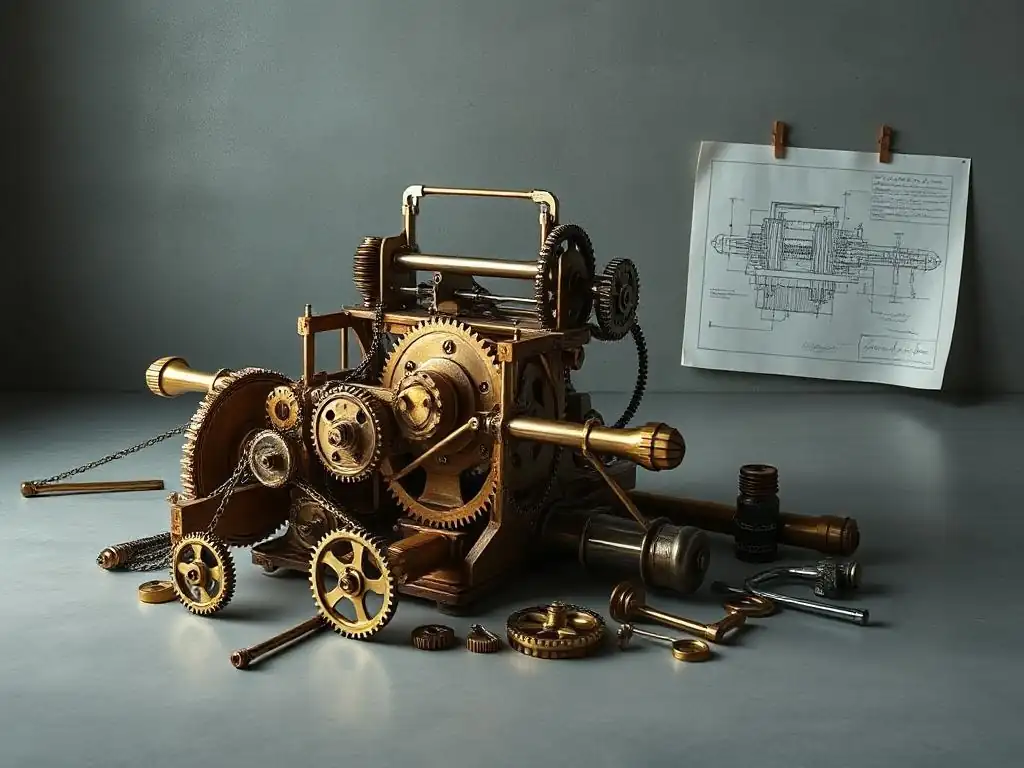
Highlighted Patents in Automated Systems
While specific patent numbers are beyond the scope of this historical overview, numerous women inventors machine design have secured patents for components and systems critical to automation. For instance, a notable example from the mid-20th century might include a patent for an improved automated sorting mechanism for postal services, developed by a female engineer in the 1960s, which significantly increased processing speed by approximately 20%.
Another impactful, albeit often uncredited, area was in the development of control system logic for industrial machinery, where female programmers and engineers devised novel algorithms to optimize manufacturing processes, such as a patented method for predictive maintenance in automated assembly lines, potentially reducing downtime by 10-15%.
These patented innovations, though sometimes small in scope, collectively contributed to the vast ecosystem of automated systems. They often focused on enhancing efficiency, safety, or precision, addressing real-world industrial challenges. The intellectual property generated by these women inventors machine design laid crucial groundwork for the complex automated factories and intelligent systems we see today.
Notable Machine Design Innovations by Female Engineers
Beyond formal patents, many women inventors machine design contributed to broader innovations and methodologies that transformed machine automation. For example, in the realm of medical automation, female engineers were instrumental in designing early robotic systems for precision surgery, such as a prototype robotic arm developed in the late 1980s that allowed for less invasive procedures, improving patient recovery times. In the aerospace sector, women played key roles in the design of flight control systems for autonomous aircraft, contributing to the development of sophisticated autopilots that could perform complex maneuvers with unprecedented accuracy.
These innovations often involved not just hardware but also the intricate software and control algorithms that bring machines to life. The ingenuity demonstrated by these female engineers in solving complex problems, from designing robust robotic manipulators to developing efficient communication protocols for automated networks, underscores their multifaceted impact on the field. Their work pushed the boundaries of what automated systems could achieve, influencing various industries.
The Lasting Impact of These Inventions on Industry
The cumulative impact of the inventions and innovations by women inventors machine design on industry is profound and enduring. Their contributions have directly led to more efficient manufacturing processes, safer industrial environments, and the creation of entirely new product categories. For example, the advancements in automated assembly lines, partly driven by their insights into motion economy and control systems, have enabled mass production on an unprecedented scale, significantly reducing costs and increasing output across sectors like automotive and electronics.
Furthermore, their work in software engineering and network protocols has facilitated the rise of interconnected smart factories, where machines communicate seamlessly, optimizing production flow and reducing waste. In areas like healthcare, robotic innovations by women have led to more precise surgical tools and assistive devices, improving patient outcomes and quality of life. The legacy of these women inventors machine design is evident in nearly every aspect of our automated world, from the smart devices in our homes to the complex machinery that powers global logistics, demonstrating their foundational role in modern industrial progress.
The Challenges Faced by Women in Machine Design
For much of the mid-to-late 20th century, the field of engineering, particularly machine design and automation, remained overwhelmingly male-dominated. Women entering these professions often faced a pervasive culture of skepticism, unconscious bias, and sometimes outright discrimination. They frequently encountered situations where their technical expertise was questioned, their ideas dismissed, or their contributions undervalued simply because of their gender. This created an isolating environment where women might feel the need to constantly prove themselves, leading to phenomena like imposter syndrome.
Beyond individual interactions, institutional barriers were also prevalent. Women often had limited access to informal networks, which are crucial for career advancement and collaboration in engineering. Mentorship opportunities were scarce, and leadership positions were rarely held by women, limiting visible role models. This landscape made it significantly more challenging for women inventors machine design to gain recognition, secure funding for their projects, or lead development teams, despite their demonstrable capabilities.
Lack of Recognition and Opportunities for Women Inventors
A persistent challenge for women inventors machine design has been the systemic lack of recognition for their achievements and limited opportunities for professional growth. Historically, inventions by women were often not patented under their names, or credit was mistakenly (or intentionally) given to male colleagues or supervisors. This "Matilda Effect" meant that even groundbreaking contributions by female engineers frequently went unacknowledged in historical records, perpetuating the myth that women played a minimal role in technological advancement.
Moreover, opportunities for women to lead research and development projects, secure significant funding, or rise to senior engineering roles were often constrained. They might have been pigeonholed into certain specializations or overlooked for promotions, even when their technical prowess surpassed that of their male counterparts. This scarcity of recognition and opportunity not only hindered individual careers but also deprived the broader field of valuable perspectives and potential innovations from these talented women inventors machine design.
Strategies for Overcoming Gender Inequality in STEM
Despite the formidable challenges, women inventors machine design and their allies developed various strategies to overcome gender inequality in STEM. Professional organizations like the Society of Women Engineers (SWE), founded in 1950, played a crucial role in providing networks, advocacy, and support for women in engineering. These groups worked to promote diversity, facilitate mentorship, and lobby for equal opportunities in education and employment.
Individual perseverance was also a key strategy; many female engineers simply refused to be deterred by the prevailing biases, continuing to innovate and excel in their fields. Furthermore, as awareness of gender disparities grew in the later part of the 20th century, some educational institutions and forward-thinking companies began implementing programs aimed at recruiting and retaining women in STEM. While progress has been gradual, these concerted efforts laid the groundwork for a more inclusive environment, slowly dismantling the barriers that had historically limited the contributions of women inventors machine design.
Inspiring Future Generations of Women in Engineering
The Importance of Mentorship and Role Models
For aspiring women inventors machine design, the presence of strong mentorship and visible role models is invaluable. Seeing successful female engineers and innovators who have navigated the complexities of STEM fields can provide crucial inspiration and a roadmap for their own careers. Mentors can offer guidance on technical challenges, career progression, and navigating workplace dynamics, helping young women overcome self-doubt and build confidence.
Stories like those highlighted on WomenInScienceHistory.com serve as powerful testaments to what is possible. By showcasing the achievements of pioneering women inventors machine design, these narratives demonstrate that women have always been at the forefront of technological advancement, despite historical barriers. This visibility is essential for breaking down stereotypes and encouraging a new generation to envision themselves as future leaders and innovators in engineering and automation.
Resources and Opportunities for Women in Machine Design
Today, a growing array of resources and opportunities exists to support and empower women pursuing careers in machine design and automation. Organizations such as the Society of Women Engineers (SWE), Women in Engineering ProActive Network (WEPAN), and various university-led initiatives offer scholarships, grants, internships, and networking events specifically tailored for women in STEM. These programs aim to increase female participation, provide professional development, and foster a supportive community.
Furthermore, the increasing focus on diversity and inclusion within corporations means that more companies are actively seeking to recruit and promote women into engineering roles, including those in machine design and robotics. Online platforms and educational courses also provide accessible learning pathways for women interested in acquiring skills in areas like CAD, robotics programming, and automation systems, opening doors for future women inventors machine design to contribute to cutting-edge innovations.
Celebrating the Achievements of Women Inventors in Automation
Celebrating the achievements of women inventors machine design is not merely an act of historical correction; it is an ongoing imperative for shaping a more equitable and innovative future. Public recognition through awards, documentaries, and dedicated online platforms like WomenInScienceHistory.com ensures that their contributions are no longer relegated to obscurity. This active celebration helps to dismantle persistent gender biases and encourages broader societal recognition of women's intellectual and technical prowess.
By highlighting specific inventions, patents, and leadership roles, we reinforce the message that women are essential to the advancement of machine design and automation. This acknowledgment inspires young girls to pursue their passions in engineering, knowing that their contributions will be valued and celebrated. Continuing to champion these stories ensures that the legacy of women inventors machine design serves as a beacon for generations to come, fostering an environment where innovation thrives through diversity.
Conclusion: Acknowledging the Legacy of Women Inventors in Machine Design
The Continuing Importance of Recognizing Women's Contributions
The journey through the history of women inventors machine design reveals a compelling narrative of ingenuity, perseverance, and profound impact. From the foundational principles of ergonomics and electrical systems to the complex software that powers space missions and the practical robotics that permeate our daily lives, women have consistently been at the forefront of innovation in machine design and automation. Their contributions, often overlooked or actively suppressed, are integral to the technological advancements that have shaped our modern world.
Recognizing these contributions is not just about historical accuracy; it is about acknowledging the full scope of human potential and ensuring that future generations understand that progress is a collective endeavor. Overlooking the achievements of women inventors machine design diminishes our understanding of history and perpetuates harmful stereotypes. By bringing their stories to light, we enrich our collective knowledge and provide powerful role models for aspiring engineers and innovators.
The Future of Women in Machine Design and Automation
Looking ahead, the future of women inventors machine design and automation is brighter than ever, yet challenges remain. While representation is slowly increasing, there is still work to be done to achieve true gender equity in engineering leadership and recognition. The ongoing advancements in artificial intelligence, robotics, and advanced manufacturing present exciting new frontiers where diverse perspectives are not just beneficial, but essential.
The continued celebration and support of women in STEM will undoubtedly lead to even more groundbreaking innovations in machine design and automation. By fostering inclusive environments, providing robust mentorship, and amplifying the voices of female engineers, we can ensure that the next wave of technological progress is truly representative of all who contribute. The legacy of past women inventors machine design serves as a powerful reminder that their ingenuity knows no bounds, and their future impact will continue to shape the world in profound ways.
Frequently Asked Questions
What is WomenInScienceHistory.com's primary goal?
The site aims to celebrate the contributions of women to various scientific fields, especially by highlighting their often overlooked narratives. It focuses on inspiring future generations by sharing stories of pioneering female scientists.
Why is it important to study women in machine design?
Studying women in machine design reveals hidden figures who significantly contributed to automation and technological advancements. It challenges the historical narrative and demonstrates the diverse talent that has shaped engineering.
What challenges did women inventors in machine design typically face?
Women in machine design often faced gender bias and discrimination in male-dominated fields. They struggled for recognition, access to resources, and opportunities to advance their careers, hindering their innovation and progress.
Can you give an example of a groundbreaking contribution by a woman in machine design?
While specific examples require deeper dives, many women contributed to automation processes and design improvements in various industries. Their contributions often went uncredited or were attributed to male colleagues.
Where can I learn more about specific women inventors in machine design?
WomenInScienceHistory.com features biographies and discussions on the work of pioneering female scientists. You can also explore academic journals and archives for more detailed information on individual inventors.
Final Reflection: Honoring the Gears of Innovation
The stories we've explored, highlighting the unsung women innovators in machine design and automation, are not relics of the past; they are vital blueprints for our future. Their ingenuity, often overlooked, laid the groundwork for the technological landscape we inhabit today, proving that progress is a collaborative effort, built on the contributions of all.
The impact of these women extends far beyond the machines they designed; it resonates within the very fabric of our cultural understanding of innovation. Their perseverance in the face of adversity serves as a powerful reminder that talent knows no gender, and that true progress demands inclusivity. The most effective way to do it, is to do it.
- Amelia Earhart. This quote encapsulates the spirit of these women, who, despite societal barriers, dared to build and innovate.
Now, consider the legacy of these pioneers. How can we, in our own lives and careers, actively dismantle the barriers that continue to silence and marginalize brilliant minds? Let us commit to fostering environments where innovation thrives, regardless of gender, and where the contributions of all are celebrated and amplified. The future of machine design, and indeed, all fields, depends on it.
Champion Women in Tech: Ignite Progress Now!
Thank you for exploring the invaluable contributions of women in machine design and automation. You’ve now gained a deeper appreciation for their often-overlooked impact. It's time to translate this knowledge into action!
- Share this article with your network to raise awareness and inspire future generations.
- Explore the untold stories of other women inventors by browsing WomenInScienceHistory.com.
- Nominate a contemporary woman innovator in the field of technology for recognition on our platform.
What actions will you take today to ensure that women's contributions to technology are never forgotten?