
The Human Factor: How Women Engineers Pioneered Ergonomics and UserCentric Design

Welcome to WomenInScienceHistory.com!
Delve into the fascinating world of science and discover the untold stories of remarkable women who shaped our understanding of the world. Ever wondered how user-friendly design came to be? This week, we explore The Human Factor: How Women Engineers Pioneered Ergonomics and User-Centric Design, uncovering the pivotal roles these trailblazers played in revolutionizing women engineers ergonomics design. Prepare to be inspired by their ingenuity and resilience – their contributions are more impactful than you might imagine. Read on to learn more!
- Introduction: Recognizing the Pioneering Role of Women in Ergonomics
- Early Influences: Laying the Groundwork for Ergonomic Design by Women
- Key Women Engineers in Ergonomics: Shaping User-Centric Design Principles
- Case Studies: Women Engineers and Their Impact on Ergonomic Design
- Challenges Faced by Women in Ergonomics Engineering
- The Legacy of Women Engineers in Ergonomics and User-Centric Design
- Conclusion: Celebrating the Enduring Impact of Women Engineers on Ergonomics and User-Centric Design
-
Frequently Asked Questions
- How did women engineers contribute to the field of ergonomics?
- What challenges did women face while pioneering ergonomics and user-centric design?
- Can you give an example of a woman engineer who significantly impacted ergonomics?
- Why is it important to highlight the contributions of women in the history of ergonomics?
- What is "user-centric design" and how did women engineers promote it?
- Final Reflection: The Enduring Legacy of Women in Ergonomics
- Ignite Your Inner Pioneer: Champion Human-Centered Design!
Introduction: Recognizing the Pioneering Role of Women in Ergonomics
Highlighting the Underrepresentation of Women's Contributions to Engineering History
Throughout much of the 20th century, the historical narrative of engineering has predominantly focused on male innovators, often sidelining or entirely omitting the significant contributions of women. This underrepresentation is particularly stark in fields like ergonomics and user-centric design, where women's insights into human behavior and practical needs were foundational. Despite their groundbreaking work, many pioneering women engineers faced immense professional barriers, including skepticism about their capabilities and limited access to recognition within male-dominated institutions.
Correcting this historical oversight is crucial to understanding the full scope of technological advancement. The specialized field of ergonomics, which combines engineering with psychology and physiology, benefited immensely from the unique perspectives brought by these often-uncredited women. Their work in women engineers ergonomics design laid essential groundwork, yet their names frequently remain absent from mainstream engineering histories.
Defining Ergonomics and User-Centric Design: A Focus on Human Factors
Ergonomics is the scientific discipline concerned with the understanding of interactions among humans and other elements of a system, and the profession that applies theory, principles, data, and methods to design in order to optimize human well-being and overall system performance. It seeks to fit the job to the person, not the person to the job, addressing factors like physical comfort, cognitive load, and environmental conditions.
User-centric design (UCD), a closely related concept, is an iterative design process in which designers focus on the users and their needs in each phase of the design process. UCD aims to create products and systems that are highly usable and enjoyable, directly addressing the requirements and limitations of the end-user. The convergence of ergonomics and user-centric design, significantly influenced by the practical and empathetic approaches of pioneering women engineers ergonomics design experts, has transformed how we interact with technology and environments.
Early Influences: Laying the Groundwork for Ergonomic Design by Women
World War II and the Emergence of Human Factors Engineering
The exigencies of World War II dramatically accelerated the formalization of human factors engineering. The rapid development of complex military machinery, such as sophisticated aircraft cockpits and radar systems, led to a critical realization: human error often stemmed not from operator incompetence, but from poor design that failed to account for human capabilities and limitations. This era saw a concerted effort to design equipment that was intuitive and efficient for operators under stressful conditions.
This urgent need for optimizing human-machine interaction in wartime settings provided a fertile ground for the principles that would later define modern ergonomics. While the most visible roles in military human factors were often held by men, the underlying data collection, analysis, and efficiency studies that informed these developments often relied on the meticulous work of women. The practical demands of wartime production, where efficiency and safety were paramount, inadvertently paved the way for the applied principles of women engineers ergonomics design.
Women's Roles in Wartime Research and Development: Assembly Line Optimization & Task Analysis
During World War II, women entered the workforce in unprecedented numbers, filling critical roles in factories, laboratories, and administrative positions. Many were involved in optimizing assembly lines, conducting rigorous time-and-motion studies, and analyzing worker fatigue to boost wartime production. For instance, in ordnance plants, women engineers and industrial psychologists meticulously studied tasks to identify inefficiencies and reduce physical strain on workers.
These roles, while often less celebrated, were instrumental in laying the empirical foundation for ergonomics. Women working as "computers" calculated complex trajectories and analyzed production data, identifying patterns of human performance and error. This hands-on, data-driven experience in understanding human interaction with tools and processes provided invaluable insights, directly contributing to the burgeoning field of human factors and the subsequent development of women engineers ergonomics design.
Key Women Engineers in Ergonomics: Shaping User-Centric Design Principles
Lillian Gilbreth: The Mother of Modern Management and Early Ergonomics
Lillian Moller Gilbreth (1878-1972) stands as a towering figure in the history of industrial engineering and ergonomics. Holding a Ph.D. in psychology, she brought a unique, human-centered perspective to the scientific management principles she developed alongside her husband, Frank Gilbreth. After his death in 1924, she continued their pioneering work, focusing on "motion economy" – the elimination of unnecessary movements to improve efficiency and reduce fatigue in both industrial and domestic settings.
Her contributions extended far beyond theoretical frameworks; she applied her principles to practical problems, designing ergonomic solutions for everything from surgical procedures to kitchen layouts. Gilbreth held patents for various kitchen appliances and designs, demonstrating her direct engineering impact on user experience. Her relentless focus on the worker's well-being and the user's ease of interaction firmly established her as a foundational pioneer in women engineers ergonomics design.
Florence King: Championing Safe Working Conditions in Factories
Florence King (1907-1991) was an influential industrial engineer whose work significantly contributed to improving factory conditions during the mid-20th century. As one of the earliest recognized female industrial engineers, she applied principles of efficiency and safety to diverse manufacturing environments, particularly during World War II. Her focus was not solely on increasing output but also on optimizing the work environment to enhance worker well-being and reduce injuries.
King's practical applications involved analyzing entire workflows and factory layouts to identify ergonomic deficiencies. While specific detailed case studies on her direct interventions in ventilation or lighting are scarce, her broader work in optimizing assembly lines inherently addressed the need for better ambient conditions. She understood that improvements in lighting, airflow, and workstation design were critical to reducing fatigue and improving productivity, exemplifying the holistic approach of women engineers ergonomics design in industrial settings.
Evelyn Berezin: Designing User-Friendly Data Processing Systems
Evelyn Berezin (1925-2018) was a visionary computer engineer who profoundly influenced user-centric design in the nascent field of computing. In an era dominated by complex, command-line interfaces and mainframes, Berezin recognized the critical need for systems that were intuitive and accessible to non-technical users. Her groundbreaking work in developing early word processors and automated systems was revolutionary.
In 1971, Berezin developed the Data Secretary, widely considered one of the first true word processors. This invention was a direct application of women engineers ergonomics design principles, as it aimed to simplify text editing for clerical workers, reducing cognitive load and improving efficiency. By prioritizing a user-friendly interface with features like screen display for real-time editing, Berezin transformed the way office workers interacted with computing technology, making complex data processing accessible and less cumbersome.
Case Studies: Women Engineers and Their Impact on Ergonomic Design
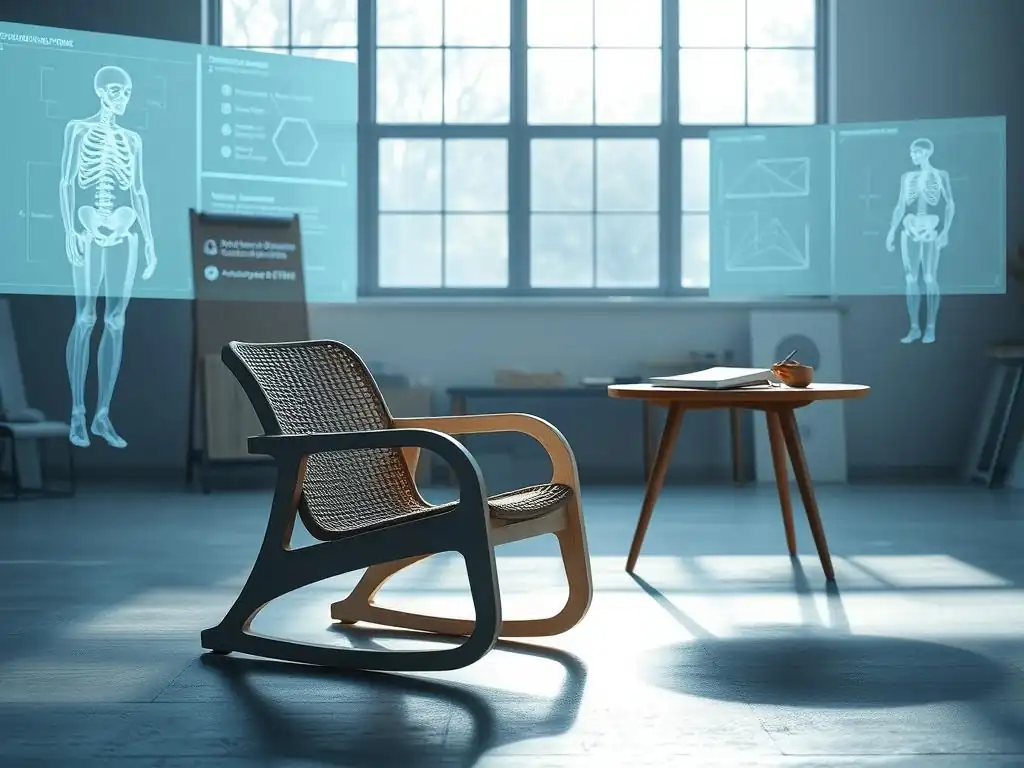
Case Study 1: Gilbreth's Kitchen Redesign - Optimizing Kitchen Layout for Efficiency and Safety
One of Lillian Gilbreth's most celebrated contributions to ergonomics applied her industrial efficiency principles to the domestic sphere. Her "Delineator Kitchen" of 1929, designed in collaboration with Delineator magazine, meticulously analyzed the movements involved in typical kitchen tasks, such as dishwashing and meal preparation. She aimed to reduce the physical burden on homemakers by streamlining workflows and minimizing unnecessary steps.
Gilbreth's designs introduced enduring ergonomic concepts like the "work triangle," which efficiently connects the stove, sink, and refrigerator, and standardized counter heights to reduce back strain. Her innovative approach, which integrated scientific analysis with practical user needs, significantly improved the efficiency, comfort, and safety of millions of homes. This was a quintessential example of women engineers ergonomics design directly improving daily life.
Case Study 2: King's Industrial Efficiency and Safety Contributions
Florence King's work as an industrial engineer focused on optimizing efficiency and safety within manufacturing plants, particularly during the high-pressure environment of wartime production. While precise, publicly documented case studies on her specific interventions in ventilation or lighting improvements are not widely detailed, her overarching contributions involved a comprehensive analysis of the entire production process. She understood that a poorly lit or inadequately ventilated workspace would negate gains made through streamlined tasks.
King's approach to industrial engineering inherently involved creating environments where workers could perform optimally with reduced fatigue and risk of injury. By designing more efficient assembly line layouts and work procedures, she indirectly, yet significantly, championed the need for better environmental controls. Her work laid the groundwork for later, more explicit ergonomic interventions in various industries, demonstrating the foundational impact of women engineers ergonomics design in improving the human factor in industrial settings.
Case Study 3: Berezin's Data Processing Systems - Simplifying Data Entry for Clerical Workers
Evelyn Berezin's development of the Data Secretary in 1971 serves as a prime example of user-centric design in the early computer age. Prior to this, clerical workers typed on manual typewriters or complex teletype machines connected to large, intimidating mainframes. Berezin's innovation was to create a standalone system that was specifically designed for ease of use by office personnel without specialized computer training.
The Data Secretary featured a visual display screen, allowing users to see and edit text in real-time before printing, a revolutionary ergonomic advancement that significantly reduced errors and eye strain compared to typing blind. Its intuitive interface, which minimized the need for complex commands or programming knowledge, was a direct application of women engineers ergonomics design principles. Berezin's foresight transformed the daily work of countless clerical professionals, making digital text processing accessible and efficient.
Challenges Faced by Women in Ergonomics Engineering
Overcoming Gender Bias in a Male-Dominated Field
Women engineers, particularly those in the mid-20th century, faced pervasive gender bias that often undermined their professional advancement and recognition. They encountered skepticism regarding their technical abilities, limited access to professional networks, and outright discrimination in hiring, promotions, and project assignments. Many women engineers ergonomics design specialists found their contributions dismissed as "soft skills" or "domestic science" rather than rigorous engineering, despite their profound technical and practical impact.
This bias was reflected in the demographic realities of the profession; even by the late 1980s, women constituted less than 10% of engineering graduates in the United States. Such underrepresentation often led to professional isolation and a constant need for women to over-perform to prove their competence in environments where male colleagues frequently received preferential treatment or undue credit for collaborative work.
Balancing Career and Family: The Unique Challenges for Women in Engineering
Beyond professional biases, women engineers often navigated the unique societal expectation of balancing demanding careers with primary responsibility for domestic and family care. Unlike many of their male counterparts, women frequently lacked spousal support for household duties, and institutional support systems such as affordable childcare or flexible work arrangements were virtually non-existent for much of the 20th century.
This dual burden often led to career interruptions, slower professional advancement, or the need to make difficult choices between personal and professional fulfillment. Despite these immense pressures, many women engineers ergonomics design pioneers demonstrated extraordinary dedication, finding innovative ways to maintain their professional standing while navigating these significant personal challenges.
Gaining Recognition for Contributions to Ergonomics and User-Centric Design
A persistent challenge for women in engineering, particularly in specialized fields like ergonomics, has been gaining proper recognition for their groundbreaking work. Their contributions were frequently overlooked in official historical accounts, academic publications, and professional awards, leading to a "hidden figures" phenomenon where innovative work remained largely uncelebrated.
Even when their designs directly led to significant improvements in efficiency, safety, or user experience, the credit was often attributed to male colleagues, institutions, or the general "team," rather than the individual women engineers ergonomics design pioneers themselves. This ongoing struggle for acknowledgment continues to be a focus of contemporary historical research and advocacy.
The Legacy of Women Engineers in Ergonomics and User-Centric Design
Inspiring Future Generations of Women in Engineering and STEM Fields
The stories of pioneering women engineers ergonomics design experts like Lillian Gilbreth, Florence King, and Evelyn Berezin serve as invaluable sources of inspiration for young women considering careers in engineering and STEM. Their resilience, ingenuity, and profound impact on human well-being demonstrate that women have always been capable of making significant technical contributions, directly encouraging more girls to pursue traditionally male-dominated fields. By highlighting these trailblazers, platforms dedicated to women in science history help dismantle stereotypes and showcase engineering as a field where diverse perspectives are not only welcome but essential for genuine innovation.
The Continuing Importance of Human Factors in Modern Design
The foundational principles established by early women engineers ergonomics design pioneers remain critically important in today's technologically advanced world. From the intuitive interfaces of smartphones and complex medical devices to the design of accessible public spaces and self-driving car controls, the focus on intuitive, safe, and efficient human-machine interaction is paramount. The field of ergonomics has expanded from industrial settings to encompass digital user experience (UX) design, cognitive ergonomics, and even the psychological impact of technology, all building upon the human-centric approach championed by these early women engineers. Their enduring legacy ensures that technology continues to serve humanity effectively.
Further Research: Exploring the Impact of Women on Specific Industries and Technologies
Despite increasing awareness, many stories of women engineers and their specific contributions to ergonomics and user-centric design remain untold or under-researched. There is a pressing need for continued historical inquiry into how women influenced particular industries and technologies. For instance, further exploration could reveal their roles in the development of ergonomic medical equipment, specialized aerospace controls, or the early days of software development. Such research promises to uncover more "hidden figures" and provide a more complete and accurate historical narrative of technological progress, enriching our understanding of women engineers ergonomics design's widespread impact.
Conclusion: Celebrating the Enduring Impact of Women Engineers on Ergonomics and User-Centric Design
Frequently Asked Questions
How did women engineers contribute to the field of ergonomics?
Women engineers played a crucial role by integrating human factors into design, focusing on user needs and safety. They championed a more holistic approach than traditional engineering.
What challenges did women face while pioneering ergonomics and user-centric design?
They often faced gender bias and were underrepresented in engineering. This made it difficult to gain recognition and access to resources.
Can you give an example of a woman engineer who significantly impacted ergonomics?
Many women contributed, but some notable examples include Lillian Gilbreth, who promoted motion study and workplace efficiency with a focus on the human element.
Why is it important to highlight the contributions of women in the history of ergonomics?
It’s essential for historical accuracy and inclusivity. Recognizing their contributions helps to inspire future generations of women in STEM fields.
What is "user-centric design" and how did women engineers promote it?
User-centric design prioritizes the needs and capabilities of users. Women engineers advocated for this by emphasizing human factors and user experience in the design process.
Final Reflection: The Enduring Legacy of Women in Ergonomics
The journey through the history of women engineers in ergonomics and user-centric design reveals a profound truth: human-centered design is inherently about empathy and understanding diverse perspectives. Today, as technology becomes ever more pervasive, their pioneering work serves as a crucial reminder that innovation must prioritize human well-being and accessibility above all else. Their contributions, often overlooked, laid the foundation for the user-friendly technologies we take for granted.
The impact of these women extends far beyond the technical realm. Their dedication to creating designs that accommodate diverse needs has profoundly shaped our understanding of inclusivity and accessibility in technology. It's a legacy that continues to inspire a new generation of engineers to challenge assumptions and champion user-centered approaches. Design is not just what it looks like and feels like. Design is how it works.
- Steve Jobs. This quote, though from a different era, perfectly encapsulates the core principle these women engineers understood and tirelessly pursued.
As we move forward, let us remember the lessons learned from these remarkable women engineers. Their story is a call to action, urging us to actively seek out and amplify diverse voices in the design process. Consider how you can contribute to creating a more equitable and user-friendly world, one design at a time. Let their legacy inspire you to champion human-centered design in all your endeavors, ensuring that technology truly serves humanity.
Ignite Your Inner Pioneer: Champion Human-Centered Design!
Thank you for exploring the inspiring journey of women engineers who revolutionized ergonomics and user-centric design! Now, let's build on their legacy and make your mark.
Here are some actionable steps you can take:
- Commit to applying ergonomic principles in your own workspace and daily life – identify one area you can improve today!
- Delve deeper into the history of women in STEM by researching a lesser-known female engineer and sharing her story on social media.
- Start a conversation: Discuss the importance of human-centered design with your colleagues, and brainstorm ways to incorporate it into your projects.
What small, but impactful, change will you implement today to honor the legacy of these pioneering women?