
The Voltage of Change: How Societal Shifts Opened Doors for Women in EE

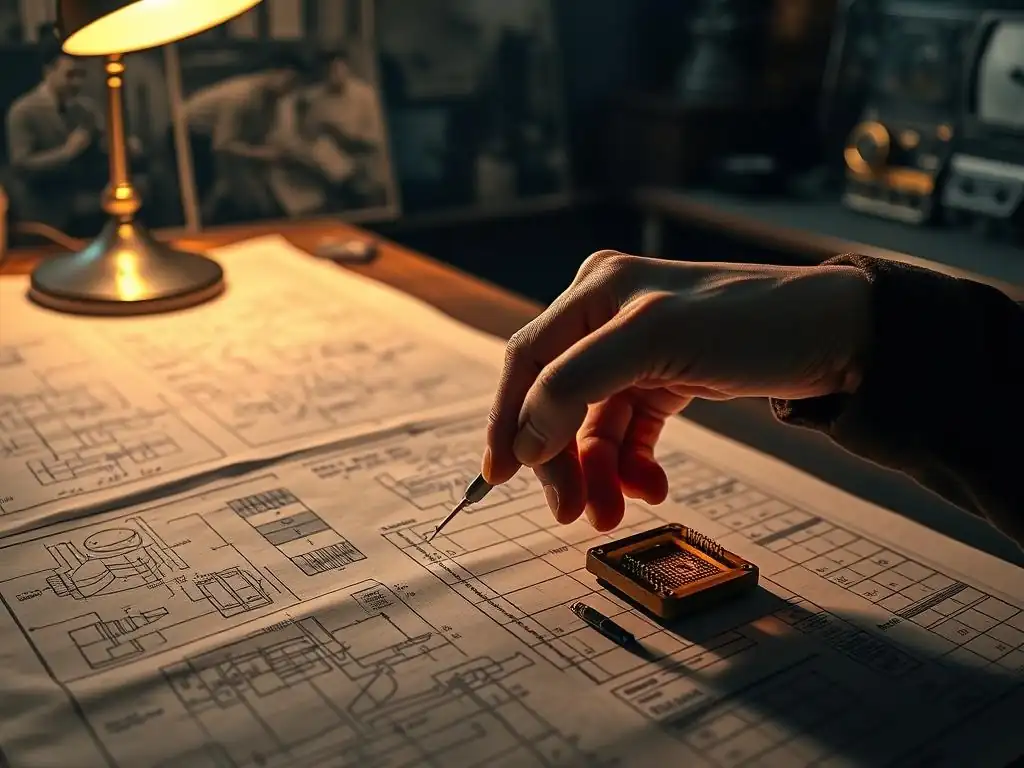
Welcome to WomenInScienceHistory.com!
Delve into the untold stories of extraordinary women who shaped the world of science. This month, we're shining a spotlight on the dynamic field of electrical engineering. Discover how societal changes and unwavering determination paved the way for brilliant minds to overcome obstacles and leave an indelible mark. Intrigued by the Voltage of Change? Explore the article below to learn more about the pioneering women who sparked innovation in EE, and the forces that finally allowed them to thrive.
- Introduction: The Evolving Landscape for Women in Electrical Engineering
- Early Pioneers: Breaking Barriers in Electrical Engineering
- World War II and the Accelerated Entry of Women into STEM Fields
- The Rise of Feminism and its Impact on Women in Electrical Engineering
- Technological Advancements and New Avenues for Women in EE
- Modern Challenges and the Ongoing Fight for Equality in Electrical Engineering
- Success Stories: Contemporary Women Shaping the Future of EE
- Conclusion: Celebrating Progress and Continuing the Journey for Women in Electrical Engineering
-
Frequently Asked Questions
- What societal factors significantly contributed to the increased participation of women in electrical engineering?
- What were some common challenges faced by women in electrical engineering throughout history?
- How does WomenInScienceHistory.com help promote the stories of women in electrical engineering?
- What groundbreaking work did women in electrical engineering contribute that is often overlooked?
- How can understanding the history of women in electrical engineering inspire future generations?
- Final Reflection: Empowering the Circuit
- Ignite Your Potential: Engineer Your Future!
Introduction: The Evolving Landscape for Women in Electrical Engineering
A Historical Overview of Women's Underrepresentation in EE
Historically, the fields of science, technology, engineering, and mathematics (STEM) were largely inaccessible to women, with engineering, in particular, being a bastion of male dominance. In the early 20th century, the presence of women in engineering programs and professional roles was negligible, often less than 1% of the total engineering workforce. This stark underrepresentation was not due to a lack of capability but rather deeply entrenched societal norms that confined women to domestic roles or specific "feminine" professions like teaching or nursing, deeming technical fields unsuitable or too demanding for them.
The prevailing cultural attitudes and institutional barriers, including limited access to appropriate education and outright discrimination in hiring practices, created a formidable hurdle for any woman aspiring to a career in electrical engineering. Universities often had quotas or informal policies limiting female enrollment in engineering programs, and employers were reluctant to hire women for roles perceived as physically demanding or requiring travel. This historical context illuminates the significant challenges that pioneering women in electrical engineering had to confront and overcome.
Setting the Stage: Societal Context and the Rise of Female Engineers
Despite the formidable barriers, various societal shifts throughout the 20th century began to slowly, yet profoundly, alter the landscape for women in electrical engineering. These changes were not always direct efforts to promote gender equality but rather broader transformations in the economy, labor needs, and social consciousness that inadvertently created openings. The Industrial Revolution, while initially reinforcing some gendered labor divisions, also laid the groundwork for increased demand for skilled technical workers, a demand that would eventually become so pressing it would necessitate looking beyond traditional male labor pools.
The slow erosion of rigid gender roles, fueled by economic necessity and evolving social thought, gradually chipped away at the exclusion of women from professional spheres. While progress was incremental for decades, certain pivotal moments—such as global conflicts and powerful social movements—would act as catalysts, accelerating the integration of women into fields like electrical engineering and setting the stage for their eventual, though still evolving, prominence.
Early Pioneers: Breaking Barriers in Electrical Engineering
Edith Clarke: A Trailblazer's Story
One of the most significant early figures for women in electrical engineering was Edith Clarke, an American electrical engineer born in 1883. Clarke broke through numerous barriers to become the first professionally employed female electrical engineer in the United States and the first woman to be elected a Fellow of the American Institute of Electrical Engineers (AIEE), now IEEE. After earning her Master of Science in electrical engineering from MIT in 1919, a rare feat for a woman at the time, she began her career at General Electric (GE).
At GE, Clarke initially worked as a "computer," performing complex calculations by hand. However, her exceptional mathematical prowess and innovative thinking soon led her to develop a graphical calculator, patented in 1921, designed to simplify calculations for power transmission lines.
This device, known as the "Clarke Calculator," significantly reduced the time and effort required to solve problems related to electrical power systems. Her contributions extended beyond practical tools; she authored the seminal textbook Circuit Analysis of A-C Power Systems in 1943, which became a standard reference in the field for decades, solidifying her legacy as a foundational figure for women in electrical engineering.
Overcoming Obstacles: Gender Bias and Limited Opportunities in Early EE
The path for early women in electrical engineering like Edith Clarke was fraught with significant obstacles, primarily rooted in pervasive gender bias and severely limited opportunities. Despite her MIT degree and undeniable talent, Clarke initially struggled to secure an engineering position, often relegated to lower-paying "computer" roles. Her colleagues and superiors frequently questioned her capabilities and commitment, simply because of her gender, reflecting the deeply ingrained skepticism about women's suitability for technical professions.
Even when women managed to secure positions, they often faced a "glass ceiling," hindering their advancement to leadership or more complex technical roles. They were typically paid less than their male counterparts for the same work, and their contributions were frequently overlooked or downplayed.
Edith Clarke herself experienced this, as her early work was not always fully recognized as "engineering" until later in her career. These systemic biases meant that many talented women in electrical engineering were either prevented from entering the field or driven out by the unwelcoming environment, making the achievements of pioneers like Clarke even more remarkable.
World War II and the Accelerated Entry of Women into STEM Fields
World War II marked a pivotal moment for women in electrical engineering and other STEM fields, as the exigencies of war created an unprecedented demand for labor. With millions of men joining the armed forces, a severe labor shortage emerged in industries vital to the war effort, including manufacturing, research, and development. This crisis compelled industries and government agencies to actively recruit women for roles previously considered exclusively male, including positions in electrical engineering, radar technology, and communications.
Women stepped into factories to assemble electrical components for aircraft and ships, worked in laboratories developing new electronic devices, and even served in technical roles within the military, such as maintaining sophisticated radar systems. This period saw a significant, albeit temporary, surge in the number of women in electrical engineering and related technical jobs, demonstrating their capability and resilience under pressure. The national imperative of winning the war effectively sidelined traditional gender prejudices, opening doors that had previously been firmly shut.
Rosie the Riveter Goes Electric: Women's Contributions During Wartime
The iconic "Rosie the Riveter" campaign symbolized the widespread mobilization of women into the workforce during World War II, but this phenomenon extended far beyond factory assembly lines to include sophisticated technical roles. Women in electrical engineering became integral to the design, production, and maintenance of crucial wartime technologies. For instance, women were employed in significant numbers at companies like General Electric and Westinghouse, where they worked on the electrical systems for planes, tanks, and naval vessels.
Beyond manufacturing, women contributed to cutting-edge research. Many women in electrical engineering worked as "human computers" for projects like the ENIAC (Electronic Numerical Integrator and Computer), performing complex calculations for ballistic trajectories and cryptology, effectively laying groundwork for early computer programming. By 1944, women constituted nearly 35% of the civilian workforce in the United States, with a notable percentage engaged in technical and skilled industrial roles, highlighting their indispensable contribution to the war effort and proving their competence in fields like electrical engineering.
Post-War Realities: Maintaining Momentum for Women in Engineering
Despite the monumental contributions of women in electrical engineering during World War II, the post-war era brought a concerted societal push for women to return to traditional domestic roles. This shift was fueled by a desire to restore pre-war social order and to make jobs available for returning servicemen. Many women who had gained invaluable technical skills and professional experience in electrical engineering and related fields found themselves facing pressure to leave their positions, often replaced by men.
However, the war had irrevocably demonstrated women's capabilities in technical fields. While the overall numbers of women in electrical engineering declined significantly immediately after the war, a small but determined cohort of women who had experienced professional independence and intellectual fulfillment resisted the societal pressure. They either continued to pursue careers in engineering, often against considerable odds, or sought higher education to further their technical skills. This persistence, though challenging, laid the groundwork for future generations of women to enter and excel in electrical engineering.
The Rise of Feminism and its Impact on Women in Electrical Engineering
Second-Wave Feminism: Challenging Gender Roles in Science and Technology
The emergence of second-wave feminism in the 1960s and 1970s brought a powerful societal shift that directly challenged traditional gender roles and advocated for equality across all spheres of life, including education and professional opportunities. This movement critically examined and dismantled the long-held beliefs that certain professions, such as engineering, were inherently masculine. Feminist activists and scholars highlighted the systemic discrimination that prevented women in electrical engineering from accessing education and employment, pushing for legal and social reforms to address these inequities.
The pervasive narrative that women lacked the aptitude for science and technology was actively challenged by feminist discourse, leading to a broader societal recognition of women's intellectual capabilities. This cultural awakening created a more receptive environment for women to consider and pursue careers in fields previously dominated by men. The demand for equal pay, equal opportunities, and an end to gender-based segregation in the workplace directly benefited aspiring women in electrical engineering, paving the way for institutional changes that would open more doors.
Increased Educational Opportunities: More Women Pursuing Electrical Engineering Degrees
A direct consequence of the feminist movement's advocacy was a significant increase in educational opportunities for women, particularly in traditionally male-dominated fields like electrical engineering. Universities, under increasing social and legal pressure, began to actively recruit and admit more female students into their engineering programs. This shift was transformative, as access to quality education is the foundational step for any professional career.
The statistics reflect this gradual but definite change: in 1970, women earned less than 1% of all engineering bachelor's degrees in the United States, a figure that starkly illustrates their near-exclusion from the field. However, by 1980, just a decade later, this percentage had risen to approximately 8%, a nearly eightfold increase. While still a minority, this growth demonstrated a clear trajectory of increasing enrollment for women in electrical engineering and other technical disciplines, indicating a tangible impact of the evolving societal landscape and educational reforms.
Title IX and its Role in Equal Access to STEM Education
A landmark legislative achievement that profoundly impacted access for women in electrical engineering to higher education was Title IX of the Education Amendments of 1972. This federal law prohibits sex-based discrimination in any education program or activity receiving federal financial assistance. While often associated with sports, Title IX's reach extends to all academic programs, including engineering. It mandated that universities and colleges could not discriminate against female applicants in admissions to STEM programs, nor could they deny them scholarships or other educational resources based on gender.
The implementation of Title IX created a legal framework that compelled educational institutions to address discriminatory practices and foster more equitable learning environments. This legal backing provided a crucial foundation for women in electrical engineering to pursue their studies without facing explicit institutional barriers. Although subtle biases and cultural norms persisted, Title IX significantly leveled the playing field, ensuring that talent, not gender, became the primary criterion for admission and support in engineering education.
Technological Advancements and New Avenues for Women in EE

The Computer Revolution: Opening Doors in Software and Hardware Engineering
The advent of the computer revolution in the mid-20th century created entirely new subfields within electrical engineering, particularly in software and hardware design, which inadvertently opened new avenues for women. Unlike traditional heavy industry or power systems, these emerging areas were less burdened by historical gender biases and often required intellectual prowess more than physical strength. Early computer programming, for instance, was sometimes viewed as a clerical or "feminine" task, leading to a higher proportion of women entering the field in its nascent stages.
Many women in electrical engineering found opportunities in designing the logic circuits, microprocessors, and memory systems that formed the backbone of early computers. Their contributions were crucial to the rapid development of computing technology. This new frontier presented a less entrenched and more fluid environment, allowing women to establish themselves as experts in areas like digital circuit design, embedded systems, and eventually, software development, which became increasingly intertwined with electrical engineering.
Telecommunications Boom: Opportunities for Women in Communications Engineering
The rapid expansion of telecommunications infrastructure, from the widespread adoption of telephones and radio to the later explosion of television and the internet, created a massive demand for skilled professionals in communications engineering, a specialized branch of electrical engineering. This boom provided significant opportunities for women in electrical engineering who specialized in signal processing, network design, and communication systems. The growth of global communication networks required a diverse workforce capable of innovating and maintaining complex systems.
Women found roles in designing and optimizing wireless communication protocols, developing fiber optic networks, and engineering satellite communication systems. Companies like Bell Labs, a prominent research and development arm for telecommunications, began to hire more women in electrical engineering for their groundbreaking work in these areas. The abstract nature of signal processing and network architecture allowed for a greater focus on intellectual contribution rather than traditional gendered perceptions of engineering.
Renewable Energy and Sustainable Technologies: New Frontiers for Women in EE
In the 21st century, the global shift towards renewable energy and sustainable technologies has created exciting new frontiers for women in electrical engineering. This burgeoning sector encompasses fields like solar power, wind energy, smart grids, energy storage, and electric vehicles. These areas are often seen as forward-thinking and inherently inclusive, attracting a diverse talent pool that includes a growing number of women.
Women in electrical engineering are at the forefront of designing efficient solar photovoltaic systems, optimizing wind turbine performance, developing advanced battery technologies, and creating intelligent power grids that integrate diverse energy sources. Their expertise is crucial in addressing pressing global challenges such as climate change and energy security. The collaborative and interdisciplinary nature of sustainable technology development also fosters environments conducive to diversity, encouraging more women to pursue careers in this vital and rapidly expanding segment of electrical engineering.
Modern Challenges and the Ongoing Fight for Equality in Electrical Engineering
Addressing the Gender Gap in Leadership Positions
Despite significant progress in increasing the number of women in electrical engineering, a substantial gender gap persists in leadership and senior management positions within the industry and academia. While women now earn approximately 20-25% of all engineering bachelor's degrees in the United States, their representation in executive roles, principal engineer positions, or tenured professorships in electrical engineering departments remains disproportionately low, often less than 10-15%. This phenomenon, sometimes referred to as the "leaky pipeline," indicates that many women leave STEM careers mid-career or struggle to advance to higher echelons.
Addressing this gap requires more than just increasing entry-level hiring; it necessitates systemic changes in corporate culture, promotion pathways, and mentorship opportunities. Factors such as unconscious bias in evaluations, lack of work-life balance support, and insufficient sponsorship networks contribute to this disparity. Companies and institutions must actively implement strategies to retain and promote women in electrical engineering into leadership roles, ensuring that their valuable experience and perspectives are not lost to the field.
Promoting Diversity and Inclusion in the Workplace
Beyond numerical representation, fostering genuine diversity and inclusion is crucial for the continued advancement and retention of women in electrical engineering. Diversity initiatives aim to increase the presence of women and other underrepresented groups, but inclusion focuses on creating an environment where all employees feel valued, respected, and empowered to contribute their best work. This includes establishing equitable promotion processes, fair compensation practices, and a culture that actively combats microaggressions and unconscious biases.
Many organizations are now implementing comprehensive diversity and inclusion programs, including unconscious bias training, mentorship programs specifically for women in electrical engineering, and employee resource groups. These efforts aim to create a workplace where women feel supported and have equal opportunities for growth and recognition. A truly inclusive environment not only benefits individual women in electrical engineering but also enhances innovation and problem-solving within teams, as diverse perspectives lead to more robust solutions.
Mentorship and Support Networks: Empowering Women in Electrical Engineering Today
Mentorship and strong support networks play a critical role in empowering women in electrical engineering today, helping them navigate career challenges, build confidence, and achieve their professional goals. Professional organizations like the Society of Women Engineers (SWE) and IEEE Women in Engineering (WIE) provide invaluable platforms for networking, peer support, and mentorship. These networks connect experienced female engineers with those earlier in their careers, offering guidance on technical skills, career progression, and work-life integration.
Mentors can provide insights into navigating corporate politics, advocating for oneself, and balancing professional ambitions with personal life. These support systems also foster a sense of community, reducing feelings of isolation that can sometimes arise in male-dominated fields. By sharing experiences and offering practical advice, these networks are instrumental in retaining talented women in electrical engineering and ensuring they have the resources and encouragement needed to thrive and lead in their respective specializations.
Success Stories: Contemporary Women Shaping the Future of EE
Dr. Ayanna Howard: Innovation and Leadership
Dr. Ayanna Howard stands as a prominent example of contemporary women in electrical engineering who are shaping the future of the field through innovation and leadership. As a distinguished robotics engineer and educator, she is currently the Dean of Engineering at The Ohio State University, a testament to her profound impact and influence. Dr. Howard's research focuses on artificial intelligence, robotics, and human-robot interaction, with a particular emphasis on developing assistive technologies and autonomous systems that improve quality of life.
Her work includes groundbreaking contributions to intelligent control systems for robotic exploration, as well as the creation of robotic devices designed to aid children with motor disabilities. Dr. Howard's career trajectory, from a senior researcher at NASA's Jet Propulsion Laboratory to a leading academic dean, showcases her exceptional technical prowess and her commitment to advancing the field. She serves as an inspiring role model, demonstrating the heights that women in electrical engineering can achieve through dedication and pioneering research.
Highlighting Achievements: Women's Contributions to Cutting-Edge Research
Beyond individual luminaries, women in electrical engineering are making substantial and often overlooked contributions to cutting-edge research across various specializations. For instance, women are leading research teams developing quantum computing technologies, pushing the boundaries of computational power and data security. Others are at the forefront of neuromorphic engineering, designing brain-inspired computer architectures that could revolutionize artificial intelligence and machine learning.
In the realm of power systems, women in electrical engineering are innovating in smart grid technologies, integrating renewable energy sources more efficiently, and developing advanced energy storage solutions. Their work is vital in addressing global challenges like climate change and energy independence. These contributions, while sometimes less publicized, are fundamentally advancing the field and demonstrating the indispensable role that women play in shaping the future of electrical engineering and its applications in modern society.
Inspiring the Next Generation of Women in STEM
Highlighting the success stories of contemporary women in electrical engineering is crucial for inspiring the next generation of female scientists and engineers. When young girls and women see visible role models like Dr. Ayanna Howard or learn about the impactful research being conducted by other female engineers, it helps to dismantle stereotypes and broaden their perception of what is possible for them. These narratives demonstrate that a career in electrical engineering is not only attainable but also intellectually stimulating and deeply rewarding.
By showcasing the diverse paths and achievements of women in electrical engineering, educational institutions, industry leaders, and media platforms can actively encourage more young women to pursue STEM fields. Providing accessible examples of successful women who have navigated challenges and achieved greatness in electrical engineering can empower aspiring students to overcome self-doubt and societal pressures, ultimately leading to a more diverse, innovative, and equitable future for the entire engineering profession.
Conclusion: Celebrating Progress and Continuing the Journey for Women in Electrical Engineering
Reflecting on the Societal Shifts That Enabled Progress
The journey of women in electrical engineering from near invisibility to increasing prominence is a testament to the profound impact of societal shifts. From the unforeseen necessities of World War II, which temporarily broke down gender barriers in the workforce, to the transformative force of second-wave feminism advocating for equal rights and educational access, each era brought unique catalysts. The subsequent technological revolutions, particularly in computing and telecommunications, created new subfields less encumbered by historical biases, offering fresh entry points for women.
These shifts were not isolated events but interconnected forces that gradually eroded deeply ingrained prejudices and opened doors that had been firmly shut. While the progress has been incremental and often met with resistance, the cumulative effect of these societal changes has undeniably paved the way for more women in electrical engineering to pursue their passions and contribute their intellect to this vital field. The story is one of persistent advocacy, changing mindsets, and the undeniable demonstration of capability.
The Importance of Continued Advocacy and Support
Despite the significant strides made, the journey for full equality and representation for women in electrical engineering is far from over. Challenges persist, particularly in achieving gender parity in leadership roles, ensuring equitable pay, and fostering truly inclusive workplace cultures. The "leaky pipeline" phenomenon, where women disproportionately leave STEM careers mid-career, underscores the ongoing need for robust support systems, mentorship, and policies that promote work-life balance.
Continued advocacy is essential to dismantle remaining systemic barriers and unconscious biases. This includes championing policies that support flexible work arrangements, implementing transparent promotion processes, and actively promoting diversity and inclusion initiatives within companies and academic institutions. Sustained effort from professional organizations, educational bodies, and industry leaders is crucial to ensure that the progress for women in electrical engineering continues and accelerates.
The Future is Electric: Empowering Women to Lead in Electrical Engineering
The future of electrical engineering is undeniably electric, and it will be shaped by the diverse talents and innovative contributions of women in electrical engineering. As the world grapples with complex challenges such as climate change, energy transition, artificial intelligence, and global connectivity, the insights and expertise of a diverse workforce are more critical than ever. Empowering women to lead in this field means not only achieving gender equity but also harnessing a broader spectrum of creativity and problem-solving approaches.
By actively encouraging young girls to explore STEM, providing equitable educational opportunities, fostering inclusive professional environments, and celebrating the achievements of women in electrical engineering, we can ensure that the field benefits from the fullest range of human potential. The continued journey to empower women in electrical engineering is not just about fairness; it is about building a more innovative, resilient, and prosperous future for all.
Frequently Asked Questions
What societal factors significantly contributed to the increased participation of women in electrical engineering?
Societal shifts like World War II labor shortages and the rise of feminist movements created opportunities and challenged traditional gender roles. This led to more women entering STEM fields, including electrical engineering.
What were some common challenges faced by women in electrical engineering throughout history?
Many women faced gender bias and discrimination in education, hiring, and promotion. They were often excluded from networking opportunities and faced skepticism about their abilities.
How does WomenInScienceHistory.com help promote the stories of women in electrical engineering?
The site features biographies of pioneering women in EE, highlighting their achievements and struggles. It also provides a platform for discussing their impact and inspiring future generations.
What groundbreaking work did women in electrical engineering contribute that is often overlooked?
Women contributed to advancements in areas like radar technology, computer science, and telecommunications. Their innovations were often crucial yet their contributions were not always recognized.
How can understanding the history of women in electrical engineering inspire future generations?
By learning about the challenges and triumphs of these women, future generations can be empowered to overcome obstacles and pursue careers in STEM, knowing they are building on a rich legacy.
Final Reflection: Empowering the Circuit
The journey through the societal shifts that paved the way for women in electrical engineering reveals more than just historical progress; it highlights the ongoing need for vigilance and proactive support. The advancements we've explored, from changing cultural norms to legislative victories, are not static achievements but rather the foundation upon which future generations will build. The voltage of change, once a surge, must become a sustained current, powering a future where gender equality in STEM fields is not an aspiration, but a reality.
This exploration has underscored the profound impact of collective action and individual courage in dismantling systemic barriers. Witnessing the resilience and determination of women who defied expectations and shattered stereotypes has been deeply inspiring. You educate a man; you educate a man. You educate a woman; you educate a generation.
This African proverb resonates deeply, reminding us that investing in women's education and empowerment yields exponential returns for society as a whole. The continued underrepresentation of women in electrical engineering represents a significant loss of talent and perspective, hindering innovation and progress.
Now, it's your turn to amplify the voltage of change. Reflect on the stories shared, the challenges overcome, and the opportunities that lie ahead. Consider how you can contribute to creating a more inclusive and equitable environment for women in electrical engineering, whether through mentorship, advocacy, or simply challenging unconscious biases. The circuit is open, the power is on – what will you connect?
Ignite Your Potential: Engineer Your Future!
Thank you for exploring the inspiring journey of women in electrical engineering! We hope you've gained valuable insights and a renewed appreciation for the pioneers who paved the way. Now, let's turn inspiration into action.
Here's how you can contribute and continue the momentum:
- Launch Your Innovation: Consider starting a passion project or side hustle to apply your knowledge and build a portfolio. Share your journey online and inspire others!
- Spread the Spark: Share this article with aspiring female engineers or anyone who needs a dose of inspiration. Help amplify these vital stories!
- Explore forgotten pioneers: Deep dive and nominate a less-known woman engineer for a profile on WomenInScienceHistory.com!
What small step will you take today to engineer a brighter future?