
Wartime Necessity, Peacetime Setback? Global Conflicts & Shifting Norms for Women Scientists

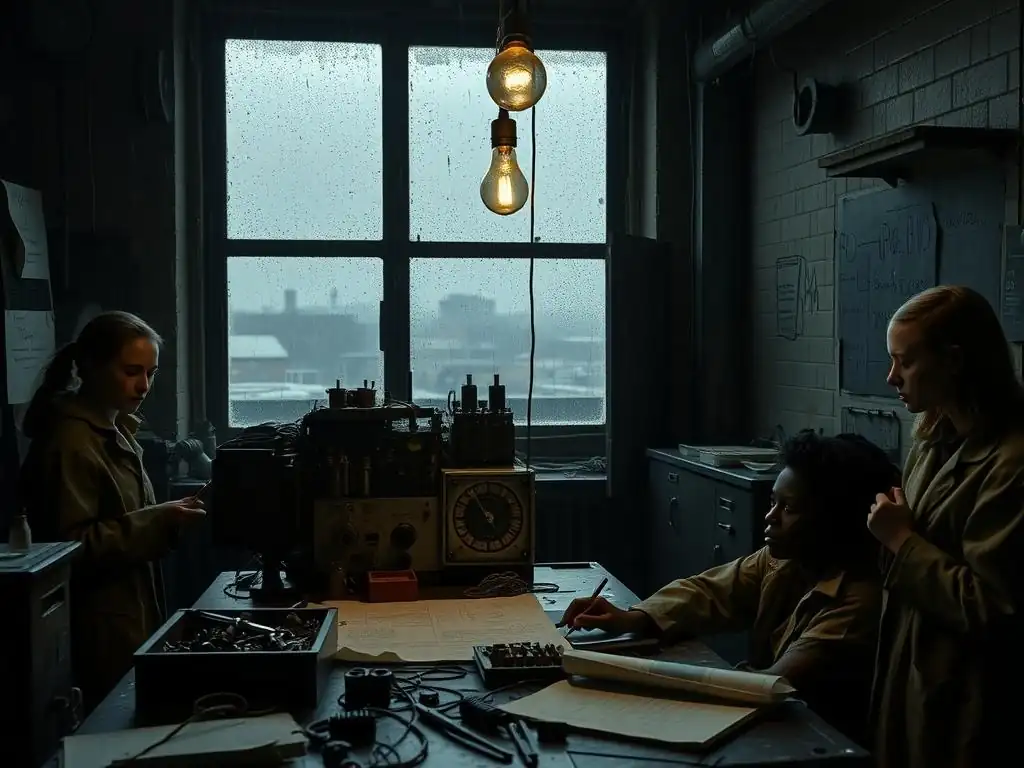
Welcome to WomenInScienceHistory.com!
Dive into a fascinating exploration of the often-untold stories of women who shaped the scientific landscape. Here, we unearth their groundbreaking contributions and the obstacles they overcame. Today, we delve into a particularly compelling area: Women scientists wartime career challenges. Discover how global conflicts dramatically altered, and often subsequently curtailed, opportunities for women in science. Prepare to be intrigued by the shifting societal norms that both empowered and ultimately hindered these brilliant minds. Read on to learn more about the complex interplay of war, science, and gender.
- Women Scientists' Wartime Career Challenges: A Double-Edged Sword?
-
The Wartime Surge: Women Scientists Filling Critical Roles
- World War I: The Initial Breakthrough for Women in Scientific Fields
- World War II: Expanding Roles and Responsibilities for Female Researchers
- Contributions in Physics: Lise Meitner and Nuclear Fission
- Contributions in Chemistry: Dorothy Hodgkin and Penicillin Crystallography
- Contributions in Engineering: Lillian Gilbreth and Industrial Efficiency
- Peacetime Realities: The Setback for Women's Scientific Advancement
- Gender Bias in Science: Lingering Challenges for Women's Careers
- Analyzing the Shifting Norms: A Global Perspective
- Lessons Learned and Future Directions: Supporting Women in STEM
- Conclusion: Recognizing the Complex Legacy of War on Women's Scientific Careers
-
Frequently Asked Questions
- What were some wartime opportunities that became available to women scientists?
- How did societal expectations impact women scientists after wartime periods?
- What kind of discrimination did women scientists face even when they were employed during wartime?
- How did the wartime experiences of women scientists influence future generations?
- What are some of the specific challenges faced when researching women scientists' wartime contributions?
- Final Reflection: Enduring Echoes of Conflict
- Ignite Your Impact: Champion Women in Science!
Women Scientists' Wartime Career Challenges: A Double-Edged Sword?
Introduction: Global Conflicts Reshaping Opportunities for Women in STEM
Global conflicts have historically served as powerful catalysts for societal change, often reshaping established norms and creating unprecedented opportunities in various sectors, including science and technology. For women in STEM, wartime periods presented a complex paradox: a temporary surge in professional integration driven by urgent national needs, frequently followed by significant setbacks in peacetime as traditional gender roles were reasserted. This article delves into the unique "Women scientists wartime career challenges," examining how global conflicts like World War I and World War II both opened doors and subsequently hindered the long-term advancement of female researchers.
Understanding this dynamic is crucial for appreciating the often-overlooked contributions of women to scientific progress during times of crisis and for recognizing the persistent barriers they faced in securing lasting recognition and equitable standing. The narrative of women in science during wartime is one of resilience, innovation, and a constant battle against deeply entrenched societal expectations that profoundly impacted their professional trajectories.
The Wartime Surge: Women Scientists Filling Critical Roles
World War I: The Initial Breakthrough for Women in Scientific Fields
The outbreak of World War I created an unprecedented demand for labor across all sectors, including scientific and industrial fields previously dominated by men. As men were conscripted for military service, women stepped into vital roles in laboratories, factories, and research institutions, filling critical gaps in areas like industrial chemistry, munitions testing, and early medical research. This period marked a significant, albeit temporary, breach in the traditional barriers that had largely excluded women from professional scientific careers.
For instance, women were increasingly employed in chemical plants to produce explosives and other essential wartime materials, often taking on roles that required precision and scientific understanding. Similarly, in medical research, women contributed to advancements in treating war-related injuries and diseases. Marie Curie's groundbreaking work with mobile X-ray units, known as "Petites Curies," mobilized hundreds of women to operate these units on the front lines, providing crucial diagnostic services and demonstrating women's capacity for hands-on scientific application in a crisis.
World War II: Expanding Roles and Responsibilities for Female Researchers
World War II amplified the trends seen in WWI, leading to an even more dramatic expansion of roles for women in scientific and technical fields. The sheer scale of the conflict necessitated a full mobilization of national resources, including intellectual capital, pushing women into positions of greater responsibility in physics, chemistry, engineering, and cryptography. This era saw women not just as assistants but as active researchers, analysts, and innovators.
In the United States, for example, the number of women employed in war-related industries, including scientific and technical roles, soared. By 1943, women constituted nearly 65% of the aircraft industry's workforce, with many in engineering support, drafting, and quality control roles. A notable example includes the "ENIAC girls," six brilliant female mathematicians who were the first programmers of the ENIAC computer, crucial for calculating ballistic trajectories for the U.S. Army. Their pioneering work laid foundational groundwork for modern computing, yet their contributions were largely unacknowledged for decades, highlighting the "Women scientists wartime career challenges" even amidst vital contributions.
Contributions in Physics: Lise Meitner and Nuclear Fission
Lise Meitner, an Austrian-Swedish physicist, stands as a poignant example of a woman whose groundbreaking work in physics was both vital and unjustly overlooked. Collaborating with Otto Hahn and Fritz Strassmann, Meitner's theoretical explanation of nuclear fission in 1938 was pivotal, providing the physical basis for the splitting of the atom. Her insights were crucial for understanding the immense energy released during this process, which would later be harnessed for both atomic weapons and nuclear power.
Despite her indispensable intellectual contribution, Meitner faced immense challenges, including her forced exile from Nazi Germany due to her Jewish heritage and the subsequent exclusion from the 1944 Nobel Prize in Chemistry awarded solely to Hahn. Her story underscores the systemic biases and "Women scientists wartime career challenges" related to recognition and intellectual property, even when their work fundamentally reshaped global understanding and military capabilities during WWII.
Contributions in Chemistry: Dorothy Hodgkin and Penicillin Crystallography
Dorothy Hodgkin, a British chemist, made revolutionary contributions to the field of X-ray crystallography, a technique crucial for determining the three-dimensional structures of complex molecules. During World War II, her expertise became invaluable, particularly with the urgent need for mass production of penicillin, a life-saving antibiotic. Hodgkin meticulously worked to determine the complex structure of penicillin, a feat that eluded many others and was essential for its synthetic production and optimization.
Her groundbreaking work on penicillin's structure, published in 1945, directly facilitated the development of more effective antibiotics and saved countless lives during and after the war. Later, she would go on to determine the structure of insulin, earning her the Nobel Prize in Chemistry in 1964. Hodgkin's career exemplifies how women scientists, even when operating within the constraints of wartime priorities, could achieve monumental scientific breakthroughs that had lasting global impact.
Contributions in Engineering: Lillian Gilbreth and Industrial Efficiency
Lillian Gilbreth, an American psychologist and industrial engineer, was a pioneer in applying psychological principles to management and efficiency, effectively bridging the gap between human factors and engineering. Her work on time-and-motion studies, ergonomics, and factory optimization became critically important during both World War I and World War II, as nations sought to maximize industrial output for the war effort. Her insights helped streamline production lines and improve worker productivity in factories across the United States.
During both conflicts, Gilbreth served as an advisor to various government committees, including those focused on wartime production and rehabilitation for disabled veterans. Her innovations in workplace design and process improvement directly contributed to the efficiency of war industries, helping to produce everything from munitions to medical supplies more rapidly. Her influence extended beyond the factory floor, shaping the very understanding of human-centered design in engineering, demonstrating the profound impact of women in applied scientific fields during wartime.
Peacetime Realities: The Setback for Women's Scientific Advancement
Post-War Displacement: Facing Job Losses and Limited Opportunities
As global conflicts drew to a close and millions of servicemen returned home, a widespread societal push emerged to re-establish pre-war gender roles. This shift had a profound and often detrimental impact on the career trajectories of many women scientists. Despite their invaluable contributions during wartime, women were frequently pressured or explicitly asked to leave their scientific and technical positions to make way for returning male veterans. This period saw a significant decline in women's employment in professional scientific fields.
In the United States, for instance, women's share of scientific and technical jobs, which had peaked during WWII, sharply dropped in the immediate post-war years. Many women who had taken on engineering, physics, or chemistry roles found themselves unable to secure comparable positions, often relegated to lower-paying, less prestigious roles, or forced out of the workforce entirely. This displacement highlights a core aspect of "Women scientists wartime career challenges": their contributions were seen as temporary necessities rather than indicators of lasting capability.
Shifting Societal Expectations: The Return to Traditional Gender Roles
The post-war era witnessed a powerful resurgence of traditional gender norms, heavily promoted through media, advertising, and cultural narratives. Society largely encouraged women to return to domestic roles, emphasizing marriage, homemaking, and child-rearing as their primary responsibilities. This societal pressure created a formidable barrier for women aspiring to continue or embark upon careers in demanding fields like science.
The pervasive cultural ideal of the suburban housewife subtly, yet effectively, discouraged women from pursuing higher education in STEM or seeking professional scientific employment. Educational institutions and employers often reflected these societal expectations, making it more challenging for women to gain admission to scientific programs or secure research positions. This period marked a significant cultural regression for women's professional aspirations, particularly in STEM.
The "Feminine Mystique" and its Impact on Women in STEM
Betty Friedan's seminal 1963 book, The Feminine Mystique, eloquently captured the widespread discontent among American women trapped by the societal expectation of domesticity in the post-WWII era. Friedan articulated the "problem that has no name," describing the profound dissatisfaction experienced by many educated women confined to the home, despite seemingly having achieved the "American Dream." This cultural phenomenon directly impacted the pipeline of women entering and staying in STEM fields.
The societal pressure to conform to the "feminine mystique" meant that many talented young women either chose not to pursue scientific training or abandoned promising scientific careers for marriage and family. This powerful societal narrative contributed significantly to the widening gender gap in STEM fields that persisted for decades, making it a profound "Women scientists wartime career challenges" legacy. It constrained not only professional opportunities but also the very aspirations of a generation of potential female scientists.
Gender Bias in Science: Lingering Challenges for Women's Careers

The "Leaky Pipeline": Addressing Attrition Rates of Women in Science
Despite decades of progress, the phenomenon known as the "leaky pipeline" continues to plague women's participation in STEM. This metaphor describes the gradual but significant attrition of women at various stages of their scientific careers, from undergraduate studies to senior leadership positions. While women now earn a substantial percentage of STEM bachelor's degrees in many fields—for instance, around 50% in biological sciences and mathematics in the US—their representation sharply declines at higher academic ranks and in leadership roles within both academia and industry.
Factors contributing to this attrition include a lack of mentorship, work-life balance challenges, and persistent subtle biases. For example, in 2021, women held only approximately 28% of STEM jobs in the United States, with even lower percentages in fields like engineering (15%) and computer science (26%). This persistent "leak" means that the scientific community loses valuable talent and diverse perspectives, hindering overall innovation and progress, and reflecting the enduring "Women scientists wartime career challenges" of establishing lasting equity.
Implicit Bias and Discrimination in Academia and Industry
Implicit bias, or unconscious prejudices, plays a significant role in perpetuating gender disparities within scientific academia and industry. These biases can subtly influence hiring decisions, promotion opportunities, grant allocations, and even the evaluation of scientific contributions. Women's work may be unconsciously undervalued, their ideas misattributed, or their leadership capabilities questioned more readily than those of their male counterparts.
Studies have consistently demonstrated the pervasive nature of implicit bias. For instance, a 2012 study published in the Proceedings of the National Academy of Sciences found that science faculty, regardless of gender, rated a male applicant as significantly more competent and hirable than an identical female applicant for a lab manager position, offering the male applicant a higher starting salary and more career mentoring. Such biases continue to create an uneven playing field, adding to the "Women scientists wartime career challenges" of achieving full professional recognition and advancement.
Barriers to Advancement: Limited Access to Funding and Leadership Roles
Women scientists frequently encounter specific barriers when seeking research funding and aspiring to leadership positions. Networking opportunities, often crucial for career progression, can be less accessible for women due to historical exclusionary practices and male-dominated networks. Furthermore, the scarcity of female role models in senior scientific roles can make it harder for women to envision themselves in such positions or find sponsors to champion their careers.
Data from various national funding agencies, such as the National Institutes of Health (NIH) in the U.S., have historically shown slight but persistent disparities in grant success rates between equally qualified male and female principal investigators, though some recent efforts have aimed to mitigate this. In 2022, women comprised only about 30% of senior leadership positions in major scientific institutions globally, and less than 20% of full professorships in STEM fields at leading universities.
These figures underscore the continued struggle for women to break through the "glass ceiling" in science, a lingering echo of the "Women scientists wartime career challenges" of establishing sustained professional equality.
Analyzing the Shifting Norms: A Global Perspective
Comparing Experiences Across Different Countries: US, UK, Soviet Union
The experiences of women scientists during and after wartime varied significantly across different geopolitical contexts, demonstrating how national ideologies and societal structures influenced their opportunities. In the United States and the United Kingdom, while women made substantial gains in scientific fields during WWII, these were largely viewed as temporary measures, leading to significant post-war displacement and a return to traditional domestic roles. The "Women scientists wartime career challenges" in these nations included a struggle against ingrained societal norms that valued male employment over female professional continuity.
In stark contrast, the Soviet Union actively promoted women's participation in STEM as part of its socialist ideology of gender equality in the workforce. By the 1970s, women constituted over 40% of engineers in the Soviet Union, a figure dramatically higher than in Western nations. While challenges related to leadership roles and domestic burdens persisted, the state-driven emphasis on women's contribution to the workforce created a vastly different landscape for female scientists, showcasing the profound impact of national policy on women's scientific careers.
The Impact of Political Ideologies on Women's Scientific Careers
Political ideologies played a crucial role in either enabling or constraining women's scientific pursuits. In countries adhering to socialist principles, such as the Soviet Union and later China, state policies often aimed at maximizing human resources for national development, which included actively integrating women into all professional fields, including science and engineering. This led to state-sponsored education and employment opportunities for women in STEM, even if traditional gender roles in the home often remained.
Conversely, in many Western capitalist democracies, particularly in the post-WWII era, the prevailing political and social ideologies emphasized individual family units and a gendered division of labor, with men as breadwinners and women as homemakers. This cultural framework often overshadowed official policies that might have otherwise supported women's professional advancement, contributing to the "Women scientists wartime career challenges" of gaining widespread acceptance and sustained career paths in science.
Long-Term Consequences: The Persistent Gender Gap in STEM Leadership
The historical shifts in societal norms and political ideologies following global conflicts have had enduring long-term consequences, contributing significantly to the persistent gender gap in STEM leadership. Despite considerable progress in recent decades, women remain vastly underrepresented in top scientific roles, full professorships, and executive positions in tech and research. This gap is a direct legacy of the historical biases and societal pressures that limited women's opportunities and aspirations.
Even today, women hold less than 20% of full professorships in STEM fields at leading universities globally and are vastly underrepresented in tech leadership roles, with only about 25% of leadership positions in tech held by women in 2023. This enduring disparity reflects not only historical disadvantages but also the continued presence of subtle biases and systemic barriers that make it harder for women to climb the scientific career ladder, underscoring the ongoing relevance of understanding "Women scientists wartime career challenges" in a contemporary context.
Lessons Learned and Future Directions: Supporting Women in STEM
Promoting Gender Equality in Science Education and Employment
To address the lingering effects of historical biases and ensure a more equitable future, it is crucial to promote gender equality vigorously in science education and employment from an early age. This involves encouraging girls to pursue STEM subjects, challenging stereotypes in classrooms, and ensuring equitable access to resources and opportunities. At the professional level, implementing fair hiring practices, transparent promotion criteria, and equal pay policies are essential to dismantle systemic barriers.
Programs like "Girls Who Code" or university outreach initiatives have demonstrated significant success in increasing female enrollment in computer science and engineering programs, with some institutions reporting a 30-40% increase in female participation over the last decade. Such targeted efforts are vital for building a robust pipeline of female talent in STEM, directly countering the historical "Women scientists wartime career challenges" of limited access.
Challenging Stereotypes and Addressing Bias in STEM Fields
Challenging deeply ingrained stereotypes about women's capabilities in science and actively addressing implicit bias are fundamental steps toward creating truly inclusive STEM environments. This requires ongoing education and awareness training for faculty, hiring committees, and leadership in both academic and industrial settings. Recognizing and mitigating unconscious biases in evaluations, promotions, and grant applications is paramount.
Studies have shown that structured interview processes and bias awareness training programs for faculty and hiring committees can reduce gender bias in evaluations by 10-15% in some contexts, leading to more equitable outcomes in hiring and promotion. By actively working to dismantle these biases, the scientific community can foster an environment where meritocracy truly prevails, irrespective of gender, and overcome the historical "Women scientists wartime career challenges" related to recognition and fairness.
Call to Action: Implementing Mentorship Programs and Inclusive Policies
A critical call to action for supporting women in STEM involves implementing robust mentorship and sponsorship programs, alongside inclusive institutional policies. Mentorship provides guidance and support, while sponsorship actively champions women for opportunities. Policies such as flexible work arrangements, comprehensive parental leave, and strong anti-harassment measures are vital for retaining women in demanding scientific careers, particularly during critical life stages.
Companies and institutions with formal mentorship programs report higher retention rates for women in STEM, sometimes by as much as 20-25% compared to those without such programs. Furthermore, policies supporting work-life balance are consistently linked to greater job satisfaction and career longevity for women scientists. By proactively adopting such measures, organizations can create environments where women scientists not only survive but thrive, overcoming the historical "Women scientists wartime career challenges" that have long hindered their progress.
Conclusion: Recognizing the Complex Legacy of War on Women's Scientific Careers
Acknowledging the Wartime Gains and Peacetime Losses
The historical impact of global conflicts on "Women scientists wartime career challenges" presents a complex and often paradoxical narrative. While wartime necessity undeniably opened doors, allowing women to step into critical scientific and technical roles previously inaccessible to them, these gains were frequently temporary. The subsequent return to peacetime often brought significant setbacks, as societal norms reasserted traditional gender roles, displacing women from their hard-won professional positions. This cycle of temporary opportunity followed by persistent struggle underscores the deep-seated biases and societal expectations that shaped women's scientific careers throughout the 20th century.
Understanding this dual legacy is essential for a complete appreciation of women's contributions to science and the systemic barriers they faced. Their resilience and innovation during crises paved the way for future generations, even as their immediate post-war career trajectories were often curtailed.
Emphasizing the Importance of Continued Advocacy for Women in Science
The historical "Women scientists wartime career challenges" serve as a potent reminder of the ongoing need for dedicated advocacy and systemic change to ensure true gender equality in STEM. The struggles faced by pioneering women during and after global conflicts highlight that opportunities, once gained, are not automatically sustained without continuous effort. It is imperative to learn from these historical patterns and actively dismantle the remaining barriers, both overt and subtle, that continue to impede women's full participation and leadership in science.
By promoting inclusive education, challenging biases, and implementing supportive policies, society can build a scientific ecosystem where talent and merit are the sole determinants of success, ensuring that the contributions of women scientists are not only recognized but also fully empowered to drive future innovation and discovery. The fight for equitable representation in science is a continuing one, deeply rooted in the historical experiences of women navigating societal shifts and professional challenges.
Frequently Asked Questions
What were some wartime opportunities that became available to women scientists?
During wartime, many men were drafted, creating vacancies in scientific and technical fields. This led to increased employment opportunities for women in research, development, and even leadership roles, which were previously inaccessible.
How did societal expectations impact women scientists after wartime periods?
After wars ended, there was often a push for women to return to traditional domestic roles, leading to job displacement. Societal norms reinforced the idea that men should be the primary breadwinners, limiting career advancement for women scientists.
What kind of discrimination did women scientists face even when they were employed during wartime?
Even with increased opportunities, women scientists often faced discrimination in the form of lower pay, limited access to resources, and a lack of recognition for their contributions. Their work was often seen as temporary or supplementary to men's.
How did the wartime experiences of women scientists influence future generations?
Despite the setbacks, the wartime experiences of women scientists demonstrated their capabilities and paved the way for future generations. They served as role models and helped to challenge gender stereotypes in STEM fields, inspiring others to pursue scientific careers.
What are some of the specific challenges faced when researching women scientists' wartime contributions?
Documenting the contributions of women scientists during wartime can be challenging due to limited archival materials, underreporting of their work, and the tendency to attribute discoveries to male colleagues. There is a need for more focused historical research to uncover these stories.
Okay, here's a final reflection designed to close your article, connect with the reader, and encourage further thought, while also subtly reinforcing the keyword: "Women scientists wartime career challenges."
Final Reflection: Enduring Echoes of Conflict
The narratives explored throughout this article reveal a stark truth: wartime necessity often paves the way for advancements, only to be followed by peacetime setbacks, particularly for women scientists. The temporary opportunities afforded by global conflicts, while showcasing the invaluable contributions of women in STEM, ultimately underscore the systemic biases that persist even in times of crisis. This cyclical pattern demands a critical examination of how we value and support women's scientific endeavors beyond moments of immediate need.
The impact of these historical shifts continues to resonate in the present. The struggle for equitable recognition and opportunity for women in science remains an ongoing battle, fueled by the echoes of wartime experiences and the subsequent erosion of gains. The stories of these pioneering women serve as a powerful reminder that progress is not always linear, and vigilance is crucial to prevent the reversal of hard-won achievements. As Marie Curie so eloquently stated: You cannot hope to build a better world without improving the individuals. To that end, each of us must work for his own improvement, and at the same time share a general responsibility for all humanity, our particular duty being to aid those to whom we think we can be most useful.
Let us, therefore, reflect on the lessons learned from the wartime career challenges faced by women scientists. Consider how you can actively contribute to a more inclusive and equitable scientific community. Advocate for policies that support women in STEM, challenge unconscious biases, and celebrate the achievements of women scientists, past and present. By acknowledging the historical context and committing to sustained action, we can ensure that the future of science is one where talent and potential are nurtured, regardless of gender or circumstance.
Ignite Your Impact: Champion Women in Science!
Thank you for exploring the vital contributions of women scientists throughout history. Now it's your turn to help shape the future!
Here's how you can make a difference:
- Advocate for Equitable Opportunities: Actively support initiatives and policies that promote equal access and advancement for women in STEM fields.
- Share Their Stories: Spread the word by sharing this article and other inspiring stories from Women in Science History on your social media platforms.
- Explore Untold Histories: Delve deeper into the lives of overlooked female scientists by researching and writing your own contributions to sites like Wikipedia.
What specific action will you take today to honor the legacy and empower the future of women in science?