
Question Everything: How Women Educators Fostered Critical Thinking in Science

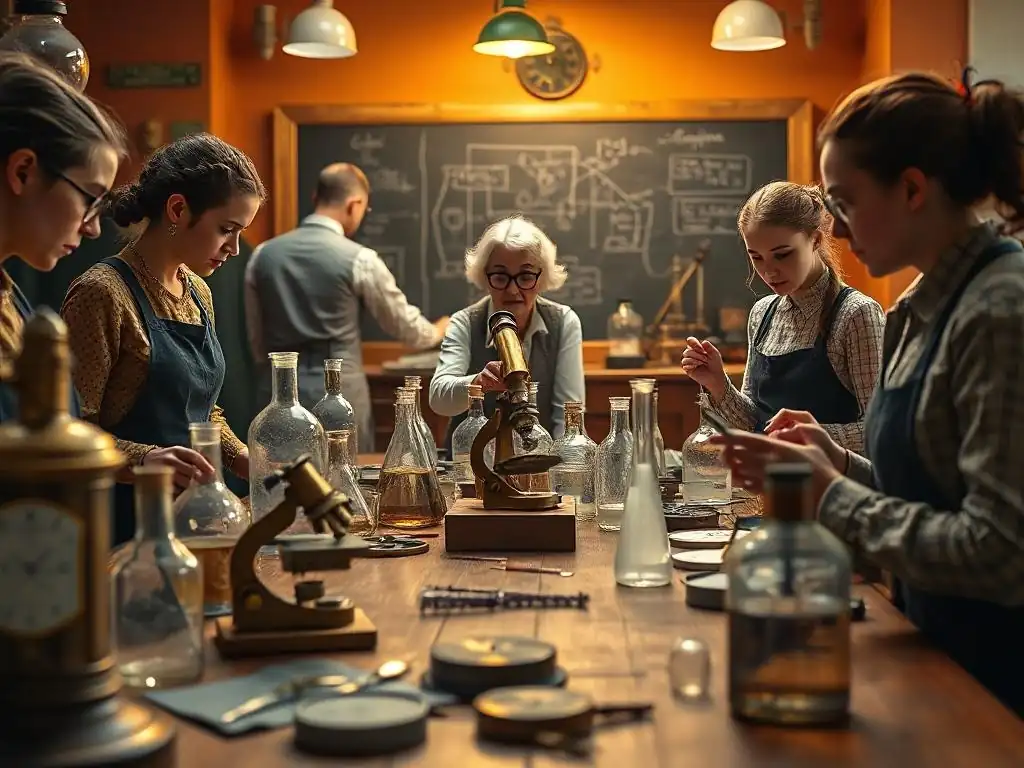
Welcome to WomenInScienceHistory.com!
Delve into the untold stories of scientific innovation and resilience. Did you know that women educators have played a pivotal, yet often unacknowledged, role in shaping critical thinking within the scientific community? Our latest article, "Question Everything: How Women Educators Fostered Critical Thinking in Science," explores this fascinating cross-disciplinary theme, revealing how these pioneers defied societal norms and ignited intellectual curiosity. Discover their methods, their impact, and the lasting legacy they've left on the world of science – a legacy that continues to inspire us today. Explore further and uncover the profound influence of women educators critical thinking science.
- Introduction: Women in Science Education and the Power of Critical Thinking
- Early Pioneers: Laying the Foundation for Critical Inquiry in Science Education
- Overcoming Obstacles: Challenges Faced by Women Educators Promoting Critical Thinking
- Case Studies: Examples of Women Educators Inspiring Critical Thought in Science
- Strategies and Techniques: How Women Educators Cultivated Critical Thinking Skills
- The Legacy: The Enduring Impact of Women Educators on Science and Critical Thought
- The Ongoing Need for Critical Thinking in Science Education
- Conclusion: Celebrating Women Educators and Their Contribution to Critical Thinking in Science
-
Frequently Asked Questions
- What role did women educators play in promoting critical thinking in science historically?
- What challenges did women educators face in promoting critical thinking in science?
- How did women educators contribute to making science more accessible?
- Can you give an example of a woman educator who significantly fostered critical thinking in science?
- Why is it important to highlight the contributions of women educators in science history?
- Final Reflection: Empowering Minds Through Inquiry
- Empower Your Curiosity: Ignite Scientific Inquiry!
Introduction: Women in Science Education and the Power of Critical Thinking
Highlighting the Role of Women Educators in Science History
Throughout history, the narrative of scientific advancement often centers on groundbreaking discoveries and the individuals who made them. However, an equally vital, yet frequently understated, contribution comes from the women educators critical thinking science who shaped future generations of scientists and informed citizens. These pioneering women, often operating within restrictive societal norms, did more than just impart factual knowledge; they cultivated an essential intellectual skill: critical thinking.
They understood that true scientific progress isn't born from rote memorization but from a spirit of inquiry, skepticism, and analytical rigor. Their pedagogical approaches laid the groundwork for a more dynamic and investigative form of science education.
Despite facing significant barriers, female educators consistently championed innovative teaching methods that empowered students to challenge assumptions, analyze data, and formulate independent conclusions. Their influence extended beyond the classroom walls, impacting public understanding of scientific principles and fostering a new appreciation for evidence-based reasoning. By focusing on how to think, rather than just what to think, these women ensured that their students were equipped not just with scientific facts, but with the intellectual tools necessary to navigate complex scientific challenges and contribute meaningfully to the field.
The Importance of Critical Thinking in Scientific Advancement
Critical thinking is the cornerstone of scientific advancement, serving as the intellectual engine that drives discovery, innovation, and problem-solving. It involves the objective analysis and evaluation of information to form a judgment, encompassing skills such as identifying biases, evaluating evidence, recognizing logical fallacies, and constructing well-reasoned arguments. In science, this translates to scrutinizing experimental results, questioning established paradigms, and devising new hypotheses based on careful observation and data interpretation. Without a robust capacity for critical inquiry, science would stagnate, relying solely on dogma rather than dynamic exploration.
The ability to think critically allows scientists to move beyond superficial observations, delve into underlying mechanisms, and challenge conventional wisdom when evidence dictates. For instance, the transition from a geocentric to a heliocentric model of the universe required profound critical thinking to re-evaluate centuries-old assumptions based on new observational data. Women educators critical thinking science recognized this fundamental need, embedding these analytical skills into their curricula, ensuring that their students were prepared not just to replicate experiments, but to conceive new ones, interpret complex data sets, and ultimately push the boundaries of scientific knowledge.
Early Pioneers: Laying the Foundation for Critical Inquiry in Science Education
Maria Mitchell: Championing Observational Astronomy and Independent Thought
Maria Mitchell (1818-1889), America's first professional female astronomer and the first woman elected to the American Academy of Arts and Sciences, was a formidable advocate for observational astronomy and independent thought in education. As a professor of astronomy at Vassar College from 1865 to 1888, Mitchell eschewed rote learning, instead requiring her students to spend countless hours at the college's observatory.
Her pedagogical approach was revolutionary for its time, emphasizing direct observation, data collection, and independent analysis over textbook memorization. For example, her students were expected to use the telescope to identify celestial objects, track their movements, and even calculate orbits, directly engaging with the raw data of the cosmos.
Mitchell’s insistence on hands-on experience directly fostered critical thinking. She believed that true scientific understanding came from personal engagement with phenomena, not from passively absorbing information. Her students were encouraged to question, to verify, and to formulate their own conclusions based on empirical evidence. This method not only cultivated a deep understanding of astronomical principles but also instilled a profound sense of scientific inquiry and intellectual independence, shaping a generation of women who were not just knowledgeable, but also capable of original scientific thought.
Ellen Swallow Richards: Integrating Scientific Principles into Domestic Science and Public Health
Ellen Swallow Richards (1842-1911) was a trailblazer who applied scientific principles to everyday life, fundamentally transforming fields like domestic science and public health. As the first woman admitted to the Massachusetts Institute of Technology (MIT) in 1871, she pioneered the application of chemistry and biology to practical problems.
At the Woman's Laboratory at MIT, which she established in 1876, Richards trained women not just in scientific theory, but in how to use scientific analysis to solve real-world issues, such as analyzing water quality, food adulteration, and sanitation. Her teaching pushed students to critically examine their environments and apply rigorous scientific methods to improve living conditions.
Richards' approach was a powerful example of women educators critical thinking science in action. She taught her students to collect samples, conduct chemical tests, interpret data, and propose evidence-based solutions for public health challenges. For instance, her work on water quality led to the first water purity standards in Massachusetts, directly influencing public health policy. By integrating scientific inquiry into seemingly mundane aspects of life, Richards empowered women to become critical consumers of information and active agents of change, demonstrating that scientific reasoning was essential for informed decision-making in all facets of society.
Overcoming Obstacles: Challenges Faced by Women Educators Promoting Critical Thinking
Women educators who championed critical thinking in science often faced pervasive gender bias, significantly hindering their efforts and limiting their influence. In the late 19th and early 20th centuries, scientific fields were overwhelmingly male-dominated, and women's intellectual capabilities, particularly in rigorous disciplines like science, were frequently underestimated or dismissed.
Female educators often struggled to secure permanent, well-compensated positions, adequate laboratory space, or access to the same research opportunities as their male counterparts. For example, many early female professors were confined to "women's colleges" or less prestigious departments, which, while offering a platform, sometimes isolated them from mainstream scientific discourse and resources.
This bias also manifested in the perception of their teaching methods. When women educators introduced innovative, inquiry-based approaches designed to foster critical thinking, they sometimes encountered skepticism or resistance from traditional institutions and male colleagues who viewed such methods as less "rigorous" or simply unconventional. They often had to work harder to prove the validity of their pedagogical strategies, constantly demonstrating the effectiveness of their student-centered, analytical approaches in environments that favored didactic instruction and rote learning.
Limited Resources and Support for Innovative Teaching Methods
Beyond gender bias, women educators critical thinking science often contended with severely limited resources and institutional support for their innovative teaching methods. Fostering critical thinking in science typically requires hands-on experiments, access to well-equipped laboratories, up-to-date scientific literature, and opportunities for field research or interdisciplinary collaboration. Historically, such resources were disproportionately allocated to male-dominated institutions or departments, leaving women's colleges and female faculty with meager budgets and outdated equipment. This disparity forced women educators to be exceptionally resourceful and creative.
For instance, without access to advanced microscopes or chemical reagents, they might emphasize detailed observational drawing, discussions of scientific papers, or problem-solving exercises based on theoretical scenarios. This lack of material support sometimes meant that inquiry-based learning had to be adapted to available resources, relying more heavily on intellectual engagement and conceptual understanding rather than extensive practical experimentation. Despite these financial and logistical constraints, their unwavering commitment to cultivating critical thinking meant they found alternative ways to engage students in rigorous scientific analysis, often through intense intellectual discourse and the application of scientific principles to everyday life.
Case Studies: Examples of Women Educators Inspiring Critical Thought in Science
Rachel Carson: Challenging Conventional Wisdom on Pesticides and Environmental Science
While not a traditional classroom educator, Rachel Carson (1907-1964) stands as one of the most impactful women educators critical thinking science has ever known, profoundly educating the public and scientific community through her groundbreaking book, Silent Spring (1962). Carson, a marine biologist and writer, meticulously assembled scientific evidence to challenge the widely accepted and largely unquestioned use of synthetic pesticides like DDT.
Her work compelled an entire generation to critically examine humanity's impact on the natural environment, sparking the modern environmental movement. She didn't merely present facts; she taught the world how to critically analyze scientific claims, particularly those promoted by industry, and their far-reaching ecological and societal implications.
Carson's narrative was a masterclass in fostering critical thought. She used accessible language to explain complex ecological concepts, detailing how pesticides bioaccumulated through food chains and affected non-target species, including birds and humans. Her powerful prose, combined with rigorously researched scientific data, forced a re-evaluation of established agricultural practices and challenged the prevailing belief that nature could be infinitely controlled without consequence. Silent Spring exemplifies how one individual, through careful research and compelling communication, can inspire millions to question conventional wisdom and demand a more critical, evidence-based approach to environmental stewardship.
Mae Jemison: Inspiring Critical Thinking Through STEM Outreach and Space Exploration
Dr. Mae Jemison (b. 1956), the first African American woman to travel to space, continues to be a powerful force among women educators critical thinking science in the 21st century. Following her historic mission aboard the Space Shuttle Endeavour in 1992, Jemison transitioned her passion for exploration into a commitment to science literacy and STEM education.
She founded The Jemison Group, Inc., a technology consulting firm, and the Dorothy Jemison Foundation for Excellence, through which she launched groundbreaking educational initiatives like the "Look Up" program. This program encourages students to critically observe their surroundings, engage with scientific phenomena, and apply inquiry-based learning to everyday experiences.
Jemison consistently emphasizes that science is not an exclusive domain for a select few but a fundamental way of understanding the world accessible to everyone. Through her lectures and outreach, she challenges students to think beyond memorized facts, to question assumptions, and to approach problems with the curiosity and rigor of a scientist.
Her work with the 100 Year Starship project, aiming to achieve human interstellar travel within the next century, exemplifies her commitment to fostering long-term critical thinking and problem-solving on a grand scale, inspiring future generations to "take the world apart and put it back together again" with scientific inquiry.
Strategies and Techniques: How Women Educators Cultivated Critical Thinking Skills

Promoting Active Learning and Student-Led Discussions
A hallmark of women educators critical thinking science is their consistent emphasis on active learning and student-led discussions, moving beyond traditional lecture-based instruction. Instead of simply delivering information, these educators designed curricula that required students to actively participate in their own learning process. At institutions like Wellesley College and Bryn Mawr, often staffed by pioneering female faculty, seminar-style classes became common. Here, students were encouraged to present their research findings, defend their arguments, and engage in vigorous debates, fostering an environment where ideas were challenged and refined through peer interaction.
For example, in biology courses, students might be tasked with designing their own experiments to test a hypothesis, collecting data, and then presenting their results to the class for critical review. This approach not only solidified their understanding of scientific methodology but also developed their ability to articulate complex ideas, analyze data critically, and respond to intellectual challenges. By shifting the focus from passive reception to active engagement, these educators empowered students to take ownership of their learning and develop independent analytical skills essential for scientific inquiry.
Encouraging Questioning and Challenging Existing Theories
A fundamental strategy employed by women educators critical thinking science was to instill a healthy skepticism and courage to question existing theories, even those considered well-established. They understood that scientific progress often arises from challenging the status quo and not accepting information at face value. These educators modeled this critical approach themselves, often daring to question prevailing scientific dogmas or societal norms that limited scientific inquiry. They created classroom environments where asking "why" and "how" was not just permitted but actively encouraged.
This involved teaching students to scrutinize the evidence behind scientific claims, to identify potential biases, and to formulate their own hypotheses based on logical reasoning and empirical data. For instance, in geology, a female professor might present a widely accepted theory on rock formation and then challenge students to identify its weaknesses or propose alternative explanations based on new observations. This approach empowered students to become independent thinkers, capable of rigorous scientific analysis and the intellectual bravery required to push the boundaries of knowledge, even if it meant contradicting established views.
Fostering Scientific Reasoning and Problem-Solving Abilities
Beyond foundational knowledge, women educators critical thinking science meticulously cultivated students' scientific reasoning and problem-solving abilities. They designed educational experiences that required students to apply scientific principles to solve complex, often real-world, problems, moving beyond theoretical understanding to practical application. This involved breaking down intricate problems into manageable components, identifying relevant variables, developing systematic methodologies for investigation, and interpreting results with precision.
In fields such as early environmental science or public health, female educators frequently presented case studies or simulated scenarios that demanded data-driven solutions. For example, students might be given a set of data related to a local water contamination issue and tasked with identifying the source, proposing remediation strategies, and justifying their recommendations based on scientific evidence.
This process honed their analytical skills, their capacity for logical deduction, and their ability to devise innovative solutions. By focusing on the practical application of scientific thought, these educators ensured their students were not just knowledgeable, but also adept at applying critical thinking to address tangible challenges.
The Legacy: The Enduring Impact of Women Educators on Science and Critical Thought
Inspiring Future Generations of Female Scientists and Educators
The pioneering efforts of women educators critical thinking science created an invaluable legacy by inspiring countless future generations of female scientists and educators. By demonstrating intellectual rigor, challenging societal norms, and fostering a spirit of inquiry, these women served as powerful role models in fields where women were historically underrepresented.
Their dedication to inquiry-based learning and critical analysis empowered young women to envision themselves not just as learners of science, but as active participants and contributors. For example, the students of Maria Mitchell at Vassar College went on to become accomplished astronomers and educators at other institutions, effectively spreading her pedagogical philosophy and creating a ripple effect that extended for decades.
This direct mentorship and the creation of supportive educational environments were crucial. When young women saw female professors excelling in scientific disciplines and passionately teaching critical thought, it demystified the scientific process and demonstrated that a career in science was not only attainable but also intellectually fulfilling. Many of these inspired students, in turn, became educators themselves, perpetuating the cycle of inquiry-based learning and ensuring that future students, particularly girls, continued to receive an education that prioritized independent thought and scientific reasoning.
Shaping the Landscape of Science Education for the Better
The innovative teaching methods championed by women educators critical thinking science profoundly shaped the broader landscape of science education. What began as necessity or conviction within often marginalized institutions eventually gained recognition as best practices, influencing mainstream pedagogical approaches. Their emphasis on hands-on learning, student-led inquiry, problem-solving, and interdisciplinary connections moved away from didactic instruction towards a more engaging and effective model of scientific literacy. Elements like active learning, peer discussion, and the application of scientific principles to real-world problems, once championed by these pioneering women, are now considered foundational to modern STEM education.
For instance, the integration of laboratory work as a central component of science education, rather than a mere demonstration, owes much to early educators who insisted on students' direct engagement with scientific processes. Similarly, the focus on environmental science and public health as critical areas of study was significantly advanced by women who applied scientific rigor to societal issues. Their legacy is evident in curricula that prioritize critical analysis, evidence-based reasoning, and the development of lifelong scientific literacy for all students, regardless of gender.
The Ongoing Need for Critical Thinking in Science Education
Addressing Contemporary Challenges in Science Literacy
In the 21st century, the critical thinking skills championed by women educators critical thinking science are more vital than ever in addressing contemporary challenges in science literacy. We live in an era characterized by an overwhelming volume of information, much of which is unverified or misleading.
Complex global issues like climate change, public health crises (such as pandemics), and the proliferation of misinformation demand a populace capable of discerning credible scientific information from pseudoscience or outright falsehoods. Without strong critical thinking abilities, individuals are susceptible to misinformation, making it difficult to make informed decisions about personal health, environmental policies, or societal well-being.
The foundational approaches of these historical educators provide a powerful blueprint for current science education. By teaching students to evaluate sources, analyze data, identify logical fallacies, and understand the scientific method, we equip them to navigate the complexities of modern scientific discourse. This empowers them not just to consume scientific information, but to critically assess it, contributing to a more informed and scientifically literate society capable of tackling the pressing issues of our time.
Empowering Students to Become Informed and Engaged Citizens through Critical Analysis
Beyond the academic realm, fostering critical thinking in science education empowers students to become informed and engaged citizens, a societal benefit that women educators critical thinking science inherently understood. Scientific issues are no longer confined to laboratories; they permeate public policy, economic decisions, and daily life. Whether it's understanding vaccine efficacy, evaluating energy policies, or discerning the environmental impact of consumer choices, a critical understanding of scientific principles is essential for responsible citizenship.
These educators recognized that science education was not merely about preparing future scientists, but about equipping all individuals to understand and contribute to the world around them. By teaching students to analyze scientific arguments, understand data, and recognize the limitations of scientific knowledge, they cultivated a citizenry capable of thoughtful deliberation on complex issues. This civic dimension of critical thinking ensures that individuals can engage meaningfully with scientific debates, hold leaders accountable for evidence-based policies, and advocate for solutions that benefit both society and the planet.
Conclusion: Celebrating Women Educators and Their Contribution to Critical Thinking in Science
Recognizing the Unsung Heroes of Science Education
The history of science is rich with stories of groundbreaking discoveries, but it is equally shaped by the dedicated women educators critical thinking science who, often from behind the scenes, nurtured the intellectual foundations of future generations. These unsung heroes faced significant barriers, from gender bias to limited resources, yet their unwavering commitment to fostering critical thought revolutionized how science was taught and perceived.
They moved beyond rote memorization, instilling in their students a profound sense of inquiry, skepticism, and analytical rigor. Their legacy is not just in the scientific breakthroughs made by their students, but in the fundamental shift towards a more dynamic, engaging, and intellectually challenging approach to science education.
By emphasizing active learning, encouraging questioning, and cultivating problem-solving abilities, these women ensured that their students were equipped with the essential tools for navigating complex scientific landscapes. Their contributions laid the groundwork for a more inclusive and effective science education system, proving that intellectual curiosity and rigorous analysis are paramount for scientific progress.
Looking Ahead: Ensuring a Future Where Critical Thinking Thrives in Science Classrooms
As we look ahead, the enduring lessons from women educators critical thinking science remain profoundly relevant. In an increasingly complex world, where scientific literacy is paramount for informed decision-making and societal progress, the ability to think critically about scientific information is non-negotiable. It is crucial to continue supporting and celebrating educators, particularly women in STEM, who champion inquiry-based learning and cultivate a spirit of questioning in their students. Ensuring that critical thinking thrives in science classrooms means fostering environments where curiosity is rewarded, evidence is paramount, and intellectual independence is highly valued.
By embracing the legacy of these pioneering women, we can build a future where science education empowers every student to challenge assumptions, analyze data with discernment, and contribute meaningfully to the advancement of knowledge and the well-being of society. The "question everything" ethos, so diligently fostered by these remarkable educators, is a timeless principle vital for both scientific discovery and an informed, engaged citizenry.
Frequently Asked Questions
What role did women educators play in promoting critical thinking in science historically?
Women educators often championed inquiry-based learning and hands-on experimentation, fostering critical thinking skills. They encouraged students to question assumptions and explore scientific concepts independently.
What challenges did women educators face in promoting critical thinking in science?
They faced gender biases that limited their access to resources and influence in academic institutions. They also encountered resistance to progressive teaching methods that emphasized critical thinking over rote memorization.
How did women educators contribute to making science more accessible?
Women educators often focused on making science relevant to everyday life and accessible to diverse learners. They used innovative teaching methods to engage students who might otherwise have been excluded from science education.
Can you give an example of a woman educator who significantly fostered critical thinking in science?
While the specific names vary, many women educators emphasized active learning and student-led investigations. They encouraged students to analyze data and draw their own conclusions.
Why is it important to highlight the contributions of women educators in science history?
Recognizing their contributions helps correct historical imbalances and provides role models for aspiring scientists and educators. It also underscores the importance of diverse perspectives in shaping scientific thought.
Final Reflection: Empowering Minds Through Inquiry
The journey through the contributions of women educators in science reveals a profound truth: critical thinking is not just a skill, but a legacy. Their dedication to questioning everything, challenging assumptions, and fostering intellectual curiosity has shaped generations of scientists and thinkers, and its relevance is more vital than ever in today's complex world.
This legacy continues to resonate, influencing how we approach science education and empowering individuals to become active participants in shaping their own understanding. The impact of these women extends beyond the classroom, fostering a culture of inquiry that encourages us to challenge established norms and seek deeper understanding. The important thing is not to stop questioning. Curiosity has its own reason for existing.
- Albert Einstein, a sentiment perfectly embodied by these pioneering women.
Let us, therefore, embrace the spirit of inquiry championed by these remarkable women. Question everything, not with cynicism, but with a genuine desire to learn, to understand, and to contribute to a world where critical thinking empowers us all to build a brighter future.
Empower Your Curiosity: Ignite Scientific Inquiry!
Thank you for exploring the remarkable contributions of women educators in fostering critical thinking in science. Now, let's translate that inspiration into action!
- Challenge assumptions! Actively question the scientific information you encounter today – in news, social media, or everyday conversations.
- Share this article with a friend or colleague to spark a conversation about the importance of critical thinking in science education.
- Reflect on a time when questioning the status quo led to a breakthrough for you, personally.
What's one scientific "fact" you've always accepted but are now inspired to investigate further?