
Dorothy Vaughan: The Pioneering AfricanAmerican Mathematician & NASA Supervisor

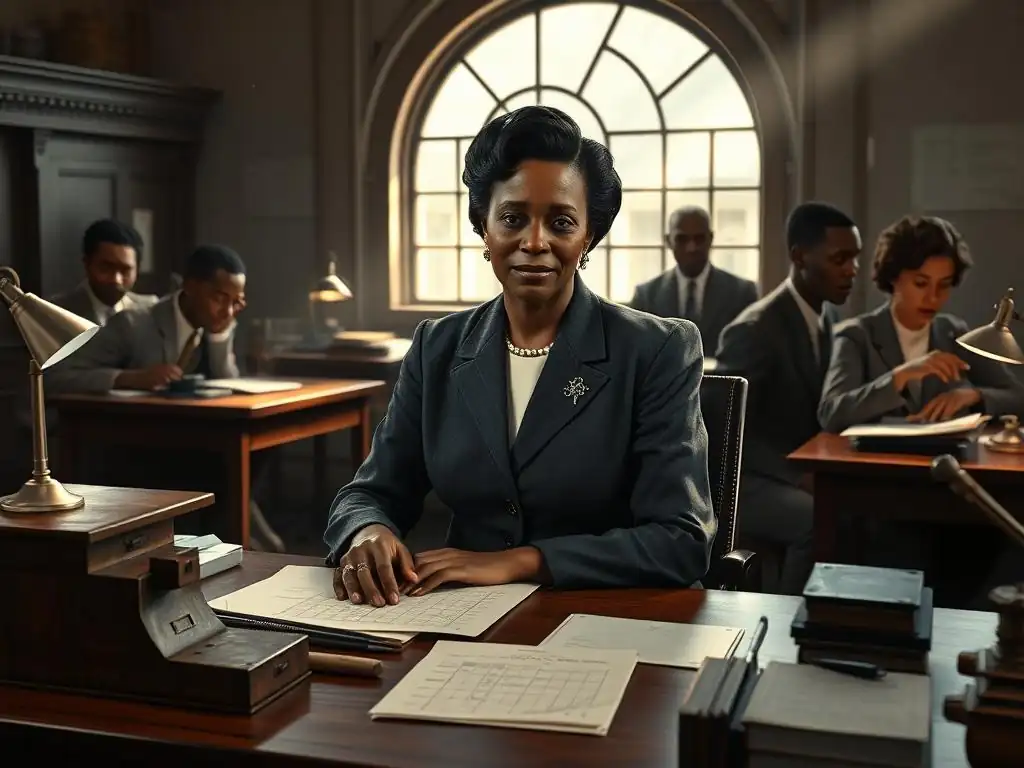
Welcome to WomenInScienceHistory.com! Prepare to be inspired by the untold stories of brilliant women who shaped the scientific landscape. This month, we delve into the extraordinary life and career of Dorothy Vaughan, a pioneering African American mathematician and NASA supervisor. Discover how she broke barriers and made invaluable contributions to the space race, paving the way for future generations. Intrigued? Join us as we uncover her remarkable journey!
- Introduction: Remembering Dorothy Vaughan, a NASA Trailblazer
- Early Life and Education of Dorothy Vaughan
- Dorothy Vaughan's Career at NACA/NASA: A Journey of Innovation
- Dorothy Vaughan and the Transition to Electronic Computing
- Dorothy Vaughan's Key Achievements and Contributions
- The Significance of "Hidden Figures" and Dorothy Vaughan's Portrayal
- Dorothy Vaughan's Awards, Recognition, and Lasting Impact
- Conclusion: Celebrating Dorothy Vaughan's Enduring Contribution to NASA and Space Science
- Frequently Asked Questions
- Final Reflection: The Enduring Legacy of Hidden Figures
- Ignite Your Inner Pioneer: Take the Next Step!
Introduction: Remembering Dorothy Vaughan, a NASA Trailblazer
Highlighting Dorothy Vaughan's Legacy in Space Exploration
Dorothy Vaughan stands as a pivotal figure in the early days of American space exploration, a trailblazer whose mathematical prowess and leadership were instrumental in the success of critical missions. As one of the original "human computers" at the National Advisory Committee for Aeronautics (NACA), which later became NASA, her contributions were foundational to the complex calculations required for aeronautical research and the nascent space program. Her work directly supported the development of advanced aircraft and, crucially, the initial steps into space, including the manned missions of Project Mercury.
Vaughan's impact extended beyond mere computation; she was a supervisor, a mentor, and an advocate for her team of African American women mathematicians. Her foresight in embracing the advent of electronic computing ensured that NASA's computational capabilities evolved, bridging the gap between manual calculations and the era of digital programming. This adaptability and leadership cemented her legacy as a key contributor to America's triumphs in the Space Race.
Why Dorothy Vaughan's Story Matters: Representation in STEM
The story of Dorothy Vaughan is more than just a historical account of scientific achievement; it is a powerful narrative about representation, perseverance, and breaking barriers in STEM fields. In an era marked by deeply entrenched racial segregation and gender discrimination, Vaughan navigated a professional landscape designed to limit her opportunities. Her success, therefore, serves as a testament to her extraordinary intellect and unwavering determination.
Her biography illuminates the often-overlooked contributions of women, particularly women of color, in science and engineering. By highlighting Dorothy Vaughan's journey, we not only correct historical omissions but also provide inspiring role models for future generations. Her story underscores the vital importance of diversity and inclusion in scientific endeavors, demonstrating that talent and innovation thrive when all individuals are given the chance to contribute, irrespective of their background.
Early Life and Education of Dorothy Vaughan
Dorothy Vaughan's Academic Achievements: A Foundation in Mathematics
Dorothy Johnson Vaughan was born on September 20, 1910, in Kansas City, Missouri, and later moved with her family to Morgantown, West Virginia. From a young age, her exceptional aptitude for mathematics was evident. She excelled academically, graduating from high school at the remarkably young age of 15. Her intellectual promise earned her a full tuition scholarship to Wilberforce University, a prestigious historically Black college located in Wilberforce, Ohio.
In 1929, Dorothy Vaughan graduated from Wilberforce University with a Bachelor of Arts degree in mathematics. Following her graduation, she embarked on a career as a mathematics teacher at Robert Russa Moton High School in Farmville, Virginia. For 14 years, she dedicated herself to educating young minds, a period that honed her analytical skills and her ability to explain complex concepts, qualities that would prove invaluable in her later career at NASA.
Overcoming Racial Barriers in Education: Dorothy Vaughan's Early Challenges
Dorothy Vaughan's pursuit of higher education and a professional career took place during a period of severe racial segregation in the United States, particularly in the South. African Americans faced systemic discrimination that limited access to quality education, employment opportunities, and social mobility. Despite her academic brilliance, the societal barriers of the early 20th century presented significant challenges to her aspirations.
Her attendance at Wilberforce University, a historically Black institution, was a reflection of the segregated educational system of the time. While these institutions provided vital educational opportunities for Black students, they also underscored the lack of equitable access to mainstream universities. Vaughan’s perseverance through these societal constraints, from her early education to her teaching career, laid the groundwork for her groundbreaking achievements in a field that was largely inaccessible to African American women.
Dorothy Vaughan's Career at NACA/NASA: A Journey of Innovation
From Teacher to "Human Computer": Dorothy Vaughan Joins Langley
In 1943, amidst the heightened demands of World War II, Dorothy Vaughan made a significant career shift, joining the National Advisory Committee for Aeronautics (NACA) at Langley Memorial Aeronautical Laboratory in Hampton, Virginia. The war effort created an urgent need for skilled mathematicians to perform complex calculations for aeronautical research, leading NACA to recruit women, including African American women, for these roles. Vaughan, leaving her teaching position, became one of these "human computers."
Upon her arrival at Langley, Dorothy Vaughan was assigned to the segregated West Area Computing Unit. This unit was specifically designated for African American female mathematicians, working under the strictures of Jim Crow laws that mandated separate facilities for Black and white employees. Despite these discriminatory practices, Vaughan and her colleagues performed vital calculations for aircraft design, wind tunnel tests, and flight trajectories, directly contributing to the war effort and laying the groundwork for the future space program.
Dorothy Vaughan and the West Area Computing Unit
The West Area Computing Unit, where Dorothy Vaughan spent a significant portion of her career, was an essential component of NACA's research operations. This unit comprised a group of exceptionally talented African American women mathematicians who performed the intricate calculations that were critical to the success of various aeronautical and later, space-related projects. Their work involved everything from processing data from wind tunnel experiments to calculating the aerodynamic performance of aircraft designs.
These "human computers" were responsible for solving complex equations manually, often using slide rules, mechanical calculators, and their keen mathematical minds. The accuracy and speed of their computations were paramount, as any error could have significant consequences for the experimental data and the safety of test flights. Dorothy Vaughan and her colleagues in this unit were the mathematical backbone of much of NACA's groundbreaking research.
Leading the West Area Computing Unit: Dorothy Vaughan's Supervisory Role
Dorothy Vaughan's exceptional aptitude and leadership qualities quickly became apparent. In 1949, she was promoted to acting head of the West Area Computing Unit, and within a few months, her position was made permanent. This promotion marked a historic milestone: Dorothy Vaughan became the first African American woman to achieve a supervisory role at NACA, and subsequently at NASA. Her responsibilities included managing the day-to-day operations of the unit, assigning tasks to her team, and meticulously reviewing their calculations.
Beyond her administrative duties, Vaughan was a staunch advocate for the women under her supervision. She championed their professional development, pushing for equal pay and promotions, and ensuring they received credit for their critical work. Her leadership was not just about managing tasks; it was about nurturing talent and creating opportunities for other African American women in a highly challenging and often discriminatory environment.
Breaking Barriers: Dorothy Vaughan's Impact on African American Women at NASA
Dorothy Vaughan's leadership at the West Area Computing Unit had a profound and lasting impact on the trajectory of African American women in science and engineering at NASA. By securing her supervisory position, she broke a significant racial and gender barrier, demonstrating that Black women possessed the intellect and capability to hold leadership roles in a highly technical field. Her unit became a pipeline for talented mathematicians, many of whom, under her guidance, went on to achieve significant careers within the agency.
She actively mentored her team, preparing them for the evolving technological landscape. As the era of electronic computers dawned, Vaughan ensured her "human computers" were not rendered obsolete by teaching them new programming languages, most notably FORTRAN. This proactive approach guaranteed their continued relevance and employment, directly contributing to the agency's computational strength and providing a vital pathway for African American women into the burgeoning field of computer science within NASA.
Dorothy Vaughan and the Transition to Electronic Computing
Embracing FORTRAN: Dorothy Vaughan's Adaptation to Computer Programming
As the 1950s progressed, the field of computation was on the cusp of a revolutionary change: the transition from manual calculations performed by "human computers" to electronic digital computers. Dorothy Vaughan, with her characteristic foresight and adaptability, recognized that this technological shift was inevitable and would fundamentally transform the work of her unit. Instead of resisting this change, she embraced it wholeheartedly.
Vaughan took it upon herself to learn the intricacies of FORTRAN (Formula Translation), one of the earliest high-level programming languages, which was becoming crucial for the new IBM mainframes. More impressively, she then dedicated herself to teaching FORTRAN to her entire team of human computers. This proactive initiative ensured that the women of the West Area Computing Unit remained indispensable to NASA's operations, transitioning seamlessly from performing manual calculations to becoming proficient computer programmers.
Dorothy Vaughan's Contributions to the SCOUT Launch Vehicle Program
Dorothy Vaughan's expertise in both manual computation and early computer programming proved invaluable to several critical NASA projects, including the development of the SCOUT (Solid Controlled Orbital Utility Test) launch vehicle program. The SCOUT rocket was a four-stage solid-propellant launch vehicle designed to launch small satellites and conduct atmospheric research. It was a vital tool for NASA's early space endeavors, providing a cost-effective means of placing payloads into orbit.
Vaughan and her team were instrumental in performing the complex calculations required for the SCOUT program, which included determining trajectories, analyzing aerodynamic performance, and ensuring the stability of the rockets during launch and ascent. Their precise mathematical work was crucial for the successful deployment of early satellites and probes, directly contributing to NASA's ability to conduct scientific experiments in space and demonstrate its orbital capabilities during the intense Space Race.
Dorothy Vaughan's Role in NASA's Space Race Initiatives
The era of the Space Race was defined by intense competition between the United States and the Soviet Union to achieve milestones in space exploration. Dorothy Vaughan's mathematical contributions were directly tied to America's efforts to gain an advantage in this monumental contest. Her unit's calculations were fundamental to Project Mercury, the United States' first human spaceflight program, which aimed to put an American astronaut into orbit.
The precision required for calculating orbital trajectories, re-entry paths, and launch windows for missions like Alan Shepard's suborbital flight in 1961 and John Glenn's historic orbital flight in 1962 was immense. Dorothy Vaughan's team provided these critical figures, working tirelessly to ensure the safety of the astronauts and the success of the missions. Her work, though often behind the scenes, was a cornerstone of NASA's ability to achieve its ambitious goals and ultimately win the Space Race.
Dorothy Vaughan's Key Achievements and Contributions
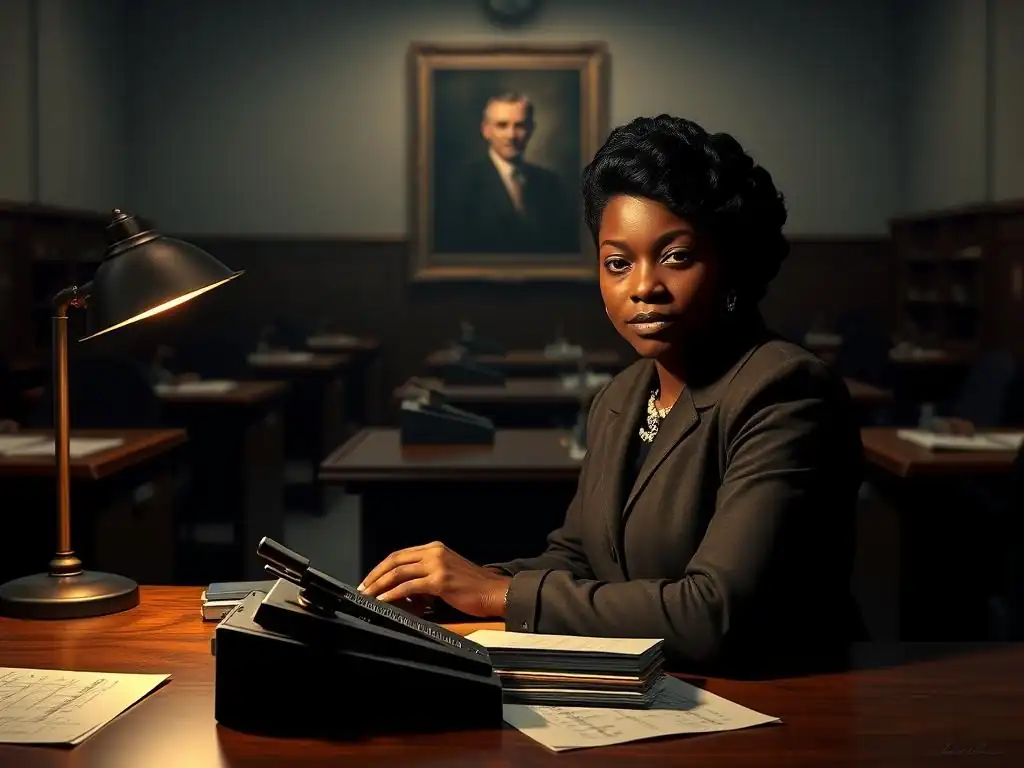
Calculating Trajectories: The Precision of Dorothy Vaughan's Mathematics
One of Dorothy Vaughan's most significant and enduring contributions to NACA and NASA was the meticulous and precise calculation of trajectories for various aeronautical and space vehicles. From the early days of aircraft design to the pioneering launches of the Space Race, every flight path, every re-entry angle, and every orbital trajectory required complex mathematical solutions. Vaughan and her unit were the masters of this intricate work.
Their calculations were not merely academic exercises; they directly impacted the safety of pilots and astronauts, the efficiency of aircraft, and the success of multi-million dollar space missions. For instance, determining the precise parabolic arc for Alan Shepard's Freedom 7 flight, or the orbital parameters for John Glenn's Friendship 7 mission, demanded accuracy down to fractions of a degree and second. This unparalleled precision, born from countless hours of manual computation and later, programming, was a hallmark of Dorothy Vaughan's mathematical brilliance.
Mentoring and Empowering Female Mathematicians at NASA
Beyond her technical contributions, Dorothy Vaughan's legacy is profoundly shaped by her role as a mentor and an empowering leader. As the supervisor of the West Area Computing Unit, she was not just a manager but a dedicated advocate for her team of African American women. She understood the systemic barriers they faced and actively worked to dismantle them, both within her unit and by advocating for her team's professional advancement within the broader agency.
Vaughan made it a priority to ensure her team members were not only skilled in their current roles but also prepared for future opportunities. Her initiative to teach them FORTRAN programming was a direct reflection of this commitment, allowing them to transition into the burgeoning field of computer science. Many of the women she mentored, including Katherine Johnson and Mary Jackson, went on to achieve remarkable careers at NASA, a testament to Vaughan's impactful guidance and unwavering support for their growth.
Dorothy Vaughan's Impact on NASA's Computational Capabilities
Dorothy Vaughan's most transformative impact on NASA's computational capabilities stemmed from her visionary leadership during the agency's critical transition from manual to electronic computing. While others might have viewed the rise of digital computers as a threat to their roles, Vaughan saw an opportunity for evolution and growth. Her proactive approach in educating herself and her entire unit in computer programming languages like FORTRAN was revolutionary.
This strategic move ensured that NASA had a highly skilled workforce ready to operate the new IBM electronic computers, which were essential for processing the vast amounts of data generated by advanced aeronautical and space missions. Her unit's seamless transition meant that NASA could rapidly scale its computational power, accelerating research and development during a period of intense innovation. Dorothy Vaughan essentially built a bridge between two eras of computation, cementing her indelible mark on the technological foundation of NASA.
The 2016 film "Hidden Figures," based on Margot Lee Shetterly's non-fiction book of the same name, played a monumental role in bringing Dorothy Vaughan's extraordinary story, alongside those of Katherine Johnson and Mary Jackson, to a global audience. Before the film's release, the contributions of these pioneering African American women mathematicians at NASA were largely unknown to the general public. The movie transformed them from historical footnotes into celebrated figures.
"Hidden Figures" vividly depicted the challenges of racial segregation and gender discrimination that Vaughan and her colleagues faced daily at Langley. It highlighted their intellectual brilliance, their perseverance, and their indispensable role in the success of the early American space program, particularly Project Mercury. The film's popularity sparked widespread interest in their lives and careers, finally giving these unsung heroes the recognition they long deserved.
The Accuracy and Impact of Dorothy Vaughan's Representation
While "Hidden Figures" took some dramatic liberties for narrative purposes, its portrayal of Dorothy Vaughan, played by Octavia Spencer, largely captured the essence of her character, her leadership, and her significant contributions. The film accurately depicted her as a strong, intelligent, and compassionate supervisor who fiercely advocated for her team. It showcased her foresight in recognizing the importance of electronic computers and her initiative in teaching FORTRAN to her unit, which was a pivotal moment in her career.
The film's impact was profound, prompting a broader conversation about diversity, inclusion, and the often-overlooked contributions of marginalized groups in scientific and historical narratives. It inspired countless individuals, especially young women and minorities, to pursue careers in STEM, demonstrating that talent and dedication can overcome even the most formidable societal barriers. The portrayal of Dorothy Vaughan NASA mathematician biography was a powerful catalyst for this renewed appreciation.
Beyond the Film: Continuing Dorothy Vaughan's Legacy
While "Hidden Figures" was instrumental in introducing Dorothy Vaughan's story to millions, her legacy extends far beyond the confines of the cinematic narrative. The film served as a crucial starting point, encouraging deeper exploration into her life and the broader history of African American women in science. Her story continues to be a subject of academic research, educational programs, and public discourse, ensuring that her contributions are not relegated to a single cinematic moment.
Continuing Dorothy Vaughan's legacy involves recognizing that her achievements were not isolated incidents but part of a larger, systemic struggle for equality and recognition. It means actively promoting the stories of other unsung women in science and advocating for policies that foster genuine diversity and inclusion in STEM fields today. Her biography remains a powerful reminder of the enduring importance of historical accuracy and the ongoing need to celebrate all who contribute to scientific progress.
Dorothy Vaughan's Awards, Recognition, and Lasting Impact
Honoring Dorothy Vaughan: Awards and Posthumous Recognition
During much of her career, Dorothy Vaughan's pioneering work, like that of many "human computers," remained largely unheralded by major public awards, a common fate for many women and minorities in STEM during that era. Her recognition was often within the internal structures of NACA and NASA, where her leadership and mathematical precision were highly valued. However, in the decades following her retirement and particularly after the release of "Hidden Figures," posthumous recognition for Dorothy Vaughan has grown significantly.
In 2019, Dorothy Vaughan was posthumously awarded the Congressional Gold Medal, the highest civilian honor in the United States, alongside Katherine Johnson, Mary Jackson, and Christine Darden, for their contributions to NASA during the Space Race. Additionally, NASA's Langley Research Center, where she worked for nearly three decades, has honored her by naming a building in her honor: the Dorothy Vaughan Computer Lab. These recognitions affirm her enduring legacy as a pivotal figure in American scientific history.
Dorothy Vaughan's Influence on Future Generations of Scientists and Engineers
Dorothy Vaughan's biography continues to exert a profound influence on future generations of scientists, engineers, and mathematicians. Her story is a powerful testament to the idea that talent, perseverance, and intellectual curiosity can overcome immense societal obstacles. For young women, particularly women of color, her journey from a segregated teaching position to a supervisory role at NASA offers an inspiring blueprint for pursuing ambitious careers in STEM.
Her foresight in embracing computer programming and her dedication to mentoring her team underscore the importance of adaptability and collaboration in scientific fields. By showcasing her unwavering commitment to excellence despite the pervasive discrimination she faced, Dorothy Vaughan serves as a beacon, encouraging students to pursue their passions in mathematics and science, and to challenge existing boundaries in their respective fields.
Dorothy Vaughan: A Symbol of Perseverance and Excellence in STEM
Dorothy Vaughan stands as an enduring symbol of perseverance and excellence in STEM. Her career at NACA and NASA spanned nearly three decades, witnessing and actively participating in some of the most transformative periods in aeronautical and space history. Throughout this time, she consistently demonstrated not only exceptional mathematical ability but also remarkable resilience in the face of racial segregation and gender discrimination.
Her dedication to her work, her commitment to her team, and her willingness to adapt to new technologies exemplify the qualities of a true pioneer. Dorothy Vaughan's life story is a powerful narrative that challenges historical narratives that often omit the contributions of marginalized groups. She represents the unyielding spirit of those who, against all odds, forged paths of innovation and opened doors for future generations, proving that intellectual brilliance knows no racial or gender boundaries.
Conclusion: Celebrating Dorothy Vaughan's Enduring Contribution to NASA and Space Science
Dorothy Vaughan: A Legacy of Mathematical Brilliance and Leadership
Dorothy Vaughan's extraordinary journey from a mathematics teacher to a pioneering NASA supervisor and programmer is a testament to her profound mathematical brilliance and unparalleled leadership. Her work as a "human computer" and later as a FORTRAN programmer provided the indispensable calculations that underpinned crucial aeronautical research and the ambitious missions of the early Space Race. Her foresight in embracing electronic computing ensured that NASA's computational capabilities evolved seamlessly, cementing her integral role in the agency's technological advancement.
Beyond her technical contributions, Vaughan's legacy is defined by her unwavering commitment to her team. As the first African American woman to hold a supervisory position at NACA, she broke significant barriers and became a tireless advocate for the women under her charge, mentoring them, fighting for their recognition, and preparing them for the future of computer science. Her impact on the careers of countless African American women at NASA is a cornerstone of her enduring influence.
Inspiring Future Generations: The Dorothy Vaughan Story
The Dorothy Vaughan story is far more than a historical account; it is a powerful source of inspiration for future generations of scientists, engineers, and leaders. Her biography serves as a compelling narrative of perseverance against systemic discrimination, demonstrating that dedication and intellect can overcome even the most formidable societal obstacles. By highlighting her achievements and her unwavering commitment to excellence, her story encourages young people, particularly women and minorities, to pursue their passions in STEM fields without reservation.
Dorothy Vaughan's life reminds us of the critical importance of diversity and inclusion in scientific progress, illustrating that innovation thrives when all voices are heard and all talents are utilized. Her enduring legacy as a Dorothy Vaughan NASA mathematician biography continues to illuminate the path for those who seek to make their mark on the world, proving that true scientific breakthroughs are often the result of unsung heroes whose contributions are finally brought to light.
Frequently Asked Questions
What is Dorothy Vaughan best known for?
Dorothy Vaughan is best known for her work as a NASA mathematician and for being one of the first African American supervisors at the agency. She played a vital role in the early days of the space program.
What challenges did Dorothy Vaughan face in her career?
As an African American woman in the mid-20th century, Dorothy Vaughan faced significant discrimination and segregation in the workplace. She had to work hard to overcome these barriers and prove her abilities.
What was Dorothy Vaughan's role with the "human computers" at NASA?
Dorothy Vaughan supervised the West Area Computing unit, a group of African American female mathematicians who performed complex calculations for NASA's engineering projects. They were often referred to as "human computers."
How did Dorothy Vaughan adapt to technological advancements in her field?
Dorothy Vaughan embraced new technologies, learning FORTRAN programming to prepare herself and her team for the transition from manual calculations to electronic computing, ensuring their continued relevance at NASA.
Sharing Dorothy Vaughan's story is important because it highlights the contributions of often overlooked women in STEM and inspires future generations to pursue careers in science and technology, regardless of their background.
The story of Dorothy Vaughan, once hidden in the shadows of NASA's history, now shines brightly as a testament to resilience and brilliance. Her journey, from a mathematics teacher to a pioneering NASA supervisor, resonates deeply in a world still striving for true equity and representation in STEM fields. The challenges she overcame, and the barriers she shattered, serve as a powerful reminder that talent knows no color and that opportunity should be accessible to all.
Dorothy Vaughan's impact extends far beyond her calculations and supervisory role. Her story is a powerful symbol of the contributions of countless African American women who were instrumental in shaping America's scientific advancements, yet often went unrecognized. Her legacy continues to inspire young women, particularly women of color, to pursue their passions in STEM, knowing that they too can break barriers and achieve greatness. There is no protocol... for breaking into a man's world.
This quote, though not directly attributed to Vaughan, encapsulates the spirit of her generation and the obstacles they faced, making her story all the more poignant and relevant today.
As we reflect on Dorothy Vaughan's extraordinary life and career, let us remember that her story is not just a historical account, but a call to action. Let us strive to create a world where every individual, regardless of their background, has the opportunity to reach their full potential.
Consider how you can actively champion diversity and inclusion in your own sphere of influence, ensuring that future generations will not have to fight the same battles that Dorothy Vaughan so bravely faced. Let her legacy be a catalyst for change, inspiring us to build a more equitable and just future for all.
Ignite Your Inner Pioneer: Take the Next Step!
Thank you for exploring the inspiring story of Dorothy Vaughan with us! We hope you've gained a new appreciation for her remarkable contributions to science and her impact on women in STEM. Now, let's turn that inspiration into action.
- Share Dorothy's story with at least three people you know to help amplify her legacy and inspire future generations.
- Research other hidden figures in STEM and learn about their groundbreaking achievements.
- Consider mentoring a young woman interested in science or mathematics – you could be the spark that ignites her passion!
What steps will you take to honor Dorothy Vaughan's legacy and champion women in STEM?