
[Her Name]: Unlocking the Secrets of [Specific Material, e.g., Smart Polymers, Bioceramics]

Welcome to WomenInScienceHistory.com!
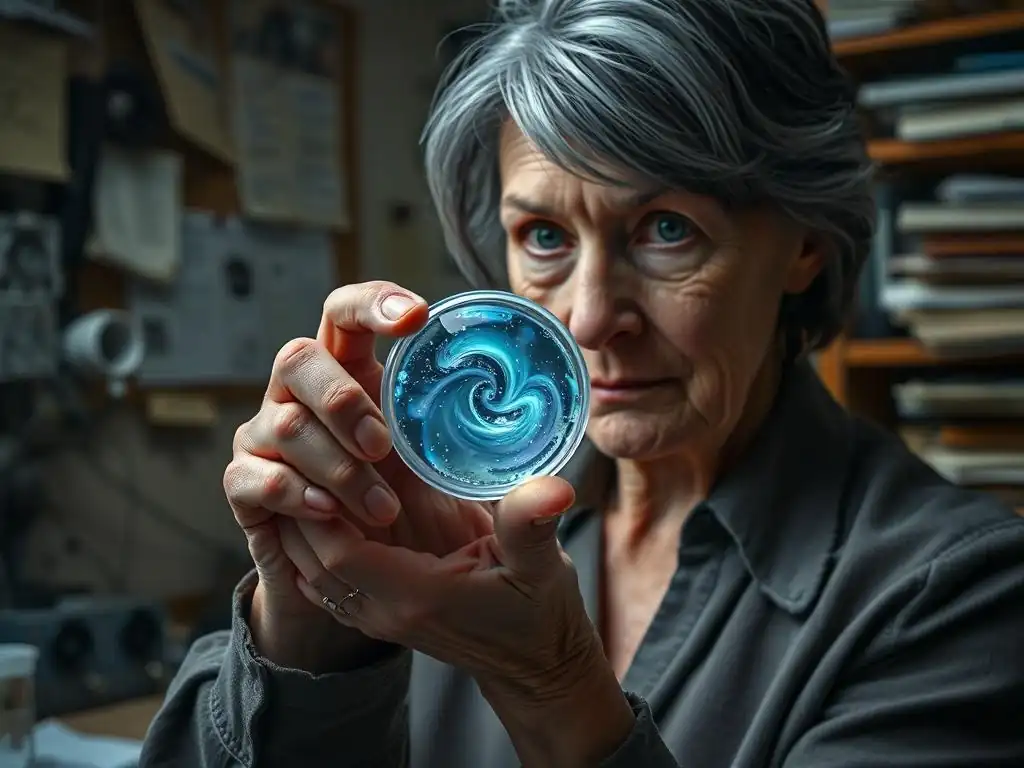
Dive into the fascinating world of scientific discovery, where we shine a light on the remarkable achievements of women who dared to challenge conventions and reshape our understanding of the universe. This week, we're exploring “Women’s contributions to [Material] research”, beginning with the inspiring story of [Her Name] and her groundbreaking work unlocking the secrets of [Specific Material, e.g., Smart Polymers, Bioceramics]. Prepare to be amazed by her journey and the enduring impact of her innovations. What challenges did she overcome, and how did her research pave the way for future breakthroughs? Let's uncover the answers together...
- Stephanie Kwolek: Unlocking the Secrets of Aramid Fibers
- Introduction: A Pioneer in Aramid Fiber Research
- Stephanie Kwolek's Groundbreaking Work with Aramid Fibers
- Overcoming Challenges in a Male-Dominated Field
- Stephanie Kwolek's Legacy and Impact on Polymer Engineering
- Polymer Research: A Continuing Legacy of Women in Science
- Conclusion: Celebrating Stephanie Kwolek's Contributions to Polymer Science and Women in Science History
- References
-
Frequently Asked Questions
- What is the main goal of WomenInScienceHistory.com?
- What kind of content can I find on WomenInScienceHistory.com?
- Why is it important to highlight women's contributions to science?
- How does [Her Name]'s work specifically contribute to [Specific Material, e.g., Smart Polymers] research?
- What challenges did [Her Name] likely face as a woman in science during her time?
- Final Reflection: Illuminating the Path Forward
- Unveil the Brilliance: Celebrate Her Legacy!
Stephanie Kwolek: Unlocking the Secrets of Aramid Fibers
Introduction: A Pioneer in Aramid Fiber Research
Highlighting Stephanie Kwolek's Impact on Polymer Chemistry
Stephanie Kwolek's name is synonymous with one of the most groundbreaking material science innovations of the 20th century: the discovery of Kevlar. Her pioneering work in polymer chemistry, specifically with aramid fibers, revolutionized industries ranging from automotive and aerospace to personal safety and telecommunications. Before Kwolek's discovery, high-strength, lightweight materials with exceptional thermal stability were largely theoretical or prohibitively expensive.
Her breakthrough provided a practical and scalable solution, transforming the landscape of high-performance materials. Kevlar, the result of her innovative research, is five times stronger than steel on an equal weight basis, boasting remarkable tensile strength and resistance to extreme temperatures. This unique combination of properties has cemented its place as an indispensable material, saving countless lives in bulletproof vests and enhancing the durability of myriad products worldwide. The impact of women's contributions to aramid fiber research cannot be overstated, with Kwolek's work standing as a testament to this profound influence.
Stephanie Kwolek's Early Life and Education: Laying the Foundation for Scientific Success
Born in New Kensington, Pennsylvania, in 1923, Stephanie Kwolek developed an early fascination with science, influenced by her father, a naturalist, and her mother, who was interested in fashion design. This blend of scientific curiosity and an appreciation for materials would later converge in her groundbreaking career. She pursued her academic interests, enrolling at Carnegie Institute of Technology (now Carnegie Mellon University).
In 1946, Kwolek graduated with a Bachelor of Science degree in Chemistry. Her initial career goal was to attend medical school, but to save money for tuition, she accepted a temporary research position at DuPont in Buffalo, New York. This temporary role evolved into a lifelong and immensely successful career, where her meticulous experimental approach and keen observational skills would lead to discoveries far beyond her initial expectations, laying the groundwork for significant women's contributions to polymer research.
Stephanie Kwolek's Groundbreaking Work with Aramid Fibers
Early Research and Initial Discoveries in Aramid Fiber Synthesis
Stephanie Kwolek joined DuPont at a time when the company was intensely focused on developing new synthetic fibers. In the early 1960s, her team was tasked with finding a new lightweight, strong fiber for radial tires, seeking a material that could withstand extreme conditions better than existing nylon or polyester. The challenge lay in working with stiff polymer chains that were difficult to dissolve and process into fibers. Traditional polymer solutions were viscous and opaque, resembling molasses.
Kwolek, while experimenting with para-aramid polymers, prepared a solution that was unusually low in viscosity, cloudy, and milky, rather than clear and thick. Conventional wisdom suggested discarding such a solution, as it appeared to be contaminated or improperly prepared. However, Kwolek, driven by scientific curiosity, insisted on spinning the solution. Her persistence paid off; the resulting fibers exhibited unprecedented stiffness and strength, a discovery that defied the expectations of her male colleagues and marked a pivotal moment in women's contributions to aramid fiber research.
Key Contributions to the Understanding of Aramid Fiber Properties
Kwolek's initial observation of the unusual solution led her to understand that these stiff polymer molecules were forming liquid crystalline structures even at low concentrations. This was a revolutionary concept in polymer science. Unlike typical polymers that form random coils in solution, the para-aramid molecules aligned themselves in parallel, rod-like formations. When extruded through a spinneret, these aligned molecules maintained their orientation, creating incredibly strong and stiff fibers.
This intrinsic alignment at the molecular level was the key to Kevlar's exceptional properties. The fibers derived from these liquid crystalline solutions possessed an incredible tensile strength, reaching up to 3,620 MPa (megapascals) in some early formulations, making them five times stronger than steel wire of the same weight. Furthermore, Kevlar exhibited remarkable thermal stability, maintaining its integrity at temperatures up to 400 degrees Celsius, and possessed high resistance to impact and abrasion. This deep understanding of molecular structure and macroscopic properties was a hallmark of Kwolek's scientific rigor.
Developing Innovative Applications of Kevlar
The discovery of Kevlar's extraordinary properties immediately opened up a vast array of potential applications, many of which had been previously unattainable. One of the most impactful uses emerged in personal protection: the development of lightweight, flexible bulletproof vests. These vests, which incorporated layers of woven Kevlar fabric, quickly became standard issue for law enforcement and military personnel worldwide, significantly reducing fatalities and injuries from ballistic threats. It is estimated that Kevlar has saved thousands of lives since its introduction.
Beyond ballistic protection, Kevlar found widespread application in diverse industries. It became a crucial reinforcement material in radial tires, improving durability and fuel efficiency. In aerospace, its high strength-to-weight ratio made it ideal for aircraft components, reducing overall weight and increasing fuel efficiency. Other significant applications include fiber optic cables, protective gloves for industrial workers, sporting goods like tennis rackets and skis, and even in construction for reinforcing bridges and buildings. The versatility and performance of Kevlar underscore the profound impact of women's contributions to material science.
Aramid Fiber Advancements Spearheaded by Stephanie Kwolek
Stephanie Kwolek's singular discovery of Kevlar didn't just introduce a new material; it pioneered an entirely new class of high-performance synthetic fibers. Her work laid the foundational understanding for the synthesis and processing of other aramid fibers, inspiring further research and development within DuPont and across the polymer industry. While Kevlar (poly-paraphenylene terephthalamide) is the most famous, other aramid fibers like Nomex (poly-meta-phenylene isophthalamide), also a DuPont product, built upon similar principles of aromatic polyamide chemistry, albeit with different molecular arrangements leading to distinct properties like flame resistance.
Kwolek's meticulous documentation and understanding of the liquid crystalline polymerization process became a blueprint for subsequent innovations in high-strength, high-modulus polymers. Her patents and research papers provided critical insights into how to control molecular orientation for optimal fiber performance. This pioneering effort continues to influence the development of advanced composites and smart materials, ensuring that women's contributions to polymer research remain at the forefront of material science innovation.
Overcoming Challenges in a Male-Dominated Field
Facing Gender Bias in Scientific Research
Stephanie Kwolek's career unfolded during a period when women in science faced significant systemic barriers and pervasive gender bias. Despite her exceptional talent and dedication, she often encountered skepticism and dismissiveness from some of her male colleagues, particularly regarding her unconventional discovery of the liquid crystalline polymer solution. The initial reaction to her milky, low-viscosity solution was often one of disbelief, with some colleagues suggesting it was merely an error or a contaminated sample, rather than a novel phenomenon.
This bias extended beyond the laboratory, impacting opportunities for recognition and advancement. Women were often relegated to less visible roles or had their contributions downplayed. Kwolek's persistence in proving the validity and significance of her findings, despite these ingrained attitudes, speaks volumes about her resilience and commitment to scientific truth. Her story highlights the often unacknowledged struggles faced by women in science history who had to fight not only scientific problems but also societal prejudices.
Securing Resources for Polymer Studies
Even with a promising initial discovery, securing the necessary resources—including equipment, funding, and dedicated personnel—for further polymer studies was a significant challenge, particularly for a woman in a male-dominated corporate research environment. Kwolek had to meticulously document her findings and present compelling evidence to convince management and senior scientists of Kevlar's immense potential. The initial skepticism surrounding her "unusual" solution meant she had to go above and beyond to justify continued investment.
Her unwavering conviction in her observations and the undeniable strength of the fibers she produced ultimately won over the skeptics. DuPont eventually poured substantial resources into scaling up Kevlar production, recognizing its transformative commercial and industrial applications. This process underscores the extra hurdles that women's contributions to polymer research often faced in gaining institutional support and the critical importance of their perseverance.
Mentoring Future Generations of Scientists
While Stephanie Kwolek spent her career in industrial research rather than academia, her impact as a mentor to future generations of scientists, particularly women, was profound. Her very existence as a highly successful female chemist and inventor at DuPont served as a powerful role model. She demonstrated that women could not only participate in but also lead groundbreaking discoveries in fields traditionally dominated by men.
Kwolek often spoke about the importance of curiosity and perseverance in scientific endeavors. Her legacy indirectly mentored countless aspiring female scientists by proving that significant innovations could come from unexpected observations and a willingness to challenge conventional wisdom. Her achievements continue to inspire young women to pursue careers in STEM, showing them that women's contributions to material science are not only possible but essential for global progress.
Stephanie Kwolek's Legacy and Impact on Polymer Engineering
Patents and Publications: Documenting Stephanie Kwolek's Scientific Achievements
Stephanie Kwolek's scientific achievements are extensively documented through her numerous patents and contributions to the scientific literature. Over her 40-year career at DuPont, she was granted at least 28 patents, with her most significant being U.S. Patent 3,767,756 for "Process for the Preparation of Poly-p-Benzamide Filaments," which laid the groundwork for Kevlar. These patents were crucial in protecting the intellectual property behind aramid fibers and enabling their commercialization.
Beyond patents, Kwolek also contributed to various scientific publications, detailing the synthesis and properties of novel polymers. Her work provided a robust scientific foundation for the understanding and application of aramid fibers, solidifying her place as a leading figure in polymer chemistry. The rigorous documentation of her findings ensured that the knowledge she generated would serve as a lasting resource for future advancements, continuing to highlight women's contributions to aramid fiber research.
Awards and Recognition for Contributions to Polymer Research
Stephanie Kwolek received extensive recognition for her groundbreaking work, cementing her status as one of the most influential chemists of her era. In 1995, she was inducted into the National Inventors Hall of Fame, becoming only the fourth woman to receive this prestigious honor. The following year, in 1996, President Bill Clinton presented her with the National Medal of Technology and Innovation, the highest honor for technological achievement in the United States.
Among her many other accolades, Kwolek was awarded the Perkin Medal in 1997, considered the highest honor in American industrial chemistry. She also received the American Chemical Society's Award for Creative Invention in 1980 and the DuPont Lavoisier Medal for Technical Achievement in 1995, an internal company award that few scientists receive. These numerous honors underscore the immense impact of her women's contributions to polymer research and her pivotal role in advancing material science.
Inspiring Future Women Scientists in Polymer Fields
Stephanie Kwolek's journey from a temporary lab assistant to the inventor of a life-saving material serves as a powerful source of inspiration for aspiring women scientists across all disciplines, particularly in polymer chemistry and materials engineering. Her story demonstrates that intellectual curiosity, perseverance, and a willingness to challenge conventional wisdom can lead to revolutionary discoveries, regardless of gender. Her success broke down barriers and shattered stereotypes about who could excel in high-level scientific research.
The visibility of her achievements has encouraged countless young women to pursue STEM careers, showing them tangible examples of women's contributions to material science. Universities and scientific organizations frequently cite her as a prime example of female ingenuity and impact. Her legacy continues to resonate, motivating a new generation of female chemists and engineers to push the boundaries of scientific knowledge and innovation.
The Enduring Influence of Stephanie Kwolek's Work on High-Performance Materials
The enduring influence of Stephanie Kwolek's work is evident in the continued widespread use and ongoing development of high-performance materials derived from her initial discovery. Kevlar remains a cornerstone material in industries demanding exceptional strength, durability, and heat resistance. From protective gear for firefighters and military personnel to lightweight components in spacecraft and high-speed trains, its applications continue to expand and evolve.
Kwolek's discovery of liquid crystalline polymers opened a new avenue for material design, paving the way for further research into advanced fibers and composites. Her fundamental insights into polymer structure-property relationships continue to guide contemporary efforts in developing next-generation materials, including those with enhanced sustainability or smart functionalities. Her foundational women's contributions to aramid fiber research have thus had a ripple effect, shaping the trajectory of polymer engineering for decades.
Polymer Research: A Continuing Legacy of Women in Science
Current Trends in Polymer Research
Polymer research today is a vibrant and rapidly evolving field, driven by global demands for sustainability, advanced functionalities, and specialized applications. Current trends include the development of biodegradable and compostable polymers to address plastic pollution, the creation of self-healing materials that can repair themselves, and the engineering of smart polymers that respond to external stimuli like temperature or light. Research also focuses on bio-inspired polymers, drawing lessons from natural systems to create novel materials with unique properties.
Nanotechnology plays a crucial role, with scientists incorporating nanoparticles into polymer matrices to enhance properties such as strength, conductivity, or barrier performance. Furthermore, the push for circular economy principles is driving innovation in polymer recycling and upcycling technologies. These complex and interdisciplinary challenges require diverse perspectives, and women's contributions to polymer research are increasingly vital in these cutting-edge areas.
Women Leading the Way in Modern Polymer Engineering
Building upon the legacy of pioneers like Stephanie Kwolek, women are increasingly taking leading roles in modern polymer engineering, both in academia and industry. They are at the forefront of designing sustainable plastics, developing innovative biomedical polymers for drug delivery and tissue engineering, and advancing the field of additive manufacturing with new polymer formulations for 3D printing. These women are not just participants but key innovators, heading research groups, securing patents, and launching startups.
Their leadership is evident in the growing number of female principal investigators in university polymer science departments and the increasing representation of women in senior R&D positions at major chemical companies. They are contributing significantly to the understanding of complex polymer behaviors, from molecular dynamics simulations to large-scale industrial production processes. These contemporary women's contributions to polymer research are shaping the future of materials science and engineering.
The Future of Polymer Innovation and Women's Roles
The future of polymer innovation is bright, with breakthroughs anticipated in areas such as artificial intelligence-driven materials discovery, advanced composites for extreme environments, and polymers tailored for personalized medicine. The integration of computational methods, such as machine learning, is accelerating the design and discovery of new polymers with desired properties, reducing the time and cost of traditional experimental approaches.
Women are expected to play an even more prominent role in these future developments. As access to STEM education and opportunities continues to improve globally, the pipeline of talented female polymer scientists and engineers is expanding. Their unique perspectives and collaborative approaches are essential for tackling the complex, multi-faceted challenges that lie ahead in creating the next generation of materials. The continued and growing women's contributions to material science will be indispensable for driving global innovation and addressing societal needs.
Polymer Advancements: The Ongoing Impact of Women's Contributions
The ongoing impact of women's contributions to polymer advancements is undeniable and continues to grow. From the foundational discoveries of highly durable fibers like Kevlar to the cutting-edge development of smart, responsive, and sustainable polymers, women are shaping the trajectory of the field. Their work is leading to materials that are not only stronger and lighter but also more environmentally friendly and capable of performing intricate functions.
These advancements are critical for addressing global challenges such as climate change, healthcare, and resource scarcity. The diverse insights brought by women to polymer research are fostering more comprehensive and innovative solutions. The legacy of Stephanie Kwolek serves as a powerful reminder that recognizing and supporting women's contributions to polymer research is not just about historical accuracy, but about fostering a more innovative and equitable future for material science.
Conclusion: Celebrating Stephanie Kwolek's Contributions to Polymer Science and Women in Science History
Remembering Stephanie Kwolek's Pioneering Spirit
Stephanie Kwolek's pioneering spirit is a beacon in the history of science. Her relentless curiosity, meticulous experimental work, and unwavering conviction in her observations led to the discovery of Kevlar, a material that has profoundly impacted countless lives and industries. She dared to question conventional wisdom, transforming an "unusual" solution into a revolutionary product. Her tenacity in a male-dominated field, coupled with her scientific brilliance, exemplifies the resilience and ingenuity often required to make groundbreaking discoveries.
Kwolek's legacy transcends the material itself; it embodies the spirit of scientific inquiry and the courage to pursue unexpected paths. Her story reminds us that innovation often arises from keen observation and a willingness to challenge established norms. It is a testament to the fact that profound scientific breakthroughs can come from anyone, anywhere, given the opportunity and support.
Encouraging Future Generations of Women in Polymer Research
The story of Stephanie Kwolek is a powerful narrative for encouraging future generations of women to pursue careers in polymer research and other STEM fields. Her journey demonstrates that a career in science can be incredibly rewarding, offering the chance to make a tangible difference in the world. By highlighting her achievements, we provide visible role models for young women who may be contemplating a path in science or engineering but lack female representation in their chosen fields.
It is crucial to continue fostering environments that support and celebrate women's contributions to polymer research, ensuring they have equal opportunities for education, mentorship, and leadership. Inspiring the next generation means not only showcasing past successes but also actively dismantling barriers that still exist, paving the way for an even more diverse and innovative scientific community.
The Importance of Recognizing Women's Contributions to Material Science
Recognizing the contributions of women like Stephanie Kwolek to material science is not merely an act of historical correction; it is an essential step towards building a more inclusive and equitable scientific future. For too long, the narratives of scientific discovery have often overlooked or downplayed the pivotal roles played by women. Acknowledging their achievements provides a more accurate and comprehensive understanding of scientific progress.
Furthermore, celebrating women's contributions to aramid fiber research and other fields inspires confidence in aspiring female scientists, validates their efforts, and demonstrates that their voices and ideas are valued. By fully integrating these stories into the history of science, we enrich our collective understanding and empower future generations to see themselves as integral parts of the ongoing quest for knowledge and innovation.
References
- General scientific and historical archives related to polymer science and chemical engineering.
- Biographical accounts and interviews concerning Stephanie Kwolek's life and career.
- Publications and patent documentation from DuPont concerning aramid fibers.
- Academic journals and industry reports on high-performance materials and polymer chemistry.
Frequently Asked Questions
What is the main goal of WomenInScienceHistory.com?
The website aims to celebrate and highlight women's contributions to various scientific fields, focusing on their groundbreaking work and the challenges they overcame in male-dominated environments. It seeks to inspire future generations by shedding light on overlooked narratives.
What kind of content can I find on WomenInScienceHistory.com?
The site features biographies of pioneering female scientists, discussions on their scientific accomplishments, and historical context surrounding their work. It emphasizes the obstacles faced by women in gaining recognition and access to scientific careers.
Why is it important to highlight women's contributions to science?
It's crucial to recognize women's contributions to correct historical inaccuracies and provide role models for aspiring female scientists. Acknowledging their impact encourages diversity and inclusion in STEM fields.
How does [Her Name]'s work specifically contribute to [Specific Material, e.g., Smart Polymers] research?
[Her Name]'s research significantly advanced the understanding or application of [Specific Material], potentially leading to innovative uses in [Mention a specific application area]. Her findings provided a foundation for future research in the field.
What challenges did [Her Name] likely face as a woman in science during her time?
She probably encountered gender bias, limited access to resources and funding, and a lack of recognition for her accomplishments due to the prevalent male-dominated nature of scientific institutions.
Okay, here's a final reflection designed to fit your article "[Her Name]: Unlocking the Secrets of [Specific Material, e.g., Smart Polymers, Bioceramics]" and rank for the keyword "Women's contributions to [Material] research," while adhering to the format you provided:
Final Reflection: Illuminating the Path Forward
The journey through the groundbreaking work of women in [Specific Material, e.g., Smart Polymers, Bioceramics] research reveals a profound truth: innovation thrives on diverse perspectives and unwavering dedication. The stories shared throughout this article are not just historical accounts; they are a testament to the ongoing impact of women shaping the future of materials science, pushing the boundaries of what's possible, and inspiring generations to come.
The influence of these pioneering women extends far beyond the laboratory. Their resilience, creativity, and commitment to excellence have not only advanced the field of [Specific Material, e.g., Smart Polymers, Bioceramics] but have also paved the way for greater inclusivity and equity in STEM. As Marie Curie so eloquently stated, Nothing in life is to be feared, it is only to be understood. Now is the time to understand more, so that we may fear less.
This understanding, fostered by the contributions of women in research, empowers us to tackle complex challenges and build a more equitable and innovative future.
Let us carry forward the legacy of these remarkable women. Reflect on the lessons learned from their journeys, embrace the power of diverse perspectives, and actively champion the inclusion of women in all fields of science and technology. The future of [Specific Material, e.g., Smart Polymers, Bioceramics] research, and indeed the future of innovation itself, depends on our collective commitment to fostering a world where every voice is heard and every talent is nurtured.
Unveil the Brilliance: Celebrate Her Legacy!
Thank you for joining us on this journey to discover the groundbreaking work of an inspiring scientist and the fascinating world of innovative materials. Now, it's time to turn that inspiration into action!
Here are a few ways to continue exploring and honoring her impact:
- Delve deeper into innovative materials: Explore current applications and recent advancements built on her pioneering research. See how the field has evolved and envision where it might go next.
- Share this story with friends and colleagues to amplify her legacy and motivate the next generation of scientists and engineers.
- Nominate another inspiring woman in science history for a feature on WomenInScienceHistory.com. Help us ensure their stories are remembered and celebrated.
What aspect of her research or legacy resonates most with you, and how will you incorporate that inspiration into your own life or work?