
Before 'UserFriendly': Women Designing Early Computer Output and Interfaces

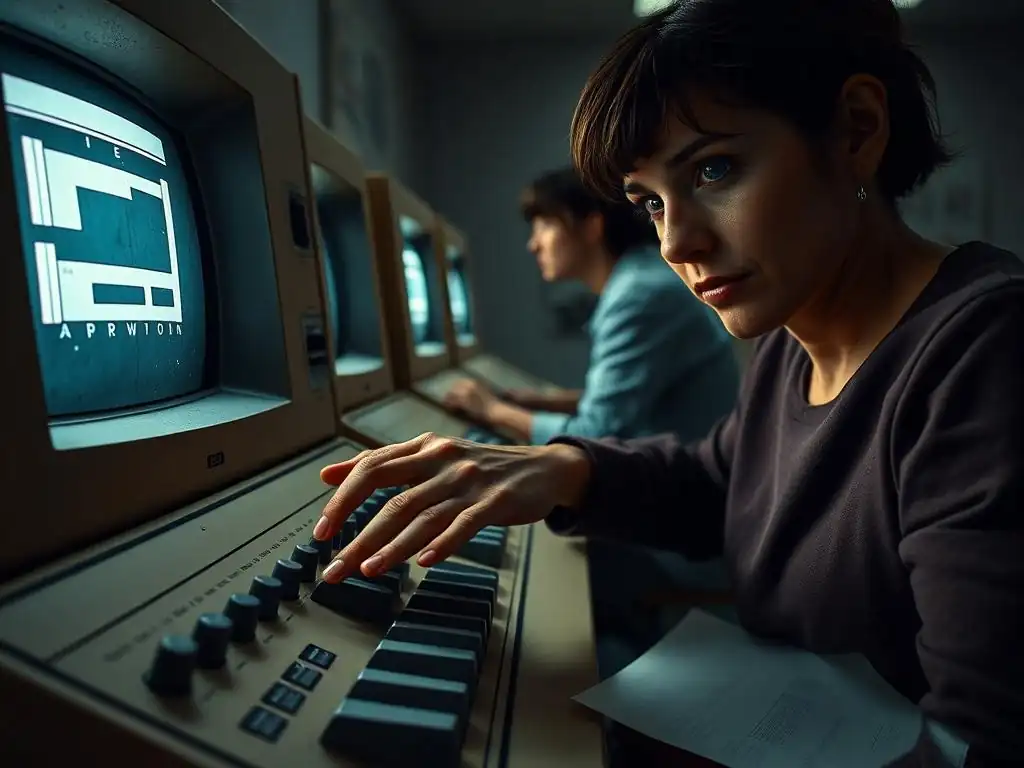
Welcome to WomenInScienceHistory.com!
Dive into the fascinating world of women in science and uncover the stories of extraordinary individuals who shaped our understanding of the world. Ever wondered who pioneered the connection between humans and machines before the concept of "user-friendly" even existed? Explore our latest article on Women Designing Early Computer Interfaces and discover the unsung heroines who laid the foundation for the digital age. Prepare to be inspired by their ingenuity and resilience!
- Introduction: Unveiling the Forgotten Contributions of Women in Early Computer Interface Design
- The Pioneers: Women Who Shaped Early Computer Output
- Designing for the User: Early Principles of Human-Computer Interaction
- The Challenges Faced by Women in a Male-Dominated Field
- Case Studies: Examining Specific Examples of Women's Interface Design Work
- The Legacy: Inspiring Future Generations of Women in Computer Science
- Conclusion: Recognizing the Vital Role of Women in Shaping Early Computer Experiences
-
Frequently Asked Questions
- What specific challenges did women face while designing early computer interfaces?
- Why is it important to highlight the contributions of women in designing early computer interfaces?
- What kind of impact did women have on the development of early computer output and interfaces?
- Where can I find more information about specific women who designed early computer interfaces?
- How did the contributions of women influence the future of computer interface design?
- Final Reflection: Honoring the Unseen Architects of the Digital Age
- Unveil Your Inner Tech Pioneer!
Introduction: Unveiling the Forgotten Contributions of Women in Early Computer Interface Design
Highlighting the Role of Women in Shaping Early Computer-Human Interaction
In the nascent stages of computing, long before the terms "user interface" or "user experience" were formally coined, the very first interactions between humans and machines were being painstakingly crafted. This foundational work, often overlooked in historical accounts, was significantly shaped by women who served as "computers," programmers, and operators. Their hands-on engagement with complex machinery and abstract logic directly influenced how data was input, processed, and ultimately, output in a comprehensible format.
These pioneering women were not merely executing instructions; they were actively designing the operational flow and the tangible outputs that made early computers functional for specific tasks. From the layout of punch cards to the clarity of printed reports and the logic of command structures, their practical insights ensured that these groundbreaking technologies could be effectively utilized by a broader range of users, laying the intuitive groundwork for what would become sophisticated human-computer interaction.
Addressing the Historical Underrepresentation of Women in Computer Science Narratives
Despite their pivotal roles, the contributions of women in the early days of computer science, particularly in the realm of interface design, have historically been underrepresented or entirely omitted from mainstream narratives. This oversight has created an incomplete picture of technological evolution, often attributing innovations solely to male counterparts or abstract institutional efforts. Correcting this imbalance is crucial not only for historical accuracy but also for acknowledging the diverse intellectual forces that propelled computing forward.
By shedding light on the specific achievements of women designing early computer interfaces, we gain a more nuanced understanding of how usability principles emerged from practical necessity. It reveals that the path to today's intuitive digital experiences was paved by individuals who, often against societal odds, prioritized clarity and accessibility in an era of cumbersome machines. This re-evaluation enriches the history of computer science and provides inspiring role models for future generations.
The Pioneers: Women Who Shaped Early Computer Output
Early Programming and the Crucial Role of Women Coders
In the 1940s and 1950s, programming was often perceived as a meticulous, clerical task, which led to a significant number of women entering the field. A prime example is the team of six women — Kay McNulty, Betty Jennings, Betty Snyder, Marlyn Wescoff, Fran Bilas, and Ruth Lichterman — who were the original programmers of the ENIAC, the Electronic Numerical Integrator and Computer, in 1946. They programmed the machine directly with switches, cables, and external wires, effectively designing its operational interface by understanding its complex logic and translating ballistic trajectories into machine-readable instructions.
Their work was a profound act of early interface design, as they had to visualize the data flow, anticipate errors, and meticulously arrange the machine's physical components to execute calculations. These women developed the first routines, subroutines, and nested subroutines, pioneering concepts that are fundamental to modern programming and, by extension, to how users interact with software today. Their practical ingenuity in making the ENIAC perform complex tasks was a direct form of creating a functional interface between human problems and machine solutions.
Evelyn Berezin - Designing the First Computerized Word Processor
Evelyn Berezin stands as a pivotal figure in the history of women designing early computer interfaces, particularly for her groundbreaking work in word processing. In the late 1960s, she founded Redactron Corporation, where she developed the "Data Secretary," widely recognized as the first computerized word processor. This machine was a revolutionary step beyond typewriters, offering functionalities like editing, deleting, copying, and pasting text – features that are now ubiquitous in modern computing.
Berezin's design philosophy for the Data Secretary was deeply user-centered, focusing on simplifying the creation and manipulation of documents for office workers. She considered the entire user experience, from the keyboard layout and display feedback to the commands required for text manipulation and storage onto magnetic tape. Her innovation fundamentally changed office productivity, providing an intuitive interface that allowed users to interact with text digitally, a concept that was truly visionary for its time and laid the groundwork for modern word processing software.
Jean E. Sammet - Developing the FORMAC Programming Language
Jean E. Sammet made significant contributions to programming language design, which inherently involves shaping user interfaces for developers. As a senior programmer at IBM in the 1960s, she led the development of FORMAC (FORmula MAnipulation Compiler), the first widely used general-purpose symbolic manipulation language. Unlike numerical programming languages that focused on calculations, FORMAC allowed computers to manipulate mathematical expressions symbolically, meaning it could perform algebraic operations directly.
Sammet's design of FORMAC's syntax and structure was a direct effort to create a more accessible and powerful interface for mathematicians and scientists. It enabled users to input complex equations and receive symbolic results, effectively extending the computational capabilities of machines beyond mere number crunching. Her work showcased how a well-designed programming language acts as a sophisticated interface, allowing users to express complex ideas and solve problems in a more natural and powerful way, significantly influencing the trajectory of advanced computational tools.
Designing for the User: Early Principles of Human-Computer Interaction
Women’s Influence on the Evolution of User-Centered Design in Computing
In the rudimentary world of early computing, "user-centered design" wasn't a formal discipline, but its principles were organically applied by those closest to the machine's operation and its practical applications. Many women in programming roles, often tasked with making complex calculations or managing large datasets for specific purposes like payroll or ballistics, intuitively focused on usability and efficiency. Their direct engagement with the end goals of computing led them to design systems that were, by necessity, more logical and easier to operate.
This pragmatic approach meant that female programmers and operators were often the first to identify pain points in interacting with the machines and to devise solutions that streamlined processes. They were instrumental in shaping the output of early computers into formats that were not only accurate but also practical for human interpretation, effectively laying the groundwork for what would later become formal user-centered design methodologies. Their contributions ensured that the power of computing could be harnessed by a wider array of professionals, not just engineers.
Overcoming Technical Challenges in Early Computer Output Design
The technical landscape of early computing presented formidable challenges, with hardware limitations dictating much of what was possible in terms of output. Early computers relied on cumbersome technologies such as punch cards, magnetic tape, teletypes, and line printers for input and output. Women designing early computer interfaces had to ingeniously work within these constraints to create readable and usable information. This often involved meticulous planning of printout formats, optimizing character placement for clarity on limited-width paper, and devising efficient punch card layouts for data entry and retrieval.
Their efforts extended to designing command structures that were as intuitive as possible for teletype terminals, where every character counted and errors were costly. For instance, they might have designed clear tabular data outputs for financial reports or military calculations, ensuring that critical information was easily digestible despite the stark monochrome print. These women were not just coders; they were pragmatic designers, making the abstract world of machine logic tangible and useful for human operators.
The Importance of Clarity and Accessibility in Early Computer Interfaces
The sheer complexity of early computing machines made clarity and accessibility paramount for anyone interacting with them. Women, often bridging the gap between the engineers who built the machines and the personnel who used them for daily operations, played a crucial role in advocating for and implementing these principles. Their work focused on making the computer's operations understandable, whether through logical command sequences, clear data entry protocols, or comprehensible output formats.
This dedication to clarity manifested in efforts to minimize ambiguity in instructions, provide meaningful (if simple) error messages, and ensure that the results of computations were presented in an organized and digestible manner. Their focus on reducing cognitive load for operators and users, even without formal theories of human-computer interaction, was fundamental to the successful adoption of early computing technology. These contributions highlight the foundational role of women designing early computer interfaces in making complex systems approachable.
The Challenges Faced by Women in a Male-Dominated Field

Gender Bias and the Struggle for Recognition in Early Computer Science
Despite their indispensable contributions, women in early computer science frequently encountered significant gender bias, which often translated into a struggle for recognition. While women comprised a substantial portion of the programming workforce in the 1950s and 1960s—estimates suggest that women made up around 25-30% of programmers in the U.S. during this period—their work was often undervalued or attributed to male colleagues. Programming was frequently seen as a clerical or "feminine" task, leading to a pervasive stereotype of the "computer girl" that downplayed the intellectual rigor and innovation involved.
This bias extended to professional advancement and public perception. Many women who developed groundbreaking software or innovative interface solutions received little to no public credit, and their names rarely appeared in academic papers or industry accolades. This systemic marginalization meant that even as women designing early computer interfaces were shaping the future of computing, their influence was often invisible in the historical record, perpetuating a narrative that primarily celebrated male achievements.
Limited Opportunities and the Impact on Career Advancement for Women
The gender bias prevalent in early computer science directly translated into limited opportunities for career advancement for women. They often faced barriers to promotion into leadership or management roles, even when they possessed superior technical skills or project management experience. Access to higher education in computer science, particularly at advanced levels, was also more challenging for women, further restricting their pathways to formal recognition and influential positions within the burgeoning industry.
This systemic limitation meant that many women, despite their foundational work in areas like programming language design or interface development, were unable to formally lead major projects or influence the strategic direction of computing in a visible capacity. The lack of equitable opportunities not only hindered individual careers but also deprived the field of diverse perspectives at its highest levels, potentially slowing the adoption of user-centered design principles that women often championed through their practical work.
The Importance of Mentorship and Support Networks for Women in Computing
In an environment often characterized by isolation and bias, the importance of mentorship and informal support networks for women in early computing cannot be overstated. Pioneering figures like Grace Hopper actively championed and mentored younger women entering the field, providing guidance, encouragement, and a powerful example of female leadership. These informal networks offered crucial emotional and professional support, helping women navigate the challenging landscape of a male-dominated industry.
Such connections provided a vital lifeline, allowing women to share experiences, collaborate on solutions, and gain confidence in their technical abilities. While formal support structures were scarce, these nascent communities fostered resilience and helped to ensure that women continued to contribute their invaluable skills to the development of computing. These networks were instrumental in sustaining the presence of women designing early computer interfaces and programming languages, even when formal recognition was elusive.
Case Studies: Examining Specific Examples of Women's Interface Design Work
Case Study 1: Grace Hopper's Contribution to COBOL
Grace Hopper, a towering figure in computer science, envisioned a future where programming was accessible to a wider audience, not just mathematicians and engineers. Her philosophy profoundly influenced the development of COBOL (Common Business-Oriented Language) in the late 1950s. Hopper believed that programming languages should use English-like commands rather than complex symbols, making them more intuitive and understandable for business professionals. This vision was a radical departure from the machine code and assembly languages prevalent at the time, marking a pivotal moment in women designing early computer interfaces for broader, practical use.
COBOL's design, heavily influenced by Hopper's advocacy for readability and self-documentation, aimed to bridge the gap between human language and machine logic. Its syntax was structured to resemble standard English sentences, making it easier for non-specialists to read, write, and debug programs. This approach was revolutionary for its time, as it democratized programming by making it less abstract and more relatable to the business problems it was intended to solve.
Analyzing Hopper's Design Choices and Their Impact
Hopper's design choices for COBOL were meticulously focused on user-friendliness and clarity. The language was divided into distinct sections such as the DATA DIVISION, which described the data to be processed, and the PROCEDURE DIVISION, which contained the instructions. This modular, structured approach mirrored the organization of business documents, making the code inherently more understandable and maintainable. For example, a COBOL statement like ADD QUANTITY-ON-HAND TO ITEMS-SOLD GIVING TOTAL-SALES is far more intuitive than an equivalent assembly language instruction.
The profound impact of COBOL lies in its widespread adoption and enduring legacy. By the early 1970s, COBOL was the most widely used programming language in the world, processing an estimated 80% of all business transactions. Its English-like interface significantly lowered the barrier to entry for programming, enabling countless individuals, including many women, to enter the field of business computing. This widespread accessibility proved Hopper's foresight that a language designed for human readability would dramatically increase the practical utility of computers.
Hopper's Legacy and Influence on Future Interface Design
Grace Hopper's unwavering commitment to making computers more accessible fundamentally shaped the trajectory of interface design. Her insistence on human-readable programming languages paved the way for all subsequent high-level languages and, eventually, graphical user interfaces. She famously stated, "It's easier for people to write in English than it is for them to write in symbols," a philosophy that underscored the importance of designing for the human user rather than solely for machine efficiency.
Hopper's work with COBOL demonstrated that the language through which humans communicate with computers is itself a critical interface. Her legacy continues to influence modern software development, where user experience (UX) and user interface (UI) design are paramount. Her pioneering efforts proved that focusing on the user's cognitive comfort and natural language patterns could transform complex technology into a powerful, accessible tool for the masses, setting a precedent for all future women designing early computer interfaces and beyond.
Case Study 2: Adele Goldberg's Innovative Approach to Smalltalk
Adele Goldberg, a prominent computer scientist at Xerox PARC (Palo Alto Research Center) in the 1970s, played a crucial role in developing Smalltalk, a dynamic, object-oriented programming language and its integrated development environment. Smalltalk was not just a language; it was a complete interactive system that pioneered many concepts now ubiquitous in modern computing, most notably the graphical user interface (GUI) with windows, icons, and menus. Goldberg's work was central to conceiving and implementing this revolutionary way of interacting with computers, making her a key figure among women designing early computer interfaces.
Her contributions extended beyond just coding the language; she was instrumental in shaping the user experience of the entire Smalltalk environment. This included designing how objects would be manipulated directly on screen, how processes would be visualized, and how users would navigate through complex information hierarchies. The Smalltalk environment was a visionary leap towards intuitive computing, moving away from command-line interfaces to a more visual and interactive paradigm.
Goldberg's Methodology and Problem-Solving Techniques
Goldberg's methodology for Smalltalk was deeply rooted in the philosophy of direct manipulation and visual metaphors. The Smalltalk environment treated everything as an object that could be interacted with directly on a bitmapped display. This meant users could open multiple "windows" to view different tasks, use "icons" to represent files and applications, and select options from "menus" with a pointing device. This was a radical departure from textual commands and batch processing, representing a paradigm shift in human-computer interaction.
She co-authored seminal books like "Smalltalk-80: The Interactive Programming Environment," which meticulously documented the system's design and functionality. Her approach to problem-solving involved not just technical implementation but also a profound understanding of how users would intuitively interact with a visual, dynamic system. This holistic perspective on design, integrating programming language with a compelling visual interface, was crucial to Smalltalk's groundbreaking innovations.
The Significance of Goldberg's Work in the Context of Early Computer Science
The significance of Adele Goldberg's work on Smalltalk cannot be overstated. The innovations developed within the Smalltalk environment at Xerox PARC, particularly its pioneering GUI, directly influenced the development of subsequent personal computing interfaces. Steve Jobs famously visited PARC in 1979 and was deeply impressed by Smalltalk's graphical capabilities, which then became a foundational inspiration for Apple's Lisa and Macintosh computers. Later, these concepts were widely adopted by Microsoft Windows and other operating systems.
Goldberg's contributions demonstrated the profound power of visual interfaces and direct manipulation, fundamentally changing how users perceived and interacted with computers. Her work solidified the idea that the interface itself is a critical component of a computer system, deserving of meticulous design and user-centric thinking. She stands as a testament to the transformative impact of women designing early computer interfaces, shaping the very visual language of modern computing.
The Legacy: Inspiring Future Generations of Women in Computer Science
The Enduring Impact of Early Female Computer Interface Designers
The foundational work of early female computer interface designers continues to exert a profound and enduring impact on modern computing. From the intuitive structure of programming languages to the visual metaphors of graphical user interfaces, the principles of clarity, accessibility, and user-centered design championed by these pioneers are still at the core of today's digital experiences. Their efforts to make complex machines understandable and usable laid the essential groundwork for the sophisticated, user-friendly software and hardware we interact with daily.
Every time a user clicks an icon, navigates a menu, or types a document, they are benefiting from the early design decisions made by these visionary women. Their pragmatic solutions to the challenges of early computing hardware directly informed the evolution of human-computer interaction, proving that a focus on the user's needs was paramount for technological adoption and success. Their legacy is embedded within the very fabric of our digital world.
Recognizing and Celebrating the Contributions of Women in Computing History
Recognizing and actively celebrating the contributions of women in computing history is not merely an act of historical correction; it is essential for a complete and accurate understanding of technological progress. For too long, the narratives of innovation in computer science have been incomplete, often omitting the significant roles played by women in programming, software development, and interface design. Acknowledging their achievements provides a more nuanced and truthful account of how computers evolved from complex machines into indispensable tools.
By highlighting the specific achievements of women designing early computer interfaces, we ensure that their intellectual rigor, innovative spirit, and tireless efforts are given the credit they deserve. This ongoing effort to unearth and publicize these overlooked stories enriches our collective understanding of computing's past and ensures that future generations can draw inspiration from a more diverse set of role models.
Encouraging Young Women to Pursue Careers in Computer Science and Interface Design
Showcasing the historical contributions of women in computer science, particularly in areas like interface design, is a powerful tool for encouraging young women to pursue careers in STEM fields today. When young women see trailblazers like Grace Hopper, Evelyn Berezin, Jean Sammet, and Adele Goldberg, they gain visible role models who demonstrate that women have always been at the forefront of technological innovation. This representation is crucial for breaking down persistent stereotypes about who belongs in tech.
By understanding that women designing early computer interfaces were instrumental in shaping the very way we interact with technology, aspiring female professionals can envision themselves contributing to the next wave of innovation in fields like UI/UX design, software engineering, and artificial intelligence. Celebrating these legacies helps to foster a more inclusive and diverse future for computer science, inspiring young women to confidently enter and excel in these dynamic and impactful careers.
Conclusion: Recognizing the Vital Role of Women in Shaping Early Computer Experiences
Reaffirming the Importance of Inclusive Histories in Computer Science
The journey from cumbersome mainframes to sleek, intuitive personal devices owes an immeasurable debt to the often-unrecognized contributions of women in computer science. From the ENIAC programmers who physically wired algorithms to the visionaries who conceived English-like programming languages and graphical user interfaces, women designing early computer interfaces were integral to making computers accessible and practical. Their practical insights and user-centric approaches were not peripheral but foundational to the development of human-computer interaction.
Reaffirming these inclusive histories is crucial for a complete and accurate understanding of technological evolution. It acknowledges that innovation is a multifaceted process, driven by diverse talents and perspectives, and that the narrative of computing is richer and more inspiring when all its contributors are properly recognized.
Looking Ahead: Building a More Equitable and Diverse Future for Computer Interface Design
By recognizing the historical struggles and triumphs of women in early computing, we gain valuable insights for building a more equitable and diverse future in computer interface design and the broader tech industry. The challenges of gender bias and limited opportunities faced by these pioneers underscore the ongoing need for initiatives that promote diversity, inclusion, and equitable advancement in STEM fields today.
Understanding that women designing early computer interfaces laid critical groundwork for usability and accessibility should inspire current and future generations to continue pushing for inclusive design that serves all users. By honoring their legacy, we not only correct historical omissions but also empower a new wave of innovators to create technologies that are truly user-friendly and reflective of a diverse world.
Frequently Asked Questions
What specific challenges did women face while designing early computer interfaces?
Women often faced gender biases in the male-dominated field of computer science, limiting their opportunities for recognition and advancement. They were sometimes relegated to "softer" roles like interface design, which were undervalued compared to hardware engineering.
Why is it important to highlight the contributions of women in designing early computer interfaces?
Highlighting their contributions helps correct historical inaccuracies and acknowledges the significant role women played in shaping the user experience of early computing. It also serves as inspiration for future generations of women in STEM.
What kind of impact did women have on the development of early computer output and interfaces?
Women brought a human-centered approach to interface design, focusing on usability and accessibility. Their work helped make computers more user-friendly and less intimidating for a wider audience.
Where can I find more information about specific women who designed early computer interfaces?
Websites like WomenInScienceHistory.com offer biographies and articles that showcase the lives and work of pioneering female scientists. You can also explore archival materials related to early computing history.
How did the contributions of women influence the future of computer interface design?
Their focus on user-centered design principles laid the foundation for modern UI/UX design. They helped shape the field's understanding of human-computer interaction and its importance in making technology accessible.
Final Reflection: Honoring the Unseen Architects of the Digital Age
The stories unearthed in this exploration of women designing early computer interfaces reveal a profound truth: the user-friendly world we inhabit today owes an immeasurable debt to the often-unrecognized contributions of female pioneers. These women, working in the nascent stages of computing, shaped the very way we interact with technology, laying the groundwork for the intuitive experiences we now take for granted. Their ingenuity and dedication deserve to be celebrated and remembered.
The impact of these women extends far beyond the technical realm. Their work fundamentally altered the relationship between humans and machines, democratizing access to technology and paving the way for the digital revolution we are still experiencing. Their legacy serves as a powerful reminder that innovation thrives on diversity and that the perspectives of all individuals are essential for creating truly inclusive and accessible technologies. The best way to predict the future is to create it.
- Peter Drucker. These women weren't just predicting the future; they were actively building it, one line of code, one interface design, at a time.
As we navigate an increasingly digital world, let us remember the women who designed the first pathways. Let us honor their legacy by championing diversity in STEM fields, ensuring that future generations of innovators reflect the rich tapestry of human experience. Consider how you can contribute to a more inclusive and equitable technological landscape, ensuring that the voices and perspectives of all are heard and valued in the creation of the technologies that shape our lives.
Unveil Your Inner Tech Pioneer!
Thanks for diving into the untold stories of women shaping early computer interfaces! We hope you've gained a newfound appreciation for their ingenuity and impact. Now, it's your turn to continue their legacy.
Here's how you can connect with the spirit of innovation:
- Dig deeper! Uncover the untold stories of women in STEM near you - check local historical societies, libraries, or university archives for related records.
- Share this article with a friend, colleague, or student to inspire the next generation of tech trailblazers.
- Start a conversation! What modern interface design challenges could benefit from the creative problem-solving skills demonstrated by these pioneers?