
From Hidden Figures to FrontPage News: The Shifting Perceptions of Women in Space

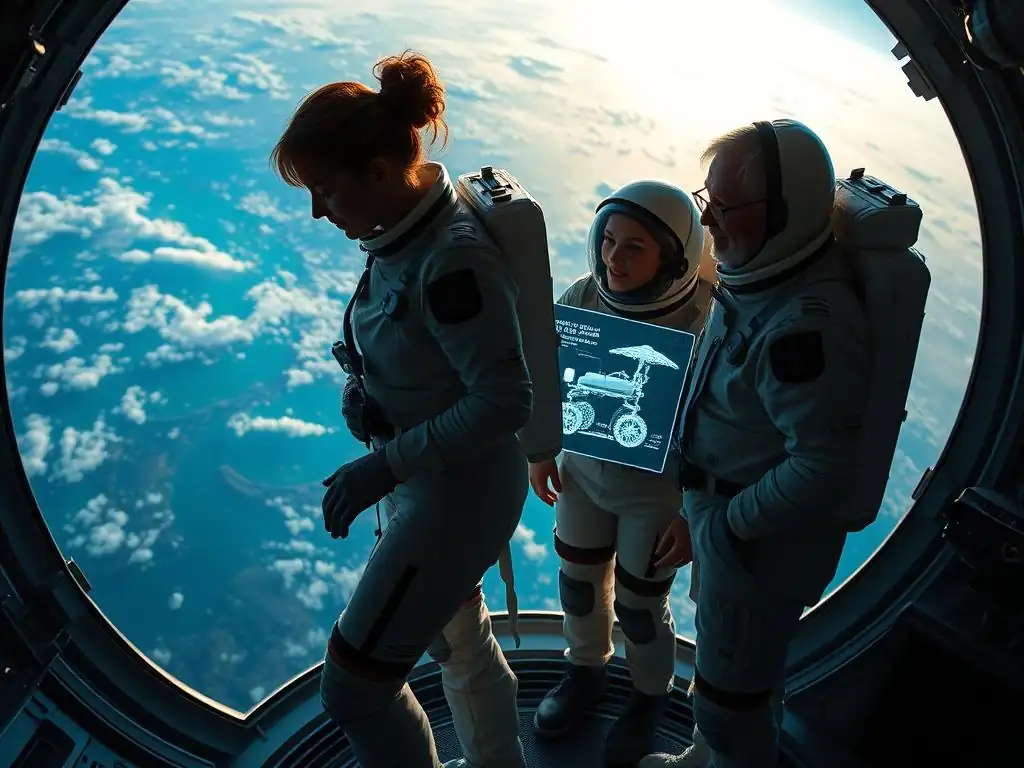
Welcome to WomenInScienceHistory.com!
Dive into a universe of untold stories and groundbreaking achievements. Have you ever wondered about the unsung heroes who propelled us into the cosmos? This month, we're focusing on Women in Space History, exploring the shifting perceptions and pivotal roles these brilliant minds played, from the "Hidden Figures" era to their well-deserved front-page recognition. Discover how their contributions shaped our understanding of the universe and continue to inspire future generations of scientists and astronauts. Prepare to be amazed!
- Women in Space History: A Journey Through Shifting Perceptions
- Early Challenges for Women in Space Exploration
- The First Women in Space: Breaking Barriers and Redefining Roles
- Shifting Perceptions: The Media and Public Opinion on Women Astronauts
- Women Leading the Way: Current and Future Roles in Space
- The Importance of Recognizing Women in Space History
-
Frequently Asked Questions
- What were some of the major hurdles women in space history faced?
- How has the public perception of women in space history changed over time?
- Who are some key figures highlighted by WomenInScienceHistory.com in relation to women in space history?
- Why is it important to celebrate and remember women in space history?
- What resources does WomenInScienceHistory.com offer for learning more about women in space history?
- Final Reflection: Reaching for the Stars, Together
- Ignite Your Inner Astronaut: Explore the Universe of Women in Space!
Women in Space History: A Journey Through Shifting Perceptions
The narrative of human space exploration is often told through the lens of male pioneers, yet the contributions of women in space history are profound and increasingly recognized. For decades, the presence and impact of women in this demanding field were largely overlooked, confined to the "hidden figures" of backroom calculations or the quiet struggle against societal barriers. This article charts the remarkable evolution in public and media perception, transitioning from a time when the very idea of women in space was met with skepticism to an era where female astronauts are celebrated leaders and role models.
Understanding this shift is crucial to appreciating the full scope of human endeavor in space. It's a journey that reflects not only advancements in technology and scientific understanding but also significant changes in gender roles and societal expectations. By delving into the challenges faced, the barriers broken, and the legacies forged, we can better comprehend the true depth of women's influence on space exploration and their enduring place in women in space history.
Early Challenges for Women in Space Exploration
Societal Barriers and Gender Stereotypes in Early Space Programs
In the nascent stages of the space race, the prevailing societal norms and deeply ingrained gender stereotypes presented formidable barriers for women aspiring to reach the stars. The initial astronaut selection criteria, particularly in the United States, heavily favored military test pilots—a profession exclusively open to men. This effectively, and often intentionally, excluded highly qualified women from consideration, regardless of their exceptional aviation skills or scientific acumen. The widespread belief that women were "too emotional" or "physically unsuited" for the rigors of spaceflight was a pervasive stereotype, despite scientific evidence to the contrary.
A poignant example of these barriers is the "Mercury 13" program, a privately funded initiative in the early 1960s led by Dr. Randy Lovelace. Thirteen highly experienced female pilots underwent the same rigorous physical and psychological tests as the Mercury Seven male astronauts, with many of them outperforming their male counterparts in certain areas. For instance, Jerrie Cobb, one of the Mercury 13, endured sensory deprivation tests for 9 hours and 40 minutes, significantly longer than the male average.
Despite proving their physiological readiness, their program was abruptly canceled by NASA, citing a lack of official requirement for female astronauts and the aforementioned military test pilot prerequisite. This decision starkly illustrates the systemic gender discrimination that characterized the early chapters of women in space history.
Overcoming Obstacles: Pioneering Women in Space Program History
Despite the formidable institutional and societal obstacles, the determination of pioneering women in space program history was unwavering. The Mercury 13, though never flying to space, became powerful symbols of the fight for gender equality in STEM. Their advocacy, including testimony before a congressional committee in 1962, highlighted the injustice of their exclusion and planted the seeds for future change. While their immediate efforts did not result in an official female astronaut corps, their public stand resonated, challenging the prevailing notion that space was solely a male domain.
Their persistence laid crucial groundwork, demonstrating that the physical and mental capabilities of women were more than adequate for spaceflight. This era, though marked by exclusion, was vital for understanding the societal biases that needed to be dismantled. The struggles of these early aspirants underscored the fact that the journey for women in space exploration would be a protracted one, requiring not just scientific breakthroughs but also significant shifts in cultural attitudes and policy, ultimately shaping the ongoing narrative of women in space history.
Even as women were barred from the astronaut corps, countless female professionals played indispensable, though often uncredited, roles in the success of early space missions. This period, now famously known as the "Hidden Figures" era, saw brilliant African American women mathematicians, known as "human computers," performing complex calculations that were critical to NASA's groundbreaking achievements. Working at centers like Langley Research Center, these women, often equipped with only pencils, paper, and slide rules, provided the precise numbers needed for launch trajectories, orbital mechanics, and landing calculations.
Figures like Katherine Johnson, whose calculations were vital for John Glenn's orbital flight in 1962 and later for the Apollo 11 lunar landing; Dorothy Vaughan, a pioneering programmer and supervisor; and Mary Jackson, NASA's first African American female engineer, exemplify these unsung heroes. Their meticulous work ensured the accuracy and safety of some of humanity's most ambitious endeavors in space.
For decades, their contributions remained largely outside the public eye, yet without their intellectual prowess and dedication, many iconic moments in space history might never have occurred. Their stories are a testament to the essential, yet often overlooked, contributions of women in space history.
The First Women in Space: Breaking Barriers and Redefining Roles
Valentina Tereshkova: The First Woman in Space and Her Impact
The Soviet Union made history on June 16, 1963, by launching Valentina Tereshkova aboard Vostok 6, making her the first woman in space. Her solo mission orbited Earth 48 times over nearly three days, accumulating more flight time than all American astronauts combined at that point. Tereshkova, a textile worker and amateur parachutist, was selected from over 400 applicants, demonstrating the Soviet Union's commitment to showcasing its advancements in gender equality, albeit with significant political motivations.
Her flight was a global sensation, inspiring women and girls worldwide and challenging the prevailing Western notion that space exploration was exclusively a male domain. Upon her return, Tereshkova became a powerful symbol of Soviet achievement and a prominent advocate for women's rights and international peace. Despite this groundbreaking achievement, it would be nearly two decades before another woman, Svetlana Savitskaya, would fly to space, highlighting that even a pioneering flight didn't immediately pave the way for widespread female participation. Nevertheless, Tereshkova's mission remains a foundational moment in women in space history, forever cementing her place as a trailblazer.
Sally Ride: America's First Woman in Space and Her Legacy
Twenty years after Tereshkova's flight, the United States finally sent its first woman into space. On June 18, 1983, Sally Ride launched aboard the Space Shuttle Challenger on mission STS-7, becoming the first American woman to orbit Earth. Ride, a physicist who joined NASA in 1978 as part of the first astronaut class to include women, underwent rigorous training and proved her exceptional capabilities, silencing any remaining doubts about women's suitability for spaceflight. Her selection marked a significant shift in NASA's approach, moving away from military prerequisites to a more inclusive, scientifically-driven recruitment model.
Ride's calm demeanor and professional approach under intense media scrutiny helped normalize the idea of women in space. After her second spaceflight in 1984, she left NASA to pursue a career in academia and public outreach, becoming a passionate advocate for STEM education, particularly for girls. She co-founded Sally Ride Science, an organization dedicated to inspiring young people in science, technology, engineering, and mathematics. Her legacy extends far beyond her spaceflights; she became a powerful role model, demonstrating that girls could indeed reach for the stars, profoundly influencing the trajectory of women in space history.
Expanding Roles: Women's Increasing Participation in Space Missions
Following the pioneering flights of Tereshkova and Ride, the participation of women in space missions gradually but steadily expanded, both in numbers and in the diversity of their roles. Astronauts like Judith Resnik, who flew on STS-41-D in 1984, and Mae Jemison, the first African American woman in space in 1992, broadened the representation.
The pinnacle of this expansion came with Eileen Collins, who not only flew four Space Shuttle missions but also became the first woman to pilot a Space Shuttle in 1995 and the first woman to command a Space Shuttle mission (STS-93) in 1999. Her ascent to command underscored the growing trust and reliance on women's leadership capabilities in highly complex and critical space operations.
Beyond piloting and commanding, women took on increasingly specialized roles as mission specialists, flight engineers, and eventually, long-duration residents on the International Space Station (ISS). This period saw women from various nations—including Canada, Japan, France, and others—contributing to international space endeavors. Their diverse contributions, from conducting advanced scientific research to performing complex spacewalks, dismantled lingering stereotypes and showcased the multifaceted talents of women in space exploration, enriching the tapestry of women in space history.
Shifting Perceptions: The Media and Public Opinion on Women Astronauts

From Novelty to Normality: How Media Coverage of Women in Space Evolved
The media's portrayal of women in space has undergone a significant transformation, evolving from an initial focus on novelty and gender to a more normalized emphasis on professional achievement. Early coverage of Valentina Tereshkova often highlighted her gender as the primary story, sometimes overshadowing the technical complexities of her mission.
Similarly, Sally Ride faced intrusive questions about her personal life and even whether she would wear makeup in space, reflecting a societal expectation that women's appearance was more relevant than their qualifications. This sensationalist approach often reduced their groundbreaking accomplishments to mere curiosities, rather than serious scientific and engineering feats.
Over time, as more women flew to space and their contributions became undeniable, media coverage shifted. While gender might still be mentioned, the focus increasingly moved to their specific roles, scientific experiments, and leadership in missions.
The achievements of astronauts like Peggy Whitson, who holds the record for most cumulative spacewalk time by a woman and most cumulative time in space by an American, are now reported with the same professional respect as those of her male counterparts. This evolution in media representation has played a crucial role in shaping public opinion, moving from viewing women in space as an anomaly to recognizing them as integral and essential members of the space community, reflecting a maturation in the narrative of women in space history.
The Impact of Female Astronauts on Inspiring Future Generations
The visibility of female astronauts has had an immeasurable impact on inspiring future generations, particularly girls, to pursue careers in STEM fields. Seeing women like Kalpana Chawla, the first Indian-American woman in space, or Mae Jemison, the first African American woman in space, perform complex scientific tasks and lead missions sends a powerful message: that intelligence, capability, and passion, not gender, are the true determinants of success in science and engineering. These role models break down perceived barriers and demonstrate that the sky is not the limit for ambition.
Educational initiatives and outreach programs often feature the stories of these pioneering women, using their experiences to ignite curiosity and encourage young minds to explore STEM. For instance, the sheer presence of women on the International Space Station, conducting experiments and living in microgravity, provides a tangible example of what is possible. This direct correlation between representation and inspiration is a cornerstone of efforts to diversify the scientific workforce, ensuring that the legacy of women in space history continues to motivate and empower.
Addressing Gender Bias in STEM Fields Through Space Exploration
The success of women in space exploration serves as a powerful testament against persistent gender biases in STEM fields. By excelling in an environment that demands peak intellectual and physical performance, female astronauts unequivocally demonstrate that women are equally capable of contributing to the most complex and challenging scientific and technical endeavors. Their achievements challenge outdated stereotypes and provide empirical evidence that gender should never be a barrier to entry or advancement in any scientific discipline.
Space agencies worldwide have increasingly embraced diversity and inclusion, not just as a matter of fairness but as a strategic imperative. A diverse workforce, encompassing varied perspectives and backgrounds, has been shown to foster greater innovation and problem-solving capabilities—critical assets in the demanding world of space exploration. By actively recruiting and supporting women, and by showcasing their successes, the space sector sets a compelling example for other STEM industries. This commitment to inclusivity is not only enriching the present landscape of space exploration but also actively shaping a more equitable future for women in space history.
Women Leading the Way: Current and Future Roles in Space
Prominent Women Astronauts and Their Contributions to Space Science
In contemporary space exploration, women astronauts are not just participants but leaders and record-breakers, making indelible contributions to space science. Peggy Whitson, for example, holds the American record for cumulative time in space, with 665 days across three missions, and commanded the International Space Station twice.
Her extensive experience includes 10 spacewalks, totaling 60 hours and 21 minutes, demonstrating her vital role in maintaining the orbiting laboratory and advancing scientific research. Christina Koch and Jessica Meir made history in October 2019 by conducting the first all-female spacewalk, a significant milestone that highlighted the increasing normalization of women in all aspects of space operations.
Samantha Cristoferetti, the first Italian woman in space, has also made significant contributions, including being the first European woman to perform a spacewalk and holding the record for the longest continuous spaceflight by a woman (199 days) before it was surpassed. These women, among many others, are actively engaged in cutting-edge research on the ISS, from studying the effects of microgravity on the human body to testing new technologies for future deep-space missions. Their scientific rigor and leadership are paramount to current space endeavors, continually enriching the ongoing narrative of women in space history.
Women in Leadership Positions at NASA and Other Space Agencies
Beyond the astronaut corps, women are increasingly occupying critical leadership and executive positions within NASA and other international space agencies, shaping the future of space exploration from the ground up. These roles include program managers, mission directors, chief scientists, and heads of departments, where their expertise and vision directly influence policy, budget allocation, and strategic direction. For instance, Lori Garver served as the Deputy Administrator of NASA from 2009 to 2013, playing a key role in the agency's transition towards commercial space partnerships.
Similarly, Gwynne Shotwell serves as the President and Chief Operating Officer of SpaceX, a pivotal figure in the commercial space revolution, overseeing the company's day-to-day operations and strategic growth. These women are not only breaking glass ceilings in their respective organizations but are also fostering environments that promote diversity and inclusion, ensuring that more women have opportunities to rise through the ranks. Their leadership is instrumental in steering ambitious projects like the Artemis program and developing next-generation space technologies, solidifying their vital roles in the continuing saga of women in space history.
The Future of Women in Space: New Opportunities and Challenges
The future of women in space is poised for unprecedented opportunities, particularly with ambitious programs like NASA's Artemis mission, which aims to land the first woman on the Moon by the mid-2020s. This initiative represents a monumental step towards truly inclusive space exploration, paving the way for future missions to Mars and beyond with diverse crews. The burgeoning commercial space sector also presents new avenues for women, from engineering and operations roles in private companies like SpaceX and Blue Origin to becoming commercial astronauts.
However, challenges remain. Ensuring equitable access to training programs, combating any lingering unconscious biases in selection processes, and actively promoting women into senior leadership and technical roles are ongoing efforts. As humanity ventures further into the cosmos, it is crucial that the workforce reflects the diversity of humanity itself. Addressing these challenges will ensure that the next chapters of women in space history are written with even greater inclusivity and achievement, harnessing the full spectrum of human talent for the benefit of all.
The Importance of Recognizing Women in Space History
Preserving the Legacy of Female Space Pioneers
Preserving and celebrating the legacy of female space pioneers is not merely an act of historical acknowledgment; it is an essential component of understanding the full scope of human achievement in space. For too long, the stories of women who contributed to space exploration—from the "human computers" like Katherine Johnson to trailblazing astronauts like Valentina Tereshkova and Sally Ride—were either overlooked or marginalized. By actively documenting their challenges, triumphs, and profound impacts, we ensure that their invaluable contributions are not lost to time.
This preservation helps to correct historical inaccuracies and provides a more comprehensive and truthful narrative of humanity's journey to the stars. It recognizes the immense perseverance required to break through societal and institutional barriers, highlighting the strength and resilience of these women. Ensuring their stories are told and understood is vital for future generations to draw inspiration from their courage and intellect, firmly cementing their rightful place in the annals of women in space history.
Promoting Diversity and Inclusion in Space Exploration
Promoting diversity and inclusion in space exploration is not just a moral imperative but a strategic advantage. A workforce that includes individuals from diverse backgrounds, genders, and experiences brings a wider range of perspectives, fosters more innovative problem-solving, and leads to more robust and effective solutions for the complex challenges of spaceflight. When women are equally represented in all facets of space exploration—from engineering and science to mission control and astronaut corps—the collective intelligence and creativity of the entire field are amplified.
Space agencies and private companies are increasingly recognizing that true excellence in space exploration hinges on leveraging the talents of all individuals, irrespective of gender. Initiatives aimed at recruiting, retaining, and advancing women in STEM fields within the space industry are crucial for building a resilient and adaptable workforce. By actively championing diversity, the space community ensures that the best minds are engaged, propelling humanity further into the cosmos and enriching the ongoing narrative of women in space history.
Inspiring the Next Generation of Women in STEM Through Space Stories
Perhaps the most profound importance of recognizing women in space history lies in its power to inspire the next generation of women in STEM. When young girls see women like themselves achieving extraordinary feats in science, technology, engineering, and mathematics, it shatters preconceived notions of what is possible. The compelling narratives of female astronauts overcoming obstacles, conducting groundbreaking research, and leading complex missions serve as powerful role models, igniting curiosity and fostering ambition.
These stories provide tangible proof that a career in STEM is not only attainable but also incredibly rewarding. By highlighting the journeys of women in space, we encourage young women to pursue challenging academic paths, to dream big, and to envision themselves as future scientists, engineers, and explorers. This continuous cycle of inspiration, fueled by the rich history of women in space, is essential for cultivating a diverse and talented workforce that will continue to push the boundaries of human knowledge and exploration for generations to come.
Frequently Asked Questions
What were some of the major hurdles women in space history faced?
They often encountered gender bias and were excluded from training and flight opportunities. Societal expectations also limited their access to scientific and engineering careers.
How has the public perception of women in space history changed over time?
Initially, they were largely overlooked or minimized, but increased awareness and advocacy have brought their contributions to the forefront. Films like Hidden Figures helped to popularize their stories.
Who are some key figures highlighted by WomenInScienceHistory.com in relation to women in space history?
The site features biographies of pioneering female scientists, engineers, and astronauts who significantly contributed to space exploration. Specific names can be found on the website.
Why is it important to celebrate and remember women in space history?
Recognizing their achievements inspires future generations of female scientists and engineers. It also helps to correct historical inaccuracies and create a more inclusive narrative.
What resources does WomenInScienceHistory.com offer for learning more about women in space history?
The website provides biographies, articles, and discussions on the groundbreaking work of women in various scientific fields, including space exploration. It aims to shed light on overlooked narratives.
Final Reflection: Reaching for the Stars, Together
The journey of women in space, once relegated to the shadows of hidden contributions, has finally burst into the forefront of public consciousness. This shift, from unseen calculations to celebrated astronauts, reflects a profound evolution in our understanding of capability, representation, and the very definition of who gets to explore the cosmos.
This narrative isn't just about historical correction; it's about inspiring future generations to shatter perceived limitations. The stories of Katherine Johnson, Sally Ride, and countless others resonate deeply, reminding us that progress is not a passive occurrence but an active pursuit. We all have a responsibility to live up to the legacy of those who came before us, and those who will come after us.
This quote encapsulates the ongoing responsibility we have to ensure that the path to the stars remains open and accessible to all, regardless of gender.
As we look to the future of space exploration, let us not only celebrate the achievements of women in space history but also actively work to create a more equitable and inclusive environment for all aspiring astronauts, engineers, and scientists. Consider how you can support initiatives that promote STEM education for girls and challenge the biases that still exist within these fields. The universe awaits, and it needs the brilliance and dedication of every single one of us.
Ignite Your Inner Astronaut: Explore the Universe of Women in Space!
Thank you for joining us on this journey through the changing perceptions of women in space! We hope you've gained a newfound appreciation for their groundbreaking contributions. Ready to take your passion further?
Here are a few things you can do right now:
- Delve Deeper: Research a female astronaut or engineer who inspires you and share her story with your friends and family.
- Explore our website further and uncover more hidden stories of women who shaped STEM.
- Join the conversation! Share your thoughts and favorite takeaways from this article in the comments below.
Which woman in space's journey resonated with you the most, and what steps will you take to honor her legacy?