
Beyond Borders: Women Forging International Environmental Collaborations (19702000)

Welcome to WomenInScienceHistory.com, a celebration of brilliance often hidden in the footnotes of history.
Dive into the untold stories of remarkable women who defied expectations and shaped the scientific landscape. Are you ready to uncover the pivotal role women played in global environmental protection? Explore our featured article, " Beyond Borders: Women Forging International Environmental Collaborations (1970-2000)," and discover how these visionary scientists transcended boundaries to champion a healthier planet. What innovative strategies did they employ, and what lasting impact did their partnerships create? The answers await within...
Introduction: Women in Science History and Environmental Stewardship
The annals of science history are replete with groundbreaking discoveries and tireless dedication, often highlighting the remarkable contributions of individuals who pushed the boundaries of knowledge. Within this rich tapestry, the role of women in environmental stewardship, particularly in the latter half of the 20th century, stands out as a testament to their foresight, resilience, and collaborative spirit. As global environmental challenges began to escalate in complexity and scale, women emerged not just as scientists and advocates, but as pivotal figures in forging international partnerships to address these pressing issues.
This article delves into the critical period between 1970 and 2000, a transformative era for global environmental awareness and action. It illuminates how women navigated patriarchal structures and societal biases to lead and participate in crucial international environmental collaborations. Their work laid foundational groundwork for sustainable development, biodiversity conservation, and climate action, significantly enriching the often-overlooked narrative of women environmental collaborations international history.
- Wangari Maathai and the Green Belt Movement: A Transnational Reforestation Initiative
- Gro Harlem Brundtland and the World Commission on Environment and Development: Shaping Sustainable Development
- Sylvia Earle and Marine Conservation Advocacy: Protecting Marine Biodiversity Through Global Collaboration
- What were some of the key challenges women faced in establishing international environmental collaborations between 1970 and 2000?
- How did "Beyond Borders: Women Forging International Environmental Collaborations (1970-2000)" help advance the field of environmental science?
- What specific types of environmental issues did these collaborative efforts typically address?
- Can you provide an example of a successful international environmental collaboration led by women during this period?
- How can learning about these historical collaborations inspire current and future generations of women in science?
The Rise of International Environmentalism: A Historical Context (1970-2000)
The Early Environmental Movement: Seeds of Global Collaboration
The 1970s marked a significant turning point, shifting environmental concerns from localized issues to a global agenda. The publication of Rachel Carson's "Silent Spring" in 1962 had already ignited public awareness about pesticides, but it was the 1972 United Nations Conference on the Human Environment in Stockholm that truly galvanized international efforts. This landmark event, attended by representatives from 113 nations, established the United Nations Environment Programme (UNEP) and laid the groundwork for multilateral environmental agreements.
This nascent global environmental movement created a fertile ground for international cooperation, recognizing that pollution, deforestation, and resource depletion transcended national borders. It was within this evolving landscape that women, often working from grassroots organizations or newly formed international bodies, began to sow the seeds of cross-border partnerships, contributing vital chapters to women environmental collaborations international history. Their early efforts focused on building bridges between diverse stakeholders and advocating for a more holistic, interconnected approach to planetary health.
Key Environmental Challenges of the Era: Setting the Stage for Women's Leadership
The period from 1970 to 2000 was characterized by a growing recognition of severe environmental threats that demanded collective international action. Issues such as acid rain, which devastated forests and lakes across continents, and the depletion of the ozone layer, threatening global health, highlighted the urgent need for transnational solutions. Deforestation, particularly in tropical rainforests, and the escalating loss of biodiversity also became major concerns, prompting calls for global conservation strategies.
These complex challenges underscored the limitations of national-level interventions and necessitated collaborative, often innovative, responses. In response, women stepped into leadership roles, leveraging their scientific expertise, advocacy skills, and unique perspectives to champion international environmental initiatives. Their contributions were instrumental in shaping the discourse around these global problems and formulating effective strategies, thereby solidifying their place in the ongoing narrative of women environmental collaborations international history.
Pioneering Women in International Environmental Collaborations: Case Studies
Wangari Maathai and the Green Belt Movement: A Transnational Reforestation Initiative
Wangari Maathai, a Kenyan environmental and political activist, founded the Green Belt Movement (GBM) in 1977 under the auspices of the National Council of Women of Kenya. Initially focused on combating deforestation by planting trees, the GBM quickly evolved into a holistic rural development program, empowering women through sustainable livelihoods and environmental education. By 1989, the movement had gained international recognition, expanding its reach beyond Kenya's borders and inspiring similar initiatives across Africa and beyond.
Maathai's vision extended beyond simply planting trees; she recognized the intrinsic link between environmental degradation, poverty, and political oppression. Under her leadership, the GBM planted over 30 million trees by the turn of the millennium, engaging approximately 30,000 women in rural communities. This grassroots, women-led approach became a powerful model for international environmental collaborations, demonstrating how local action could have global impact and profoundly shaping women environmental collaborations international history.
Gro Harlem Brundtland and the World Commission on Environment and Development: Shaping Sustainable Development
Gro Harlem Brundtland, former Prime Minister of Norway, chaired the World Commission on Environment and Development (WCED) from 1983 to 1987. This commission was tasked by the United Nations to examine the critical environmental and development problems facing the world and to formulate realistic proposals for addressing them. The WCED's seminal report, "Our Common Future," published in 1987, famously popularized the concept of "sustainable development" as development that "meets the needs of the present without compromising the ability of future generations to meet their own needs."
Brundtland's leadership in navigating complex geopolitical interests and fostering consensus among diverse nations was crucial to the report's success. The report's recommendations significantly influenced the agenda for the 1992 Earth Summit in Rio de Janeiro, leading to key international agreements like Agenda 21. Her work exemplifies a high-level contribution to women environmental collaborations international history, demonstrating how a woman's vision and diplomatic skill could redefine global environmental policy.
Sylvia Earle and Marine Conservation Advocacy: Protecting Marine Biodiversity Through Global Collaboration
Sylvia Earle, a pioneering American oceanographer and marine biologist, dedicated her career to exploring and advocating for the protection of the world's oceans. Throughout the 1970s, 80s, and 90s, her groundbreaking deep-sea expeditions, including leading the first team of women aquanauts in Project Tektite II in 1970, provided unprecedented insights into marine ecosystems. Her work was inherently international, pushing the boundaries of underwater exploration and scientific understanding across various global marine environments.
As Chief Scientist of the National Oceanic and Atmospheric Administration (NOAA) from 1990 to 1992, Earle became a powerful voice for marine conservation on a global stage. She championed the establishment of marine protected areas and raised public awareness about the devastating impacts of overfishing, pollution, and climate change on ocean health. Her tireless advocacy, participation in international scientific forums, and public education efforts significantly influenced global marine conservation policy discussions during this period, marking her as a pivotal figure in women environmental collaborations international history, inspiring a worldwide movement for ocean protection.
Key Themes in Women's International Environmental Work: 1970-2000
Bridging the Gap: Women as Intermediaries in Cross-Cultural Environmental Projects
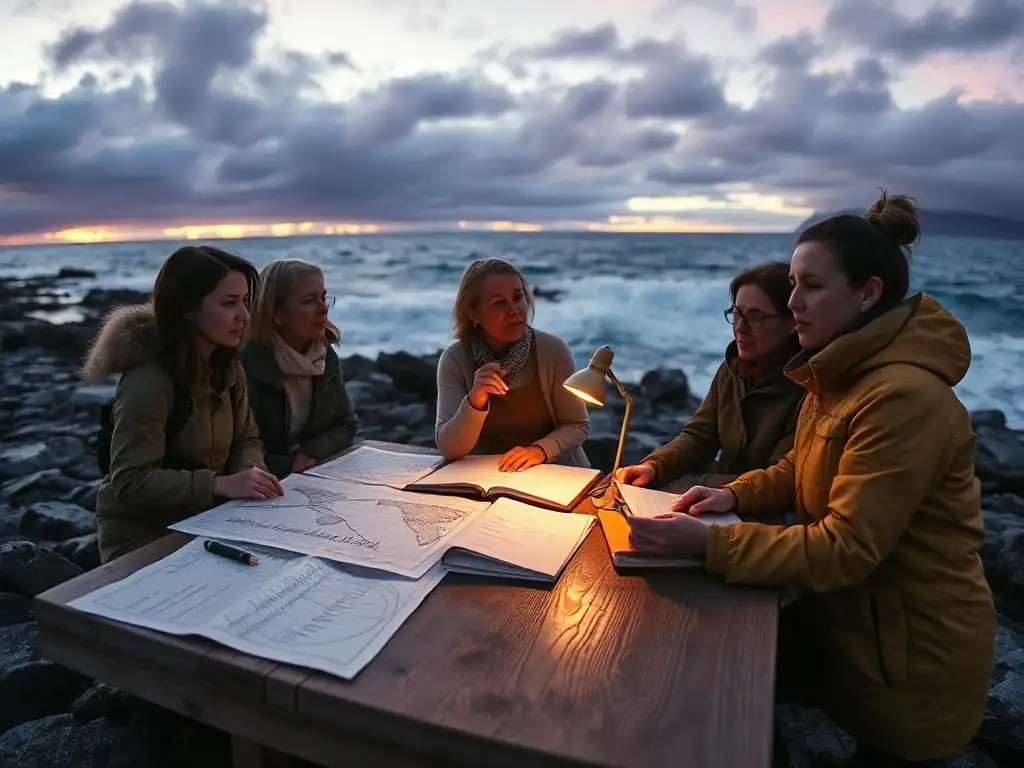
During this period, women often played crucial roles as intermediaries, effectively bridging the gap between diverse cultural contexts, scientific knowledge, and policy frameworks in international environmental projects. Their ability to foster dialogue, build trust, and facilitate consensus across different stakeholder groups was often a key factor in the success of transnational initiatives. This was particularly evident in projects that required collaboration between local communities, national governments, and international organizations.
For instance, in many developing nations, women were the primary custodians of natural resources and possessed intimate knowledge of their local ecosystems. Environmental projects led by or involving women frequently succeeded in translating complex scientific concepts into actionable plans that resonated with local populations, while simultaneously conveying community needs and priorities to international funding bodies or policymakers. This unique capacity for cross-cultural communication and mediation is a defining feature of women environmental collaborations international history.
Integrating Local Knowledge: The Importance of Indigenous Women's Perspectives
A significant theme in women's international environmental work was the emphasis on integrating local and indigenous knowledge into broader conservation strategies. Indigenous women, in particular, often held centuries of traditional ecological knowledge, passed down through generations, regarding sustainable resource management, biodiversity, and ecosystem health. Their perspectives offered invaluable insights that challenged conventional, often Western-centric, approaches to conservation.
For example, in efforts to protect rainforests or preserve traditional agricultural systems, the wisdom of indigenous women proved indispensable in identifying sustainable practices that respected ecological limits and cultural traditions. International environmental organizations and initiatives increasingly recognized that ignoring these vital perspectives led to ineffective or culturally insensitive interventions. The deliberate inclusion and amplification of indigenous women's voices became a powerful force, enriching the practical application and theoretical understanding within women environmental collaborations international history.
Overcoming Obstacles: Gender Bias in International Environmental Arenas
Despite their significant contributions, women in international environmental arenas frequently encountered systemic gender bias and discrimination. They often faced challenges in accessing leadership positions, securing adequate funding, and gaining recognition for their work in male-dominated scientific and political spheres. Decision-making bodies at international conferences and organizations were predominantly male, often leading to the marginalization or underrepresentation of women's voices and priorities.
However, women demonstrated remarkable resilience and determination in navigating and overcoming these obstacles. They formed their own networks, advocated for gender mainstreaming in environmental policy, and persistently pushed for their inclusion in all levels of environmental governance. Their unwavering commitment to environmental protection, coupled with their strategic efforts to challenge gender inequality, significantly advanced the cause of both environmental justice and gender equity, leaving an indelible mark on women environmental collaborations international history.
The Impact of Women-Led International Environmental Collaborations
Concrete Achievements: Measuring the Success of Collaborative Projects
The period from 1970 to 2000 saw numerous concrete achievements stemming directly from women-led and women-influenced international environmental collaborations. These successes spanned reforestation, policy change, and community empowerment. For example, the Green Belt Movement, spearheaded by Wangari Maathai, directly led to the planting of tens of millions of trees across Kenya, rehabilitating degraded land, and providing sustainable fuel wood and food sources for rural communities. This scaled effort was supported by international donors and replicated in other nations.
Another significant achievement was the increased global awareness and policy shifts regarding the ozone layer. While many scientists contributed, the advocacy of women like Dr. Susan Solomon, whose research was crucial to understanding ozone depletion, contributed to the Montreal Protocol on Substances that Deplete the Ozone Layer (1987), an international treaty widely considered one of the most successful environmental agreements. These tangible outcomes underscore the efficacy and lasting impact of women environmental collaborations international history.
Shaping Policy: Women's Influence on International Environmental Agreements
Women's persistent advocacy and intellectual contributions significantly shaped the language and objectives of key international environmental agreements during this era. Their presence and influence, though often hard-won, ensured that issues like sustainable development, community involvement, and gender equity began to be integrated into global policy frameworks. Gro Harlem Brundtland's leadership of the WCED, for instance, directly led to the conceptualization of sustainable development that underpinned the 1992 Earth Summit and its subsequent outcomes, including Agenda 21 and the Framework Convention on Climate Change.
Beyond high-profile commissions, women scientists, lawyers, and activists worked tirelessly behind the scenes and in public forums to advocate for stronger environmental protections in treaties like the Convention on Biological Diversity (1992) and the Convention to Combat Desertification (1994). Their efforts ensured that these agreements considered not only scientific imperatives but also social dimensions and the rights of local communities, cementing their indelible mark on women environmental collaborations international history.
Inspiring Future Generations: The Legacy of Early Women Environmentalists
The pioneering women who forged international environmental collaborations between 1970 and 2000 left an enduring legacy that continues to inspire future generations of environmental leaders and activists. Their stories of perseverance, scientific excellence, and unwavering commitment to a healthier planet serve as powerful role models. By breaking barriers and achieving significant successes in male-dominated fields, they demonstrated that women's leadership is not only possible but essential for effective environmental action.
Their work illuminated the interconnectedness of environmental, social, and economic issues, laying the groundwork for integrated approaches to sustainability. The visibility of figures like Wangari Maathai, who became the first African woman to win the Nobel Peace Prize in 2004 for her environmental and human rights work, amplified the message that women are powerful agents of change. This inspirational legacy is a cornerstone of women environmental collaborations international history, motivating countless individuals to pursue careers and activism in environmental science and advocacy.
Challenges and Opportunities: Lessons Learned from the Past
Funding and Resources: Ensuring Sustainability for Women-Led Initiatives
A persistent challenge for women-led international environmental initiatives during this period, and still today, was securing adequate and sustained funding and resources. Despite demonstrating significant impact at the grassroots and policy levels, many women's environmental organizations struggled to compete for limited international development and conservation funds, which often favored larger, more established institutions. This disparity sometimes hampered the scalability and long-term sustainability of highly effective projects.
However, these challenges also presented opportunities for innovation. Women's groups often became adept at resourcefulness, leveraging volunteer networks, in-kind contributions, and micro-financing to achieve their goals. The lessons learned highlight the critical need for international donors and philanthropic organizations to prioritize equitable funding for women-led initiatives, recognizing their proven capacity for impactful and community-centric environmental solutions, thereby strengthening the future of women environmental collaborations international history.
Building Strong Networks: Fostering Collaboration for Long-Term Impact
The importance of building strong, resilient networks among women environmentalists emerged as a crucial lesson from the past. Recognizing the isolation and marginalization they sometimes faced, women actively sought to create platforms for mutual support, knowledge sharing, and collective action. Organizations like Women's Environment & Development Organization (WEDO), founded in 1990, played a vital role in connecting women globally, amplifying their voices, and ensuring their participation in major international environmental forums.
These networks provided a lifeline for sharing best practices, developing joint advocacy strategies, and offering solidarity in the face of adversity. They demonstrated that by fostering collaboration among themselves, women could overcome individual limitations and exert greater influence on international environmental policy. The strategic development of these networks is a testament to the foresight and collaborative spirit that defines women environmental collaborations international history.
Addressing the Ongoing Need for Gender Equity in Environmental Leadership
While significant strides were made between 1970 and 2000 in recognizing women's contributions to environmental science and advocacy, the period also highlighted the ongoing, systemic need for greater gender equity in environmental leadership. Despite their expertise and dedication, women often remained underrepresented in senior decision-making roles within governmental agencies, international organizations, and major scientific bodies. This imbalance meant that women's unique perspectives and experiences were not always fully integrated into global environmental strategies.
The challenges faced by these pioneers underscored the necessity of actively promoting women's leadership through mentorship programs, capacity building, and institutional reforms. The lessons learned from this era emphasize that achieving true sustainability requires diverse perspectives and inclusive leadership, making gender equity not just a social justice issue but an environmental imperative. The continuing evolution of women environmental collaborations international history depends on addressing these systemic barriers.
Conclusion: Celebrating Women's Enduring Legacy in International Environmental History
The Continuing Relevance of Women's Contributions to Global Environmental Solutions
The period from 1970 to 2000 represents a foundational chapter in the history of international environmentalism, and within it, the indispensable role of women shines brightly. From grassroots reforestation efforts that empowered local communities to high-level diplomatic negotiations that shaped global policy, women demonstrated unparalleled dedication, scientific acumen, and collaborative spirit. Their work was not merely supplementary but integral to the paradigm shift towards recognizing the interconnectedness of environmental health, social equity, and economic development.
The strategies they pioneered—integrating local knowledge, fostering cross-cultural dialogue, and building robust networks—remain profoundly relevant in today's complex environmental landscape. Their early warnings about biodiversity loss, climate change, and sustainable resource management continue to resonate, underscoring the foresight that characterizes women environmental collaborations international history. Their contributions are not just historical footnotes but foundational pillars upon which current and future global environmental solutions are built.
Looking Ahead: Empowering Future Generations of Women Environmental Leaders
As the world grapples with escalating environmental crises, the legacy of these pioneering women serves as both inspiration and a blueprint for action. Empowering future generations of women environmental leaders means not only celebrating their past achievements but also actively dismantling the barriers that still limit their full participation and recognition. This involves investing in science education for girls, creating equitable opportunities in environmental fields, and ensuring women's voices are central to policy-making at all levels.
The story of women environmental collaborations international history is one of resilience, innovation, and unwavering commitment to a sustainable future. By continuing to support and amplify the voices of women in environmental science, policy, and activism, the global community can harness their collective wisdom and leadership to forge even more impactful and inclusive solutions for the planet. The ongoing narrative of women's contributions to global environmental solutions promises to be as vital and transformative as its past.
Frequently Asked Questions
What were some of the key challenges women faced in establishing international environmental collaborations between 1970 and 2000?
Many women faced gender bias and limited access to funding and leadership positions, hindering their ability to form and lead international collaborations. They also contended with cultural barriers in various countries.
How did "Beyond Borders: Women Forging International Environmental Collaborations (1970-2000)" help advance the field of environmental science?
By forming international collaborations, women brought diverse perspectives and approaches to environmental problem-solving, leading to more holistic and effective solutions for global environmental issues.
What specific types of environmental issues did these collaborative efforts typically address?
These collaborations often focused on issues like deforestation, pollution, biodiversity loss, and climate change, addressing these problems on a global scale.
Can you provide an example of a successful international environmental collaboration led by women during this period?
Dr. Wangari Maathai's Green Belt Movement, which promoted tree planting and environmental conservation in Kenya and beyond, is a prime example of a successful and internationally recognized women-led initiative.
How can learning about these historical collaborations inspire current and future generations of women in science?
By showcasing the impact and resilience of these pioneering women, it demonstrates that women can successfully lead and contribute to international environmental collaborations, overcoming barriers and driving positive change.
Final Reflection: Seeds of Change, Global Harvest
The stories shared in "Beyond Borders: Women Forging International Environmental Collaborations (1970-2000)" resonate powerfully today, perhaps even more so than when these collaborations first blossomed. The unwavering dedication of these women, navigating complex geopolitical landscapes to protect our shared planet, serves as a potent reminder that environmental stewardship transcends national boundaries and demands collective action. Their pioneering spirit laid the groundwork for the global environmental movement we know today, proving that even seemingly disparate voices can unite to create lasting change.
The impact of these women's work continues to ripple through the cultural and social landscape, inspiring new generations of environmental activists and fostering a deeper understanding of interconnectedness. Witnessing their tenacity and innovative approaches underscores the vital role women play in shaping a sustainable future. > As Wangari Maathai so eloquently stated, "You cannot protect the environment unless you empower people, you inform them, and you help them understand that these resources are their own, that they must protect them." This sentiment encapsulates the very essence of the collaborations explored in this article.
Now, consider the legacy of these women and the lessons they offer. How can you, in your own sphere of influence, foster collaboration and champion environmental stewardship? Let their stories ignite a spark within you, prompting you to seek out opportunities to connect with others, share knowledge, and work towards a healthier, more sustainable world for all. The seeds they planted are still bearing fruit; it is up to us to nurture them and ensure a bountiful harvest for generations to come.
Unveil Your Inner Environmental Advocate!
Thank you for exploring the impactful stories of women shaping international environmental collaborations. Now, armed with their inspiration, let's translate knowledge into action!
- Amplify their legacy: Share this article with your network to highlight the crucial role women play in environmental solutions and inspire others to learn more.
- Explore resources: Dive deeper into the archives and biographies of the women mentioned, discovering lesser-known facts and ongoing projects.
- Start a conversation: What collaborative environmental initiative, inspired by these women, could you champion in your community?