
Guardians of the Grain: Female Engineers Designing Superior PostHarvest Storage Solutions

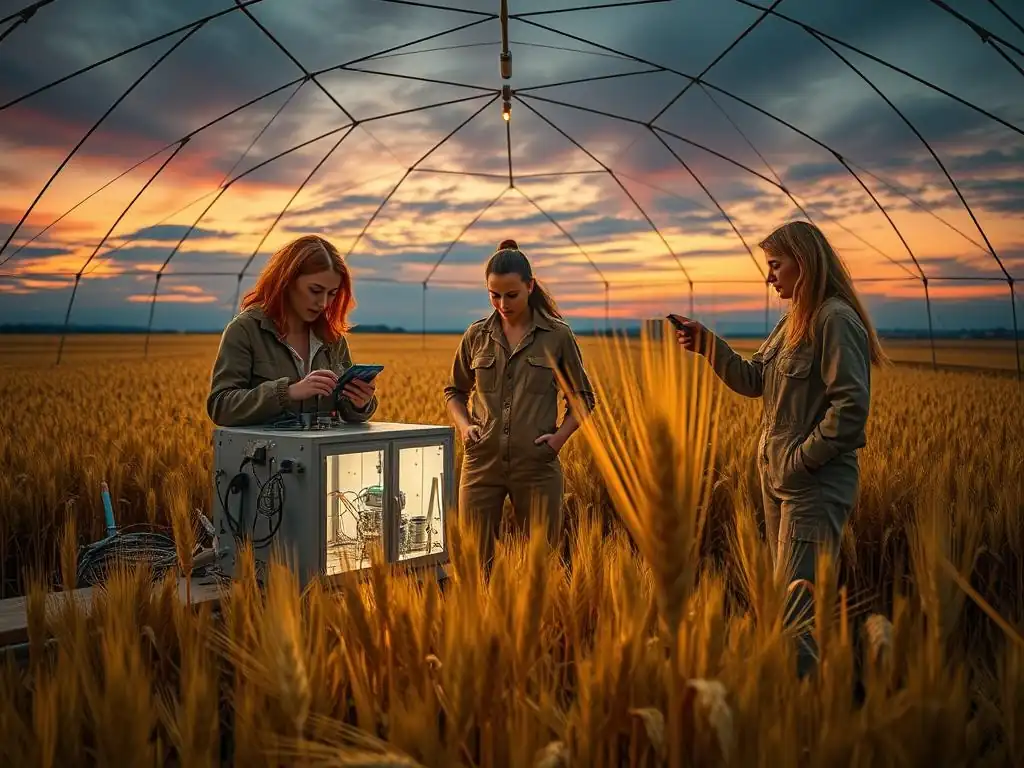
Welcome to WomenInScienceHistory.com!
Dive into the fascinating world of science and discover the untold stories of remarkable women who shaped our understanding of the universe. Today, we spotlight a crucial, often unseen field: postharvest storage. Prepare to be inspired by the ingenuity of female engineers, the unsung heroes who are designing superior solutions to safeguard our food supply. What innovative strategies are they employing to combat spoilage and ensure food security? Read on to uncover the groundbreaking work of these modern-day "Guardians of the Grain" and explore how they're revolutionizing the future of food preservation.
- The Vital Role of Female Engineers in PostHarvest Storage
- Understanding PostHarvest Loss and its Impact
- Pioneering Female Engineers in PostHarvest Storage: A Historical Perspective
- Modern Female Engineers Revolutionizing PostHarvest Storage
- Innovations in PostHarvest Storage Technologies Led by Female Engineers
- The Importance of Education and Mentorship for Future Female Engineers
- The Future of PostHarvest Storage: A Female-Led Vision
- Female Engineers: Champions of Food Security and Sustainable Agriculture
-
Frequently Asked Questions
- What is postharvest storage and why is it important in the context of female engineers?
- Why is it important to highlight the contributions of female engineers in postharvest storage?
- What kind of challenges did female engineers face historically in the field of postharvest storage?
- What are some specific examples of postharvest storage solutions designed by female engineers?
- How does WomenInScienceHistory.com aim to inspire future generations regarding female engineers and postharvest storage?
- Final Reflection: Cultivating a Future of Food Security
- Empower Change: Design a Brighter Future!
The Vital Role of Female Engineers in PostHarvest Storage
Addressing Global Food Security Through Innovative Storage Solutions
Globally, a staggering amount of food, estimated at 1.3 billion tons annually, is lost or wasted, with a significant portion occurring at the post-harvest stage. This loss, particularly prevalent in developing countries, can account for up to 40% of food produced in certain regions, directly contributing to food insecurity and malnutrition. The challenge is immense, as inadequate storage allows for spoilage from moisture, pests, and mold, eroding the nutritional value and economic viability of crops.
Innovative postharvest storage solutions are critical to mitigating these losses and strengthening global food security. Female engineers are at the forefront of designing and implementing these vital technologies, from advanced hermetic bags that create oxygen-deprived environments to sophisticated climate-controlled warehouses. Their contributions ensure that more food reaches consumers, preserving not only nutritional value but also the livelihoods of millions of smallholder farmers who depend on their harvests for income and sustenance.
Women in Agricultural Engineering: A Historical Overview
The involvement of women in agricultural practices is as old as agriculture itself, with women historically playing crucial roles in cultivation, harvesting, and traditional food preservation methods. However, their formal entry into the specialized field of agricultural engineering, particularly in areas like postharvest technology, began to gain momentum in the mid-20th century. Pioneers often faced significant societal and professional barriers, yet their foundational work in understanding crop physiology, storage conditions, and pest control laid essential groundwork.
While historical records might not always highlight individual female engineers by name in the early days of formal agricultural engineering, their collective contributions to food science and preservation were undeniable. These early trailblazers, often working in research institutions or university departments, advanced knowledge in areas such as grain drying, aeration, and pest management, establishing principles that continue to inform modern postharvest solutions. Their perseverance paved the way for the increasing number of female engineers postharvest storage who are now leading the charge.
Understanding PostHarvest Loss and its Impact
The Devastating Consequences of Inadequate Grain Storage
Inadequate grain storage leads to substantial losses primarily through spoilage mechanisms such as insect infestation, rodent damage, and fungal growth, particularly aflatoxins, which are highly toxic. For example, in sub-Saharan Africa, postharvest losses for cereals can range from 10% to 25%, with some estimates pushing higher depending on the crop and storage conditions. This translates into millions of tons of food rendered inedible or unsafe, representing a monumental waste of resources including land, water, and labor invested in cultivation.
Beyond direct consumption, these losses have cascading environmental impacts. Food that spoils in storage often ends up in landfills, contributing to greenhouse gas emissions, particularly methane, a potent climate change accelerator. The cycle of producing food only for it to spoil before reaching consumers exacerbates resource scarcity and contributes to a larger ecological footprint, underscoring the urgent need for robust postharvest solutions.
The economic costs of postharvest losses are profound, especially for smallholder farmers who rely on their harvest for income. Losing even a fraction of their yield can mean the difference between solvency and poverty, perpetuating cycles of debt and food insecurity. For instance, a 10% loss in grain can translate to a direct income reduction of hundreds of dollars for a typical small farm, which is significant in regions where daily earnings are minimal. At a national level, these losses can reduce agricultural export potential, increase reliance on food imports, and destabilize food prices, impacting entire economies.
Socially, the consequences are equally dire. Reduced food availability due to postharvest losses exacerbates malnutrition, particularly among vulnerable populations, including women and children. It can lead to food scarcity, price spikes that make staple foods unaffordable, and increased social instability. Addressing these losses through effective female engineers postharvest storage solutions is not just an agricultural challenge but a fundamental step towards achieving broader societal well-being and economic stability.
Pioneering Female Engineers in PostHarvest Storage: A Historical Perspective
Highlighting Early Contributions of Women to Grain Preservation
While the term "engineer" was not always broadly applied to women in early scientific fields, many women made crucial contributions to food preservation and agricultural science that directly influenced postharvest practices. For example, early food chemists and microbiologists, a field where women slowly gained entry, were instrumental in understanding the enzymatic and microbial processes that cause spoilage. Their research into fermentation, drying, and salting techniques, though often conducted in academic or domestic settings, provided the scientific basis for designing more effective and large-scale preservation methods.
Furthermore, women in agricultural extension services and domestic science programs in the early to mid-20th century often taught and disseminated best practices for food storage and preservation to rural communities. Though not always designing physical structures, their educational efforts directly impacted the reduction of losses at the farm and household level, laying a practical foundation for the specialized field of postharvest engineering that emerged later. Their often-uncredited work was foundational to the development of modern female engineers postharvest storage techniques.
Overcoming Barriers: Challenges Faced by Women in Agricultural Engineering
Historically, women pursuing careers in science and engineering, including agricultural engineering, faced significant systemic barriers. These included limited access to higher education, particularly in male-dominated technical fields, and pervasive gender bias in hiring and promotion. Many early female scientists found themselves relegated to supportive roles or had their contributions overlooked and undervalued, making it challenging to gain recognition or leadership positions in research and development.
Despite these formidable obstacles, women in agricultural engineering demonstrated remarkable resilience and determination. They often had to prove their capabilities more rigorously than their male counterparts, sometimes working in isolation or with limited resources. Their perseverance, however, was instrumental in breaking down gender stereotypes and opening doors for future generations of female engineers, creating a more inclusive environment for those now contributing to postharvest storage solutions.
Modern Female Engineers Revolutionizing PostHarvest Storage
Profiles of Contemporary Women Leading the Way
Today, female engineers are making groundbreaking advancements across the spectrum of postharvest storage solutions, leveraging cutting-edge technology and sustainable practices. Their work addresses diverse challenges, from empowering smallholder farmers to optimizing large-scale commercial operations, showcasing the breadth of impact that female engineers postharvest storage can achieve.
These engineers are not only developing innovative technologies but also implementing them in real-world scenarios, demonstrating tangible improvements in food security and economic stability. Their leadership provides vital inspiration for the next generation of women entering STEM fields.
Dr. Anya Sharma: Designing Hermetic Storage Solutions for Smallholder Farmers
Dr. Anya Sharma, an agricultural engineer based in India, has dedicated her career to developing accessible and effective storage solutions for smallholder farmers. Recognizing the devastating impact of traditional storage methods on grain quality and quantity, Dr. Sharma spearheaded the design and implementation of low-cost, hermetic storage bags and small-scale silos. Her innovative designs create an airtight, oxygen-deprived environment, effectively suffocating insects and preventing mold growth without the need for chemical pesticides.
Her work has been transformative in regions like rural Bihar, where over 50,000 smallholder farmers have adopted her hermetic storage solutions. This adoption has led to a documented reduction in postharvest losses of staple crops, such as maize and pulses, by an average of 25-30% over a six-month storage period. Dr. Sharma's approach not only preserves food but also significantly increases farmer income by allowing them to sell grain when market prices are favorable, rather than immediately after harvest to avoid spoilage.
Dr. Lena Petrova: Developing AI-Powered Grain Quality Monitoring Systems
Dr. Lena Petrova, a Ukrainian-Canadian electrical and agricultural engineer, is revolutionizing large-scale grain storage with her expertise in artificial intelligence and sensor technology. She leads a team that has developed sophisticated AI-powered systems capable of real-time monitoring of grain quality within massive commercial silos. Her systems integrate a network of smart sensors that continuously collect data on temperature, humidity, CO2 levels, and even volatile organic compounds (VOCs) that indicate early signs of spoilage or pest activity.
The AI algorithms developed by Dr. Petrova's team analyze this vast dataset to predict potential spoilage risks with high accuracy, often days before visible signs appear. This predictive capability allows facility managers to take proactive measures, such as adjusting aeration, cooling, or targeted pest control, thereby preventing widespread loss. Her technology has been implemented in several major grain terminals across North America and Europe, contributing to an estimated 15% reduction in quality degradation for millions of tons of stored grain annually, representing millions of dollars in savings and enhanced food safety.
Dr. Chen Li: Implementing Integrated Pest Management Strategies in Large-Scale Storage Facilities
Dr. Chen Li, an environmental and agricultural engineer from China, is a leading expert in sustainable pest management within large-scale grain storage facilities. Her work focuses on developing and implementing comprehensive Integrated Pest Management (IPM) strategies that minimize reliance on chemical pesticides while effectively protecting stored grain. Dr. Li's approach emphasizes a multi-pronged attack, combining biological controls, physical barriers, environmental modifications, and targeted, minimal chemical interventions only when absolutely necessary.
One of her key achievements includes the successful overhaul of pest management protocols in several national grain reserves, managing millions of tons of rice and wheat. By introducing natural predators for common grain pests, optimizing ventilation systems to create unfavorable conditions for insects, and utilizing advanced monitoring traps, Dr. Li's strategies have led to a remarkable 60% reduction in pesticide usage over a five-year period, without compromising grain quality or increasing losses. Her work exemplifies how female engineers postharvest storage are driving sustainability in the agricultural sector.
Innovations in PostHarvest Storage Technologies Led by Female Engineers

Advanced Grain Silos and Storage Structures
The design of grain silos and storage structures has seen significant innovation, with female engineers often at the forefront of developing more robust and efficient solutions. Modern silos, unlike their predecessors, incorporate advanced aeration systems that precisely control temperature and humidity, crucial for preventing moisture-induced spoilage and fungal growth. Engineers are now designing structures with improved insulation and reflective coatings to minimize heat absorption, especially in tropical climates, ensuring consistent internal conditions.
Furthermore, innovations include modular silo designs that allow for flexible expansion and adaptation to varying storage needs, and the use of lightweight, durable composite materials that offer superior structural integrity against seismic activity and extreme weather events. These designs prioritize not only preservation but also ease of operation and energy efficiency, showcasing the holistic approach taken by female engineers in postharvest storage.
Smart Sensors and IoT Applications for Monitoring Grain Quality
The integration of smart sensors and Internet of Things (IoT) applications has revolutionized grain quality monitoring, largely driven by the ingenuity of female engineers. These systems deploy networks of miniature sensors throughout grain piles and storage facilities, continuously collecting real-time data on critical parameters such as moisture content, temperature gradients, and gas concentrations (e.g., CO2, O2). This granular data provides unprecedented insight into the health of the stored grain.
The data collected by these IoT devices is transmitted wirelessly to cloud-based platforms, where it is analyzed using sophisticated algorithms. This allows for remote monitoring by facility managers, who receive instant alerts for any deviations from optimal conditions. Such proactive monitoring, a hallmark of female engineers postharvest storage, enables immediate corrective actions, significantly reducing losses from undetected spoilage and pest infestations that previously went unnoticed until it was too late.
Eco-Friendly and Sustainable Storage Solutions
A major focus for female engineers in postharvest storage is the development of eco-friendly and sustainable solutions that minimize environmental impact. This includes pioneering research into passive aeration systems that utilize natural air currents and temperature differentials to ventilate grain, reducing reliance on energy-intensive mechanical fans. Solar-powered ventilation systems are also being integrated, further lowering the carbon footprint of storage operations.
Beyond energy, engineers are exploring natural pest deterrents derived from plant extracts and developing biodegradable packaging materials to replace single-use plastics in smaller-scale storage. The emphasis is on circular economy principles, where waste is minimized, and resources are reused. These sustainable innovations reflect a commitment to long-term environmental stewardship, ensuring that food security is achieved in harmony with ecological balance.
The Importance of Education and Mentorship for Future Female Engineers
Inspiring the Next Generation of Women in Agricultural Engineering
Inspiring young girls to pursue careers in agricultural engineering is paramount to ensuring a future workforce equipped to tackle global food security challenges. Early exposure to STEM fields through engaging educational programs and hands-on activities can spark interest and break down stereotypes. Showcasing the impactful work of current female engineers in postharvest storage, like Dr. Sharma or Dr. Petrova, provides tangible role models, demonstrating that women can lead and innovate in this vital sector.
School outreach programs, science fairs, and dedicated workshops that highlight the practical applications of agricultural engineering — from designing sustainable farms to preserving harvests — are crucial. By demonstrating how their skills can directly contribute to solving real-world problems like hunger and climate change, these initiatives can motivate a new generation of female engineers to embrace agricultural engineering as a fulfilling and impactful career path.
Scholarship Programs and Opportunities for Women in STEM Fields
Financial support and targeted opportunities are essential for encouraging and retaining women in STEM fields, particularly in specialized areas like agricultural engineering. Numerous scholarship programs, such as the "Women in Sustainable Agriculture Engineering Scholarship" or grants from organizations like the Society of Women Engineers, specifically aim to alleviate financial burdens and encourage female students to pursue degrees in these disciplines. These scholarships often come with mentorship components, connecting students with experienced professionals.
Beyond financial aid, mentorship programs, internships, and networking opportunities provide invaluable practical experience and professional guidance. These platforms allow aspiring female engineers to gain hands-on experience in postharvest storage facilities, participate in research projects, and build professional relationships. Such comprehensive support systems are vital for nurturing talent and ensuring that women successfully transition from academia into leadership roles as female engineers postharvest storage.
The Future of PostHarvest Storage: A Female-Led Vision
Predictions and Projections for the Field
The future of postharvest storage is poised for significant advancements, with female engineers expected to play an increasingly dominant role in shaping its trajectory. We can anticipate deeper integration of artificial intelligence and machine learning for predictive analytics, enabling ultra-precise management of grain conditions and automated responses to potential spoilage. Robotics will likely become more prevalent in handling, sorting, and monitoring, further reducing human error and labor costs.
Furthermore, biotechnological solutions will likely emerge, focusing on enhancing grain resilience to pests and environmental stressors through genetic improvements that facilitate longer, safer storage. The vision for the future, significantly influenced by female engineers postharvest storage, includes highly interconnected, self-optimizing storage networks that leverage big data to ensure maximum efficiency and minimal loss, even across vast geographical distances.
Addressing Emerging Challenges in Grain Storage with Female Ingenuity
As global climates shift and populations grow, new and complex challenges in grain storage are emerging. These include adapting storage systems to cope with more frequent extreme weather events, managing new strains of pests that are resistant to traditional treatments, and developing solutions that are even more energy-efficient and environmentally benign. The diverse perspectives and innovative problem-solving approaches characteristic of female engineers are uniquely suited to tackling these multifaceted issues.
Female ingenuity will drive the development of adaptive storage technologies, such as climate-resilient structures and smart systems that can dynamically adjust to fluctuating environmental conditions. Their focus on sustainability and community impact will also lead to more equitable and accessible storage solutions, ensuring that advancements benefit all levels of the food supply chain. This forward-thinking leadership from female engineers postharvest storage is critical for building a truly food-secure and sustainable future.
Female Engineers: Champions of Food Security and Sustainable Agriculture
The Broader Impact of Women's Contributions to PostHarvest Solutions
The contributions of female engineers to postharvest solutions extend far beyond simply preventing spoilage. Their work directly impacts global food security by ensuring that more food reaches those who need it, reducing hunger and improving nutrition for millions. By minimizing losses, they help stabilize food prices, making staple foods more accessible and affordable for vulnerable populations. This, in turn, contributes to poverty reduction, as farmers can earn more from their harvests and communities can better sustain themselves.
Moreover, the innovations driven by female engineers in postharvest storage have a significant positive impact on environmental sustainability. By reducing food waste, they lessen the demand for new agricultural land, conserve water, and decrease greenhouse gas emissions associated with food production and decomposition. Their efforts are foundational to achieving several of the United Nations Sustainable Development Goals, particularly Zero Hunger (SDG 2), Responsible Consumption and Production (SDG 12), and Climate Action (SDG 13).
Call to Action: Supporting Women in Agricultural Engineering
To continue fostering innovation and progress in postharvest storage, it is imperative to actively support and empower women in agricultural engineering. This involves advocating for policies that promote gender equality in STEM education and professional fields, increasing funding for research led by female engineers, and celebrating their achievements. Recognizing their vital contributions is crucial for inspiring the next generation.
We must invest in educational programs, mentorship initiatives, and scholarship opportunities specifically designed to attract and retain women in agricultural engineering. By championing female engineers postharvest storage, we not only foster diversity and inclusion within the scientific community but also strengthen our collective ability to address the pressing challenges of global food security and build a more sustainable and equitable future for all.
Frequently Asked Questions
What is postharvest storage and why is it important in the context of female engineers?
Postharvest storage refers to the processes and technologies used to preserve crops after harvesting. Female engineers are crucial in designing efficient and sustainable storage solutions, reducing food waste and improving food security, especially in developing countries.
Why is it important to highlight the contributions of female engineers in postharvest storage?
Historically, women's contributions in science and engineering have been underrepresented. Highlighting their work in postharvest storage provides role models and encourages more women to enter STEM fields, particularly those focused on agricultural solutions.
What kind of challenges did female engineers face historically in the field of postharvest storage?
Female engineers often faced gender bias and discrimination in male-dominated fields. They were frequently denied opportunities for advancement and recognition, and their innovative ideas were sometimes dismissed or attributed to their male colleagues.
What are some specific examples of postharvest storage solutions designed by female engineers?
Female engineers have contributed to developing improved grain silos, controlled atmosphere storage systems, and innovative packaging materials. They have also worked on temperature and humidity control strategies to minimize spoilage and pest infestations.
How does WomenInScienceHistory.com aim to inspire future generations regarding female engineers and postharvest storage?
WomenInScienceHistory.com showcases the biographies and achievements of pioneering female engineers in postharvest storage. By sharing these stories, the platform aims to empower young women to pursue careers in STEM and contribute to solving global food security challenges.
Final Reflection: Cultivating a Future of Food Security
The journey we've explored, highlighting the pivotal role of female engineers in revolutionizing postharvest storage, is not merely a historical account. It's a testament to the power of innovation and inclusivity in addressing one of humanity's most pressing challenges: ensuring food security for all. The ingenuity and dedication showcased by these women are directly impacting communities worldwide, reducing food waste and empowering farmers to thrive.
The impact of these "Guardians of the Grain" extends far beyond the technical specifications of storage solutions. It's about challenging conventional norms, fostering a more diverse and equitable engineering field, and inspiring future generations to pursue careers that make a tangible difference. This work resonates deeply, reminding us that progress is often driven by those who dare to see problems from a fresh perspective and apply their unique skills to create lasting solutions. The best way to predict the future is to create it.
- Peter Drucker. This quote encapsulates the proactive spirit of these female engineers, who are not just adapting to the challenges of postharvest loss but actively shaping a more sustainable and food-secure future.
As we conclude this exploration, let us consider the seeds of change planted by these remarkable women. What can we learn from their dedication, their innovative spirit, and their commitment to a better world? Let us each strive to cultivate our own potential, to challenge the status quo, and to contribute to a future where food security is not a privilege, but a right, for all. Embrace the spirit of innovation, champion inclusivity, and become a guardian of the grain in your own way.
Empower Change: Design a Brighter Future!
Thank you for exploring the groundbreaking contributions of female engineers in postharvest storage solutions. Now, let's turn inspiration into action!
- Take the lead: Research: local food storage challenges in your community and identify potential engineering solutions. What are the unique needs of farmers in your area?
- Share this article with aspiring engineers and advocates for women in STEM to amplify these inspiring stories.
- Brainstorm innovative, sustainable storage designs and sketch your ideas—even a simple drawing can spark the next breakthrough!
What small change can you implement today to reduce food waste in your own home?