
The Cosmic Odyssey of Sunita Williams: Marathons, Spacewalks, and Trailblazing Command

Welcome to WomenInScienceHistory.com!
Prepare to be inspired by the extraordinary journey of a true cosmic pioneer. In this article, we delve into the Sunita Williams space marathon biography, uncovering the story of her relentless dedication, record-breaking spacewalks, and groundbreaking command in the vast expanse of space. But what drove this remarkable woman to push the boundaries of human exploration? Join us as we explore her life, her achievements, and the challenges she overcame in her pursuit of reaching for the stars, a story that is a testament to the power of perseverance and the boundless potential of women in space science.
- Sunita Williams: A Space Biography of Firsts and Records
- Sunita Williams' Groundbreaking Space Missions: A Timeline
- Sunita Williams' Spacewalks: Braving the Vacuum
- Sunita Williams: Beyond the Missions - Inspiration and Legacy
- The Enduring Significance of Sunita Williams' Space Journey
-
Frequently Asked Questions
- What is Sunita Williams primarily known for in the context of space exploration?
- What challenges did women like Sunita Williams often face in the field of science and space exploration?
- How does "WomenInScienceHistory.com" aim to inspire future generations?
- What aspects of Sunita Williams's life are typically covered in a biography?
- Besides her endurance records, what other significant contribution did Sunita Williams make to space exploration?
- Final Reflection: Reaching for the Stars, Running Towards Tomorrow
- Chart Your Own Course: Unveiling Your Inner Explorer!
Sunita Williams: A Space Biography of Firsts and Records
Sunita Lyn Williams was born on September 19, 1965, in Euclid, Ohio, to Dr. Deepak Pandya and Bonnie Pandya. Her upbringing was characterized by a diverse cultural background, with her father being an Indian-American neuroanatomist and her mother of Slovenian-American descent. This unique heritage, combined with her early interest in aviation and a disciplined environment, laid the groundwork for her extraordinary journey. She graduated from Needham High School in Needham, Massachusetts, in 1983, already demonstrating a keen intellect and a drive for challenging pursuits.
Following her high school graduation, Sunita Williams pursued her passion for the military and science by enrolling in the U.S. Naval Academy. She earned her Bachelor of Science degree in Physical Science in 1987.
After commissioning, she began her naval career as a helicopter pilot, where she gained invaluable experience flying various aircraft, including the CH-46 Sea Knight. Her dedication to continuous learning led her to further academic pursuits, culminating in a Master of Science degree in Engineering Management from the Florida Institute of Technology in 1995. This foundational period in her life, marked by rigorous education and hands-on aviation experience, was pivotal in shaping her future as an astronaut, a key part of her "Sunita Williams space marathon biography."
From Helicopter Pilot to Astronaut: The Path to NASA
Before her selection as an astronaut, Sunita Williams distinguished herself as an exceptional naval aviator. Her career in the U.S. Navy spanned various critical roles, including a tour in Operation Desert Shield/Storm and later becoming a test pilot. She accumulated over 3,000 flight hours in more than 30 different types of aircraft, demonstrating a profound understanding of aviation mechanics and operations. This extensive experience, coupled with her leadership qualities and unwavering composure under pressure, made her an ideal candidate for NASA's demanding astronaut corps.
In June 1998, Sunita Williams was selected by NASA as part of Astronaut Group 17, a testament to her remarkable qualifications and potential. Her astronaut training was comprehensive and arduous, encompassing survival training, intensive spacewalk practice in the Neutral Buoyancy Laboratory – a massive pool designed to simulate microgravity – and in-depth instruction on the complex systems of the International Space Station (ISS). This rigorous preparation transformed a decorated pilot into a highly skilled astronaut, ready to contribute to humanity's endeavors in space, a critical chapter in her "Sunita Williams space marathon biography."
Sunita Williams' Groundbreaking Space Missions: A Timeline
Expedition 14/15: Long-Duration Flight on the ISS
Sunita Williams embarked on her first space mission, Expedition 14/15, on December 9, 2006, aboard Space Shuttle Discovery (STS-116). As a flight engineer, she played a crucial role in the ongoing assembly and maintenance of the International Space Station. During her stay, which transitioned from Expedition 14 to Expedition 15, she participated in numerous critical activities, including reconfiguring the station's power systems, installing new components, and conducting vital scientific experiments. Her adaptability and technical prowess were essential for the successful completion of these complex tasks in the challenging microgravity environment.
Living and working aboard the ISS for an extended period presented unique challenges, from managing personal well-being in confined spaces to adapting to the physiological effects of microgravity. Sunita Williams consistently demonstrated exceptional resilience and professionalism throughout her mission. Her daily routine involved a mix of scientific research, maintenance work, and communication with ground control, all while maintaining peak physical and mental condition. This long-duration flight provided invaluable data on human endurance in space, further enriching her "Sunita Williams space marathon biography."
Record-Breaking Time in Space for a Female Astronaut (at the time)
During her initial mission, Sunita Williams set a new benchmark for female astronauts. Upon her return to Earth on June 22, 2007, after 195 days in space, she held the record for the longest single spaceflight by a woman. This achievement surpassed the previous record of 188 days held by Shannon Lucid, highlighting Williams' endurance and the increasing capabilities for long-duration human spaceflight. Her extended stay provided scientists with critical data on the long-term effects of microgravity on the human body, contributing significantly to future mission planning.
This record-breaking duration underscored the advancements in life support systems and astronaut training, allowing for more prolonged stays in orbit. Her time aboard the ISS was not merely about setting a record but about contributing to the continuous operation and expansion of humanity's orbiting laboratory. The data collected from her health and performance during these 195 days proved instrumental in understanding the physiological adaptations required for future deep-space missions, making this a pivotal aspect of her "Sunita Williams space marathon biography."
First Person to Run a Marathon in Space: The Boston Marathon Connection
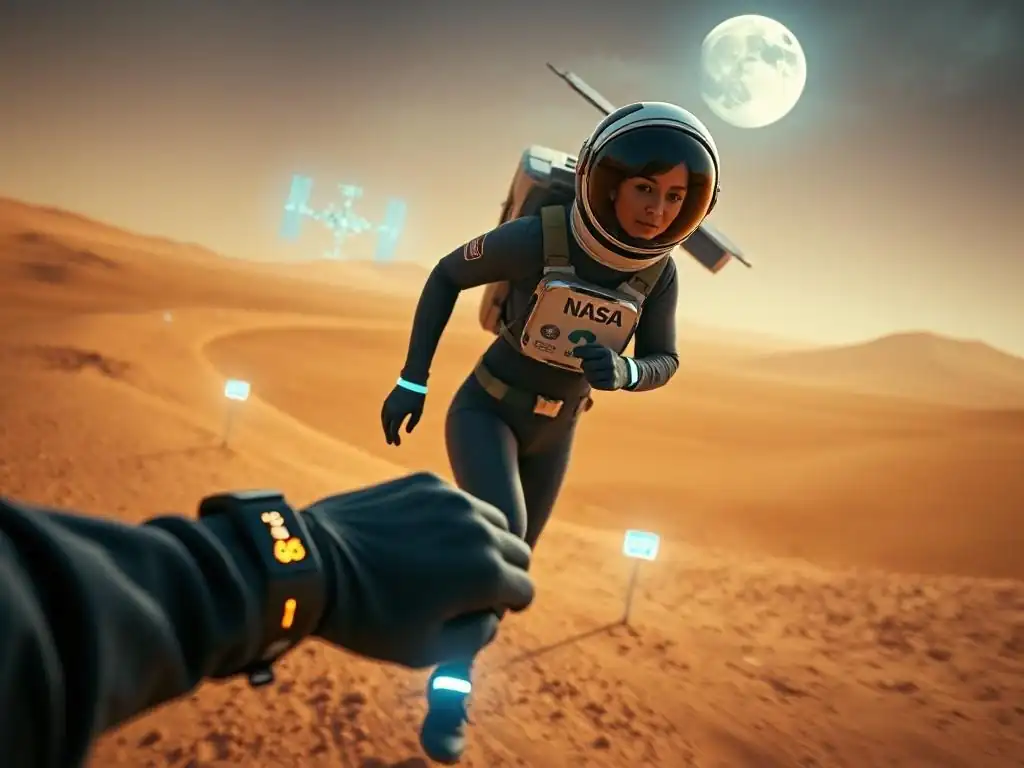
On April 16, 2007, Sunita Williams made history by becoming the first person to run a marathon in space. Strapped to a treadmill aboard the International Space Station, she completed the 26.2-mile (42.195-kilometer) Boston Marathon in 4 hours, 23 minutes, and 10 seconds. This extraordinary feat was not just a personal triumph but a powerful demonstration of human ingenuity and physical endurance in the most unique of circumstances. She ran concurrently with the actual Boston Marathon taking place on Earth, wearing a race bib and even having her time recorded.
This iconic event captivated audiences worldwide, showcasing the importance of physical fitness for astronauts and the innovative ways in which they maintain their well-being in orbit. The space marathon also served as a unique outreach tool, connecting the rigorous demands of space exploration with a relatable human endeavor. Her determination to complete the marathon, despite the challenges of microgravity and the specialized equipment required, cemented her place in popular culture and became an unforgettable highlight of her "Sunita Williams space marathon biography."
Expedition 32/33: Commanding the International Space Station
Sunita Williams returned to the International Space Station for her second long-duration mission, Expedition 32/33, launching on July 15, 2012, aboard Soyuz TMA-05M. Initially serving as a flight engineer for Expedition 32, she then assumed command of the ISS for Expedition 33, becoming only the second woman in history to hold this prestigious leadership role. Her total time in space across her two missions reached 322 days, solidifying her status as one of NASA's most experienced astronauts.
As commander of Expedition 33, Sunita Williams was responsible for the safety and well-being of a multinational crew, the successful execution of complex scientific research, and the overall operation of the sprawling orbital outpost. Her leadership during this 127-day mission was crucial in coordinating activities between various international partners and ensuring the seamless functioning of the station's intricate systems. This command role further underscored her capabilities and added another significant achievement to her "Sunita Williams space marathon biography."
Leadership in Orbit: Responsibilities and Challenges
The role of an International Space Station commander is multifaceted and demanding, requiring a unique blend of technical expertise, interpersonal skills, and crisis management capabilities. Sunita Williams' responsibilities included overseeing daily operations, managing the crew's schedule, coordinating with multiple international mission control centers, and ensuring the successful execution of hundreds of scientific experiments. She was the ultimate authority on board, tasked with making critical decisions that impacted the safety and productivity of the entire mission.
Leading an international crew in the confined, high-stakes environment of the ISS presented distinct challenges, such as navigating cultural differences, maintaining morale during long periods of isolation, and responding effectively to unexpected technical issues or emergencies. Sunita Williams' calm demeanor and decisive leadership were vital in fostering a cohesive and productive environment. Her ability to inspire confidence and manage complex situations in microgravity showcased exceptional leadership, a core theme in her "Sunita Williams space marathon biography."
Scientific Contributions: Research and Experiments Conducted
During her command of Expedition 33, Sunita Williams oversaw a wide array of scientific research that contributed significantly to our understanding of human physiology, materials science, and Earth observation. Experiments focused on areas such as the effects of long-duration spaceflight on bone density and muscle atrophy, crucial for planning future deep-space missions to destinations like Mars. The crew also conducted studies on fluid physics, combustion science, and the growth of crystals in microgravity, which have implications for various industries on Earth.
Beyond human-focused research, the mission involved continuous Earth observation, monitoring climate patterns, natural disasters, and changes in land use. The crew also maintained and operated external payloads and robotic systems, some of which were dedicated to astrophysics and space weather research. Sunita Williams' direct involvement in these diverse scientific endeavors, from setting up experiments to collecting data, highlights her commitment to advancing scientific knowledge through space exploration.
Sunita Williams' Spacewalks: Braving the Vacuum
Spacewalk Details: Objectives, Tasks, and Challenges Faced
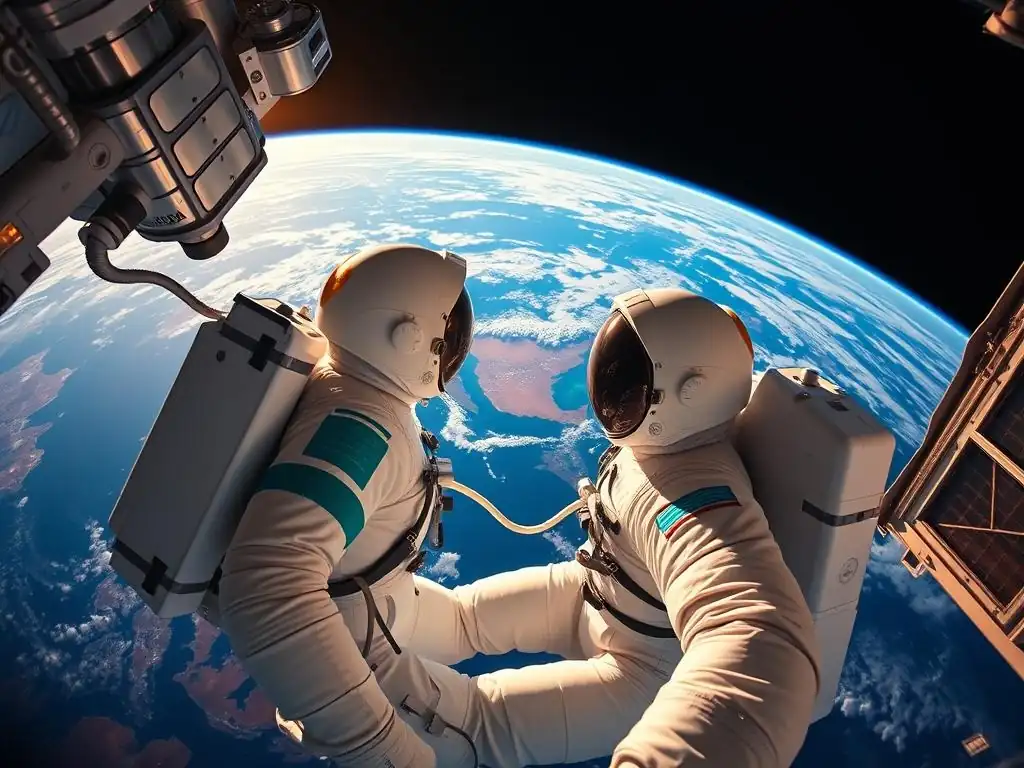
Sunita Williams has distinguished herself as one of the most experienced spacewalkers in history, having completed a total of seven spacewalks (Extravehicular Activities or EVAs) with a cumulative time of 50 hours and 40 minutes. At the time of her first mission, this total set a record for the most spacewalk time by a female astronaut. The primary objectives of these spacewalks ranged from the critical maintenance and repair of the International Space Station's external components to the installation of new modules and equipment crucial for the station's expansion and functionality.
Performing a spacewalk is an incredibly demanding and high-stakes endeavor. Astronauts must operate in a bulky spacesuit that acts as a miniature spacecraft, providing life support and protection against the extreme temperatures and vacuum of space. Challenges include managing tools in microgravity, maintaining orientation, and performing intricate tasks with gloved hands. Williams' spacewalks involved complex procedures like reconfiguring the station's power grid, installing cooling systems, and replacing faulty equipment, requiring immense precision, strength, and mental fortitude.
Contributions to ISS Maintenance and Critical Repairs
During her first mission, Expedition 14/15, Sunita Williams performed three spacewalks that were instrumental in reconfiguring the International Space Station's electrical power system. These EVAs involved connecting new power lines and relocating vital components, tasks critical for the station's continued operation and future expansion. She also played a key role in the installation of the Harmony node, a pivotal connecting module for future international laboratories and spacecraft docking ports.
Her contributions continued during Expedition 32/33, where she conducted two more spacewalks. One particularly vital EVA involved repairing an external ammonia leak in a radiator, a critical component of the station's cooling system. This complex and time-sensitive repair ensured the continued operability and safety of the ISS. Sunita Williams' extensive spacewalk experience and her direct involvement in these crucial maintenance and repair tasks have been indispensable to the ongoing success and longevity of the International Space Station, making her spacewalks a central part of her "Sunita Williams space marathon biography."
Sunita Williams: Beyond the Missions - Inspiration and Legacy
Inspiring Future Generations: STEM Outreach and Education
Beyond her operational achievements in space, Sunita Williams has become a powerful advocate for Science, Technology, Engineering, and Mathematics (STEM) education. She frequently engages in public appearances, educational programs, and interviews, sharing her unique experiences to ignite curiosity and passion for space exploration and scientific careers among young people. Her personal story, particularly her journey from a naval aviator to an accomplished astronaut and her historic space marathon, serves as a compelling narrative that demystifies space travel and makes scientific pursuits more accessible.
Her ability to connect with diverse audiences, from elementary school children to university students, has made her an effective ambassador for NASA and the broader scientific community. By highlighting the challenges and rewards of her career, she encourages students, especially girls, to pursue fields traditionally underrepresented by women. Sunita Williams embodies the idea that dedication, perseverance, and a strong educational foundation can lead to extraordinary achievements, reinforcing the inspirational aspect of her "Sunita Williams space marathon biography."
Impact on Space Exploration: Advancements and Contributions
Sunita Williams' impact on space exploration extends far beyond her personal records and missions. Her long-duration flights provided invaluable physiological data on human adaptation to microgravity, contributing to the development of countermeasures for future deep-space missions. Her extensive experience in spacewalks, totaling over 50 hours, significantly advanced the techniques and procedures for external assembly, maintenance, and repair of orbital infrastructure, proving crucial for the ongoing success of the ISS.
Furthermore, her role as an ISS commander demonstrated the capabilities of diverse leadership in complex, multinational scientific and engineering endeavors. She proved that effective leadership transcends gender, fostering collaboration and achieving critical mission objectives in a high-pressure environment. Her contributions have directly influenced operational protocols, technological advancements, and the overall understanding of human endurance and capability in space, leaving an indelible mark on the field.
Awards, Recognition, and Continued Advocacy for Space Exploration
Throughout her illustrious career, Sunita Williams has received numerous awards and accolades, reflecting her exceptional service and groundbreaking achievements. These include prestigious honors such as the Defense Superior Service Medal, the Legion of Merit, the Navy Commendation Medal, and multiple NASA Space Flight Medals. Internationally, she was awarded the Padma Bhushan by the Government of India, one of the nation's highest civilian honors, recognizing her contributions and heritage.
Her commitment to space exploration continues actively. Sunita Williams is currently assigned to the Boeing Starliner program, serving as a test pilot for the next generation of commercial crew spacecraft. Her involvement in the Crew Flight Test (CFT) mission underscores her ongoing dedication to advancing human spaceflight capabilities and certifying new vehicles that will transport astronauts to the ISS and potentially beyond. This continued advocacy and direct participation ensure that her "Sunita Williams space marathon biography" is still being written, inspiring new frontiers.
The Enduring Significance of Sunita Williams' Space Journey
Contributions to Women in Spaceflight: Breaking Barriers and Setting Examples
Sunita Williams stands as a towering figure in the history of women in spaceflight. Her record-breaking achievements, including her long-duration flight record and her extensive spacewalk time (at the time of her missions), shattered previous benchmarks and provided undeniable proof of women's physical and mental endurance in the extreme environment of space. She demonstrated that women possess the same capabilities and resilience as their male counterparts for the most demanding roles in space exploration.
Moreover, her command of the International Space Station was a pivotal moment, showcasing women's leadership capabilities in highly technical, high-stakes international projects. By excelling in such a visible and critical role, she provided a powerful counter-narrative to historical biases and stereotypes, inspiring countless women and girls to pursue careers in science, engineering, and space. Her journey serves as a compelling testament to the ongoing breaking of barriers for women in STEM fields.
A Role Model in Space Science: Leadership, Dedication, and Achievements
Sunita Williams' career epitomizes the qualities of an exemplary role model in space science: unwavering dedication, relentless perseverance, and exceptional leadership. From her rigorous training as a naval aviator to her demanding assignments as an astronaut and ISS commander, she consistently demonstrated the commitment and resolve required for success in the most challenging environments. Her journey illustrates that extraordinary achievements are born from consistent effort and a passion for pushing boundaries.
Her multifaceted accomplishments—not only as a skilled pilot and astronaut but also as the first person to run a marathon in space, a prolific spacewalker, and a respected commander—paint a comprehensive picture of a truly remarkable individual. This rich and varied "Sunita Williams space marathon biography" makes her an enduring source of inspiration for aspiring scientists, engineers, and explorers worldwide, showcasing the profound impact one individual can have on the advancement of human knowledge and capability.
Future Endeavors: Potential Missions and Continued Contributions
Sunita Williams remains at the forefront of human spaceflight, with her current assignment to the Boeing Starliner program. She is one of the elite astronauts selected to fly the Starliner spacecraft, a critical component of NASA's Commercial Crew Program, designed to provide independent crew transport capabilities to the International Space Station. Her anticipated role in the Crew Flight Test (CFT) mission highlights her continued active participation in shaping the future of space travel.
Her invaluable experience, spanning multiple space missions and decades of dedicated service, will be instrumental in certifying the Starliner spacecraft for regular crewed operations. This commitment to testing and validating new space vehicles paves the way for even more ambitious future missions, potentially including deeper explorations into the solar system, such as to the Moon or Mars. Sunita Williams' "Sunita Williams space marathon biography" continues to evolve, promising further contributions to humanity's quest to explore the cosmos.
Frequently Asked Questions
What is Sunita Williams primarily known for in the context of space exploration?
Sunita Williams is renowned for her endurance and spacewalk records as an astronaut. She notably combined her passion for marathons with her space missions.
What challenges did women like Sunita Williams often face in the field of science and space exploration?
Women in science, including astronauts, often encountered gender bias and limited opportunities in historically male-dominated fields. They had to overcome societal expectations.
How does "WomenInScienceHistory.com" aim to inspire future generations?
The website highlights the stories of pioneering female scientists, like Sunita Williams, to demonstrate their groundbreaking achievements. This sheds light on overlooked narratives and inspires future scientists.
What aspects of Sunita Williams's life are typically covered in a biography?
A biography of Sunita Williams usually includes her early life, education, training, and career milestones as a NASA astronaut. It also covers her record-breaking space missions.
Besides her endurance records, what other significant contribution did Sunita Williams make to space exploration?
Sunita Williams commanded space missions, showcasing her leadership skills and technical expertise. She also participated in crucial research and experiments while in space.
Final Reflection: Reaching for the Stars, Running Towards Tomorrow
The extraordinary journey of Sunita Williams, as we've explored, isn't just a biography; it's a testament to the boundless potential of human ambition. Her dedication to pushing physical and mental limits, both on Earth and in the vast expanse of space, resonates deeply in a world constantly seeking inspiration and innovation. Sunita's story reminds us that even the most audacious dreams are within reach with unwavering commitment and relentless perseverance.
The impact of Sunita Williams extends far beyond the scientific community; she has become a symbol of what is possible when we dare to challenge conventional boundaries. Her space marathon, a feat of both physical endurance and technological ingenuity, continues to inspire generations, particularly young women, to pursue careers in STEM fields. There's no place that you can't go if you put your mind to it,
Sunita once said, encapsulating the spirit of exploration and the power of self-belief that defines her legacy.
As we reflect on Sunita Williams' cosmic odyssey, let us not only marvel at her achievements but also internalize the lessons of her journey. What personal "space marathon" are you preparing for? What limitations are you ready to transcend? Embrace the spirit of exploration, cultivate unwavering determination, and dare to run towards your own stars, knowing that the universe of possibilities awaits.
Chart Your Own Course: Unveiling Your Inner Explorer!
Thank you for joining us on this incredible journey through Sunita Williams's extraordinary life and achievements! We hope you've found inspiration in her dedication and courage. Now, it's time to take those lessons and apply them to your own life.
Here's how you can begin:
- Embrace the Challenge: Identify a personal goal that feels both exciting and daunting. Just like Sunita's spacewalks, push yourself beyond your comfort zone.
- Inspire Others: Share this article with someone who needs a dose of motivation or who dreams of pursuing a career in STEM.
- Explore Related Content: Delve deeper into the lives of other inspiring women in science on WomenInScienceHistory.com.
What small step will you take today to unleash your own inner trailblazer?