
Software Sentinels: Female Engineers Ensuring Flawless Space Missions

Welcome to WomenInScienceHistory.com!
Prepare to be inspired by the unsung heroines of scientific discovery. Dive into the remarkable stories of women who dared to challenge the status quo and reshape our understanding of the world. Today, we spotlight the crucial role of female engineers in ensuring the flawless execution of space missions. Ever wondered how these brilliant minds contribute to keeping our spacecraft, and our astronauts, safe? Explore the captivating world of Software Sentinels and uncover the vital contributions these women make to reaching for the stars. Read on to discover their impactful stories!
- Introduction: The Vital Role of Female Engineers in Space Exploration
- Early Pioneers: Trailblazing Female Engineers in Space Programs
- Modern-Day Software Sentinels: Women Shaping the Future of Space Travel
- The Crucial Role of Software in Ensuring Flawless Space Missions
- Female Engineers and the Development of Critical Space Mission Software
- Overcoming Challenges and Breaking Barriers: The Stories of Female Engineers
- The Future is Female: The Bright Prospects for Women in Space Engineering
- Conclusion: Recognizing the Enduring Impact of Female Engineers on Space Exploration
-
Frequently Asked Questions
- What role have female engineers played in ensuring the success of space missions?
- What kinds of challenges did female engineers face in the historically male-dominated field of space exploration?
- Can you provide examples of groundbreaking work by female engineers in space missions?
- How does WomenInScienceHistory.com contribute to highlighting the achievements of female engineers in space missions?
- Why is it important to celebrate and recognize the contributions of female engineers in space missions?
- Final Reflection: Guardians of the Cosmos
- Ignite Your Own Tech Journey!
Introduction: The Vital Role of Female Engineers in Space Exploration
Highlighting the Indispensable Contributions of Women to Space Missions
For decades, the narrative of space exploration often highlighted male astronauts and engineers, subtly overshadowing the crucial, often unsung, contributions of women. However, a closer look at the history and present of space missions reveals that countless groundbreaking achievements would have been impossible without the meticulous work of female engineers.
These women, particularly those specializing in software development, have acted as "software sentinels," meticulously designing, testing, and maintaining the complex digital systems that underpin every facet of space travel, from launch to orbital maneuvers and safe return. Their precision, foresight, and innovative problem-solving have been indispensable in ensuring the flawless execution of some of humanity's most ambitious endeavors beyond Earth.
The intricate dance of rockets, satellites, and probes in the vastness of space relies fundamentally on robust and error-free software. From calculating precise trajectories to managing intricate life support systems, the digital backbone of any space mission is its most vulnerable yet vital component.
Female engineers have stepped into this critical arena, contributing their expertise to craft the intricate code that guides spacecraft, processes invaluable scientific data, and safeguards the lives of astronauts. Their work directly translates into mission reliability, preventing costly failures and ensuring that every second of a mission, from launch to the return journey, proceeds exactly as planned, a testament to their unwavering dedication and technical prowess.
The Growing Presence of Women in Aerospace Engineering
Historically, the aerospace engineering field, like many STEM disciplines, was predominantly male. In the mid-20th century, the number of women pursuing engineering degrees and careers was significantly lower compared to men, often facing societal barriers and limited access to educational and professional opportunities. However, decades of advocacy, changing societal norms, and a growing recognition of the value of diverse perspectives have led to a gradual, yet impactful, shift. While still striving for full parity, the presence of women in aerospace engineering has steadily increased, bringing new insights and strengthening the field.
Today, universities report a growing enrollment of women in engineering programs, including aerospace. For instance, while specific up-to-the-minute global statistics can vary, many leading engineering schools now see female students comprising approximately 20-25% or more of their undergraduate engineering cohorts, with some specialized fields like aerospace showing similar trends.
This growing pipeline of talented female engineers is directly impacting the space sector, filling critical roles in software development, systems integration, and mission operations. Their increasing numbers are not just a matter of diversity; they represent an expansion of the talent pool, bringing a wider range of problem-solving approaches and enhancing the overall capability and innovation within space exploration.
Early Pioneers: Trailblazing Female Engineers in Space Programs
Margaret Hamilton: A Legacy of Innovation in Flight Software Development
Margaret Hamilton stands as a monumental figure in the history of software engineering, particularly for her pivotal contributions to NASA's Apollo program. As the Director of the Software Engineering Division at the MIT Instrumentation Laboratory, she led the team responsible for developing the on-board flight software for the Apollo command and lunar modules. Her work was groundbreaking, not only in its complexity but also in defining the very discipline of "software engineering" itself, a term she is credited with coining to grant the field the same respect as other engineering disciplines.
Hamilton's team developed sophisticated, asynchronous software that could handle multiple tasks simultaneously, a revolutionary concept for its time. A prime example of her team's software preventing disaster occurred during the Apollo 11 lunar landing. As the lunar module approached the moon, the computer was overloaded with data from an incorrectly activated rendezvous radar.
The software, designed with robust error detection and recovery routines, intelligently offloaded less critical tasks and alerted the astronauts with priority alarms (a "1202" alarm), indicating the computer was busy but still functioning. This foresight allowed Neil Armstrong and Buzz Aldrin to proceed with the landing, averting a mission abort and ensuring humanity's first steps on the lunar surface.
Katherine Johnson: Overcoming Obstacles to Achieve Space Mission Success
Katherine Johnson, a brilliant mathematician often referred to as a "human computer" at NASA, played an absolutely critical role in the early American spaceflights, directly enabling engineering and mission success through her precise calculations. While not formally an "engineer" in the traditional sense, her work was foundational to the engineering designs and operational plans for these missions, making her an indispensable part of the engineering team's triumph. Her calculations provided the bedrock of confidence that allowed engineers to design and execute missions safely.
Johnson's extraordinary ability to calculate orbital mechanics and trajectories by hand was vital for the Mercury and Apollo programs. She famously computed the trajectory for Alan Shepard's 1961 Freedom 7 mission, America's first human spaceflight. Later, she was asked to verify the electronic computer's calculations for John Glenn's 1962 orbital mission, a testament to the trust placed in her accuracy; Glenn famously refused to fly until Johnson personally re-checked the numbers.
Her calculations were also crucial for the Apollo 11 mission's trajectory to the Moon and the subsequent safe return of the Apollo 13 crew, providing critical backup calculations when the mission faced catastrophic failure. Johnson faced significant racial and gender discrimination throughout her career but persevered, her mathematical genius serving as a direct conduit to mission success, ensuring the safety and precision required for groundbreaking space endeavors.
The Challenges Faced by Early Female Engineers in Male-Dominated Space Programs
The early days of space exploration were characterized by a deeply entrenched male-dominated culture, where women, particularly in technical roles, faced formidable challenges. Female engineers and mathematicians often encountered skepticism regarding their capabilities, were assigned to less visible roles, or had their contributions downplayed. They frequently had to work twice as hard to prove their competence and secure recognition that their male counterparts received more readily. This systemic bias meant they often lacked access to the informal networks and mentorship opportunities that were crucial for career advancement, further isolating them within their professional environments.
Beyond professional hurdles, these pioneering women also navigated societal expectations that often pushed women towards domestic roles rather than demanding scientific careers. They frequently faced subtle and overt discrimination, from being excluded from meetings to having their ideas dismissed until repeated by a male colleague. Despite these significant obstacles, their unwavering passion for science and engineering, coupled with sheer determination, enabled them to not only survive but thrive. Their resilience paved the way for future generations of female engineers, slowly but surely chipping away at the barriers and demonstrating unequivocally that talent knows no gender.
Modern-Day Software Sentinels: Women Shaping the Future of Space Travel
Poppy Northcutt: Leading the Way in Trajectory Analysis and Engineering
Poppy Northcutt broke significant ground in the 1960s as the first woman to work in an operational role at NASA's Mission Control Center in Houston. As a "computress" for TRW Systems, a NASA contractor, she was quickly promoted to a trajectory engineer, a highly technical and critical position. Her responsibilities included calculating the complex trajectories for lunar missions, ensuring that spacecraft were on the correct path to the Moon and back. This role demanded incredible precision and an astute understanding of orbital mechanics and physics.
Northcutt's most notable contributions came during the Apollo 8 mission, where her calculations were essential for the spacecraft's successful journey around the Moon and safe return. Later, during the perilous Apollo 13 mission, her expertise was instrumental in developing the emergency return-to-Earth trajectory, which was crucial for the crew's survival after their spacecraft suffered a critical malfunction. Her ability to perform rapid, accurate calculations under immense pressure, and her direct involvement in the real-time decision-making process, underscored the vital role of female engineers in ensuring the safety and success of these complex space missions.
Aprille Ericsson-Jackson: Ensuring Mission Reliability Through Systems Engineering Excellence
Dr. Aprille Ericsson-Jackson is a distinguished aerospace engineer at NASA's Goddard Space Flight Center, making her the first African American woman to earn a Ph.D. in Mechanical Engineering from Howard University and the first African American woman to earn a Ph.D. in Engineering at NASA Goddard. Her work primarily focuses on systems engineering, an interdisciplinary field that ensures all components of a complex system, such as a spacecraft, function cohesively and reliably. Her meticulous approach to design, development, and testing is critical for mission success.
Throughout her career, Dr. Ericsson-Jackson has contributed to numerous high-profile NASA missions. She has worked on instruments for the Tropical Rainfall Measuring Mission (TRMM), which provided vital data on climate and weather patterns, and the Lunar Reconnaissance Orbiter (LRO), which maps the Moon's surface.
Her role as a systems engineer involves managing the interfaces between various spacecraft subsystems – from propulsion and power to communications and scientific instruments – ensuring that every piece of hardware and software integrates seamlessly. This holistic view and rigorous attention to detail are paramount in preventing failures and guaranteeing the longevity and performance of space missions, directly enhancing their reliability and effectiveness.
The Impact of Female Engineers on the Safety and Efficiency of Space Missions
The contributions of female engineers extend far beyond individual achievements; their collective impact has profoundly enhanced the safety and efficiency of space missions. By bringing diverse perspectives and problem-solving approaches to complex challenges, they contribute to more robust and resilient designs. Studies and anecdotal evidence suggest that diverse teams often identify more potential failure points and develop more comprehensive solutions, leading to higher quality outcomes in highly technical fields like aerospace engineering. This diversity of thought is particularly valuable in software development, where overlooked edge cases can have catastrophic consequences.
Furthermore, the meticulous nature and attention to detail often attributed to female engineers in their work on critical systems, such as flight software and life support, have directly contributed to mitigating risks. Their rigorous testing protocols, careful validation processes, and dedication to ensuring system integrity have prevented countless potential failures.
From optimizing fuel consumption through precise trajectory calculations to designing intuitive interfaces for mission control, the innovations brought forth by female engineers have made space travel not only safer for astronauts but also more efficient in terms of resource utilization and operational costs, solidifying their indispensable role in every successful journey beyond Earth.
The Crucial Role of Software in Ensuring Flawless Space Missions
Software engineering forms the invisible yet indispensable backbone of mission control and spacecraft navigation, orchestrating every maneuver and communication during a space mission. From the moment a rocket leaves the launchpad, complex algorithms and real-time operating systems manage its ascent, ensuring it stays on course and reaches its designated orbit. Ground control software, developed by skilled engineers, processes telemetry data from spacecraft, allowing human operators to monitor systems, send commands, and make critical decisions based on real-time information. This continuous feedback loop, enabled by robust software, is vital for maintaining control over assets millions of miles away.
Beyond Earth's orbit, navigation software becomes even more critical for deep space missions. Algorithms calculate precise interplanetary trajectories, factoring in gravitational pulls from multiple celestial bodies and accounting for tiny deviations over vast distances. Software enables autonomous navigation systems, rendezvous and docking procedures for spacecraft like the International Space Station, and intricate landing sequences on other planets. Without flawlessly executed code, the precision required for these operations—down to fractions of a degree or milliseconds—would be impossible, making software engineers, including many talented female engineers, the silent architects of every successful journey into the cosmos.
The Importance of Robust Software for Life Support Systems in Space
For human spaceflight, the reliability of life support systems is paramount, and robust software is the unseen guardian of astronaut well-being. These critical systems manage the internal environment of spacecraft and habitats, controlling factors such as oxygen levels, carbon dioxide removal, temperature, humidity, and water recycling.
The software continuously monitors sensor data, adjusts environmental controls, and triggers alarms or automated responses in case of anomalies. For instance, on the International Space Station, sophisticated software oversees the Environmental Control and Life Support System (ECLSS), ensuring that the air is breathable, water is potable, and temperatures are stable for the long-duration stays of the crew.
The development of this software demands extreme precision and fault tolerance. Engineers must anticipate every conceivable failure mode and design in redundancies and fail-safes. The code must be capable of autonomous decision-making in emergencies, such as automatically switching to backup systems or initiating emergency purges.
The lives of astronauts literally depend on the flawless execution of these programs, making the contributions of software engineers, including dedicated female engineers space missions rely on, absolutely non-negotiable. Their work ensures that astronauts can focus on their scientific objectives and mission tasks, confident that their environment is safely and reliably managed by intelligent systems.
Preventing Disasters: Software's Role in Mitigating Risks in Space Exploration
In the high-stakes realm of space exploration, even minor software glitches can lead to catastrophic failures, making software's role in risk mitigation absolutely critical. One stark example illustrating the dire consequences of software errors is the Mars Climate Orbiter incident in 1999, where a mix-up between metric and imperial units in different parts of the navigation software led to the spacecraft entering the Martian atmosphere at too low an altitude and disintegrating. This costly failure underscored the absolute necessity of rigorous software verification and validation, a task that female engineers contribute significantly to.
To prevent such disasters, software engineers develop sophisticated diagnostic tools, simulation environments, and error-detection protocols. They design software with multiple layers of redundancy, allowing systems to automatically switch to backups if a primary component fails. Furthermore, fault-tolerant programming ensures that systems can continue to operate even when experiencing partial failures, gracefully degrading rather than crashing completely. Through meticulous code reviews, extensive testing against every conceivable scenario, and the implementation of robust error-handling routines, software acts as the primary defense against unforeseen challenges and system malfunctions, safeguarding missions and billions of dollars in investment.
Female Engineers and the Development of Critical Space Mission Software
Designing and Implementing Software for Spacecraft Control Systems
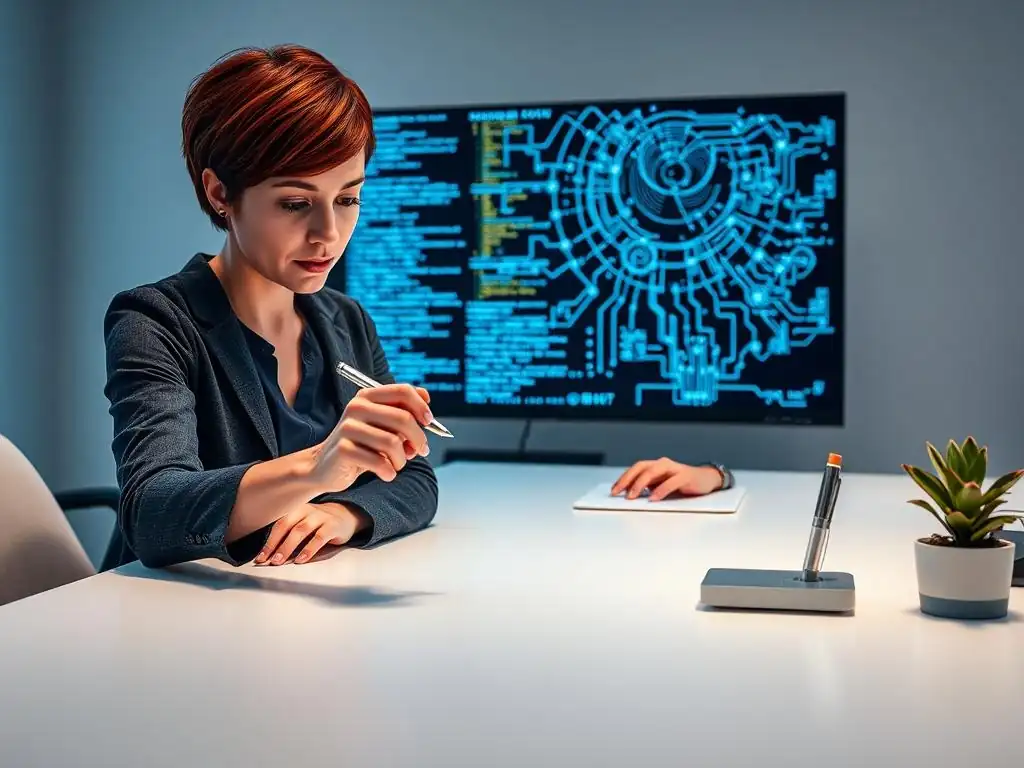
Female engineers are at the forefront of designing and implementing the intricate software that forms the "brain" of spacecraft control systems. This involves developing the operating systems that run the entire vehicle, handling everything from power management and thermal control to communication links with Earth.
They write complex algorithms for attitude control, ensuring the spacecraft maintains its correct orientation in space, and for propulsion systems, executing precise thrusts for orbital adjustments or deep-space maneuvers. These systems demand real-time responsiveness and absolute reliability, as a delay of even milliseconds or an error in a single line of code can lead to mission failure.
The development process is highly iterative, involving extensive coding, debugging, and rigorous testing in simulated space environments. Female engineers contribute to creating the command sequences that guide spacecraft through their mission profiles, from deploying solar arrays to activating scientific instruments. Their expertise in embedded systems and real-time programming is crucial for crafting robust and efficient code that operates flawlessly within the constrained computational resources and harsh radiation environments of space. The precision and foresight they bring to this work directly translate into the successful execution of complex space missions.
Developing Software for Data Analysis and Scientific Research in Space
Beyond controlling spacecraft, female engineers are also instrumental in developing the sophisticated software necessary for processing and analyzing the vast amounts of scientific data collected during space missions. Telescopes like the Hubble Space Telescope and probes exploring distant planets generate terabytes of raw data, from images and spectroscopic readings to atmospheric compositions and gravitational measurements. Engineers design the software pipelines that transform this raw data into meaningful scientific insights, enabling astronomers and planetary scientists to make groundbreaking discoveries.
This involves creating algorithms for image processing, noise reduction, data compression, and visualization tools. Female engineers contribute to developing software that can identify exoplanets from subtle stellar wobbles, map the surface of Mars in intricate detail, or analyze the composition of interstellar dust. Their work on these analytical tools is vital for translating complex sensor readings into understandable formats, allowing researchers to uncover the secrets of the universe. Without their contributions, much of the invaluable data gathered by space missions would remain uninterpretable, highlighting their critical role in advancing scientific knowledge.
Ensuring Software Security and Reliability for Long-Duration Spaceflights
As space missions become longer in duration and more interconnected, ensuring software security and reliability has become an increasingly complex challenge, one that female engineers are actively tackling. Spacecraft, especially those on multi-year or multi-decade missions like the Voyager probes, require software that can operate without degradation and resist potential cyber threats. Engineers develop robust cybersecurity measures to protect spacecraft from unauthorized access or malicious attacks, which could compromise mission integrity or sensitive data. This involves encryption, secure boot processes, and intrusion detection systems tailored for space environments.
Furthermore, long-duration missions necessitate software that can be updated or patched remotely, often from millions of miles away. Female engineers design systems that can safely receive and implement these updates without disrupting critical operations or risking system failure.
They also focus on creating highly reliable software with built-in redundancy and fault tolerance, ensuring that even if a component degrades over time, the system can self-diagnose and recover, or seamlessly switch to a backup. Their work in this domain is fundamental to maintaining the operational longevity and integrity of spacecraft, ensuring that humanity's robotic explorers can continue their journeys for decades, delivering invaluable data back to Earth.
Overcoming Challenges and Breaking Barriers: The Stories of Female Engineers
Addressing Gender Bias in the Aerospace Engineering Industry
Despite significant progress, gender bias remains a persistent challenge in the aerospace engineering industry, impacting the careers of many female engineers. This bias can manifest in various forms, from unconscious assumptions about women's technical capabilities to overt discrimination in hiring, promotion, or compensation. Female engineers often report experiencing "imposter syndrome," a feeling of self-doubt despite accomplishments, exacerbated by being in environments where they are often a minority. They may also face a lack of recognition for their achievements or be excluded from informal networks that are crucial for career progression.
Organizations and individual advocates are actively working to address these biases through unconscious bias training, promoting equitable hiring practices, and fostering inclusive workplace cultures. The stories of female engineers who have navigated these challenges highlight the resilience and determination required to succeed. By openly discussing these issues and implementing proactive strategies, the industry is slowly but surely creating more welcoming and equitable environments, ensuring that talent is recognized and rewarded regardless of gender, which is crucial for attracting and retaining the best minds in space exploration.
Mentorship and Support Networks for Women in Space Science
Mentorship and strong support networks have proven invaluable for women pursuing careers in space science and aerospace engineering, helping them navigate challenges and thrive in often demanding fields. Experienced female engineers, recognizing the hurdles faced by newcomers, often step into mentorship roles, providing guidance on career paths, technical skills, and professional development. These relationships offer a safe space for discussing workplace issues, building confidence, and gaining insights into navigating complex organizational structures.
Beyond individual mentorships, professional organizations like the Society of Women Engineers (SWE) and Women in Aerospace (WIA) provide crucial support networks. These groups offer opportunities for networking, skill-building workshops, and advocacy for women's issues within the industry. They host conferences, create scholarships, and foster communities where female engineers can connect with peers, share experiences, and find solidarity. These networks are vital for combating feelings of isolation and for empowering women to achieve leadership positions and make even greater contributions to space missions and the broader scientific community.
Inspiring Future Generations of Female Engineers in Space Exploration
The visibility of successful female engineers in space exploration is paramount for inspiring future generations and breaking down outdated stereotypes about who belongs in STEM fields. When young girls see women like Dr. Aprille Ericsson-Jackson or figures like Margaret Hamilton celebrated for their technical brilliance, it ignites a spark of possibility and encourages them to pursue their own interests in science and engineering. These role models demonstrate that a career in space is not only achievable but also incredibly rewarding, directly influencing educational and career choices.
Many current female engineers actively engage in outreach programs, visiting schools, participating in science fairs, and mentoring students. They share their personal journeys, demystify complex engineering concepts, and highlight the exciting opportunities available in space. These efforts are crucial for building a diverse pipeline of talent, ensuring that the next generation of space explorers, software developers, and mission controllers includes a significant number of bright, innovative female engineers, ready to push the boundaries of human knowledge and exploration even further.
The Future is Female: The Bright Prospects for Women in Space Engineering
The Increasing Demand for Skilled Female Engineers in the Space Sector
The global space sector is experiencing unprecedented growth, driven by both traditional government agencies and a burgeoning commercial space industry. This expansion, encompassing everything from satellite constellations for global internet to lunar bases and Mars missions, is creating a significant and increasing demand for skilled engineers across all disciplines, particularly in software.
As the industry scales, there is a clear recognition that a diverse workforce, including a strong representation of female engineers, is essential to meet the innovation and talent requirements. Companies like SpaceX, Blue Origin, and countless startups are actively seeking top talent, and they understand that limiting their talent pool by overlooking women would be detrimental to their progress.
This demand translates into bright prospects for female engineers space missions will increasingly rely upon. Universities are seeing more women entering aerospace and software engineering programs, indicating a growing pipeline of qualified candidates.
Furthermore, companies are implementing diversity and inclusion initiatives not just for ethical reasons, but also because diverse teams have been shown to be more innovative, productive, and resilient. This strategic need for talent across the board means that opportunities for female engineers in roles ranging from flight software development to mission operations are not just available, but actively sought after, signaling a positive shift in the industry.
Opportunities for Women in Emerging Areas of Space Technology
The rapid pace of technological advancement in space is opening up entirely new and exciting opportunities for women in space engineering. Emerging areas like artificial intelligence (AI) and machine learning (ML) are becoming critical for autonomous spacecraft navigation, on-board data processing, and predictive maintenance, creating a high demand for female engineers with expertise in these cutting-edge fields. Robotics for in-space manufacturing, asteroid mining, and planetary surface exploration also present vast opportunities for women to design and program the next generation of robotic explorers and builders.
Furthermore, the development of quantum computing for complex simulations, advanced materials for lightweight spacecraft, and new propulsion systems are all areas where female engineers are making significant contributions. The focus on space sustainability, including debris mitigation and satellite servicing, also offers unique challenges requiring innovative engineering solutions. These new frontiers are less constrained by historical biases and offer fertile ground for women to lead, innovate, and define the future of space technology, ensuring their pivotal role in the next giant leaps for humankind.
Celebrating the Achievements of Women in Aerospace Engineering and Space Missions
Celebrating the remarkable achievements of women in aerospace engineering and space missions is not just about historical acknowledgment; it's about shaping the future. By highlighting the groundbreaking work of pioneers like Margaret Hamilton and contemporary leaders like Aprille Ericsson-Jackson, we inspire a new generation to see themselves as capable of achieving extraordinary feats in STEM. Public recognition through awards, documentaries, and educational initiatives amplifies their stories, making them accessible to a broader audience and correcting the historical imbalance in scientific narratives.
This ongoing celebration also serves to reinforce the invaluable contributions of female engineers to the success and safety of every space endeavor. It underscores that space exploration is a collective human enterprise, strengthened immeasurably by the full participation of diverse talents. As humanity looks towards ambitious goals like returning to the Moon and venturing to Mars, acknowledging and promoting the pivotal role of female engineers ensures that their expertise continues to be sought after, their innovations are fully leveraged, and their enduring impact on space exploration is recognized as fundamental to our journey among the stars.
Conclusion: Recognizing the Enduring Impact of Female Engineers on Space Exploration
A Call to Action: Supporting and Empowering Women in STEM Fields
The extraordinary achievements of female engineers, particularly their role as "software sentinels" ensuring flawless space missions, underscore an undeniable truth: the advancement of space exploration is inextricably linked to the full and equitable participation of women in STEM fields. Their contributions, from foundational flight software to cutting-edge data analysis tools, have been critical to every major milestone in humanity's journey beyond Earth.
To continue this progress, there is a clear call to action: we must actively support and empower women in STEM. This involves investing in early STEM education for girls, fostering inclusive learning environments, and challenging outdated stereotypes from a young age.
Furthermore, it requires creating equitable workplaces within the aerospace industry and beyond. This means implementing fair hiring and promotion practices, providing robust mentorship programs, and cultivating cultures that value diversity of thought and experience. By actively dismantling barriers and championing opportunities for women, we not only fulfill a moral imperative but also strategically strengthen the workforce that will drive future innovations. Ensuring that every talented mind, regardless of gender, has the opportunity to contribute is essential for solving the complex challenges of space exploration and unlocking its full potential.
Looking Ahead: The Continued Contributions of Women to the Advancement of Space Science
As humanity embarks on increasingly ambitious space endeavors—from building lunar outposts to sending crewed missions to Mars and beyond—the continued contributions of female engineers will be more vital than ever. The future of space science and exploration demands diverse perspectives, innovative problem-solving, and meticulous attention to detail, all qualities that female engineers bring in abundance. They will be at the forefront of developing the next generation of autonomous spacecraft, designing advanced life support systems for long-duration missions, and crafting the sophisticated software that will process unimaginable amounts of data from new frontiers.
The narrative of space exploration is evolving, increasingly recognizing and celebrating the profound impact of women. Their pioneering spirit, technical brilliance, and unwavering dedication have shaped the past and are undeniably charting the course for the future. The continued presence and leadership of female engineers space missions depend on will ensure that the journey into the cosmos is not only successful but also inclusive, innovative, and truly reflective of the best of human ingenuity. Their enduring legacy will be written in the stars, guiding humanity towards its ultimate destiny among the cosmos.
Frequently Asked Questions
What role have female engineers played in ensuring the success of space missions?
Female engineers have been critical in designing, testing, and implementing software and hardware systems that are essential for mission success. They often serve as "software sentinels", ensuring everything runs smoothly.
What kinds of challenges did female engineers face in the historically male-dominated field of space exploration?
They faced gender bias, limited opportunities for advancement, and a general lack of recognition for their contributions, often having their work undervalued or overlooked.
Can you provide examples of groundbreaking work by female engineers in space missions?
Many female engineers developed critical software for guidance systems, communication networks, and data analysis, contributing to the success of numerous space missions. Specific examples are detailed in the WomenInScienceHistory.com archives.
How does WomenInScienceHistory.com contribute to highlighting the achievements of female engineers in space missions?
The website features biographies, articles, and discussions that showcase the groundbreaking work of female engineers. It aims to inspire future generations by shedding light on these often overlooked stories.
Why is it important to celebrate and recognize the contributions of female engineers in space missions?
Recognizing their contributions helps to address historical inequalities, encourage more women to pursue STEM careers, and provide role models for aspiring scientists and engineers.
Final Reflection: Guardians of the Cosmos
The narrative we've explored, highlighting the vital role of female engineers in ensuring the success of space missions, is not just a historical account; it's a powerful testament to the ongoing need for diversity and inclusion in STEM fields. The meticulous work, innovative solutions, and unwavering dedication of these "Software Sentinels" directly impact our ability to explore the universe and push the boundaries of human knowledge, making their contributions immeasurably valuable today.
The influence of these pioneering women extends far beyond the technical realm. Their stories serve as beacons of inspiration, challenging societal norms and paving the way for future generations of female engineers. We see their impact in the growing number of women pursuing STEM careers and in the increasing recognition of the importance of diverse perspectives in problem-solving. The future belongs to those who believe in the beauty of their dreams,
Eleanor Roosevelt once said, and these women dared to dream of reaching for the stars, both literally and figuratively.
Now, consider your own role in shaping the future of STEM. How can you champion diversity and inclusion in your own sphere of influence? How can you encourage young women to pursue their passions, regardless of societal expectations? Let the stories of these "Software Sentinels" inspire you to become an advocate for a more equitable and innovative world, where every individual has the opportunity to contribute their unique talents to the grand adventure of space exploration and beyond.
Ignite Your Own Tech Journey!
Thank you for exploring the vital role of women engineers in shaping space missions. Now that you've seen their impact, it's time to consider your own potential.
Here are a few ways to get started:
- Explore coding: Dive into the world of programming with free online courses and tutorials. Find a language that sparks your interest and start building simple projects.
- Share this article: Help inspire the next generation of female engineers by sharing their stories on social media and with your network.
- Research Women in STEM Scholarships: Uncover opportunities that can help make your dreams a reality.
What small step will you take today to become part of the future of STEM?