
From Amateur Astronomers to Physics Pioneers: A 19th Century Woman's Journey

Welcome to WomenInScienceHistory.com!
Delve into the captivating world of women who defied expectations and shaped scientific progress. This month, we spotlight the remarkable legacy of 19th-century female astronomers, exploring how they navigated societal barriers to contribute groundbreaking discoveries to the field of physics. What challenges did they overcome, and how did their insights reshape our understanding of the cosmos? Uncover their untold stories and be inspired by their unwavering dedication to scientific exploration.
Celebrating 19th Century Women in Physics and Astronomy
The 19th century represented a period of immense scientific discovery and rapid technological advancement, yet it was also an era characterized by significant societal barriers for women. Despite these formidable obstacles, numerous women made indelible contributions to various scientific fields, often starting from unconventional paths. Many pioneering female astronomers, for instance, began their journeys as self-taught "amateurs" or assistants to male family members, slowly carving out their niches in a world largely dominated by men. Their stories highlight not only their individual brilliance but also the systemic challenges they had to overcome to gain recognition.
Among these remarkable individuals, Maria Mitchell stands out as a beacon of perseverance and scientific acumen. Her trajectory from a diligent astronomical observer in Nantucket to an internationally recognized comet discoverer and esteemed physics professor exemplifies the extraordinary journey undertaken by many 19th-century female astronomers. Her work not only expanded the understanding of the cosmos but also paved the way for future generations of women to pursue scientific careers, challenging the prevailing notions of women's capabilities in rigorous intellectual pursuits.
- What were some of the biggest obstacles faced by 19th century female astronomers?
- What kind of work did 19th century female astronomers typically engage in?
- Why is it important to highlight the contributions of 19th century female astronomers?
- Besides astronomy, what other fields did some of these women eventually contribute to?
- Where can I learn more about specific 19th century female astronomers and their stories?
Early Life and Astronomical Beginnings: Maria Mitchell's Passion for the Stars
Nurturing a Scientific Curiosity in Nantucket, Massachusetts
Maria Mitchell was born in Nantucket, Massachusetts, on August 1, 1818, into a Quaker family with a progressive outlook on education, particularly for girls. Her father, William Mitchell, was a schoolteacher and an avid amateur astronomer who played a pivotal role in nurturing her early scientific curiosity.
Unlike many fathers of the era, he actively involved his daughters in his astronomical pursuits, teaching Maria how to operate a telescope, understand celestial mechanics, and perform complex calculations necessary for navigation—a skill highly valued in the whaling town of Nantucket. This early exposure to practical astronomy and mathematics laid a strong foundation for her future groundbreaking work.
The intellectual environment of Nantucket, while relatively isolated, fostered a unique culture of self-reliance and intellectual inquiry. Maria Mitchell’s father's home observatory became her first classroom, where she spent countless hours observing the night sky. This informal yet rigorous education provided her with a level of practical astronomical knowledge that was rare for anyone, let alone a young woman, in the early 19th century. Her innate aptitude for observation and calculation quickly became apparent, setting her apart from her peers.
Initial Astronomical Observations and Self-Education
From a young age, Maria Mitchell assisted her father in his work, which included calculating nautical almanacs for whaling ship captains, a task requiring precise astronomical data and mathematical skill. This practical application of astronomical principles honed her abilities in observation and computation. She developed a meticulous approach to record-keeping and data analysis, essential for any serious scientific endeavor. Her self-education extended beyond her father's tutelage, as she devoured books on astronomy, mathematics, and natural philosophy.
Her position as librarian at the Nantucket Atheneum, which she held from 1836 to 1856, proved instrumental in her self-directed learning. This role provided her unparalleled access to a vast collection of scientific texts, journals, and instruments, far exceeding what most women, or even many men, could access at the time. She meticulously studied the works of leading astronomers and physicists, absorbing complex theories and observational techniques, further deepening her understanding of the universe.
Overcoming Barriers to Access Scientific Knowledge
The 19th century presented significant systemic barriers for women seeking formal scientific education. Universities and scientific societies were almost exclusively male domains, and opportunities for women to pursue higher education in fields like astronomy and physics were virtually nonexistent. Maria Mitchell, like many other aspiring 19th-century female astronomers, navigated this restrictive landscape through unconventional means. Her father’s direct mentorship was crucial, providing her with hands-on experience and a foundational understanding that bypassed traditional educational institutions.
Her role at the Nantucket Atheneum was another critical advantage, transforming a societal barrier into an opportunity. By managing the library, she gained unrestricted access to the very knowledge that was often withheld from women. She leveraged this access to educate herself to a professional level, mastering subjects like celestial mechanics and advanced mathematics, which were essential for her later discoveries. This self-driven pursuit of knowledge exemplifies the determination required for a 19th-century woman to engage meaningfully with the scientific community.
Transitioning from Amateur Astronomy to Professional Physics
The Challenges Faced by 19th Century Female Scientists
The path from an amateur enthusiast to a recognized professional was fraught with challenges for 19th-century female scientists. Societal norms dictated that women's place was primarily in the domestic sphere, and intellectual pursuits, especially in rigorous fields like physics and astronomy, were often deemed unsuitable or even detrimental to their health. Access to formal education beyond rudimentary schooling was severely limited, and women were largely excluded from universities, scientific societies, and professional research laboratories. This meant that even highly talented individuals like Maria Mitchell had to demonstrate exceptional capability and persistence to break through these entrenched barriers.
Furthermore, even when women made significant discoveries, they often struggled to gain proper credit or recognition. Their work was sometimes attributed to male relatives or colleagues, or simply dismissed as mere assistance rather than independent scientific contribution. The lack of professional networks, funding opportunities, and avenues for publication further complicated their efforts to transition from passionate amateurs to respected scientists. Maria Mitchell’s journey, therefore, represents a triumph over these pervasive institutional and societal biases.
Early Contributions to Astronomical Research and Data Analysis
Maria Mitchell’s early contributions were rooted in her meticulous and systematic approach to astronomical observation and data analysis. Working alongside her father, she developed an unparalleled skill in precisely measuring star positions and calculating celestial phenomena. Her accuracy in determining the positions of stars and planets was crucial for the navigational charts used by Nantucket's whaling fleet, a practical application that underscored the reliability of her work. This precision was not merely a technical skill but a scientific methodology that would define her later discoveries.
Beyond practical navigation, she engaged in more theoretical astronomical pursuits, including tracking double stars and nebulae. Her detailed observational logs, maintained over years, provided valuable empirical data that contributed to the broader astronomical understanding of the period. This commitment to rigorous data collection and analysis, often performed in isolation, was a hallmark of her transition from a gifted amateur to a scientist whose contributions held professional weight.
Developing Expertise in Celestial Mechanics and Comet Discovery
Maria Mitchell’s deep immersion in self-study at the Nantucket Atheneum allowed her to develop profound expertise in celestial mechanics, the branch of astronomy concerned with the motions of celestial bodies under the influence of gravity. Understanding orbital dynamics was critical for identifying and tracking new celestial objects, particularly comets, which follow highly elliptical paths. She spent countless nights scanning the sky, not just for general observation, but with a specific, methodical approach, familiarizing herself with thousands of star positions so that any new object would immediately stand out.
This methodical preparation, combined with her exceptional observational skills, culminated in her most famous discovery. Her ability to distinguish a new comet from known celestial objects, and then to accurately calculate its preliminary orbit, was a testament to her mastery of both practical observation and theoretical physics. This expertise positioned her at the forefront of 19th-century comet discovery, a field that blended observational astronomy with complex mathematical calculations.
Groundbreaking Research in Physics: Comet Discovery and Celestial Observation
Investigating the Characteristics of Comets
On the night of October 1, 1847, Maria Mitchell made the discovery that would catapult her to international fame: a new comet, later designated Comet 1847 VI (or C/1847 T1), and colloquially known as "Miss Mitchell's Comet." Her investigation into the characteristics of this comet began immediately after her initial sighting. She meticulously recorded its position, brightness, and apparent motion over several nights from her small observatory atop the Pacific National Bank building in Nantucket. This detailed observation was crucial for distinguishing it from other known celestial objects and confirming its cometary nature.
Her work involved not just seeing the comet, but understanding its properties. She noted its faintness and its slow, deliberate movement against the background of stars, indicating its distance and unique trajectory. This immediate, systematic documentation allowed her to confidently report her discovery, initiating a race among astronomers to confirm and claim the new celestial visitor. Her precise observations were the foundation for subsequent calculations of the comet's orbit and trajectory, a process that firmly placed her contribution within the realm of scientific research.
Experimental Setup and Methodology (Telescopic Observation and Mathematical Calculation)
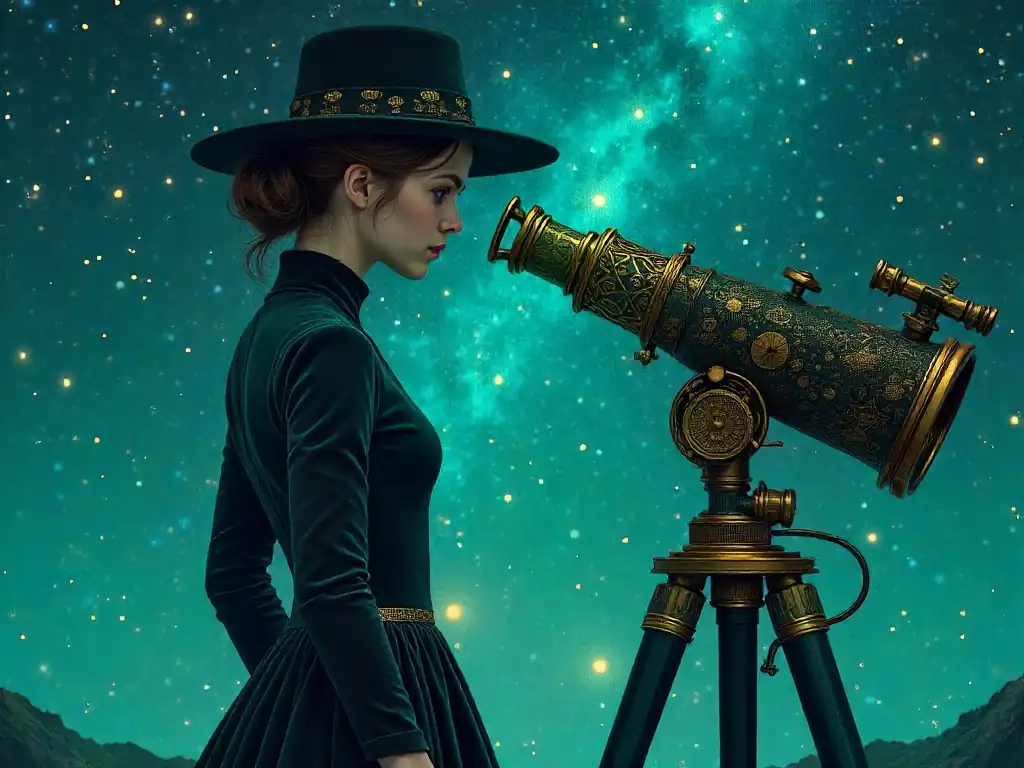
Maria Mitchell's "experimental setup" was characteristic of 19th-century observational astronomy: a relatively modest telescope, likely a 4.5-inch refracting telescope, combined with a precise chronometer and star charts. The dark, clear skies of Nantucket provided an ideal environment for her nightly vigils. Her methodology was rigorous and systematic. She would methodically sweep sections of the sky, comparing what she saw through the eyepiece with existing star charts. Any unmapped object immediately drew her attention, prompting further, more detailed observations.
Once a potential new object was identified, she would precisely measure its angular position relative to known stars using a micrometer attached to her telescope. These raw observational data points were then subjected to complex mathematical calculations to determine the object's celestial coordinates and, crucially, its preliminary orbit. This mathematical rigor, which involved spherical trigonometry and Newtonian mechanics, was as critical as the observation itself. It was her ability to perform these intricate calculations accurately and swiftly that allowed her to confirm her comet's uniqueness and secure her claim to its discovery.
Key Findings and Scientific Publications
The key finding, of course, was the discovery of Comet 1847 VI. Her prompt notification of her discovery to institutions like the Harvard College Observatory and the subsequent corroboration by other astronomers, including Father Francesco de Vico in Rome (who observed it two days later), cemented her claim. The discovery earned her the prestigious gold medal from the King of Denmark, awarded to the first discoverer of a telescopic comet. This recognition was monumental, as it was one of the few instances where a woman received such a high honor for scientific achievement in the 19th century.
While formal "publications" in the modern sense were less common for independent astronomers of her time, her detailed observational notes and calculated orbital elements were shared with leading scientific bodies and subsequently discussed in astronomical journals and proceedings. For instance, her discovery and subsequent orbital calculations were acknowledged in publications like the American Journal of Science and Arts. This immediate dissemination of her findings ensured her place in the annals of astronomy and physics, demonstrating her ability to contribute meaningfully to the scientific discourse of her era.
Contributions to the Advancement of 19th Century Physics
Influence on Contemporary Scientists and Theories
Maria Mitchell's work, particularly her precise observations and calculations, had a tangible influence on contemporary scientists and the developing theories of 19th-century physics, especially those related to celestial mechanics. Her meticulous data collection provided crucial empirical evidence that supported and refined gravitational theories. When she discovered her comet, the ability to accurately predict its orbit based on Newtonian physics was a testament to the predictive power of these theories. Her observations contributed to a broader body of knowledge that was constantly validating and expanding the understanding of the physical laws governing the universe.
Leading astronomers and mathematicians of her time, such as Benjamin Peirce of Harvard, recognized the exceptional quality of her work. Her observational accuracy set a high standard, demonstrating the potential for rigorous scientific inquiry even with limited resources. Her contributions helped solidify the empirical foundations of astronomy, which was inextricably linked with the physical laws being investigated by physicists. She proved that precise, verifiable data, regardless of the observer's gender, was paramount to scientific progress.
Overcoming Gender Bias in the Scientific Community
Maria Mitchell's journey is a powerful narrative of overcoming entrenched gender bias within the 19th-century scientific community. Her comet discovery was undeniable proof of her scientific merit, forcing institutions that had historically excluded women to acknowledge her. In 1848, she became the first woman elected to the prestigious American Academy of Arts and Sciences, a groundbreaking achievement that cracked open the door for future female scientists. This election was not a symbolic gesture but a recognition of her demonstrable scientific contribution.
Later, as a professor of astronomy at Vassar College, starting in 1865, she continued to challenge gender norms. She famously insisted on equal pay for female faculty, advocating for economic equity in an era where women were routinely paid less than men for the same work. Her principled stand for equal pay was a direct challenge to the prevailing gender inequalities in professional life, showcasing her commitment to not just scientific advancement but also social justice within academia. She used her position to empower and mentor a new generation of 19th-century female astronomers.
Recognition and Legacy within Physics and Astronomy
Maria Mitchell received numerous accolades that underscored her significant contributions. Beyond the King of Denmark's gold medal, she was also the first woman elected to the American Association for the Advancement of Science in 1850. Her appointment as a professor at Vassar College was another landmark, making her one of the first female astronomy professors in the United States. At Vassar, she created a unique learning environment, emphasizing hands-on observation and critical thinking, producing many notable female scientists.
Her legacy extends far beyond her singular comet discovery. She became a powerful advocate for women's education and their inclusion in science, inspiring countless individuals through her lectures and her very presence in a male-dominated field. Her dedication to meticulous observation and rigorous calculation embodied the scientific spirit of the age, making her a pivotal figure not just among 19th-century female astronomers but for the broader scientific community. Her influence helped to slowly dismantle the barriers that prevented women from pursuing scientific careers.
The Enduring Impact of a 19th Century Female Pioneer
Inspiring Future Generations of Women in Science
Maria Mitchell's life and achievements continue to serve as a profound source of inspiration for future generations of women in science. Her story vividly illustrates that passion, diligence, and intellectual rigor can overcome even the most formidable societal and institutional barriers. She demonstrated that women were not only capable of understanding complex scientific principles but could also make original, significant contributions to fields like astronomy and physics. Her journey from a self-taught observer in Nantucket to a celebrated comet discoverer and esteemed professor laid a foundational precedent, proving that gender was no determinant of scientific capability.
Her advocacy for women's education and her role as a mentor at Vassar College were instrumental in shaping the early landscape for female scientists. She actively encouraged her students to pursue independent research and challenged them to think critically, fostering an environment where scientific curiosity could flourish without the constraints typically imposed on women. The sheer fact of her existence as a prominent 19th-century female astronomer provided a visible role model, signaling that a career in science was a tangible, albeit challenging, possibility for women.
Preserving the Legacy of Maria Mitchell in Science History
The legacy of Maria Mitchell is actively preserved through various initiatives, ensuring her contributions remain prominent in science history. The Maria Mitchell Association in Nantucket, founded in 1902, stands as a testament to her enduring impact. This organization maintains her birthplace, an observatory, a natural science museum, and a library, all dedicated to promoting scientific education, particularly for women and girls. It houses many of her personal papers, instruments, and observational logs, providing invaluable insights into her scientific methodology and daily life.
By maintaining these historical resources and continuing educational programs, the Maria Mitchell Association plays a crucial role in preventing her story from being overlooked. It ensures that future generations can learn directly about the challenges she faced and the triumphs she achieved. This active preservation allows her to remain a vibrant figure in the narrative of 19th-century female astronomers and a symbol of intellectual perseverance against societal odds.
Maria Mitchell's Contributions to the Broader Scientific Landscape
Maria Mitchell's contributions extended far beyond her singular comet discovery; they encompassed a holistic impact on the broader scientific landscape of the 19th century and beyond. Her meticulous observational practices and accurate calculations set a standard for empirical astronomy, reinforcing the importance of precise data in scientific inquiry. She was a pioneer in demonstrating that observational astronomy, when combined with rigorous mathematical analysis, could lead to groundbreaking discoveries and contribute significantly to celestial mechanics.
Furthermore, her steadfast advocacy for women's rights in education and professional life fundamentally challenged the prevailing gender biases in academia. As a professor, she nurtured a generation of women who would go on to become scientists, educators, and leaders, effectively expanding the pool of scientific talent. Maria Mitchell's life encapsulates the struggle and triumph of 19th-century female astronomers and scientists, solidifying her place as a transformative figure whose influence continues to resonate in the ongoing effort to achieve equity and inclusion in science.
Frequently Asked Questions
What were some of the biggest obstacles faced by 19th century female astronomers?
The biggest hurdles included limited access to education and resources, social biases against women in science, and lack of recognition for their contributions.
What kind of work did 19th century female astronomers typically engage in?
Many worked as 'human computers', meticulously analyzing astronomical data. Some also made significant discoveries in stellar classification and nebulae, despite facing discrimination.
Why is it important to highlight the contributions of 19th century female astronomers?
Recognizing their work helps to correct historical inaccuracies and provides role models for aspiring scientists. It also highlights the challenges women faced and the perseverance they demonstrated.
Besides astronomy, what other fields did some of these women eventually contribute to?
Some female astronomers transitioned into other scientific fields like physics and mathematics, applying their analytical skills and knowledge to new areas. This demonstrates the breadth of their scientific talents.
Where can I learn more about specific 19th century female astronomers and their stories?
Websites like WomenInScienceHistory.com feature biographies and articles about pioneering women in science. These resources offer detailed accounts of their lives and work, inspiring future generations.
Final Reflection: Illuminating the Unseen
The stories of women like the 19th-century amateur astronomers turned physics pioneers we've explored are not simply historical anecdotes; they are vital reminders of the untapped potential that exists when societal barriers are dismantled. Their contributions, often overlooked in their time, resonate powerfully today as we continue to strive for greater inclusivity and equity in STEM fields.
The legacy of these women extends far beyond the scientific discoveries they made. It's a testament to the power of perseverance, intellectual curiosity, and the unwavering pursuit of knowledge in the face of adversity. Their struggles and triumphs serve as a powerful inspiration, reminding us that progress is often forged through the relentless efforts of those who dare to challenge the status quo. We are all in the gutter, but some of us are looking at the stars.
- Oscar Wilde, a sentiment that perfectly captures the spirit of these women who transcended their limitations to reach for the cosmos.
Let us carry forward the torch ignited by these 19th-century female astronomers. Consider how you can actively champion inclusivity and create opportunities for underrepresented voices in science and beyond. Embrace your own curiosity, challenge conventional wisdom, and remember that even the smallest act of encouragement can spark a revolution. The universe awaits, and it needs the brilliance of every mind to unlock its secrets.
Ignite Your Inner Pioneer: Chart Your Own Course!
Thank you for delving into the inspiring story of this remarkable 19th-century woman! Now that you've rediscovered her journey from amateur astronomer to physics pioneer, it's time to translate that inspiration into action.
- Embrace the Unknown: Identify one area in your life where you feel like an "amateur" and commit to dedicating 30 minutes a week to learning something new about it. Even small steps can lead to groundbreaking discoveries.
- Share this story: Help elevate her legacy and inspire others by sharing this article on your social media channels. Use the hashtag #WomenInScienceHistory.
- Start a Science Journal: Begin documenting your own scientific curiosities and observations. What questions fascinate you? What experiments could you design?
What small experiment or observation will you undertake this week to tap into your own scientific potential?