
Hidden Figures of the Factory: Uncovering Women Engineers of the Early 20th Century

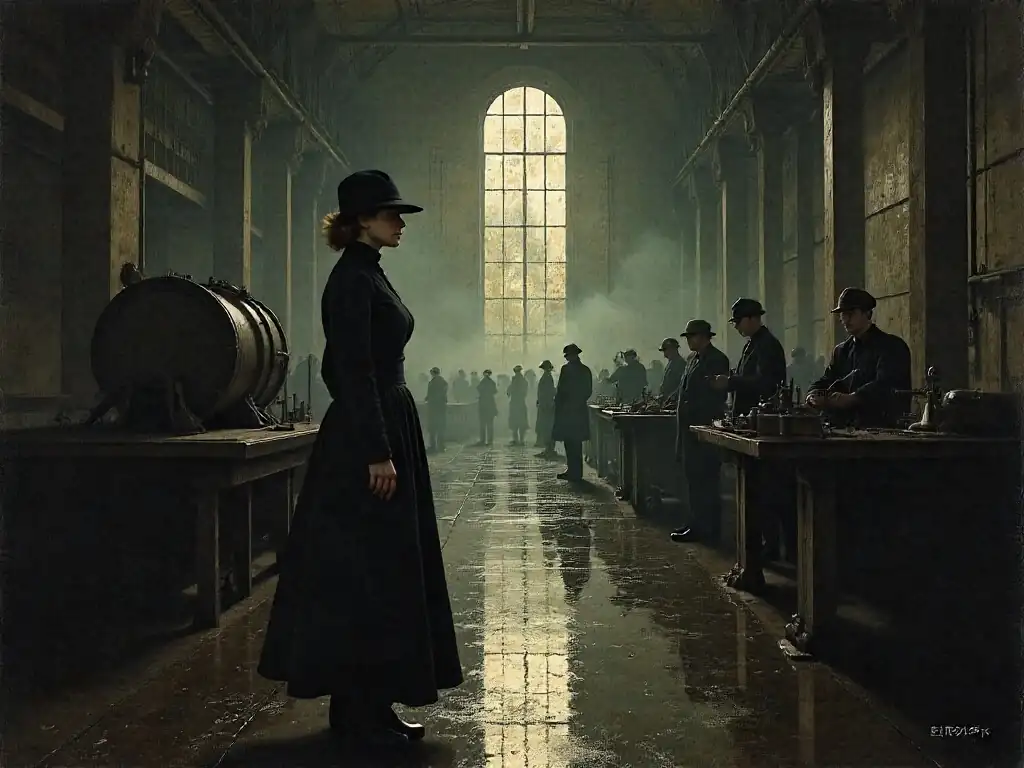
Welcome to WomenInScienceHistory.com!
Dive into the untold stories of brilliant minds with " Hidden Figures of the Factory: Uncovering Women Engineers of the Early 20th Century." Engineering & Technology often overlooks these trailblazers, but their contributions during a pivotal era are undeniable. Discover their innovative solutions and the obstacles they overcame – and perhaps, uncover why their narratives have remained largely hidden… Intrigued? Read on to learn more about the remarkable women reshaping the world, one blueprint at a time.
Early 1900s: Opportunities and Obstacles for Female Engineers
At the dawn of the 20th century, the landscape for women in professional fields, particularly engineering, was largely barren. Societal norms dictated that women's primary roles were domestic, and higher education, especially in technical disciplines, was rarely encouraged or accessible. While the burgeoning industrial revolution created a vast demand for skilled labor and innovation, the concept of a woman holding an engineering degree or a professional engineering position was considered radical, if not outright impossible, by the vast majority of institutions and industries.
Despite these overwhelming odds, a select few pioneering women engineers early 20th century began to carve out niches. Opportunities, when they arose, were typically in less formalized roles or in fields that were still nascent, such as industrial efficiency or chemical research, where the professional boundaries were less rigidly defined. However, even in these areas, women faced immense obstacles, including a lack of formal training programs, open discrimination in hiring, and a prevailing skepticism about their intellectual and practical capabilities in a field deemed inherently masculine.
Challenging Gender Norms: Women Entering Technical Fields
The entry of women into technical fields during the early 20th century was a slow but revolutionary process, directly challenging deeply entrenched gender norms. These determined individuals often had to prove their competence repeatedly, not just through their academic achievements but also through their practical contributions in workplaces where they were often the only female engineer. They defied the expectation that women lacked the analytical rigor, mechanical aptitude, or leadership qualities required for engineering roles.
The First World War, in particular, served as an unexpected catalyst, opening temporary but significant avenues for women in industrial and technical capacities. As men left for the front, women stepped into factory roles, including some supervisory and technical positions previously inaccessible. While many of these gains were temporary, the war demonstrated women's capacity for complex technical work, laying some groundwork for the continued, albeit limited, presence of women engineers early 20th century in the decades that followed.
- Early 1900s: Opportunities and Obstacles for Female Engineers
- Challenging Gender Norms: Women Entering Technical Fields
- What types of engineering roles did women hold in the early 20th century, as highlighted by "Hidden Figures of the Factory"?
- What were some of the key challenges faced by women engineers in the early 20th century, according to "Hidden Figures of the Factory"?
- How does "Hidden Figures of the Factory" aim to change the narrative around women in engineering history?
- What makes the "Hidden Figures of the Factory" era significant in the context of women in engineering?
- How can learning about women engineers of the early 20th century, as presented in "Hidden Figures of the Factory," inspire future generations?
Pioneering Women Engineers of the Early 20th Century: Profiles
Bertha Lamme Feicht: Electrical Engineer and Pioneer at Westinghouse
Bertha Lamme Feicht stands as a monumental figure among women engineers early 20th century, being one of the very first female electrical engineers in the United States. She broke significant ground when she graduated from Ohio State University in 1893 with a degree in Mechanical Engineering, specializing in electricity – a field then in its infancy and almost exclusively male. Her academic excellence immediately set her apart, signaling a new era for women in STEM.
Following her graduation, Feicht joined Westinghouse Electric Corporation in 1894, a leading industrial powerhouse of the time. She worked as an electrical engineer until 1905, primarily in the design department. Her role involved complex calculations for various electrical machines, a highly technical and critical area that directly impacted the company's innovative output in the rapidly expanding electrical industry.
Contributions to Electrical Engineering at Westinghouse
At Westinghouse, Bertha Lamme Feicht's contributions were substantial and far-reaching. She was deeply involved in the calculation and design of rotating electrical machinery, including the generators for the monumental Niagara Falls power project. This project, completed in the early 1900s, was a landmark in electrical engineering, demonstrating the feasibility of long-distance power transmission and directly powering industries and cities. Her precise calculations were integral to the efficiency and reliability of these massive generators.
Her work was not merely supportive; it involved rigorous analytical engineering, ensuring the performance and safety of the electrical equipment. Feicht's expertise was crucial in an era where electrical engineering was rapidly evolving, and her designs contributed to the foundational technology that powered early 20th-century American industry. Her position at such a prominent company, working on such critical projects, solidified her place as a true pioneer among women engineers early 20th century.
Paving the Way for Future Women in STEM
Bertha Lamme Feicht's career at Westinghouse provided a tangible and highly visible example of a woman succeeding in a professional engineering role during a period of immense skepticism. Her presence in a leading industrial company, engaged in cutting-edge electrical design, directly challenged the prevailing notion that engineering was unsuitable for women. She quietly proved, through her consistent competence and contributions, that intellectual capability knew no gender.
Her pioneering efforts, alongside a handful of other early female engineers, created a vital pathway and demonstrated the capability of women to excel in rigorous technical fields. While the number of women entering engineering remained small for decades, figures like Feicht served as an inspiration and a testament to what was possible, laying foundational groundwork for the gradual increase in female representation in engineering education and practice throughout the 20th century.
Lillian Gilbreth: Industrial Engineer and Efficiency Expert
Lillian Gilbreth, often hailed as the "First Lady of Engineering," brought a revolutionary human-centered approach to the burgeoning field of industrial engineering. With a Ph.D. in psychology, she uniquely combined psychological principles with engineering methodologies, emphasizing the human element in workplace efficiency. Her partnership with her husband, Frank Gilbreth, led to groundbreaking work in time and motion studies, fundamentally altering manufacturing processes.
Gilbreth's genius lay in her ability to see beyond the purely mechanical aspects of work, understanding that worker well-being, fatigue, and motivation were integral to productivity. She introduced concepts that aimed not just to speed up processes but to make them more ergonomic and less strenuous for the workers. Her holistic perspective made her a crucial figure among women engineers early 20th century, advocating for efficiency that served both the employer and the employee.
Contributions to Time and Motion Studies
Lillian Gilbreth's work in time and motion studies was transformative for early 20th-century industries. She and Frank developed innovative techniques such as chronocyclegraphs, which used lights attached to workers' hands to photographically record motions, and micromotion studies, which broke down tasks into their smallest components (therbligs). These methods allowed for precise analysis and optimization of work processes in factories, offices, and even kitchens.
Her research led to significant improvements in productivity, reduction of worker fatigue, and enhanced safety. For instance, her redesign of the standard kitchen layout, known as the "efficiency kitchen," streamlined household chores, directly impacting daily life for millions. She also innovated on surgical procedures, improving tool arrangement and workflow in operating rooms, demonstrating the broad applicability of her engineering principles.
Balancing Career and Family in a Male-Dominated Field
Lillian Gilbreth faced the immense challenge of balancing a groundbreaking professional career with raising 12 children, a feat that was extraordinary for any woman, let alone a pioneering engineer. After Frank's sudden death in 1924, she bravely continued their work alone, delivering lectures, consulting for numerous companies, and publishing extensively. She became a sought-after expert in management, applying her principles to diverse sectors, from General Electric to Macy's.
Her resilience and determination in establishing her own consulting firm, Gilbreth, Inc., and continuing to teach and lecture, proved that women could not only manage demanding professional careers but also lead their own enterprises. She became a role model for countless women aspiring to professional lives, demonstrating that dedication and intellectual prowess could overcome societal expectations and stereotypes in a male-dominated engineering world.
Olive Dennis: Transportation Engineer and Pioneer in Passenger Comfort
Olive Dennis was a trailblazing transportation engineer whose innovative approach to passenger comfort revolutionized early 20th-century train travel. Graduating from Cornell University with a civil engineering degree in 1920, she was one of the first women to earn such a qualification from the institution. Her unique career path led her to the Baltimore and Ohio (B&O) Railroad, where she was hired not for traditional track or bridge design, but for a groundbreaking role focused on the human experience of travel.
The B&O Railroad recognized the need to improve passenger services to remain competitive, and they wisely created a position specifically for Dennis: "service engineer" or "research engineer." This role was unprecedented, allowing her to apply engineering principles to the often-overlooked aspects of customer satisfaction. Her work exemplified how women engineers early 20th century could bring fresh perspectives to established industries.
Contributions to the Baltimore and Ohio Railroad
Olive Dennis's contributions to the B&O Railroad were numerous and highly impactful. She was responsible for designing and implementing features that significantly enhanced passenger comfort and convenience. Her innovations included the development of reclining seats, stain-resistant upholstery, and improved ventilation systems. She also worked on better lighting solutions for reading and the introduction of amenities like individual washbasins in passenger cars.
Perhaps her most significant contribution was her advocacy for air-conditioned trains, which she helped introduce on the B&O in the early 1930s, making it one of the first railroads to offer this luxury. Her meticulous attention to detail and her focus on the passenger's perspective transformed train travel from a utilitarian necessity into a more comfortable, luxurious, and appealing experience, directly contributing to the B&O's reputation and financial success during a competitive era.
Advocating for Improved Passenger Experience
Olive Dennis's approach was remarkably user-centric for her time. She would often ride trains herself, observing passengers, gathering feedback, and identifying their needs, demonstrating a practical, empathetic design philosophy. She understood that engineering extended beyond purely mechanical systems to encompass human-centered design, a concept that was far ahead of its time. Her insights allowed her to push for changes that genuinely improved the travel experience.
Her persistent advocacy for these improvements within a traditionally male-dominated railway industry showcased her determination and vision. Dennis proved that a female engineer could bring a unique and invaluable perspective, focusing on aspects that male engineers might have overlooked. Her success in implementing these changes solidified her as a crucial figure among women engineers early 20th century, demonstrating the breadth of engineering applications.
Contributions of Women Engineers to Early 20th Century Industries
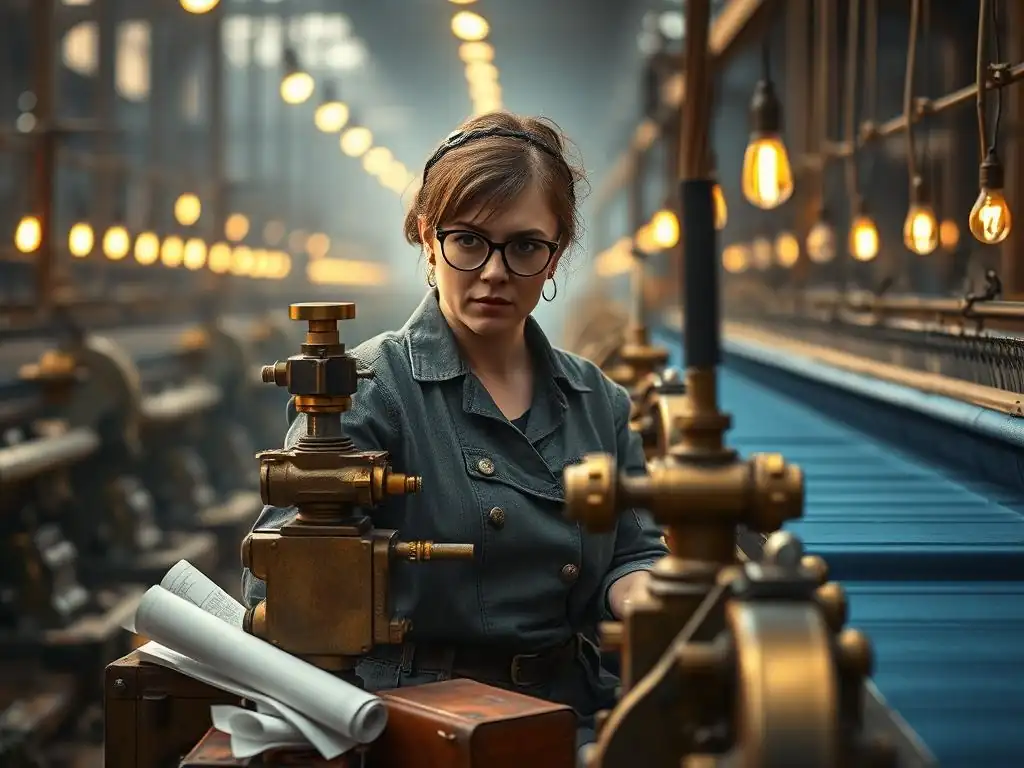
Women's Role in Manufacturing and Industrial Innovation
Despite their limited numbers, women engineers early 20th century played an often-uncredited but significant role in manufacturing and industrial innovation. They contributed to optimizing production lines, improving machinery design, and ensuring quality control in burgeoning sectors such as electrical equipment, textiles, and consumer goods. Lillian Gilbreth's pioneering work in industrial efficiency, for example, directly influenced how factories operated, leading to more streamlined processes and increased output.
Beyond the prominent figures, many women worked in less visible capacities, such as drafting offices, chemical engineering labs, or as technical assistants in electrical components manufacturing. While their specific roles might have been subsumed under male supervisors or lacked formal titles, their technical expertise in calculations, material analysis, and process development was integral to the overall progress of these industries. Their quiet dedication helped to refine manufacturing techniques and improve product quality.
Impact on Transportation and Infrastructure
The impact of women engineers on early 20th-century transportation and infrastructure, though often overlooked, was tangible. Olive Dennis's revolutionary work on passenger comfort in trains, detailed previously, transformed the railway experience for millions, making travel more appealing and efficient. Her innovations in seating, ventilation, and air conditioning directly contributed to the advancement of passenger rail services.
While less numerous in heavy civil engineering roles, some women found opportunities in related fields. For instance, women were employed in roles involving the testing of materials for bridges and roads, or in the design of internal systems for buildings and utilities. These contributions, though often behind the scenes, were foundational to the development of the modern infrastructure that defined the era, from improved public transit to better urban planning.
Advancements in Industrial Efficiency and Ergonomics
The early 20th century saw significant advancements in industrial efficiency and ergonomics, largely propelled by the work of women engineers. Lillian Gilbreth's application of psychological principles to scientific management revolutionized how factories operated, leading to the development of more efficient workflows and the reduction of worker fatigue. Her focus on motion economy and the design of tools and workspaces to fit human capabilities directly improved productivity and worker well-being.
These advancements led to more humane and productive workplaces across various industries. By advocating for improved working conditions, such as better lighting, reduced noise, and more ergonomic tools, women engineers demonstrated that a holistic approach to engineering could yield significant economic and social benefits. Their insights proved that considering the human element was not merely a humanitarian concern but a critical factor in achieving optimal industrial performance.
The Educational Landscape: Training the First Generation of Women Engineers
Universities and Colleges Opening Doors to Women in STEM
In the early 20th century, the number of universities and colleges that admitted women into engineering programs was exceedingly small, reflecting widespread societal and institutional resistance. Institutions like Cornell University (which graduated Olive Dennis in 1920), Ohio State University (Bertha Lamme Feicht in 1893), and later, the Massachusetts Institute of Technology (MIT), were among the rare exceptions. Even at these progressive institutions, female engineering students were often isolated, typically numbering in the single digits for entire programs.
The curriculum for these pioneering women engineers was identical to that of their male counterparts, indicating that those who gained admission had to meet the same rigorous academic standards. Despite the challenges of integrating women into what was considered an exclusively male academic and professional domain, these institutions, by opening their doors, however narrowly, laid the critical groundwork for the future growth of women in engineering education. This slow but steady increase in enrollment, from a handful in 1900 to perhaps a few hundred by 1950, marked a quiet revolution.
Overcoming Barriers to Higher Education in Engineering
Women seeking engineering degrees in the early 20th century faced a formidable array of barriers. Beyond the limited institutional access, they contended with pervasive societal disapproval, which often discouraged girls from pursuing rigorous scientific or mathematical subjects in preparatory schooling. Financial constraints were also significant, as families were less likely to invest in an engineering education for a daughter whose professional prospects were uncertain. Furthermore, overt discrimination from faculty members and male peers was not uncommon, with some professors openly questioning women's intellectual capacity for the field.
Despite these daunting obstacles, these determined women persevered through sheer intellect, resilience, and passion. They often had to excel academically to justify their presence, proving their capabilities in rigorous technical disciplines. Their success in navigating these challenging educational environments was crucial, not only for their individual careers but also for demonstrating the intellectual prowess of women, thereby gradually chipping away at the prejudiced notions that permeated higher education in engineering.
The Importance of Mentorship and Support Networks
For the first generation of women engineers early 20th century, formal mentorship programs were virtually nonexistent, yet informal support networks played a crucial role in their survival and success. Sympathetic professors who recognized their talent, or pioneering female peers who could share experiences and offer encouragement, provided invaluable guidance. In some cases, family members, particularly fathers or male relatives already in technical fields, offered vital encouragement and connections.
As the century progressed, nascent professional organizations began to emerge, providing a much-needed sense of community. While mainstream engineering societies were slow to admit women, groups like the Society of Women Engineers (founded in 1950, though its roots trace earlier informal gatherings) began to form. These early networks, however informal, offered crucial support, a platform for sharing experiences, and a collective voice, helping these women navigate often isolating professional environments and advocate for their rightful place in the engineering world.
Gender Bias in the Workplace: Overcoming Discrimination
The social and cultural context of the early 20th century was profoundly shaped by pervasive gender bias, and women engineers faced significant discrimination in the workplace. They were routinely denied opportunities for promotion, paid less than their male counterparts for equivalent work, and often relegated to "feminine" roles, such as drafting or research assistance, rather than lead design or project management positions. Many faced skepticism, or even outright hostility, from male colleagues and clients who doubted their competence or authority.
To succeed, women engineers early 20th century often had to work twice as hard to prove their capabilities, consistently outperforming their male peers to gain even a modicum of respect. They frequently encountered resistance to their ideas and were sometimes overlooked for credit on projects where their contributions were substantial. This environment meant that many talented women were confined to less visible roles, their potential stifled by systemic discrimination.
The Fight for Recognition and Equal Opportunities
The fight for recognition and equal opportunities for women engineers in the early 20th century was an uphill battle. With limited formal avenues for advocacy, pioneering women often sought to gain professional legitimacy through sheer competence and by slowly infiltrating existing, male-dominated professional organizations. As the century progressed, the idea of separate women's engineering societies began to gain traction, offering a space for networking, mutual support, and collective advocacy.
Key events, such as World War I and II, provided unexpected, albeit temporary, opportunities for women to demonstrate their capabilities in engineering and technical roles on a larger scale. During these periods, women filled critical industrial and technical positions, proving their competence when national necessity demanded it. However, many of these gains were rolled back post-war, forcing women to continually re-assert their right to be in the engineering profession.
Public Perception of Women Engineers in the Early 1900s
The public perception of women engineers in the early 1900s was largely one of skepticism, ranging from amusement to outright disapproval. Engineering was widely considered a physically demanding and intellectually rigorous field, deemed inherently unsuitable for women. The prevailing view was that women lacked the necessary aptitude for mathematics, mechanics, or the practical, hands-on nature of engineering work. Many believed that a woman's place was in the home, not in a factory or on a construction site.
Despite this dismissive public sentiment, the quiet competence and undeniable contributions of pioneering women engineers slowly began to chip away at these entrenched stereotypes. Figures like Lillian Gilbreth, with her public profile and practical innovations, helped to normalize the idea of women in technical roles. While widespread acceptance was still decades away, these early women engineers, through their perseverance and tangible achievements, initiated a crucial shift in public perception, laying the groundwork for greater acceptance in the future.
Legacy and Inspiration: The Enduring Impact of Early 20th Century Women Engineers
Inspiring Future Generations of Female Engineers
The courage and achievements of women engineers early 20th century laid an indispensable foundation for subsequent generations of female scientists and engineers. Their very existence in a field that largely excluded them provided tangible role models, however scarce, for girls and young women who dared to dream beyond traditional gender roles. Their stories, often tales of immense perseverance against systemic barriers, became a quiet but powerful testament to what was possible.
As their histories are increasingly brought to light, the documented struggles and triumphs of these pioneers continue to inspire. They demonstrate that the path to a career in STEM is not always easy, but it is deeply rewarding. Their legacy encourages more women to pursue engineering degrees and careers, knowing that they stand on the shoulders of giants who bravely forged the initial pathways in a challenging and often unwelcoming landscape.
Recognizing the Unsung Heroines of Engineering History
Many women engineers early 20th century worked in obscurity, their contributions often attributed to male colleagues or simply overlooked by historical narratives. Platforms like WomenInScienceHistory.com are vital in bringing these "hidden figures" to light, ensuring that their rightful place in engineering history is acknowledged. This ongoing effort to research, document, and celebrate these unsung heroines provides a more complete, accurate, and inclusive picture of innovation throughout the 20th century.
By recognizing these often-forgotten pioneers, we not only honor their individual achievements but also gain a deeper understanding of the societal and professional challenges they faced. This recognition is crucial for correcting historical omissions and for inspiring a broader audience, ensuring that the full breadth of human ingenuity in engineering is properly celebrated, regardless of gender.
Lessons Learned and the Ongoing Pursuit of Equality in STEM
The experiences of women engineers early 20th century offer profound lessons that remain highly relevant today. Their stories underscore the power of perseverance, the importance of challenging entrenched norms, and the invaluable contribution that diverse perspectives bring to problem-solving and innovation in engineering. Despite significant progress, the journey towards full gender equality in STEM continues, and the historical struggles of these pioneers serve as a powerful reminder of the work yet to be done.
Their legacy reminds us that while overt discrimination may be less prevalent in many areas, subtle biases and systemic barriers still exist. The fight for equitable opportunities, fair representation, and inclusive environments in STEM fields draws strength and inspiration from the trailblazers of the early 20th century. Their enduring impact compels us to continue advocating for support, recognition, and mentorship to achieve true equity for all in the world of science and engineering.
Frequently Asked Questions
Women engineers often found roles in areas like industrial engineering, drafting, and technical design, particularly in factories and manufacturing settings. Their contributions were often underestimated and less publicly recognized.
They faced significant gender discrimination, including lower pay, limited career advancement opportunities, and lack of recognition for their accomplishments. They were often excluded from formal networks.
The article seeks to highlight the often-overlooked contributions of women engineers during the early 20th century. It aims to bring their stories to light and challenge the historical underrepresentation of women in STEM fields.
It represents a period where women were increasingly entering industrial roles, often driven by wartime needs and technological advancements. However, their experiences were marked by both opportunity and significant barriers.
By showcasing the resilience and ingenuity of these pioneering women, it provides positive role models and encourages more women to pursue careers in engineering. It also emphasizes the importance of equity and inclusion in STEM.
Okay, here's a final reflection designed to close your article "Hidden Figures of the Factory: Uncovering Women Engineers of the Early 20th Century," optimized for the keyword "Women engineers early 20th century" and following the requested structure:
Final Reflection: Echoes of Innovation
The stories unearthed in this exploration of women engineers in the early 20th century resonate powerfully today. Their struggles for recognition and their groundbreaking contributions to fields dominated by men serve as a potent reminder that progress, while significant, is never truly complete. Their ingenuity and perseverance laid the foundation for the diverse and innovative engineering landscape we strive for now, highlighting the enduring impact of their often-overlooked achievements.
The influence of these pioneering women extends far beyond the blueprints they drafted and the machines they designed. Their legacy is a testament to the resilience of the human spirit and a powerful inspiration for future generations of women in STEM. It reminds us that breaking barriers requires not only talent and dedication but also unwavering courage in the face of adversity. You educate a man; you educate a man. You educate a woman; you educate a generation.
This African proverb perfectly encapsulates the ripple effect of empowering women in any field, especially those as crucial as engineering.
As we close this chapter on the hidden figures of the factory, let us not simply admire their past accomplishments, but actively champion the cause of equality and inclusion in engineering today. Consider how you can support young women pursuing STEM careers, challenge biases that persist in the workplace, and ensure that the voices and contributions of all engineers, regardless of gender, are heard and valued. The future of innovation depends on it.
Rediscover the Pioneering Spirit: Your Journey Starts Now!
Thank you for diving into the inspiring stories of early 20th-century women engineers! Now that you've unearthed these hidden figures, it's time to carry their legacy forward.
- Boldly champion women in STEM by sharing this article with at least three friends, family members, or colleagues. Let's amplify their voices!
- Explore your local library or university archives for forgotten stories of women in engineering in your community. You might just uncover a hidden history!
- Discuss: What challenges do you think modern women engineers face that weren't present a century ago? Share your thoughts below!