
From Observation to Creation: The Scientific Minds Driving Early Female Invention

Welcome to WomenInScienceHistory.com!
Delve into the captivating world where ingenuity meets resilience. This space celebrates the brilliant minds of women who dared to innovate and contribute to scientific progress throughout history. Prepare to be inspired as we uncover the often-hidden stories of female pioneers in Engineering & Technology. Our featured article, " From Observation to Creation: The Scientific Minds Driving Early Female Invention", explores the groundbreaking contributions of women in early female invention science. What were their inventions, and what obstacles did they overcome? Join us as we uncover the answers and celebrate their lasting legacy.
- Introduction: Unveiling the Untold Stories of Early Female Invention
- The Foundation: Scientific Observation as a Catalyst for Early Female Invention
- Key Areas of Early Female Invention: Addressing Societal Needs
- Case Studies: Pioneering Women and Their Inventions (Pre-19th Century)
- Challenges Faced by Women in Early Science and Invention
- The Legacy of Early Female Invention: Inspiring Future Generations
- Conclusion: Celebrating the Scientific Minds Behind Early Female Invention
-
Frequently Asked Questions
- What is the primary focus of WomenInScienceHistory.com?
- Why is it important to highlight the stories of early female inventors?
- What kind of challenges did early female inventors typically face?
- What fields of science did early female inventors contribute to?
- How does WomenInScienceHistory.com aim to inspire future generations?
- Final Reflection: Illuminating the Legacy of Early Female Invention
- Unveil Your Inner Innovator: Start Designing Now!
Introduction: Unveiling the Untold Stories of Early Female Invention
Recognizing Women's Contributions to Science and Technology History
Throughout history, the narrative of scientific and technological advancement has predominantly centered on male figures, often overshadowing the significant and foundational contributions made by women. This selective retelling has created a historical imbalance, presenting an incomplete picture of human ingenuity and progress. To truly understand the evolution of various scientific fields, it is imperative to acknowledge and integrate the achievements of pioneering women who, despite immense societal obstacles, pushed the boundaries of knowledge and practical application.
This article aims to rectify this historical oversight by shining a light on early female invention science. These women, often working in anonymity or under the names of their male relatives, were instrumental in developing solutions that improved daily life, advanced health, and laid groundwork for future innovations. Their work, though frequently unrecorded in formal scientific annals, represents a critical, yet largely unrecognized, chapter in the history of science and technology.
The Overlooked Role of Women in Pre-19th Century Engineering and Invention
In the pre-19th century, societal structures severely limited women's access to formal education, public recognition, and professional scientific institutions. Women were primarily confined to domestic roles, which, paradoxically, became fertile ground for practical early female invention science. Their innovations, borne out of necessity and keen observation, spanned areas from household efficiency to agricultural improvements and even medical advancements.
However, because these contributions often occurred within the private sphere or were not deemed "scientific" by the prevailing male-dominated intellectual establishments, they were rarely documented, patented under their names, or formally celebrated. This systemic marginalization resulted in the widespread neglect of women's vital role in shaping early engineering and invention, leaving countless stories of ingenuity untold and their impact largely unacknowledged in mainstream historical accounts.
The Foundation: Scientific Observation as a Catalyst for Early Female Invention
The Importance of Observation in Scientific Discovery
Observation stands as the cornerstone of the scientific method, serving as the initial step in understanding phenomena, identifying problems, and formulating solutions. Before hypotheses can be tested or experiments designed, careful and systematic observation allows for the collection of empirical data, revealing patterns, anomalies, and opportunities for innovation. For many early scientists, particularly women who often lacked access to formal laboratories or theoretical frameworks, acute observation was their primary tool for engaging with the natural world and their immediate environment.
This fundamental skill was particularly crucial for early female invention science. Without the benefit of formal training or established scientific networks, women relied on their keen senses to perceive deficiencies in existing methods or to discern the intricate workings of nature. Their ability to meticulously observe daily tasks, plant cycles, animal behaviors, or human ailments provided the empirical foundation upon which their practical inventions and discoveries were built, transforming everyday challenges into opportunities for scientific application.
Examples of Early Female Scientists Who Relied on Keen Observation
Many early female scientists exemplified the power of observation, turning it into a systematic practice that rivaled formal scientific inquiry. For instance, women involved in horticulture or herbal medicine spent countless hours observing plant growth, flowering cycles, and medicinal properties, leading to the development of effective remedies and cultivation techniques. Their hands-on engagement with the natural world fostered an intimate understanding that transcended mere anecdote.
A prominent example is Maria Sibylla Merian, who, long before formal biological expeditions were common, embarked on a journey to Suriname in 1699. Her meticulous, multi-year observations of insect metamorphosis, depicted with unprecedented accuracy and artistic detail in her seminal work "Metamorphosis Insectorum Surinamensium," revolutionized entomology. This dedication to detailed, long-term observation, often conducted in challenging conditions, was a hallmark of much of early female invention science, enabling breakthroughs that were as much about new knowledge as they were about practical application.
Key Areas of Early Female Invention: Addressing Societal Needs
Domestic Innovations: Women's Contributions to Household Efficiency
The domestic sphere, traditionally managed by women, became a fertile ground for practical early female invention science. Faced with the daily demands of running a household, preparing food, and caring for families, women developed ingenious solutions to improve efficiency, hygiene, and comfort. These innovations, though often unpatented and orally transmitted, significantly impacted daily life.
Examples include improved cooking methods, such as more efficient oven designs or novel ways to preserve food through pickling, salting, or drying, thereby extending the shelf life of provisions and preventing spoilage. In textile production, women innovated with weaving patterns, dye formulations, and methods for processing fibers, contributing to the development of more durable or aesthetically pleasing fabrics. These practical advancements, born out of necessity and resourcefulness, were foundational to the evolution of household technology and exemplify the pervasive nature of early female invention science in everyday life.
Agricultural Advancements: Innovations in Food Production and Preservation
In pre-industrial societies, women played a direct and often central role in agricultural practices, from planting and harvesting to food storage and animal care. Their intimate knowledge of the land, crops, and livestock led to numerous practical early female invention science breakthroughs that enhanced food production and ensured sustenance for communities. These innovations were vital for survival and prosperity.
Women developed improved planting techniques, often based on generations of empirical observation, leading to more efficient crop yields. They experimented with natural pest control methods, using specific plant combinations or substances to protect crops without harmful chemicals. Furthermore, their expertise in animal husbandry led to advancements in breeding practices and care routines that improved the health and productivity of livestock. Sybilla Masters, whose grain processing innovations will be discussed, is a prime example of a woman who applied scientific principles to agricultural challenges, demonstrating the far-reaching impact of early female invention science in this critical sector.
Medical Contributions: Advancements in Healthcare and Healing Practices
For centuries, women were the primary caregivers and healers within their communities, serving as midwives, herbalists, and informal medical practitioners. This role placed them at the forefront of practical medical early female invention science, leading to significant advancements in healthcare and healing practices, particularly before the rise of formal, male-dominated medical institutions.
Through extensive observation and experimentation, women developed and refined countless herbal remedies for various ailments, often documenting their efficacy through generations of practical application. They innovated with birthing techniques and even early forms of surgical instruments or aids, improving maternal and infant health outcomes. Furthermore, their understanding of basic hygiene practices, even if rudimentary by modern standards, contributed to preventing the spread of disease. These hands-on contributions formed the bedrock of community health and represent a vital, often uncredited, aspect of early female invention science.
Case Studies: Pioneering Women and Their Inventions (Pre-19th Century)
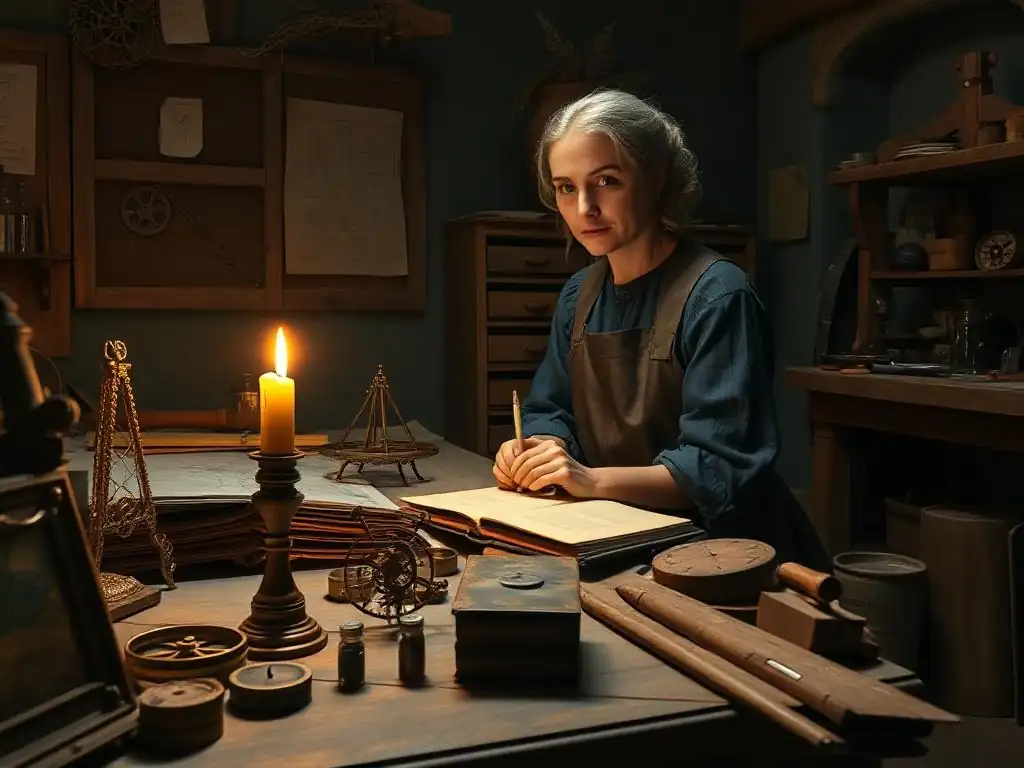
Sybilla Masters: Corn Milling and Grain Processing Innovations
Sybilla Masters, an American inventor residing in colonial Pennsylvania in the early 18th century, stands as a notable figure in early female invention science. Faced with the inefficiencies of traditional corn processing, she developed an innovative method for milling corn into meal. Her invention addressed a critical need for more efficient and higher-quality grain production, which was a staple food source for the nascent American colonies.
Her significant contribution was a machine for cleaning and pounding Indian corn, which not only streamlined the arduous process but also produced a finer, more consistent meal. This represented a substantial improvement over existing methods, enhancing food quality and reducing labor.
Crucially, due to the legal limitations of the era that prevented women from holding patents in their own names, her husband, Thomas Masters, was granted the patent for her invention in 1715 by the British Crown (and later a British patent in 1717). This case vividly illustrates both the ingenuity of early female invention science and the systemic challenges women faced in gaining formal recognition for their groundbreaking work.
Maria Merian: Scientific Illustration and Entomological Discoveries
Maria Sibylla Merian (1647-1717), a German-born naturalist and scientific illustrator, revolutionized the fields of entomology and botany through her meticulous observations and groundbreaking documentation. Her work exemplifies how systematic observation can lead to profound scientific discoveries, making her a pivotal figure in early female invention science despite not inventing a mechanical device. She essentially invented a new standard for scientific illustration and observation.
Merian embarked on an unprecedented expedition to Suriname from 1699 to 1701, a journey rarely undertaken by scientists of her time, let alone a woman. During her two years there, she meticulously documented the life cycles of insects and plants, challenging the prevailing belief in spontaneous generation and providing irrefutable evidence of metamorphosis.
Her magnum opus, "Metamorphosis Insectorum Surinamensium" (1705), combined scientific accuracy with stunning artistic detail, providing invaluable data for future biological study. Her innovative approach to field research and detailed illustration set new standards for natural history, demonstrating the power of early female invention science in systematic knowledge creation.
Jane Colden: Botanical Classification and Documentation
Jane Colden (1724-1766), often celebrated as America's first female botanist, made significant contributions to the understanding of North American flora through her rigorous classification and documentation. Working in colonial New York, she exemplifies early female invention science in the realm of systematic natural history, particularly in a period when scientific pursuits were largely inaccessible to women.
Colden meticulously collected, pressed, and described over 300 plant species native to the Hudson River Valley. Her remarkable achievement was her adherence to the Linnaean system of classification, a relatively new and complex method at the time, which she applied with precision.
While she did not invent a physical object, her systematic approach to cataloging, describing, and illustrating the local flora was an innovation in scientific methodology. Her detailed "Flora Novaboracensis" (Flora of New York) provided a foundational record of regional plant life, demonstrating an advanced scientific understanding and contributing invaluable data for future botanical, agricultural, and medicinal studies, underscoring the intellectual rigor of early female invention science.
Challenges Faced by Women in Early Science and Invention
Societal Barriers and Limited Access to Education
For women pursuing early female invention science, societal norms presented formidable barriers. Prevailing attitudes confined women primarily to domestic roles, discouraging intellectual pursuits outside the home. This cultural expectation severely limited their opportunities for formal education in subjects like science, mathematics, and engineering, which were largely reserved for men. Universities and scientific academies were almost exclusively male domains, effectively barring women from accessing structured learning environments, laboratories, and scholarly networks.
Consequently, women often had to rely on self-education, informal apprenticeships, or the rare privilege of learning from male relatives, such as fathers or brothers, who possessed scientific knowledge. This lack of formal training and institutional support meant that any early female invention science was often achieved through sheer determination and ingenuity, navigating a system that actively sought to exclude them from recognized intellectual endeavors. Their achievements, therefore, stand as even more remarkable given the systemic disadvantages they faced.
Lack of Recognition and Patenting Issues
Beyond educational barriers, women in early female invention science faced significant hurdles in gaining recognition for their contributions. Legal frameworks in many jurisdictions in the pre-19th century did not permit women to own property, including intellectual property like patents, in their own names. This meant that even when a woman developed a groundbreaking invention, the patent often had to be filed by a male relative—a husband, father, or brother—effectively erasing her name from the official record.
The case of Sybilla Masters, whose corn milling invention was patented by her husband, is a stark reminder of this systemic issue. This lack of formal attribution not only obscured women's roles in technological progress but also denied them the economic benefits and public recognition that would typically accompany such innovations. The absence of their names on patents or in scientific publications led to their contributions being historically marginalized, making the task of uncovering early female invention science a persistent challenge for modern historians.
Overcoming Obstacles: Perseverance and Ingenuity
Despite the pervasive societal barriers and legal limitations, women involved in early female invention science demonstrated extraordinary perseverance and ingenuity. Their drive to solve practical problems and their passion for understanding the natural world often compelled them to find unconventional ways to pursue their scientific interests. Many leveraged their prescribed domestic roles, transforming kitchens, gardens, or drawing rooms into informal laboratories or workshops.
They often worked within informal networks, sharing knowledge and techniques with other women or through family connections. Their methods, while perhaps not conforming to the formal scientific protocols of the time, were highly effective and often led to impactful innovations that directly addressed societal needs. This resilience in the face of adversity underscores the deep-seated intellectual curiosity and problem-solving spirit that characterized these pioneering women, ensuring that early female invention science continued to advance, even if from the periphery.
The Legacy of Early Female Invention: Inspiring Future Generations
The Enduring Impact of Women's Contributions to Science and Technology
The cumulative effect of early female invention science, though often historically overlooked, has had an undeniable and enduring impact on the trajectory of science and technology. Innovations developed by women in areas such as textile production, food preservation, agricultural efficiency, and medical practices significantly improved the quality of life for communities and laid essential groundwork for subsequent advancements. These practical solutions, born from necessity and keen observation, contributed directly to societal progress and economic development, even if anonymously.
Recognizing these historical contributions is not merely an act of historical revisionism; it is crucial for constructing a complete and accurate narrative of scientific and technological development. It demonstrates that innovation is not exclusive to any gender, social class, or formal institution. By understanding the foundational role of early female invention science, we gain a richer appreciation for the diverse origins of modern conveniences and scientific principles that shape our world today.
Promoting STEM Education and Encouraging Female Innovation Today
Understanding the historical context of early female invention science provides powerful inspiration for contemporary efforts to promote STEM (Science, Technology, Engineering, and Mathematics) education and encourage female innovation. By highlighting the ingenuity and resilience of women who pursued scientific endeavors against formidable odds, we provide compelling role models for girls and young women considering careers in these fields. Their stories demonstrate that scientific curiosity and problem-solving ability transcend historical limitations.
Today, various initiatives worldwide are dedicated to increasing female participation in STEM, from mentorship programs to scholarships and inclusive educational reforms. Learning about the often-uncelebrated early female invention science reinforces the message that women have always been, and continue to be, vital contributors to scientific and technological progress. This historical perspective can help dismantle lingering gender stereotypes and foster an environment where all aspiring innovators feel empowered to pursue their scientific passions.
Recognizing the Importance of Diverse Perspectives in Scientific Advancement
The history of early female invention science profoundly underscores the critical importance of diverse perspectives in scientific advancement. When a wider range of voices, experiences, and problem-solving approaches are included in scientific inquiry and invention, the resulting innovations are more robust, comprehensive, and relevant to the needs of all segments of society. Women, often operating from different vantage points due to their societal roles, frequently identified and addressed needs that might have been overlooked by male-dominated scientific establishments.
This diversity of thought leads to more holistic solutions and opens new avenues for discovery. A truly innovative and thriving scientific community requires the inclusion of all talents, regardless of gender, background, or social status. By celebrating the legacy of early female invention science, we reinforce the contemporary imperative to foster inclusive environments in STEM, ensuring that future scientific breakthroughs are informed by the richest possible array of human intellect and experience.
Conclusion: Celebrating the Scientific Minds Behind Early Female Invention
Reaffirming the Significance of Women's Role in Shaping Technological History
The journey through the annals of early female invention science powerfully reaffirms that women were not mere bystanders in the shaping of technological and scientific history, but rather active, ingenious, and often uncredited contributors. Despite pervasive societal barriers, limited access to formal education, and legal impediments to recognition, women consistently demonstrated remarkable scientific acumen and practical ingenuity. Their innovations, spanning from household efficiency to agricultural advancements and medical practices, laid crucial groundwork for the progress of human civilization.
It is imperative that these stories are brought to light, integrated into our historical narratives, and celebrated. Acknowledging the depth and breadth of early female invention science provides a more accurate, comprehensive, and inspiring account of human innovation, ensuring that the full tapestry of ingenuity is recognized for future generations.
Further Research and Exploration
The narratives presented in this article represent only a fraction of the untold stories of early female invention science. Countless women, whose names may have been lost to history or whose contributions were attributed to others, undoubtedly made significant impacts on their communities and beyond. Their work often lies hidden in obscure archives, domestic records, or family histories, awaiting discovery.
We encourage continued research and exploration into this rich and underexplored field. Delving deeper into specific historical periods, geographical regions, and cultural contexts will undoubtedly uncover more forgotten inventors and their groundbreaking work. By actively seeking out and documenting these narratives, we can ensure that the full legacy of women's scientific and technological contributions is finally given the recognition it rightfully deserves.
Frequently Asked Questions
What is the primary focus of WomenInScienceHistory.com?
The site focuses on celebrating the contributions of women to science throughout history. It features biographies and discussions of their work, highlighting the challenges they faced.
Why is it important to highlight the stories of early female inventors?
Highlighting these stories helps to inspire future generations and sheds light on the overlooked narratives of women in science. It also acknowledges their significant contributions often ignored by historical accounts.
What kind of challenges did early female inventors typically face?
They often faced challenges due to male-dominated arenas, including limited access to education and resources. Social biases and lack of recognition were also significant hurdles.
What fields of science did early female inventors contribute to?
Early female inventors contributed to various fields, including but not limited to: medicine, agriculture, and household technologies. Their inventions addressed practical needs and improved daily life.
How does WomenInScienceHistory.com aim to inspire future generations?
By showcasing the achievements and perseverance of pioneering female scientists, WomenInScienceHistory.com demonstrates that women can excel in STEM fields. This aims to encourage more women to pursue careers in science and invention.
Final Reflection: Illuminating the Legacy of Early Female Invention
The journey through the scientific minds driving early female invention reveals not just historical ingenuity, but a profound and enduring lesson about the untapped potential that exists when diverse perspectives are empowered. The stories of these women, often overlooked in traditional narratives, resonate powerfully today as we strive for greater inclusivity and equity in STEM fields. Their struggles and triumphs serve as a potent reminder that innovation thrives on the contributions of all.
This exploration has underscored the profound impact these early female inventors had, and continue to have, on shaping our world. Their resilience in the face of societal barriers and their unwavering dedication to scientific inquiry are deeply inspiring. The most effective way to do it, is to do it.
- Amelia Earhart. This quote, though not directly from a female inventor, perfectly encapsulates the spirit of these women who, despite facing immense obstacles, persevered and left an indelible mark on the landscape of science and technology.
Now, consider the legacy of these pioneers. How can we, in our own lives and communities, actively foster an environment where innovation flourishes, regardless of gender or background? Let us commit to recognizing, celebrating, and supporting the scientific minds of today and tomorrow, ensuring that the brilliance of early female invention science continues to inspire generations to come.
Unveil Your Inner Innovator: Start Designing Now!
Thanks for diving into the stories of these inspiring women! We hope their journeys have ignited your own passion for discovery and innovation. Now, it’s time to translate that inspiration into action.
- Begin brainstorming! Dedicate just 30 minutes to sketching out an idea you have, no matter how big or small. Don't worry about perfection, focus on exploring possibilities.
- Share this article with a friend or colleague who is also passionate about STEM. Let's amplify these incredible stories!
- Explore our 'Inspiring Inventors' section on WomenInScienceHistory.com for even more untold stories. You might discover your next role model!
What's one small step you can take today to bring your own inventive ideas to life?