
From Hidden Figures to Icons: A Women in Physics Timeline Infographic Poster

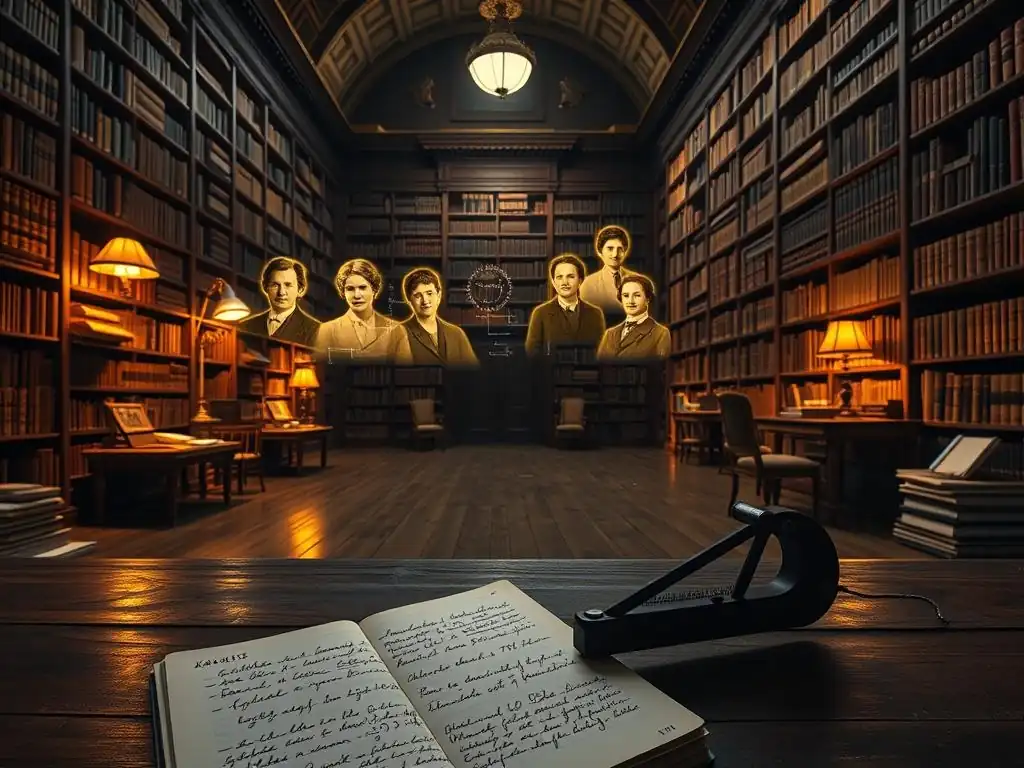
Welcome to WomenInScienceHistory.com, where we unearth the remarkable stories of women who shaped the world of science. Have you ever wondered about the pivotal moments and brilliant minds that paved the way for women in physics? Dive into our captivating "Women in Physics Timeline" infographic poster, and discover a visual journey through their groundbreaking achievements and the hurdles they overcame. Prepare to be inspired!
- Celebrating Women's Contributions: Explore the Women in Physics Timeline
- Why a "Women in Physics Timeline" is Essential for Every Science Enthusiast
- Exploring the Best Options: Women in Physics Timeline Infographic Posters
- Key Figures Highlighted in the "Women in Physics Timeline"
- Choosing the Right "Women in Physics" Poster: A Buying Guide
- Complementary Resources: Deepening Your Knowledge of Women in Physics
- Conclusion: Celebrating and Remembering Women in Physics
- Frequently Asked Questions
- Final Reflection: Illuminating the Path Forward
- Unleash Your Inner Physicist!
Celebrating Women's Contributions: Explore the Women in Physics Timeline
Introducing the Women in Physics Timeline Poster: A Visual Journey Through History
The "Women in physics timeline" poster serves as an invaluable visual resource, meticulously charting the groundbreaking contributions of female scientists throughout history. It aims to illuminate the often-overlooked and underappreciated work of women who have profoundly shaped our understanding of the physical world. This comprehensive graphic design transforms complex historical data into an accessible and engaging narrative, making the lineage of female physicists clear and compelling.
Far from being a mere list of names and dates, this timeline offers a chronological journey, connecting pivotal discoveries, the formidable challenges these women faced, and their triumphant breakthroughs. It provides a clear, sequential understanding of women's immense impact on various branches of physics, from foundational theories in classical mechanics to intricate explorations in quantum physics and nuclear science. This visual narrative ensures that their stories are not only remembered but also celebrated for their true significance.
Why a "Women in Physics Timeline" is Essential for Every Science Enthusiast
Unveiling the Untold Stories: Discovering the History of Women Physicists
Historically, the narratives of women in science have often been marginalized, with many pioneering female physicists facing systemic barriers, overt discrimination, and frequently having their groundbreaking work attributed to male counterparts. A dedicated "Women in physics timeline" acts as a vital tool to rectify this historical oversight, bringing these "hidden figures" from the shadows into the spotlight. It critically addresses the imbalance in scientific historiography, ensuring that their intellectual contributions are acknowledged.
This focus on the history of women physicists reveals the true depth and breadth of their impact. While many may be familiar with Marie Curie's dual Nobel Prizes, fewer are aware of Lise Meitner's crucial intellectual contribution to the discovery of nuclear fission, or Chien-Shiung Wu's meticulous experimental verification that disproved the law of parity conservation. The "Women in physics timeline" helps to bridge these knowledge gaps, offering a more complete and accurate portrayal of physics history that encompasses diverse contributions across fields like electromagnetism, thermodynamics, and particle physics.
Inspiring Future Generations: Showcasing Role Models in Physics
The power of representation cannot be overstated, especially in STEM fields where historical gender imbalances persist. When young girls and aspiring scientists encounter a comprehensive "Women in physics timeline," they are presented with a diverse array of role models who defied societal expectations, persevered through adversity, and made indelible marks on scientific progress. This visual affirmation of women's capabilities and achievements can significantly influence career choices and foster greater persistence in challenging scientific pursuits.
These narratives of resilience and intellectual courage are profoundly inspiring. For instance, learning about Vera Rubin's persistent work on galaxy rotation rates, which provided strong evidence for dark matter, despite initial skepticism, or Jocelyn Bell Burnell's discovery of pulsars, for which she was notably excluded from the Nobel Prize awarded to her male supervisor, teaches invaluable lessons in dedication and standing firm in one's convictions. A "Women in physics timeline" provides tangible examples of groundbreaking work and perseverance, motivating the next generation to pursue their scientific passions with unwavering determination.
Exploring the Best Options: Women in Physics Timeline Infographic Posters
This premium poster option, measuring a substantial 24x36 inches, is printed on high-quality matte paper, offering a sophisticated and durable visual experience. Its generous size allows for exceptional detail and clarity, making it an ideal choice for prominent display in educational institutions, public libraries, or the private study of a dedicated science enthusiast. The matte finish minimizes glare, ensuring that the intricate details of the "Women in physics timeline" are always easily discernible.
The larger format of this edition facilitates a richer, more expansive presentation of information. Each entry on the timeline can feature not only key dates and significant discoveries but also concise mini-biographies and contextual notes about the challenges faced by each woman physicist. Designed for maximum visual impact and educational utility, this poster serves as a continuous source of inspiration and an authoritative reference for exploring the history of women in physics.
Option 2: The "Pocket-Sized" Women in Physics Timeline - Cardstock Edition (Desktop Version)
For those seeking a more compact and portable reference, the "Pocket-Sized" Women in Physics Timeline, typically measuring around 11x17 inches, offers an excellent alternative. Printed on robust cardstock, this edition is designed for durability and ease of handling, making it perfect for personal desks, smaller office spaces, or as a convenient study aid. Its manageable size ensures it can be easily stored or displayed without requiring significant wall space.
Despite its smaller dimensions, this cardstock version still captures the essential narrative of the "Women in physics timeline," providing a concise yet comprehensive overview. It distills key information, highlighting crucial dates and achievements, making it an accessible guide for quick reference or on-the-go learning. This format is particularly practical for students to include in binders or for educators to use as supplementary handouts in classroom settings.
Option 3: The "Interactive" Women in Physics Timeline - Digital Download
The "Interactive" Women in Physics Timeline is offered as a high-resolution digital download, typically in a PDF format, designed for versatile digital display or printing at various custom sizes. This option provides unparalleled flexibility, allowing users to access the content instantly from any device and adapt it to their specific needs, whether for a digital presentation or a printout.
While not truly interactive in the software sense, this digital format allows users to zoom in on specific sections for detailed viewing, print multiple copies for different uses, or seamlessly integrate the "Women in physics timeline" into digital presentations and virtual learning environments. This option offers immediate access to a wealth of information, making it an ideal choice for digital libraries, online courses, and anyone seeking instant access to the history of women in physics without the constraints of a physical product.
Key Figures Highlighted in the "Women in Physics Timeline"
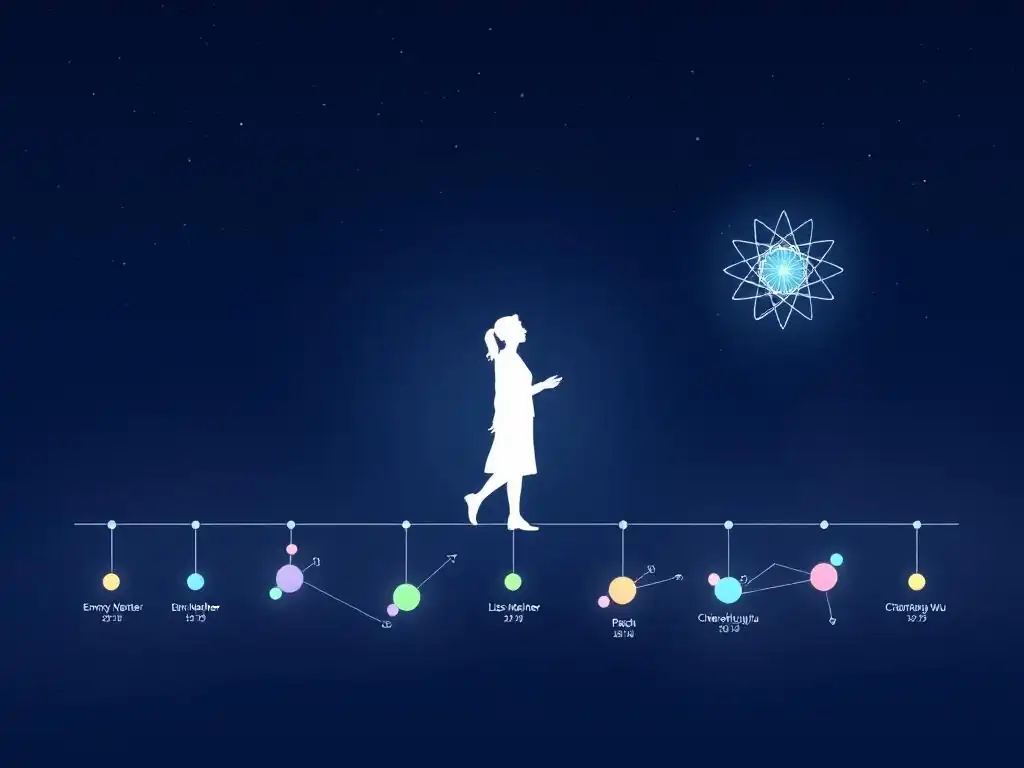
Marie Curie: The Pioneer of Radioactivity
Born Maria Skłodowska in 1867 in Warsaw, Poland, Marie Curie was a brilliant Polish and naturalized-French physicist and chemist who, alongside her husband Pierre, conducted groundbreaking research on radioactivity. Her relentless pursuit of scientific understanding led to monumental discoveries that reshaped the field of physics. In 1903, she achieved a historic milestone, becoming the first woman ever to win a Nobel Prize, sharing the Physics award for their collective study of spontaneous radiation.
Curie's exceptional contributions extended beyond this initial recognition. In 1911, she was awarded a second Nobel Prize, this time in Chemistry, for her isolation and discovery of the elements polonium and radium.
This extraordinary feat made her the only person to win Nobel Prizes in two different scientific fields, a testament to her unparalleled genius and dedication. Her pioneering work laid the foundational principles for nuclear physics and chemistry, profoundly influencing medical applications such such as X-rays used during World War I, and continues to inspire countless women to pursue scientific careers, securing her an undeniable and prominent place on any "Women in physics timeline."
Emmy Noether: The Mother of Modern Algebra
Amalie Emmy Noether, born in 1882 in Erlangen, Germany, was an extraordinary mathematician whose theoretical work profoundly impacted not only abstract algebra but also the very foundations of theoretical physics. Despite facing considerable gender-based discrimination and systemic barriers to academic advancement in early 20th-century Germany, she persevered, making groundbreaking contributions to ring theory, field theory, and ideal theory. Her intellectual prowess was recognized by peers like Albert Einstein, who called her a "creative mathematical genius."
Noether's most celebrated contribution to physics is undoubtedly Noether's Theorem, published in 1918. This elegant and profound theorem establishes a fundamental connection between conservation laws (such as the conservation of energy, momentum, and angular momentum) and symmetries in nature. It is widely regarded as one of the most important theorems in modern physics, forming a cornerstone for both general relativity and quantum field theory. Her insights continue to be indispensable in theoretical physics, solidifying her essential position on any comprehensive "Women in physics timeline."
Lise Meitner: Uncovering Nuclear Fission
Born in Vienna, Austria, in 1878, Lise Meitner was an Austrian-Swedish physicist who played a pivotal, though often uncredited, role in the discovery of nuclear fission. Working closely with Otto Hahn and Fritz Strassmann in Berlin, Meitner led the small research group that conducted the critical experiments. Despite her indispensable intellectual contributions and leadership in the theoretical interpretation, she faced severe discrimination due to her Jewish heritage, which forced her to flee Nazi Germany in 1938 and continue her work from Sweden.
From her exile, Meitner maintained correspondence with Hahn, providing the crucial physical explanation for the perplexing results of their experiments—the splitting of the uranium nucleus. She and her nephew, Otto Frisch, coined the term "nuclear fission" and published the first theoretical explanation of the process in 1939.
Although Otto Hahn alone received the 1944 Nobel Prize in Chemistry for the discovery, Meitner's theoretical insight was absolutely indispensable to understanding and validating the phenomenon. Her work was foundational to the development of nuclear energy and atomic weapons, securing her a crucial, though sometimes understated, position on the "Women in physics timeline."
Chien-Shiung Wu: The First Lady of Physics
Chien-Shiung Wu, born in Liuhe, China, in 1912, was a distinguished Chinese-American experimental physicist whose meticulous work significantly advanced the field of nuclear physics. After moving to the United States in 1936 to pursue her doctoral studies, she went on to conduct groundbreaking research at Columbia University, establishing herself as a leading experimentalist. Her precision and dedication earned her the moniker "First Lady of Physics."
Wu is most renowned for conducting the "Wu experiment" in 1956, which definitively disproved the long-held law of parity conservation in weak nuclear interactions. This monumental discovery, published in 1957, overturned a fundamental principle of physics that had been accepted for decades, demonstrating that nature distinguishes between left and right in certain processes.
While her theoretical colleagues, Tsung-Dao Lee and Chen-Ning Yang, received the 1957 Nobel Prize in Physics for their theoretical proposal that led to the experiment, Wu's experimental verification was absolutely indispensable to validating their theory. Her meticulous and groundbreaking work rightfully places her among the most influential figures on any "Women in physics timeline."
Choosing the Right "Women in Physics" Poster: A Buying Guide
Factors to Consider: Size, Format, and Content
When selecting a "Women in physics timeline" poster, several practical considerations should guide your choice. The size is paramount: a larger format, such as 24x36 inches, offers greater detail and visual impact, making it ideal for prominent wall display in educational settings or large study areas. Conversely, smaller formats, like 8.5x11 or 11x17 inches, are more suitable for personal desks, binders, or as portable reference guides.
Beyond size, consider the format and content. Decide whether a physical print, offering a tactile experience, or a versatile digital download, allowing for custom printing and digital integration, best suits your needs. Evaluate the depth of information provided: some timelines offer concise biographical snippets, while others provide more extensive details about discoveries and challenges. The overall visual design, readability, and the specific range of physicists featured on the "Women in physics timeline" should also align with your educational objectives or aesthetic preferences.
Women in Physics Timeline Poster: Educators, Students, and Science Enthusiasts
The "Women in physics timeline" poster serves as an invaluable resource across various audiences. For educators, it functions as a dynamic teaching aid, transforming abstract historical concepts into tangible and visually engaging lessons for students ranging from middle school through university level. It can effectively spark classroom discussions, inspire research projects, and provide a compelling visual backdrop for lectures on the history of science.
For students, this poster is a powerful study tool and a constant visual reminder of the diverse pathways to scientific discovery. It can help solidify understanding of key historical periods and the specific contributions of women in physics. Science enthusiasts, whether seasoned professionals or curious learners, will find it a compelling piece of art and an enriching source of inspiration, deepening their understanding of physics history and the often-overlooked intellectual prowess of women. It stands as a powerful statement piece, celebrating the enduring legacy of women in physics.
Complementary Resources: Deepening Your Knowledge of Women in Physics
Exploring the WomenInScienceHistory.com Archive
While the "Women in physics timeline" offers a comprehensive overview, it serves as an excellent entry point into a much broader world of knowledge. The WomenInScienceHistory.com archive provides an extensive collection of detailed biographies, insightful articles, and analytical discussions dedicated to countless women across all scientific disciplines, not just physics. This digital repository allows for a deeper dive into the lives and legacies of these remarkable individuals.
Readers are strongly encouraged to explore this rich archive to further their understanding. You can delve deeper into the specific scientific contributions of the women featured on the timeline, uncovering extended narratives that provide crucial context about their personal struggles, the societal barriers they overcame, and the intricate scientific processes involved in their discoveries. This dedicated online resource offers a rich and continually expanding tapestry of the history of women in science.
Recommended Reading: Books About Women in Physics
To complement the visual journey offered by the "Women in physics timeline," a wealth of literature provides in-depth narratives about the lives and work of women in physics. Biographies like "Madame Curie" by Eve Curie offer a deeply personal and scientific account of Marie Curie's life and groundbreaking research. Similarly, "Lise Meitner: A Life in Physics" by Ruth Lewin Sime provides a meticulous exploration of Meitner's pivotal role in nuclear fission and the challenges she faced.
These books offer a narrative depth that a timeline, by its nature, cannot fully capture. They explore the personal struggles, the societal barriers, and the intricate scientific processes involved in their discoveries with rich detail. Such literary works significantly enhance the understanding gained from the visual "Women in physics timeline" by offering richer context, humanizing the scientific journey, and celebrating the enduring intellectual contributions of these extraordinary women.
Conclusion: Celebrating and Remembering Women in Physics
Frequently Asked Questions
What is a "Women in Physics Timeline"?
It's a visual representation, often in the form of an infographic, showcasing the key achievements and milestones of women in physics across history. It highlights their contributions and struggles in the field.
Why is a "Women in Physics Timeline" important?
It helps to highlight the often-overlooked contributions of women to physics. This promotes greater awareness and recognition of their work and inspires future generations.
What kind of information might be included in a "Women in Physics Timeline"?
It usually includes biographies of notable women physicists, their major discoveries or inventions, and the historical context surrounding their work.
What challenges did women in physics face historically?
Historically, women faced significant barriers including gender bias, limited access to education and research opportunities, and lack of recognition for their accomplishments.
How can a "Women in Physics Timeline" inspire future generations?
By showcasing the achievements and perseverance of pioneering women, it can motivate young people, especially girls, to pursue careers in physics and other STEM fields.
Final Reflection: Illuminating the Path Forward
The journey through the lives and achievements of women in physics, as visualized in this timeline infographic, underscores a crucial point: representation matters. It's not just about acknowledging past contributions; it's about actively shaping a future where brilliance knows no gender. The stories highlighted here, from the "Hidden Figures" to contemporary icons, are not relics of the past; they are living testaments to the power of perseverance and the transformative impact of inclusivity in STEM fields.
This timeline serves as a powerful reminder of the systemic barriers women have faced and continue to overcome in physics. It's deeply moving to consider the countless potential discoveries lost due to societal biases and limited opportunities. The infographic is more than just a historical record; it's a call to action, urging us to dismantle these barriers and create a more equitable landscape for future generations of female physicists. You educate a man; you educate a man. You educate a woman; you educate a generation.
- Brigham Young. This quote encapsulates the ripple effect of empowering women in science and the profound impact it can have on society as a whole.
Now, as you reflect on the remarkable women showcased in this timeline, consider your own role in fostering a more inclusive environment. How can you champion diversity in STEM? How can you support young women pursuing their passions in physics? Let their stories inspire you to challenge assumptions, break down barriers, and actively contribute to a future where every aspiring physicist, regardless of gender, has the opportunity to shine. Let us all work together to ensure that the next chapter of the women in physics timeline is even more vibrant and groundbreaking than the last.
Unleash Your Inner Physicist!
Thank you for exploring the inspiring journey of women in physics! We hope this timeline has illuminated the remarkable contributions and resilience of these pioneering figures. Now, it's time to build on that inspiration and take action!
Here are a few ways to engage further and celebrate women in physics:
- Share the Infographic: Inspire others by sharing the "Women in Physics Timeline" poster with your network, students, or community!
- Delve deeper: Research one of the featured physicists and present your findings at a local school or community event.
- Nominate a contemporary female physicist who inspires you to be featured on WomenInScienceHistory.com.
What actions will you take today to honor the legacy of women in physics and champion the next generation of scientific trailblazers?