
Guardians of Our Planet: Mobile Portraits of Pioneering Women in Ecology & Conservation Biology

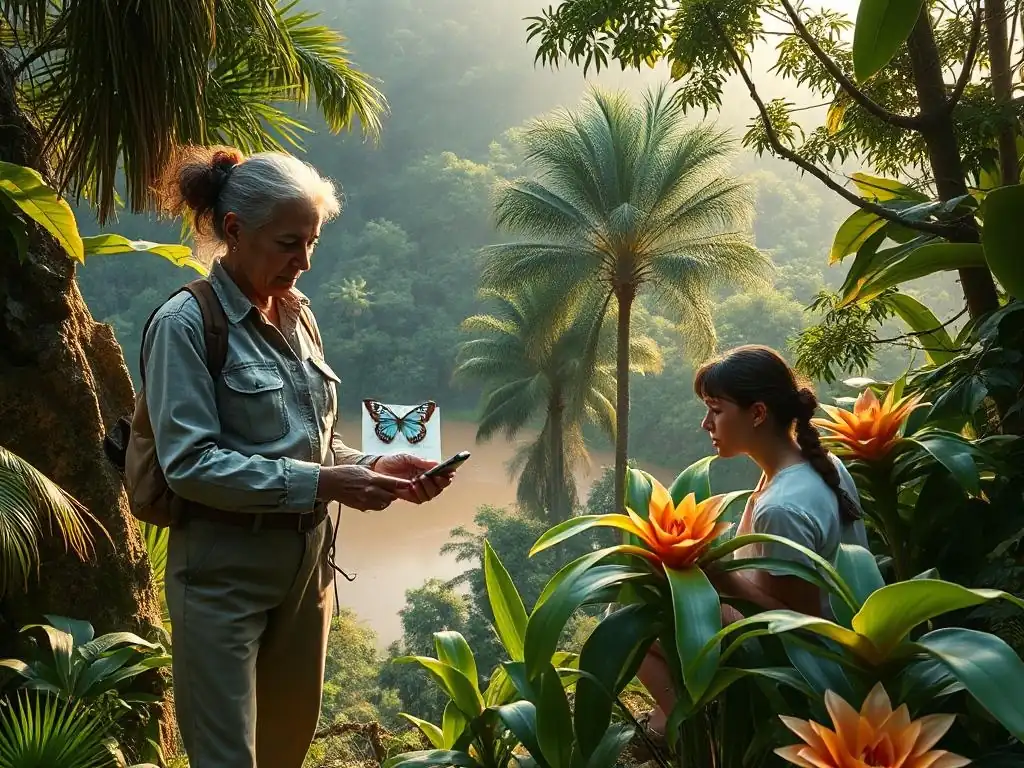
Welcome to WomenInScienceHistory.com, where we unearth the remarkable stories of women who shaped the scientific world. Ever wondered about the unsung heroines who dedicated their lives to protecting our planet? Dive in to discover "Guardians of Our Planet: Mobile Portraits of Pioneering Women in Ecology & Conservation Biology," a digital tribute to those who championed the natural world. But what challenges did they overcome, and how did their groundbreaking work pave the way for modern conservation efforts? Explore this captivating collection and ignite your curiosity about women ecology conservation history!
- Celebrating Women's History in Ecology and Conservation Through Mobile Art
- The Best Mobile Wallpapers: Honoring Women in Ecology and Conservation History
- Why These Women in Ecology and Conservation History Matter
- Beyond Wallpapers: Supporting Women in Science and Conservation
- Download Your Inspiration Today
-
Frequently Asked Questions
- What exactly does WomenInScienceHistory.com focus on?
- How does the website aim to inspire future generations?
- What is meant by "Guardians of Our Planet" in the context of the website?
- What obstacles did women in ecology and conservation history often face?
- How does WomenInScienceHistory.com connect women in ecology and conservation history with the broader history of science?
- Final Reflection: Echoes of Ecological Leadership
- Ignite Your Inner Conservationist!
Celebrating Women's History in Ecology and Conservation Through Mobile Art
The tapestry of scientific discovery is rich with threads woven by brilliant minds, yet often, the contributions of women have been historically overlooked. Our digital age offers a unique opportunity to rectify this, allowing us to celebrate and highlight these remarkable figures who shaped our understanding of the natural world.
This article delves into the profound impact of pioneering women in ecology and conservation biology, whose dedication and groundbreaking work laid the foundation for modern environmentalism. By honoring their legacies, we not only acknowledge their crucial roles in women ecology conservation history but also inspire future generations to follow in their footsteps, safeguarding our planet.
The Best Mobile Wallpapers: Honoring Women in Ecology and Conservation History
Imagine carrying a daily reminder of courage, intellect, and unwavering commitment in your pocket. Our curated collection of mobile wallpapers featuring these incredible women serves as more than just aesthetic appeal; it's a tribute to their enduring influence. Each portrait is a window into the lives of individuals who defied societal norms and scientific skepticism to champion environmental causes. These visual tributes highlight the profound impact of women ecology conservation history, transforming your device into a source of daily inspiration and a testament to their invaluable contributions to science and the planet.
Rachel Carson - The Silent Spring Advocate
Rachel Carson, a marine biologist, author, and conservationist, stands as a monumental figure in women ecology conservation history, widely credited with launching the modern environmental movement. Born in Springdale, Pennsylvania, in 1907, Carson's early career involved working for the U.S. Bureau of Fisheries (later the U.S. Fish and Wildlife Service), where she honed her scientific expertise and writing prowess. Her deep understanding of ecosystems and her eloquent prose culminated in her seminal work, Silent Spring, published in 1962, a book that meticulously documented the devastating effects of synthetic pesticides, particularly DDT, on the environment and human health.
Silent Spring was a meticulously researched exposé that challenged the prevailing belief in the unquestionable benefits of chemical pesticides. Carson presented compelling evidence of bioaccumulation and the widespread ecological damage caused by these chemicals, from the thinning of bird eggshells to the poisoning of entire food chains.
Despite fierce opposition from chemical companies and some government agencies, her work ignited a national debate, leading directly to the establishment of the U.S. Environmental Protection Agency (EPA) in 1970 and the eventual nationwide ban of DDT in 1972. Her unwavering commitment to scientific truth and public education irrevocably altered the course of women ecology conservation history, proving that one voice, backed by rigorous research, can instigate monumental change.
Wangari Maathai - The Forest Mother of Africa
Wangari Maathai, a Kenyan environmental and political activist, was the first African woman to win the Nobel Peace Prize in 2004 for her contributions to sustainable development, democracy, and peace. Born in 1940, Maathai pursued higher education, becoming the first woman in East and Central Africa to earn a Ph.D. in biological sciences from the University of Nairobi. Her deep understanding of ecological principles and social justice issues led her to found the Green Belt Movement in 1977, an indigenous grassroots organization focused on community-based tree planting to combat deforestation, desertification, and poverty.
Under Maathai's visionary leadership, the Green Belt Movement empowered rural women by paying them small stipends for planting trees, integrating environmental restoration with economic development and political empowerment. This initiative saw the planting of over 51 million trees across Kenya by 2004, significantly improving livelihoods, restoring degraded landscapes, and increasing access to clean water. Maathai's unwavering advocacy for human rights and environmental protection, often in the face of governmental opposition and personal risk, cemented her legacy as a transformative force in women ecology conservation history, demonstrating the profound link between ecological health and social well-being.
Dian Fossey - The Gorilla's Guardian
Dian Fossey, an American primatologist and conservationist, dedicated her life to the study and protection of mountain gorillas in Rwanda, becoming one of the world's foremost authorities on these majestic creatures. Inspired by a trip to Africa in 1963 and encouraged by renowned anthropologist Louis Leakey, Fossey established the Karisoke Research Center in the Virunga Mountains of Rwanda in 1967. Her pioneering work involved developing innovative techniques to habituate gorillas, allowing her to observe their complex social behaviors and individual personalities in unprecedented detail, providing invaluable insights into their lives.
Fossey's commitment extended beyond observation to fierce anti-poaching efforts, often confronting poachers directly and dismantling their traps, earning her both admiration and dangerous enemies. Her tireless advocacy, documented in her book Gorillas in the Mist (1983), brought global attention to the plight of mountain gorillas, whose populations had plummeted to a critical low of around 250 individuals in the 1980s.
Tragically, Fossey was murdered in 1985, a crime widely believed to be linked to her anti-poaching activities. Her legacy, however, lives on through the Dian Fossey Gorilla Fund International, which continues her work, and the remarkable recovery of the mountain gorilla population to over 1,000 individuals today, a testament to her profound impact on women ecology conservation history.
Sylvia Earle - Her Deepness
Sylvia Earle, an American oceanographer, marine biologist, and explorer, is a living legend in the field of marine conservation, often referred to as "Her Deepness" or "The Sturgeon General." Born in 1935, Earle's fascination with the ocean began in her youth, leading her to a groundbreaking career marked by numerous deep-sea expeditions and scientific discoveries.
In 1979, she set a solo deep-diving record, descending to 1,250 feet in the JIM suit, demonstrating an unparalleled commitment to exploring the ocean's depths and unraveling its mysteries. Her extensive research has focused on marine ecosystems, particularly the impact of human activities on ocean health.
Earle's influence extends far beyond scientific exploration; she has been a tireless advocate for ocean conservation, serving as the first female chief scientist of the U.S. National Oceanic and Atmospheric Administration (NOAA) in 1990. She founded Mission Blue in 2009, an initiative dedicated to establishing "Hope Spots" – critical areas of the ocean that need protection from human impact.
Through compelling lectures, documentaries, and publications, Earle continues to raise global awareness about overfishing, pollution, and climate change's devastating effects on marine life, inspiring millions to care for the "blue heart" of our planet. Her relentless dedication firmly places her among the most impactful figures in women ecology conservation history.
Why These Women in Ecology and Conservation History Matter
The stories of Rachel Carson, Wangari Maathai, Dian Fossey, and Sylvia Earle are not just historical footnotes; they are powerful narratives that underscore the critical role of women ecology conservation history in shaping our understanding and protection of the natural world. These women, often operating in male-dominated fields and facing significant opposition, demonstrated unparalleled courage, scientific rigor, and an unwavering commitment to their environmental causes. Their work transcended mere academic pursuits, translating into tangible policy changes, community empowerment, and the preservation of endangered species and vital ecosystems.
Their legacies serve as a beacon, illustrating that scientific inquiry, when coupled with passionate advocacy, can lead to profound societal and environmental transformation. They broke barriers, challenged norms, and inspired countless others to join the fight for a healthier planet. By celebrating these pioneering women in ecology and conservation, we not only honor their individual achievements but also recognize the broader impact of women ecology conservation history on global environmental movements, proving that diverse perspectives are essential for holistic and effective conservation strategies.
Beyond Wallpapers: Supporting Women in Science and Conservation
While mobile wallpapers offer a daily dose of inspiration from women ecology conservation history, true support extends beyond digital tributes. It involves actively championing initiatives that promote gender equity in STEM fields and conservation efforts worldwide. Supporting organizations that fund young female scientists, provide mentorship opportunities, or directly engage women in community-based conservation projects are crucial steps. Investing in educational programs that encourage girls to pursue careers in science, technology, engineering, and mathematics ensures that the next generation of environmental leaders is diverse and well-equipped.
Furthermore, advocating for policies that dismantle systemic barriers faced by women in scientific research and leadership roles is vital. This includes promoting equitable access to funding, resources, and recognition. By fostering an inclusive environment, we empower more women to contribute their unique insights and talents to solving the complex environmental challenges of our time, enriching the future of women ecology conservation history and ensuring a sustainable future for all.
Download Your Inspiration Today
Frequently Asked Questions
What exactly does WomenInScienceHistory.com focus on?
The website celebrates the contributions of women to science throughout history. It features biographies and discussions on their work, highlighting the challenges they faced.
How does the website aim to inspire future generations?
By showcasing the stories of pioneering female scientists, the platform hopes to inspire future generations. It aims to shed light on overlooked narratives in science.
What is meant by "Guardians of Our Planet" in the context of the website?
"Guardians of Our Planet" refers to the women in ecology and conservation biology featured on the site. It highlights their crucial role in protecting the environment.
What obstacles did women in ecology and conservation history often face?
These women often encountered obstacles due to male-dominated fields. They faced challenges in receiving recognition and access to opportunities.
How does WomenInScienceHistory.com connect women in ecology and conservation history with the broader history of science?
The website places their work within the historical context of science, showing how their contributions shaped the field. It acknowledges their place in the overall narrative of scientific progress.
Final Reflection: Echoes of Ecological Leadership
The stories shared within these mobile portraits resonate far beyond the digital frame, highlighting the enduring legacy of women in ecology and conservation. Their pioneering spirit, often forged in the face of adversity, continues to inspire a new generation to champion the health of our planet. These are not just historical accounts; they are blueprints for a sustainable future, built on resilience, collaboration, and unwavering dedication.
The impact of these women extends beyond scientific breakthroughs; it has profoundly shaped the cultural understanding of our relationship with nature. Their commitment to conservation serves as a powerful reminder that environmental stewardship is not just a profession, but a moral imperative. We have forgotten how to be good guests, how to walk lightly on the earth as its other creatures do.
- Barbara Ward. This quote encapsulates the essence of their work, urging us to reconsider our role and responsibility in the delicate balance of our ecosystem.
As we close this chapter, let us carry forward the torch of these ecological guardians. Consider how their stories can inform your own actions, both big and small. What steps can you take to become a more conscious and active participant in protecting our planet? Let their courage and vision inspire you to become a guardian of our planet, ensuring a thriving future for generations to come.
Ignite Your Inner Conservationist!
Thank you for diving into the inspiring stories of these incredible women. Now that you've seen the impact they've made, it's time to consider how you can contribute to a healthier planet too. Here are some ways to get started:
- Share this article with your network to amplify the voices and achievements of these pioneering women.
- Identify a local environmental issue that resonates with you and research ways to get involved with relevant organizations or initiatives.
- Challenge yourself to reduce your carbon footprint this week by making small, sustainable changes in your daily routine, like opting for public transport or reducing food waste.
What's one small but meaningful step you're inspired to take today to honor the legacy of these conservation heroes?