
Unmasking the Anonymous: Identifying Women Behind PC Breakthroughs (19702000)

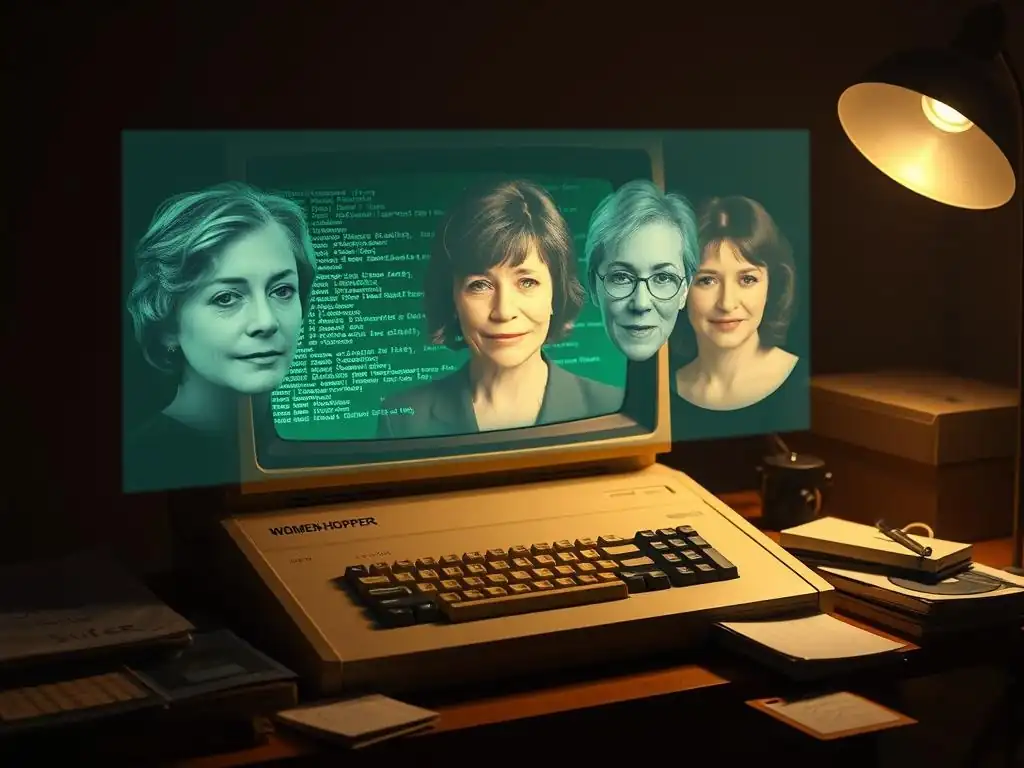
Welcome to WomenInScienceHistory.com, where we illuminate the remarkable achievements of women who shaped the scientific landscape. Dive into "Unmasking the Anonymous: Identifying Women Behind PC Breakthroughs (1970-2000)" and discover the untold stories of Women PC programming history. What innovations were quietly driven by female ingenuity, and what obstacles did they overcome to revolutionize the world of computing? Prepare to be inspired by these pioneers and their enduring legacy.
- Introduction: Recognizing the Unsung Heroines of Early PC Programming
- Key Figures in Women PC Programming History: Pioneers and Innovators
- Unveiling the Impact: Women's Contributions to PC Software Development (1980-1990)
- The Rise of the Internet and Beyond: Women's PC Programming Contributions (1990-2000)
- Challenges and Triumphs: Examining the Gender Dynamics in PC Programming
- Preserving the Narrative: Resources and Further Research on Women in PC Science
- Conclusion: Acknowledging the Enduring Legacy of Women in PC Programming
-
Frequently Asked Questions
- What were some of the major challenges faced by women in PC programming history between 1970 and 2000?
- Why is it important to highlight the contributions of women in PC programming history?
- What kinds of breakthroughs did women contribute to in PC programming between 1970 and 2000?
- How does "WomenInScienceHistory.com" aim to promote awareness of women in PC programming history?
- What can be done to further uncover and celebrate the anonymous women behind PC breakthroughs?
- Final Reflection: Illuminating the Unsung Heroines
- Champion Unsung Heroines: Ignite the Legacy!
Introduction: Recognizing the Unsung Heroines of Early PC Programming
The Invisible Contributions: Why Women's Roles in PC Development Were Often Overlooked
The narrative of early personal computer development frequently centers on a few iconic male figures, inadvertently sidelining the significant contributions of countless women. This oversight stems from a combination of societal biases prevalent in the 1970s and 1980s, where technical roles were often stereotyped as male domains, and a lack of systematic documentation that specifically highlighted women's roles. Many women worked in less visible, yet crucial, capacities such as quality assurance, technical writing, user interface design, and core programming, often without individual attribution in a team-oriented environment.
Furthermore, the transition from "human computers" – predominantly women performing complex calculations manually or with early machines – to electronic computer programmers was not always accompanied by an equal shift in recognition. As the field evolved, the vital work of these women, who laid foundational groundwork in logic and algorithms, continued in the nascent PC industry but frequently remained uncredited in the broader public discourse, obscuring a rich women PC programming history.
Setting the Stage: The Dawn of the Personal Computer Era (1970-1980)
The 1970s marked a pivotal decade, transforming computing from colossal mainframes into accessible personal machines. This era saw the emergence of microprocessors like the Intel 8080 in 1974, which made devices like the Altair 8800 (released in 1975) commercially viable. Early personal computers such as the Apple I (1976), TRS-80, and Commodore PET (both 1977) began to democratize computing, shifting it from institutional laboratories to homes and small businesses.
The programming of these early machines was a pioneering effort, often done in assembly language or early versions of BASIC. It required immense creativity and problem-solving skills to work within severe memory and processing limitations. This foundational period of women PC programming history involved individuals who were not just coders but often hardware tinkerers and system architects, shaping the very interaction models that would define personal computing for decades to come.
Key Figures in Women PC Programming History: Pioneers and Innovators
Ada Lovelace: A Visionary of Analytical Engines
Considered by many to be the first computer programmer, Ada Lovelace's contributions to the Analytical Engine in the mid-19th century were revolutionary. Her extensive notes on Charles Babbage's proposed mechanical general-purpose computer detailed how the machine could go beyond simple calculations to manipulate symbols, create music, and even generate art. She envisioned algorithms and iterative processes, concepts fundamental to modern computing, long before electronic computers existed.
Lovelace's intellectual prowess, though recognized by Babbage, faced the inherent societal limitations placed upon women in the Victorian era. Despite her aristocratic background, her scientific pursuits were often viewed as eccentricities rather than serious professional endeavors. Her groundbreaking insights into what we now call software, and her understanding of the Analytical Engine's potential beyond mere arithmetic, solidify her place as a foundational figure in women PC programming history, inspiring future generations.
Grace Hopper: Pioneering Software Development
Rear Admiral Grace Hopper, a distinguished computer scientist and U.S. Navy officer, is renowned for her groundbreaking work in software development. Among her most significant achievements was the development of the first compiler for electronic computers in the early 1950s, a program that translates human-readable code into machine code. She is also credited with popularizing the term "debugging" for computer errors after a moth was found in a relay of the Mark II computer.
The impact of Hopper's work on programming was profound, revolutionizing the field by making it more accessible and efficient. Her advocacy for machine-independent programming languages led to the creation of FLOW-MATIC, which later influenced COBOL (Common Business-Oriented Language) – a language that dominated business and government computing for decades. Her foresight in making programming more akin to natural language significantly broadened the pool of potential programmers, including many women who entered the field, leaving an indelible mark on women PC programming history.
Unveiling the Impact: Women's Contributions to PC Software Development (1980-1990)
Shaping the User Experience: Women's Role in Interface Design
As personal computers became more sophisticated in the 1980s, the focus shifted from command-line interfaces to more intuitive graphical user interfaces (GUIs). Women played a crucial, though often uncredited, role in shaping this user experience. They were frequently at the forefront of usability testing, technical documentation, and the design of user-friendly software applications. Their insights helped make complex systems accessible to a broader audience, transforming intimidating machines into tools for everyday use.
For instance, at companies like Apple, Xerox PARC, and Microsoft, women contributed significantly to the development of early word processors, spreadsheets, and desktop publishing software. Their work in areas like icon design, menu structures, and help systems ensured that software was not only functional but also intuitive and appealing, directly influencing how millions interacted with their personal computers. This period saw a quiet revolution in user-centric design, heavily influenced by the perspectives of women.
Women Leading the Charge in Early Programming Languages
While men often received public accolades for creating programming languages, women were instrumental in their practical development, adoption, and education. Niklaus Wirth, the creator of Pascal, acknowledged the influence of women in the development and widespread adoption of Pascal. This language, known for its structured programming capabilities, became incredibly popular in academic settings and for teaching computer science throughout the 1980s, partly due to its clear syntax and logical framework.
Women educators and programmers embraced Pascal, developing curricula, writing textbooks, and applying it in early software projects, thereby solidifying its place in the burgeoning PC ecosystem. Their dedication to teaching and applying these languages helped train a new generation of programmers, including many other women, ensuring that the legacy of women PC programming history continued to evolve and expand.
Breaking Barriers: Women in Software Companies and Startups
The 1980s witnessed the explosive growth of software companies and startups, and women were integral to their success, often breaking significant barriers in male-dominated environments. While precise figures for women in technical roles at nascent companies like Microsoft or Lotus Development are hard to isolate for the entire decade, estimates suggest that by the mid-1980s, women comprised approximately 10-15% of the technical workforce in some leading software firms. They held critical positions in software testing, quality assurance, technical support, and even core development teams, ensuring the robustness and reliability of early PC software.
These women often navigated environments where they were a distinct minority, yet their technical expertise and problem-solving skills were indispensable. They contributed to the development of foundational software such as operating systems, productivity suites, and early database management systems, laying the groundwork for the digital economy that would flourish in the subsequent decade. Their perseverance in these roles is a testament to the evolving women PC programming history.
The Rise of the Internet and Beyond: Women's PC Programming Contributions (1990-2000)
Women Innovators in Early Web Development
The 1990s ushered in the era of the World Wide Web, and women were at the forefront of its creation and popularization. While Tim Berners-Lee is credited with the invention of the WWW, countless women contributed to the development of early web browsers, HTML standards, and the explosion of online content. For example, individuals like Elizabeth Ferrarini were among the very first "webmasters," crafting early websites and grappling with the nascent technologies of the internet.
Women also contributed significantly to the burgeoning field of web design and user experience for online platforms, making the internet accessible and engaging for the masses. Their work in information architecture, content creation, and front-end development shaped the look and feel of the early internet, demonstrating their crucial impact on the evolving women PC programming history.
Contributing to Operating System Advancements: Windows
As Microsoft's Windows operating system became dominant in the 1990s with releases like Windows 95 and Windows 98, women played vital roles within the vast development teams. While individual contributions within such large projects are often not publicly attributed, women engineers, testers, and project managers were integral to the development of core system functionalities, device drivers, and user interface enhancements.
Their work ensured the stability, compatibility, and usability of an operating system that would run on hundreds of millions of personal computers worldwide. These contributions, though often behind the scenes, were fundamental to Windows' widespread adoption and success, marking a significant chapter in the ongoing women PC programming history.
The Legacy of Women in PC Programming: Inspiring Future Generations
The cumulative efforts of women in PC programming throughout the 1970s, 1980s, and 1990s created a profound legacy that continues to inspire. Their perseverance in a male-dominated field, their technical ingenuity, and their commitment to making technology accessible laid the groundwork for the digital age. By contributing to everything from fundamental programming languages to operating systems and the early internet, they established precedents for innovation.
This legacy serves as a powerful reminder that talent and vision are not confined by gender. Highlighting these stories is crucial for encouraging young women today to pursue careers in computer science and technology, showing them a rich and often overlooked heritage of women PC programming history to draw inspiration from.
Challenges and Triumphs: Examining the Gender Dynamics in PC Programming
The Gender Gap in Computer Science: Historical Context
Despite the significant contributions of women in early computing, a notable gender gap emerged and widened in computer science during the 1980s and 1990s. In the mid-1980s, women earned nearly 37% of all computer science bachelor's degrees in the U.S., a peak that followed a period of growth.
However, this percentage began to decline sharply thereafter, falling to approximately 28% by 1995 and further to about 18% by 2010. This decline is attributed to various factors, including the increasing "geek" stereotype of programmers, the rise of home computers marketed predominantly to boys, and a lack of visible female role models in popular media.
This shift meant that while women were instrumental in the early PC revolution, their representation in the academic pipeline for computer science diminished, creating a challenge for the future of women PC programming history. Understanding this historical context is vital to addressing contemporary gender disparities in tech.
Strategies for Overcoming Bias: Mentorship Programs and Inclusive Hiring Practices
To counteract the historical gender gap and foster greater inclusivity, various strategies have been developed and implemented within the tech industry. Mentorship programs, where experienced women in tech guide and support aspiring female professionals, have proven particularly effective. These programs provide invaluable career advice, networking opportunities, and a sense of community, helping women navigate potential biases and challenges.
Furthermore, companies are increasingly adopting inclusive hiring practices, such as blind resume reviews, diverse interview panels, and a focus on skills-based assessments over traditional credentials, to mitigate unconscious bias. These efforts aim to create more equitable opportunities and ensure that the talent pool for women PC programming history continues to grow and thrive.
Celebrating Success: Highlighting the Achievements of Women in PC Programming History
Celebrating the achievements of women in PC programming is not just about historical accuracy; it's about inspiring the present and future. Recognizing pioneers like Grace Hopper, who fundamentally changed how we interact with computers, and the countless unsung heroines who shaped user interfaces and operating systems, provides tangible role models. Publicizing their stories helps to dismantle the stereotype that computing is a male-dominated field.
Through awards, historical accounts, and public recognition, the triumphs of women in PC programming can be brought to the forefront. This active celebration is essential for encouraging more girls and young women to pursue STEM fields, reinforcing that their contributions are valued and vital to the ongoing evolution of technology and the rich tapestry of women PC programming history.
Preserving the Narrative: Resources and Further Research on Women in PC Science
Archival Projects Dedicated to Women in Computing
Preserving the stories and artifacts of women in computing is crucial for a complete understanding of technological history. Numerous archival projects worldwide are dedicated to this endeavor. Institutions such as the Charles Babbage Institute at the University of Minnesota, the Computer History Museum in California, and the National Museum of American History at the Smithsonian have extensive collections, including oral histories, personal papers, and corporate records that shed light on women PC programming history.
These archives actively seek out and preserve materials from pioneering women, ensuring that their contributions are not lost to time. They provide invaluable resources for researchers, educators, and the public to explore the often-overlooked narratives of female innovators in computing.
Books and Articles Highlighting Women's Contributions to PC Technology
A growing body of literature, including academic books, popular non-fiction, and specialized articles, is dedicated to illuminating the contributions of women to PC technology. These publications delve into the biographies of individual pioneers, analyze the societal and cultural factors that shaped women's involvement in computing, and document their impact on hardware, software, and networking.
These resources offer detailed insights into the challenges faced by women in the field and their triumphs, providing a comprehensive view of women PC programming history. They are essential for anyone seeking to deepen their understanding of how women shaped the digital world we inhabit today.
Despite the progress in documenting women's roles in computing, significant opportunities for future research remain. Many "hidden figures" still await discovery, their stories buried in corporate archives, personal collections, or obscured by collective project attributions. Research into specific companies, regional tech hubs, and specialized areas of PC development from the 1970s to 2000 could uncover new names and contributions.
Oral history projects, in particular, offer a powerful means to capture firsthand accounts from women who were active in the early PC industry. By actively seeking out and documenting these narratives, researchers can continue to enrich the comprehensive understanding of women PC programming history and ensure that the full scope of innovation is recognized.
Conclusion: Acknowledging the Enduring Legacy of Women in PC Programming
The Importance of Recognizing and Celebrating Women's Contributions
Recognizing and celebrating the contributions of women to PC programming is not merely about correcting historical oversights; it is about painting a more accurate and inspiring picture of technological progress. From the foundational theoretical work of Ada Lovelace to the compiler innovations of Grace Hopper, and the countless women who shaped user interfaces, developed operating systems, and built the early internet, their impact is undeniable. Acknowledging their roles validates their efforts and ensures that their ingenuity is woven into the fabric of computing history.
This recognition fosters a sense of belonging for women currently in tech and encourages future generations to pursue careers in computer science without feeling that they are entering an exclusively male domain. It enriches our collective understanding of innovation, demonstrating that diverse perspectives are essential for solving complex problems and driving technological advancement.
Inspiring the Next Generation of Female Computer Scientists
The stories of women in PC programming history serve as powerful beacons of inspiration for the next generation of female computer scientists. By highlighting their resilience, creativity, and groundbreaking achievements, we can dismantle persistent stereotypes and show young girls that they too can be innovators, problem-solvers, and leaders in the tech world. Witnessing the profound impact these pioneers had on the personal computer revolution can ignite a passion for technology and empower girls to pursue their ambitions in STEM fields.
Ultimately, by preserving and promoting the rich women PC programming history, we not only honor the past but also actively shape a more inclusive and equitable future for computing. Their legacy is a testament to the fact that talent knows no gender, and their contributions continue to pave the way for new breakthroughs and a more diverse technological landscape.
Frequently Asked Questions
What were some of the major challenges faced by women in PC programming history between 1970 and 2000?
Women faced significant challenges including gender bias, lack of recognition for their contributions, and limited access to opportunities and mentorship in the male-dominated field.
Why is it important to highlight the contributions of women in PC programming history?
Highlighting their contributions helps to correct historical inaccuracies and provides role models for future generations, inspiring them to pursue careers in STEM fields. It also acknowledges the diversity of talent that shaped the PC revolution.
What kinds of breakthroughs did women contribute to in PC programming between 1970 and 2000?
Women contributed to a range of breakthroughs including software development, operating system design, and programming language creation. They were often involved in key aspects of early PC development.
How does "WomenInScienceHistory.com" aim to promote awareness of women in PC programming history?
The website promotes awareness by featuring biographies of pioneering female programmers, discussing their groundbreaking work, and highlighting the obstacles they overcame.
What can be done to further uncover and celebrate the anonymous women behind PC breakthroughs?
Further research, archival investigations, and oral history projects are crucial to uncovering hidden stories and documenting the contributions of these women. Actively seeking out and amplifying their voices is essential.
Okay, here's a final reflection designed to close your article, "Unmasking the Anonymous: Identifying Women Behind PC Breakthroughs (1970-2000)," optimized for the keyword "Women PC programming history" and following the structure you provided:
Final Reflection: Illuminating the Unsung Heroines
The stories we've explored in this article, detailing the often-overlooked contributions of women to PC programming between 1970 and 2000, are not simply historical anecdotes; they are a crucial piece of the puzzle in understanding the evolution of technology itself. By bringing these names and accomplishments to light, we challenge the pervasive narrative that has traditionally sidelined women in STEM fields. The impact of their work resonates even today, shaping the digital landscape we inhabit.
The persistent erasure of women from historical accounts, particularly in fields dominated by men, demands constant vigilance and active correction. This journey into the past has reinforced my belief in the vital importance of actively seeking out and celebrating the contributions of marginalized voices. History is written by the victors,
a sentiment often attributed to Winston Churchill, reminds us that narratives are shaped by power, and it is our responsibility to ensure that all voices are heard and acknowledged.
As we close this chapter on unmasking the anonymous, I invite you, the reader, to consider your own role in shaping the future of technology. How can you actively support and amplify the voices of women in STEM? How can you challenge biases and create a more inclusive environment where innovation thrives, regardless of gender? Let us all commit to ensuring that the future of PC programming history remembers and celebrates the contributions of all its pioneers.
Champion Unsung Heroines: Ignite the Legacy!
Thank you for delving into the stories of these remarkable women who shaped the world of personal computing. Now, let's ensure their contributions are never forgotten.
- Amplify Their Voices: Share this article with your network and spark a conversation about the women who pioneered PC technology.
- Delve deeper: Explore our website, WomenInScienceHistory.com, to uncover even more untold stories of women who revolutionized science.
- Nominate a Pioneer: Do you know of a woman in computing history who deserves recognition? Send her story to us and help expand our archive.
Which unsung heroine's story resonates most with you and what can you do to ensure her contributions are celebrated?