
From Folk Remedies to Medical Texts: Tracing Women's Impact on Early Medical Understanding

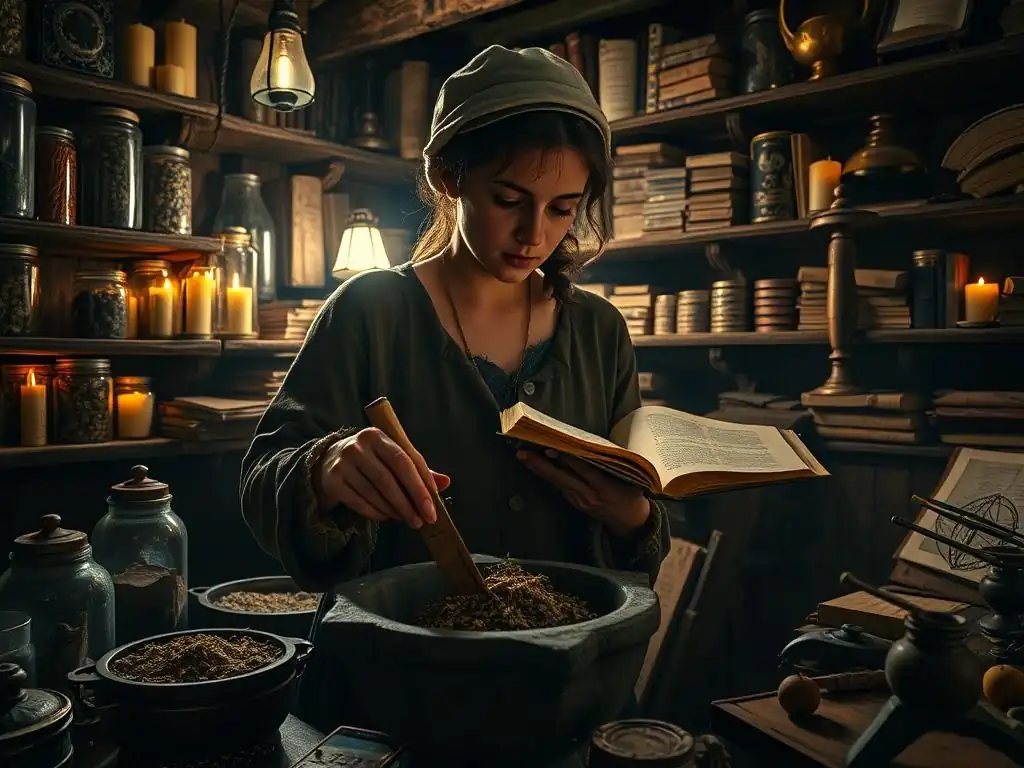
Welcome to WomenInScienceHistory.com, where we uncover the untold stories of remarkable women who shaped the world of science!
Delve into the fascinating history of women's contributions to science, starting with an intriguing exploration of Women's Early Medical Knowledge. From ancient folk remedies passed down through generations to their influence on the earliest medical texts, discover how women's insights profoundly impacted our understanding of health and healing. Ready to explore the hidden chapters of medical history? Let's begin!
- Introduction: Unveiling Women's Contributions to Early Medicine
- Women's Early Medical Knowledge: A Historical Overview
- Folk Remedies and Herbal Knowledge: The Foundation of Women's Early Medical Knowledge
- Documenting Women's Early Medical Insights: From Oral Tradition to Written Records
- Challenges Faced by Women in Sharing and Preserving Medical Knowledge
- Case Studies: Highlighting Influential Women and Their Medical Contributions
- The Legacy of Women's Early Medical Knowledge: Shaping Future Practices
- Conclusion: Acknowledging and Celebrating Women's Enduring Impact on Medical Understanding
-
Frequently Asked Questions
- How did women contribute to early medical knowledge before formal medical institutions existed?
- What were some of the challenges women faced in sharing and documenting their medical knowledge?
- In what ways did women's early medical knowledge differ from that of men at the time?
- How did the rise of medical texts and institutions impact women's roles in healthcare?
- What steps can be taken to better recognize and celebrate women's contributions to early medical understanding?
- Final Reflection: Honoring the Legacy of Women's Early Medical Knowledge
- Unveil Your Inner Healer: Explore Women's Medical Legacy!
Introduction: Unveiling Women's Contributions to Early Medicine
For centuries, the narrative of medical history has predominantly highlighted the contributions of male figures, often overlooking the foundational role women played in developing early healing practices. Before the advent of formalized medical institutions, women's early medical knowledge, passed down through generations, formed the bedrock of community health and well-being. This article delves into how women, as primary caregivers and healers, cultivated a vast body of understanding that profoundly shaped pre-scientific medicine.
From the quiet wisdom of herbalists to the systematic compilations of early texts, women's influence permeated every aspect of health management. Their practical experience, rooted in observation and empirical testing, provided vital remedies for common ailments, guided childbirth, and nurtured recovery. Exploring this often-unacknowledged history is crucial to understanding the full scope of medical evolution and recognizing the enduring impact of women's early medical knowledge on contemporary practices.
Women's Early Medical Knowledge: A Historical Overview
The Underestimated Role of Women in Ancient Healing Practices
Throughout ancient civilizations, the roles of healer, midwife, and caregiver were predominantly held by women, yet their contributions have been historically underestimated. In ancient Egypt, for instance, women like Peseshet, possibly the earliest recorded female physician from around 2600 BCE, oversaw medical training and held significant positions, suggesting a more formalized role than often acknowledged. Across Mesopotamia, Greece, and Rome, women were integral to domestic healing, preparing poultices, administering herbal remedies, and assisting in childbirth, forming the crucial, albeit often informal, backbone of healthcare.
This pervasive presence meant that much of the practical medical understanding within communities resided with women. They were the first responders to illness, injuries, and the challenges of childbirth, accumulating a wealth of empirical women's early medical knowledge through direct experience. Their expertise, though rarely documented in grand academic treatises, was indispensable for survival and health in societies lacking formal medical infrastructure.
Pre-Scientific Medicine: Women as Traditional Healers
Before the emergence of systematic scientific inquiry, medicine was largely empirical, based on observation, tradition, and often spiritual belief. In this context, women excelled as traditional healers, their practices deeply integrated into the fabric of daily life. They were the custodians of household health, responsible for everything from treating childhood fevers to managing chronic conditions.
This hands-on approach allowed women to develop sophisticated systems of diagnosis and treatment, often drawing upon local flora and ancestral wisdom. Their role extended beyond physical ailments to encompass emotional and spiritual well-being, reflecting a holistic approach that characterized much of women's early medical knowledge. These traditional healers, often uncelebrated, were vital community figures, embodying the practical application of healing arts passed down through countless generations.
Folk Remedies and Herbal Knowledge: The Foundation of Women's Early Medical Knowledge
The Transmission of Herbal Wisdom: Mother to Daughter
The bedrock of women's early medical knowledge was undoubtedly their profound understanding of herbs and folk remedies, meticulously passed down through an intimate, intergenerational lineage. This wisdom was primarily transmitted orally, from mother to daughter, grandmother to granddaughter, within the domestic sphere or through apprenticeships within families and communities. This informal yet highly effective system ensured that vital information about medicinal plants, their preparation, and their application was preserved and adapted over centuries.
This direct transmission meant that practical skills and observations about the efficacy of various natural remedies were honed and refined with each generation. Daughters learned not only the names of plants but also how to identify them in different seasons, how to harvest them correctly, and the precise methods for preparing infusions, poultices, salves, and tinctures. This continuous cycle of learning and practice solidified a comprehensive body of women's early medical knowledge related to herbal healing.
Common Ailments and Women's Traditional Treatments
Women's traditional treatments covered a wide spectrum of common ailments that afflicted pre-modern populations. From minor cuts and burns to more serious conditions like fevers, digestive disturbances, and respiratory infections, women developed and administered remedies often derived from their immediate natural environment. Their deep familiarity with the human body, particularly concerning reproductive health and childbirth, also made them indispensable experts in midwifery and gynecological care.
For instance, they understood the importance of hygiene in wound care, often using antiseptic herbs, and developed remedies for pain relief and inflammation long before modern pharmacology. The efficacy of these treatments, while sometimes anecdotal, was often validated by generations of empirical observation, forming a practical and accessible healthcare system for the majority of the population. This practical application of women's early medical knowledge was the primary source of healing for countless individuals.
Use of Willow Bark for Pain Relief, Mint for Digestive Issues, and Calendula for Skin Ailments
Specific examples powerfully illustrate the depth of women's early medical knowledge concerning herbal remedies. Willow bark, for instance, was widely recognized and utilized across various cultures for its pain-relieving and anti-inflammatory properties, long before the isolation of its active compound, salicylic acid (the precursor to aspirin), in the 19th century. Women healers would prepare teas or poultices from willow bark to alleviate headaches, fevers, and joint pain, demonstrating an intuitive understanding of its medicinal chemistry.
Mint, a ubiquitous herb, was a go-to remedy for a host of digestive issues, including indigestion, nausea, and stomach cramps. Its carminative properties were well-understood, and infusions of mint leaves were commonly given to soothe upset stomachs and aid digestion. Calendula (marigold) was another staple in women's herbal arsenals, prized for its ability to promote wound healing, soothe skin irritations, and reduce inflammation. Applied as salves, poultices, or washes, calendula was a primary treatment for cuts, scrapes, rashes, and minor burns, showcasing the practical application of women's early medical knowledge in everyday health.
Documenting Women's Early Medical Insights: From Oral Tradition to Written Records
The Transition from Oral Lore to Early Medical Texts
For much of history, women's early medical knowledge existed primarily as oral tradition, passed down through generations of healers and caregivers. This informal system, while effective for practical application, made it vulnerable to loss and difficult to disseminate widely or formally recognize. However, as societies evolved and literacy became more widespread, a gradual transition began, where some of this invaluable oral lore started to be codified into written records.
This process was often complex, as formal writing was largely the domain of educated men, who might record practices learned from women without proper attribution. Nevertheless, the accumulated practical wisdom, much of it originating from female experience, found its way into early medical texts, contributing to a more systematic understanding of remedies and treatments. This shift represented a crucial step in preserving and formalizing aspects of women's early medical knowledge.
Women's Contributions to Early Pharmacopoeias
Early pharmacopoeias, which were essentially compilations of medicinal substances and their uses, often drew heavily upon the traditional herbal wisdom cultivated by women. While explicit female authorship in these formal texts was rare, the remedies documented within them frequently reflected practices that had been developed, refined, and maintained by generations of female healers. These texts served as foundational reference works for apothecaries and physicians, cataloging the properties and preparations of plants, minerals, and animal products used in medicine.
The inclusion of specific herbal remedies for common ailments, childbirth, and women's health issues within these pharmacopoeias strongly suggests the pervasive influence of women's early medical knowledge. Even if uncredited, the practical efficacy of these remedies ensured their place in documented medical practice, demonstrating the enduring impact of women's empirical observations and therapeutic innovations.
The Physician's Book of Remedies, Salerno Texts on Women's Medicine
While a single "Physician's Book of Remedies" is a broad descriptor, medieval medical compilations often integrated practices that originated from or were heavily influenced by common folk traditions, many of which were overseen by women. These practical handbooks for general practitioners would frequently include remedies for common ailments, many of which mirrored the herbal and remedial practices widely known and applied by women in the community. This demonstrates how women's early medical knowledge, even if not formally attributed, permeated the medical mainstream.
A far more explicit and significant example of documented women's early medical knowledge are the "Salerno Texts on Women's Medicine," most notably the Trotula ensemble. Originating from the renowned medical school of Salerno in medieval Italy, these texts (comprising De passionibus mulierum curandarum or Trotula Major, and De ornatu mulierum or Trotula Minor) are widely attributed to or heavily influenced by a female physician named Trotula of Salerno, or a collective of female practitioners.
These works provided detailed insights into gynecology, obstetrics, skin care, and general women's health, offering practical advice on childbirth, postnatal care, contraception, and the treatment of various female-specific conditions, representing a groundbreaking codification of female medical expertise.
Challenges Faced by Women in Sharing and Preserving Medical Knowledge
Societal Barriers to Women's Education and Medical Practice
Throughout much of history, significant societal barriers actively hindered women's access to formal education and professional medical practice, severely limiting their ability to share and preserve women's early medical knowledge in recognized ways. Universities and medical schools, which began to emerge in the Middle Ages and solidify in later centuries, were almost exclusively male domains. This exclusion meant that women were systematically denied the formal training, Latin literacy, and institutional recognition necessary to become licensed physicians or to publish their findings in the academic sphere.
Consequently, women's medical roles were largely confined to the informal, domestic, or community-based realms, such as midwifery or herbalism. While highly skilled and deeply knowledgeable, their practices were rarely documented in official texts, making their contributions difficult to trace and often leading to their historical erasure. This institutional marginalization meant that a vast body of practical medical wisdom remained largely outside the formal historical record.
The Appropriation of Women's Knowledge by Male Physicians
A pervasive challenge for women's early medical knowledge was its appropriation by male physicians, who, armed with formal education and societal authority, often incorporated female-developed remedies and practices into their own repertoires without attribution. As medicine professionalized, male practitioners increasingly gained legitimacy and power, often at the expense of traditional female healers. They would learn from the empirical observations and successful treatments of women, integrate them into their own "scientific" frameworks, and publish them under their own names.
This systemic appropriation not only robbed women of credit but also contributed to the perception that medical knowledge was solely the domain of men. It obscured the true origins of many effective treatments, reinforcing the patriarchal structures that denied women their rightful place in medical history. The process of formalization often meant the uncredited absorption of women's early medical knowledge into a male-dominated canon.
Women Healers Accused of Witchcraft, Suppression of Female Medical Guilds
Perhaps the most devastating challenge to women's early medical knowledge came in the form of widespread persecution, particularly the European witch hunts from the 15th to the 18th centuries. Thousands of women, many of whom were skilled herbalists, midwives, and traditional healers, were accused of witchcraft, tortured, and executed. This period saw a systematic targeting of women who held significant medical authority and influence within their communities, leading to an immense loss of valuable expertise and the suppression of alternative healing traditions.
Simultaneously, the rise of formal medical guilds and professional organizations actively worked to exclude women, consolidating medical practice under male control. In many regions, laws were enacted to prevent women from practicing medicine, effectively dismantling existing female healing networks and making it nearly impossible for women to openly practice or preserve their medical knowledge. This dual pressure of persecution and professional exclusion severely curtailed the development and recognition of women's early medical knowledge for centuries.
Case Studies: Highlighting Influential Women and Their Medical Contributions
Hildegard of Bingen: A Medieval Visionary in Medicine and Science
Hildegard of Bingen (1098–1179) stands as an extraordinary example of a medieval woman whose early medical knowledge and scientific insights were remarkably advanced for her time. As a Benedictine abbess, mystic, composer, and writer, Hildegard authored two significant medical and scientific works: Physica (Natural History) and Causae et Curae (Causes and Cures). These texts reveal her deep understanding of the natural world and its medicinal properties, detailing hundreds of plants, animals, and minerals and their therapeutic applications.
Hildegard's approach to medicine was holistic, integrating herbal remedies, dietary advice, and spiritual well-being. She meticulously described the medicinal uses of plants like lavender for headaches, fennel for digestive issues, and even detailed complex diagnostic observations. Her writings, though rooted in the theological framework of her era, provided practical, empirical observations that contributed significantly to the existing body of women's early medical knowledge and European natural medicine.
Trotula of Salerno: A Pioneer in Gynecology and Women's Health
The figure of Trotula of Salerno, or the collective of female practitioners associated with the Trotula texts from the Schola Medica Salernitana in medieval Italy, represents a pinnacle of women's early medical knowledge in the formal sphere. The Trotula texts, specifically De passionibus mulierum curandarum (On the Diseases of Women) and De ornatu mulierum (On Women's Cosmetics), are foundational works in medieval gynecology, obstetrics, and women's health. They offer practical advice on childbirth, postpartum care, contraception, infertility, and various gynecological conditions.
These texts are remarkable for their detailed anatomical descriptions, diagnostic methods, and therapeutic interventions, reflecting a sophisticated understanding of the female body. The Trotula works broke new ground by addressing topics often ignored by male physicians, such as menstrual irregularities, perineal tears, and even emotional well-being related to women's health. Their enduring popularity and widespread influence across medieval Europe highlight the critical role of women in shaping specialized medical understanding.
Metrodora, a Byzantine female physician, is believed to be the earliest known female medical writer whose work has survived to the present day. Her treatise, On the Diseases and Cures of Women, composed likely between the 3rd and 4th centuries CE, is a monumental testament to women's early medical knowledge. The text is comprehensive, covering a wide array of gynecological conditions, diagnostics, surgical procedures, and therapeutic remedies.
Metrodora's work is notable for its practical and clinical approach, providing detailed instructions for examinations, the use of instruments, and the preparation of medications. It includes discussions on menstruation, conception, childbirth complications, uterine prolapse, and various female ailments. The survival of her extensive work underscores the existence of highly educated and skilled female physicians in the Byzantine era, whose contributions, like Metrodora's, were vital to the development of medical science and represent a significant portion of documented women's early medical knowledge.
The Legacy of Women's Early Medical Knowledge: Shaping Future Practices
The Enduring Influence of Traditional Remedies
The women's early medical knowledge embodied in traditional remedies and herbal practices continues to exert a profound influence on modern healthcare. Many folk remedies, once dismissed as anecdotal, have since been scientifically validated, revealing the empirical wisdom embedded in centuries of observation. For example, the use of foxglove (Digitalis purpurea) for heart conditions, long a part of traditional women's healing, led to the isolation of digitalis, a crucial cardiac medication. Similarly, the anti-inflammatory properties of willow bark, recognized by ancient healers, laid the groundwork for aspirin.
This enduring influence is evident in the continued use of many plant-derived compounds in modern pharmaceuticals, and in the growing appreciation for complementary and alternative medicine. The foundational insights gleaned from generations of female healers demonstrate that practical, observational knowledge can be a powerful precursor to scientific discovery, solidifying the lasting impact of women's early medical knowledge on contemporary medicine.
The Recognition of Women's Contributions in Modern Medical History
In recent decades, there has been a significant and much-needed re-evaluation of medical history to properly acknowledge and celebrate the contributions of women. Historians and scholars are actively uncovering and highlighting the stories of countless female healers, midwives, and medical practitioners whose early medical knowledge was crucial but largely uncredited. This ongoing research challenges the traditional male-centric narratives, revealing a far richer and more inclusive history of medical development.
This shift in recognition is not merely about historical accuracy; it is about inspiring future generations of women in science and medicine by showcasing the profound impact of their predecessors. By bringing to light the innovative practices and intellectual achievements of women from ancient times through the pre-modern era, we gain a more complete understanding of how medical understanding evolved, recognizing the invaluable role of women's early medical knowledge in shaping our present-day healthcare systems.
Ethnobotany and the Study of Traditional Medicine, Holistic Approaches to Healthcare
The field of ethnobotany directly connects to and validates much of the women's early medical knowledge by systematically studying the relationship between people and plants, particularly the traditional medicinal uses of flora. Researchers in ethnobotany often work with indigenous communities and historical texts to document and analyze traditional healing practices, many of which were historically preserved and passed down by women. This scientific discipline helps to authenticate the efficacy of many folk remedies, leading to the discovery of new therapeutic compounds and a deeper appreciation for ancestral wisdom.
Furthermore, the holistic approaches to healthcare, which are gaining increasing traction in modern medicine, echo the comprehensive philosophy often employed by women healers throughout history. These traditional practitioners frequently considered not only the physical symptoms but also the patient's diet, emotional state, environment, and social context. This integrated perspective, a hallmark of women's early medical knowledge, is now being rediscovered and incorporated into contemporary integrative and personalized medicine, underscoring the timeless relevance of women's historical contributions to healing.
Conclusion: Acknowledging and Celebrating Women's Enduring Impact on Medical Understanding
The journey from rudimentary folk remedies to sophisticated medical texts is a testament to the cumulative efforts of countless individuals, a journey in which women's early medical knowledge played an indispensable, though often uncredited, role. From the intuitive wisdom of ancient healers to the systematic observations of medieval physicians, women were central to developing, preserving, and transmitting the practical insights that formed the foundation of early medical understanding. Despite facing immense societal barriers, including exclusion from formal education and severe persecution, their expertise in herbalism, midwifery, and general care profoundly shaped community health.
Recognizing the enduring legacy of figures like Hildegard of Bingen, Trotula of Salerno, and Metrodora, alongside the countless unnamed women who practiced healing, is crucial for a complete and accurate understanding of medical history. Their contributions continue to resonate in modern ethnobotany and holistic healthcare, reminding us of the deep roots of our medical knowledge. By acknowledging and celebrating women's early medical knowledge, we not only honor their historical significance but also inspire future generations to continue the vital work of healing and discovery, ensuring that no contribution to human well-being remains overlooked.
Frequently Asked Questions
How did women contribute to early medical knowledge before formal medical institutions existed?
Women played a crucial role by developing and passing down folk remedies and herbal treatments through generations. This practical knowledge formed the foundation of early medical understanding.
What were some of the challenges women faced in sharing and documenting their medical knowledge?
Women faced significant barriers due to limited access to education, social restrictions, and the prevailing male dominance in emerging medical fields. Their contributions were often undervalued or attributed to men.
In what ways did women's early medical knowledge differ from that of men at the time?
Women's knowledge often focused on practical, everyday health concerns, particularly related to women's health, childbirth, and family care. Men's knowledge was more aligned with theory and formalized medical practices.
How did the rise of medical texts and institutions impact women's roles in healthcare?
The formalization of medicine often excluded women, leading to a decline in their recognition as medical practitioners. Medical texts were largely authored by men, marginalizing women's contributions.
What steps can be taken to better recognize and celebrate women's contributions to early medical understanding?
We can highlight their stories through historical research, educational initiatives, and by challenging existing narratives that overlook their important role in shaping early medical practices.
Final Reflection: Honoring the Legacy of Women's Early Medical Knowledge
The journey from whispered folk remedies passed down through generations to the formal documentation found in early medical texts reveals a profound truth: women's contributions to medical understanding have been historically undervalued yet undeniably essential. This article has illuminated the pathways through which women's practical experience and intuitive knowledge shaped the foundations of healthcare, a legacy that continues to resonate in modern medicine's emphasis on holistic and patient-centered care.
The impact of these early female healers and knowledge-keepers extends far beyond the remedies they concocted. Their dedication to alleviating suffering and their keen observation skills laid the groundwork for empirical approaches to medicine, influencing not only their communities but also, albeit often indirectly, the development of formal medical practices. The best doctor is also a philosopher.
This quote, often attributed to Galen, underscores the importance of observation and understanding the whole person, a principle deeply embedded in the women's early medical knowledge we've explored.
Let us remember and honor the women who, despite societal constraints, persevered in their pursuit of healing. Consider how their stories challenge us to recognize and value the often-unseen contributions of marginalized voices in all fields. How can you, in your own life, actively seek out and amplify the wisdom of those whose voices have been historically silenced? By doing so, you contribute to a more complete and equitable understanding of our shared human experience and pave the way for a future where all knowledge is valued and celebrated.
Unveil Your Inner Healer: Explore Women's Medical Legacy!
Thank you for delving into the fascinating history of women's contributions to early medicine. You've gained valuable insight into their often-overlooked impact. Now, let's put that knowledge into action!
- Deepen your understanding: Dive into the primary sources! Research specific women mentioned in the article and explore their writings or the medical practices they championed.
- Share this newfound appreciation: Spread the word about these incredible women by sharing this article with your friends, family, and social media networks.
- Contribute to the conversation: Reflect on your own knowledge of traditional or folk remedies. Do you see connections to the practices described?
What forgotten wisdom can you rediscover and share within your own community?