
Early Environmental Insights? 18thCentury Women on Nature, Health, and Balance

Welcome to WomenInScienceHistory.com!
Did you know that long before modern environmentalism, women in the 18th century were already exploring the intricate connections between nature, health, and well-being? Our featured article, " Early Environmental Insights? 18th Century Women on Nature, Health, and Balance," delves into the fascinating perspectives of these often-overlooked pioneers. Prepare to be surprised by their insightful observations and contributions, and discover how their legacy continues to resonate today. Intrigued? Read on to uncover their remarkable stories!
Reframing Environmental History: The Overlooked Contributions of Women
Traditional narratives of environmental history often center on male figures, primarily those within established scientific or philosophical circles. However, a closer examination reveals that 18th-century women, despite significant societal constraints, were keen observers and active participants in understanding the natural world around them. Their contributions, though frequently informal or unacknowledged in their time, offer invaluable insights into early environmental thought and the intricate relationship between humanity and nature. It is crucial to reframe this history to include these vital perspectives.
These 18th-century women engaged with nature from a unique vantage point, often rooted in their domestic responsibilities, health concerns, and the daily management of households and estates. This practical engagement fostered a deep, empirical understanding of ecological principles, even if not articulated in modern scientific terminology. Their observations and writings provide a rich, often overlooked, layer to our understanding of how societies perceived and interacted with their natural environment during the Age of Enlightenment.
Women's Roles in 18th-Century Natural Philosophy and Medicine
While formal scientific academies and universities largely excluded women, their participation in natural philosophy and medicine was far from absent. Many 18th-century women engaged in scientific inquiry through informal networks, domestic pursuits, and extensive correspondence. They were often passionate naturalists, collecting specimens, meticulously illustrating flora and fauna, and exchanging knowledge with both male and female scholars across Europe and the Americas.
This informal engagement was particularly pronounced in the realm of medicine and health. As primary caregivers within their families and communities, 18th-century women relied heavily on botanical knowledge for remedies, understanding the medicinal properties of plants and their cultivation. This hands-on application of natural science fostered a profound awareness of the direct link between environmental conditions, plant health, and human well-being, showcasing the practical wisdom of 18th Century women nature practitioners.
- Reframing Environmental History: The Overlooked Contributions of Women
- Women's Roles in 18th-Century Natural Philosophy and Medicine
- What key areas did 18th-century women focus on in relation to nature?
- How did 18th-century societal norms impact women's contributions to understanding nature?
- Were there specific environmental concerns that 18th-century women addressed in their writings?
- How does "WomenInScienceHistory.com" contribute to our understanding of 18th-century women and nature?
- What challenges did 18th-century women face in having their voices heard regarding their insights on nature?
The Intertwined Worlds of Nature, Health, and Female Experience in the 1700s
18th Century Women's Understanding of Natural Balance and its Impact on Well-being
Many 18th-century women, through their daily interactions with the environment, developed an intuitive understanding of what we might now call ecological balance. While they might not have used the term "ecosystem," their writings and practices often reflected an awareness of the interconnectedness of natural systems, recognizing that disruptions in one area could have ripple effects on others, particularly on human health. They understood that a healthy natural environment—characterized by clean air, fresh water, and fertile soil—was fundamental to human flourishing.
For instance, concerns about the quality of air in burgeoning urban centers were common among women. They often attributed various ailments to "miasmas" or noxious fumes, advocating for fresh air and natural surroundings as therapeutic. Similarly, the purity of water sources and the availability of wholesome food, directly derived from a balanced natural environment, were frequently discussed in their personal writings and domestic guides. This deep connection between environmental health and personal well-being characterized the insights of many 18th Century women nature observers.
Gardens as Laboratories: Women's Botanical Studies and Medicinal Practices
For many 18th-century women, the domestic garden served as a vital "laboratory" for scientific inquiry and practical application. These spaces were not merely aesthetic additions to a home but dynamic sites where women cultivated, observed, and experimented with plants. They meticulously documented growth cycles, identified medicinal properties, and explored horticultural techniques, often compiling their observations into personal journals or family remedy books.
These "garden laboratories" facilitated hands-on botanical studies. Women engaged in activities such as:
- Cultivating diverse plant species: From common herbs to exotic imports.
- Observing plant growth and seasonal changes: Documenting flowering times, fruit production, and leaf shedding.
- Experimenting with plant propagation: Trying different methods for cloning or growing from seed.
- Preparing herbal remedies: Grinding, steeping, and distilling plants for medicinal purposes.
This practical engagement with the botanical world underscores the empirical nature of many 18th-century women's contributions to natural history and medicine.
Key Figures: 18th-Century Women Influencing Environmental Thought
Maria Sibylla Merian: Pioneer of Entomological Observation and Illustration
Maria Sibylla Merian (1647-1717), though her most renowned work was published just at the dawn of the 18th century, profoundly influenced natural history throughout it and beyond. A celebrated entomologist and scientific illustrator, Merian distinguished herself through her meticulous and artistic documentation of insect life cycles. Her seminal work, Metamorphosis Insectorum Surinamensium (1705), broke new ground by depicting insects not as isolated specimens, but within their natural habitats, interacting with the plants they consumed.
Merian's approach was revolutionary because it moved beyond mere classification. She focused on the entire life cycle of insects, illustrating the transformation from egg to larva, pupa, and adult, alongside the specific plants they fed upon. This holistic perspective, capturing the dynamic relationship between organisms and their environment, was a significant departure from the static, specimen-focused illustrations common at the time, offering an early glimpse into ecological understanding.
Merian's Observations on Insect Metamorphosis and Tropical Ecosystems
In 1699, at the age of 52, Merian embarked on an extraordinary journey to Suriname, a Dutch colony in South America, accompanied by her daughter. This self-funded expedition was unprecedented for a woman of her era. There, she spent two years immersed in the tropical rainforest, meticulously observing and documenting the metamorphosis of insects, amphibians, and reptiles. For example, she accurately depicted the complete life cycle of the Attacus atlas moth, illustrating its various stages from egg to the magnificent adult, alongside its host plant.
Her detailed illustrations and accompanying texts provided invaluable insights into the complex interactions within tropical ecosystems. She documented how specific insects relied on particular plants for survival, creating vivid portrayals of food webs and symbiotic relationships. Her work was not just about individual species but about their place within a vibrant, interconnected natural world, making her a crucial figure among 18th Century women nature scholars.
The Influence of Merian's Work on Entomology and Artistic Representation of Nature
Merian's Metamorphosis Insectorum Surinamensium quickly became a highly influential work, admired by naturalists and artists alike. Her precise observations and lifelike illustrations set a new standard for scientific accuracy and artistic beauty in natural history. Leading botanists, including Carl Linnaeus, who developed the modern system of taxonomy, cited her work and acknowledged her contributions.
Her pioneering efforts helped elevate entomology as a serious field of study and inspired countless subsequent naturalists to observe insects in their living environments. Moreover, her artistic style, characterized by vibrant colors and dynamic compositions, influenced generations of natural history illustrators, bridging the gap between scientific documentation and fine art. Her legacy cemented her place as a foundational figure whose work continues to inform our understanding of the natural world.
Jane Colden: Early American Botanist and Plant Classifier
Jane Colden (1724-1766) is widely recognized as arguably the first female botanist in America. Born in New York, she received an exceptional education from her father, Cadwallader Colden, a prominent physician, botanist, and Lieutenant Governor of New York. Despite the lack of formal educational opportunities for women, her father's tutelage and access to his extensive library fostered her profound interest in the natural sciences, particularly botany.
Colden pursued her botanical studies with remarkable dedication and independence. She engaged in extensive fieldwork, meticulously collecting, documenting, and classifying the rich flora of the Hudson River Valley. Her work was highly regarded by her contemporaries, and she corresponded with leading botanists of the era, including the eminent Swedish naturalist Carl Linnaeus, who acknowledged her significant contributions to the understanding of North American plants.
Colden's Contributions to Botanical Nomenclature and Local Flora Documentation
Jane Colden's most significant contribution was her comprehensive manuscript, Flora Nov.-Eboracensis (Flora of New York), compiled between 1753 and 1757. In this remarkable work, she meticulously described and drew over 400 species of plants native to the New York region, detailing their characteristics, habitats, and medicinal uses. Her descriptions were incredibly precise, often including observations on the plant's growth habits and ecological context.
A key aspect of her work was her early adoption and skillful application of Carl Linnaeus's new binomial nomenclature system. At a time when many American naturalists were still grappling with the new classification method, Colden embraced it with proficiency, demonstrating her scientific rigor and forward-thinking approach. Her detailed drawings and descriptions were crucial for understanding the biodiversity of colonial America and remain a valuable historical botanical record. This demonstrates the pioneering spirit of 18th Century women nature scholars.
Challenges Faced by Colden as a Self-Taught Female Scientist in Colonial America
Despite her exceptional talent and significant contributions, Jane Colden faced considerable challenges as a female scientist in 18th-century colonial America. Formal scientific institutions and societies were exclusively male, denying her access to traditional academic platforms, collaborative research opportunities, and official recognition. Her botanical manuscript, Flora Nov.-Eboracensis, was never published during her lifetime, a common fate for many accomplished 18th-century women scholars whose work remained in private hands or circulated only within limited networks.
However, Colden's perseverance, supported by her father's encouragement and her intellectual exchanges with other naturalists, allowed her to overcome many of these obstacles. Her work stands as a testament to the intellectual capabilities of 18th-century women and their ability to conduct rigorous scientific research outside established academic structures. Her story highlights the often-unseen dedication required to pursue scientific inquiry amidst societal limitations.
Lady Mary Wortley Montagu: Advocate for Public Health and Smallpox Inoculation
Lady Mary Wortley Montagu (1689-1762) was a prominent English writer, poet, and social commentator, but her most impactful contribution lay in the realm of public health. While not a natural scientist in the traditional sense, her keen observational skills and courageous advocacy for smallpox inoculation represent a pivotal moment in the history of preventative medicine. Her experiences as the wife of the British ambassador to the Ottoman Empire (1716-1718) exposed her to a local medical practice that would dramatically change her perspective on disease.
During her time in Constantinople, Montagu observed the practice of variolation, a method of inoculating individuals with a small amount of live smallpox virus taken from a mild case, usually through a scratch on the skin. She noted that this procedure, while not without risk, effectively conferred immunity and resulted in a much milder form of the disease compared to natural infection, which often proved fatal or disfiguring. Her empirical observation of this preventative measure sparked her lifelong commitment to its introduction in England.
Montagu's Writings on the Benefits of Inoculation and Public Health Reform
Upon her return to England in 1718, Lady Montagu became a fervent advocate for variolation. She had her own children inoculated, setting a powerful example within aristocratic society. She tirelessly promoted the practice through her extensive and influential correspondence, describing the procedure, its benefits, and the minimal risks associated with it. Her letters, later widely published, provided a compelling narrative of her observations abroad and her conviction in the method's efficacy.
Her advocacy was revolutionary because it challenged conventional medical wisdom and societal fears surrounding the deliberate introduction of disease. Montagu's arguments were pragmatic and rooted in empirical evidence gleaned from her direct observations. She highlighted the stark contrast between the devastating effects of natural smallpox outbreaks, which claimed approximately 10-15% of the population in some European cities, and the relatively mild course of inoculated smallpox, which had a mortality rate closer to 1-2%. Her persuasive writings laid the groundwork for public health reform, demonstrating the significant influence of an 18th Century woman on societal health.
Montagu's Legacy and Impact on the Development of Preventative Medicine
Lady Montagu's efforts faced initial skepticism and resistance from the medical establishment and the public. However, her unwavering determination, combined with the successful inoculation of royal children in 1722 (a direct result of her influence), gradually led to wider acceptance of variolation across England and eventually Europe. Her groundbreaking advocacy paved the way for Edward Jenner's development of the safer cowpox vaccine decades later.
Montagu's legacy extends beyond the specific practice of variolation. She demonstrated the critical role of observational science and public education in advancing preventative medicine. Her courage in challenging medical orthodoxy and her commitment to improving public health mark her as a crucial figure whose contributions underscore the diverse ways 18th-century women impacted societal well-being and scientific progress.
The Socio-Cultural Context: Opportunities and Obstacles for Women in 18th-Century Science
Limited Access to Formal Education and Scientific Institutions
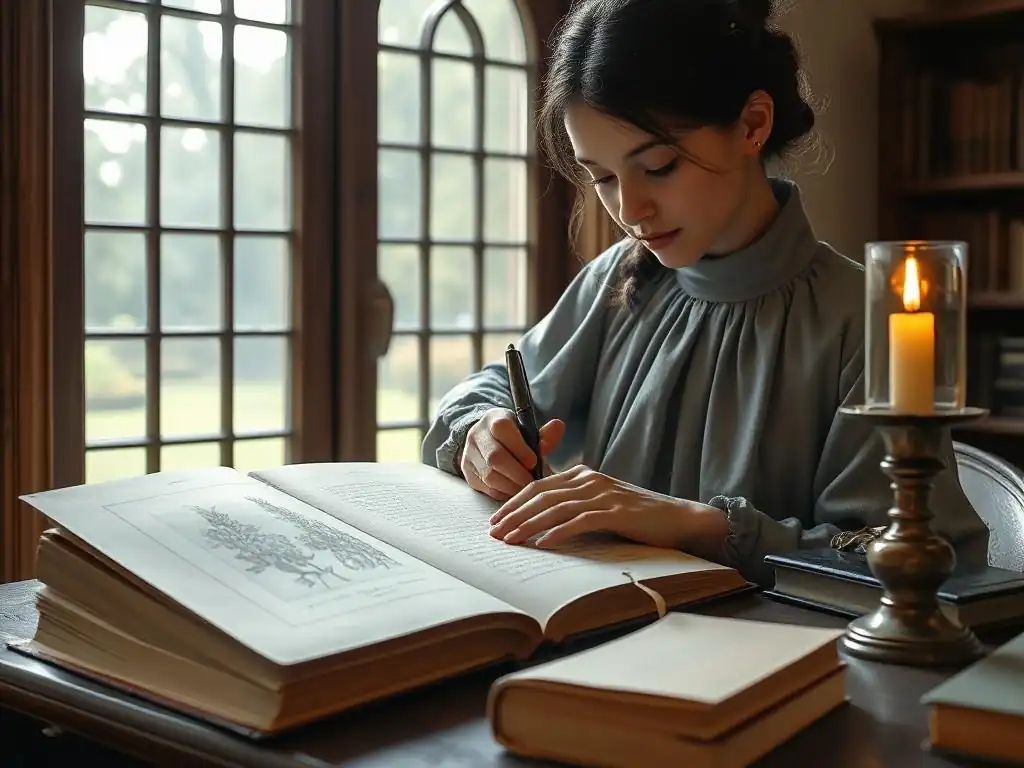
The 18th century presented significant barriers for women aspiring to engage in scientific pursuits. Formal education beyond basic literacy and domestic skills was largely denied to them. Universities, which were the primary centers of scientific learning and research, were exclusively male domains. Women were barred from attending lectures, participating in experiments, or earning degrees. Similarly, prestigious scientific societies like the Royal Society in London or the Académie des Sciences in Paris did not admit female members, effectively excluding them from official recognition, collaborative networks, and access to cutting-edge research.
This systemic exclusion meant that 18th-century women interested in science had to rely almost entirely on self-education, private tutors (often family members), or informal apprenticeships. This limited their exposure to advanced scientific theories, laboratory equipment, and peer review processes, making it exceptionally difficult to gain credibility or publish their work under their own names. The lack of institutional support was a formidable obstacle for any 18th Century woman pursuing nature studies or any scientific field.
Beyond educational barriers, 18th-century women faced immense societal pressure to conform to prescribed gender roles that confined them primarily to the domestic sphere. Intellectual pursuits, especially in traditionally male-dominated fields like natural philosophy or medicine, were often deemed unfeminine, inappropriate, or even detrimental to a woman's health and marital prospects. Women who dared to engage in serious scientific study risked social ostracization or ridicule.
This societal framework often forced women to pursue their scientific interests discreetly, often integrating them into acceptable domestic activities like gardening, needlework (e.g., botanical embroidery), or household management. Their scientific contributions, if recognized at all, were frequently attributed to male relatives—fathers, brothers, or husbands—or published anonymously or under male pseudonyms. This pervasive cultural environment demanded exceptional tenacity and ingenuity from any 18th Century woman venturing into the world of science.
The Power of Networks: Women's Scientific Communities and Correspondence
Despite the formidable obstacles, 18th-century women found ways to engage in scientific inquiry through informal networks and extensive correspondence. These alternative channels provided crucial opportunities for intellectual exchange, mutual support, and the dissemination of knowledge. Family connections were often pivotal; daughters or sisters of male naturalists frequently served as assistants, illustrators, or even independent researchers, learning directly from their male relatives.
Salons, particularly in France, offered another informal platform where aristocratic women hosted intellectual gatherings, inviting scholars, philosophers, and naturalists for discussions and presentations. More broadly, correspondence networks proved invaluable. Women exchanged letters with other naturalists, both male and female, across geographical boundaries, sharing observations, discussing theories, and critiquing findings. For example, Jane Colden corresponded with Carl Linnaeus and other leading botanists. These informal communities were vital for fostering scientific development among 18th-century women, enabling them to contribute to natural history and medicine despite institutional exclusion.
18th Century Women's Writings: A Window into Early Environmental Concerns
Analyzing Literary and Scientific Texts by 18th Century Women
The written output of 18th-century women offers a rich tapestry of their engagement with the natural world and nascent environmental concerns. Their observations were documented in diverse forms, from private diaries, personal letters, and poetry to household manuals and, occasionally, published scientific works (though often under anonymous authorship or male patronage). These texts provide invaluable primary sources for understanding their scientific thought and environmental perspectives.
These documents are not merely records of scientific data; they are imbued with personal reflections, aesthetic appreciation, and practical insights into the relationship between human activities and the natural environment. Analyzing these varied forms of writing allows historians to reconstruct how 18th-century women perceived their surroundings, articulated environmental challenges, and proposed solutions, offering a unique lens into the historical understanding of 18th Century women nature interactions.
Common Themes: Resource Depletion, Agricultural Practices, and the Impact of Urbanization
A recurring theme in the writings of 18th-century women, particularly those managing estates or involved in rural life, was the observation of resource depletion. They often noted the effects of extensive deforestation for timber and fuel, recognizing its impact on soil erosion and water availability. Concerns about agricultural practices, such as the overuse of land leading to decreased fertility or the impact of monoculture, also surfaced in their discussions.
Furthermore, as the 18th century witnessed significant urban growth, many women expressed concerns about the environmental consequences of urbanization. Their writings often touched upon issues of sanitation, the pollution of waterways by industrial waste (e.g., from tanneries or textile dyeing), and the loss of green spaces. They frequently linked these environmental degradations directly to public health issues, highlighting an early awareness of the interconnectedness of urban development, pollution, and human well-being, a hallmark of the perceptive 18th Century women nature observers.
The Rhetoric of Nature: How Women Articulated Environmental Issues
The way 18th-century women articulated their environmental concerns often differed from the more formal, systematic language of male scientists. Their rhetoric frequently blended scientific observation with moral, aesthetic, and practical considerations. They might frame arguments about deforestation not just in terms of resource loss but also lament the destruction of natural beauty or the disruption of local ecosystems necessary for health.
Their arguments often drew heavily on personal experience and direct observation, lending an authentic and persuasive quality to their calls for responsible stewardship of the natural world. For example, a woman managing a garden might write about the importance of crop rotation based on years of practical experience, rather than abstract scientific theory. This grounded, empirical approach, often expressed through narrative or didactic prose, made their environmental insights accessible and influential within their social spheres, showcasing the unique voice of 18th Century women nature writers.
Reassessing Historical Narratives: The Significance of Women's Environmental Insights
Challenging Traditional Interpretations of Scientific History
By foregrounding the contributions of 18th-century women, we fundamentally challenge traditional, often male-centric, interpretations of scientific history. Their inclusion reveals that scientific inquiry and environmental awareness were not confined to formal institutions or celebrated male figures but were also cultivated and advanced by individuals operating outside conventional academic structures. This broader perspective offers a more accurate and nuanced understanding of how scientific knowledge evolved.
Acknowledging these women's insights corrects a historical oversight that has long presented an incomplete picture of intellectual development during the Age of Enlightenment. Their practical, observational, and often interdisciplinary approaches, particularly in areas like botany, medicine, and domestic ecology, were foundational, even if they did not always receive formal recognition or publication. This reassessment enriches our collective understanding of scientific progress and the diverse pathways to discovery.
Highlighting the Unique Perspectives of 18th-Century Women
The perspectives offered by 18th-century women on nature and health were often unique, stemming from their particular societal roles and experiences. Their engagement with the natural world was frequently holistic, integrating scientific observation with the daily realities of household management, food production, and family health. This integrated worldview often contrasted with more specialized or abstract scientific approaches, providing a valuable counterpoint.
Moreover, their experiences with childbirth, child-rearing, and the management of household resources often gave them a profound understanding of the fragility of life and the critical importance of a healthy environment for human flourishing. This deeply personal and practical connection to the natural world imbued their observations with a particular urgency and relevance, adding invaluable depth to the historical discourse on 18th Century women nature interactions.
The Enduring Relevance of their Observations for Contemporary Environmentalism
The environmental concerns articulated by 18th-century women, such as resource depletion, the impact of agricultural practices, and the consequences of urbanization and pollution, resonate powerfully with contemporary environmental challenges. Their observations on the interconnectedness of natural systems and the link between environmental health and human well-being remain strikingly relevant in an era of climate change, biodiversity loss, and public health crises.
Their integrated approach—linking environmental health with human health and societal well-being—offers valuable lessons for modern sustainability efforts. By recognizing the foresight of these early environmental thinkers, we gain historical context and inspiration for addressing present-day ecological dilemmas. The enduring wisdom embedded in the observations of 18th-century women underscores the timeless nature of environmental stewardship.
Conclusion: Recognizing the Legacy of 18th-Century Women in Shaping Environmental Thought
The Lasting Impact of Their Contributions to Understanding Nature and Health
The contributions of 18th-century women to natural history, medicine, and early environmental awareness, though often overlooked, had a lasting and significant impact. From meticulous botanical classifications to pioneering public health advocacy, their work laid important groundwork for future scientific advancements and societal improvements. Their empirical observations and practical applications of knowledge were crucial to understanding the natural world and its direct influence on human health.
Whether through published works, extensive correspondence, or the quiet dedication within their domestic spheres, these women collectively enriched the intellectual landscape of the 18th century. Their observations on phenomena like insect metamorphosis, plant life cycles, and the spread of disease contributed directly to the growing body of scientific knowledge, making them integral, if often uncredited, figures in the history of human interaction with and understanding of nature.
Inspiring Future Generations Through the Untold Stories of Women in Science
Bringing to light the untold stories of 18th-century women in science is not merely an academic exercise; it is a powerful source of inspiration for current and future generations. By showcasing the ingenuity, perseverance, and intellectual curiosity of these pioneering figures, we provide diverse role models for young people, particularly girls and women, who are considering careers in STEM fields. Their experiences demonstrate that scientific discovery can emerge from many paths, not just conventional ones.
The struggles they overcame—limited access to education, societal expectations, and lack of formal recognition—underscore their remarkable dedication and resilience. Their stories remind us that scientific talent knows no gender boundaries and that passion for inquiry can flourish even in the most challenging circumstances. This recognition fosters a more inclusive and equitable vision of scientific history and future.
Further Research: Exploring the Depth and Breadth of Women's Environmental Knowledge in the 18th Century
Despite increasing scholarship, much remains to be discovered about the depth and breadth of 18th-century women's environmental knowledge. Many personal diaries, private letters, botanical collections, and household manuals are still largely underexplored, holding potentially invaluable insights into their observations and concerns. Continued research into these primary sources promises to uncover more hidden histories.
A multidisciplinary approach, combining historical analysis with literary studies, botanical research, and public health history, will be essential to fully appreciate their contributions. By systematically examining these diverse records, we can further illuminate the significant, yet often unacknowledged, role that 18th Century women nature enthusiasts played in shaping early environmental thought and understanding the intricate balance between humanity and the natural world.
Frequently Asked Questions
What key areas did 18th-century women focus on in relation to nature?
18th-century women often focused on the connections between nature, health, and achieving a sense of balance in life. They observed and wrote about these interdependencies.
How did 18th-century societal norms impact women's contributions to understanding nature?
Societal norms often limited women's access to formal scientific training. However, they contributed through observation, writing, and practical applications, often focusing on domestic spheres.
Were there specific environmental concerns that 18th-century women addressed in their writings?
While not always explicitly framed as "environmentalism," they addressed concerns about health impacts of polluted environments and the importance of balance in nature for human well-being.
How does "WomenInScienceHistory.com" contribute to our understanding of 18th-century women and nature?
The site highlights the often overlooked narratives of these women, bringing their contributions to light and inspiring future generations to learn about their groundbreaking work.
What challenges did 18th-century women face in having their voices heard regarding their insights on nature?
They faced challenges due to male-dominated scientific arenas, limited access to formal education, and societal expectations that often confined them to domestic roles.
Final Reflection: Echoes of Harmony
The insights of 18th-century women on nature, health, and balance, as explored throughout this article, are not merely historical curiosities; they are urgent reminders of our interconnectedness with the natural world. Their observations, often dismissed in their own time, resonate powerfully today as we grapple with the consequences of environmental degradation and the pursuit of unsustainable lifestyles. The wisdom they offered, born from intimate observation and a deep sense of responsibility, provides a crucial lens through which to examine our current challenges.
The enduring influence of these women lies in their holistic perspective, a perspective that recognized the intrinsic link between personal well-being and environmental health. Their emphasis on balance, moderation, and respect for nature continues to shape our understanding of sustainable living, even if their names are not always explicitly acknowledged. Look deep into nature, and then you will understand everything better.
- Albert Einstein, a sentiment that echoes the very core of the 18th-century women's philosophy.
Let us, therefore, take inspiration from these often-overlooked voices of the past. Consider how their insights on nature, health, and balance can inform your own choices and actions. Embrace a more mindful and sustainable way of living, recognizing that your well-being is inextricably linked to the health of the planet. The legacy of these 18th-century women invites you to cultivate a deeper connection with nature and to become an active participant in creating a more harmonious future for all.
Rediscover Nature's Wisdom: Your Journey Begins Now!
Thank you for exploring the fascinating perspectives of 18th-century women on nature and health. We hope you've found their insights both enlightening and inspiring. Now, it's time to put that inspiration into action!
Here are a few ways to connect with their legacy and deepen your understanding:
- Embrace Mindful Observation: Spend 30 minutes this week observing nature near you. Record your sensory experiences – what do you see, hear, smell, and feel? How does it impact your mood?
- Research one of the women mentioned in the article further. What else did she write or do? Share your findings with a friend.
- Start a conversation! Share this article with someone who's interested in history, science, or women's studies. Ask them what resonates most and why.
What's one small change you can make this week to cultivate a deeper connection with the natural world, inspired by these remarkable women?