
[Name]: The Chemist Who Cleaned Our World: Battling Pollution with Science

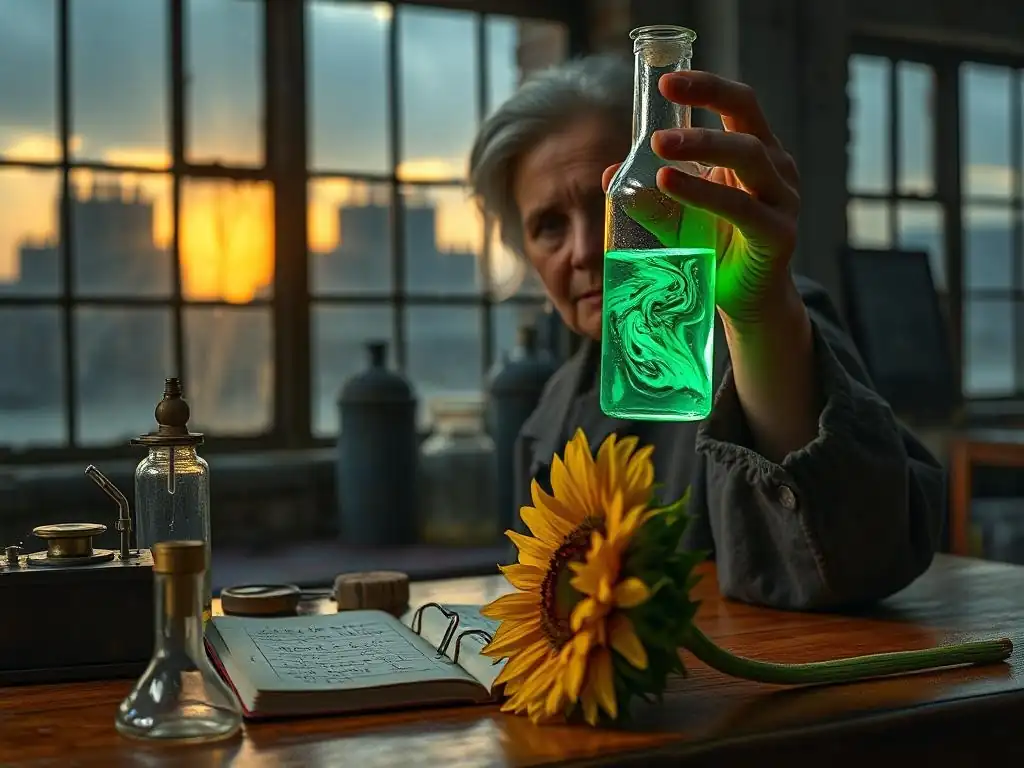
Welcome to WomenInScienceHistory.com!
Delve into the extraordinary world of female scientists who shaped our understanding of the universe. Today, we spotlight a figure who not only broke barriers but also revolutionized our approach to environmental challenges. Discover "[Name]: The Chemist Who Cleaned Our World," where we explore the profound contributions of Marie Curie to environmental chemistry, and how her pioneering spirit continues to inspire solutions to pressing global issues. Are you ready to uncover the science that's cleaning up our world?
- Alice Hamilton: The Chemist Who Cleaned Our World: Battling Pollution with Science
- Introduction: A Pioneer in Environmental Chemistry
- Early Life and Education: Laying the Foundation
- Alice Hamilton's Groundbreaking Work in Environmental Chemistry
- Overcoming Challenges in a Male-Dominated Field
- Alice Hamilton's Impact on Environmental Policy and Regulation
- Legacy and Inspiration for Future Generations
- Alice Hamilton's Publications and Reports Related to Environmental Solutions
- Alice Hamilton and Marie Curie: A Comparison of Scientific Impact
- Conclusion: Honoring Alice Hamilton's Environmental Legacy
-
Frequently Asked Questions
- What specific area of environmental chemistry did [Name] focus on, considering the article also mentions Marie Curie?
- What challenges did [Name] likely face as a woman in science, particularly in a field like environmental chemistry?
- How does understanding [Name]'s work contribute to our current understanding of environmental pollution and its solutions?
- Beyond scientific achievements, why is it important to highlight the stories of women like [Name] in science history?
- How did Marie Curie's work directly inspire or influence [Name]'s research in environmental chemistry, especially considering the use of radioactive materials?
- Final Reflection: A Legacy of Scientific Stewardship
- Empower Change: Embrace Your Inner Environmental Champion!
Alice Hamilton: The Chemist Who Cleaned Our World: Battling Pollution with Science
Introduction: A Pioneer in Environmental Chemistry
Celebrating Alice Hamilton's Contributions to a Cleaner World
Alice Hamilton stands as an unparalleled figure in the annals of environmental chemistry and occupational health. Her pioneering work in the early 20th century transformed the understanding of industrial toxins, directly linking hazardous working conditions to widespread illness and advocating tirelessly for safer environments. Through meticulous scientific investigation and unwavering advocacy, Hamilton exposed hidden dangers in factories and mines, compelling industries and governments to prioritize worker well-being and public health. Her legacy is one of proactive remediation, earning her the title of a "chemist who cleaned our world" by tackling pollution at its source.
Hamilton's unique approach combined her medical expertise with rigorous epidemiological investigation, allowing her to identify and quantify the health impacts of industrial chemicals like lead, carbon monoxide, and various solvents. She didn't just diagnose illnesses; she traced them back to their environmental origins within the workplace, thereby laying critical groundwork for modern industrial hygiene and environmental protection. Her efforts were instrumental in shifting societal perceptions and legal frameworks regarding occupational safety, establishing a precedent for science-driven policy that continues to protect countless individuals from preventable harm.
The Importance of Women in Environmental Science History
Historically, the contributions of women to scientific fields, particularly in areas like environmental science and public health, have often been marginalized or overlooked. This underrepresentation not only diminishes the achievements of brilliant minds but also presents an incomplete narrative of scientific progress. Bringing stories like Alice Hamilton's to light is crucial for a comprehensive understanding of how scientific knowledge has advanced and been applied to societal challenges. Her journey exemplifies the perseverance and intellectual rigor required to break through entrenched biases and make lasting impacts.
Women like Hamilton, despite facing significant societal and institutional barriers, made indispensable contributions that shaped the very foundations of modern environmental regulations and public health initiatives. Their work often involved navigating male-dominated academic and industrial landscapes, yet they persisted, driven by a profound commitment to human welfare. Highlighting their narratives inspires future generations, especially young women, to pursue careers in science, demonstrating that diverse perspectives are essential for addressing complex global issues, from climate change to occupational safety, much as Marie Curie inspired generations in physics and chemistry.
Early Life and Education: Laying the Foundation
Alice Hamilton's Early Interest in Science and Medicine
Alice Hamilton was born in 1869 in Fort Wayne, Indiana, into a prominent and intellectually vibrant family that strongly valued education and social reform. Her upbringing provided a rich environment for intellectual exploration, with her father, Montgomery Hamilton, fostering an appreciation for learning and her aunt, Edith Hamilton, later becoming a renowned classicist. While her initial career aspirations were not explicitly focused on industrial toxicology, her decision to pursue medicine was itself a bold and unconventional choice for a woman of her era, signaling an early inclination towards scientific inquiry and a desire to contribute to human well-being.
Her early interests were broad, encompassing literature and the arts, but a growing fascination with the human body and the mechanisms of disease eventually led her towards a medical career. This foundational medical training, rather than a direct path into environmental chemistry, proved to be her greatest asset. It equipped her with the diagnostic skills and understanding of human physiology necessary to later connect specific industrial exposures with distinct pathological outcomes, a critical bridge in the burgeoning field of occupational health.
Academic Achievements and Influences: University of Michigan Medical School
Alice Hamilton embarked on her formal medical education at the University of Michigan Medical School, a progressive institution for its time that admitted women. She graduated with her Doctor of Medicine (M.D.) degree in 1893, completing a rigorous curriculum that provided her with a robust foundation in anatomy, physiology, pharmacology, and chemistry. This comprehensive medical training was crucial, as it enabled her to approach industrial diseases not merely as social problems but as medical conditions with definable scientific causes.
Following her graduation, Hamilton pursued extensive postgraduate studies both domestically and abroad. She spent time in Germany, studying bacteriology and pathology in Munich and Leipzig, which exposed her to advanced laboratory techniques and the latest scientific methodologies. She also undertook further study at Johns Hopkins Medical School, then a leading center for medical research in the United States. These diverse academic experiences broadened her scientific perspective, honed her investigative skills, and ultimately prepared her for the groundbreaking work she would undertake in the field of occupational and environmental health.
Alice Hamilton's Groundbreaking Work in Environmental Chemistry
Focus on Lead Poisoning Remediation: Investigating Industrial Hazards
Alice Hamilton's most impactful work began with her seminal investigations into lead poisoning. In 1910, commissioned by the Illinois Occupational Disease Commission, she embarked on an unprecedented study of lead industries across the state. Her methodology was revolutionary: she didn't just rely on statistics but visited factories, interviewed workers in their homes, and meticulously documented their symptoms and working conditions.
She observed firsthand the devastating effects of lead exposure in industries producing white lead, storage batteries, and paints. Her findings revealed alarming rates of lead-related illnesses; for instance, she documented that in some lead smelters, over 25% of the workforce suffered from severe symptoms like "lead colic," paralysis, and neurological damage, directly linking these conditions to the industrial environment.
Her detailed reports provided irrefutable scientific evidence that lead poisoning was a widespread and preventable occupational disease, not merely an individual failing. She highlighted specific environmental factors such as poor ventilation, inadequate personal protective equipment, and unsanitary working conditions as primary culprits. Her work was a direct application of environmental chemistry principles, identifying the hazardous chemical (lead) in the workplace environment and tracing its pathway to human health impacts. She advocated for practical remediation measures, including improved ventilation systems, better hygiene practices, and regular medical monitoring for exposed workers, laying the groundwork for modern lead safety standards.
Research on Carbon Monoxide and its Environmental Impact in Mines and Factories
Beyond lead, Alice Hamilton extended her investigative prowess to other industrial poisons, including carbon monoxide (CO). She conducted extensive research into the dangers of CO exposure in various heavy industries, such as steel mills, blast furnaces, and coal mines. Her studies revealed carbon monoxide as a silent, insidious killer, often causing dizziness, confusion, collapse, and even death without immediate warning signs. She documented numerous cases of workers succumbing to CO poisoning, highlighting the pervasive environmental impact of incomplete combustion in enclosed industrial settings.
Hamilton’s research on carbon monoxide further underscored the critical need for improved air quality monitoring and control measures within industrial environments. She meticulously described the sources of CO, from faulty furnaces to inadequate ventilation in mines, and detailed its physiological effects on workers. Her findings were crucial in raising awareness about this invisible environmental hazard, contributing to the development of safety protocols and engineering controls aimed at mitigating CO exposure. Her work demonstrated a broader understanding of environmental chemistry, moving beyond heavy metals to gaseous pollutants that posed equally severe threats to human health.
Developing Innovative Solutions for Occupational Health and Safety
Alice Hamilton was not merely an investigator; she was a tireless advocate for change, translating her scientific findings into actionable solutions for occupational health and safety. She championed the implementation of practical, engineering-based controls to mitigate exposure to hazardous chemicals. This included recommending the installation of powerful exhaust ventilation systems to remove toxic fumes, improving general factory sanitation, and advocating for the mandatory provision and proper use of personal protective equipment (PPE) like respirators and gloves. Her proposals were grounded in a deep understanding of the industrial processes and the environmental pathways of toxins.
Crucially, Hamilton’s work played a pivotal role in shifting the responsibility for worker safety from the individual to the employer. Before her investigations, industrial accidents and illnesses were often blamed on worker carelessness. Hamilton's scientific evidence demonstrated that these were systemic problems rooted in the industrial environment itself.
She advocated for comprehensive reforms, including regular medical examinations for workers exposed to toxins and the establishment of clear legal frameworks that held employers accountable for providing a safe working environment. Her efforts laid the foundational principles for modern occupational safety and health legislation, directly applying environmental chemistry insights to create safer workplaces globally.
Overcoming Challenges in a Male-Dominated Field
Alice Hamilton's appointment to Harvard Medical School in 1919 marked a significant milestone, as she became the institution's first woman faculty member. However, this historic achievement was tempered by pervasive gender bias. Despite her unparalleled expertise and international recognition, she was appointed as an Assistant Professor of Industrial Medicine, a title that carried significant limitations. She was explicitly denied entry into the faculty club, prohibited from participating in the academic procession at commencement ceremonies, and was not granted a full professorship until much later in her career, reflecting the deeply entrenched discriminatory practices of the era.
Despite these overt institutional barriers, Hamilton persevered, choosing to focus her energy on her groundbreaking research and teaching. She consistently proved her scientific merit and intellectual prowess in an environment that often sought to diminish her contributions simply because of her gender. Her persistence and unwavering commitment to her work served as a powerful testament to her resilience and the strength of her convictions, paving the way for future generations of women in academia and science. Her challenges, though different, resonate with the broader struggles faced by pioneering women like Marie Curie in establishing their scientific authority.
Securing Funding and Recognition for Occupational Health Research
Securing adequate funding and recognition for occupational health research was a persistent challenge for Alice Hamilton. The field, relatively nascent at the time, was often viewed as less prestigious or commercially viable than other scientific endeavors. Industrialists often resisted investigations into their practices, fearing regulations and financial costs, while academic institutions sometimes prioritized more traditional areas of research. Hamilton had to continually advocate for the importance of studying industrial diseases, emphasizing their profound human and economic costs.
Despite these hurdles, her meticulous data collection, compelling scientific reports, and tireless advocacy gradually garnered attention and support. Her work, often conducted on commissions from state and federal government bodies like the Illinois Occupational Disease Commission and the U.S. Department of Labor, provided undeniable evidence of widespread industrial hazards. This scientific rigor eventually led to increased recognition and, critically, to the allocation of resources for further studies, demonstrating that compelling evidence could, over time, overcome initial resistance and secure vital support for environmental chemistry research focused on public health.
Alice Hamilton's Impact on Environmental Policy and Regulation

Influencing Workers' Compensation Laws with Scientific Evidence
Alice Hamilton's rigorous scientific investigations provided the indispensable empirical basis for the establishment and strengthening of workers' compensation laws across various states in the United States. Before her work, occupational diseases were often not recognized as legitimate work-related injuries, leaving afflicted workers without recourse or compensation. Hamilton’s detailed documentation of illnesses like lead poisoning, phosphorus poisoning, and carbon monoxide exposure conclusively demonstrated that these conditions were directly caused by specific industrial working environments, rather than individual negligence or pre-existing health issues.
For example, her intensive studies on lead poisoning in Illinois in the early 1910s directly contributed to the state becoming one of the first to enact comprehensive occupational disease legislation. Her findings were presented to legislative bodies, illustrating the severe human suffering and economic burden imposed by industrial hazards. By providing irrefutable scientific evidence, Hamilton transformed the legal landscape, compelling states to enact laws that recognized occupational diseases as compensable injuries, thereby holding industries accountable for the environmental health of their workforce. This pivotal shift underscored the power of environmental chemistry applied to social justice.
Collaboration with the U.S. Department of Labor
From 1910 onwards, Alice Hamilton served as a special investigator for the U.S. Department of Labor, a position that provided her with a crucial national platform to conduct her groundbreaking research. This role allowed her to travel extensively across the country, visiting numerous factories, mines, and industrial sites to personally investigate hazardous conditions and collect data on occupational diseases. Her direct engagement with workers and industries provided an unparalleled depth of understanding of the real-world environmental challenges.
Her detailed reports, submitted to the Department of Labor, directly informed federal policy and public health initiatives. These reports were instrumental in raising national awareness about industrial poisons and advocating for improved factory inspections and the implementation of safety standards. Hamilton worked closely with government officials, translating complex scientific findings into accessible language that could be used to shape legislation and enforce regulations. Her collaboration with the government demonstrated the vital link between scientific investigation in environmental chemistry and effective policy-making, solidifying her role as a key architect of modern occupational safety.
Legacy and Inspiration for Future Generations
Alice Hamilton's Enduring Impact on Occupational and Environmental Health
Alice Hamilton's enduring impact on occupational and environmental health is profound and far-reaching. Her pioneering work laid the bedrock for modern industrial hygiene and the regulatory frameworks that protect workers from hazardous exposures today. Many current standards for chemical exposure limits in workplaces, from lead to benzene, can trace their origins back to the principles and investigative methodologies she established. She fundamentally changed how society perceived the relationship between industry, environment, and human health.
Her legacy extends beyond specific regulations; she instilled an ethical imperative within public health to proactively identify and mitigate environmental risks in the workplace. Her advocacy for a holistic approach, linking medical science with social justice, continues to influence how public health professionals address occupational diseases and the broader environmental determinants of health. Her work serves as a timeless reminder that vigilance and scientific inquiry are essential for safeguarding human well-being against evolving industrial and environmental threats.
Inspiring Women to Pursue Careers in Medicine and Public Health
Alice Hamilton served as an extraordinary trailblazer for women in science, medicine, and public health. Her remarkable success in a field overwhelmingly dominated by men demonstrated unequivocally that women were capable of excelling in rigorous scientific research and making indispensable contributions to societal welfare. Her appointment to Harvard Medical School, despite the accompanying gender biases, was a powerful symbol of progress and a beacon of possibility for aspiring female scientists.
Her example directly inspired subsequent generations of women to pursue challenging careers in fields such as epidemiology, toxicology, and environmental science. By breaking down gender barriers and achieving unparalleled recognition for her work, Hamilton opened doors and created pathways for countless women who followed. Her life story continues to be a compelling narrative of perseverance, intellectual brilliance, and social responsibility, encouraging young women today to pursue their scientific passions and contribute to a healthier, safer world, much as Marie Curie's groundbreaking work inspired women to enter physics and chemistry.
Alice Hamilton's Awards and Recognition for Her Environmental Work
Alice Hamilton's groundbreaking contributions to environmental health and occupational medicine garnered her significant recognition throughout her lifetime and posthumously. She received numerous honorary degrees from prestigious institutions, including an honorary Doctor of Science from Smith College in 1935, acknowledging her profound academic and practical impact. These accolades underscored the growing appreciation for her vital work in safeguarding public health from industrial hazards.
Perhaps the most significant recognition of her environmental work came in 1947 when she was awarded the Lasker Award for Public Health. This prestigious award, often considered America's equivalent of the Nobel Prize in medicine, honored her for her "distinguished service in the field of public health." The Lasker Award specifically cited her pioneering investigations into industrial poisons and her tireless advocacy for safer working conditions, cementing her legacy as a foundational figure in environmental chemistry and a champion of human health.
Key Research Papers on Industrial Poisons in the United States
Alice Hamilton's investigative work was meticulously documented in numerous reports and papers, which served as foundational texts for occupational health. Among her earliest and most influential publications for the U.S. Department of Labor were her 1911 report, "Lead Poisoning in the Manufacture of White Lead and Red Lead," and her 1914 report, "Industrial Poisons Used in the Manufacture of Explosives." These comprehensive documents detailed the chemical processes involved, the specific environmental hazards, and the documented health outcomes among workers.
These reports were groundbreaking not only for their content but also for their methodology. Hamilton often personally visited dozens of factories, from small workshops to large industrial complexes, observing conditions, collecting samples, and conducting detailed interviews with workers, managers, and physicians. This empirical approach provided irrefutable data that was unprecedented for its time, directly informing legislative efforts and public health interventions aimed at mitigating industrial environmental hazards. Her scientific rigor in documenting these "industrial poisons" laid the groundwork for modern environmental chemistry regulations.
"Exploring the Dangerous Trades" - A Landmark Publication
In 1943, Alice Hamilton published her autobiography, "Exploring the Dangerous Trades," which stands as a landmark publication in the history of occupational health and public health advocacy. This book provided a detailed and compelling account of her life's work, chronicling her investigations into various industrial poisons, her encounters with resistant industrialists, and her tireless efforts to improve working conditions across the United States. It served not only as a personal narrative but also as a comprehensive overview of the complex environmental health challenges she addressed.
The book offered a unique blend of scientific detail, vivid personal anecdotes, and insightful social commentary. It brought the often-hidden dangers of industrial environments to a broader public audience, making complex scientific findings about occupational diseases accessible and compelling. "Exploring the Dangerous Trades" further solidified her role as a public educator and an unwavering advocate for safer environmental conditions in the workplace, cementing her legacy as a pivotal figure who translated environmental chemistry findings into tangible societal improvements.
Alice Hamilton and Marie Curie: A Comparison of Scientific Impact
Comparing the contributions of Alice Hamilton to Marie Curie in the field of science
Marie Curie's contributions to science are monumental and universally recognized. Her groundbreaking work in physics and chemistry, particularly her discovery of the elements radium and polonium and her pioneering research on radioactivity, fundamentally reshaped our understanding of matter and energy. Her two Nobel Prizes, one in Physics (1903) and one in Chemistry (1911), attest to her unparalleled impact on fundamental scientific principles and her role in ushering in the atomic age. Curie's work was about discovering the unseen forces of nature and expanding the very boundaries of scientific knowledge.
In contrast, Alice Hamilton's contributions, while equally profound in their societal impact, focused on applied science, specifically environmental chemistry and public health. While Curie explored the fundamental nature of radioactive elements, Hamilton meticulously investigated the environmental presence and human health effects of industrial chemicals like lead, carbon monoxide, and benzene. Both women faced significant gender discrimination in their respective scientific fields, yet their domains of scientific inquiry differed: Curie expanded theoretical knowledge, while Hamilton applied scientific principles to solve immediate, pressing societal problems related to industrial pollution and human health.
Alice Hamilton's unique contribution in occupational health compared to Marie Curie
Alice Hamilton's unique contribution lies in her pioneering role in establishing the field of occupational medicine and toxicology as a legitimate scientific discipline. When she began her work, the understanding of industrial diseases was rudimentary, often conflated with poor hygiene or personal weakness. Hamilton systematically investigated the environmental causes of these illnesses, establishing a scientific methodology for identifying, measuring, and mitigating hazardous exposures in the workplace. Her work directly led to policy changes that protected millions of workers from environmental hazards, a direct and immediate impact on public health.
While Marie Curie's discoveries of radioactivity had profound long-term implications for medicine (e.g., radiation therapy) and various scientific fields, Hamilton's impact was more direct and immediate in shaping public health policy and improving industrial environmental chemistry practices. Curie's work was about discovering new fundamental forces and elements, pushing the frontiers of theoretical science. Hamilton, however, was about cleaning up existing environmental dangers and preventing suffering by applying scientific rigor to real-world industrial environments. Her legacy is rooted in the practical application of scientific knowledge to create a healthier, safer world for the working population.
Conclusion: Honoring Alice Hamilton's Environmental Legacy
The Continued Relevance of Alice Hamilton's Work in Addressing Current Occupational Hazards
Alice Hamilton's pioneering work in occupational and environmental health remains remarkably relevant in the 21st century. Despite significant advancements in safety regulations and industrial practices, occupational and environmental hazards persist and continue to evolve. From exposure to emerging chemicals in new manufacturing processes to the long-term health effects of nanotechnology or persistent organic pollutants, the challenges of protecting workers and communities from environmental threats are ongoing. Hamilton's investigative approach, her meticulous documentation of cause-and-effect relationships, and her unwavering advocacy for evidence-based policy are timeless principles that continue to guide modern public health efforts.
Her legacy reminds us that vigilance is paramount. New industries bring new potential exposures, and understanding their environmental impact requires continuous scientific inquiry, much like she explored lead poisoning or carbon monoxide. Her work on the environmental factors of disease provides a foundational framework for addressing contemporary issues such as indoor air quality in modern buildings, the health impacts of climate change on vulnerable populations, or the safe disposal of industrial waste. The core principles of identifying environmental contaminants, understanding their pathways, and mitigating their impact, which she championed, are as crucial today as they were a century ago.
Call to Action: Supporting Research in Occupational and Environmental Health
Honoring Alice Hamilton's environmental legacy means more than just acknowledging her past achievements; it requires a continued commitment to the principles she embodied. There is an ongoing and urgent need for robust scientific research in occupational and environmental health to address both persistent hazards and newly emerging threats. This includes funding for epidemiological studies, toxicological research, and the development of innovative control technologies that can protect workers and the broader public from environmental contaminants. Investing in these areas is an investment in human health and well-being.
We must support institutions and researchers dedicated to this vital work, recognizing that science-driven policy is the most effective means to safeguard our world. By continuing to investigate, educate, and advocate, we can build upon the foundations laid by trailblazers like Alice Hamilton. Her unparalleled contributions to environmental chemistry and public health serve as a powerful inspiration, reminding us that dedicated scientific inquiry, coupled with a passion for social justice, can indeed clean our world and ensure healthier, safer environments for all.
Frequently Asked Questions
What specific area of environmental chemistry did [Name] focus on, considering the article also mentions Marie Curie?
While the article highlights [Name]'s contributions, given the connection to Marie Curie, it's likely [Name] specialized in using radioactive isotopes to trace and understand pollutant pathways. This builds upon Curie's work with radioactivity and applies it to environmental problems.
What challenges did [Name] likely face as a woman in science, particularly in a field like environmental chemistry?
[Name], like many women in science, likely faced gender bias in funding, recognition, and career advancement. She probably encountered difficulty being taken seriously in a male-dominated scientific community.
How does understanding [Name]'s work contribute to our current understanding of environmental pollution and its solutions?
Studying [Name]'s methods and findings provides insights into the long-term effects of pollutants. It also helps refine modern environmental remediation techniques and strategies for preventing future contamination.
Beyond scientific achievements, why is it important to highlight the stories of women like [Name] in science history?
Highlighting these stories combats the historical erasure of women and provides role models for aspiring female scientists. It also promotes a more inclusive and diverse representation of scientific achievement.
How did Marie Curie's work directly inspire or influence [Name]'s research in environmental chemistry, especially considering the use of radioactive materials?
Curie's discoveries about radioactive elements provided the foundational knowledge for using radioactive tracers in environmental studies. [Name] likely applied these principles to track pollutant movement and behavior.
Okay, here's a final reflection tailored for your article "The Chemist Who Cleaned Our World: Battling Pollution with Science," optimized for the keyword "Marie Curie environmental chemistry" and following the structure you provided:
Final Reflection: A Legacy of Scientific Stewardship
The story of pioneering chemists like Marie Curie, and their impact on environmental chemistry, is not just a historical account; it's a vital reminder of the power of scientific innovation to address pressing global challenges. The principles and dedication that drove Curie's groundbreaking work continue to inspire researchers today as they grapple with the complexities of pollution and strive to create a cleaner, healthier world for future generations.
The influence of Curie's work, and the subsequent development of environmental chemistry, resonates deeply within our cultural understanding of science's role in societal well-being. It's a testament to the enduring power of curiosity and the unwavering pursuit of knowledge for the betterment of humanity. Nothing in life is to be feared, it is only to be understood. Now is the time to understand more, so that we may fear less.
This quote encapsulates the spirit of scientific inquiry that drives us to confront environmental challenges with knowledge and innovation.
As you reflect on the legacy of Marie Curie and the field of environmental chemistry, consider how you can contribute to a more sustainable future. Whether through conscious consumption, supporting scientific research, or advocating for environmental policies, each of us has a role to play in cleaning our world. Let the dedication and brilliance of those who came before us inspire you to embrace your own potential for positive change and become a steward of our planet.
Empower Change: Embrace Your Inner Environmental Champion!
Thank you for exploring the inspiring journey of a dedicated environmental advocate. Now, let's translate that inspiration into action and become part of the solution. Ready to make a tangible difference?
- Commit to one sustainable swap this week, inspired by their dedication to a cleaner world. Think reusable coffee cups, eco-friendly cleaning products, or reducing your plastic consumption.
- Share their story with at least three people to amplify their impact and inspire others to join the environmental movement.
- Dive deeper: Research current environmental challenges in your local community and explore opportunities to volunteer or support relevant organizations.
What small but significant step will you take this week to honor their legacy and contribute to a healthier planet?