
[Pioneer's Name]: The Woman Who Dared to Engineer in a Man's World


Welcome to WomenInScienceHistory.com!
Delve into the untold stories of extraordinary women who shaped the scientific landscape. This week, we’re spotlighting the remarkable life of a groundbreaking figure in engineering. Prepare to be inspired as we uncover the story of a pioneering female engineer, navigating a world that wasn't always ready for her brilliance. Discover her triumphs, the obstacles she overcame, and the enduring legacy she left behind. What innovative solutions did she engineer, and how did she defy societal expectations? Read on to find out!
- Lillian Moller Gilbreth: The Woman Who Dared to Engineer in a Man's World
- Introduction: Honoring a Pioneering Female Engineer
- Early Life and Education: The Making of an Engineer
- Breaking Barriers: Lillian Moller Gilbreth's Early Career Challenges
- Groundbreaking Work and Engineering Achievements
- Legacy and Impact: Inspiring Future Generations of Women Engineers and Managers
- Lillian Moller Gilbreth's Approach and Engineering Philosophy
- Conclusion: Celebrating a Historical Female Engineer's Triumph
-
Frequently Asked Questions
- What is "WomenInScienceHistory.com" about?
- Why is it important to learn about female engineers from history?
- What makes a "Female Engineer Historical Biography" important?
- What kind of information can I expect to find on "[Pioneer's Name]: The Woman Who Dared to Engineer in a Man's World"?
- Where can I find more "Female Engineer Historical Biographies"?
- Final Reflection: The Enduring Legacy of Courage
- Embrace Her Legacy: Inspire the Next Generation!
Lillian Moller Gilbreth: The Woman Who Dared to Engineer in a Man's World
Introduction: Honoring a Pioneering Female Engineer
Highlighting Lillian Moller Gilbreth's Contributions to Engineering History
Lillian Moller Gilbreth stands as a towering figure in the annals of engineering history, a pioneering female engineer whose groundbreaking work transformed industrial efficiency and human factors. Her unique blend of psychology and engineering principles laid the foundation for modern management theory and ergonomics, fields traditionally dominated by men. This historical biography delves into the life and achievements of a woman who not only excelled in a male-centric world but redefined the very essence of work, making it more humane and productive.
Gilbreth's contributions extended far beyond the factory floor, revolutionizing domestic life and advocating for the inclusion of human well-being in all aspects of design. Her story is a testament to intellectual curiosity, resilience, and the power of interdisciplinary thinking, marking her as an indispensable part of any discussion on the contributions of women in engineering. Her work continues to influence how we approach efficiency, design, and the integration of the human element in technology.
Early Life and Education: The Making of an Engineer
Lillian Moller Gilbreth's Early Influences and Interest in Efficiency
Born on May 24, 1878, in Oakland, California, Lillian Evelyn Moller was the eldest of nine children in a prosperous family. Her father, a successful building supply merchant, and her strong-willed mother instilled in her a deep sense of responsibility and a keen intellect.
Initially, her interests gravitated towards literature and psychology rather than what would traditionally be considered engineering. This early fascination with human behavior and the workings of the mind would later become the bedrock of her unique approach to industrial efficiency, distinguishing her from her contemporaries and setting the stage for her remarkable career as a pioneering female engineer.
From a young age, Gilbreth exhibited an innate curiosity about how things worked and how processes could be improved. While not directly focused on machinery or physical structures, her analytical mind was constantly seeking patterns and efficiencies in everyday life. This inherent drive for understanding and optimizing human activity, coupled with her rigorous academic pursuits, subtly yet profoundly shaped her trajectory toward becoming a key figure in the historical biography of female engineers.
Overcoming Barriers to Education for Women in the Early 20th Century
Lillian Moller Gilbreth pursued higher education at a time when opportunities for women in academia, especially in advanced fields, were still limited and often met with skepticism. Despite societal norms that largely confined women to domestic roles, she enrolled at the University of California, Berkeley. Her determination to acquire knowledge and excel academically pushed her past the prevailing barriers that often deterred women from pursuing rigorous scholarly paths.
Her commitment to education was unwavering, demonstrating a resolve that would characterize her entire career. Navigating an academic environment that was slowly opening its doors to women, Gilbreth's persistence in securing advanced degrees was a significant achievement in itself, paving the way for future generations of women to pursue higher education and enter professional fields, including engineering and management.
Academic Achievements of a Budding Psychologist and Engineer
Lillian Moller Gilbreth's academic journey was marked by exceptional achievements across multiple disciplines. She earned her Bachelor of Arts degree in English literature in 1900 and a Master of Arts degree in 1902, both from the University of California, Berkeley. Her intellectual curiosity, however, extended beyond literature, leading her to delve deeply into the nascent field of psychology. This interdisciplinary approach was crucial to her later work.
In 1915, Gilbreth earned her Ph.D. in Psychology from Brown University. Her dissertation, "The Psychology of Management," was a groundbreaking work that integrated psychological principles with industrial management, long before such interdisciplinary studies became common. This doctoral achievement was not only a personal triumph but also a significant milestone for women in academia, solidifying her intellectual foundation as a visionary who would apply the nuanced understanding of human behavior to the practical challenges of engineering and industrial efficiency.
Breaking Barriers: Lillian Moller Gilbreth's Early Career Challenges
Upon marrying Frank Gilbreth, a renowned efficiency expert, Lillian Moller Gilbreth became his intellectual partner, bringing her profound understanding of psychology to his motion studies. However, the early 20th-century engineering and management fields were overwhelmingly male-dominated, making it challenging for her to gain recognition for her significant contributions. Her ideas, particularly the emphasis on the human element in efficiency, were often initially overshadowed by her husband's more visible presence, or attributed solely to him.
Despite co-authoring numerous influential books and articles, including "Fatigue Study" (1916) and "Applied Motion Study" (1917), Lillian frequently faced skepticism and was sometimes dismissed simply because of her gender. This struggle for intellectual parity in a field resistant to female leadership highlights the systemic barriers she had to continuously overcome to establish her authority and expertise as a pioneering female engineer.
Balancing Family Life and a Demanding Career
Perhaps one of the most remarkable aspects of Lillian Moller Gilbreth's life was her ability to balance a demanding, pioneering career with raising a large family. She was the mother of twelve children, a responsibility that in itself was a full-time undertaking. Managing household affairs, caring for her children, and simultaneously contributing to groundbreaking research and consulting work presented immense logistical and personal challenges.
Her life famously inspired the book and film "Cheaper by the Dozen," which, while humorous, underscores the extraordinary demands placed upon her. This constant juggle between professional ambition and domestic duties was a reality for many women of her era, but Gilbreth approached it with the same efficiency principles she applied to industry, constantly seeking ways to optimize her time and energy to succeed in both spheres.
Strategies for Success: How Lillian Moller Giller Gilbreth Overcame Obstacles
Lillian Moller Gilbreth employed several ingenious strategies to overcome the formidable obstacles she faced. Her intellectual partnership with Frank Gilbreth was symbiotic; she provided the crucial psychological dimension to his engineering-focused motion studies, creating a holistic approach to efficiency that was unparalleled at the time. This collaboration allowed her ideas to gain traction, even when direct recognition for her was scarce.
After Frank's sudden death in 1924, Gilbreth demonstrated extraordinary resilience, taking over their joint consulting firm, Gilbreth, Inc., and continuing their work independently. She adapted her methods to address new challenges, expanding her focus to include home economics and disability rehabilitation, fields where her psychological insights were particularly valuable. By demonstrating the practical applicability of her theories across diverse domains, she solidified her reputation and ensured the enduring legacy of her unique contributions to engineering and management.
Groundbreaking Work and Engineering Achievements
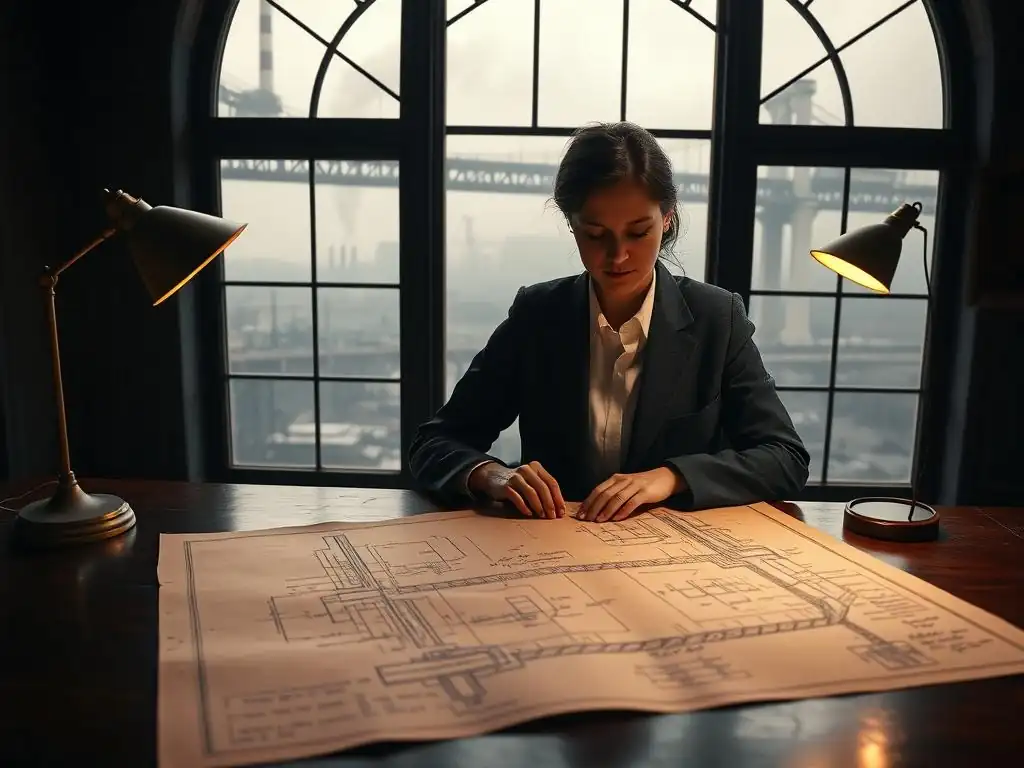
Motion Study and Time Management: A Detailed Look at Lillian Moller Gilbreth's Contribution
Lillian Moller Gilbreth, in collaboration with her husband Frank, revolutionized industrial efficiency through their pioneering work in motion study and time management. Their approach involved meticulously analyzing and optimizing every movement involved in a task to eliminate wasted effort and improve productivity. They utilized innovative techniques such as chronocyclegraphs, which involved attaching lights to workers' hands and photographing their movements, and micromotion studies, using film to record and analyze specific motions in slow motion.
A classic example of their impact is the bricklaying study, which dramatically reduced the number of motions required to lay a brick from 18 to as few as 4.5. This seemingly small change led to significant increases in productivity, with some workers able to lay up to 350 bricks per hour, compared to the previous average of 120. This precise, scientific approach to work design laid the foundation for modern industrial engineering and operations management, showcasing Gilbreth's profound influence as a historical female engineer.
The Technical Challenges and Lillian Moller Gilbreth's Innovative Solutions
The development of motion study presented considerable technical challenges, particularly in an era without advanced computing or video technology. The Gilbreths had to invent their own tools and methodologies. Their pioneering use of film and photography for scientific analysis of work processes was revolutionary, allowing for unprecedented precision in identifying inefficient movements. They also developed "therbligs" (an anagram of Gilbreth, with 'th' transposed), a set of 18 elementary motions, such as "reach," "grasp," and "hold," which allowed for a standardized and universal language for analyzing tasks.
Lillian Moller Gilbreth's unique insight into the psychological aspects of fatigue and motivation ensured that their efficiency improvements were not merely mechanical but also considered worker well-being. She understood that sustainable productivity depended on minimizing unnecessary strain and fostering a sense of accomplishment. This holistic approach, integrating technical innovation with human psychology, was a hallmark of her genius and a testament to her vision as a female engineer.
Applying Psychology to Industrial Efficiency: Revolutionizing Workplace Design
Lillian Moller Gilbreth's most profound contribution was her insistence on integrating human psychology with engineering principles. She fundamentally argued that true industrial efficiency wasn't solely about machines or processes, but critically about understanding the human element involved. Her work demonstrated that a worker's comfort, satisfaction, and psychological well-being directly impacted their productivity and the overall success of an operation.
She championed the idea that workplaces should be designed with the human worker in mind, advocating for ergonomic considerations long before the term became commonplace. This focus on human factors engineering revolutionized how industries approached design, moving beyond purely mechanical considerations to incorporate the physical and psychological needs of employees.
Impact of Lillian Moller Gilbreth's Work on Manufacturing and Home Economics
The impact of Lillian Moller Gilbreth's work resonated across diverse fields, from heavy manufacturing to the domestic sphere. In manufacturing, her principles influenced the design of assembly lines, improving workflow and reducing worker fatigue. For example, her studies led to better placement of tools and materials, optimizing the sequence of operations for greater output.
Beyond industry, she applied her efficiency principles to home economics, aiming to reduce the physical burden on housewives. She designed functional kitchen layouts, such as the "Gilbreth Kitchen," advocating for efficient arrangements of appliances and storage to minimize unnecessary movement. Her innovations included the invention of the foot-pedal trash can and shelves inside refrigerator doors, practical solutions that remain ubiquitous in modern homes. This application of engineering principles to everyday life underscores her versatile genius and her commitment to improving human experience.
Other Notable Engineering and Management Contributions by Lillian Moller Gilbreth
Lillian Moller Gilbreth's influence extended into various sectors, particularly during periods of national crisis. During the Great Depression, she served as a consultant to President Herbert Hoover's Emergency Committee for Employment, advising on strategies to create jobs and improve efficiency in government programs. Her expertise was also vital during World War II, where she advised government agencies on efficient factory operations and, notably, on the rehabilitation of disabled veterans.
Her work in disability rehabilitation was pioneering, as she applied motion study principles to design accessible equipment and workspaces for individuals with physical limitations, helping them re-enter the workforce. This focus on inclusive design and human capabilities cemented her legacy as a humanitarian engineer, demonstrating how her unique perspective as a female engineer enriched the field beyond traditional industrial applications.
Legacy and Impact: Inspiring Future Generations of Women Engineers and Managers
Lillian Moller Gilbreth's Influence on Women in STEM and Business Fields
Lillian Moller Gilbreth's extraordinary career served as a powerful beacon for women aspiring to enter the male-dominated fields of science, technology, engineering, and mathematics (STEM), as well as business and management. As a pioneering female engineer, she demonstrated that intellectual rigor, innovative thinking, and leadership were not exclusive to men. Her ability to excel in a highly technical and analytical domain while simultaneously navigating the complexities of a large family provided a tangible role model for women who sought to integrate professional ambition with personal life.
Her public presence, through lectures, publications, and consulting work, showcased a woman who commanded respect for her intellect and practical contributions. This visibility helped dismantle prevailing stereotypes about women's capabilities in professional and technical spheres, inspiring countless individuals to pursue careers that had traditionally been closed off to them.
Awards and Recognition for a Trailblazing Engineer and Psychologist
Despite the initial challenges in gaining full recognition, Lillian Moller Gilbreth eventually received widespread acclaim for her groundbreaking work. In 1965, she became the first woman elected to the prestigious National Academy of Engineering, a monumental achievement that formally acknowledged her engineering prowess. The following year, in 1966, she was awarded the Hoover Medal, an honor bestowed by engineering societies for "great, unselfish, non-technical services by engineers to humanity." She was the first woman to receive this highly distinguished engineering award.
Throughout her career, Gilbreth was also honored with over 20 honorary degrees from universities worldwide, recognizing her profound impact on psychology, engineering, and management. These accolades underscore her enduring legacy as a trailblazing historical female engineer and a testament to her monumental contributions to human well-being and industrial efficiency.
Lillian Moller Gilbreth's Enduring Legacy in Engineering and Management History
Lillian Moller Gilbreth's enduring legacy is woven into the fabric of modern engineering and management. Her foundational work in motion study, time management, and human factors engineering continues to be a cornerstone of industrial engineering, operations research, and organizational psychology. The concept of "management by objectives," and the critical importance of considering employee well-being in productivity strategies, can trace their roots directly back to her interdisciplinary insights.
Her historical biography is not merely a record of past achievements but a living inspiration. Her emphasis on the "human element" in engineering solutions remains profoundly relevant in today's technologically advanced world, reminding us that efficiency must always serve human needs. She taught us that true innovation occurs at the intersection of diverse disciplines, and her unwavering belief in the potential of every individual continues to shape contemporary approaches to work and design.
Lillian Moller Gilbreth's Approach and Engineering Philosophy
Lillian Moller Gilbreth Quotes on Efficiency, Family, and Collaboration
Lillian Moller Gilbreth's philosophy was encapsulated in many insightful statements, reflecting her unique blend of practical engineering and deep psychological understanding. She often emphasized the human aspect of work, famously stating, "I don't know what I'd do without my work. It keeps me sane," highlighting the intellectual fulfillment she derived from her professional pursuits. Her belief in self-reliance and continuous improvement was evident in her assertion, "The one real security is your ability to earn it."
Her most poignant quote, "The greatest waste in the world is the difference between what we are and what we could become," underscores her conviction in maximizing human potential and eliminating inefficiencies that hinder personal and professional growth. Regarding her collaborative approach to teaching and management, she believed, "The best way to teach is to praise positive actions and ignore negative ones," revealing her psychological insight into motivation and behavior modification. These quotes collectively illuminate the core tenets of her engineering philosophy, which centered on human dignity, efficiency, and empowerment.
Analysis of Lillian Moller Gilbreth's Engineering Methods and Problem-Solving Skills
Lillian Moller Gilbreth's engineering methods were characterized by a holistic and human-centered approach to problem-solving. Unlike many engineers of her time who focused solely on mechanical or structural aspects, she consistently emphasized the "human element" in every solution. Her methods involved meticulous observation and systematic measurement, as seen in her development of micromotion studies and chronocyclegraphs, which allowed for precise analysis of human movements in tasks.
Her problem-solving skills were not limited to identifying inefficiencies but extended to understanding their root causes, often psychological or ergonomic. She advocated for continuous improvement, the elimination of waste (of time, energy, and motion), and the creation of environments that fostered both productivity and worker well-being. This comprehensive approach, integrating physical, psychological, and social factors into engineering design, made her a true pioneer whose methodologies continue to influence modern human factors engineering and industrial psychology.
Conclusion: Celebrating a Historical Female Engineer's Triumph
The Importance of Remembering Lillian Moller Gilbreth's Story
Remembering Lillian Moller Gilbreth's story is crucial for several reasons. As a quintessential historical female engineer, her life exemplifies resilience, intellectual prowess, and the ability to break through formidable societal barriers. Her unique interdisciplinary approach, blending psychology with engineering, demonstrated that innovation often arises from unconventional perspectives and diverse intellectual backgrounds. Her narrative serves as a powerful reminder that significant contributions to science and technology have been made by individuals who defied expectations and challenged the status quo.
Her biography is not just a chapter in the history of industrial engineering but an essential part of the broader narrative of women's empowerment and progress. By highlighting her achievements, we ensure that the often-overlooked contributions of women in STEM are brought to the forefront, inspiring future generations to pursue their passions regardless of prevailing stereotypes.
Continuing the Fight for Work-Life Balance and Gender Equality in Engineering and Management Today
Lillian Moller Gilbreth's struggles with balancing a demanding, pioneering career with the responsibilities of a large family resonate powerfully with modern professionals, particularly women. Her life serves as a historical testament to the ongoing challenges of achieving work-life balance, a fight that continues to be relevant in contemporary engineering and management fields. Her legacy encourages a continued push for policies and cultural shifts that support both professional ambition and personal well-being.
Furthermore, her pioneering spirit continues to inspire efforts to promote gender equality in STEM and leadership roles. By celebrating her as a trailblazing female engineer, we reinforce the message that talent knows no gender. Her story is a call to action for fostering inclusive environments where all individuals, regardless of background, can contribute their full potential to the advancement of science, technology, and society.
Frequently Asked Questions
What is "WomenInScienceHistory.com" about?
It's a website dedicated to celebrating the contributions of women to science throughout history. It features biographies and discussions of their work, highlighting the challenges they faced in male-dominated fields.
Why is it important to learn about female engineers from history?
Learning about them provides inspiration for future generations and showcases the often-overlooked narratives of women in STEM. It also helps to understand the historical barriers they overcame.
What makes a "Female Engineer Historical Biography" important?
These biographies provide a detailed account of a woman's journey in the engineering field. They highlight her achievements, challenges, and impact on the world.
What kind of information can I expect to find on "[Pioneer's Name]: The Woman Who Dared to Engineer in a Man's World"?
You can expect to find a biography detailing her life, achievements, and the obstacles she faced as a woman in a male-dominated field. It will likely cover her significant engineering contributions.
Where can I find more "Female Engineer Historical Biographies"?
Websites like "WomenInScienceHistory.com" are great resources, as well as academic journals and historical archives. Searching specifically for biographies of female pioneers in engineering is also recommended.
Okay, here's a final reflection designed to fit your article, keyword, and structure, aiming for an inspiring and reflective tone:
Final Reflection: The Enduring Legacy of Courage
The story of [Pioneer's Name] resonates deeply today because the fight for equality in STEM fields is far from over. While progress has been made, women remain underrepresented in engineering, making her journey not just a historical account, but a powerful reminder of the barriers that still need to be broken down. Her unwavering determination serves as a beacon, illuminating the path for future generations of female engineers.
The impact of [Pioneer's Name]'s life extends beyond the technical achievements she made; it lies in the inspiration she provided and continues to provide to countless women who dare to dream of a career in engineering. Her story underscores the importance of perseverance and the courage to challenge societal norms. The most courageous act is still to think for yourself. Aloud.
- Coco Chanel. This quote perfectly encapsulates the spirit of [Pioneer's Name], who dared to think, to create, and to lead in a world that told her she couldn't.
As you reflect on [Pioneer's Name]'s extraordinary life, consider how you can contribute to a more inclusive and equitable future. Let her story ignite a passion within you to champion diversity in STEM, to mentor young women, and to challenge the biases that still exist. Her legacy lives on through each of us who strive to create a world where every individual, regardless of gender, has the opportunity to reach their full potential.
Embrace Her Legacy: Inspire the Next Generation!
Thank you for exploring the inspiring journey of a trailblazing woman in science. We hope you’ve gained valuable insights into her remarkable contributions and unwavering spirit. Now, let’s carry her torch forward and empower future women in STEM.
Here are a few ways you can make a difference:
- Share her story with your network to amplify her legacy and inspire others.
- Research and mentor a young woman interested in STEM—your guidance could be life-changing.
- Explore WomenInScienceHistory.com for more untold stories of groundbreaking women in STEM.
What steps will you take this week to champion women in science and engineering?