
Dr. Susan K. McConnell: Illuminating Brain Development, One Neuron at a Time

Welcome to WomenInScienceHistory.com!
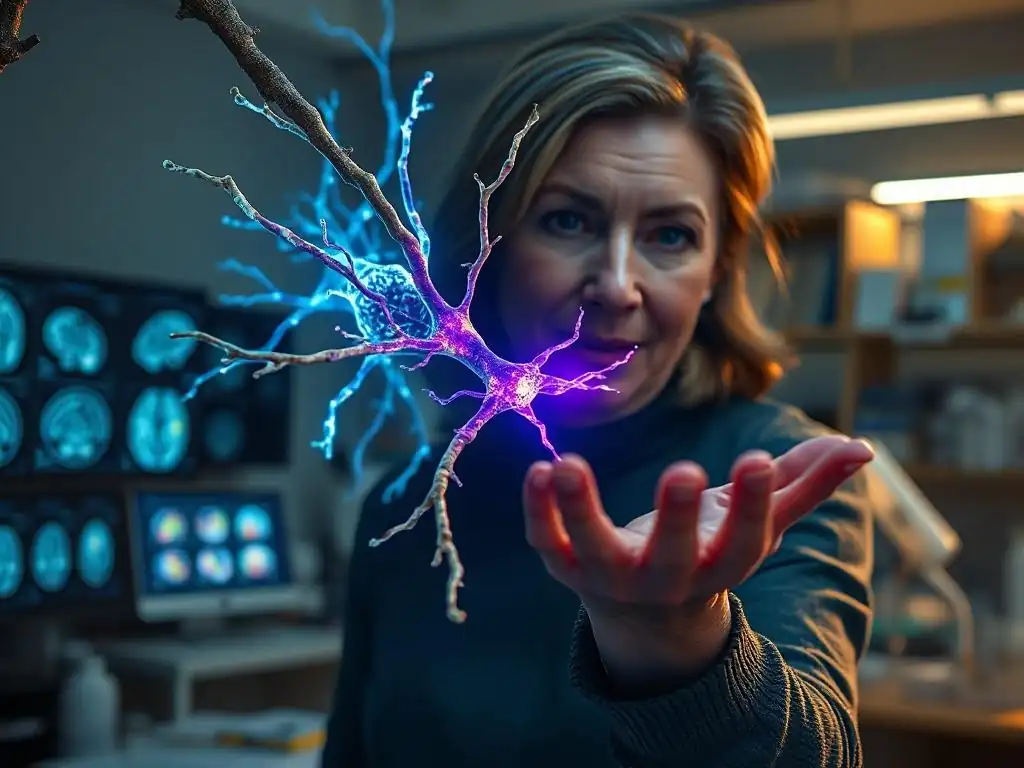
Delve into the captivating world of scientific discovery and resilience. Here, we illuminate the remarkable contributions of women who have shaped the landscape of science. Prepare to be inspired by the untold stories of pioneering figures, like Dr. Susan K. McConnell, whose groundbreaking work in brain development research is just one example of the brilliance we're celebrating. What secrets do developing brains hold, and how did Dr. McConnell unlock them? Explore her biography and discover the remarkable journey of a scientist who truly illuminated the path forward.
- Introduction: Honoring Dr. Susan McConnell's Contributions to Neuroscience
- Early Life and Education: The Genesis of a Neuroscientist
- Pioneering Research on Cerebral Cortex Development
- The McConnell Lab: A Hub for Cutting-Edge Neuroscience
- Susan McConnell's Impact on the Field of Neuroscience
- Awards and Recognition: Celebrating Dr. McConnell's Achievements
- Overcoming Challenges in a Male-Dominated Field
- Legacy: Inspiring Future Generations of Neuroscientists
- Conclusion: Dr. Susan K. McConnell's Enduring Contribution to Understanding Brain Development
-
Frequently Asked Questions
- What is Dr. Susan K. McConnell known for in the field of science?
- What challenges did women like Dr. McConnell face in the scientific community?
- How does Dr. McConnell's research impact our understanding of brain development?
- Where can I learn more about other pioneering women in science history?
- Why is it important to celebrate the contributions of women like Dr. McConnell?
- Final Reflection: The Enduring Legacy of Neural Exploration
- Ignite Your Neurons: Explore, Share, and Connect!
Introduction: Honoring Dr. Susan McConnell's Contributions to Neuroscience
Overview of Dr. McConnell's Groundbreaking Brain Development Research
Dr. Susan K. McConnell stands as a towering figure in developmental neuroscience, renowned for her profound contributions to understanding how the mammalian cerebral cortex, the seat of higher cognitive functions, is formed. Her pioneering investigations meticulously revealed the intricate processes by which neurons are generated, migrate to their precise locations, and establish the complex synaptic connections that underlie brain function. This Susan McConnell brain development research has provided fundamental insights into the cellular and molecular mechanisms that govern the assembly of one of nature's most complex structures.
Her work has not only charted the developmental trajectories of individual neurons but also elucidated the critical principles governing cortical organization and connectivity. Through elegant experimental designs, Dr. McConnell demystified how diverse neuronal types are specified and how they navigate the intricate landscape of the developing brain to form functional circuits. Her findings have laid essential groundwork for understanding both normal brain development and the origins of neurodevelopmental disorders, making her Susan McConnell brain development research indispensable to the field.
Early Life and Education: The Genesis of a Neuroscientist
Educational Journey: From Harvard to PhD at Caltech
Susan McConnell embarked on her academic journey at Harvard University, where she cultivated an early fascination with biological sciences. Her undergraduate studies provided a robust foundation in fundamental biological principles, laying the groundwork for her eventual specialization in neuroscience. This period at Harvard was crucial in shaping her analytical skills and fostering a deep curiosity about the complex mechanisms of life, particularly the intricacies of the nervous system.
Following her undergraduate degree, Dr. McConnell pursued her doctoral studies at the California Institute of Technology (Caltech), a world-renowned hub for cutting-edge scientific research. At Caltech, she delved into the burgeoning field of developmental neurobiology, focusing on the fundamental processes that guide brain formation. Her doctoral work was instrumental in refining her experimental prowess and critical thinking, setting the stage for her independent and highly influential Susan McConnell brain development research.
Mentors and Key Influences Shaping Her Scientific Path
During her formative years, Dr. McConnell benefited immensely from the guidance of prominent scientists who significantly influenced her research philosophy and approach. While specific names might vary over her career, the intellectual environment at institutions like Caltech fostered a rigorous, question-driven scientific mindset. These mentors encouraged her to tackle complex biological problems with innovative techniques and meticulous experimental design, which became hallmarks of her later work.
The collaborative and intellectually stimulating atmosphere of these leading research institutions provided a fertile ground for her ideas to flourish. She was exposed to diverse perspectives and cutting-edge methodologies, which undoubtedly shaped her unique contributions to brain development studies. This mentorship not only provided technical expertise but also instilled in her a commitment to scientific excellence and a passion for unraveling the brain's developmental mysteries.
Pioneering Research on Cerebral Cortex Development
Unraveling the Mysteries of Cortical Neuron Migration
Dr. McConnell's early Susan McConnell brain development research revolutionized the understanding of neuronal migration in the cerebral cortex. Using the ferret as a key model organism, she pioneered techniques to track the lineage of individual neurons, revealing how newly born neurons migrate radially from their birthplace near the ventricles to their final positions in the cortical layers. Her findings demonstrated that the "birthdate" of a neuron critically determines its ultimate laminar position, with older neurons settling in deeper layers and younger neurons migrating past them to superficial layers.
This groundbreaking work, particularly her use of retroviral lineage tracing, provided unprecedented clarity on the highly organized and precise nature of cortical assembly. Before her studies, the mechanisms governing this remarkable cellular journey were largely unknown. Her research elucidated that this migration is not random but follows a strict inside-out pattern, a fundamental principle now central to developmental neuroscience and critical for understanding how the intricate architecture of the cortex is established.
Key Discoveries in Neural Circuit Formation by Dr. McConnell
Beyond migration, Dr. McConnell's Susan McConnell brain development research extended to the equally complex process of neural circuit formation. She made pivotal discoveries regarding how neurons acquire their specific identities and form precise connections, even before they reach their final destinations. Her work showed that the fate of a cortical neuron — whether it becomes an excitatory pyramidal neuron or an inhibitory interneuron, and which layer it populates — is largely determined very early in its development, influenced by intrinsic programs.
Furthermore, her lab explored the mechanisms by which axons, the output wires of neurons, find their correct targets to establish functional circuits. She demonstrated that neurons possess intrinsic cues that guide their growth and connectivity, ensuring that the brain's vast network is wired with remarkable specificity. These findings were crucial for understanding how the complex functional maps of the brain, such as those for vision or touch, are meticulously laid down during development.
Susan McConnell's Innovative Approaches to Studying Brain Development
A hallmark of Dr. McConnell's scientific career has been her innovative development and application of experimental methodologies. She was among the first to successfully employ retroviral vectors to genetically label and track individual neurons and their progeny in the developing mammalian brain. This technique allowed her to follow the entire developmental history of a neuron, from its birth in the proliferative zone to its final integration into a functional circuit.
This revolutionary approach enabled her to definitively answer long-standing questions about neuronal lineage, migration pathways, and fate determination that were previously intractable. Her Susan McConnell brain development research consistently pushed the boundaries of what was technically possible, leading to the establishment of new standards for precision and rigor in developmental neuroscience. These methodological advancements were as impactful as her scientific discoveries, empowering a generation of researchers.
The McConnell Lab: A Hub for Cutting-Edge Neuroscience
Research Focus: Investigating the Mechanisms of Brain Development
The McConnell Lab at Stanford University has consistently been at the forefront of neuroscience research, dedicating its efforts to unraveling the fundamental mechanisms governing brain development. The lab's primary focus has been on understanding how neural stem cells generate the diverse array of neuronal types found in the cerebral cortex, and how these neurons subsequently assemble into highly organized and functional circuits. This comprehensive approach encompasses cellular, molecular, and genetic investigations into the intricate processes that shape the developing brain.
Current and past projects within the lab have delved into areas such as the molecular cues that guide neuronal migration, the genetic programs that specify neuronal identity, and the activity-dependent mechanisms that refine synaptic connections. The overarching goal of the Susan McConnell brain development research conducted in her lab is to build a complete picture of how the brain's complex architecture is constructed, providing insights into both typical development and the origins of neurological disorders.
Notable Publications and Contributions to the Field
Over her distinguished career, Dr. McConnell has authored numerous seminal papers that have profoundly shaped the field of neuroscience. Among her most cited works is the 1988 publication in Science magazine, which provided definitive evidence for the "inside-out" pattern of neuronal migration in the ferret cortex, a cornerstone discovery in cortical development. Another highly influential paper, published in Neuron in 1995, further elucidated the principles of neuronal fate determination, showing that intrinsic factors play a crucial role in specifying a neuron's identity.
These and many other publications from the McConnell Lab have not only presented groundbreaking findings but have also introduced sophisticated experimental paradigms that have been widely adopted by the scientific community. Her collective Susan McConnell brain development research has established new paradigms for understanding cortical development, influencing textbooks and inspiring countless follow-up investigations by researchers worldwide.
Impact of the McConnell Lab on the Next Generation of Neuroscientists
Beyond her direct scientific contributions, Dr. McConnell has had an immense impact through her role as a mentor and educator. The McConnell Lab has served as a vibrant training ground for a remarkable number of graduate students and postdoctoral fellows, many of whom have gone on to establish highly successful independent research careers at leading institutions globally. Her trainees often credit her for fostering an environment of intellectual rigor, scientific curiosity, and collaborative spirit.
She instilled in her mentees a deep appreciation for meticulous experimental design, critical thinking, and the pursuit of fundamental questions in brain development. The "McConnell lineage" of neuroscientists continues to make significant contributions to the field, reflecting her dedication to nurturing the next generation of scientific leaders. Her commitment to mentorship is a lasting legacy, ensuring that her influence extends far beyond her own laboratory.
Susan McConnell's Impact on the Field of Neuroscience
Contributions to Understanding Cortical Neuron Differentiation
Dr. McConnell's Susan McConnell brain development research fundamentally advanced our understanding of how neurons in the cerebral cortex differentiate from their progenitor cells. Her work elucidated that the identity and laminar position of cortical neurons are largely predetermined very early in development, before they embark on their migratory journeys. This concept of "birthdate-dependent fate" was revolutionary, demonstrating that a neuron's ultimate function and connectivity are influenced by the time of its genesis.
Her findings provided critical insights into the interplay between intrinsic genetic programs and extrinsic environmental cues in shaping neuronal diversity. This knowledge is crucial for understanding how the highly specialized regions of the cortex, responsible for distinct cognitive functions, are precisely formed. The principles she uncovered about cortical neuron differentiation are foundational to current research on neurodevelopmental disorders and potential regenerative therapies.
Advancements in Understanding Neural Connectivity and Brain Function
The precision with which Dr. McConnell's work revealed neuronal migration and fate determination has had profound implications for understanding how complex neural circuits are wired to enable brain function. Her research demonstrated that the precise positioning of neurons is essential for the formation of appropriate synaptic connections, which are the basis of all brain activity, from sensory perception to complex thought. By mapping the developmental trajectories of neurons, she provided a blueprint for how functional cortical maps are established.
Her Susan McConnell brain development research has contributed significantly to the understanding that disruptions in these early developmental processes can lead to profound neurological and psychiatric conditions. The insights gained from her lab's work on how neurons find their partners and form specific connections are indispensable for researchers studying conditions like autism spectrum disorders, schizophrenia, and epilepsy, where abnormal connectivity is often implicated.
Influence on Brain Development Research Methodologies
Dr. McConnell's legacy is not only in her discoveries but also in the innovative methodologies she pioneered and refined. Her groundbreaking application of retroviral lineage tracing in the mammalian brain became a gold standard technique for studying neuronal development. This method allowed scientists to permanently mark and track the progeny of single progenitor cells, providing unprecedented resolution into cell fate and migratory pathways.
This methodological contribution transformed the field, enabling countless subsequent studies to investigate complex developmental questions with a level of precision previously unattainable. Her rigorous experimental design and meticulous attention to detail also set a high bar for scientific inquiry in brain development research. The techniques and conceptual frameworks she established continue to be widely used and taught, underscoring her enduring influence on how neuroscience is conducted.
Awards and Recognition: Celebrating Dr. McConnell's Achievements
Dr. Susan K. McConnell's groundbreaking Susan McConnell brain development research has been widely recognized by the scientific community with numerous prestigious awards and honors throughout her career. In 2004, she was elected to the American Academy of Arts and Sciences, acknowledging her exceptional scholarly achievements and contributions to science. This was followed by her election to the National Academy of Sciences in 2007, one of the highest honors a U.S. scientist can receive, signifying her profound and continuous impact on her field.
Further testament to her leadership and influence, Dr. McConnell received the Pradel Research Award from the National Academy of Sciences in 2009, which recognizes innovative research in neuroscience. In 2014, the Society for Neuroscience bestowed upon her the Mika Salpeter Lifetime Achievement Award, celebrating her outstanding career achievements and her commitment to mentoring young scientists. These accolades underscore her status as a preeminent figure whose work has fundamentally advanced our understanding of the brain.
Overcoming Challenges in a Male-Dominated Field
Throughout much of her career, Dr. Susan McConnell operated within a scientific landscape historically dominated by men, particularly in leadership and highly visible research roles. While specific instances of bias are often subtle and unrecorded, women in STEM fields have frequently faced systemic challenges, including unequal access to resources, fewer opportunities for promotion, and implicit biases affecting recognition and funding. These institutional hurdles could make the path to scientific prominence more arduous for female researchers.
Despite these prevailing conditions, Dr. McConnell's unwavering commitment to scientific excellence and her groundbreaking Susan McConnell brain development research allowed her to ascend to the highest echelons of neuroscience. Her success served as a powerful testament to her intellectual prowess and resilience, demonstrating that exceptional scientific merit can, and must, overcome societal barriers.
Dr. McConnell's Role as a Mentor and Advocate for Women in STEM
Beyond her individual achievements, Dr. McConnell has actively contributed to fostering a more inclusive environment in science. She has been a passionate advocate for increasing the representation and success of women in STEM fields, particularly in neuroscience. Through her leadership roles and personal mentorship, she has provided invaluable guidance and support to countless aspiring female scientists, helping them navigate academic careers and overcome challenges.
Her presence as a highly respected and successful female neuroscientist has provided a tangible role model, inspiring women to pursue careers in brain development research and other scientific disciplines. Dr. McConnell's dedication to mentorship extends beyond her own lab, as she has often participated in initiatives aimed at promoting diversity and equity in academia, ensuring that future generations of scientists benefit from a more equitable and supportive environment.
Legacy: Inspiring Future Generations of Neuroscientists
The Lasting Impact of Dr. Susan McConnell's Research
The Susan McConnell brain development research has left an indelible mark on the field of neuroscience, establishing fundamental principles that continue to guide contemporary studies. Her pioneering work on neuronal migration and fate determination in the cerebral cortex remains a cornerstone of developmental neurobiology. The "inside-out" pattern of cortical assembly, the intrinsic determination of neuronal identity, and the precise guidance of axonal projections are concepts she definitively established, which are now taught in textbooks worldwide.
Her discoveries are not merely historical footnotes; they actively inform current research into neurodevelopmental disorders such as autism spectrum disorders, schizophrenia, and intellectual disabilities. Understanding the normal processes of brain development that she meticulously mapped is crucial for identifying where things go wrong in these conditions and for devising potential therapeutic strategies. Her body of work provides the essential foundational knowledge upon which complex questions about brain wiring and function are built.
Lessons Learned from Dr. McConnell's Career in Brain Development
Dr. McConnell's career offers invaluable lessons for aspiring scientists. Her unwavering commitment to asking fundamental questions about brain development, coupled with her relentless pursuit of innovative experimental approaches, exemplifies scientific excellence. She demonstrated the power of meticulous observation and rigorous experimental design in unraveling complex biological processes. Her work stands as a testament to the fact that deep understanding often comes from focusing on foundational mechanisms, even if the immediate clinical application is not apparent.
Furthermore, her dedication to mentorship and her role as an advocate for women in science highlight the importance of building a supportive and diverse scientific community. The legacy of Dr. McConnell extends beyond her remarkable discoveries; it encompasses the intellectual curiosity she ignited, the high standards she set, and the generations of neuroscientists she inspired and empowered to pursue the intricate mysteries of the brain.
Conclusion: Dr. Susan K. McConnell's Enduring Contribution to Understanding Brain Development
Dr. Susan K. McConnell's scientific journey has profoundly shaped our understanding of how the brain is built, neuron by neuron. Her relentless pursuit of knowledge, marked by innovative experimental design and groundbreaking discoveries, has revealed the intricate choreography of neuronal migration, differentiation, and circuit formation in the cerebral cortex. This Susan McConnell brain development research has not only answered fundamental questions about brain assembly but has also provided critical insights into the origins of neurodevelopmental disorders.
As a pioneering scientist, a dedicated mentor, and an advocate for diversity in STEM, Dr. McConnell's influence extends far beyond the confines of her laboratory. Her enduring legacy lies in the foundational principles she established, the methodologies she popularized, and the countless neuroscientists she inspired to explore the wondrous complexities of brain development. Her contributions continue to illuminate the path for future generations, ensuring that the mysteries of the brain continue to be unraveled, one neuron at a time.
Frequently Asked Questions
What is Dr. Susan K. McConnell known for in the field of science?
Dr. McConnell is renowned for her brain development research, specifically focusing on how neurons find their correct positions and establish connections in the developing cerebral cortex. Her work has provided crucial insights into the formation of neural circuits.
What challenges did women like Dr. McConnell face in the scientific community?
Historically, women in science have faced significant obstacles, including gender bias, limited access to resources and opportunities, and underrepresentation in leadership roles. These challenges often hindered their career advancement and recognition.
How does Dr. McConnell's research impact our understanding of brain development?
Her findings have significantly advanced our understanding of the molecular and cellular mechanisms that govern neuronal migration and circuit formation. This knowledge is crucial for understanding developmental brain disorders.
Where can I learn more about other pioneering women in science history?
Resources like WomenInScienceHistory.com offer biographies and stories of female scientists who have made significant contributions to various fields. These platforms aim to highlight their achievements and inspire future generations.
Why is it important to celebrate the contributions of women like Dr. McConnell?
Celebrating these contributions helps to address historical biases and promote gender equality in STEM fields. It also serves to inspire and empower young women to pursue careers in science.
Final Reflection: The Enduring Legacy of Neural Exploration
The groundbreaking work of Dr. Susan K. McConnell, as explored in this article, underscores the profound impact of understanding brain development on our comprehension of human potential and neurological disorders. Her meticulous research, focusing on the intricate dance of neuronal connections, is not merely an academic pursuit; it's a vital key to unlocking the mysteries of the mind and paving the way for future therapeutic interventions.
This journey into the microscopic world of developing neurons has deeply influenced our understanding of the delicate balance that shapes our cognitive abilities. The dedication and precision exemplified by Dr. McConnell's research serve as a powerful reminder of the importance of persistent inquiry in the face of complex scientific challenges. The brain is wider than the sky,
Emily Dickinson wrote, "For, put them side by side, the one the other will contain with ease, and you beside." This quote encapsulates the vastness of what we still have to learn about the brain, and the critical role researchers like Dr. McConnell play in illuminating its hidden pathways.
As we conclude this exploration of Dr. McConnell's contributions to the field of brain development, let us consider the implications of her work for our own lives. What can we learn from her unwavering commitment to unraveling the complexities of the brain? Let us embrace a spirit of curiosity and a dedication to lifelong learning, recognizing that every new discovery, every connection made, brings us closer to understanding the remarkable potential that resides within each of us.
Thank you for diving into the fascinating world of Dr. Susan K. McConnell and her groundbreaking work! We hope you found her journey as inspiring as we do. Now, it’s time to take the next step and become a part of the scientific conversation.
Here’s how you can continue exploring and supporting women in science:
- Become an advocate for science education! Consider volunteering your time at a local school or science center to inspire the next generation of scientists.
- Share Dr. McConnell’s story with your friends, family, and colleagues. Help spread the word about her incredible contributions and inspire others.
- Uncover more hidden figures in science! Dedicate some time each week to research and learn about other influential women in science history, expanding your knowledge and appreciation.
What's one small step you can take this week to champion women in science and inspire future generations of innovators?