
Catherine Clarke Fenselau: Pioneering Mass Spectrometry for Biological Discoveries

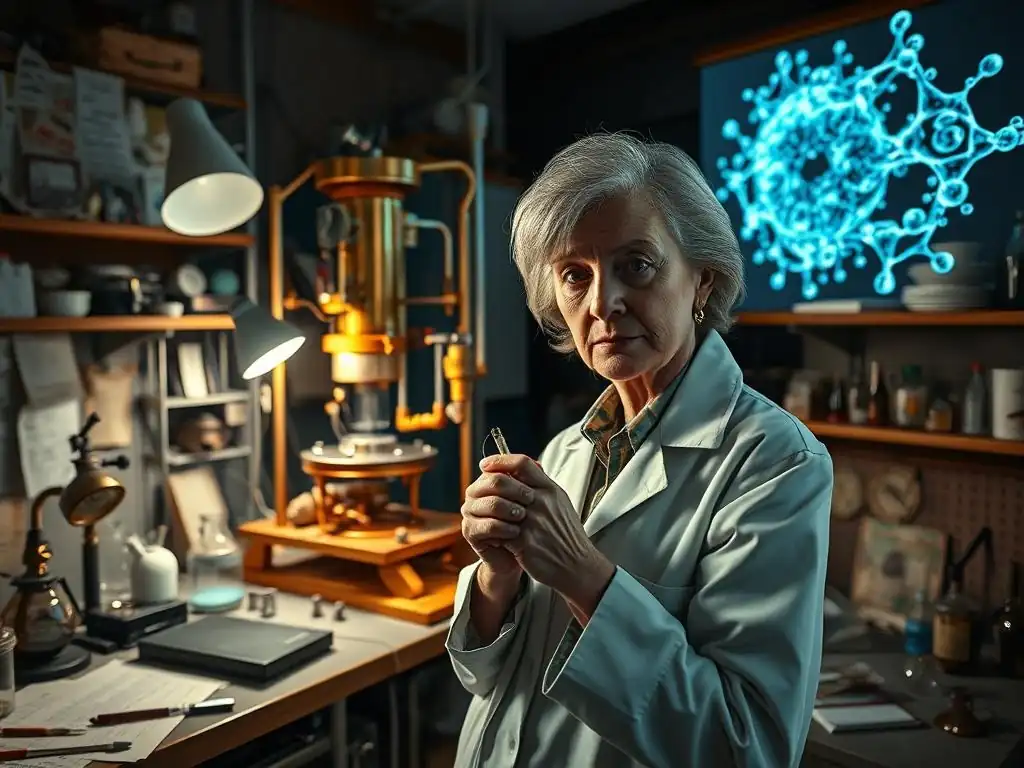
Welcome to WomenInScienceHistory.com, where we illuminate the extraordinary legacies of women who shaped the scientific world. Prepare to be captivated by stories of ingenuity and resilience, often hidden from the traditional historical narrative. Ever wondered how mass spectrometry revolutionized our understanding of biological processes? Dive into the remarkable life and groundbreaking work of Catherine Clarke Fenselau, a true pioneer in the field, and discover how her contributions continue to impact scientific advancements today.
- Introduction to Catherine Clarke Fenselau's Scientific Journey
- Early Life and Education: The Foundation of a Scientific Career
- Groundbreaking Research in Mass Spectrometry
- Key Contributions to Biomedical Mass Spectrometry
- Impact on the Field: Fenselau's Legacy in Mass Spectrometry
- Awards and Recognition: Celebrating Fenselau's Achievements
- Challenges and Triumphs in a Male-Dominated Field
- Catherine Clarke Fenselau's Lasting Impact on Women in Science
- Fenselau's Published Works and Research Contributions
- Conclusion: Celebrating a Visionary in Mass Spectrometry and Women's Contributions to Science
-
Frequently Asked Questions
- What is Catherine Clarke Fenselau best known for?
- What were some of the major challenges Catherine Clarke Fenselau faced in her career?
- What scientific field did Catherine Clarke Fenselau contribute to significantly?
- Why is it important to highlight the work of women like Catherine Clarke Fenselau in science history?
- How did Catherine Clarke Fenselau's work impact the broader scientific community?
- Final Reflection: The Enduring Legacy of Scientific Innovation
- Ignite Your Inner Scientist: Explore Fenselau's Legacy!
Introduction to Catherine Clarke Fenselau's Scientific Journey
Celebrating a Pioneer in Mass Spectrometry
Catherine Clarke Fenselau stands as a monumental figure in the history of analytical chemistry, particularly for her transformative contributions to mass spectrometry. Born in 1939, Fenselau's career spanned several decades, during which she not only advanced the fundamental techniques of mass spectrometry but also pioneered its application to complex biological systems, thereby revolutionizing fields like biochemistry, pharmacology, and medicine. Her innovative spirit and relentless pursuit of knowledge laid critical groundwork that continues to impact modern scientific research, making the keyword "Catherine Clarke Fenselau mass spectrometry" synonymous with groundbreaking biological analysis.
Her work moved mass spectrometry from a niche analytical tool to an indispensable method for understanding life's intricate processes. Fenselau's early adoption and refinement of techniques like fast atom bombardment (FAB) and later, her contributions to the integration of electrospray ionization (ESI) with mass spectrometry, opened up new avenues for analyzing large, fragile biomolecules such as proteins and oligonucleotides that were previously intractable. This foresight cemented her legacy as a visionary whose efforts significantly broadened the scope and utility of mass spectrometry in biological discoveries.
Women in Chemistry: Highlighting Fenselau's Contributions
Within the broader narrative of women in science, Catherine Clarke Fenselau's journey is particularly illustrative of the challenges and triumphs faced by female scientists in historically male-dominated disciplines like chemistry. She not only excelled academically and professionally but also became a leading voice and mentor, paving the way for future generations of women in analytical chemistry. Her career trajectory demonstrates how perseverance and exceptional talent can overcome systemic barriers, proving that intellectual curiosity knows no gender.
Fenselau's significant impact extends beyond her technical innovations; she actively fostered an inclusive environment, mentoring countless students and postdoctoral researchers, many of whom were women. Her leadership roles in prominent scientific organizations, such as her presidency of the American Society for Mass Spectrometry (ASMS) from 1986 to 1988, further underscore her influence in shaping the scientific community. These contributions solidify her place as a pivotal figure, not just in the development of mass spectrometry, but also in advancing the representation and success of women in chemistry.
Early Life and Education: The Foundation of a Scientific Career
Catherine Clarke Fenselau's Early Academic Pursuits
Catherine Clarke Fenselau's foundational academic journey began with a strong interest in science, leading her to Bryn Mawr College, a prestigious women's liberal arts college. She pursued a Bachelor of Arts degree in Chemistry, graduating in 1961. This early exposure to rigorous scientific inquiry in a supportive environment, focused on empowering women in academia, was crucial in shaping her analytical mind and her dedication to the field.
Following her undergraduate studies, Fenselau advanced her education at Stanford University, where she earned her Ph.D. in Organic Chemistry in 1965. Her doctoral research focused on understanding chemical structures and reactions, which provided her with a deep understanding of molecular interactions—a prerequisite for her future work in mass spectrometry. This period of intense study and research at a leading institution laid the intellectual groundwork for her pioneering contributions to analytical chemistry, particularly in the realm of Catherine Clarke Fenselau mass spectrometry.
From Chemistry Studies to Mass Spectrometry Specialization
While her doctoral work was in organic chemistry, Catherine Clarke Fenselau quickly recognized the burgeoning potential of mass spectrometry as a powerful tool for structural elucidation. Her postdoctoral fellowship at the University of California, Berkeley, from 1965 to 1966, under the guidance of Melvin Calvin (a Nobel laureate), provided her with the opportunity to specialize in this emerging analytical technique. This pivotal transition marked the beginning of her lifelong dedication to advancing mass spectrometry.
Upon joining the faculty at Johns Hopkins University School of Medicine in 1967, Fenselau established one of the first mass spectrometry laboratories dedicated to biological and biomedical applications. This move was audacious at a time when mass spectrometry was primarily used for smaller, volatile organic molecules. Her foresight in applying this technology to complex biological matrices set a new precedent and positioned her at the forefront of what would become a revolutionary field of study, continually pushing the boundaries of Catherine Clarke Fenselau mass spectrometry.
Groundbreaking Research in Mass Spectrometry
Fenselau's Innovative Approaches to Mass Spectrometry Techniques
Catherine Clarke Fenselau was at the forefront of developing and refining mass spectrometry techniques to tackle increasingly complex biological questions. One of her most significant contributions involved the early adoption and application of fast atom bombardment (FAB) mass spectrometry in the 1980s. This ionization technique allowed for the analysis of non-volatile, thermally labile biomolecules—such as peptides, carbohydrates, and oligonucleotides—that were previously impossible to study with conventional electron ionization methods. Her work with FAB paved the way for the routine analysis of larger biomolecules, fundamentally expanding the scope of mass spectrometry.
Beyond FAB, Fenselau was a pioneer in demonstrating the utility of other emerging ionization techniques, notably electrospray ionization (ESI), in biological contexts. While ESI was developed by others, her laboratory was instrumental in showcasing its power for analyzing intact proteins and their modifications, a critical step towards modern proteomics. She consistently sought to integrate new technological advancements, ensuring that mass spectrometry could keep pace with the growing demands of biological research, solidifying her reputation as a leading figure in Catherine Clarke Fenselau mass spectrometry.
Applying Mass Spectrometry to Biological Systems: A Revolutionary Approach
Fenselau's genius lay not just in developing techniques but in her unwavering vision to apply mass spectrometry directly to solve pressing biological and biomedical problems. Prior to her work, the biological applications of mass spectrometry were limited. She championed the use of mass spectrometry for identifying drug metabolites, understanding enzymatic reactions, and characterizing complex biological mixtures. For instance, her early studies on drug metabolism provided critical insights into how the body processes pharmaceutical compounds, which is essential for drug development and toxicology.
Her laboratory was one of the first to systematically employ mass spectrometry for the structural characterization of modified proteins and peptides, laying foundational work for what is now known as proteomics. This revolutionary approach allowed researchers to identify specific post-translational modifications on proteins, such as glycosylation or phosphorylation, which are crucial for protein function and regulation. This pioneering work fundamentally transformed how biological scientists approached the study of biomolecules, firmly establishing Catherine Clarke Fenselau mass spectrometry as a cornerstone of biological research.
Key Contributions to Biomedical Mass Spectrometry
Developing Mass Spectrometry for Drug Metabolism Studies
Catherine Clarke Fenselau made profound contributions to the field of drug metabolism by integrating mass spectrometry as a primary analytical tool. Her early work focused on identifying and characterizing the metabolic products of various pharmaceutical compounds within biological systems. For example, she utilized mass spectrometry to elucidate the metabolic pathways of anticancer drugs like cyclophosphamide, a critical step in understanding their efficacy and toxicity. This detailed analysis provided invaluable data for pharmaceutical companies in the drug discovery and development process, helping to optimize drug design and predict potential side effects.
Her methodologies allowed for the precise determination of molecular weights and structural features of metabolites, even those present in very low concentrations, significantly improving upon previous analytical techniques. This capability was revolutionary, providing a more comprehensive understanding of how drugs interact with the body, which is vital for ensuring drug safety and effectiveness. The impact of her work in this area is still felt today, as mass spectrometry remains the gold standard for drug metabolism studies in pharmaceutical research, directly attributable to the pioneering efforts in Catherine Clarke Fenselau mass spectrometry.
Applications of Mass Spectrometry in Proteomics and Cancer Research
Beyond drug metabolism, Fenselau was a visionary in applying mass spectrometry to proteomics and cancer research. She was among the first to explore the use of mass spectrometry for identifying and characterizing proteins from complex biological samples, laying the groundwork for modern proteomics. Her work on protein modifications, such as the characterization of modified hemoglobin variants, provided crucial insights into disease mechanisms. This early work demonstrated the immense potential of mass spectrometry for understanding the complex world of proteins, which are central to all biological processes.
In cancer research, Fenselau's laboratory investigated the use of mass spectrometry to identify potential biomarkers for various cancers. By analyzing changes in protein profiles or specific metabolites in diseased tissues or bodily fluids, her research contributed to the development of early detection methods and a better understanding of cancer progression. For instance, her group explored the potential of mass spectrometry in characterizing glycoproteins associated with tumor growth, which could serve as diagnostic or prognostic indicators. These applications of Catherine Clarke Fenselau mass spectrometry have had a lasting impact, driving advancements in precision medicine and personalized cancer therapies.
Impact on the Field: Fenselau's Legacy in Mass Spectrometry
Shaping the Future of Biological Mass Spectrometry
Catherine Clarke Fenselau's visionary leadership and relentless pursuit of innovation profoundly shaped the trajectory of biological mass spectrometry. She was instrumental in shifting the perception of mass spectrometry from a tool primarily for small molecule analysis to an indispensable technique for studying large, complex biomolecules. Her pioneering work in applying new ionization methods, such as FAB and later embracing ESI, directly facilitated the emergence of proteomics, metabolomics, and lipidomics as distinct and thriving fields of study. Without her early contributions and advocacy, the widespread adoption of mass spectrometry in biological research would have been significantly delayed.
Her influence extended to the development of standardized protocols and best practices for biological mass spectrometry, ensuring reproducibility and reliability in the burgeoning field. Through her extensive publications and presentations, she disseminated knowledge and inspired countless researchers to explore the vast potential of this analytical technique. The methodologies and conceptual frameworks she established are still foundational to how biological mass spectrometry is conducted today, solidifying her enduring legacy in Catherine Clarke Fenselau mass spectrometry.
Mentoring and Inspiring Future Scientists in Analytical Chemistry
Beyond her scientific discoveries, Catherine Clarke Fenselau left an indelible mark through her dedication to mentoring and educating the next generation of scientists. Throughout her distinguished career, she supervised over 80 Ph.D. students and postdoctoral fellows, many of whom went on to become leaders in academia, industry, and government laboratories. Her mentorship style was characterized by intellectual rigor, unwavering support, and a keen ability to foster independent thinking, empowering her students to tackle ambitious research questions.
She was particularly passionate about encouraging women and underrepresented groups to pursue careers in science, serving as a powerful role model and advocate. Fenselau's commitment to education was also evident in her involvement with professional societies, where she organized workshops and educational programs that trained thousands of researchers in the intricacies of mass spectrometry. Her legacy of mentorship has created a ripple effect, with her former students and mentees continuing to advance the field and inspire new scientists, ensuring the continued evolution of analytical chemistry and Catherine Clarke Fenselau mass spectrometry.
Awards and Recognition: Celebrating Fenselau's Achievements
Honors and Distinctions in the Field of Mass Spectrometry
Catherine Clarke Fenselau's unparalleled contributions to mass spectrometry were widely recognized through numerous prestigious awards and honors throughout her career. In 1985, she received the Garvan-Olin Medal from the American Chemical Society (ACS), an award recognizing distinguished service to chemistry by women chemists, highlighting her significant impact on the discipline. This was followed by her election as President of the American Society for Mass Spectrometry (ASMS) from 1986 to 1988, a testament to her leadership and influence within the mass spectrometry community.
Her accolades continued with the ACS Award in Analytical Chemistry in 2008, acknowledging her pioneering work in applying mass spectrometry to biological problems. She was also honored with the Thomson Medal by the International Mass Spectrometry Foundation in 2014, one of the highest international recognitions in the field, celebrating her sustained and outstanding contributions to mass spectrometry. These awards underscore the breadth and depth of her impact, firmly establishing "Catherine Clarke Fenselau mass spectrometry" as a benchmark of excellence.
Recognizing Fenselau's Influence on Scientific Advancement
Beyond specific awards, Catherine Clarke Fenselau's influence was acknowledged through her election to highly selective scientific bodies. She was elected a Fellow of the American Association for the Advancement of Science (AAAS), a distinction recognizing scientists whose efforts are scientifically or socially distinguished. This membership signifies her broad impact across scientific disciplines, not just within analytical chemistry.
Her active participation and leadership in various editorial boards of leading scientific journals, such as the Journal of the American Society for Mass Spectrometry and Analytical Chemistry, further solidified her standing as an authority. Through these roles, she shaped the discourse and direction of research in mass spectrometry, ensuring the dissemination of high-quality scientific work. Her numerous invited lectures and keynote addresses at international conferences also served as platforms to share her insights and inspire countless researchers, cementing her legacy as a driving force in scientific advancement and the field of Catherine Clarke Fenselau mass spectrometry.
Challenges and Triumphs in a Male-Dominated Field
Overcoming Obstacles as a Woman in Science
Catherine Clarke Fenselau navigated a scientific landscape that, for much of her early career, was overwhelmingly dominated by men. Entering academia in the late 1960s, she faced the implicit biases and structural barriers common for women aspiring to leadership roles in STEM.
Despite these challenges, she consistently demonstrated exceptional scientific acumen and resilience, carving out a prominent space for herself and her groundbreaking work in mass spectrometry. Her ability to secure research funding, establish a leading laboratory, and publish prolifically in top-tier journals was a testament to her unwavering determination and scientific merit in an era where such achievements by women were less common.
She often had to prove her capabilities more rigorously than her male counterparts, yet she never faltered in her pursuit of scientific excellence. Her dedication to her research and her profound contributions ultimately transcended gender-based limitations, earning her widespread respect and recognition within the scientific community. Her experience highlights the significant hurdles that pioneering women in science, like Fenselau, had to overcome to achieve their rightful place at the forefront of their fields.
Breaking Barriers in Mass Spectrometry Research
Fenselau's triumphs extended beyond personal achievements; she actively broke barriers within the field of mass spectrometry itself. When she began applying mass spectrometry to biological molecules, it was a relatively nascent and often skeptical area of research. Many conventional mass spectrometrists doubted the utility of the technique for large, fragile biomolecules. However, Fenselau's persistence, innovative methodological development, and undeniable results proved the immense potential of what is now known as biological mass spectrometry.
Her success in applying mass spectrometry to complex biological problems, from drug metabolism to proteomics, helped legitimate these applications and inspired a generation of researchers to follow suit. She was not just a recipient of scientific advancements but a key architect in expanding the boundaries of what mass spectrometry could achieve. By consistently pushing the envelope and demonstrating tangible biomedical applications, Catherine Clarke Fenselau mass spectrometry became synonymous with pioneering and transformative research, effectively dismantling conceptual barriers within the scientific discipline itself.
Catherine Clarke Fenselau's Lasting Impact on Women in Science
Inspiring Future Generations of Female Scientists
Catherine Clarke Fenselau's remarkable career serves as a powerful source of inspiration for future generations of female scientists. Her journey from a young chemistry student to a world-renowned leader in mass spectrometry demonstrates that women can achieve extraordinary success in challenging scientific fields. By breaking through glass ceilings and establishing a highly respected research program, she provided a tangible example of what is possible, encouraging countless young women to pursue their passions in STEM.
Through her public speaking engagements, mentorship, and active participation in organizations promoting women in science, Fenselau actively championed the cause of gender equity in academia and research. She was a vocal advocate for creating more inclusive environments where female scientists could thrive, offering practical advice and unwavering support. Her legacy continues to resonate, motivating young women to enter and excel in analytical chemistry and related scientific disciplines, understanding that the path to impactful research in Catherine Clarke Fenselau mass spectrometry is open to them.
Fenselau's Role as a Role Model in STEM
Beyond her scientific breakthroughs, Catherine Clarke Fenselau embodied the qualities of an exceptional role model in STEM. Her integrity, intellectual curiosity, collaborative spirit, and dedication to both research and mentorship set a high standard for aspiring scientists. She demonstrated that it is possible to achieve scientific eminence while maintaining a strong commitment to teaching and fostering a supportive research environment.
Her life story, marked by resilience and groundbreaking innovation, provides a narrative that empowers women to navigate the complexities of scientific careers. Fenselau's commitment to excellence and her unwavering belief in the power of scientific inquiry, coupled with her efforts to uplift other women, have left an enduring positive impact. Her profound contributions ensure that Catherine Clarke Fenselau mass spectrometry is not just a scientific achievement but also a symbol of what women can accomplish when given the opportunity to lead and innovate in science.
Fenselau's Published Works and Research Contributions
Key Publications in Mass Spectrometry and Biological Applications
Catherine Clarke Fenselau's prolific publication record stands as a testament to her extensive and impactful research contributions in mass spectrometry and its biological applications. Throughout her career, she authored or co-authored hundreds of peer-reviewed articles in leading scientific journals, including Analytical Chemistry, Journal of the American Society for Mass Spectrometry, Proceedings of the National Academy of Sciences, and Journal of Medicinal Chemistry. Her early papers often focused on the structural elucidation of complex organic molecules and drug metabolites using nascent mass spectrometry techniques.
As the field evolved, her publications increasingly showcased the application of mass spectrometry to larger biomolecules. Key works include those detailing the use of fast atom bombardment (FAB) for peptides and carbohydrates, and later, the characterization of proteins and their post-translational modifications using electrospray ionization. These articles were not merely descriptive; they often introduced novel methodologies or provided critical insights into biological processes, establishing foundational principles for modern biological mass spectrometry and continually advancing the domain of Catherine Clarke Fenselau mass spectrometry.
A Review of Fenselau's Scholarly Articles and Scientific Impact
A comprehensive review of Fenselau's scholarly articles reveals a consistent pattern of pioneering research and a remarkable ability to adapt and integrate new technologies. Her publications are highly cited, indicating their significant influence on subsequent research across chemistry, biology, and medicine. Beyond original research, she also contributed numerous review articles and book chapters, synthesizing complex topics and making advanced mass spectrometry concepts accessible to a wider scientific audience. This educational outreach further amplified the impact of her work.
Her scientific impact can be measured not just by the volume of her publications, but by their transformative nature. Many of her papers opened up entirely new avenues of research, inspiring countless studies in drug discovery, disease diagnostics, and fundamental biochemistry. For instance, her work on identifying biomarkers for cancer using mass spectrometry laid conceptual groundwork that is still actively pursued today. The breadth and depth of her contributions, documented meticulously in her published works, underscore her status as a visionary and a true pioneer in the field of Catherine Clarke Fenselau mass spectrometry.
Conclusion: Celebrating a Visionary in Mass Spectrometry and Women's Contributions to Science
Catherine Clarke Fenselau: A Legacy of Innovation and Inspiration
Catherine Clarke Fenselau's life and career represent a powerful narrative of innovation, perseverance, and profound impact on science. From her foundational work in organic chemistry to her pioneering role in applying mass spectrometry to complex biological systems, she consistently pushed the boundaries of analytical science.
Her contributions transformed the capabilities of mass spectrometry, making it an indispensable tool for understanding everything from drug metabolism and toxicology to the intricate world of proteins and their role in human health and disease. Her legacy is one of technical brilliance coupled with a clear vision for how analytical tools could unlock biological mysteries.
Beyond her remarkable scientific achievements, Fenselau was a tireless advocate and mentor, especially for women in STEM. She inspired countless students and colleagues, demonstrating through her own career that excellence knows no gender and that scientific leadership can be both rigorous and nurturing. Her unwavering commitment to both scientific discovery and the advancement of future generations solidifies her position not just as a scientific pioneer, but as a true role model whose influence extends far beyond the laboratory.
The Enduring Relevance of Fenselau's Work in Modern Mass Spectrometry
The principles and applications championed by Catherine Clarke Fenselau remain profoundly relevant in modern mass spectrometry. Techniques she helped popularize, such as the analysis of large biomolecules, are now routine in pharmaceutical research, clinical diagnostics, and fundamental biological studies. The field of proteomics, which relies heavily on mass spectrometry to identify and quantify thousands of proteins simultaneously, owes a significant debt to her early methodological developments and conceptual insights. Her work laid the essential groundwork for advancements in personalized medicine, biomarker discovery, and drug development that continue to evolve today.
Her foresight in recognizing the potential of mass spectrometry for biomedical applications continues to guide research efforts in areas like cancer detection, neurodegenerative diseases, and infectious diseases. The analytical rigor and innovative spirit she brought to the field of Catherine Clarke Fenselau mass spectrometry set a high standard that continues to inspire current researchers. Her enduring legacy ensures that she will forever be remembered as a visionary whose scientific contributions continue to shape the future of analytical science and its impact on human well-being.
Frequently Asked Questions
What is Catherine Clarke Fenselau best known for?
Catherine Clarke Fenselau is primarily known for her pioneering work in mass spectrometry, particularly its application to biological problems. She significantly advanced the field, making it a crucial tool for biological research.
What were some of the major challenges Catherine Clarke Fenselau faced in her career?
As a woman in a male-dominated field, Fenselau likely faced challenges related to gender bias and limited opportunities for advancement. She had to overcome societal expectations and prove her capabilities in a competitive environment.
What scientific field did Catherine Clarke Fenselau contribute to significantly?
Catherine Clarke Fenselau made significant contributions to the field of mass spectrometry, particularly in its use for analyzing biological molecules like proteins and peptides. Her work helped to revolutionize the field.
Why is it important to highlight the work of women like Catherine Clarke Fenselau in science history?
Highlighting the work of women like Fenselau helps to correct historical inaccuracies, inspire future generations of female scientists, and demonstrate that science is not solely a male domain.
How did Catherine Clarke Fenselau's work impact the broader scientific community?
Fenselau's work provided the scientific community with powerful new tools for studying biological systems. Her innovations in mass spectrometry have had a lasting impact on fields like proteomics and drug discovery.
Final Reflection: The Enduring Legacy of Scientific Innovation
The journey through Catherine Clarke Fenselau's groundbreaking work in mass spectrometry reveals not just scientific advancements, but the transformative power of persistent curiosity and dedication in unlocking the secrets of biological systems. Her contributions, initially pioneering, are now foundational, shaping the landscape of modern proteomics and drug discovery, and their impact continues to resonate deeply within the scientific community and beyond.
Fenselau's unwavering commitment to pushing the boundaries of what was possible has profoundly influenced my own perspective on the importance of interdisciplinary collaboration and the courage to challenge established norms in pursuit of knowledge. Science is not finished until you have communicated it.
This quote, often attributed to Fenselau, underscores the vital role of sharing discoveries and fostering a collaborative spirit, ensuring that scientific breakthroughs translate into tangible benefits for society.
As we reflect on Catherine Clarke Fenselau's extraordinary legacy, let us be inspired to embrace our own potential for innovation and impact. Consider how you can contribute to the advancement of knowledge, not just within your chosen field, but also by fostering collaboration and communicating your findings effectively. Let her story be a reminder that even the most complex challenges can be overcome with dedication, curiosity, and a commitment to sharing the fruits of our labor with the world.
Ignite Your Inner Scientist: Explore Fenselau's Legacy!
Thank you for delving into the inspiring journey of Catherine Clarke Fenselau. We hope you've gained a new appreciation for her groundbreaking contributions to mass spectrometry and its impact on biological discoveries. Now, it's your turn to contribute!
- Commit to learning one new concept in mass spectrometry this week – visit your local library or check for open-access articles online to dive deeper!
- Share Fenselau's story with a friend or colleague to inspire the next generation of women in STEM.
- Reflect on how Fenselau's interdisciplinary approach can be applied to your own field of interest and develop a similar approach to solving problems at your work, school or hobby.
How can you apply Fenselau's dedication to innovation in your own pursuits to make a positive difference in the world?