
The AllWoman Spacewalk: More Than a Photo Op, A Technical Triumph


Welcome to WomenInScienceHistory.com!
Prepare to be inspired by the untold stories of women who shaped the scientific landscape. In a field often dominated by men, their contributions are finally taking center stage. Dive into our latest exploration of Space Science & Astronomy and uncover the fascinating details behind Sally Ride’s groundbreaking spacewalk challenge. Was it merely a photo op, or something far more significant? The answer, and the technical triumphs behind it, await you. Read on to discover the remarkable story behind this pivotal moment in space exploration and the persistent barriers these brilliant women overcame.
- The First All-Woman Spacewalk: A Technical Triumph for NASA
- Introduction: Recognizing Soviet Cosmonaut Valentina Tereshkova's Flight and its Legacy
- The Reality Behind All-Woman Spacewalks: Beyond Symbolism
- Technical Challenges and Preparations for the First All-Woman Spacewalk
- The First All-Woman Spacewalk: A Detailed Look at Expedition 61
- The Significance of Representation and the First All-Woman Spacewalk
- The Future of Women in Space: Building on the Expedition 61 Success
- Conclusion: Celebrating a Milestone and Continuing the Push for Equality in Space
-
Frequently Asked Questions
- What was the "All-Woman Spacewalk" and why was it significant?
- What was the original challenge faced by Sally Ride and other female astronauts regarding spacewalks?
- How did the All-Woman Spacewalk demonstrate technical triumph beyond just representation?
- Did Sally Ride ever perform a spacewalk herself?
- What impact did the All-Woman Spacewalk have on inspiring future generations of women in science and engineering?
- Final Reflection: Reaching for the Stars, Together
- Ignite Your Inner Astronaut: Take the Next Giant Leap!
The First All-Woman Spacewalk: A Technical Triumph for NASA
Introduction: Recognizing Soviet Cosmonaut Valentina Tereshkova's Flight and its Legacy
Acknowledging the Historical Context of Women in Space Exploration
The journey of women in space exploration began dramatically with Soviet cosmonaut Valentina Tereshkova's historic flight aboard Vostok 6 on June 16, 1963. Tereshkova orbited Earth 48 times over nearly three days, logging more flight hours than all American astronauts combined at that point. Her pioneering mission shattered the perception that space was exclusively a male domain, demonstrating the immediate capability of women to endure the rigors of orbital flight and perform effectively in the demanding environment of space.
Following Tereshkova's groundbreaking achievement, it would be two decades before another woman, Svetlana Savitskaya, flew into space in 1982, also for the Soviet Union, and performed the first spacewalk by a woman in 1984. For the United States, Sally Ride became the first American woman in space aboard Space Shuttle Challenger on STS-7 in June 1983.
While Sally Ride herself did not perform a spacewalk, her groundbreaking entry into space was a significant challenge that opened doors for subsequent female astronauts to engage in extravehicular activities. Her pioneering spirit laid the groundwork for future achievements, including the eventual all-woman spacewalk.
Setting the Stage: The Significance of All-Woman Spacewalks
Despite the individual achievements of women in space, including those who had performed spacewalks, the concept of an all-woman spacewalk remained elusive for decades. It wasn't until October 2019 that such an event finally occurred, marking a significant milestone beyond mere symbolism. This event underscored the depth and breadth of the female astronaut corps and the increasing integration of women into all facets of complex space operations.
The significance of an all-woman spacewalk extends beyond simply having two women outside the International Space Station (ISS) simultaneously. It represents a maturation of the space program's diversity efforts, demonstrating that women are not only capable of individual feats but can also perform highly coordinated, critical tasks as a team in the most challenging environment imaginable. It signaled a shift from celebrating "firsts" to recognizing the routine, yet extraordinary, capabilities of a diverse astronaut population.
The Reality Behind All-Woman Spacewalks: Beyond Symbolism
Debunking Misconceptions: Technical Skills and Expertise
A common misconception surrounding high-profile events like the first all-woman spacewalk is that they are primarily symbolic, designed for public relations rather than operational necessity. This notion fundamentally misunderstands the nature of extravehicular activity (EVA). Spacewalks are among the most complex, dangerous, and physically demanding operations in space, requiring immense technical skill, precision, and unwavering focus from the astronauts involved, regardless of their gender.
Every astronaut, male or female, undergoes identical, rigorous training protocols that span years. This includes hundreds of hours in NASA's Neutral Buoyancy Laboratory (NBL), a massive underwater facility that simulates microgravity, where they practice every maneuver, tool use, and emergency procedure. Astronauts Christina Koch and Jessica Meir, who performed the first all-woman spacewalk, were not selected for their gender but for their exceptional technical proficiency, extensive training, and proven capabilities. Koch, for instance, had already completed multiple spacewalks prior to this historic event, demonstrating her seasoned expertise in EVA operations.
Emphasizing the Complexities of Extravehicular Activity (EVA)
Extravehicular activity is an incredibly intricate ballet of engineering, physiology, and human endurance. Astronauts must operate a self-contained, pressurized Extravehicular Mobility Unit (EMU) — essentially a personal spacecraft — in the vacuum of space, where temperatures can swing from -150°C in shadow to +120°C in direct sunlight. The physical demands of working against the suit's internal pressure while manipulating tools and maneuvering around the ISS are immense, leading to significant fatigue.
Beyond the physical challenges, EVAs require meticulous planning and execution. Prior to exiting the station, astronauts must undergo a lengthy pre-breathe protocol, often spending hours breathing pure oxygen to purge nitrogen from their bodies and prevent decompression sickness (the "bends"). During the spacewalk itself, every action is choreographed, requiring constant communication with mission control and adherence to precise checklists. The success of any EVA, including the all-woman spacewalk, is a testament to the comprehensive preparation, technical acumen, and mental fortitude of the astronauts and the entire ground support team.
Technical Challenges and Preparations for the First All-Woman Spacewalk
Suit Sizing and Customization: Ensuring Proper Fit and Functionality
The path to the first all-woman spacewalk was not without its specific technical hurdles, one of the most notable being the availability of properly sized spacesuit components. Initially, an all-woman spacewalk was planned for March 2019, involving astronauts Anne McClain and Christina Koch. However, the plan was revised because only one medium-sized hard upper torso (HUT) — the rigid part of the spacesuit that covers the astronaut's chest and back — was readily available and prepared for immediate use on the ISS. Both McClain and Koch needed a medium-sized HUT, leading to a deferral of the all-woman spacewalk.
This incident highlighted a logistical challenge rather than a limitation of female astronauts. An ill-fitting spacesuit can severely compromise an astronaut's ability to perform tasks, leading to fatigue, reduced dexterity, and even injury. The EMU is modular, with different sized components for the torso, arms, and legs.
Ensuring that the correct combination of these components is readily available and sized for every astronaut on orbit is a complex logistical dance, crucial for the safety and efficiency of any EVA. The subsequent October 2019 spacewalk with Koch and Jessica Meir proceeded smoothly because the necessary medium-sized HUTs were prepared for both astronauts.
Addressing Physiological Considerations in Space
While the primary challenges of spacewalks are universal, specific physiological considerations related to spaceflight are meticulously studied for all astronauts, including women. Prolonged exposure to microgravity can lead to bone density loss, muscle atrophy, and fluid shifts, affecting the cardiovascular system. NASA and other space agencies conduct extensive research to understand and mitigate these effects on all crew members, ensuring they can perform demanding tasks like EVAs.
The astronaut selection and training programs are designed to identify individuals with exceptional physical and psychological resilience. While there might be minor differences in how male and female bodies adapt to space, these are thoroughly accounted for in training and mission planning. The focus is on individual physiological readiness and robustness, not on gender-based limitations. For instance, the rigorous physical training, including intense cardiovascular and strength conditioning, prepares all astronauts for the strenuous demands of an EVA, regardless of their sex.
Specialized Training and Skill Development for Astronauts
The journey to becoming an EVA-certified astronaut involves an unparalleled level of specialized training and skill development. Astronauts spend hundreds of hours in the Neutral Buoyancy Laboratory, meticulously practicing every step of potential spacewalking tasks, from routine maintenance to complex repairs and scientific installations. These simulations are incredibly detailed, often incorporating mockups of ISS components and tools to replicate the real-world environment as closely as possible.
Beyond the physical practice, astronauts develop critical problem-solving skills, learning to troubleshoot unexpected issues in a high-pressure environment. They are trained to work seamlessly as a team, relying on precise communication and mutual support. This iterative and intensive training ensures that when an astronaut like Christina Koch or Jessica Meir performs an EVA, they are not only physically prepared but also mentally agile, capable of adapting to unforeseen circumstances and executing complex tasks with precision and efficiency.
The First All-Woman Spacewalk: A Detailed Look at Expedition 61
The Objectives of the Spacewalk: Installing New Batteries and Upgrading Power Systems
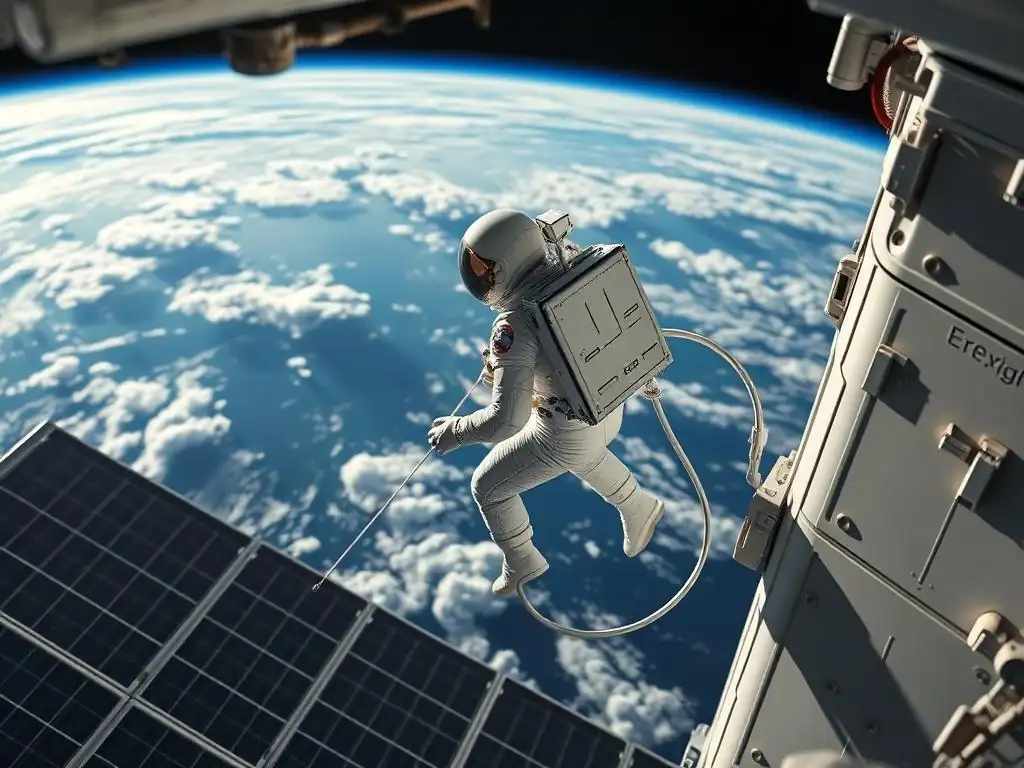
On October 18, 2019, history was made outside the International Space Station as astronauts Christina Koch and Jessica Meir embarked on the first-ever all-woman spacewalk. This wasn't a symbolic gesture; it was a critical maintenance mission. The primary objective of their EVA, lasting 7 hours and 17 minutes, was to replace a faulty battery charge/discharge unit (BCDU) on the Port 6 truss structure of the ISS. This unit was essential for managing the power flow from the station's solar arrays to its lithium-ion batteries, which store power for when the station is in Earth's shadow.
The BCDU had failed to activate after new lithium-ion batteries were installed during a series of spacewalks earlier in the month. This malfunction meant that one of the new, more powerful batteries was not contributing to the station's overall power grid. The success of the ISS relies on a robust and reliable power system to sustain its life support, scientific experiments, and operational systems. Therefore, the timely replacement of the faulty unit was paramount to ensuring the station's long-term health and full functionality.
Overcoming Technical Hurdles: Troubleshooting a Power Controller Malfunction
The spacewalk by Koch and Meir was not pre-planned months in advance; it was an unscheduled EVA necessitated by the BCDU failure. This added a layer of urgency and complexity, requiring rapid assessment and preparation by both the ground teams and the astronauts themselves. The faulty unit was one of 24 BCDUs on the ISS, and its failure posed a significant technical hurdle for the power system upgrade.
During the EVA, Koch and Meir meticulously followed procedures to remove the old, 220-pound BCDU and install the new replacement unit. Their training enabled them to work efficiently and precisely in the challenging microgravity environment. The successful replacement demonstrated their exceptional technical proficiency and ability to execute complex repairs under pressure, directly resolving a critical power system malfunction that could have impacted the station's operational capacity.
Demonstrating Teamwork and Collaboration During the EVA
The first all-woman spacewalk was a powerful demonstration of seamless teamwork and collaboration, not only between Christina Koch and Jessica Meir but also with the entire mission control team on Earth. In EVAs, one astronaut typically acts as the primary worker, while the other assists with tools, provides stability, monitors the worksite, and ensures safety. Koch and Meir executed these roles with precision and coordination, moving around the station's exterior with practiced ease.
The success of any spacewalk is a collective effort. Ground control provides real-time guidance, troubleshooting support, and constant monitoring of the astronauts' health and suit systems. Inside the ISS, other crew members, often including a robotic arm operator, provide crucial support. The Expedition 61 spacewalk exemplified this synergy, showcasing how diverse talents and roles come together to achieve complex objectives in the unforgiving environment of space.
The Significance of Representation and the First All-Woman Spacewalk
Highlighting the Importance of Diversity in STEM Fields
The first all-woman spacewalk served as a powerful visual and substantive demonstration of the capabilities of women in highly technical and demanding fields. It directly challenged long-standing stereotypes about who belongs in science, technology, engineering, and mathematics (STEM). By showcasing two highly skilled female astronauts performing a critical mission, the event broadened the public's perception of what is possible, inspiring a wider range of individuals to consider careers in space and STEM.
Diversity in STEM is not merely about optics; it is a strategic imperative. Studies, such as those from McKinsey & Company, consistently indicate that diverse teams — encompassing various genders, ethnicities, and backgrounds — are more innovative, make better decisions, and achieve superior outcomes. Bringing different perspectives to complex problems, like those encountered in space exploration and engineering, leads to more robust solutions and greater overall success. The all-woman spacewalk underscored this principle through a real-world, high-stakes example.
Inspiring Future Generations of Female Astronauts and Engineers
The visual impact of Christina Koch and Jessica Meir working together outside the ISS was immeasurable for young girls and aspiring scientists worldwide. It transformed the abstract concept of a woman in space into a tangible reality, demonstrating that there are no inherent barriers to reaching the pinnacle of space exploration. This event built upon the legacy of pioneers like Sally Ride, whose groundbreaking challenges in becoming the first American woman in space paved the way for future achievements like this.
NASA's astronaut corps has become increasingly diverse over the decades. Recent astronaut candidate classes have seen a significant increase in female representation, with roughly half of the candidates being women. This trend reflects a growing pipeline of talented women in STEM. The all-woman spacewalk served as a potent symbol, reinforcing the message that space is for everyone and encouraging more girls and young women to pursue rigorous STEM education and career paths, ultimately enriching the talent pool for future space missions.
The Role of Role Models in Breaking Barriers
Role models like Koch and Meir provide concrete, relatable examples of success in challenging fields. They demonstrate that dedication, perseverance, and exceptional skill can overcome traditional barriers and societal expectations. Their achievement echoed the pioneering spirit of Sally Ride, who faced her own groundbreaking challenges as she navigated the male-dominated aerospace industry to become a shuttle astronaut. These visible figures help to dismantle the perception that certain careers are exclusive to one gender.
By seeing women confidently performing highly technical and physically demanding roles in space, it normalizes their presence and contribution. This normalization is crucial for fostering inclusive environments where talent is recognized and nurtured regardless of gender. These role models not only inspire but also demonstrate the practical reality of breaking barriers, illustrating that competence and capability are the true measures of success in any endeavor, especially one as complex as human spaceflight.
The Future of Women in Space: Building on the Expedition 61 Success
Expanding Opportunities for Women in Lunar and Martian Missions
The success of the Expedition 61 all-woman spacewalk is a foundational element for the future of human space exploration, particularly for ambitious endeavors like NASA's Artemis program. Artemis aims to return humans to the Moon by the mid-2020s and eventually establish a sustainable human presence there, paving the way for missions to Mars. Women are not only expected to be integral to these missions as crew members but will also play critical roles in leadership, engineering, and scientific research.
Notably, the Artemis program explicitly commits to landing the first woman and the first person of color on the lunar surface. This commitment signifies a profound shift towards greater inclusivity at the highest echelons of space exploration. The technical proficiency and teamwork demonstrated by Koch and Meir during their spacewalk directly contribute to the confidence and capabilities required for these more distant and complex missions, proving that diverse teams are essential for pushing the boundaries of human achievement.
Addressing Systemic Biases and Promoting Gender Equality
While significant progress has been made in diversifying the space sector, systemic biases can still subtly influence career progression and opportunities within STEM fields. The success of the all-woman spacewalk serves as a powerful reminder of the importance of actively addressing these biases and promoting genuine gender equality across all levels of space agencies and related industries. This involves ensuring equitable access to training, mentorship, and leadership roles.
Continued advocacy and policy changes are crucial to fostering truly inclusive cultures. This includes reviewing recruitment practices, promoting work-life balance, and creating environments where all individuals feel valued and empowered to contribute their best. The aim is to dismantle any remaining barriers that might prevent talented women from reaching their full potential, ensuring that the space program benefits from the broadest possible pool of expertise and innovation.
The Long-Term Vision: A Diverse and Inclusive Space Program
The long-term vision for space exploration is one where diversity and inclusivity are not merely goals but inherent characteristics of the entire program. This means a future where an astronaut's capabilities and contributions are the sole criteria for participation, regardless of their gender, background, or identity. Such an approach fosters stronger, more innovative teams, better equipped to tackle the unprecedented challenges of interplanetary travel and long-duration space habitation.
The all-woman spacewalk of Expedition 61 was a critical step towards realizing this vision. It demonstrated not only what women can do but also the immense value that a truly inclusive approach brings to the complex and demanding endeavor of human space exploration. By embracing diversity, the global space community can unlock new perspectives, accelerate scientific discovery, and ensure that the future of humanity in space is built on the collective strengths of all its members.
Conclusion: Celebrating a Milestone and Continuing the Push for Equality in Space
Reinforcing the Importance of Recognizing Women's Contributions to Space Science
The first all-woman spacewalk on October 18, 2019, was far more than a symbolic event; it was a profound technical achievement that unequivocally underscored the capabilities, expertise, and collaborative spirit of female astronauts. Christina Koch and Jessica Meir demonstrated their exceptional proficiency in performing critical repairs and upgrades to the International Space Station, proving that gender is irrelevant to competence in the most demanding of environments. Their mission was a tangible demonstration of skill and teamwork, not merely a photo opportunity.
This milestone reinforces the critical importance of recognizing and celebrating women's contributions to space science throughout history. From pioneers like Valentina Tereshkova, the first woman in space, to Sally Ride, whose groundbreaking challenges opened the doors for American women in space, each step has built upon the last. The all-woman spacewalk stands as a testament to this enduring legacy, highlighting the ongoing impact of women in pushing the boundaries of human exploration.
The Enduring Impact of the First All-Woman Spacewalk on Future Missions
The success of the Expedition 61 all-woman spacewalk has an enduring impact that extends far beyond the confines of that single EVA. It sets a powerful precedent, normalizing the presence and capabilities of women in all aspects of space operations, from complex engineering tasks to leadership roles in future missions. This event contributes significantly to fostering a culture within space agencies where gender is truly irrelevant to an individual's ability to excel in the rigorous and unforgiving environment of space.
Looking forward, the achievement of Koch and Meir fuels the momentum for a future where diverse teams are the norm, not the exception, in space exploration. It paves the way for the next grand challenges, such as establishing lunar bases within the Artemis program and embarking on crewed missions to Mars. By showcasing the collective strength of a diverse and inclusive astronaut corps, the first all-woman spacewalk ensures that the full spectrum of human talent is engaged in humanity's continued push into the cosmos.
Frequently Asked Questions
What was the "All-Woman Spacewalk" and why was it significant?
It was a planned spacewalk performed entirely by women astronauts, Christina Koch and Jessica Meir. It marked a significant milestone as the first all-female spacewalk in history, highlighting the growing role of women in space exploration.
What was the original challenge faced by Sally Ride and other female astronauts regarding spacewalks?
Early spacesuits were often designed primarily for male physiques, posing challenges for women. This led to issues with fit and comfort, potentially affecting their ability to perform spacewalks effectively.
How did the All-Woman Spacewalk demonstrate technical triumph beyond just representation?
The spacewalk involved complex tasks such as replacing a faulty battery charge-discharge unit on the International Space Station. Successfully completing this mission demonstrated women's technical expertise and problem-solving capabilities in a demanding environment.
Did Sally Ride ever perform a spacewalk herself?
No, Sally Ride never actually performed a spacewalk. Her groundbreaking achievement was being the first American woman in space, paving the way for future female astronauts who would later conduct spacewalks.
What impact did the All-Woman Spacewalk have on inspiring future generations of women in science and engineering?
It served as a powerful symbol of inclusivity and demonstrated that women can excel in traditionally male-dominated fields like space exploration. This visibility inspires young girls to pursue STEM careers and challenge gender stereotypes.
Final Reflection: Reaching for the Stars, Together
The journey of space exploration, once a realm dominated by a single narrative, is now being rewritten with inclusivity and groundbreaking achievements. The all-woman spacewalk, far from being a mere symbolic gesture, represents a significant leap forward in technical prowess and collaborative spirit within the space program. It underscores the evolving landscape of STEM fields and the critical role women play in pushing the boundaries of human potential beyond our planet.
This moment transcends the immediate accomplishment, resonating deeply within the cultural and social fabric. It serves as a powerful reminder that progress is not just about reaching new frontiers, but about ensuring that everyone has the opportunity to contribute to the journey. The legacy of pioneers like Sally Ride, who faced immense challenges in paving the way, is amplified by these contemporary achievements. We will always have STEM with us. Some things will drop out of the public eye and go away, but there will always be science, engineering, and technology. And there will always, always be mathematics.
- Katherine Johnson. This quote perfectly encapsulates the enduring importance of STEM and the necessity of diverse voices shaping its future.
As we celebrate this milestone, let us not only marvel at the technical brilliance on display but also reflect on the ongoing work needed to foster true equity and opportunity in STEM. Consider how you can contribute to creating a more inclusive environment, encouraging the next generation of female scientists, engineers, and astronauts to reach for the stars, knowing that their contributions are valued and essential to the future of space exploration and beyond.
Ignite Your Inner Astronaut: Take the Next Giant Leap!
Thank you for exploring the remarkable story of the all-woman spacewalk and the groundbreaking achievements it represents. Now, it's your turn to make a difference!
Here's how you can continue the journey:
- Champion STEM Education: Actively support initiatives that encourage young girls and women to pursue careers in science, technology, engineering, and mathematics.
- Share this article to raise awareness of the contributions of women in space exploration with your friends and colleagues.
- Research and write a brief biography of a lesser-known female scientist and submit it to WomenInScienceHistory.com for potential publication!
What steps will you take to help inspire the next generation of female scientists and engineers?