
Hidden Figures No More: The Black Women Mathematicians Who Powered NASA's Space Race

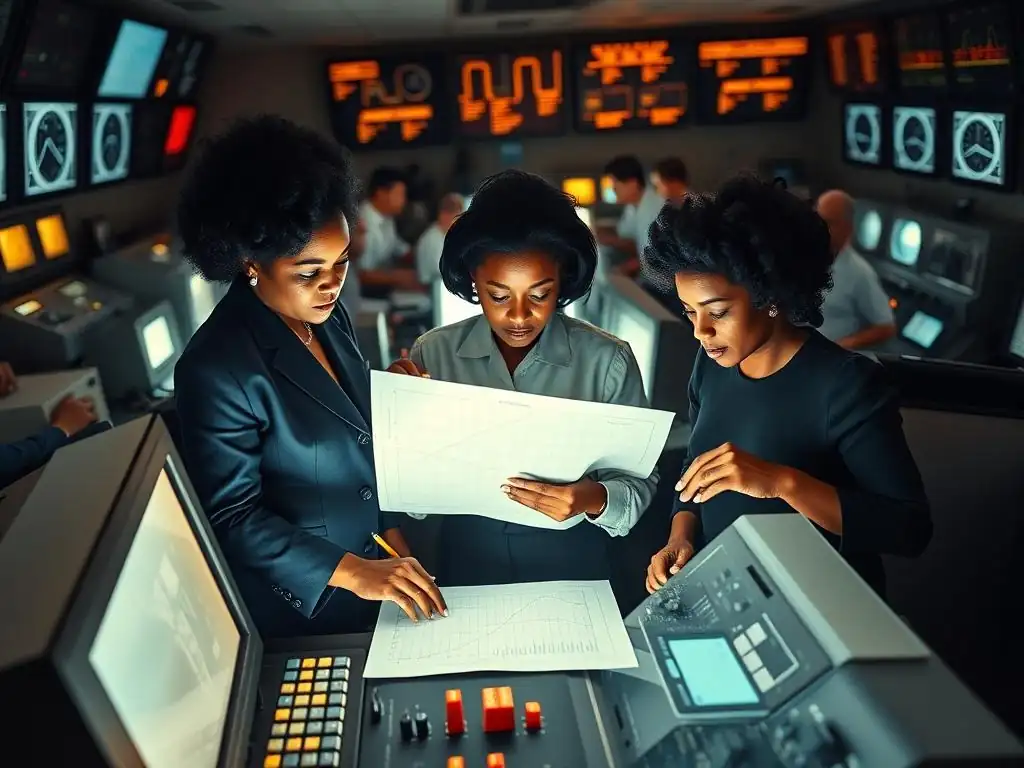
Welcome to WomenInScienceHistory.com!
Uncover the untold stories of remarkable women who shaped the scientific landscape. Ever wondered who really powered the calculations behind NASA's groundbreaking space missions? Dive into our latest article, " Hidden Figures No More: The Black Women Mathematicians Who Powered NASA's Space Race," and discover the inspiring and often overlooked contributions of these Black women NASA mathematicians. Prepare to be amazed by their brilliance and resilience, and learn how they defied expectations to help humanity reach for the stars. What other secrets does the history of women in science hold? Let's explore together!
- Introduction: Unveiling the Untold Stories of Black Women at NASA
- The Early Years: Segregation and Opportunity
- The "Human Computers": Black Women Mathematicians at Langley
- Contributions to Key NASA Missions
- Overcoming Obstacles and Achieving Recognition
- The Legacy of the "Human Computers"
- Conclusion: Celebrating the Achievements of Black Women NASA Mathematicians
-
Frequently Asked Questions
- What is the primary focus of WomenInScienceHistory.com?
- Why is it important to highlight the stories of Black women NASA mathematicians?
- What were some of the challenges faced by Black women mathematicians at NASA during the Space Race?
- How did the Black women mathematicians contribute to NASA's Space Race?
- What impact did the "Hidden Figures" story have on the recognition of these women?
- Final Reflection: Celebrating Unsung Heroes
- Ignite Your Inner Pioneer: Reimagine What's Possible!
Introduction: Unveiling the Untold Stories of Black Women at NASA
The Overlooked Role of African American Women in the Space Race
For decades, the narrative of the American Space Race predominantly highlighted the achievements of male engineers and astronauts, often overlooking the critical contributions of countless individuals behind the scenes. Among the most significant, yet historically marginalized, were the African American women whose intellectual prowess and mathematical precision were indispensable to NASA's early triumphs. Their work as "human computers" was foundational, providing the complex calculations that powered rockets and guided astronauts through the perilous journey to space.
These extraordinary Black women NASA mathematicians navigated not only the daunting complexities of orbital mechanics but also the pervasive systemic barriers of racial and gender discrimination prevalent in mid-20th century America. Their stories, once largely confined to historical footnotes or oral traditions, represent a powerful testament to resilience, intellect, and the profound impact of unsung heroes on monumental national endeavors.
Women in Space Missions & Programs: A Historical Perspective
The involvement of women in space missions and programs has a rich, albeit often understated, history, spanning from theoretical contributions to hands-on engineering and, eventually, direct participation as astronauts. From the earliest days of rocketry and aeronautics, women served in various capacities, frequently relegated to supportive or analytical roles rather than leadership positions. Their work in fields like aerodynamics, materials science, and computational analysis was consistently vital, yet the societal norms of the era often obscured their individual achievements.
Within this broader context, the challenges faced by Black women were compounded by the dual forces of sexism and racial segregation. While white women often struggled for professional recognition, Black women faced an additional layer of institutionalized discrimination that limited their access to education, employment, and advancement. Despite these formidable obstacles, a select group of Black women found opportunities within the burgeoning space program, demonstrating an unwavering commitment to scientific excellence that would ultimately redefine the boundaries of possibility.
Highlighting the Contributions of Black Women NASA Mathematicians
This article aims to illuminate the specific, groundbreaking contributions of these pioneering Black women NASA mathematicians, bringing their stories from the shadows into the spotlight. Their precise calculations were not merely supportive tasks; they were the very backbone of America's early spaceflight endeavors, enabling missions that captivated the world and reshaped geopolitical landscapes. Without their meticulous work, the iconic moments of the Space Race, from the first orbital flights to the Moon landing, would have remained distant aspirations.
By detailing the lives and work of figures like Katherine Johnson, Dorothy Vaughan, and Mary Jackson, we aim to underscore the immense impact of their intellect and perseverance. Their contributions were not just about numbers and equations; they were about breaking racial and gender barriers in STEM, inspiring future generations, and proving that talent knows no color or gender. These Black women NASA mathematicians exemplify how dedication and brilliance can triumph over adversity, leaving an indelible mark on both space exploration and the fight for social justice.
The Early Years: Segregation and Opportunity
Segregation's Impact on Black Women's Education and Careers
In the mid-20th century United States, racial segregation was deeply entrenched in every facet of society, particularly in the Southern states. Jim Crow laws dictated separate and unequal facilities for African Americans, extending from public transportation and restrooms to educational institutions and workplaces. This pervasive system severely limited educational and professional opportunities for Black citizens, with Black women facing the additional burden of gender discrimination. Access to quality schooling, especially in advanced scientific and mathematical fields, was often denied or significantly inferior compared to that offered to white students.
Despite these systemic barriers, many Black women pursued higher education, often attending Historically Black Colleges and Universities (HBCUs) that provided a nurturing environment for intellectual growth. While many were channeled into traditionally "female" fields like teaching or nursing, a determined few ventured into mathematics and science. Institutions such as West Virginia State College (where Katherine Johnson earned her degree) and Howard University played crucial roles in equipping these women with the robust mathematical skills that would later prove indispensable, preparing them for unique career paths that defied societal expectations.
Seeking Opportunities in Mathematics and Science during the 1940s
The outbreak of World War II created an unprecedented demand for skilled labor in defense industries across the United States. This national exigency, coupled with a significant shortage of male workers who were serving overseas, inadvertently opened doors for women and minorities in roles previously inaccessible. The need for mathematicians, physicists, and engineers skyrocketed, creating a unique, albeit often segregated, window of opportunity for mathematically talented Black women.
These women, often holding degrees in mathematics or related fields, sought employment in areas where their analytical skills could be applied to the war effort. While many faced initial resistance and discrimination, the sheer volume of work and the critical need for accurate calculations meant that their abilities could not be ignored. This period marked a subtle but significant shift, allowing some Black women to enter scientific and technical professions, laying the groundwork for their eventual pivotal roles at NACA and later NASA.
The National Advisory Committee for Aeronautics (NACA) and Early Hiring Practices
The National Advisory Committee for Aeronautics (NACA), the predecessor to NASA, was at the forefront of aeronautical research during World War II. Its operations, particularly at the Langley Memorial Aeronautical Laboratory in Hampton, Virginia, required a large pool of skilled mathematicians to process vast amounts of data from wind tunnel tests and flight experiments. The demand for "human computers" to perform these complex calculations was immense. In 1941, Executive Order 8802, which prohibited racial discrimination in the national defense industry, further pressured government agencies to open employment opportunities to African Americans, although often within segregated units.
This order, combined with the pressing need for analytical talent, led NACA to begin hiring Black women mathematicians in 1943. These initial hires formed the West Area Computing Unit at Langley, a segregated but intellectually vibrant department. This unit became home to many of the pioneering Black women NASA mathematicians, providing them with a chance to apply their formidable skills to cutting-edge scientific problems, even as they navigated the daily realities of a racially divided workplace.
The "Human Computers": Black Women Mathematicians at Langley
The West Area Computing Unit: A Segregated Workplace
The West Area Computing Unit at Langley Memorial Aeronautical Laboratory was established as a segregated section for African American female mathematicians. Physically separated from their white counterparts, these women worked in a distinct building, often facing separate dining facilities and restrooms, a stark reminder of the prevailing Jim Crow laws. Despite these discriminatory conditions, the unit quickly became a hub of exceptional mathematical talent, attracting some of the brightest minds from across the country.
Within this segregated environment, the women of the West Area Computing Unit performed highly complex calculations, processing raw data from wind tunnels and flight tests. Their work required meticulous accuracy and a deep understanding of physics and engineering principles, proving their capabilities daily regardless of the discriminatory environment. This unit, though born of segregation, fostered a strong sense of camaraderie and mutual support, as these Black women NASA mathematicians collaborated to overcome both scientific challenges and societal prejudices.
Katherine Johnson: A Pioneering Figure in Trajectory Analysis
Katherine Johnson, born in 1918, stands as one of the most iconic figures among the Black women NASA mathematicians. A child prodigy who excelled in mathematics, she graduated from West Virginia State College at the age of 18 with degrees in mathematics and French. Johnson joined NACA in 1953, initially assigned to the West Area Computing Unit before being transferred to the Flight Research Division, a predominantly male unit. Her exceptional analytical geometry skills and unwavering precision quickly earned her a reputation for unparalleled accuracy and a keen ability to ask the right questions.
Johnson's contributions were pivotal to several of NASA's most critical missions. She became renowned for her work in trajectory analysis, calculating flight paths with such precision that astronauts trusted her over the nascent electronic computers. Her meticulous calculations, performed by hand, were instrumental in determining the launch windows, orbital trajectories, and re-entry paths for human spaceflights, making her an indispensable asset to the nascent space program.
Dorothy Vaughan: Leading the West Area Computing Unit
Dorothy Vaughan, born in 1910, joined NACA in 1943, becoming one of the first African American women hired as a "human computer" at Langley. Her leadership qualities quickly became apparent, and she was promoted to supervisor of the West Area Computing Unit in 1949, making her NACA's first African American supervisor. Vaughan was not only a skilled mathematician but also a visionary leader, dedicated to the professional development of the Black women NASA mathematicians under her charge.
Recognizing the impending shift from human computations to electronic computers, Vaughan proactively taught herself and her team the programming language FORTRAN. This foresight ensured that when IBM machines were introduced, her unit was prepared for the transition, maintaining their relevance and securing their employment in the evolving technological landscape. Her leadership and dedication to her team's growth were instrumental in breaking down barriers and paving the way for future generations of Black women in STEM.
Mary Jackson: Breaking Barriers as NASA's First Black Female Engineer
Mary Jackson, born in 1921, began her career at NACA in 1951, working as a human computer under Dorothy Vaughan in the West Area Computing Unit. Her ambition, however, extended beyond computational work; she aspired to become an engineer. At the time, engineering roles were almost exclusively held by white men, and the path for Black women to achieve this professional status was fraught with significant obstacles.
To qualify for promotion to engineer, Jackson needed to complete graduate-level math and physics courses. These courses were offered at the segregated Hampton High School. In a courageous act, Jackson petitioned the city of Hampton to allow her to attend the classes alongside her white counterparts.
Her petition was granted, and after completing the coursework, she became NASA's first Black female engineer in 1958. Her groundbreaking achievement not only marked a personal triumph but also opened doors for other African American women to pursue engineering careers within the agency, profoundly impacting the representation of Black women NASA mathematicians in higher-level technical roles.
Contributions to Key NASA Missions

Calculating Trajectories for Project Mercury
The early years of the American space program, particularly Project Mercury, relied heavily on the meticulous calculations performed by human computers. The Black women NASA mathematicians at Langley played a critical role in this endeavor, providing the essential mathematical backbone for America's first human spaceflights. Their tasks included calculating launch windows, orbital paths, and re-entry trajectories with astounding precision, often working against tight deadlines and with nascent technology.
For Project Mercury, these calculations were not merely theoretical exercises; they were the very blueprints for mission success and astronaut safety. Every variable, from the Earth's rotation to the exact timing of retrofire, had to be accounted for. The accuracy of their manual computations was so trusted that, at times, they were called upon to verify the output of the earliest electronic computers, underscoring their indispensable role in guiding these pioneering missions.
Essential Calculations for the Apollo Program and Moon Landing
As NASA transitioned from Project Mercury to the more ambitious Gemini and Apollo programs, the complexity of the required calculations escalated dramatically. The Apollo program, with its ultimate goal of landing humans on the Moon, demanded an even higher degree of precision and innovative mathematical solutions. Black women NASA mathematicians continued to be at the forefront of this computational effort, performing complex calculations for translunar injection, lunar orbital mechanics, and the precise re-entry paths required for safe return to Earth.
Katherine Johnson's work on the Apollo 11 mission was particularly crucial. She calculated the trajectories for the command module and lunar module, ensuring that the critical rendezvous in lunar orbit and the precise return path to Earth were flawlessly executed. Without the diligent and accurate work of these dedicated Black women NASA mathematicians, the monumental achievement of landing humans on the Moon in 1969 would have remained an impossible dream, solidifying their profound impact on one of humanity's greatest exploratory feats.
Verifying Computer Accuracy: The Human Element in Early Spaceflight
In the early days of electronic computing, the machines were powerful but not entirely reliable, and their output often required human verification. This is where the Black women NASA mathematicians, particularly Katherine Johnson, proved invaluable. Astronauts and engineers trusted the human computers' calculations implicitly, often more than the newfangled IBM machines. This reliance on human intellect as a crucial check-and-balance system was a defining characteristic of early spaceflight.
A prime example of this trust occurred during John Glenn's historic orbital flight in 1962. Before his mission aboard Friendship 7, Glenn famously requested that Katherine Johnson personally re-verify the IBM 7090 computer's calculations for his orbital trajectory and re-entry path. He stated, "If she says they're good, then I'm ready to go." Her manual computations provided the ultimate assurance, demonstrating that the human element was not merely a placeholder but a critical component in ensuring the accuracy and safety of space missions.
Johnson's Calculations for John Glenn's Orbit and Return
Katherine Johnson's role in John Glenn's 1962 orbital mission is perhaps her most famous contribution, emblematic of the trust placed in Black women NASA mathematicians. As NASA prepared for Glenn's Friendship 7 flight, engineers fed the proposed orbital trajectory into the new IBM 7090 computer. However, the mission's success, and Glenn's life, depended on absolute certainty. Glenn, who knew and respected Johnson's unparalleled accuracy, specifically requested that she verify the computer's output by hand.
Johnson, using her analytical geometry skills, meticulously re-calculated the parameters for Glenn's orbital flight, including the critical points of his trajectory and the precise timing for retrofire to ensure a safe splashdown. Her manual calculations matched the computer's results exactly, providing the final stamp of approval for the mission. This pivotal moment solidified Johnson's reputation as an indispensable figure and highlighted how the intellectual rigor of Black women NASA mathematicians directly contributed to the success and safety of America's pioneering human spaceflights.
Overcoming Obstacles and Achieving Recognition
Facing Discrimination and Segregation within NASA
Despite their extraordinary intellectual contributions, the Black women NASA mathematicians at Langley faced constant discrimination and segregation. They were subjected to the realities of Jim Crow laws even within a federal agency, often working in separate facilities, using separate restrooms, and being excluded from certain meetings or social events. Their pay was often lower than their white counterparts, and opportunities for professional advancement were significantly limited, regardless of their qualifications or performance.
These systemic barriers meant that these women had to consistently prove their competence and value, often performing at a higher standard simply to be considered equal. They navigated a landscape where their talents were essential but their presence was often marginalized. The daily indignities of segregation, combined with the professional challenges, required immense resilience and determination, making their achievements all the more remarkable in the face of such pervasive prejudice.
Fighting for Equal Opportunities and Recognition
The fight for equal opportunities and recognition for Black women NASA mathematicians was often a quiet but persistent battle. Leaders like Dorothy Vaughan actively worked to secure opportunities for their teams, such as ensuring they were trained in new technologies like FORTRAN programming. This proactive approach was crucial for maintaining their relevance and creating pathways for advancement in a rapidly evolving technological environment, ensuring their skills remained valuable.
Beyond formal training, these women often challenged the status quo through their sheer excellence and unwavering professionalism. Their consistent accuracy and indispensable contributions to critical missions gradually chipped away at the institutionalized discrimination. While overt protests were rare in their daily work, their very presence and undeniable success served as a powerful, ongoing statement against the racial and gender biases of the era, subtly forcing recognition and opening doors.
Earning Professional Advancement and Respect
Despite the formidable obstacles, many of these Black women NASA mathematicians earned professional advancement and respect through their sheer talent and dedication. Mary Jackson's successful petition to attend segregated engineering classes, leading to her becoming NASA's first Black female engineer in 1958, is a prime example of such hard-won progress. Similarly, Katherine Johnson's integration into the Flight Research Division and her eventual role in verifying critical mission calculations demonstrated a growing, albeit slow, acceptance of their capabilities beyond the segregated computing pool.
Their respect was not given; it was earned through undeniable expertise, tireless work ethic, and a consistent track record of accuracy that simply could not be ignored. As the space program intensified, the demand for their unique skills transcended racial and gender biases, allowing them to rise within the ranks and gain the professional standing they deserved. This gradual earning of respect highlighted their essential contributions to space exploration and challenged the prevailing social norms of the time.
Jackson's Court Petition for Engineering Education
Mary Jackson's determination to become an engineer led her to a pivotal moment in her career and a significant stand against segregation. To qualify for the engineering program at NASA, she needed to complete graduate-level math and physics courses. The only available classes were offered at the segregated Hampton High School for white students. In a bold and courageous move, Jackson petitioned the city of Hampton's court to allow her to attend these classes.
Her successful petition was a landmark achievement, not just for her personal career but for civil rights within the scientific community. It allowed her to complete the necessary coursework and, in 1958, achieve her goal of becoming NASA's first Black female engineer. This act of defiance and perseverance by one of the key Black women NASA mathematicians underscored the immense personal sacrifices and legal battles required to break through the racial barriers of the era, creating a precedent for future generations.
The Legacy of the "Human Computers"
Inspiring Future Generations of Women in STEM
The stories of the Black women NASA mathematicians serve as a profound source of inspiration for future generations of women, particularly those from underrepresented backgrounds, to pursue careers in science, technology, engineering, and mathematics (STEM). Their journey from segregated classrooms to the forefront of space exploration demonstrates that intellectual brilliance and unwavering determination can overcome even the most formidable societal barriers. Their achievements resonate deeply, showing that talent and dedication know no color or gender.
These women are not merely historical figures; they are powerful role models who embody the spirit of perseverance and excellence. Their legacy encourages young girls and women to challenge preconceived notions about who can succeed in STEM fields, fostering a sense of possibility and promoting greater diversity and inclusion in scientific pursuits. By highlighting their triumphs, we empower new generations to reach for the stars, both literally and figuratively.
For decades, the critical contributions of these Black women NASA mathematicians remained largely unacknowledged by the mainstream public. This began to change dramatically with the publication of Margot Lee Shetterly's book "Hidden Figures: The American Dream and the Untold Story of the Black Women Who Helped Win the Space Race" in 2016, followed by the highly successful film adaptation. These works brought the stories of Katherine Johnson, Dorothy Vaughan, Mary Jackson, and others to global attention, sparking widespread recognition and celebration.
The "Hidden Figures" phenomenon marked a turning point in how these pioneering women were perceived and remembered. It corrected historical oversights, ensuring that their vital roles in the Space Race were no longer "hidden" but proudly celebrated. This newfound recognition has not only honored their past achievements but also ignited a broader conversation about the importance of diversity, inclusion, and accurate historical representation in science and beyond.
Continuing the Fight for Diversity and Inclusion in Science
While the recognition brought by "Hidden Figures" was significant, the fight for full diversity and inclusion in science and technology continues. The legacy of these Black women NASA mathematicians underscores the ongoing need to dismantle systemic barriers and actively promote equitable opportunities for all individuals in STEM fields. Their experiences serve as a powerful reminder that talent is universal, but opportunity is not always equally distributed.
Organizations and educational institutions today are actively working to address the disparities that persist in STEM, drawing lessons from the past. The stories of these women inspire initiatives aimed at mentorship, scholarship, and creating inclusive environments where diverse perspectives are valued and celebrated. Their enduring impact fuels the commitment to ensuring that future generations of scientists, engineers, and mathematicians truly reflect the rich diversity of society.
Black Women NASA Mathematicians: A Lasting Impact on Space Exploration
The lasting impact of the Black women NASA mathematicians on space exploration is immeasurable. Their foundational calculations laid the groundwork for decades of advancements in rocketry, orbital mechanics, and interplanetary travel. From the earliest orbital flights of Project Mercury to the complexities of the Apollo Moon landing and beyond, their precision and intellectual rigor were indispensable to America's success in space.
Their legacy extends far beyond the numbers and equations they meticulously computed. It represents a triumph of intellect, perseverance, and courage in the face of profound adversity. These Black women NASA mathematicians did not just calculate trajectories; they charted a course for greater inclusion and recognition in science, permanently etching their names into the annals of both space history and the broader narrative of human achievement.
Conclusion: Celebrating the Achievements of Black Women NASA Mathematicians
Recognizing the Unsung Heroines of the Space Race
The story of America's Space Race is incomplete without the profound contributions of the Black women NASA mathematicians. For too long, their vital roles in achieving humanity's greatest exploratory feats remained largely unacknowledged, overshadowed by narratives that omitted their groundbreaking work. Today, we stand at a point where their stories are finally being told, bringing to light the invaluable, yet long unsung, contributions of these extraordinary individuals.
Their intellectual prowess and unwavering dedication were instrumental in ensuring the success and safety of early space missions, from Project Mercury to the Apollo program. Recognizing them as the unsung heroines of the Space Race is not merely about historical correction; it is about celebrating the full scope of human ingenuity and resilience, acknowledging that scientific progress is often built on the diverse talents of many.
Ensuring Their Stories Are Never Forgotten
The importance of ensuring that the stories of these pioneering Black women NASA mathematicians are never forgotten cannot be overstated. Their narratives are not just historical footnotes; they are integral parts of the broader tapestry of scientific achievement, civil rights, and social progress in the United States. Active preservation and widespread dissemination of their experiences are crucial for future generations to understand the full spectrum of contributions to scientific advancement.
Platforms like Women in Science History play a vital role in this ongoing effort, providing dedicated spaces to share these powerful stories. By continuing to highlight their challenges, triumphs, and profound impact, we ensure that their legacy inspires, informs, and reminds us of the potential that lies within every individual, regardless of their background or the obstacles they face.
The Enduring Legacy of Black Women in Space Science & Astronomy
The enduring legacy of Black women in space science and astronomy, particularly those who served as human computers at NASA, is multifaceted and profound. They not only contributed foundational calculations that propelled humanity into space but also broke significant racial and gender barriers, paving the way for greater diversity and inclusion in STEM fields. Their work fundamentally shaped the trajectory of space exploration, demonstrating the indispensable value of their intellect and skill.
From the precise orbital mechanics for John Glenn's flight to the complex calculations for the Moon landing, the work of these Black women NASA mathematicians changed the world, both in space and on Earth. Their courage, perseverance, and brilliance leave an indelible mark on science and society, serving as a timeless testament to the power of human potential and the imperative of recognizing contributions from all corners of society.
Frequently Asked Questions
What is the primary focus of WomenInScienceHistory.com?
The website primarily focuses on celebrating the contributions of women to various scientific fields throughout history, showcasing their biographies, groundbreaking work, and the challenges they faced. It aims to inspire future generations by highlighting these often-overlooked narratives.
Why is it important to highlight the stories of Black women NASA mathematicians?
Highlighting these stories helps correct historical inaccuracies and acknowledges the crucial, yet previously hidden, role these women played in NASA's success during the Space Race. It also provides powerful role models for young Black women interested in STEM fields.
What were some of the challenges faced by Black women mathematicians at NASA during the Space Race?
These women faced challenges like racial and gender discrimination, being relegated to segregated workspaces, and often receiving less recognition than their male counterparts. They had to overcome significant societal barriers to contribute their expertise.
How did the Black women mathematicians contribute to NASA's Space Race?
These mathematicians performed complex calculations essential for trajectory analysis, orbital mechanics, and other critical aspects of the space program. Their work was vital for the success of early space missions, including putting astronauts into orbit.
The "Hidden Figures" story, through the book and film, brought widespread attention to the previously unacknowledged contributions of these Black women mathematicians. This helped raise awareness and inspire a new generation to pursue STEM careers.
Final Reflection: Celebrating Unsung Heroes
The stories of Katherine Johnson, Dorothy Vaughan, and Mary Jackson, among other Black women NASA mathematicians, are not relics of the past, but vital lessons for the present. Their brilliance, resilience, and unwavering dedication to science, despite facing systemic racism and sexism, continue to inspire a new generation to break barriers and pursue their dreams in STEM fields. Their contributions were instrumental in achieving milestones in space exploration, and recognizing their pivotal role is crucial for a more inclusive and accurate historical narrative.
The impact of these women extends far beyond the calculations they performed. Their legacy serves as a potent reminder of the untapped potential that exists within marginalized communities and the transformative power of inclusivity. There will always be obstacles, but you have to keep going. You have to keep pushing forward.
- Katherine Johnson. This quote encapsulates the spirit of these women and underscores the importance of perseverance in the face of adversity, a lesson that resonates deeply in today's world.
Now, consider the implications of their story for your own life. What hidden talents or passions might you be neglecting? What barriers might you be inadvertently reinforcing? Let the legacy of these Black women NASA mathematicians inspire you to champion inclusivity, challenge prejudice, and strive for excellence in all that you do. Their story is a testament to the power of human potential, and it is our collective responsibility to ensure that their contributions are never forgotten and that their example continues to light the way for future generations.
Ignite Your Inner Pioneer: Reimagine What's Possible!
Thank you for diving into the untold stories of these remarkable women. You've now seen how their brilliance shaped history. Now, it's your turn to create your own impact.
- Share this story with at least three friends, family members, or colleagues to amplify the legacies of these unsung heroes and inspire others.
- Explore online resources dedicated to supporting women in STEM and consider making a donation to organizations that champion diversity and inclusion.
- Reflect on your own assumptions about who can excel in STEM fields and challenge any biases you may hold.
How will you use the stories of these incredible mathematicians to fuel your own journey of discovery and empowerment?